
For buyers comparing packaging across several chilled-food lines, the same material, closure, and handling checks also apply to disposable sushi trays used by supermarkets, restaurants, and takeaway counters.
Introduction
Aluminum foil containers work well for baking, catering, takeaway meals, chilled storage, and freezer applications.
They conduct heat, block light and moisture, and stack efficiently. These advantages make them useful in restaurants, cafés, bakeries, meal-prep operations, and retail food counters.
They are not suitable for every situation. Acidic or salty food can react with bare aluminum during long or hot contact. ‘
A foil tray should not go into a microwave unless the food package and appliance instructions specifically allow it. Lids also need separate checks because paperboard, PET, PS, and other lid materials have different limits. This guide explains how to use aluminum foil food containers safely and how to compare products before buying. Buyers can view ManLuen’s aluminum foil container range and the current aluminum foil container product series while reviewing the points below.
Why Food Businesses Use Aluminum Foil Containers
Strong barrier performance
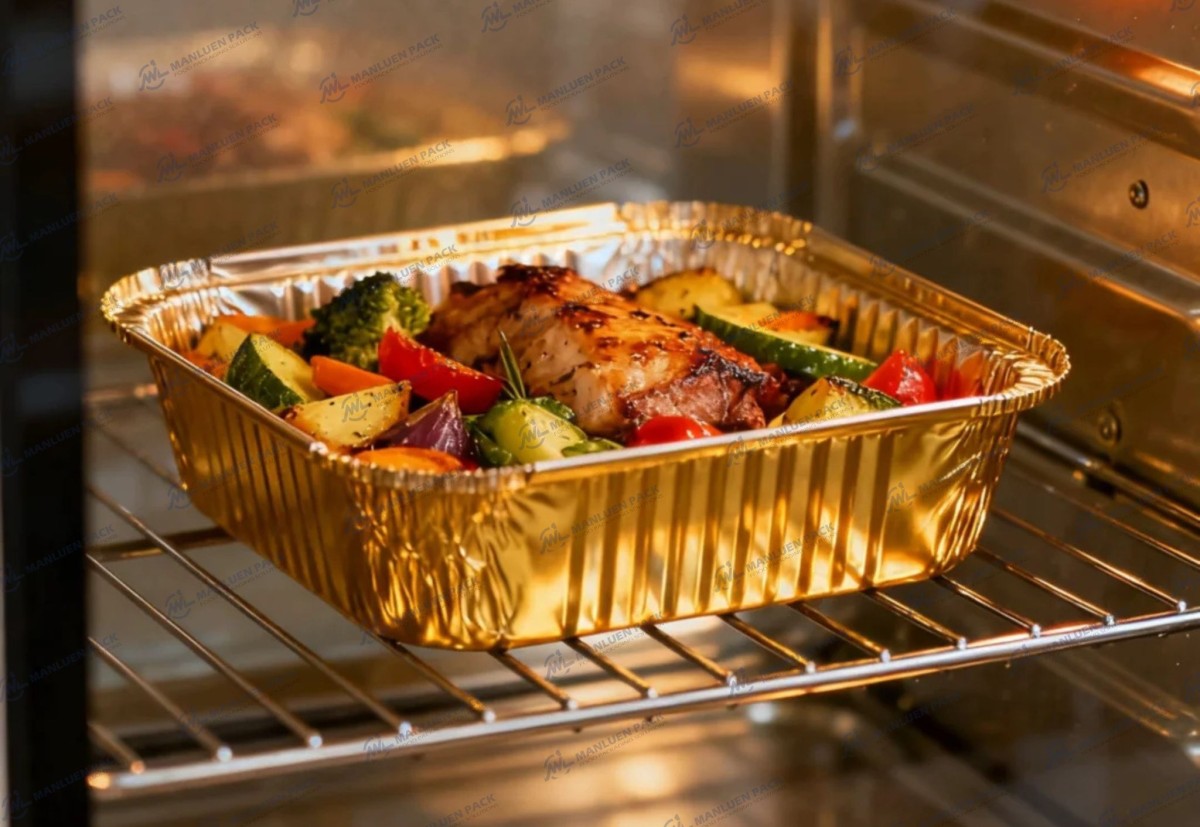
Aluminum provides a strong barrier against light, oxygen, moisture, and odors. This helps protect food quality during storage and transport. The container still needs a suitable lid or cover because the open top remains the main route for moisture loss and contamination.
Useful temperature range
An aluminum base can handle conventional oven heat and freezing better than many common display plastics. The complete package may have a lower limit, however. A plastic lid, paperboard lid, coating, adhesive, or printed component can determine the usable temperature. Use the product instructions supplied for the exact SKU. Remove any lid that is not designed for oven use before heating. Do not place a foil tray directly on an exposed heating element or flame.
Low weight and easy stacking
Foil containers are light and nest closely when empty. This can reduce shelf space and make kitchen handling easier. Buyers should compare packed carton dimensions, pieces per carton, pallet configuration, and deformation during transport rather than judging logistics only by the weight of one tray.
Simple portion and menu planning
Rectangular and round foil containers come in individual, family, catering, and bakery sizes. A fixed tray size can help staff pack consistent portions. Deep containers suit casseroles or baked meals, while shallow trays suit roasting, sides, and bakery products. For a wider comparison with PP, PET, paper, bagasse, and other formats, see ManLuen’s guide to food packaging materials.
WL-1711 and the ManLuen Foil Container Series
The source images in this article show the WL-1711. ManLuen’s current product table lists the WL-1711 at 170 × 115 × 35 mm and 1,000 pieces per carton. The same series includes several other footprints and depths.
| Model | Listed size | Pieces per carton |
|---|---|---|
| WL-C5 | 120 × 100 × 45 mm | 1,000 |
| WL-C10 | 150 × 115 × 50 mm | 1,000 |
| WL-1711 | 170 × 115 × 35 mm | 1,000 |
| WL-2650 | 168 × 138 × 45 mm | 1,000 |
| WL-1650 | 200 × 110 × 45 mm | 1,000 |
| WL-2114 | 212 × 142 × 45 mm | 1,000 |
| WL-2216 | 225 × 155 × 50 mm | 1,000 |
These are external dimensions, not verified internal capacities. Wall angle, rim design, and lid clearance affect usable volume. Request samples and pack the actual menu before setting a portion size or publishing a capacity claim.
Is Cooking with an Aluminum Foil Container Safe?
Food-grade aluminum containers can be suitable for food contact when the material, manufacturing process, and intended use meet the applicable requirements. Safety is not established by the words “food-grade” alone. Buyers should confirm the alloy or specification, coatings, lubricants, lid, food type, time, and temperature. Aluminum has a naturally occurring oxide layer, but this does not make it completely inert under every condition. Salt, vinegar, tomato, citrus, and other acidic ingredients can increase interaction with bare aluminum, especially during long contact or heating. USDA guidance notes that salt, vinegar, acidic food, and highly spiced food may cause pitting or discoloration on foil. For acidic or salty dishes, shorten storage time in bare aluminum or select a container with a suitable food-contact coating. Do not use a scratched or heavily damaged container. ManLuen’s detailed guide, Is Aluminum Foil Safe for Food Packaging?, explains migration, coatings, and purchasing checks in more detail.
United States
The FDA regulates food-contact substances according to their intended use. The food type, contact time, and temperature form part of the safety assessment. A buyer should therefore request documentation for the complete container, including any coating, lubricant, adhesive, ink, and lid component. Avoid treating “FDA approved” as a universal finished-package certificate. The article What Agency Approves Food Packaging? explains how U.S. food-contact authorization works.
European Union
Regulation (EC) No 1935/2004 provides the general framework for materials intended to contact food in the EU. It requires food-contact materials to avoid transferring constituents in amounts that could endanger health, unacceptably change the food, or damage its sensory properties. EU Regulation No 10/2011 concerns plastic materials and articles. It may apply to a plastic lid or plastic component, but it is not the primary legal basis for an aluminum tray. Buyers should ask suppliers to identify which rule or test applies to each component. 
Oven, Air Fryer, Microwave, and Freezer Use
| Use | General guidance | What to verify |
|---|---|---|
| Conventional oven | Often suitable for the aluminum base | Maximum temperature, lid removal, coating, depth, and support tray |
| Air fryer | May be suitable when the appliance permits metal trays | Airflow, tray stability, clearance from the element, and appliance instructions |
| Microwave | Do not assume it is safe | Specific food-package instructions and the microwave manufacturer’s manual |
| Freezer | Often suitable for the aluminum base | Lid fit, food expansion, sealing method, and freeze-thaw performance |
Conventional ovens
Foil trays are widely used for baking and reheating. Support thin containers on a baking sheet when moving them, especially when they hold liquid or heavy food. Follow the supplier’s maximum-temperature and time instructions. Remove plastic lids unless the lid documentation expressly allows oven use.
Air fryers
An aluminum container may work in an air fryer if the appliance manufacturer permits metal cookware. The tray must sit securely and allow enough airflow. Keep it away from the heating element. An empty or very light tray can move in strong circulating air, so never operate it in a way that lets the foil contact the element.
Microwave ovens
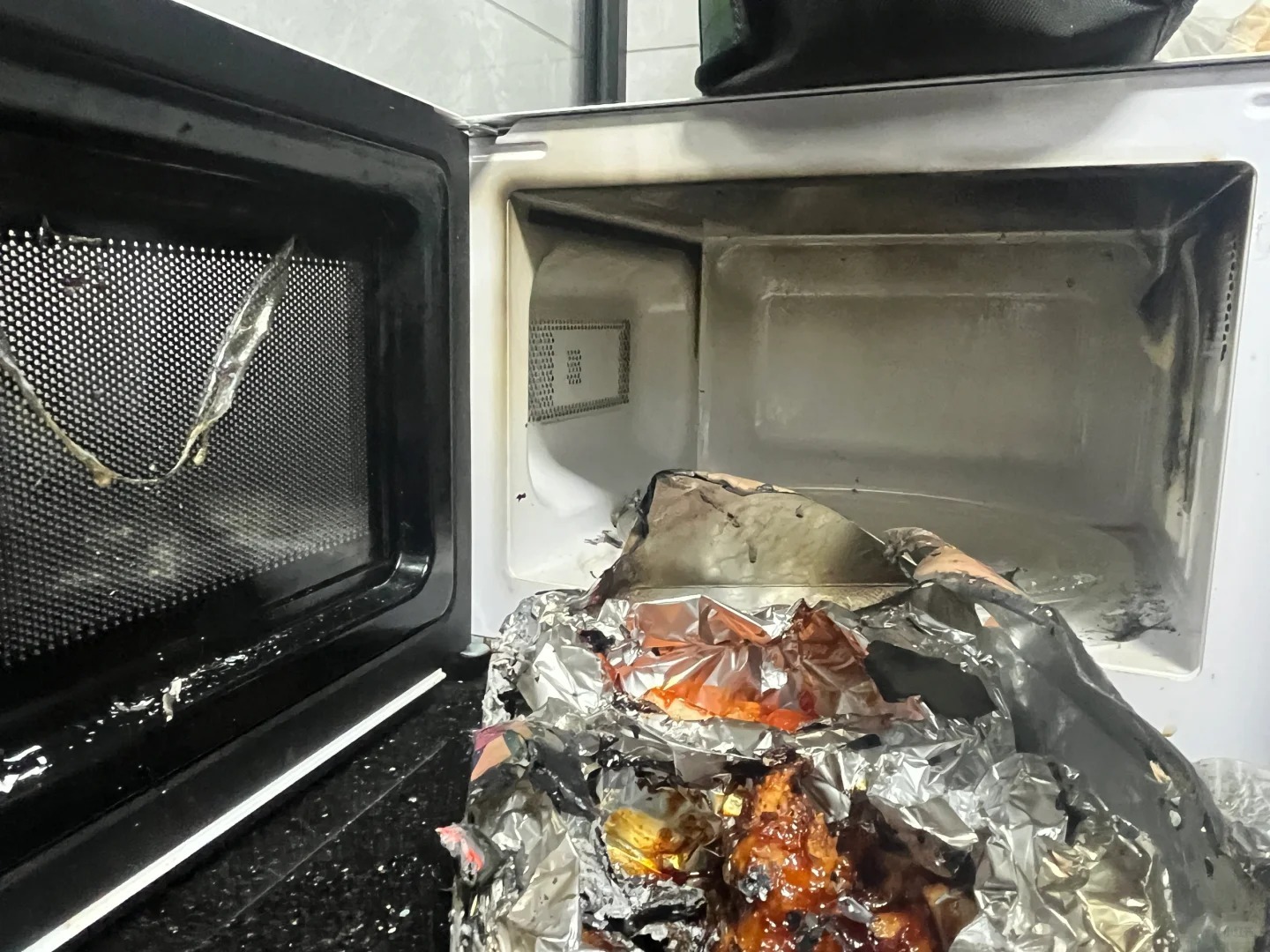
The safest general rule is to transfer food to a clearly microwave-safe container. FDA guidance says metal pans and aluminum foil generally should not be used because metal reflects microwaves and can cause uneven heating or damage. USDA guidance adds that some foods sold in foil containers may be microwaveable when the package provides specific heating instructions. Do not place a foil container in a microwave based only on material marketing. Check both the package instructions and the appliance manual. Stop immediately if arcing or sparking occurs.
Freezers
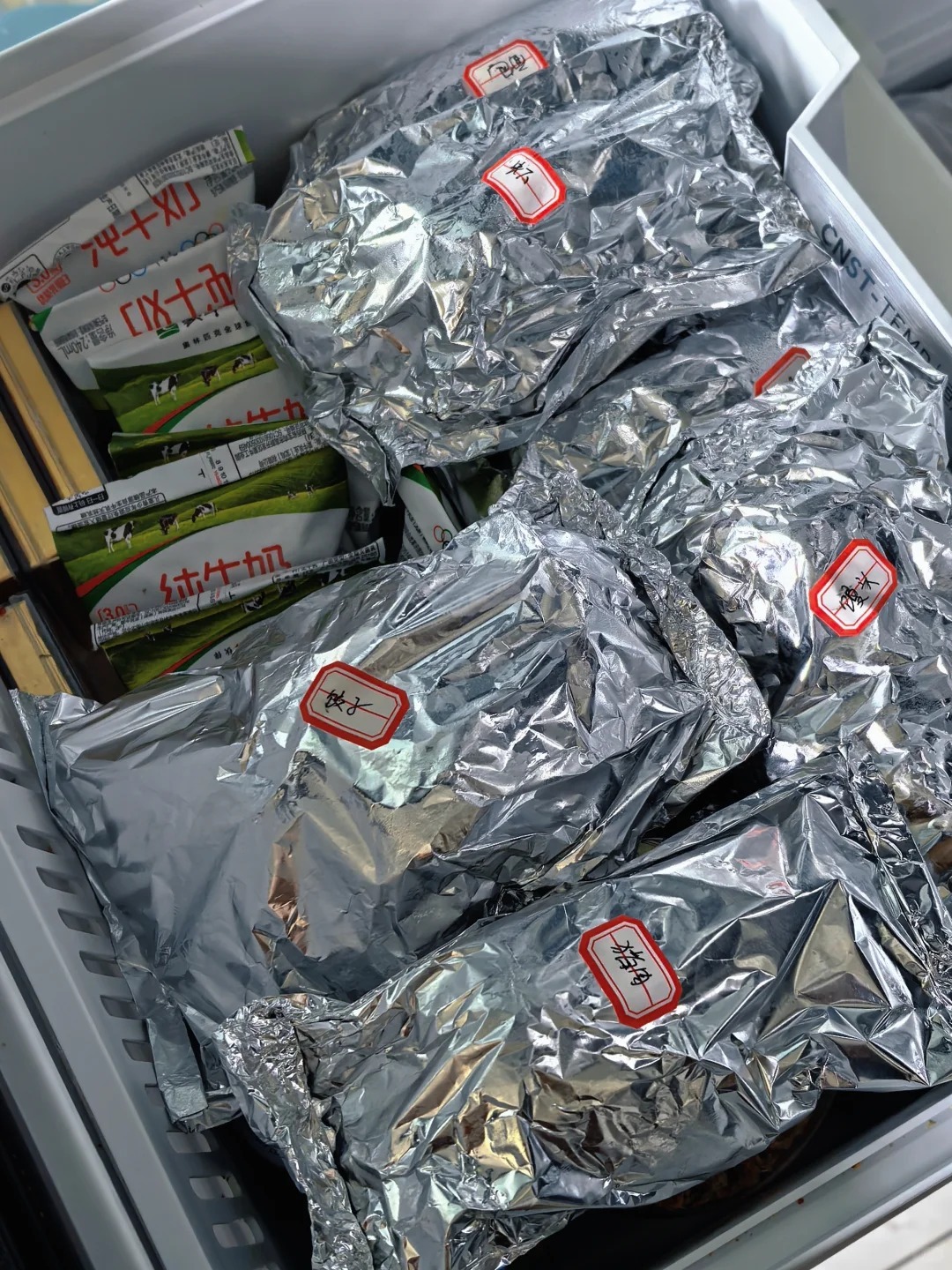
Aluminum bases can suit frozen storage, but the complete package still needs validation. Leave headspace for expanding food. Test whether the lid stays secure and whether the rim deforms during freezing, stacking, thawing, and transport.
Lids, Sealing, and Delivery Performance
A foil base alone does not make a package leakproof. Delivery performance depends on the rim, lid geometry, crimp, closure method, fill level, food viscosity, and transport position. ManLuen’s product page lists PS/PET lids for one configuration in the foil-container series. That information should not be applied automatically to every model. Ask which lid matches the chosen tray and whether it is suitable for the food temperature and storage method. Before ordering, run a filled-product test:
- Fill the container with the actual meal at the normal serving temperature.
- Clean the rim and close or crimp the lid using the intended process.
- Tilt the package and check each edge.
- Stack it at the expected delivery height.
- Transport it for the normal route and time.
- Check for leakage, lid movement, rim damage, and food contact with the lid.
Thin sauces may need a separate sealed sauce cup. Chilled deli meals may also suit a different food storage container when visibility or snap-lid closure matters more than oven use.
Cost and Operational Considerations
Unit price gives an incomplete picture. Compare the cost of the base, lid, label, sealing process, cartons, storage, freight, damaged units, and labor. Nested foil trays can save shelf space, but they may stick together if handled roughly. Thin walls reduce material use, while heavier gauges may improve rigidity. The best balance depends on fill weight and handling. A lightweight tray that bends under the actual meal can cost more through spills and complaints. Custom printing or embossing can support branding, but buyers should first confirm that the decoration system suits food contact, heating, and recycling requirements. Standard sizes usually offer simpler tooling and lower order requirements than a new custom mold. For additional sourcing comparisons, read how to choose the right food packaging and ManLuen’s overview of aluminum foil packaging for food preparation and storage. 
Recycling and Environmental Claims
Aluminum can be recycled repeatedly, and producing recycled aluminum uses far less energy than producing primary aluminum. The International Aluminium Institute reports a 95.5% difference in primary energy demand between the global primary-aluminum model and the recycled-aluminum datasets used in its comparison. That does not mean every used foil food container will be recycled. Food residue, attached lids, coatings, collection rules, sorting equipment, and local markets affect acceptance. The complete package may contain several materials even when the base is aluminum. Use specific wording. “Aluminum base that may be recyclable where accepted” is more accurate than “100% eco-friendly.” Give customers instructions on removing the lid and clearing food residue when local programs require it. For broader supplier and environmental checks, see Sustainable Food Packaging Trends 2026.
Wholesale Buyer Checklist
Ask for the following information before approving a bulk order:
- model number, dimensions, capacity, rim style, and wall thickness or gauge;
- aluminum specification and any surface coating;
- matching lid material and closure method;
- approved food types, contact time, and temperature range;
- oven, air-fryer, microwave, refrigeration, and freezer instructions;
- food-contact documentation for the destination market;
- migration or composition testing relevant to the stated use;
- pieces per carton, carton dimensions, pallet details, and lead time;
- MOQ for standard and custom versions;
- production samples and a filled-food transport test.
Company-level certificates can support supplier qualification, but they do not replace the report for the exact product. Review ManLuen’s certification information and request the SKU-specific documents with the quotation. Buyers can also compare this article with aluminum foil food containers for takeaway meals and ManLuen’s current food-service aluminum container overview.
Frequently Asked Questions
Can aluminum foil containers go in the oven?
Many aluminum bases are suitable for conventional oven use, but buyers should follow the product’s temperature and time limits. Remove any lid that is not rated for oven use and support flexible trays when moving them.
Can aluminum foil containers go in an air fryer?
They may be suitable when the air-fryer manufacturer allows metal trays. Keep the tray stable, maintain airflow, and prevent contact with the heating element. Follow both the appliance and container instructions.
Can aluminum foil containers go in a microwave?
Do not assume they can. Transfer food to microwave-safe cookware unless the packaged-food instructions and microwave manual specifically permit the foil container. Stop heating immediately if sparking occurs.
Are aluminum foil containers safe for acidic food?
Short contact may be acceptable for an appropriate food-grade product, but acidic and salty foods can increase interaction with bare aluminum. For long storage or heating, use a suitable coated container or another material and follow product-specific instructions.
Are aluminum foil containers leakproof?
Leak resistance depends on the rim, lid, closure, food, and handling. Test the chosen base-and-lid combination with the actual meal. Do not use a general “leakproof” claim without a suitable test.
Are aluminum foil containers recyclable?
The aluminum base may be recyclable where local facilities accept cleaned foil packaging. Remove food residue and separate other components when required. Check local rules before making a recyclability claim.
How can I request samples or a quote?
Send the model, dimensions, food type, fill temperature, lid requirement, quantity, and destination market through ManLuen’s request-a-quote page.
Conclusion
Aluminum foil containers are useful for baking, freezing, takeaway, catering, and prepared meals when the product matches the food and process. Choose the base and lid together. Confirm temperature limits, food-contact documents, sealing performance, carton details, and local recycling conditions. Test samples with the actual meal before ordering at scale. For more practical packaging guidance, browse ManLuen’s food packaging articles.
Sources and Further Reading
- ManLuen — High Quality Aluminum Foil Containers. Used for the WL-1711 series dimensions, carton quantities, materials, and stated applications.
- U.S. Food and Drug Administration — Food Packaging and Food Contact Substances. Used for the intended-use food-contact framework.
- U.S. Food and Drug Administration — Microwave Ovens. Used for general guidance on metal containers and microwave use.
- USDA Food Safety and Inspection Service — Cooking with Microwave Ovens. Used for the conditions under which packaged food in foil containers may include microwave instructions.
- USDA Food Safety and Inspection Service — Meat and Poultry Packaging Materials. Used for the discussion of aluminum foil and acidic or salty foods.
- EUR-Lex — Regulation (EC) No 1935/2004. Used for the EU’s general food-contact material requirements.
- International Aluminium Institute — Aluminum Recycling Energy Comparison. Used for the comparison between primary and recycled aluminum energy demand.

ManLuen Plastic Packaging Company, which is specialized in the production of Plastic Food Packaging for more than 20 years. Our products are made from 100% virgin and BPA-Free PP, PS, and OPS comply with FDA and European Standards.
 EN
 ZH
 FR
 PT
 ES
 KO
 JA