
Introduction
Party food trays help restaurants, caterers, supermarkets, and event planners arrange shared portions while protecting the food during display and transport.
A fitted clear lid can keep sushi, fruit, appetizers, sandwiches, and desserts visible without leaving them exposed.
The right tray depends on the food and service plan. Cold sushi needs a different material and layout from warm appetizers. A six-compartment platter serves a different purpose from a shallow round tray. Buyers must check size, material, lid fit, food temperature, transport, and local disposal options before ordering.

ManLuen’s party tray range includes round, square, divided, and large serving formats. This guide explains the main materials, tray styles, sample tests, compliance documents, and wholesale purchasing details.
What Is a Party Food Tray?
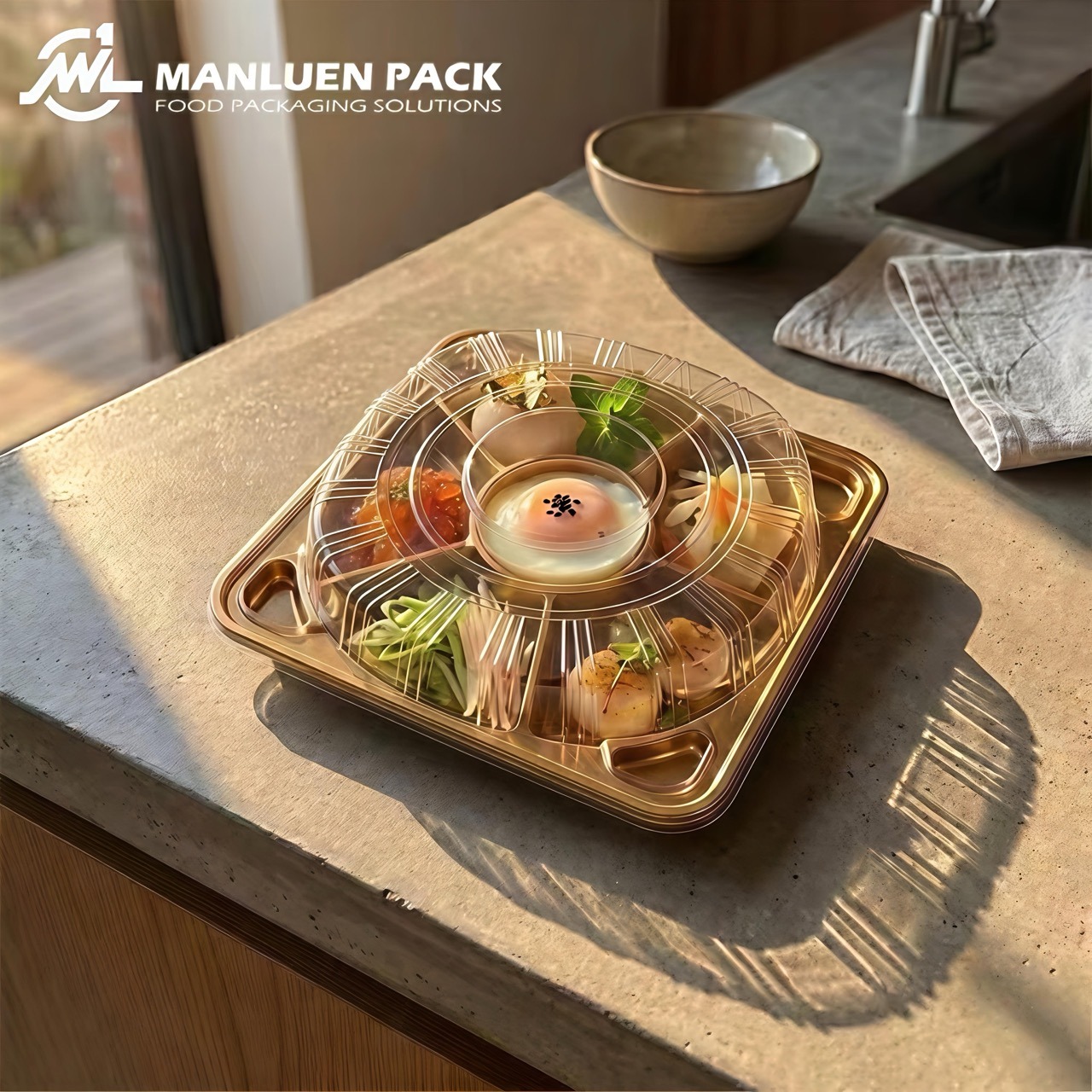
A party food tray is a serving platter designed for shared portions or grouped food presentation. Most disposable formats combine a formed base with a clear fitted lid. Some trays have one open serving area. Others use compartments to separate different foods.
These trays are commonly used for:
- Sushi, sashimi, rolls, and appetizers
- Fruit, vegetables, cheese, and deli selections
- Sandwiches, wraps, and pastries
- Desserts, cookies, and confectionery
- Catering portions and supermarket prepared-food displays
The lid protects the arrangement from contact and handling, but a normal fitted lid is not automatically leakproof or tamper-evident. Those functions require a suitable design and testing.
Why Material Selection Matters
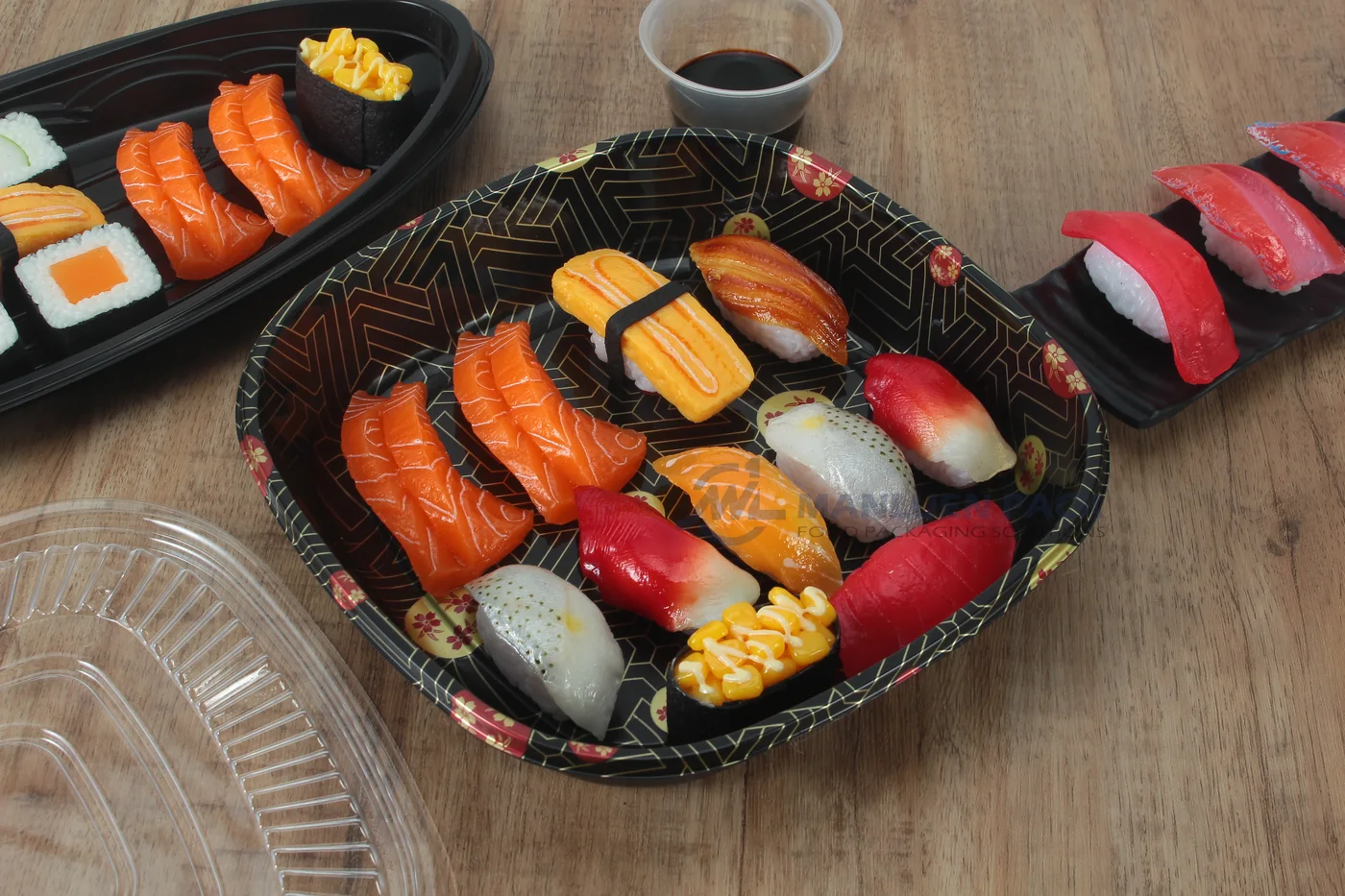
The material affects clarity, rigidity, impact performance, temperature limits, food-contact conditions, and disposal guidance. ManLuen party trays may use PS, PP, PET, OPS, or a combination such as an OPS lid with a PP base. Buyers should specify the base and lid separately.
The FDA evaluates food-contact substances according to food type and condition of use. Its categories distinguish refrigerated storage, room-temperature storage, reheating, hot filling, and cooking. This means a material that suits a chilled fruit tray may not suit a hot meal or microwave application.
The broader food packaging materials guide explains the main material families. For party trays, the practical differences are summarized below.
| Material | Common party-tray role | What buyers should verify |
|---|---|---|
| PS | Rigid bases and lightweight presentation trays for cold or room-temperature foods | Impact resistance, brittleness, intended temperature, and local recycling or restrictions |
| OPS | Clear lids and lightweight display packaging | Clarity, crack resistance, fogging, lid fit, and temperature limits |
| PET | Clear lids and chilled-food presentation | Exact grade, recycled content if claimed, cold-storage performance, and local recycling acceptance |
| PP | Bases needing greater flexibility or different heat performance | Resin grade, finished-product instructions, food-contact conditions, and whether reheating is supported |
PS Party Trays: Best Suited to Cold Presentation
PS can provide a rigid, lightweight base for sushi, fruit, snacks, desserts, and other cold presentations. OPS is often used when a clear lid needs good stiffness and product visibility. These materials can help maintain an organized display without adding unnecessary weight.
They should not be described as universally heat-resistant or microwave-safe. Ask for the intended-use instructions for the exact tray and lid. Test cold-storage brittleness, lid fit, and transport impact before approving a bulk order.
PP Party Trays: Flexible for Selected Foodservice Uses
PP can provide useful toughness and heat performance for some foodservice trays. It may be selected for a base while another material is used for the clear lid. The combination lets the manufacturer balance presentation and handling requirements.
PP does not automatically make an entire party tray microwave-safe or dishwasher-safe. The lid may use OPS, PET, or another material with different limits. Use the complete package only under the supplier’s written conditions for the exact SKU.
For more detail on how PS, PP, PET, and OPS affect party trays, see the guide to plastic materials used in party trays.

Round, Square, and Divided Party Trays
Round Trays
Round trays work well for sushi rings, fruit arrangements, desserts, cheese, and appetizers. They support a central presentation and can suit buffet displays or shared takeaway orders.
The WL-53 round party tray is one example. Its lid measures Ø265×28 mm and its base measures Ø250×26 mm. ManLuen lists PS, PP, PET, or OPS material options and packs 200 sets per carton. Buyers should select the material configuration that matches the food and market.
Square Trays
Square platters can use shelf and carton space efficiently and create straight lines for sandwich, sushi, or dessert arrangements. Corner shape and usable internal area matter, so measure the food layout rather than choosing by outside dimensions alone.
Divided Trays
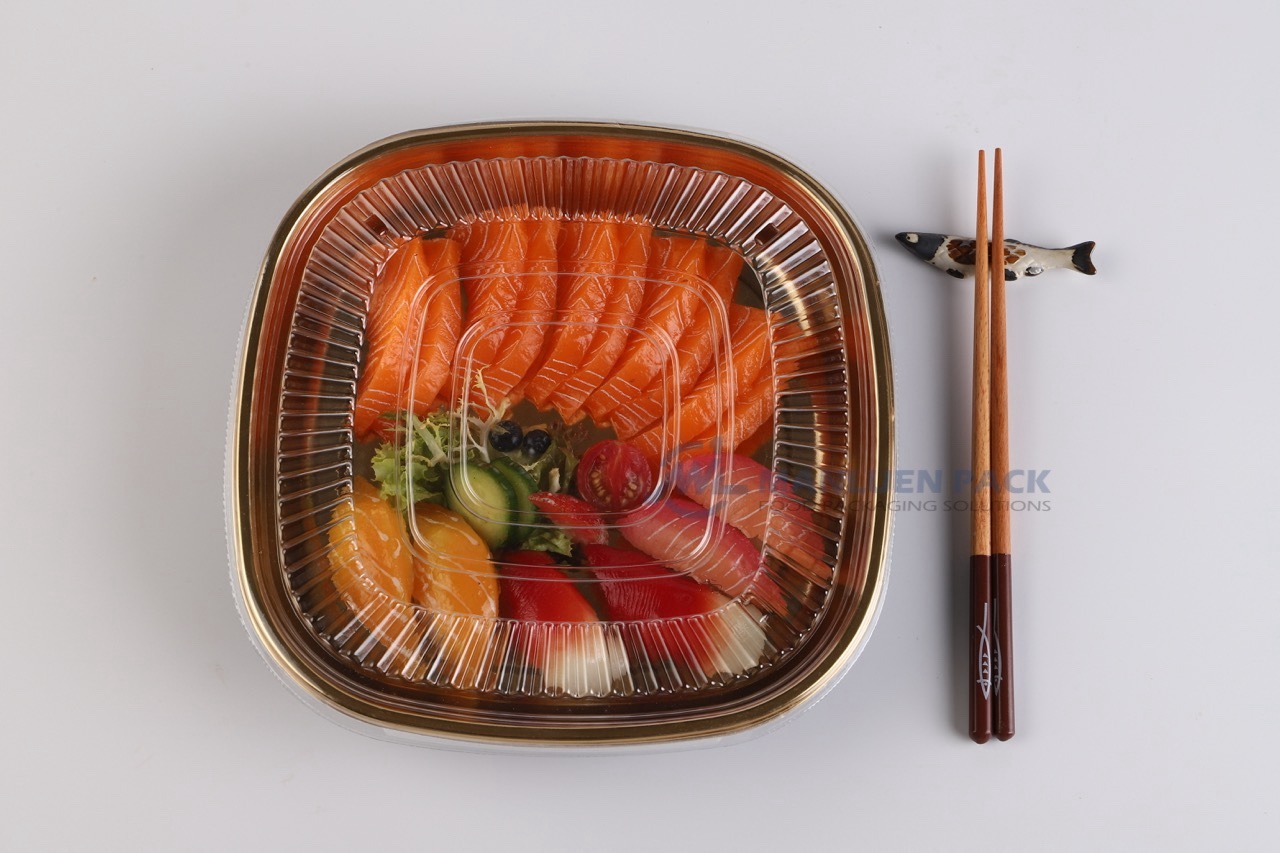
Compartments keep different foods organized and can reduce movement. They are useful for mixed appetizers, sushi varieties, fruit selections, dips, and catering assortments. The dividers do not prevent allergens, liquids, or odors from crossing between sections.
The KS-65 six-compartment party tray measures 382×385×85 mm and uses an OPS and PP construction. ManLuen lists 120 sets per carton. Its divided layout suits large sushi, appetizer, and catering presentations.
Matching the Tray to the Food
Sushi and Sashimi
Sushi trays need a stable base, secure lid, clear presentation, and enough height for garnishes. Test condensation and lid clarity after refrigeration. Large assortments also need enough surface area to prevent pieces from crowding. Buyers can compare additional formats in the round sushi party tray guide.

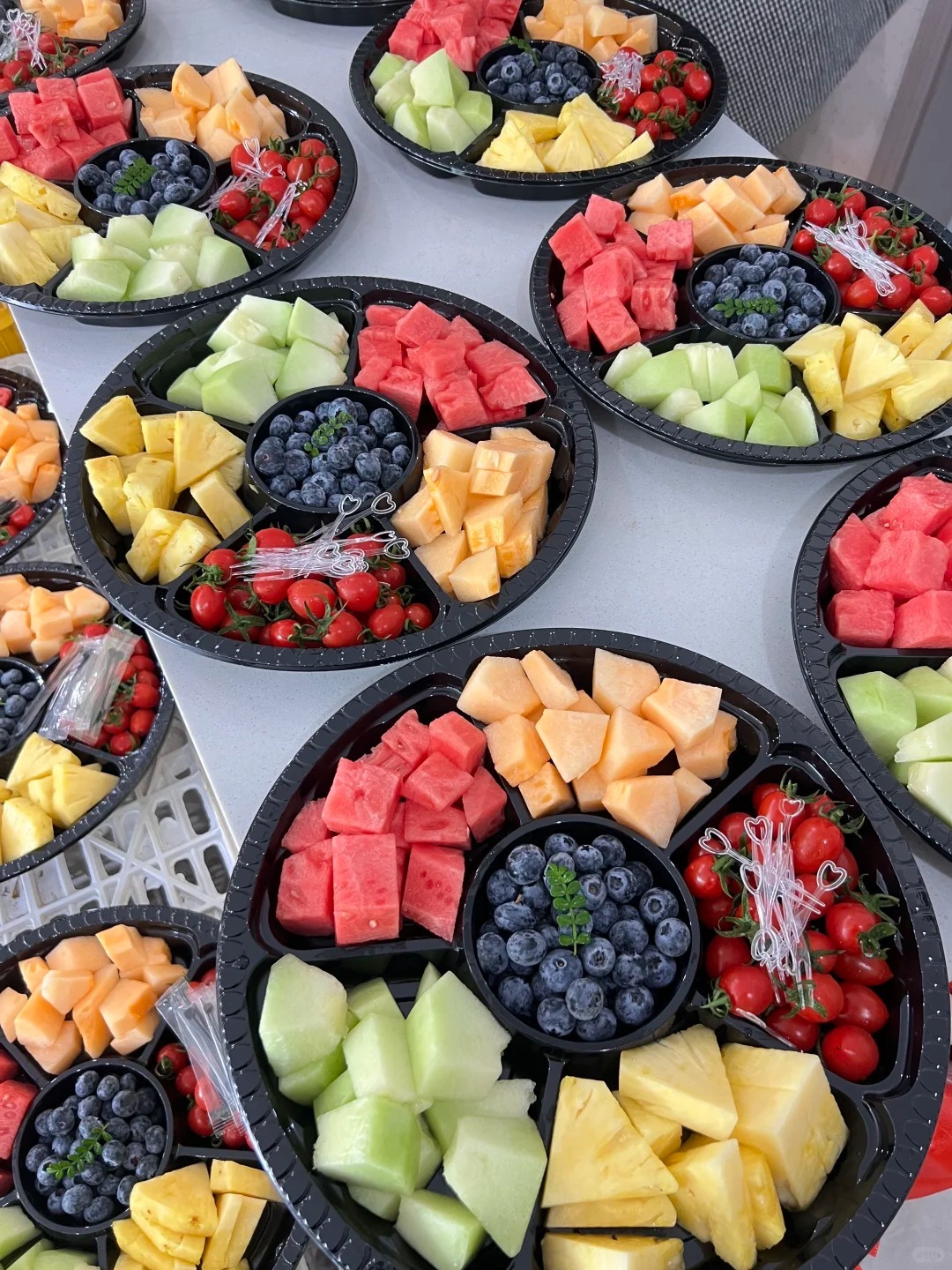
Fruit and Vegetables
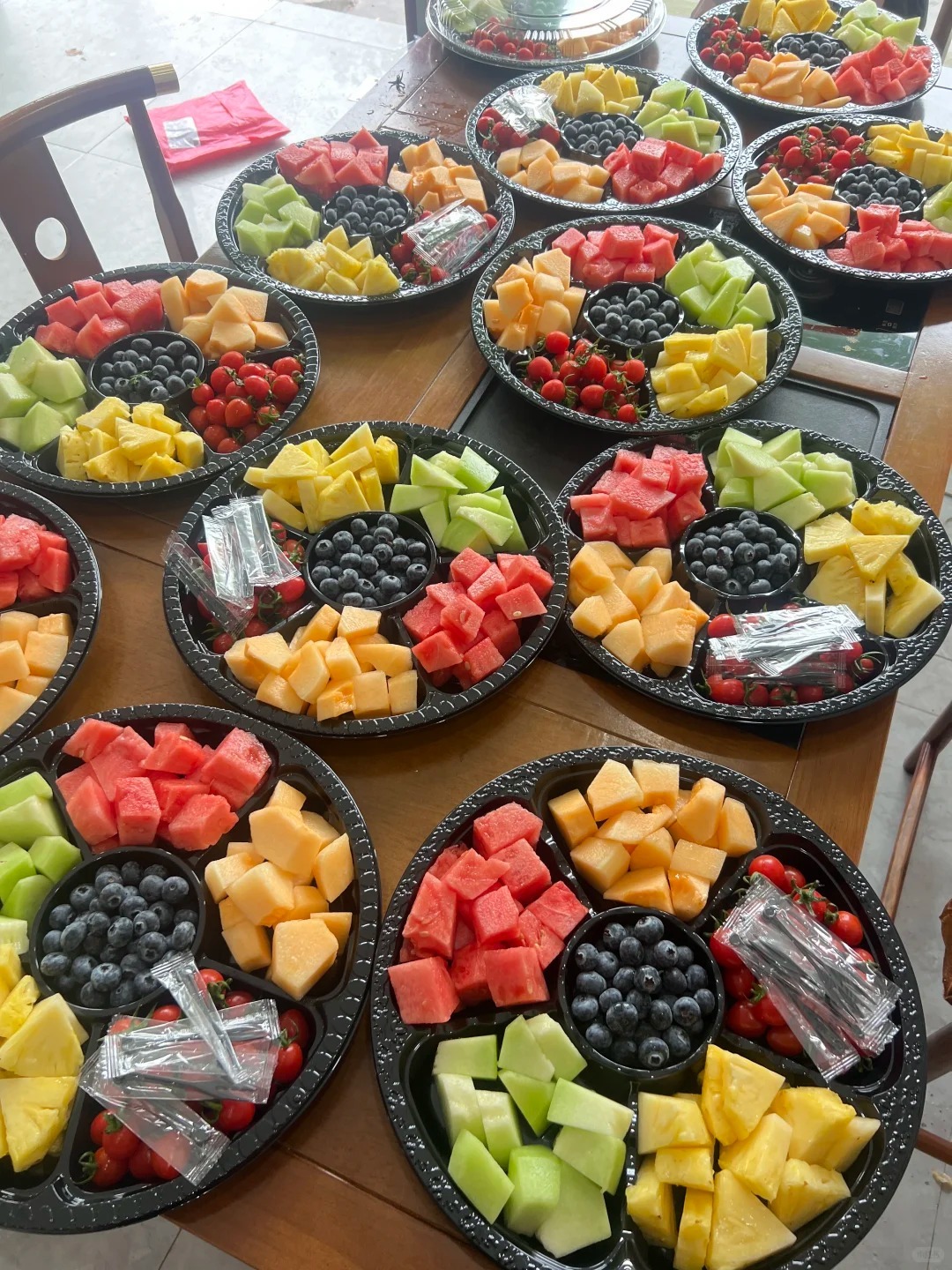
Fruit can release moisture, while cut produce may need ventilation and secure refrigerated storage. Check drainage, fogging, lid fit, and crushing during transport. Strongly scented fruit may also affect mixed platters.
Sandwiches and Wraps
Choose a footprint that holds the full arrangement without compressing bread or fillings. For chilled sandwiches, test label adhesion and condensation. Separate wet ingredients where possible to reduce sogginess.
Desserts and Bakery Items
The lid must clear frosting, fruit, and decorations. Rigid edges can protect pastries during transport, but the tray should not leave so much empty space that items slide. Test the real assortment before ordering.
Warm Foods
Use only a tray and lid combination designed for the intended filling and holding temperature. Do not place a clear cold-food lid over very hot food unless its instructions permit that use. Steam vents may help some foods, but they can also release heat and moisture into the delivery bag.

How to Test a Party Tray Before Ordering
- Measure the food layout. Check usable base area, divider dimensions, and lid height.
- Fill the real assortment. Use the planned sushi, fruit, sandwiches, appetizers, or desserts.
- Close the lid. Inspect every edge for gaps, excessive force, cracks, and loose corners.
- Chill or hold it. Reproduce the normal storage temperature and time. Check fogging, rigidity, odor, and appearance.
- Stack it. Test the number of filled trays normally used in a display or delivery.
- Transport it. Tilt and carry the tray along a representative route. Inspect movement and lid security.
- Test labels and seals. Confirm adhesion and barcode readability without blocking too much of the food display.
- Keep an approved sample. Link the signed sample to the final product specification and inspection plan.

Food-Contact Compliance
“FDA compliant” should be supported by a specific regulatory basis and intended use. In the United States, the FDA regulates food-contact substances rather than issuing a universal approval for every finished party tray. Buyers should request documentation that covers the material, additives, color, food type, contact time, and temperature used in the order.
For the European Union, Regulation (EU) No 10/2011 applies to plastic food-contact materials. The European Commission explains that migration testing uses standardized conditions representative of the intended use. A Declaration of Compliance must be supported by relevant documentation.
Ask the supplier for:
- A specification naming the base and lid materials separately
- Dimensions, unit weight, color, and intended conditions of use
- The applicable U.S. regulatory basis or EU Declaration of Compliance
- Migration or laboratory reports linked to the supplied material or SKU
- Batch traceability and quality-control records
- Evidence for BPA-free, recycled-content, recyclable, or other environmental claims
The guide to which agency regulates food packaging explains why “FDA approved” is often the wrong phrase. ManLuen also provides company-level information on its certification page, but buyers should still request current documents for the selected tray and material configuration.
Recycling and Sustainability Claims
A tray may use a recyclable resin, but actual recovery depends on local collection, sorting, shape, color, labels, food residue, and market demand. A mixed-material tray and lid may also need separation. Do not promise that every PS, PP, PET, or OPS party tray will be recycled in every market.
Reducing food damage and choosing the correct tray size can also reduce waste. Oversized trays use more material and leave room for food to move. An undersized tray can damage the presentation or cause the lid to open.
Ask for measurable information: material type, unit weight, recycled content if applicable, packing efficiency, and disposal instructions for the destination market. Avoid vague “eco-friendly” claims without evidence.
Buying Party Trays Wholesale
Wholesale pricing depends on the model, size, material combination, color, order quantity, packaging, and customization. Send the same written specification to every shortlisted supplier so quotations can be compared.
Request:
- Model number and current product drawing
- Base and lid material, color, dimensions, and unit weight
- Pieces per sleeve and carton
- Carton dimensions, net weight, gross weight, and pallet option
- MOQ and price breaks
- Sample cost and courier terms
- Customization and tooling charges
- Production lead time, payment terms, and named Incoterm location
- Available compliance and test documents
Do not rely on a universal MOQ or lead time. Obtain current written terms for the exact material and tray. The wholesale party tray sourcing guide provides a fuller supplier and import checklist.

Frequently Asked Questions
What foods can go on a party tray?
Common choices include sushi, appetizers, fruit, vegetables, cheese, sandwiches, wraps, pastries, cookies, and desserts. Match the material and design to the food temperature, moisture, oil, storage, and transport conditions.
Is PS or PP better for party food trays?
Neither is universally better. PS and OPS often serve cold presentation needs, while PP may suit applications requiring different toughness or heat performance. The exact base and lid combination should be chosen for the food and intended use.
Are party trays microwave-safe?
Only use a tray in the microwave when the exact base and lid are designed, tested, and labelled for that application. Many clear party-tray lids are intended for cold display and should not be heated.
Are disposable party trays leakproof?
Not automatically. A fitted lid may secure solid foods but still leak liquids or sauces. Test the complete tray with the intended food while tilted, stacked, and transported.
Should I choose a divided party tray?
Choose compartments when presentation and separation matter. A divided tray helps organize varieties, but it does not create an allergen barrier or stop every liquid from moving between sections.
Can party trays be customized?
Possible options may include color, pattern, labels, printed branding, carton packing, or a new format. Confirm which changes use an existing mold and which require tooling, together with MOQ, cost, lead time, and ownership terms.
Conclusion
A useful party tray protects the food, presents it clearly, closes securely, and fits the real assortment. Start with the food and service conditions. Then choose the size, layout, base material, and lid material.
Test a filled sample through storage and delivery before ordering. Wholesale buyers should also match the exact product and material configuration to the food-contact documents and written commercial specification. To compare models or request samples, send ManLuen the food type, tray size, quantity, destination market, and required documents through the quotation page.
References
U.S. Food and Drug Administration. Food Packaging & Other Substances that Come in Contact with Food. Used for the U.S. food-contact substance and intended-use framework.
U.S. Food and Drug Administration
U.S. Food and Drug Administration. Food Types & Conditions of Use for Food Contact Substances. Used to distinguish refrigerated storage, room-temperature storage, reheating, hot filling, and cooking conditions.
U.S. Food and Drug Administration
Electronic Code of Federal Regulations. 21 CFR Part 177—Indirect Food Additives: Polymers. Used as the U.S. regulatory reference for food-contact polymers.
Electronic Code of Federal Regulations
European Commission. Food Contact Materials Legislation. Used for migration testing and Declaration of Compliance requirements for plastic food-contact materials.
European Commission
European Union. Commission Regulation (EU) No 10/2011 on plastic materials and articles intended to come into contact with food.
EUR-Lex

ManLuen Plastic Packaging Company, which is specialized in the production of Plastic Food Packaging for more than 20 years. Our products are made from 100% virgin and BPA-Free PP, PS, and OPS comply with FDA and European Standards.
 EN
 ZH
 FR
 PT
 ES
 KO
 JA