
Introdução
Bandejas de comida para festas ajudam restaurantes, catering, supermercados e organizadores de eventos a organizar porções compartilhadas enquanto protegem a comida durante a exibição e transporte.
Uma tampa transparente ajustada pode manter sushi, frutas, aperitivos, sanduíches e sobremesas visíveis sem deixá-los expostos.
A bandeja certa depende da comida e do plano de serviço. Sushi frio necessita de um material e disposição diferentes de aperitivos quentes. Uma bandeja de seis compartimentos serve a um propósito diferente de uma bandeja rasa redonda. Os compradores devem verificar tamanho, material, ajuste da tampa, temperatura da comida, transporte e opções de descarte locais antes de fazer o pedido.

Da ManLuen’s gama de bandejas para festas inclui formatos de serviço redondos, quadrados, divididos e grandes. Este guia explica os principais materiais, estilos de bandejas, testes de amostra, documentos de conformidade e detalhes de compra por atacado.
O que é uma Bandeja de Comida para Festa?
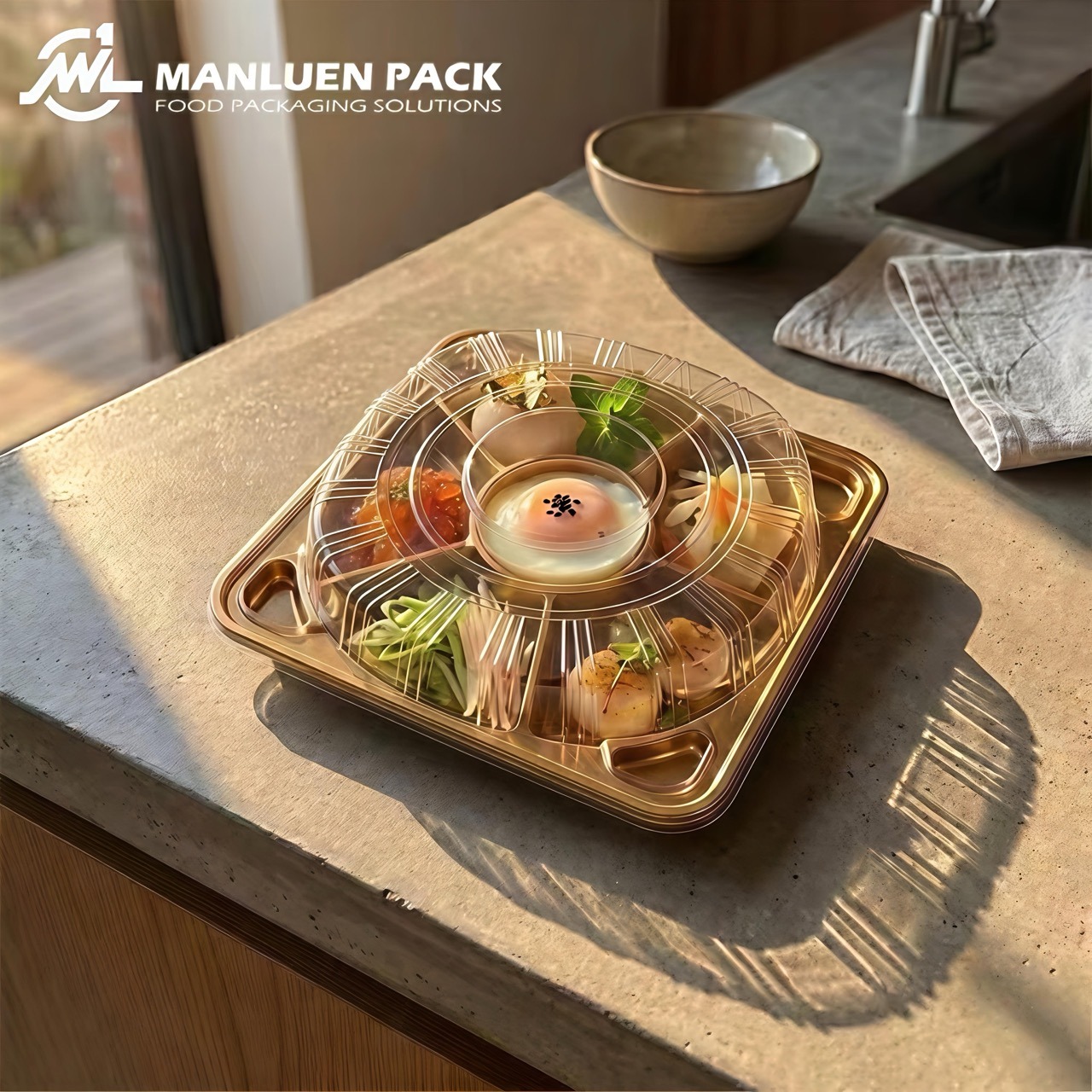
Uma bandeja de comida para festa é um prato de serviço projetado para porções compartilhadas ou apresentação agrupada de alimentos. A maioria dos formatos descartáveis combina uma base moldada com uma tampa transparente ajustada. Algumas bandejas têm uma área de serviço aberta. Outras usam compartimentos para separar diferentes alimentos.
Estas bandejas são comumente usadas para:
- Sushi, sashimi, rolos e aperitivos
- Frutas, vegetais, queijos e seleções de charcutaria
- Sanduíches, wraps e pastelaria
- Sobremesas, biscoitos e confeitaria
- Porções de catering e exibições de alimentos preparados de supermercados
A tampa protege a disposição do contato e manuseio, mas uma tampa ajustada normal não é automaticamente à prova de vazamentos ou à prova de adulteração. Essas funções requerem um design adequado e testes.
Por que a Seleção de Material Importa
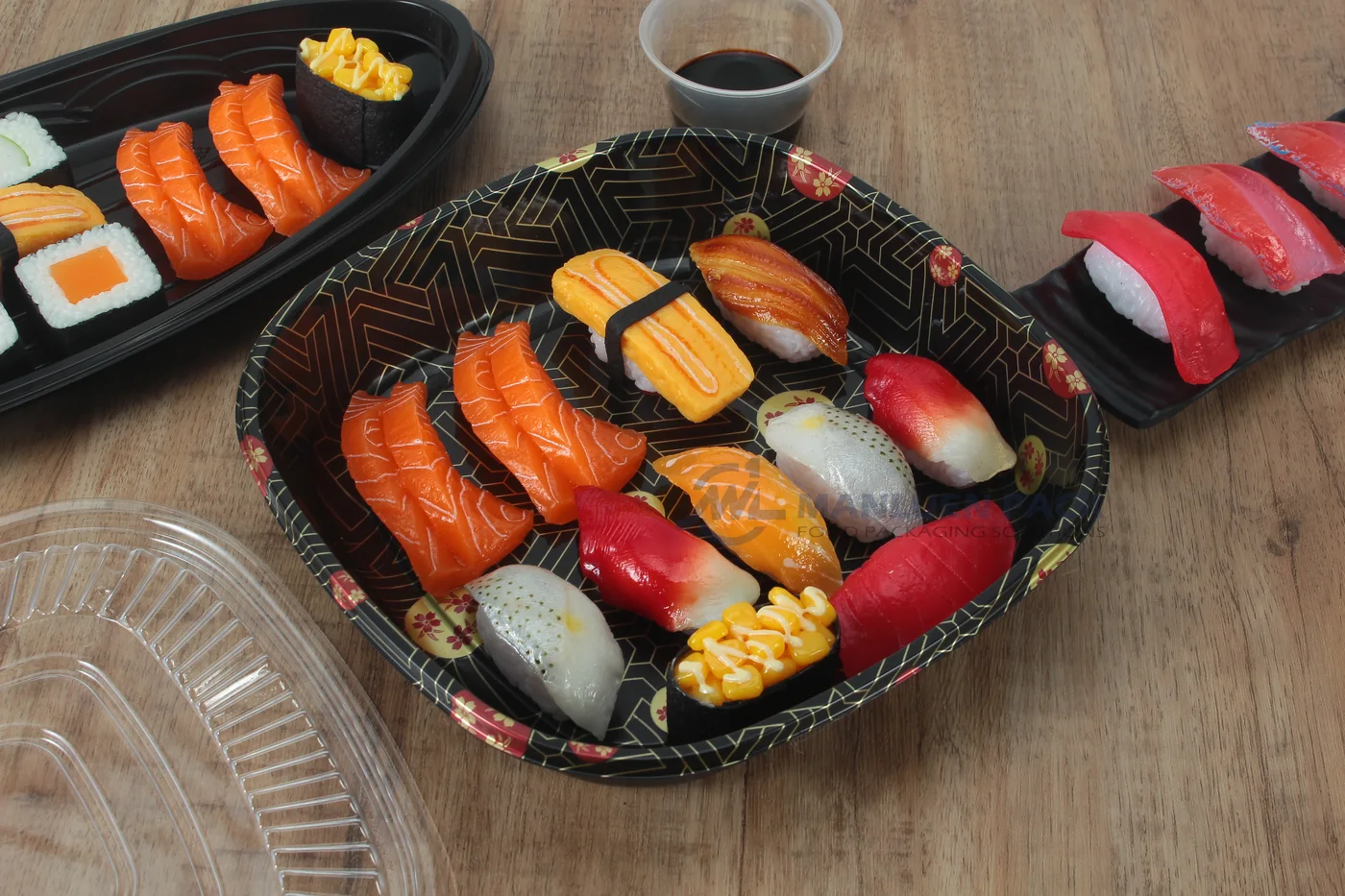
O material afeta a claridade, rigidez, desempenho contra impacto, limites de temperatura, condições de contacto com alimentos e orientações de descarte. As bandejas de festa ManLuen podem usar PS, PP, PET, OPS ou uma combinação, como uma tampa de OPS com uma base de PP. Os compradores devem especificar a base e a tampa separadamente.
A FDA avalia as substâncias em contacto com alimentos de acordo com o tipo de alimento e a condição de uso. As suas categorias distinguem armazenamento refrigerado, armazenamento à temperatura ambiente, reaquecimento, enchimento a quente e cozedura. Isto significa que um material adequado para uma bandeja de fruta refrigerada pode não ser adequado para uma refeição quente ou aplicação em micro-ondas.
O mais amplo guia de materiais de embalagem de alimentos explica as principais famílias de materiais. Para bandejas de festa, as diferenças práticas estão resumidas abaixo.
| Material | Função comum das bandejas de festa | O que os compradores devem verificar |
|---|---|---|
| PS | Bases rígidas e bandejas de apresentação leves para alimentos frios ou à temperatura ambiente | Resistência ao impacto, fragilidade, temperatura pretendida e reciclagem local ou restrições |
| OPS | Tampas transparentes e embalagens de exibição leves | Claridade, resistência a fissuras, condensação, ajuste da tampa e limites de temperatura |
| PET | Tampas transparentes e apresentação de alimentos frios | Classificação exata, conteúdo reciclado se declarado, desempenho em armazenamento a frio e aceitação de reciclagem local |
| PP | Bases que necessitam de maior flexibilidade ou desempenho térmico diferente | Classificação de resina, instruções do produto acabado, condições de contacto com alimentos e se o reaquecimento é suportado |
Bandejas de PS: Mais Adequadas para Apresentação Fria
O PS pode fornecer uma base rígida e leve para sushi, fruta, snacks, sobremesas e outras apresentações frias. OPS é frequentemente utilizado quando uma tampa transparente necessita de boa rigidez e visibilidade do produto. Estes materiais podem ajudar a manter uma exibição organizada sem adicionar peso desnecessário.
Não devem ser descritos como universalmente resistentes ao calor ou seguros para microondas. Solicite as instruções de uso pretendido para a bandeja e tampa exatas. Teste a fragilidade em armazenamento a frio, o ajuste da tampa e o impacto durante o transporte antes de aprovar uma encomenda em grande quantidade.
Bandejas de Festa em PP: Flexíveis para Utilizações Selecionadas na Restauração
O PP pode oferecer resistência útil e desempenho térmico para algumas bandejas de restauração. Pode ser selecionado como base enquanto outro material é usado para a tampa transparente. A combinação permite ao fabricante equilibrar requisitos de apresentação e manuseio.
O PP não torna automaticamente toda a bandeja de festa segura para microondas ou para máquina de lavar loiça. A tampa pode usar OPS, PET ou outro material com limites diferentes. Use o pacote completo apenas sob as condições escritas do fornecedor para o SKU exato.
Para mais detalhes sobre como PS, PP, PET e OPS afetam as bandejas de festa, consulte o guia para materiais plásticos usados em bandejas de festa.

Bandejas de Festa Redondas, Quadradas e Divididas
Bandejas Redondas
As bandejas redondas funcionam bem para anéis de sushi, arranjos de frutas, sobremesas, queijos e aperitivos. Apoiam uma apresentação central e podem ser adequadas para exibições em buffets ou encomendas partilhadas para takeaway.
O Bandeja de festa redonda WL-53 is one example. Its lid measures Ø265×28 mm and its base measures Ø250×26 mm. ManLuen lists PS, PP, PET, or OPS material options and packs 200 sets per carton. Buyers should select the material configuration that matches the food and market.
Square Trays
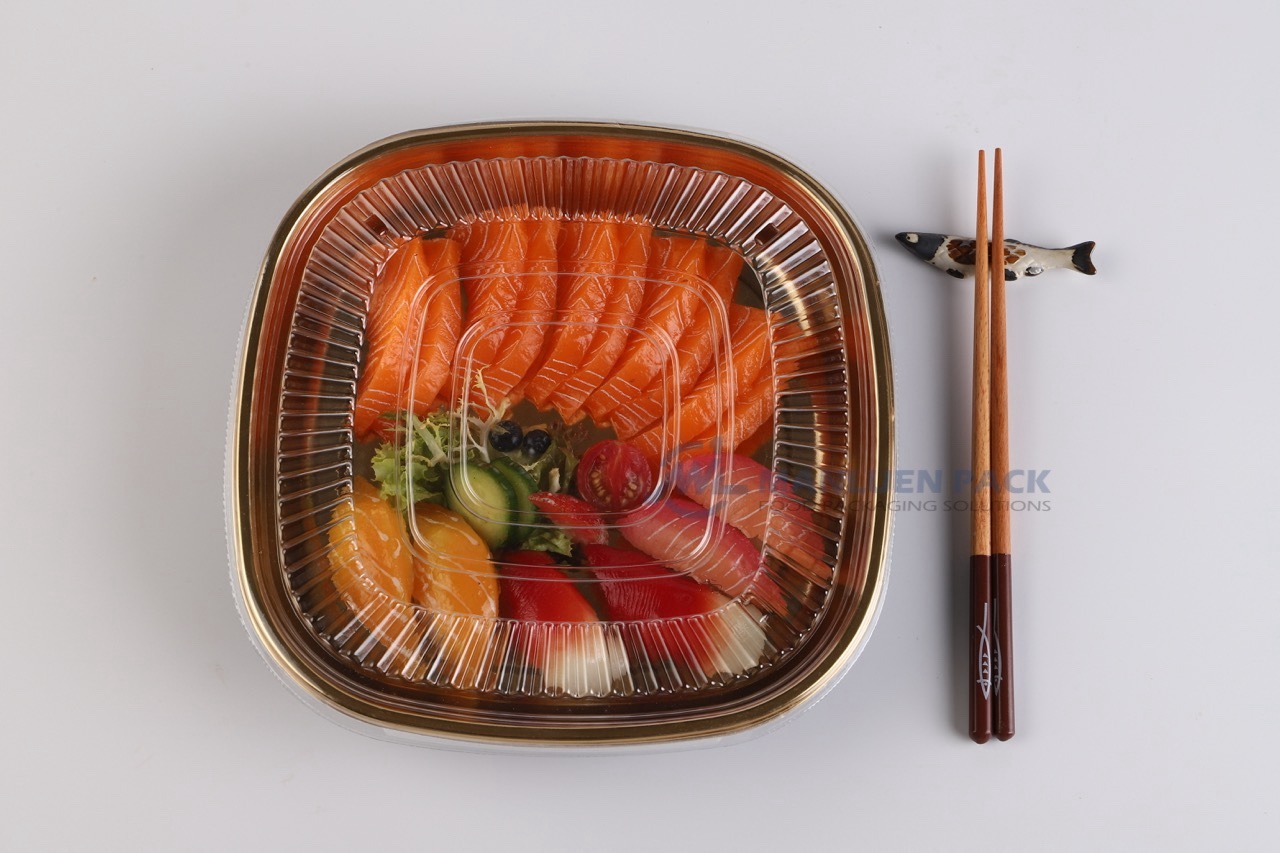
Square platters can use shelf and carton space efficiently and create straight lines for sandwich, sushi, or dessert arrangements. Corner shape and usable internal area matter, so measure the food layout rather than choosing by outside dimensions alone.
Divided Trays
Compartments keep different foods organized and can reduce movement. They are useful for mixed appetizers, sushi varieties, fruit selections, dips, and catering assortments. The dividers do not prevent allergens, liquids, or odors from crossing between sections.
O KS-65 six-compartment party tray measures 382×385×85 mm and uses an OPS and PP construction. ManLuen lists 120 sets per carton. Its divided layout suits large sushi, appetizer, and catering presentations.
Matching the Tray to the Food
Sushi and Sashimi
Sushi trays need a stable base, secure lid, clear presentation, and enough height for garnishes. Test condensation and lid clarity after refrigeration. Large assortments also need enough surface area to prevent pieces from crowding. Buyers can compare additional formats in the round sushi party tray guide.

Fruit and Vegetables
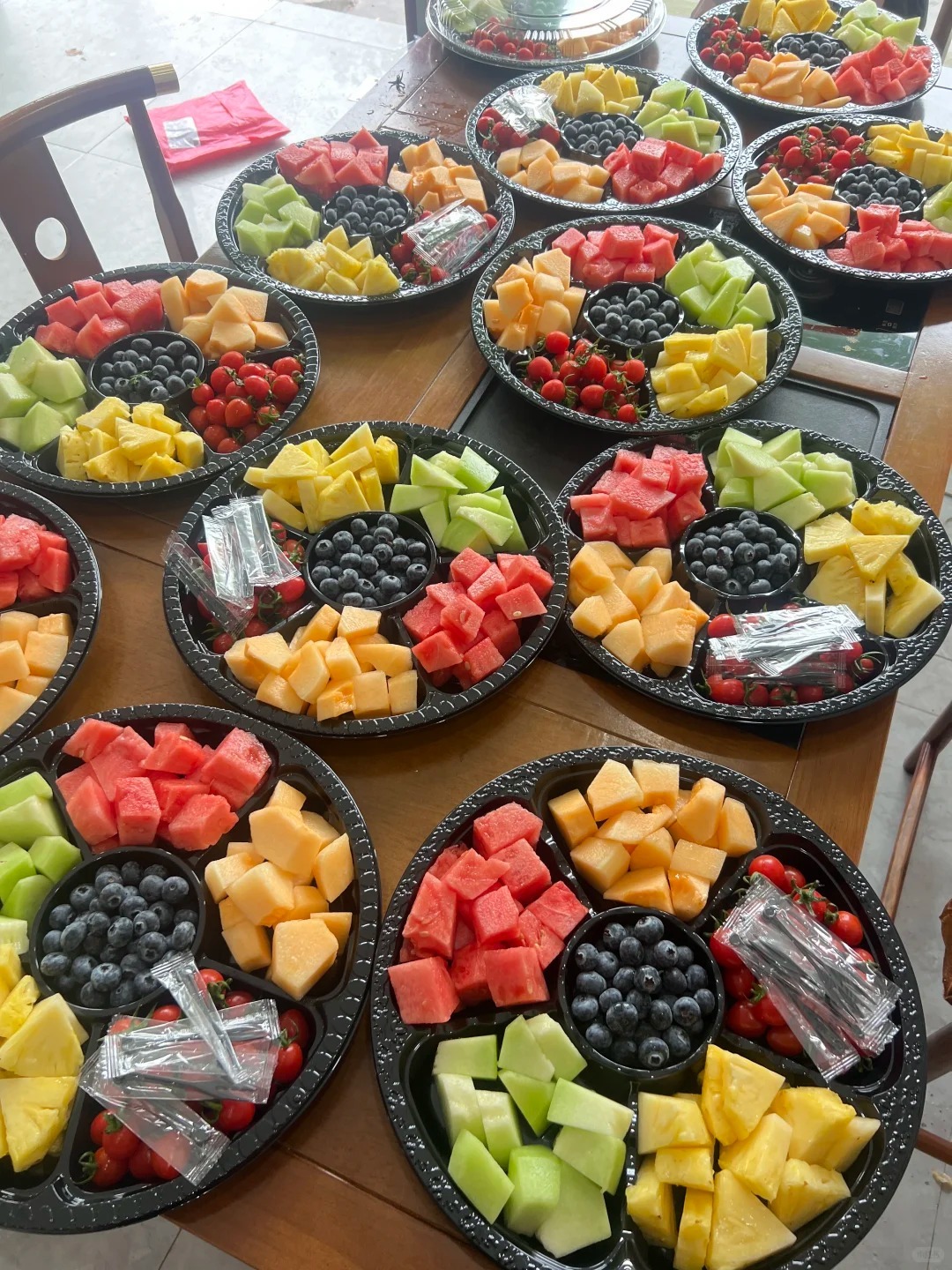
Fruit can release moisture, while cut produce may need ventilation and secure refrigerated storage. Check drainage, fogging, lid fit, and crushing during transport. Strongly scented fruit may also affect mixed platters.
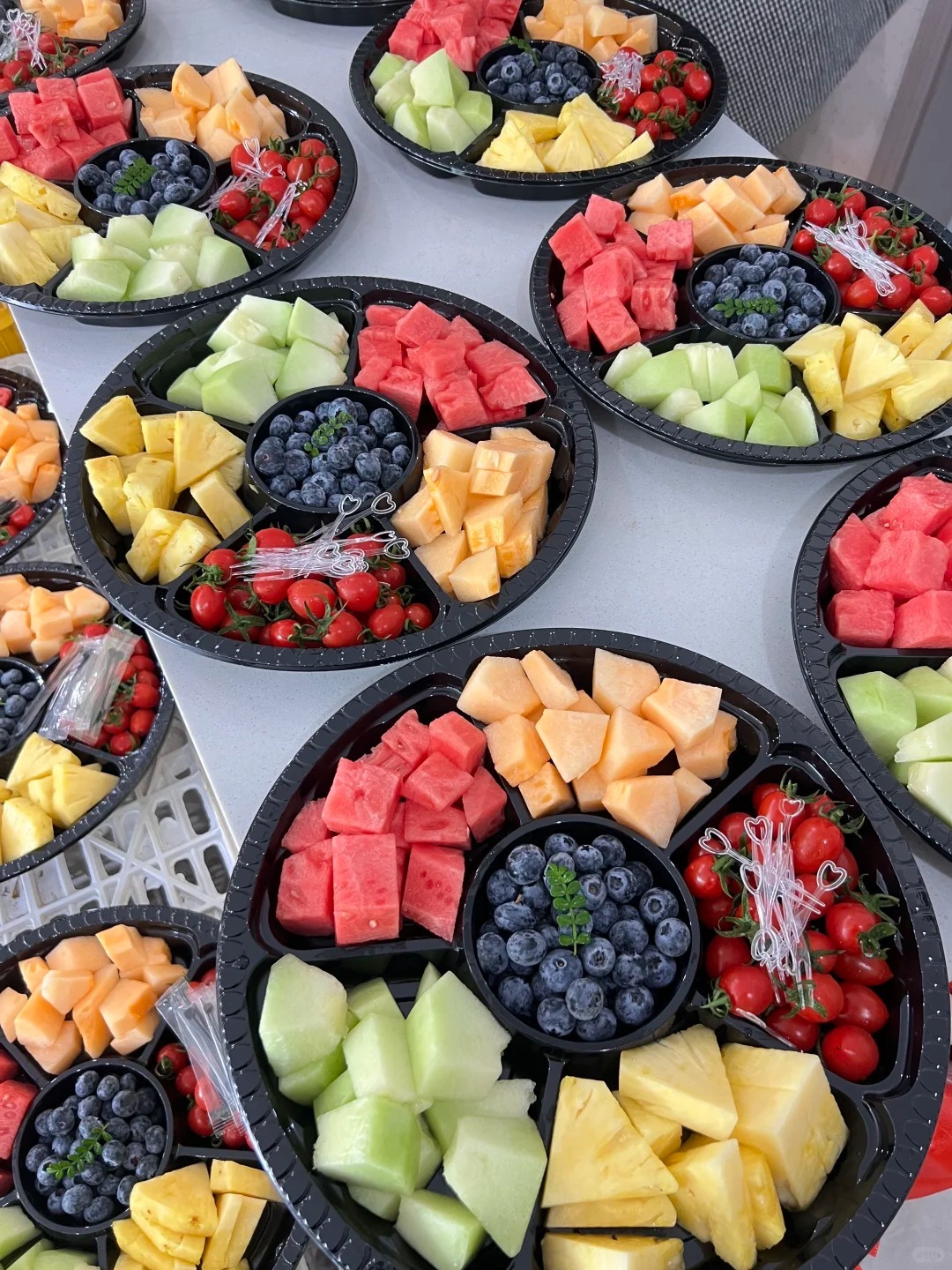
Sandwiches and Wraps
Choose a footprint that holds the full arrangement without compressing bread or fillings. For chilled sandwiches, test label adhesion and condensation. Separate wet ingredients where possible to reduce sogginess.
Desserts and Bakery Items
The lid must clear frosting, fruit, and decorations. Rigid edges can protect pastries during transport, but the tray should not leave so much empty space that items slide. Test the real assortment before ordering.
Warm Foods
Use only a tray and lid combination designed for the intended filling and holding temperature. Do not place a clear cold-food lid over very hot food unless its instructions permit that use. Steam vents may help some foods, but they can also release heat and moisture into the delivery bag.

How to Test a Party Tray Before Ordering
- Measure the food layout. Check usable base area, divider dimensions, and lid height.
- Fill the real assortment. Use the planned sushi, fruit, sandwiches, appetizers, or desserts.
- Close the lid. Inspect every edge for gaps, excessive force, cracks, and loose corners.
- Chill or hold it. Reproduce the normal storage temperature and time. Check fogging, rigidity, odor, and appearance.
- Stack it. Test the number of filled trays normally used in a display or delivery.
- Transport it. Tilt and carry the tray along a representative route. Inspect movement and lid security.
- Test labels and seals. Confirm adhesion and barcode readability without blocking too much of the food display.
- Keep an approved sample. Link the signed sample to the final product specification and inspection plan.

Food-Contact Compliance
“FDA compliant” should be supported by a specific regulatory basis and intended use. In the United States, the FDA regulates food-contact substances rather than issuing a universal approval for every finished party tray. Buyers should request documentation that covers the material, additives, color, food type, contact time, and temperature used in the order.
For the European Union, Regulation (EU) No 10/2011 applies to plastic food-contact materials. The European Commission explains that migration testing uses standardized conditions representative of the intended use. A Declaration of Compliance must be supported by relevant documentation.
Ask the supplier for:
- A specification naming the base and lid materials separately
- Dimensions, unit weight, color, and intended conditions of use
- The applicable U.S. regulatory basis or EU Declaration of Compliance
- Migration or laboratory reports linked to the supplied material or SKU
- Batch traceability and quality-control records
- Evidence for BPA-free, recycled-content, recyclable, or other environmental claims
The guide to which agency regulates food packaging explains why “FDA approved” is often the wrong phrase. ManLuen also provides company-level information on its certification page, but buyers should still request current documents for the selected tray and material configuration.
Recycling and Sustainability Claims
A tray may use a recyclable resin, but actual recovery depends on local collection, sorting, shape, color, labels, food residue, and market demand. A mixed-material tray and lid may also need separation. Do not promise that every PS, PP, PET, or OPS party tray will be recycled in every market.
Reducing food damage and choosing the correct tray size can also reduce waste. Oversized trays use more material and leave room for food to move. An undersized tray can damage the presentation or cause the lid to open.
Ask for measurable information: material type, unit weight, recycled content if applicable, packing efficiency, and disposal instructions for the destination market. Avoid vague “eco-friendly” claims without evidence.
Buying Party Trays Wholesale
Wholesale pricing depends on the model, size, material combination, color, order quantity, packaging, and customization. Send the same written specification to every shortlisted supplier so quotations can be compared.
Request:
- Model number and current product drawing
- Base and lid material, color, dimensions, and unit weight
- Pieces per sleeve and carton
- Carton dimensions, net weight, gross weight, and pallet option
- MOQ and price breaks
- Sample cost and courier terms
- Customization and tooling charges
- Production lead time, payment terms, and named Incoterm location
- Available compliance and test documents
Do not rely on a universal MOQ or lead time. Obtain current written terms for the exact material and tray. The wholesale party tray sourcing guide provides a fuller supplier and import checklist.

Perguntas Frequentes
What foods can go on a party tray?
Common choices include sushi, appetizers, fruit, vegetables, cheese, sandwiches, wraps, pastries, cookies, and desserts. Match the material and design to the food temperature, moisture, oil, storage, and transport conditions.
Is PS or PP better for party food trays?
Neither is universally better. PS and OPS often serve cold presentation needs, while PP may suit applications requiring different toughness or heat performance. The exact base and lid combination should be chosen for the food and intended use.
Are party trays microwave-safe?
Only use a tray in the microwave when the exact base and lid are designed, tested, and labelled for that application. Many clear party-tray lids are intended for cold display and should not be heated.
Are disposable party trays leakproof?
Not automatically. A fitted lid may secure solid foods but still leak liquids or sauces. Test the complete tray with the intended food while tilted, stacked, and transported.
Should I choose a divided party tray?
Choose compartments when presentation and separation matter. A divided tray helps organize varieties, but it does not create an allergen barrier or stop every liquid from moving between sections.
Can party trays be customized?
Possible options may include color, pattern, labels, printed branding, carton packing, or a new format. Confirm which changes use an existing mold and which require tooling, together with MOQ, cost, lead time, and ownership terms.
Conclusão
A useful party tray protects the food, presents it clearly, closes securely, and fits the real assortment. Start with the food and service conditions. Then choose the size, layout, base material, and lid material.
Test a filled sample through storage and delivery before ordering. Wholesale buyers should also match the exact product and material configuration to the food-contact documents and written commercial specification. To compare models or request samples, send ManLuen the food type, tray size, quantity, destination market, and required documents through the quotation page.
References
U.S. Food and Drug Administration. Food Packaging & Other Substances that Come in Contact with Food. Used for the U.S. food-contact substance and intended-use framework.
U.S. Food and Drug Administration
U.S. Food and Drug Administration. Food Types & Conditions of Use for Food Contact Substances. Used to distinguish refrigerated storage, room-temperature storage, reheating, hot filling, and cooking conditions.
U.S. Food and Drug Administration
Electronic Code of Federal Regulations. 21 CFR Part 177—Indirect Food Additives: Polymers. Used as the U.S. regulatory reference for food-contact polymers.
Electronic Code of Federal Regulations
European Commission. Food Contact Materials Legislation. Used for migration testing and Declaration of Compliance requirements for plastic food-contact materials.
European Commission
European Union. Commission Regulation (EU) No 10/2011 on plastic materials and articles intended to come into contact with food.
EUR-Lex

ManLuen Plastic Packaging Company, especializada na produção de Embalagens de Alimentos de Plástico há mais de 20 anos. Os nossos produtos são feitos de PP virgem e livre de BPA, em conformidade com os padrões da FDA e Europeus.
 PT
 EN
 ZH
 FR
 ES
 KO
 JA