
Introduction
Sushi to go containers do more than carry food. In a supermarket or deli, the package must protect delicate pieces, keep the arrangement visible, fit the chilled display, and remain secure after the customer leaves the store.
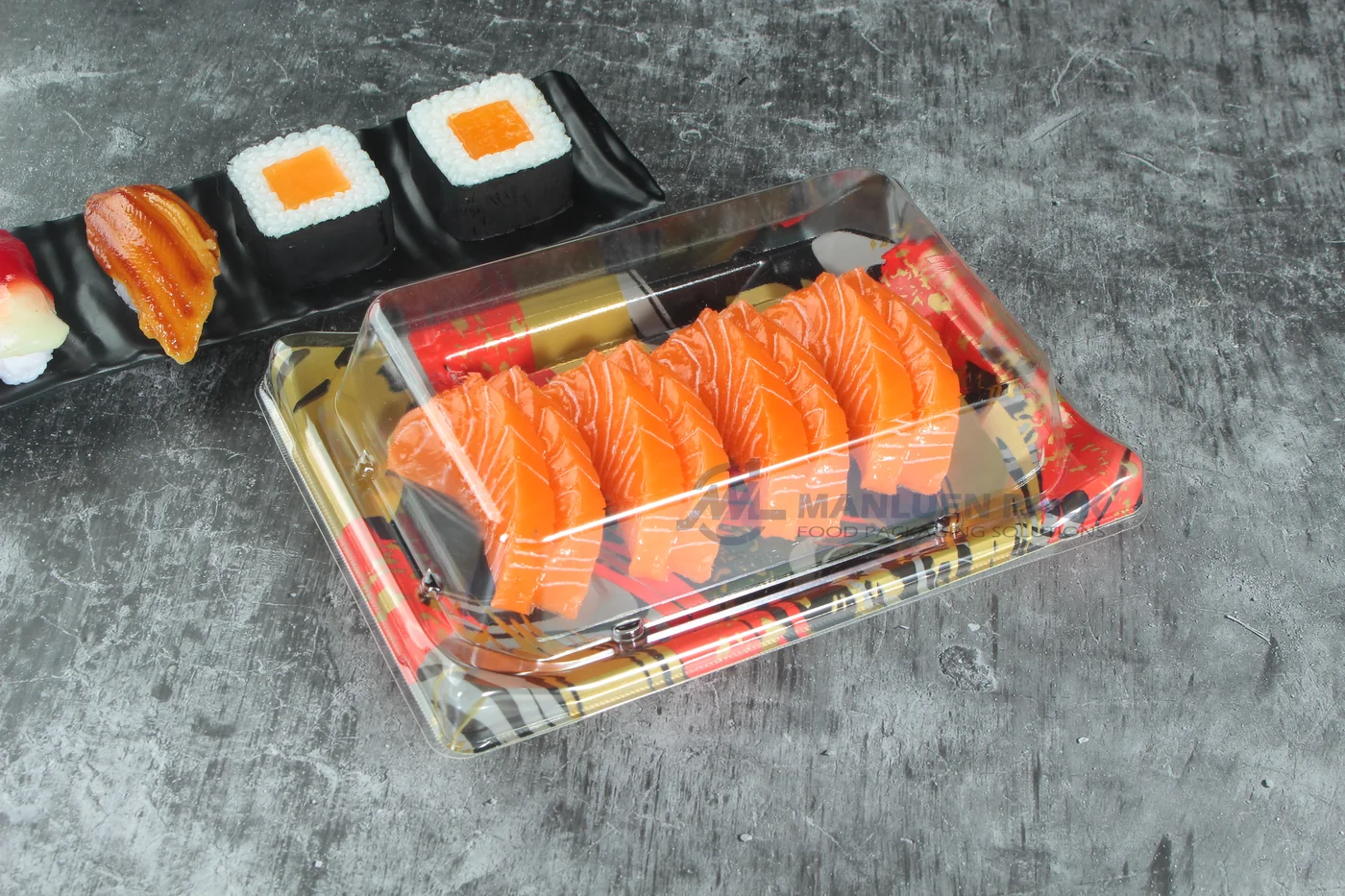
A suitable container can support cleaner presentation and more consistent portions. A poor fit can let rolls slide, trap excessive condensation, crack during handling, or make a premium product look untidy.
This guide explains how supermarkets, delis, sushi counters, and prepared-food buyers can choose the right sushi trays and containers. It covers materials, sizes, closures, merchandising, sustainability, compliance, testing, and wholesale purchasing.
Why Sushi Packaging Matters in Supermarkets and Delis
Customers often judge prepared sushi before they read the label. They look at color, arrangement, portion size, freshness, and whether the lid is clear. The packaging therefore affects both protection and merchandising.
A good sushi container should:
- Keep rolls, nigiri, sashimi, ginger, and wasabi in place
- Protect the food during stacking, customer handling, and takeaway
- Provide a clear view without opening the package
- Fit the portion without excessive empty space
- Leave enough room for required labels
- Stack efficiently in preparation and retail areas
The tray also affects staff speed. A base that is easy to load and a lid that closes consistently can reduce packing delays during busy production periods.
For a wider commercial view, the article on how sushi to go containers support sales explains how presentation and handling influence the customer experience.

Features to Check in Sushi To Go Containers
Clear product visibility
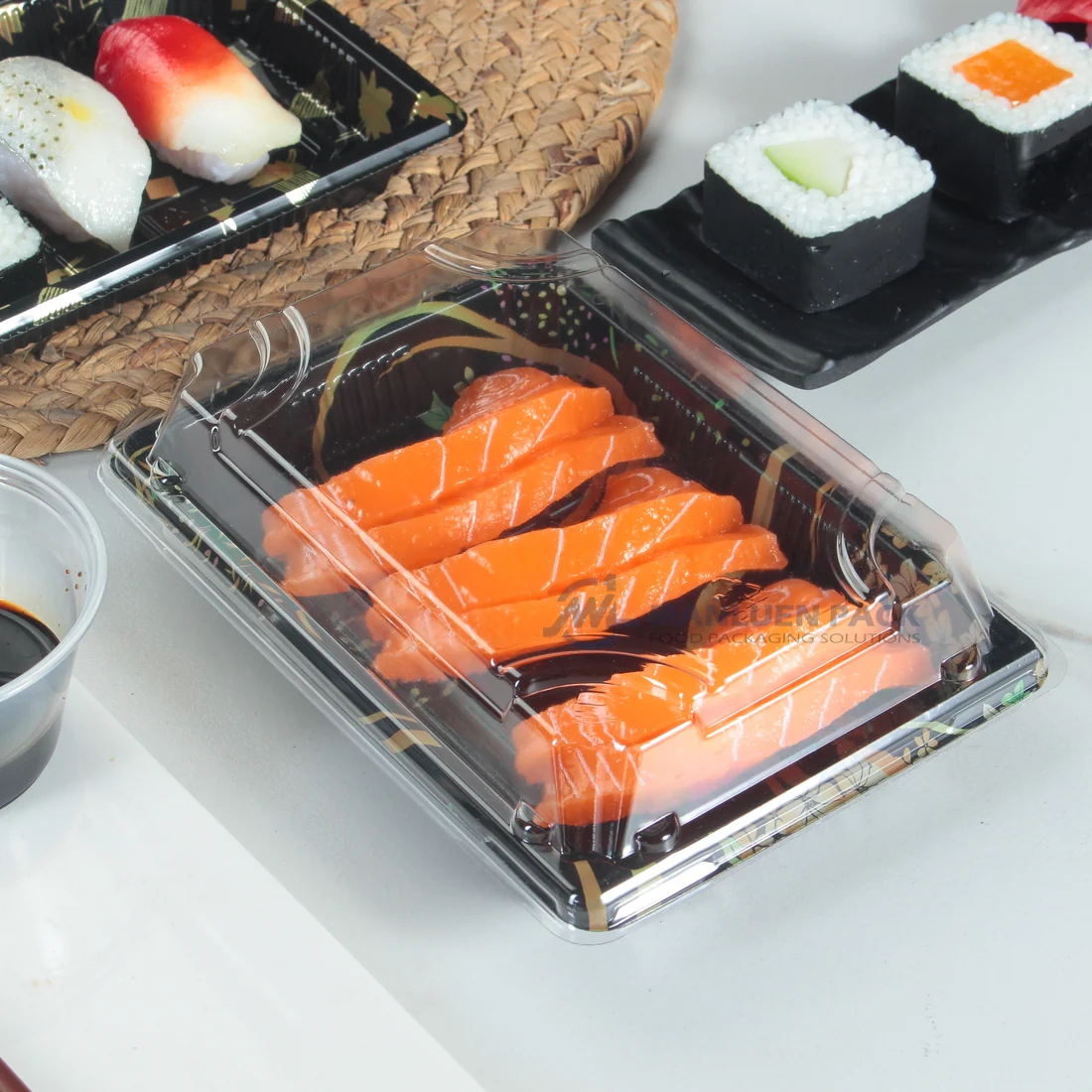
A clear lid lets shoppers inspect the assortment while the food remains covered. Check the lid under the actual display lighting. Scratches, distortion, glare, or fogging can reduce visibility.
Condensation depends on food temperature, display temperature, humidity, airflow, and the lid material. If visibility is important, test the filled package after several hours of refrigerated display rather than approving a dry sample at room temperature.
Stable base and portion fit
The tray should be rigid enough to support the food without bending during handling. The internal area should match the menu portion. Too much empty space allows pieces to move. Too little space can compress toppings or make the arrangement look crowded.
For narrow roll sets, a long tray may work well. Mixed nigiri and maki assortments often need a wider rectangular base. Large family packs need more usable area and stronger stacking performance.

Secure lid fit
The lid should close without excessive force and stay attached when the filled package is tilted or stacked. Check the corners and rim after refrigeration because some materials become more brittle at low temperatures.
If the store uses labels or seals to show whether a package has been opened, make sure they do not interfere with lid closure or obscure the food. The guide to tamper-evident packaging explains the difference between a secure closure and visible evidence of opening.
Label and branding space
The package should have enough flat space for product name, ingredients, allergen information, net quantity, use-by date, price, barcode, and handling instructions. Confirm that the label remains attached in cold and humid display conditions.
Branding can help identify a private-label sushi program, but it should not make the package harder to sort or recycle. Test printed colors, adhesive, and label placement before approving a large run.

Choose the Right Sushi Container Material
Sushi trays may use PS, PP, PET, OPS, bagasse, kraft paper, or a combination of materials. Each option has different clarity, rigidity, temperature limits, recycling considerations, and costs. The material name alone does not prove that the finished package suits a particular use.
Manluen’s food packaging materials guide provides a broader comparison. For supermarket sushi, buyers should focus on chilled performance, clarity, impact resistance, lid fit, and the complete base-and-lid construction.
| Material | Common Role | Main Buyer Check |
|---|---|---|
| PET | Clear lids and chilled display containers | Clarity, rigidity, recycled-content claims, and temperature limits |
| OPS | Clear lids and display packaging | Cold impact performance, cracking, and local restrictions |
| PS | Lightweight tray bases | Brittleness, heat limits, and destination-market rules |
| PP | Tough tray bases and some prepared-food formats | Clarity, stiffness, and product-specific use conditions |
| Bagasse | Molded-fiber bases with a natural appearance | Grease resistance, PFAS status, lid fit, and composting infrastructure |
| Kraft paper | Paper bases paired with clear lids | Coating, moisture resistance, recyclability, and component separation |
Sushi is normally sold and eaten chilled. Do not advertise a sushi container as microwave-safe simply because one possible material is PP. The exact base, lid, ink, coating, and package design must be documented for microwave use. The guide on microwaving food in plastic containers explains why the finished package matters.
Match the Tray Size to the Sushi Assortment
Container size should follow the menu, not the other way around. Count pieces, measure the intended arrangement, include ginger and wasabi, and leave enough space so the lid does not touch toppings.
The sushi tray size guide provides a practical process for matching trays to 6-, 12-, 20-, 40-, and 100-piece assortments.
Small individual portions
Compact trays suit snack portions, single rolls, small nigiri sets, and convenience-store displays. A smaller footprint can improve shelf density, but the container should not squeeze the food or make the portion difficult to remove.
The WL-01 sushi takeout container uses a long, narrow format for individual arrangements. Buyers should confirm the chosen base and lid materials for their application.

Medium mixed sets
Medium trays give staff more room for combined rolls, nigiri, and sides. The WL-03 gold sushi box has a 165×115 mm base and a fitted clear lid, making it suitable for compact mixed sets and premium chilled display.

Large assortments and sharing packs
Larger trays suit family packs, party assortments, catering, and higher-value combination sets. Check base rigidity, lid engagement, stacking, and product movement because the larger surface area increases handling demands.
Manluen offers several steps between medium and large formats. The WL-05 Black Sakura sushi tray provides a medium display area, while the WL-07 sushi container supports larger assortments. The WL-09 large sushi tray is designed for larger takeaway and display portions.

Test the Package in Real Store Conditions
Do not approve sushi packaging from dimensions or photographs alone. Run a store trial with the actual food, labels, refrigeration, display time, stacking pattern, and customer handling.
Use this test sequence:
- Pack the intended sushi assortment at the normal production temperature.
- Close the lid using the same method staff will use during service.
- Apply the full label and any tamper-evident seal.
- Refrigerate the package for the intended display time.
- Check fogging, cracking, lid fit, food movement, and label adhesion.
- Stack packages at the expected shelf and transport height.
- Carry and tilt the package as a customer or delivery driver would.
- Open it and inspect the food presentation.
Repeat the trial with different menu items. A tray that works for dry rolls may behave differently with sauced rolls, sashimi, or warm rice.

Control Packaging Cost Without Reducing Performance
Wholesale purchasing can reduce the price per set, but unit price is only one part of the cost. Compare:
- Base and lid price
- Minimum order quantity
- Units per carton
- Carton volume and freight
- Storage space
- Staff packing time
- Cracking, lid failure, and product returns
- Labels, seals, and customization
Using several closely related sizes can help a sushi program match packaging to portions without carrying too many unrelated SKUs. Review weekly sales by assortment and size before setting reorder quantities.
Do not use an oversized tray simply to make the food look more valuable. Empty space can increase movement, material use, storage demand, and freight cost.
Food-Contact Compliance and Supplier Documents
Buyers should verify the complete package, not only the resin name. The base and lid may use different materials. Colorants, inks, coatings, adhesives, recycled content, and labels may introduce additional considerations.
The FDA regulates food-contact substances according to their identity and intended conditions of use. A supplier should be able to identify the exact material options and provide documentation that matches the product being purchased. The guide to food-grade packaging explains what buyers should request instead of relying on a vague “FDA approved” statement.
For US and EU sourcing, the food packaging compliance guide covers regulatory basis, PFAS, recycled content, migration testing, and supplier documentation in more detail.
A useful document package can include:
- A product-specific compliance statement
- Material specifications for the base and lid
- Applicable CFR, FCN, or other regulatory basis
- Migration or extractables reports where relevant
- Statements covering PFAS, heavy metals, and recycled content when applicable
- Lot traceability and change-control records

Sustainability Considerations
There is no single sustainable material for every sushi program. Plastic trays can provide good clarity and low weight. Recycled-content PET can reduce virgin material use when it has a suitable food-contact basis. Bagasse or kraft bases can reduce conventional plastic in some formats, but they may still use a plastic lid or barrier layer.
Evaluate the complete package and the local recovery system. Ask:
- Can customers separate the base and lid?
- Does the local program accept each material?
- Is the recycled-content percentage documented?
- Does a compostable claim cover the complete package?
- Will the package still protect the food and limit waste?
The guide to sustainable food packaging trends explains how buyers can assess these trade-offs without relying on broad environmental claims.
How to Choose a Sushi Container Supplier
Compare suppliers against a written specification. Ask for samples from the same material and construction that will be used for production.
Check:
- Available sizes and material combinations
- Base-and-lid compatibility
- Carton quantity and freight volume
- Minimum order quantity
- Color, print, and custom tooling options
- Production capacity and lead time
- Inspection procedures and lot traceability
- Product-specific food-contact documents
- Change notification for materials or tooling
Start with a controlled trial order when possible. Record packing speed, display performance, customer complaints, product waste, and sell-through by tray size. Use those results to select the final range and reorder level.

Frequently Asked Questions
What is the best material for supermarket sushi containers?
There is no universal best material. PET and OPS are common for clear chilled display, while PS and PP may be used for tray bases. Bagasse and kraft paper are available for buyers seeking fiber-based options. Choose according to visibility, rigidity, temperature, closure, compliance, and local recovery systems.
Are sushi to go containers microwave-safe?
Do not assume they are. Many sushi trays and clear lids are designed for chilled food and should not be microwaved. Only microwave a package when the supplier documents the exact base-and-lid combination for the intended heating conditions.
How do I choose the correct sushi tray size?
Arrange the actual menu portion, including sides, and measure the required base area and lid clearance. Test food movement after tilting and transport. Use several related sizes when the menu includes individual, combination, and family portions.
Should I buy sushi containers in bulk?
Bulk purchasing can lower the unit price, but it also increases storage and inventory commitments. Compare carton quantity, freight volume, weekly usage, lead time, and the risk of changing menus or labels before placing a large order.
What should I send when requesting samples or a quote?
Provide the sushi type, piece count, preferred arrangement, required dimensions, base and lid material, color, annual quantity, destination market, labeling needs, and required compliance documents. Use Manluen’s request-a-quote form to submit the project details.

Conclusion
The right sushi to go container protects the arrangement, keeps the food visible, fits the chilled display, and remains secure during takeaway. It should also support fast staff packing and provide enough space for required labels.
Choose the package by testing the actual sushi assortment, display time, refrigeration, stacking, and transport conditions. Verify the complete base-and-lid materials and request product-specific documents before placing a wholesale order.
References
U.S. Food and Drug Administration (FDA). Packaging & Food Contact Substances.
Used for the US regulatory framework covering substances that contact food and their intended conditions of use.
U.S. Food and Drug Administration
U.S. Environmental Protection Agency (EPA). Recycling Basics and Benefits.
Used for the role of local collection and processing systems when evaluating packaging recovery.
U.S. Environmental Protection Agency

ManLuen Plastic Packaging Company, which is specialized in the production of Plastic Food Packaging for more than 20 years. Our products are made from 100% virgin and BPA-Free PP, PS, and OPS comply with FDA and European Standards.
 EN
 ZH
 FR
 PT
 ES
 KO
 JA