
Introduction
Poor packaging creates direct costs. A weak box can collapse. A poor barrier can allow grease or moisture to reach the outside. An unsuitable lid can open during delivery. Inaccurate environmental or food-contact claims can also create compliance problems.
Kraft paper boxes can solve some of these issues, but only when the material structure and box design match the food. The brown surface alone does not make a package strong, leak-resistant, recyclable, compostable, or suitable for hot food.
This guide shows foodservice buyers how to use kraft paper boxes to reduce packaging failures, control total cost, support labeling and branding, and qualify a supplier before ordering.
Start with the Complete Kraft Box Structure
A kraft food box usually contains more than paperboard. Depending on the design, it may include a polymer or water-based barrier, adhesive, printing ink, a clear window, a plastic lid, or a separate insert.
These components affect:
- Grease and moisture resistance
- Food-contact suitability
- Heat and cold performance
- Closure strength
- Printing and label adhesion
- Recycling or composting options
Buyers should ask for a material breakdown rather than accept “food-grade kraft paper” as a complete specification. Manluen’s guide to food packaging materials compares paper and paperboard with PP, PET, PS, bagasse, aluminum, and other common choices.
Packaging Pain 1: Breakage and Loss of Shape
A box may look rigid when empty but bend after it is filled with a heavy or hot meal. The board grade, basis weight, fiber direction, folds, corners, lid design, and barrier coating all affect strength.
Use a filled-package test:
- Fill the box with the heaviest intended portion.
- Close it using the normal staff process.
- Lift it from one side and then from the base.
- Stack it at the expected transport height.
- Place it in the actual delivery bag or carton.
- Inspect the base, walls, folds, lid, and corners after the full journey time.
For baked goods, wall height and crush protection can matter more than moisture resistance. Buyers should compare dedicated cake containers when decorations or delicate surfaces need extra space.
Packaging Pain 2: Grease, Moisture, and Leakage
Paperboard absorbs moisture unless the package includes a suitable barrier. Fried food, sauces, dressings, and condensation can weaken seams or stain the outside of a box.
Do not describe a folded kraft box as leak-proof without testing it with the intended food. Thin soup and liquid sauce place greater demands on the package than rice, noodles, pastries, or sandwiches.
Check:
- The coating or liner used on the food-contact surface
- Whether the bottom is folded, glued, or sealed
- How the lid engages with the base
- Maximum fill level and holding time
- Performance when tilted during delivery
- Whether heat or refrigeration changes the structure
For liquid-rich meals, a reinforced paper bowl or purpose-designed foodservice bowl may work better. Other food storage containers can provide additional closure options.
Packaging Pain 3: Choosing the Wrong Format
One kraft box should not be forced across every menu item. Match the format to the food and service method.
| Food or service | Useful kraft format | Main check |
|---|---|---|
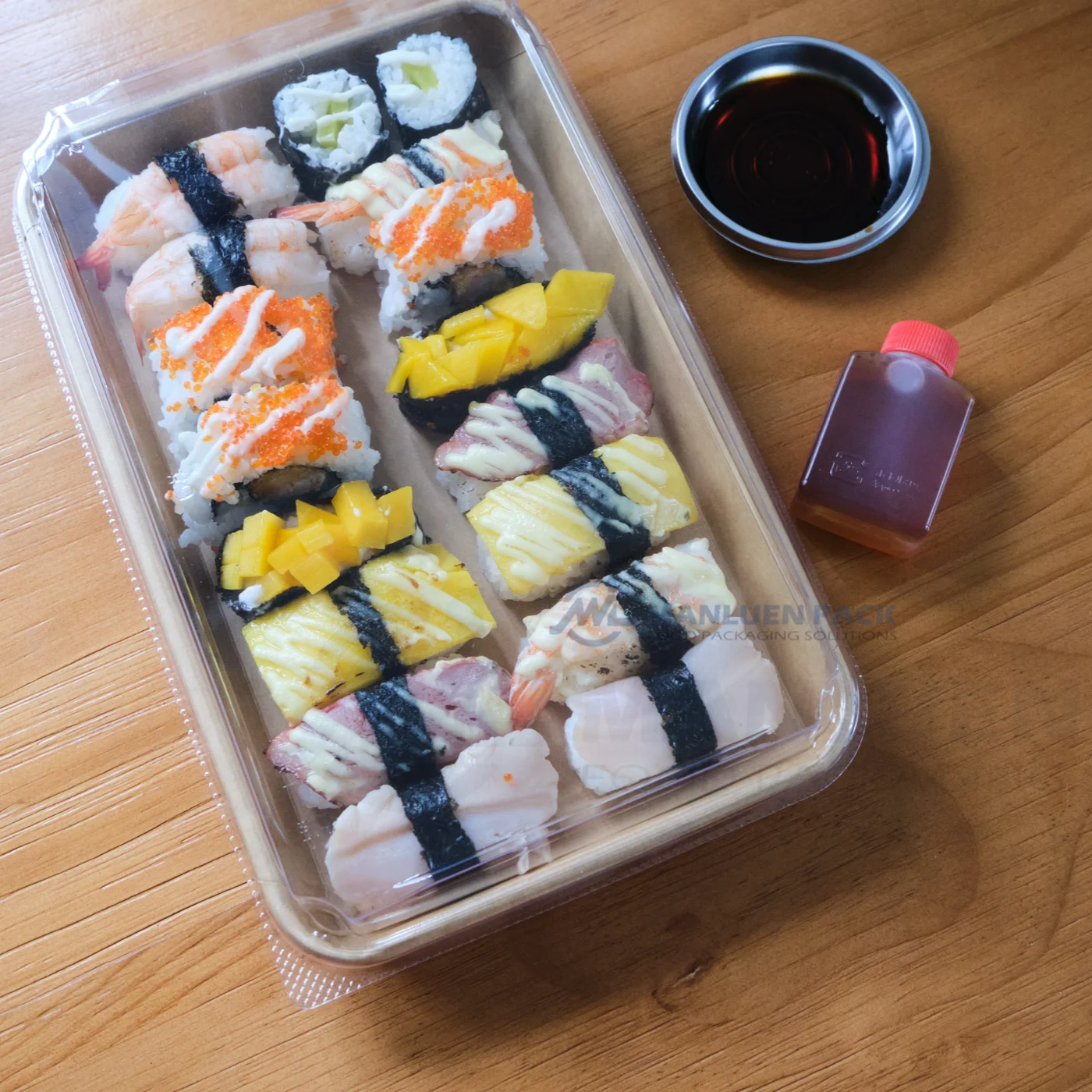
| Sushi and chilled display | Paper tray with clear lid | Visibility, refrigeration, lid fit, mixed-material disposal |
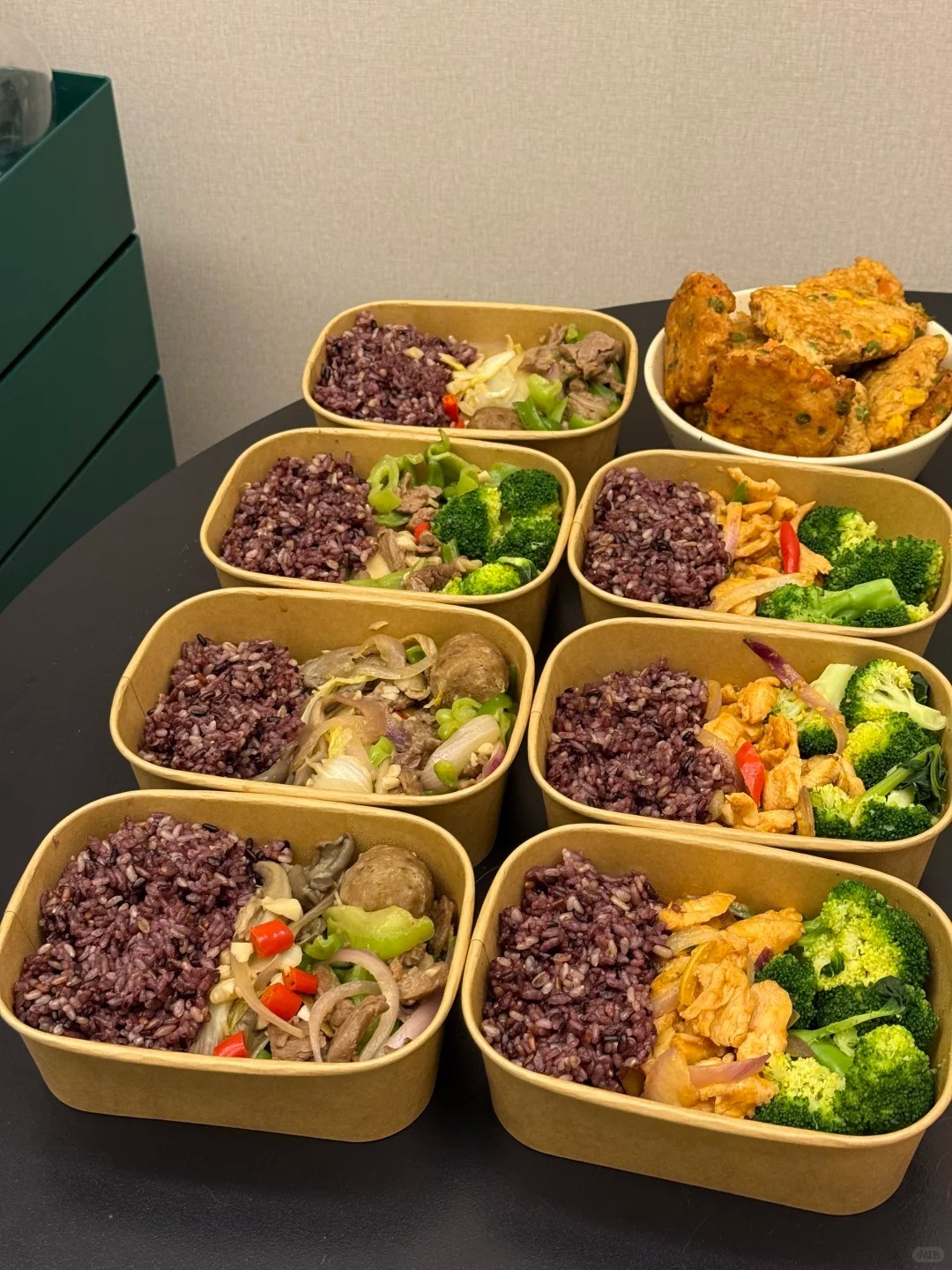
| Rice, noodles, and prepared meals | Folded takeaway box or paper bento box | Grease barrier, portion fit, closure, stacking |
| Soup and liquid foods | Reinforced bowl with compatible lid | Seam leakage, lid retention, heat handling |
| Cakes and pastries | Bakery or cake box | Crush protection, internal height, grease marks |
| Portioned meals | Compartment paper bento box | Food separation, barrier performance, usable volume |
For portioned meals, compare the available bento box formats. For sushi service, compare Manluen’s disposable sushi trays, including the 3# kraft paper sushi box with PET lid and the smaller 0# kraft paper sushi tray.

Packaging Pain 4: Food-Contact Compliance
In the United States, 21 CFR Part 176 covers paper and paperboard components used in food-contact applications. Section 176.170 addresses components used in contact with aqueous and fatty foods. Coatings, adhesives, inks, windows, and lids may rely on other regulatory provisions.
In the European Union, Regulation (EC) No 1935/2004 provides the general framework for materials intended to contact food. The finished package should not transfer constituents in amounts that endanger health, cause an unacceptable change in food composition, or damage taste and odor under normal or foreseeable use.
Ask the supplier for documents tied to the exact box rather than a generic factory certificate:
- Product specification and material breakdown
- Destination-market declaration or compliance statement
- Test reports for the intended food and use conditions
- Information about coatings, inks, adhesives, windows, and lids
- Lot traceability and change-control records
The guide to what food-grade packaging means explains why one material citation does not prove that every finished box suits every food.
Packaging Pain 5: Label and Print Problems
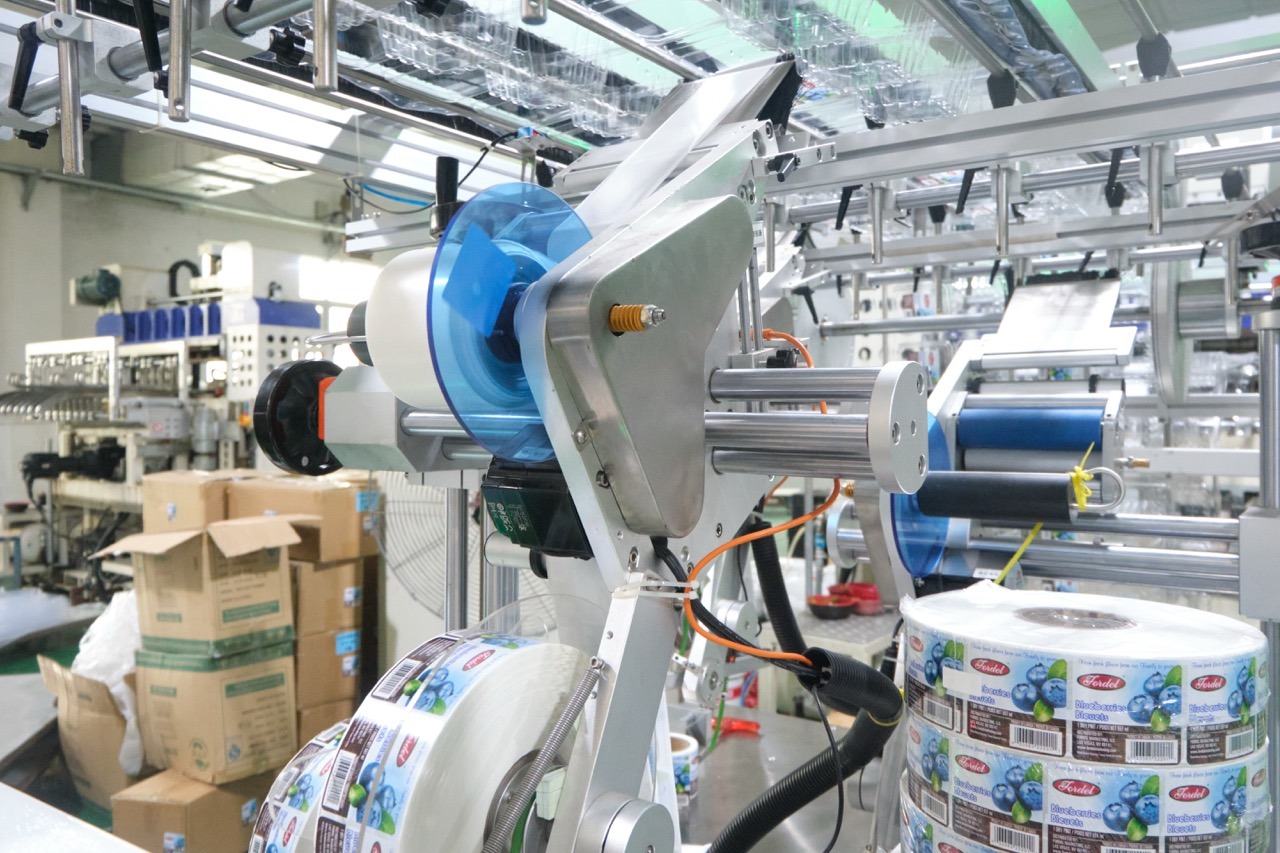
Kraft paper provides a useful surface for printed branding and labels, but results vary with surface texture, coatings, grease, condensation, and temperature.
The food business remains responsible for the final product label. Packaging suppliers can support this work by providing stable dimensions, a defined label area, material information, and a surface compatible with the selected ink or adhesive.
Test the label after:
- Filling with hot or chilled food
- Exposure to grease and condensation
- Refrigerated holding
- Stacking and transport
- The complete expected shelf or delivery time
Keep required information legible and do not place labels where a fold, seam, closure, or tamper feature can damage them.
Packaging Pain 6: Unsupported Environmental Claims
A brown paper appearance does not prove that a box is recyclable, biodegradable, compostable, or made with recycled content. Polymer coatings, food contamination, adhesives, windows, and lids can change the disposal route.
The US Federal Trade Commission advises companies to qualify recyclable claims when appropriate facilities are not widely available. Compostable claims require reliable evidence for the complete product or package and may need qualification when suitable facilities are limited.
Before making a claim, confirm:
- Whether the evidence covers the complete box or only the paperboard
- The verified recycled-content percentage, if claimed
- Whether plastic lids or windows must be removed
- Whether coated food paper is accepted locally
- Whether compostability is industrial or home compostability
Use the sustainable food packaging guide to compare claims, certifications, and local disposal systems.
Packaging Pain 7: Unit Price Hides the Real Cost
Wholesale purchasing can lower unit cost, but price per box is only one part of the decision. A cheaper package may cost more if it leaks, crushes, wastes storage space, slows packing, or requires frequent reorders.
Compare total delivered cost:
- Unit price at realistic quantities
- Carton quantity, dimensions, weight, and freight volume
- Nesting and storage efficiency
- Folding or assembly labor
- Product loss, refunds, and replacement packaging
- Printing plates, setup, tooling, and sample costs
- Lead time, reorder flexibility, and safety stock
Do not rely on a universal discount percentage or MOQ. Both depend on the model, paper grade, coating, size, print coverage, lid, packing method, and production schedule.
How Kraft Boxes Can Support Profit Without Overpromising
Packaging can protect margin when it reduces food damage, supports faster packing, fits the delivery system, and avoids buying several unnecessary formats. It can also support brand recognition through consistent printing and presentation.
These benefits must be measured. Track packaging failures, refund reasons, packing time, food waste, storage space, and repeat-order feedback before and after changing the box. Do not promise that a material alone will increase sales or allow a price premium.
The practical guide to choosing the right food packaging explains how to compare product protection, customer use, distribution, compliance, and cost.
How to Qualify a Kraft Paper Box Manufacturer
Ask potential suppliers the same questions and compare written answers.
- Material: What paperboard, coating, ink, adhesive, window, and lid are used?
- Use conditions: What foods, temperatures, and contact times does the specification cover?
- Testing: Which food-contact and performance reports apply to this SKU?
- Quality control: How are dimensions, folding, seams, print, odor, and contamination checked?
- Traceability: Can the supplier identify production lots and manage material changes?
- Commercial terms: What are the sample terms, MOQ, lead time, packing method, and change costs?
Test production samples with the actual food before approving a large order. The related article on safe kraft paper boxes for wholesale purchasing provides additional material and supplier checks. The guide to kraft paper food packaging choices covers environmental considerations.
Buyers considering Manluen can review its company information and certification records. Use the request-a-quote form to ask for current specifications, samples, MOQ, and lead time.

Frequently Asked Questions
Are kraft paper boxes leak-proof?
Not automatically. Leakage performance depends on the barrier, seams, folds, lid, food, temperature, holding time, and transport angle. Test the exact box with the intended meal.
Can kraft paper boxes hold hot food?
Some can. Use only within the temperature and contact conditions documented by the supplier. Confirm the coating, adhesive, ink, window, and lid as well as the paperboard.
Can a kraft paper food box go in a microwave?
Only when the manufacturer specifically permits microwave use for that model and supplies instructions. Remove any non-microwave-safe lid, window, or accessory as directed.
Are all kraft paper boxes recyclable?
No. Acceptance depends on coatings, food contamination, mixed materials, and local collection and processing systems.
What is the minimum wholesale order?
There is no universal MOQ. Stock boxes, custom sizes, coatings, printing, lids, and packing configurations have different requirements.
Conclusion
Kraft paper boxes can reduce packaging problems when the structure matches the food and delivery process. The real value comes from fewer failures, efficient packing, accurate labeling, supported claims, and predictable supply—not from the brown appearance alone.
Test the complete package, verify product-specific documents, and compare total delivered cost before ordering.
Sources and Further Reading
U.S. Electronic Code of Federal Regulations. 21 CFR Part 176—Indirect Food Additives: Paper and Paperboard Components.
Used for the US regulatory framework covering paper and paperboard components intended for food-contact applications.
Electronic Code of Federal Regulations
U.S. Food and Drug Administration. Packaging & Food Contact Substances.
Used for the FDA framework covering food-contact substances and intended conditions of use.
U.S. Food and Drug Administration
European Union. Regulation (EC) No 1935/2004 on Materials and Articles Intended to Come into Contact with Food.
Used for the general EU safety framework covering finished food-contact materials and articles.
EUR-Lex
U.S. Federal Trade Commission. Environmental Claims: Summary of the Green Guides.
Used for guidance on recyclable, compostable, recycled-content, and broad environmental claims.
Federal Trade Commission

ManLuen Plastic Packaging Company, which is specialized in the production of Plastic Food Packaging for more than 20 years. Our products are made from 100% virgin and BPA-Free PP, PS, and OPS comply with FDA and European Standards.
 EN
 ZH
 FR
 PT
 ES
 KO
 JA