
Introduction
The global disposable bento box market is undergoing a significant transformation as sustainability concerns and regulatory pressures reshape the food packaging industry. With the market projected to grow from $29.12 billion in 2025 to $35.10 billion by 2034, representing a compound annual growth rate (CAGR) of 3.2%, the demand for eco-friendly and compliant packaging solutions has never been more critical.
This comprehensive guide explores the key trends, market dynamics, and strategic insights that will define the disposable bento box industry through 2025-2026. Whether you’re a restaurant owner, food service operator, or packaging manufacturer, understanding these trends is essential for maintaining competitive advantage and ensuring regulatory compliance.
The convergence of consumer preferences for sustainable packaging, stringent PFAS regulations, and technological innovations in biodegradable materials is creating new opportunities for businesses willing to adapt their bento box strategies.
Key Market Insights
| 📊 Metric | Value | 📈 Trend |
|---|---|---|
| Global Market | $29.12B (2025) | +3.2% CAGR |
| Sustainable Preference | 67% consumers | +18% YoY |
| Biodegradable Growth | +28% YoY | Strong |
| PFAS Ban Deadline | June 2025 | Mandatory |
Market Overview
Global Market Size and Growth Projections
The disposable lunch box market demonstrates robust growth potential across multiple regions. According to industry analysis, the market was valued at approximately $12 billion in 2024 and is projected to reach $20 billion by 2033, growing at a CAGR of 5.8% during the forecast period. The bento box segment specifically shows even stronger momentum, with the global market valued at $990 million in 2024 and projected to reach $1,451 million, reflecting increasing adoption of Asian-inspired food packaging solutions worldwide.
Regional Market Distribution
The European market holds a significant 22.70% market share projection for 2025, driven by expanding environmental stewardship and sustainable product adoption. The United States market is experiencing rapid transformation due to state-level PFAS regulations, while the Asia-Pacific region, particularly China, remains the dominant manufacturing hub for disposable bento boxes.
Key Growth Drivers
Several factors are fueling disposable bento box market expansion:
- Convenience Culture: The growing demand for on-the-go meals and food delivery services continues to drive packaging consumption
- Health-Conscious Eating: Increasing focus on portion control and balanced meals aligns with bento box design philosophy
- Sustainable Packaging Movement: Consumer preference for eco-friendly options pushes brands toward greener alternatives
- Restaurant Virtual Brands: The proliferation of cloud kitchens and ghost restaurants increases demand for quality disposable bento box packaging
Compliance & Regulatory Trends
The PFAS Regulatory Landscape
One of the most significant developments affecting the disposable bento box industry is the ongoing PFAS (per- and polyfluoroalkyl substances) regulatory crackdown. The U.S. FDA announced in February 2024 that all grease-proofing agents containing PFAS are no longer being sold by manufacturers for food contact use in the United States. This ban extends to molded pulp containers, including lunch boxes and cup holders, with a complete market phase-out deadline of June 30, 2025.
State-Level PFAS Regulations
| State | Regulation | Key Requirements |
|---|---|---|
| California | AB 1200, AB 1201 | PFAS limits, disclosure requirements |
| Colorado | HB 1345 | PFAS prohibition in food packaging |
| Hawaii | HB 1644 | Comprehensive PFAS ban |
| Oregon | SB 543 | PFAS restrictions |
| Washington | HB 2658 | PFAS limits below 100 ppm |
FDA Compliance Requirements
For manufacturers and importers targeting the U.S. market, FDA compliance has become mandatory. The FDA approved biodegradable food containers must be PFAS-free and comply with CFR (Code of Federal Regulations) standards. Key requirements include:
- Total organic fluorine content below 100 ppm
- No intentionally added PFAS compounds
- Food contact material safety certification
- Proper labeling and documentation
Material Innovation Trends
Material Comparison: PP vs PET vs RPET vs Bagasse
The shift toward sustainable materials has accelerated as regulatory pressures mount and consumer preferences evolve. Here’s a comprehensive comparison of available options:
| Feature | PP | PET | RPET | Bagasse |
|---|---|---|---|---|
| Recyclability | ★★★☆☆ | ★★★★☆ | ★★★★★ | ★★★★★ |
| Biodegradable | ✗ | ✗ | ✗ | ✓ |
| Cost | $ | $$ | $$$ | $$$ |
| Heat Resistance | ★★★★☆ | ★★★☆☆ | ★★★☆☆ | ★★☆☆☆ |
| Food Safety | ★★★★★ | ★★★★★ | ★★★★★ | ★★★★★ |
| Environmental Impact | ★★☆☆☆ | ★★★☆☆ | ★★★★★ | ★★★★★ |
| Common Use Cases | Hot food | Beverages | Premium | Fresh produce |
Popular Eco-Friendly Materials
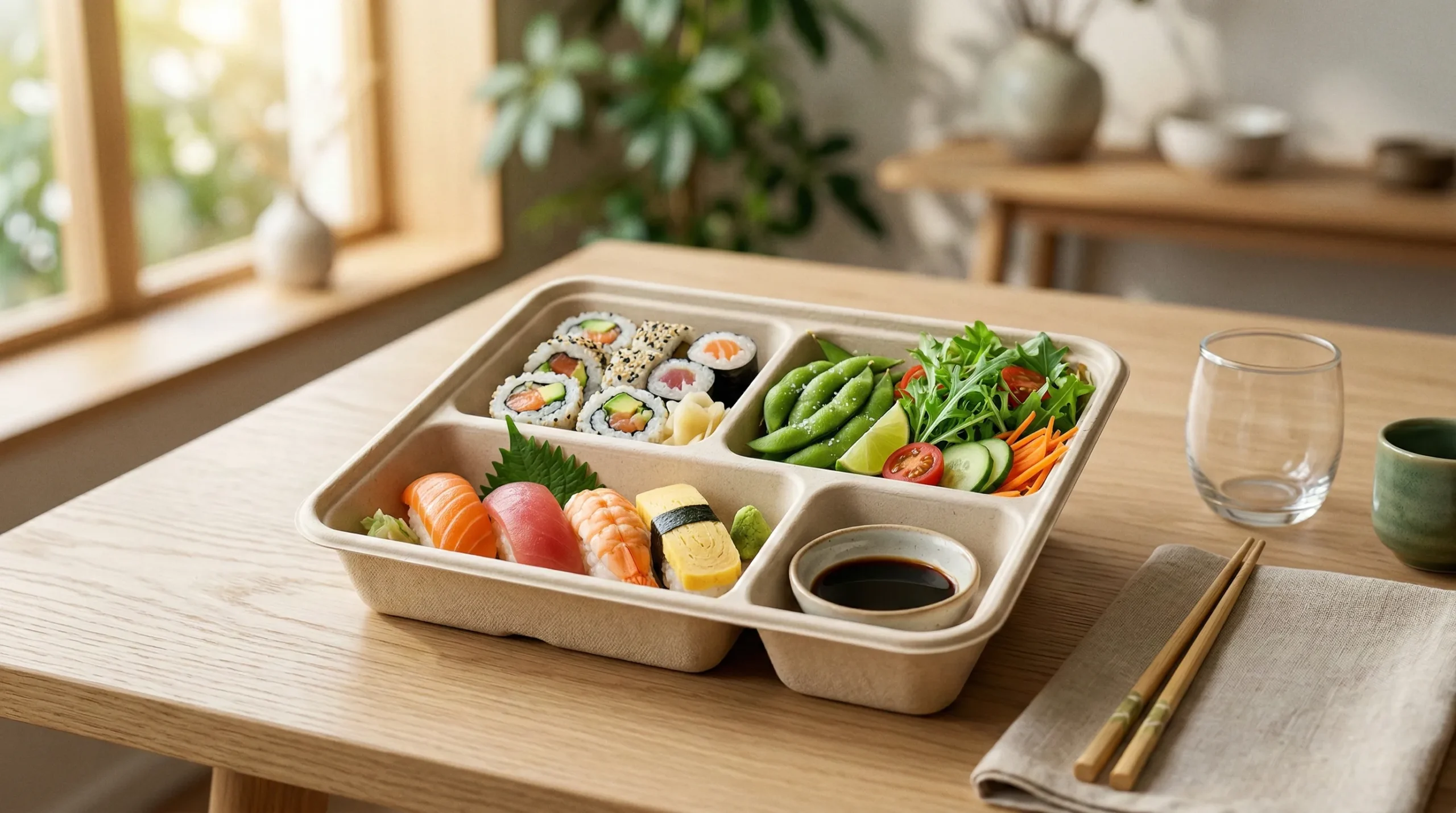
Common sustainable materials for eco-friendly bento box products include:
- Bagasse (Sugarcane Fiber): The most widely adopted material, fully compostable and FDA-approved. Bagasse eco-friendly bento box solutions are popular for their rapid decomposition and low environmental impact
- Cornstarch Bioplastics: PLA (polylactic acid) offers similar properties to plastic with biodegradability
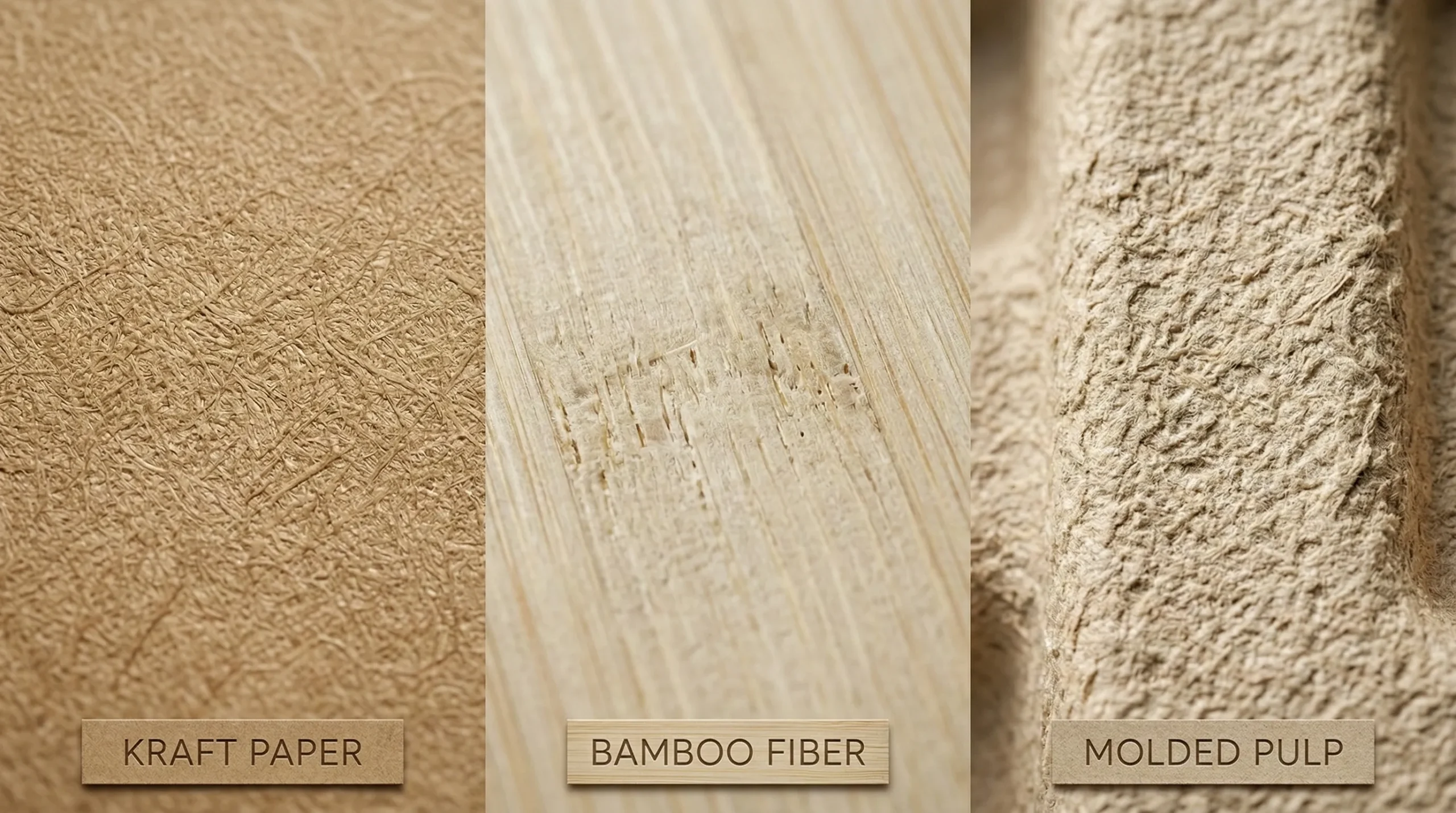
- Kraft Paper: Renewable and recyclable, suitable for various food applications
- Bamboo Fiber: Rapidly renewable, compostable, and naturally antimicrobial
- Wheat Bran: Agricultural waste product turned into functional packaging
These eco-friendly bento box materials address the growing demand for sustainable food packaging while meeting regulatory requirements.
Application & Scenario Solutions
Specific Cuisine Packaging
| Cuisine Type | Recommended Solutions | Key Features |
|---|---|---|
| Asian Cuisine | Multi-compartment bento boxes | Separate dishes, traditional appeal |
| Western Meals | 3-compartment containers | Versatile, portion control |
| Salads | Shallow container with divider | Freshness, presentation |
| Hot Meals | Microwave-safe containers | Heat retention, leak resistance |
| Appetizers | Small tray systems | Portion control, presentation |
Channel Applications
Supermarket
- Ready-to-eat counters
- Pre-packaged meal solutions
- Deli section packaging
Hospitality & Catering
- Event catering trays
- Hotel breakfast service
- Conference catering solutions
Quick Service & Delivery
- Grab-and-go packaging
- Delivery-optimized containers
- Drive-thru compatible designs
Consumer Behavior Trends
Sustainability Preferences
Research indicates that 67% of consumers now prefer sustainable packaging, representing an 18% year-over-year increase. This shift is particularly pronounced among younger demographics, with Millennial and Gen Z consumers actively seeking out brands that demonstrate environmental responsibility.
Convenience and Premiumization
The dual demand for convenience and premium presentation drives innovation in bento box design. Consumers expect packaging that:
- Maintains food quality during transportation
- Provides appealing presentation
- Offers functional features (microwave-safe, leak-resistant)
- Aligns with personal values (sustainability, health)
Health Consciousness
Growing awareness of food safety and chemical exposure influences purchasing decisions. The PFAS controversy has heightened consumer vigilance regarding packaging materials, with many actively seeking PFAS-free alternatives.
Future Outlook
Market Evolution Scenarios
Looking ahead to 2025-2026, several trends will shape the disposable bento box industry:
- Accelerated Material Innovation: Investment in next-generation biodegradable materials will increase
- Regulatory Harmonization: More states and countries adopting similar PFAS regulations
- Circular Economy Adoption: More enterprises adopting closed-loop recycling systems
- Technology Integration: Smart packaging and traceability solutions will emerge
Action Items
For Restaurants & Food Service Operators
- Audit current packaging against sustainability requirements
- Identify regulatory compliance gaps
- Research alternative materials (RPET, Bagasse)
- Evaluate cost implications of sustainable options
- Test sample products from suppliers
- Plan transition timeline before June 2025 PFAS deadline
For Retailers
- Map packaging to product categories
- Assess shelf appeal requirements
- Verify supplier certifications
- Calculate margin impact
- Plan promotional strategy around sustainability
For Manufacturers
- Expand sustainable product lines
- Obtain necessary certifications (FDA, compostable)
- Develop educational content for customers
- Build B2B marketing channels
- Monitor regulatory changes globally
Conclusion
The disposable bento box market in 2025-2026 presents both significant challenges and opportunities for industry stakeholders. The convergence of regulatory pressures, particularly the PFAS ban, with strong consumer demand for sustainable packaging creates a clear imperative for transformation. Businesses that proactively adopt compliant, eco-friendly bento box materials and communicate their sustainability commitments will be best positioned to capture market share in this evolving landscape.
The key to success lies in balancing regulatory compliance, cost competitiveness, and consumer expectations. As the industry moves toward a more sustainable future, those who embrace innovation and adapt their disposable bento box strategies early will define the next generation of food packaging solutions.
For more insights on sustainable packaging trends, visit our latest industry news.
This comprehensive guide reflects current market conditions and regulatory requirements as of early 2025. For the latest updates and specific compliance questions, consult with regulatory experts and industry associations.
ManLuen Plastic Packaging Company, which is specialized in the production of Plastic Food Packaging for more than 20 years. Our products are made from 100% virgin and BPA-Free PP, PS, and OPS comply with FDA and European Standards.
 EN
EN  ZH
ZH  FR
FR  PT
PT  ES
ES  KO
KO  JA
JA