
Introduction
Deli containers commonly come in 8, 12, 16, 24, 32 and 64 oz sizes. An 8 oz container holds approximately 237 ml, a 16 oz deli container equals 1 US pint (473 ml), and a 32 oz deli container equals 1 US quart (946 ml). A 64 oz container holds 2 US quarts, or approximately 1,893 ml.
Smaller 2 oz and 4 oz portion cups are commonly used for dressings and condiments, while larger deli containers are useful for soups, salads, prepared foods, meal prep and family-size portions. The right size depends on the actual food, filling level and container dimensions.
Choose by capacity, then check the complete package.
Use the chart to compare nominal sizes, the conversion reference to check units, and the product cards to compare dimensions. Before ordering, test your actual serving with its matching lid and the intended delivery bag.
Size chart · Click-to-view conversions · Product sizes · Dimensions in inches
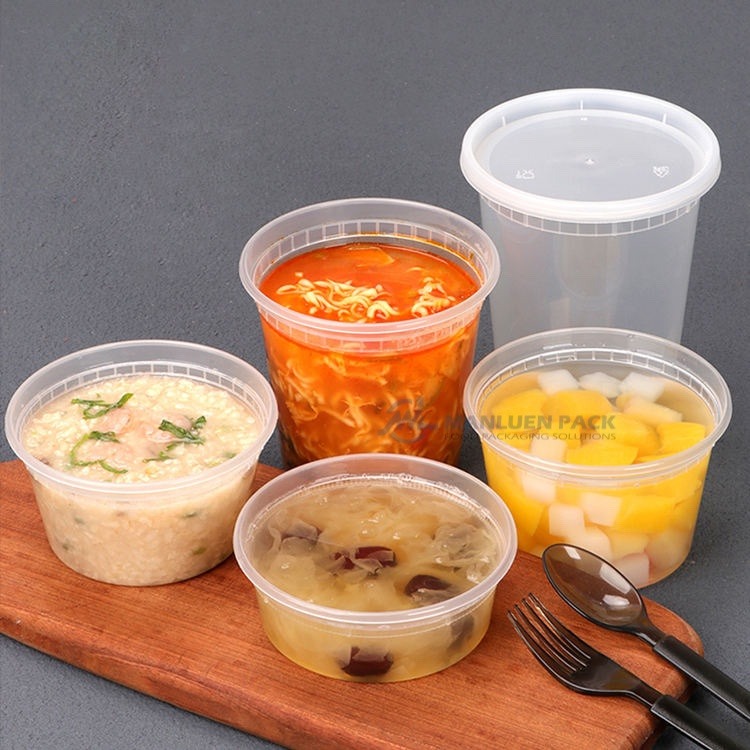
Deli Container Size Chart: 2 oz to 64 oz
The following chart converts common deli container capacities from US fluid ounces to milliliters, US pints and US quarts. It also shows typical food-service applications for each size.
| Container Size | Milliliters | US Pints | US Quarts | Typical Food Uses |
|---|---|---|---|---|
| 2 oz | 59 ml | 0.125 | 0.0625 | Condiments, small sauce portions |
| 4 oz | 118 ml | 0.25 | 0.125 | Dips, dressings and samples |
| 8 oz | 237 ml | 0.5 | 0.25 | Small sides, soup and snacks |
| 12 oz | 355 ml | 0.75 | 0.375 | Side dishes, desserts, soup |
| 16 oz | 473 ml | 1 | 0.5 | Soups, salads, prepared foods |
| 24 oz | 710 ml | 1.5 | 0.75 | Larger soup and deli portions |
| 32 oz | 946 ml | 2 | 1 | Large portions, meal prep |
| 48 oz | 1,420 ml | 3 | 1.5 | Bulk sides and sharing portions |
| 64 oz | 1,893 ml | 4 | 2 | Family portions, bulk food storage |
All conversions use US liquid volume units. The values are rounded for readability; the reference cards show common unit equivalents. See NIST’s conversion tables. Highlighted sizes correspond to the Manluen products featured below. Container capacity is not the same as recommended filling volume.
Deli Container Capacity: Click to View Conversions
Choose a common container size to expand its equivalent capacity in milliliters, US pints and US quarts. Click again to close it, or open several sizes to compare them.
Select a capacity below
Milliliters are rounded. All values use US liquid volume units, not Imperial units or food weight. Nominal capacity does not establish the recommended filling amount.
Need a capacity not listed above?
US fl oz × 29.5735 ≈ mL
mL ÷ 29.5735 ≈ US fl oz
US fl oz ÷ 16 = US pints
US fl oz ÷ 32 = US quarts
Shop Manluen Deli Containers: 12 oz to 64 oz
Manluen Pack offers a range of clear polypropylene (PP) deli containers for restaurants, delis, takeaway services, food processors and wholesale distributors. The C-12, C-16, C-24 and C-32 models use a compact round format, while the C-64 provides a wider opening for larger food portions.
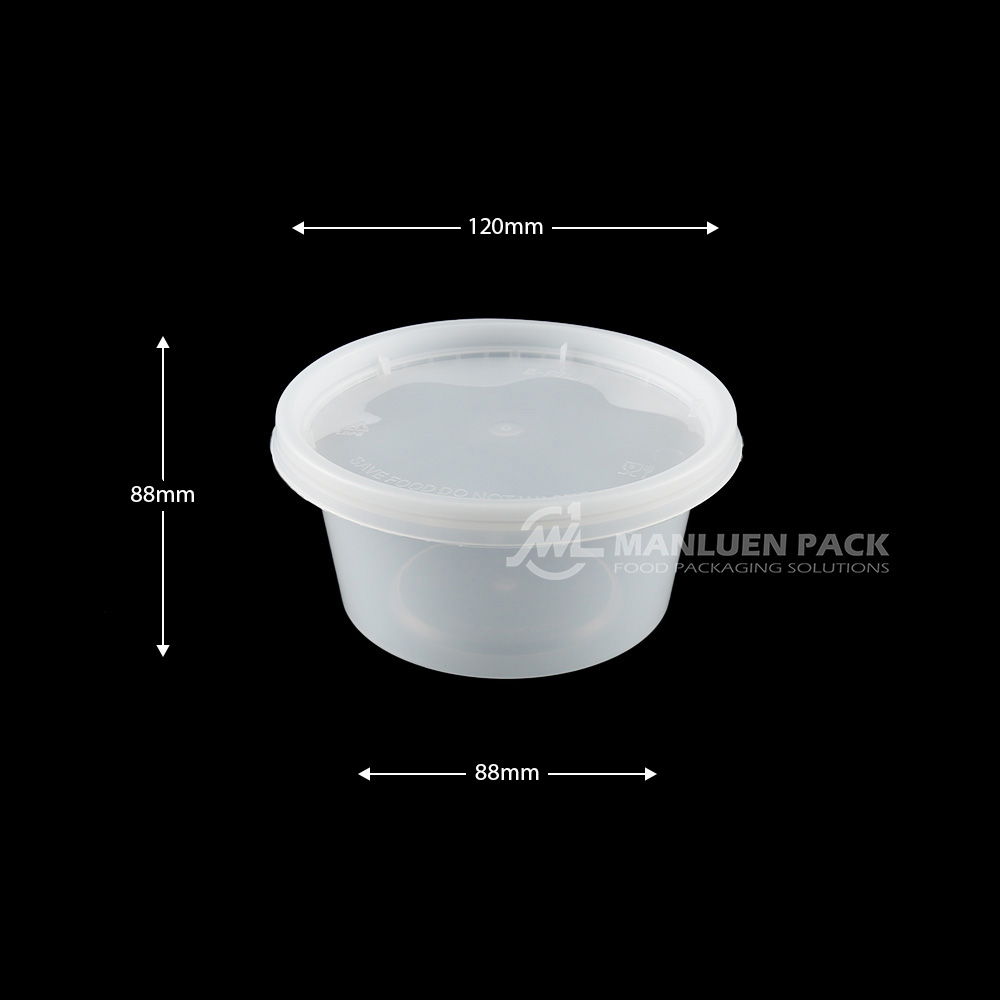
C-12 — 12 oz Deli Container
A compact option for soup portions, side dishes, desserts, sauces and prepared foods.
Capacity: 12 oz / approximately 355 ml
Dimensions: Ø115 × 60 mm
Material: Clear PP
Packing: 240 PCS/CTN
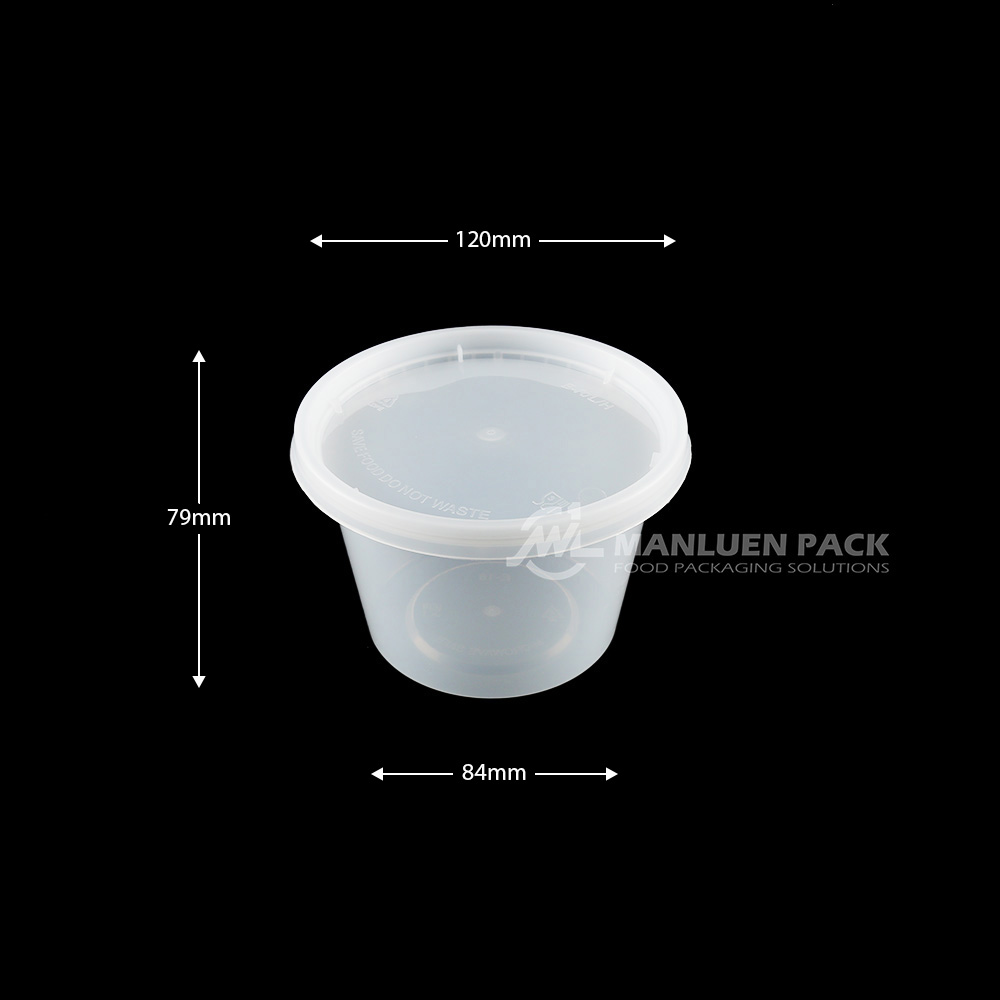
C-16 — 16 oz / 1 Pint
A versatile pint-size container for soup, prepared foods, salads and meal prep.
Capacity: 16 oz / approximately 473 ml
Dimensions: Ø115 × 81 mm
Material: Clear PP
Packing: 240 PCS/CTN
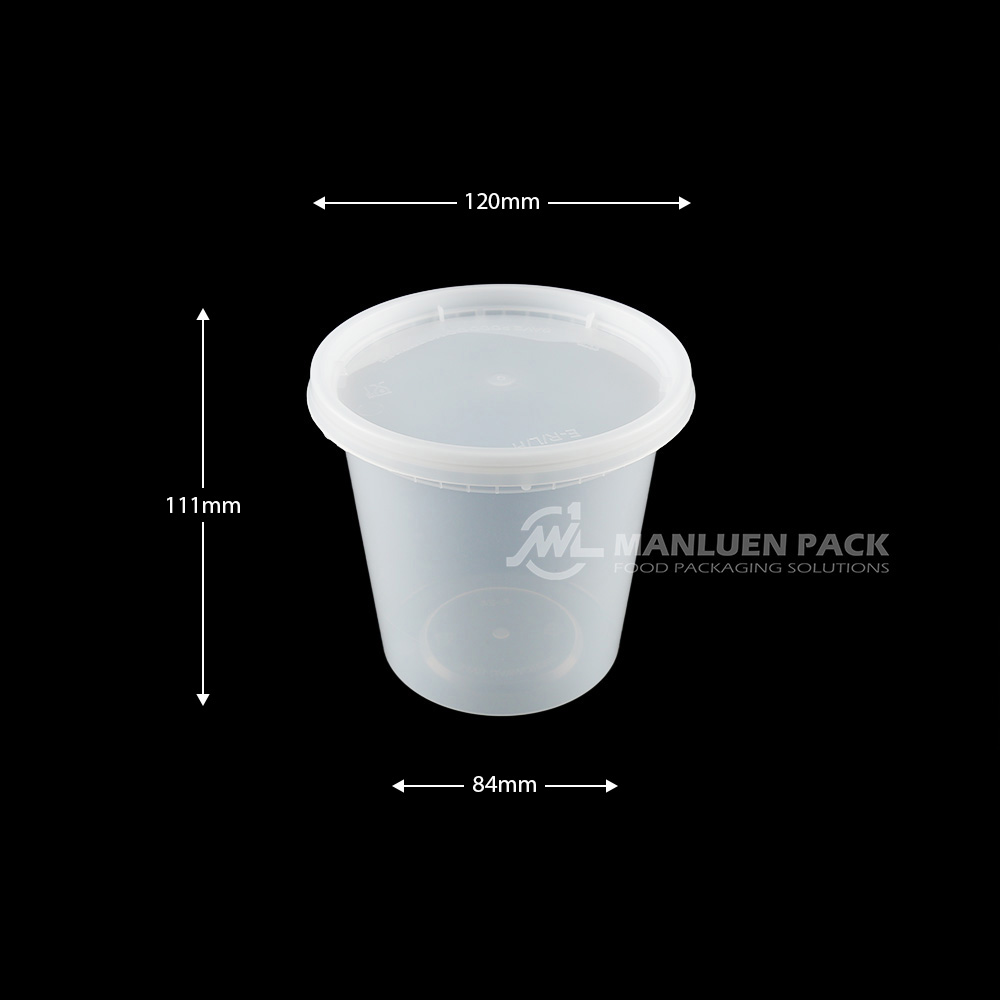
C-24 — 24 oz Deli Container
A taller format for larger soup portions, deli foods, meal prep and takeaway storage.
Capacity: 24 oz / approximately 710 ml
Dimensions: Ø115 × 114 mm
Material: Clear PP
Packing: 240 PCS/CTN
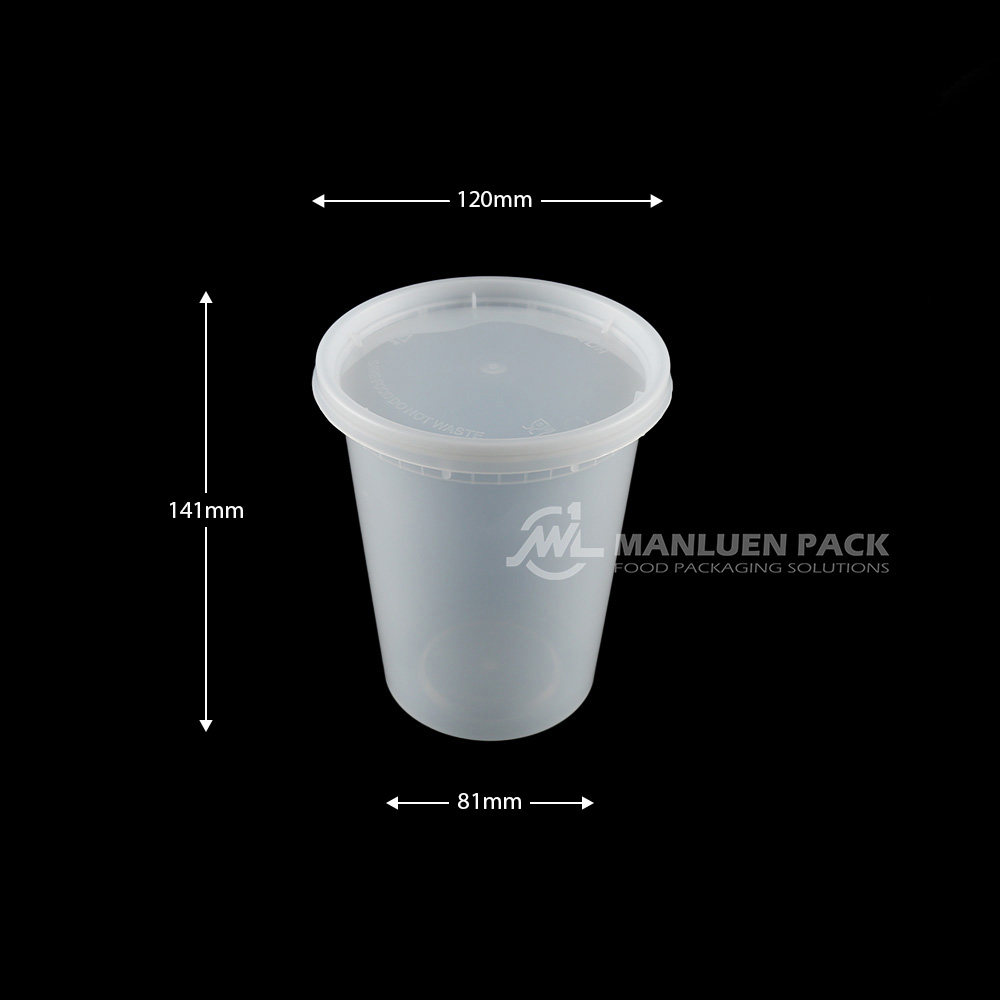
C-32 — 32 oz / 1 Quart
A larger round deli cup for soup, prepared meals, food storage and batch meal prep.
Capacity: 32 oz / approximately 946 ml
Dimensions: Ø115 × 142 mm
Material: Clear PP
Packing: 240 PCS/CTN
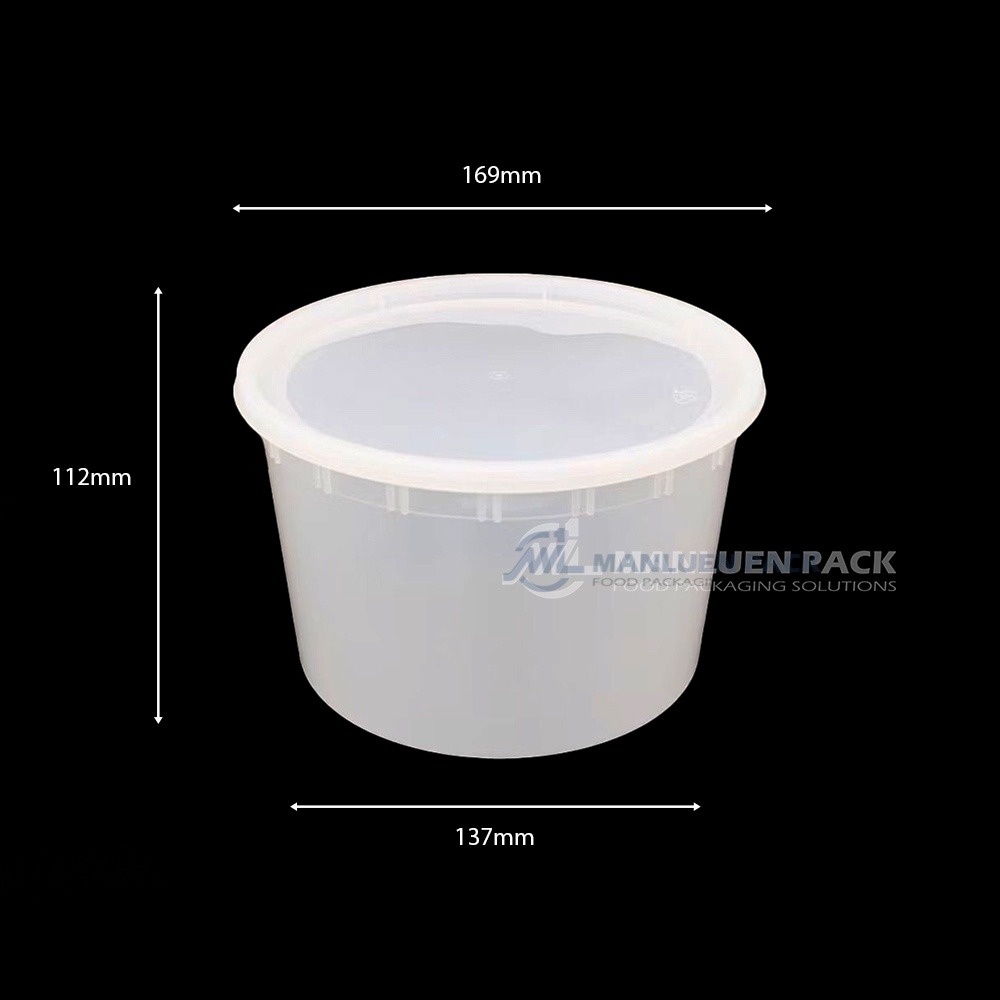
C-64 — 64 oz / 2 Quarts
A wide round container for family-size food portions, catering and bulk food storage.
Capacity: 64 oz / approximately 1,893 ml
Dimensions: Ø169 × 112 mm
Material: Clear PP
Packing: 240 PCS/CTN
Compare the Complete Deli Container Range
Need a different capacity or packaging format? Explore Manluen’s deli container category for available models, product specifications and wholesale inquiries.
What Size Deli Container Do You Need?
Choosing the right deli container starts with the food and the portion being packed. Capacity is useful for comparing options, but the same nominal volume can suit different applications depending on container dimensions, closure and filling conditions.
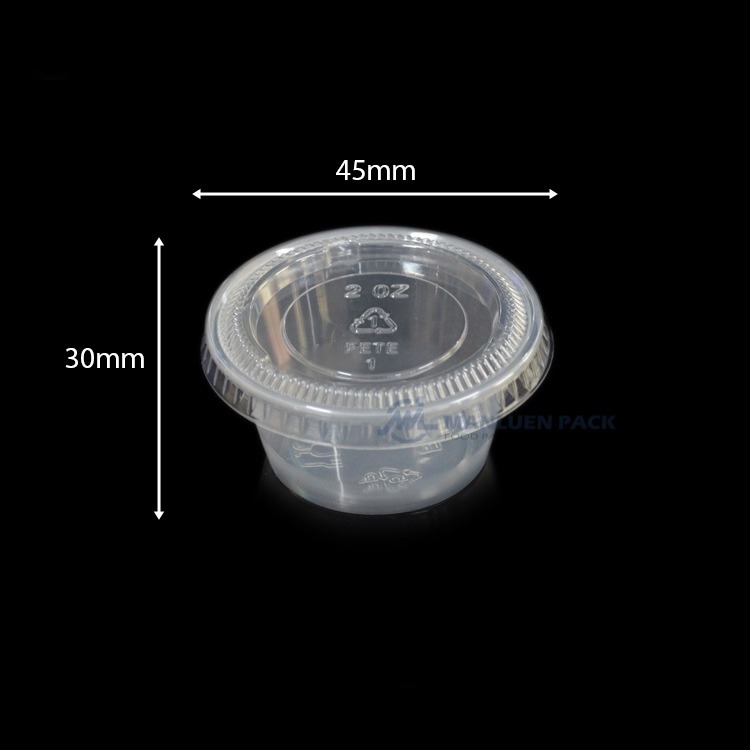
2 oz and 4 oz: Condiments and Portion Cups
The smallest food containers in this size range are generally portion cups rather than standard round deli storage containers. They are commonly used for salad dressing, ketchup, dips, sauces, food samples and other small servings.
A 2 oz cup provides approximately 59 ml of nominal capacity, while a 4 oz cup provides approximately 118 ml. The right choice depends on the intended sauce portion and whether the food requires separate packaging during delivery.
8 oz: Small Sides, Snacks and Soup Portions
An 8 oz deli container holds approximately 237 ml, equal to half a US pint. It is commonly used for small side dishes, hummus, coleslaw, potato salad, fruit, snacks and selected soup portions.
For restaurants that provide several side dishes, a compact container can help control portions and reduce unnecessary packaging space. However, the volume should be checked against the actual food rather than treated as a fixed serving-weight recommendation.
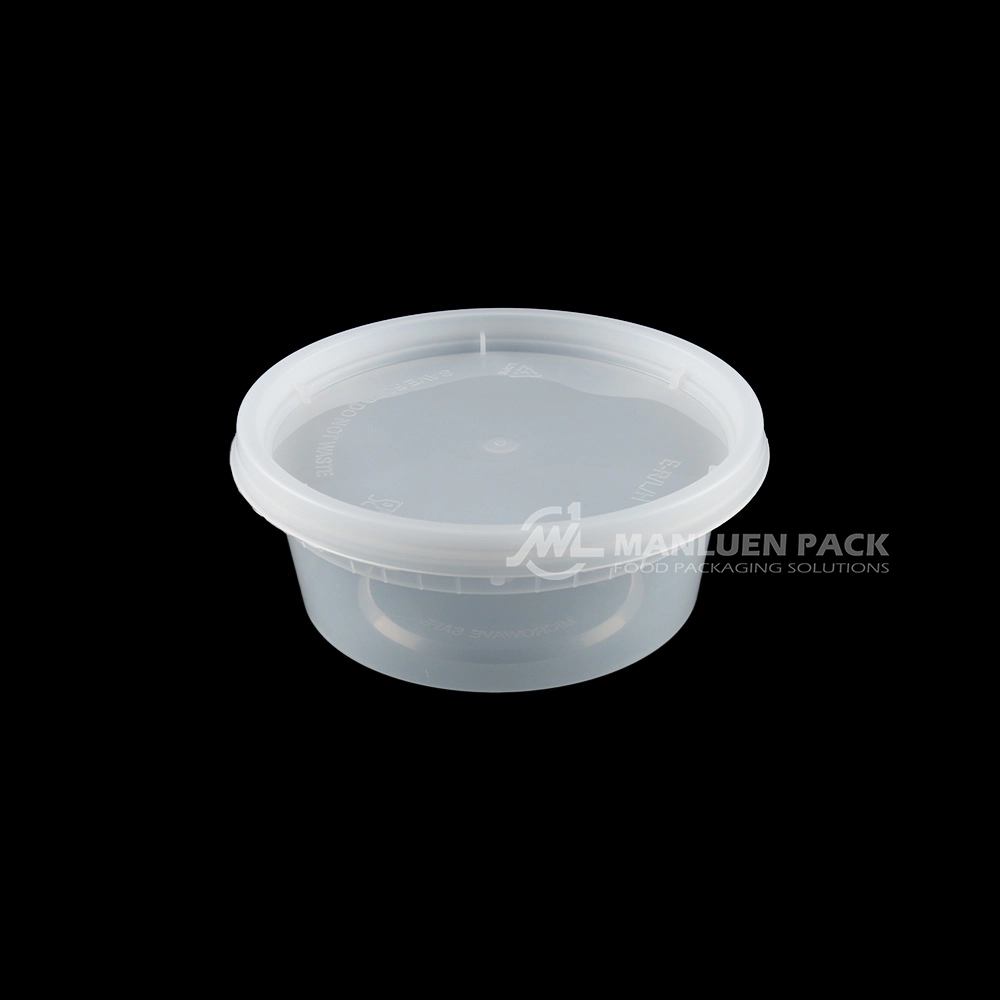
12 oz: Side Dishes and Small Prepared Meals
A 12 oz deli container provides approximately 355 ml of nominal capacity. It offers more space than an 8 oz container while remaining relatively compact.
This size can be useful for larger side portions, soups, desserts, deli salads and prepared-food applications. In Manluen’s range, the C-12 uses a clear PP body with a listed size of Ø115 × 60 mm.
Restaurants choosing between 8 oz and 12 oz should compare the actual food portion and required headspace. A slightly larger container may help prevent overfilling, but an unnecessarily large container can increase packaging usage.
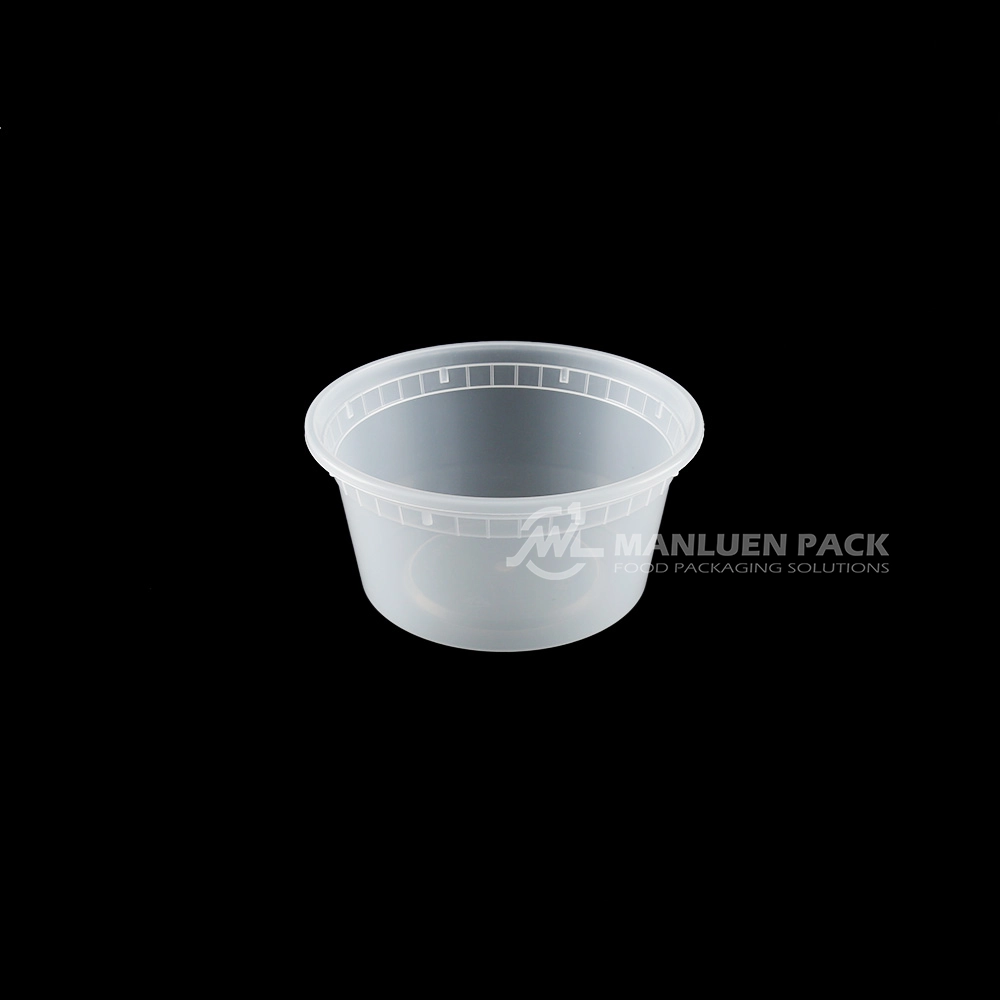
16 oz: The Standard One-Pint Deli Container
A 16 oz deli container equals exactly one US pint in the US liquid-volume system, approximately 473 ml.
It is one of the most recognizable deli container capacities and can suit soup portions, deli salads, prepared vegetables, pasta sides and meal-prep foods. Its popularity does not mean that every 16 oz product has the same dimensions.
Manluen’s C-16 is listed at Ø115 × 81 mm. Other manufacturers may offer a different diameter, height or lid system at the same nominal volume.
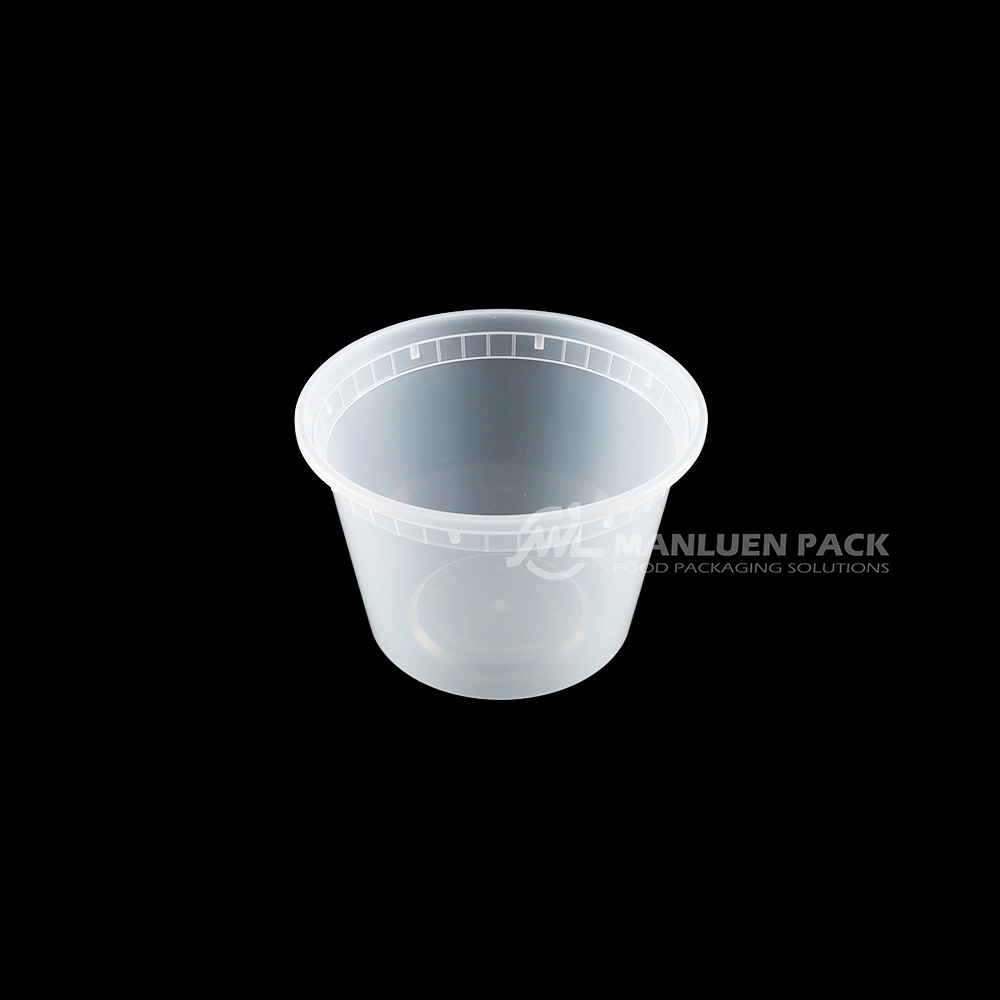
24 oz: Larger Soup and Prepared-Food Portions
A 24 oz container holds approximately 710 ml, equivalent to one and a half US pints or three-quarters of a US quart.
This size is useful when 16 oz is too small, but a full quart would be unnecessary. Typical applications can include larger soups, prepared foods, noodles, salads and take-home meal portions.
The Manluen C-24 is listed at Ø115 × 114 mm, maintaining the same nominal diameter as the smaller C-12 and C-16 while providing additional height.
32 oz: The Standard One-Quart Deli Container
A 32 oz deli container equals one US quart, approximately 946 ml. It is often used for larger portions of soup, prepared foods, salads, food storage and meal prep.
For commercial kitchens, quart-size containers may be useful for organizing ingredients or packaging larger food orders. However, the actual food weight varies with density. A quart of soup and a quart of chopped vegetables will not necessarily weigh the same.
Manluen’s C-32 uses a tall round PP design with listed dimensions of Ø115 × 142 mm. This makes it substantially taller than the 16 oz version in the same range.
48 oz and 64 oz: Bulk Preparation and Family Portions
Larger deli containers are commonly used for catering, prepared-food storage, shared portions and batch food preparation. A 48 oz container equals 1.5 US quarts, while a 64 oz container equals 2 US quarts.
A larger container should also be evaluated for total filled weight, handling and stacking. Its nominal capacity does not prove that it can safely support every food type or every delivery arrangement.
Manluen’s C-64 uses a wider Ø169 × 112 mm round format rather than simply extending the height of the smaller deli cups. This wider opening provides a different distribution of internal volume.
Deli Container Dimensions: Diameter vs. Height
One of the most common mistakes when comparing deli container sizes is assuming that the capacity determines the physical dimensions. It does not.
A 16 oz round container may be narrow and tall, or wider and shallower. Both can have a similar nominal volume while offering different food presentation, stacking and handling properties.
For round deli containers, important dimensions include the top diameter, bottom diameter, height, lid rim profile and usable internal space. The product’s listed dimensions should also be checked to determine whether they refer to the container body, outer rim or complete package including its lid.
Container Dimensions: Millimeters and Inches
Compare diameter and height separately. One inch equals exactly 25.4 mm. External measurements do not establish usable capacity because taper, wall thickness and lid space affect the interior.
| Measurement | Millimeters | Approx. Inches |
|---|---|---|
| C-12 height | 60 mm | 2.362 in |
| C-16 height | 81 mm | 3.189 in |
| C-64 height | 112 mm | 4.409 in |
| C-24 height | 114 mm | 4.488 in |
| C-12 to C-32 listed diameter | 115 mm | 4.528 in |
| C-32 height | 142 mm | 5.591 in |
| C-64 listed diameter | 169 mm | 6.654 in |
For example, Ø115 × 81 mm is approximately Ø4.528 × 3.189 inches. For other measurements: mm ÷ 25.4 = inches; inches × 25.4 = mm.
Manluen Deli Container Dimension Comparison
| Model | Capacity | Listed Dimensions | Material | PCS/CTN |
|---|---|---|---|---|
| C-12 | 12 oz | Ø115 × 60 mm | PP | 240 |
| C-16 | 16 oz | Ø115 × 81 mm | PP | 240 |
| C-24 | 24 oz | Ø115 × 114 mm | PP | 240 |
| C-32 | 32 oz | Ø115 × 142 mm | PP | 240 |
| C-64 | 64 oz | Ø169 × 112 mm | PP | 240 |
Dimensions are the primary item-size specifications shown on the respective Manluen product pages. Some secondary website series tables use different measurement conventions or values. Confirm the finalized technical drawing for critical fit requirements.
The comparison demonstrates why capacity alone cannot replace a dimensional specification. Within the smaller C-series range, additional height provides more capacity. The C-64, however, uses a substantially wider design.
Do Different Deli Container Sizes Use the Same Lid?
Some deli container product families are designed around a common rim size. Manufacturers can offer several capacities by changing container height while maintaining a similar upper opening. This can allow multiple sizes within a compatible series to use one lid design.
However, a common diameter does not guarantee lid interchangeability. Compatibility depends on the exact rim geometry, closure profile, manufacturing tolerances and product family.
For example, a supplier may offer 8, 12, 16, 24 and 32 oz containers with one compatible lid SKU. Another manufacturer’s products could use different lids even when the nominal diameter is similar.
In Manluen’s range, the C-12 through C-32 main size listings share a nominal diameter of Ø115 mm, while the C-64 is listed at Ø169 mm. Buyers should confirm which models share an identical lid SKU before standardizing their orders.
When verified, a common-lid system may reduce the number of packaging components a restaurant needs to store. It can also make picking, packing and replenishment more straightforward.
Nominal Capacity vs. Actual Filling Volume
A deli container labeled 16 oz is not necessarily intended to be filled to its absolute top edge with 16 fl oz of hot liquid.
Packaging specifications may distinguish between nominal capacity, brimful capacity and recommended practical fill volume. These terms should not be treated as interchangeable.
| Capacity Term | Meaning | Why It Matters |
|---|---|---|
| Nominal Capacity | Advertised or designated container volume | Useful for comparing product sizes |
| Brimful Capacity | Volume at the container’s fill-to-rim condition | May exceed practical serving volume |
| Practical Fill Volume | Amount suitable for the specific food and use | Depends on lid, food, temperature and transport |
For soups and other liquids, the restaurant should leave appropriate headspace for the specific container and transport process. For solid food, the required space may be different because ingredients do not move or expand in the same way.
There is no reliable universal rule that every deli container should be filled to exactly 90% or 95% of its nominal volume. The correct level must be determined from the finished package and actual food.
Are Deli Container Ounces Volume or Weight?
In US food-packaging listings, deli container capacities expressed as oz generally refer to fluid ounces, a unit of volume, rather than ounces of food weight.
This distinction matters because different foods have different densities. A container holding 16 US fluid ounces of liquid does not necessarily hold 16 ounces by weight of every prepared food.
For volume conversion, the relevant relationship is:
1 US Fluid Ounce = 29.5735 Milliliters
16 US fl oz = 1 US Pint
32 US fl oz = 1 US Quart
To calculate the weight of a specific food, the food’s density is required. The same container may hold different weights of soup, cooked rice, pasta salad or chopped vegetables.
Choosing Deli Container Materials
Although size is the main focus when purchasing deli containers, material choice influences temperature compatibility, visibility, durability and disposal options.
Polypropylene (PP) Deli Containers
Polypropylene is widely used for round deli containers because it is lightweight, durable and suitable for many food-storage and prepared-food applications.
Certain PP deli containers are designed for microwave reheating and freezer storage, but the finished product and its lid must be rated for the intended conditions. PP material alone does not guarantee unlimited heat resistance or a leak-proof seal.
Manluen’s featured C-series deli containers are described as clear PP products. Their individual product listings provide microwave and freezer-use information. For commercial purchasing, confirm the specified conditions for both the container and matching lid.
PET and Other Clear Plastic Containers
Some transparent food containers use PET or other plastic materials. These may offer good visibility for chilled deli salads, desserts and prepared foods.
However, conventional PET containers should not automatically be used for hot filling or microwave heating. The exact material grade and finished packaging instructions determine suitability.
Paper Deli Containers
Paper food containers are available in different designs, including lined soup bowls and food tubs. Their moisture and grease resistance depend on the paperboard, lining, coating and closure construction.
A paper container is not necessarily limited to dry foods, but neither should every paperboard package be considered suitable for hot soup. Restaurants must evaluate the complete product.
Bagasse and Molded-Fiber Containers
Bagasse is a molded fiber material derived from sugarcane processing residue. It is used in food trays, bowls and selected takeaway packaging.
Its performance depends on the finished container structure and any applied coatings. Moisture, grease and heat resistance should be checked for the intended food.
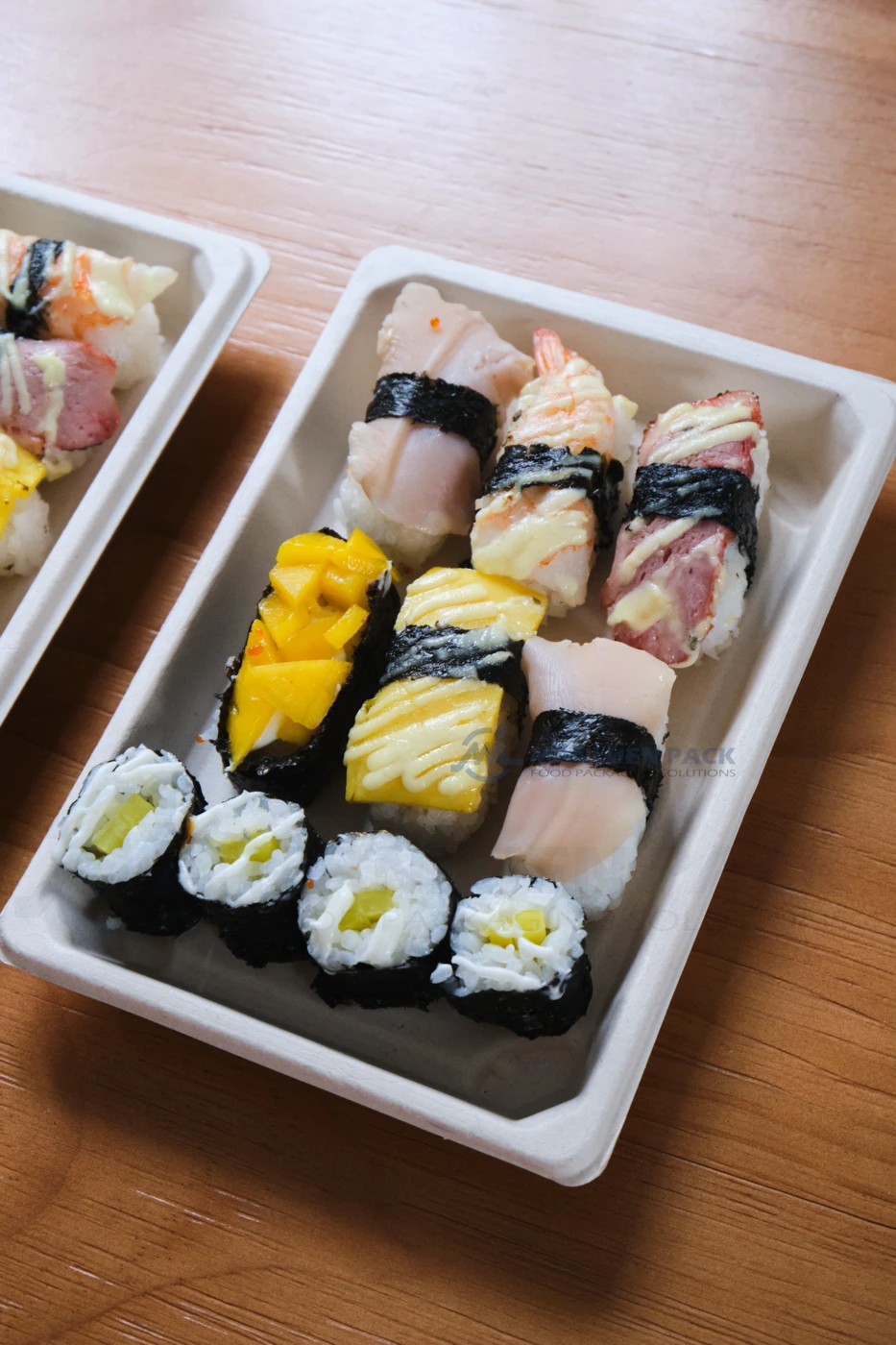
Claims such as biodegradable, compostable or plastic-free should not be assumed merely from the presence of plant fiber. The complete product and its available disposal conditions need to be considered.
Glass Reusable Containers
Glass containers are an option for some managed reusable food-storage and foodservice systems. They can be durable and suitable for repeated cleaning when used according to their design.
Their drawbacks may include greater weight, breakage risks and handling costs. The lid and any sealing components must be assessed separately.

What Features Matter Beyond Deli Container Size?
Secure Lids and Leak Resistance
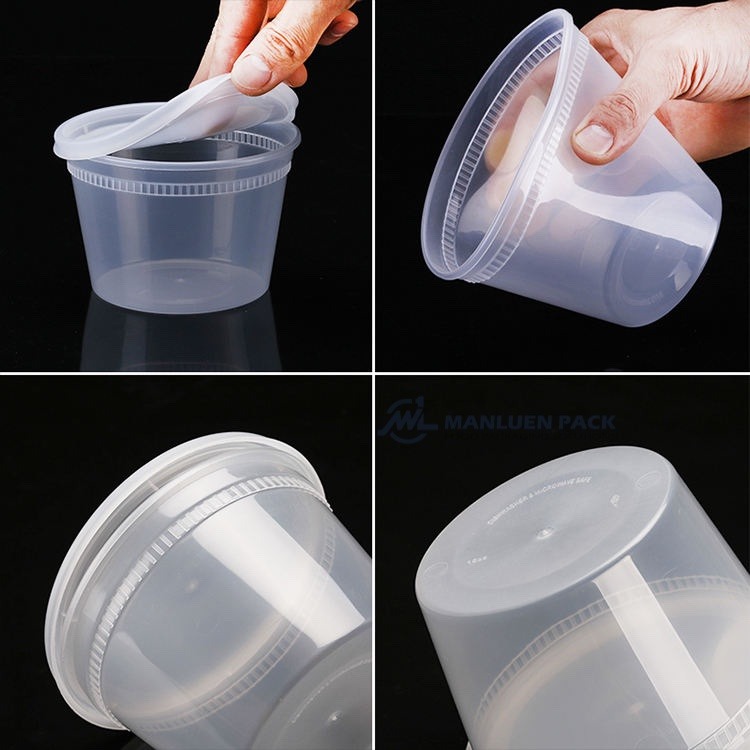
For soups, dressings and other liquid-rich foods, lid performance is especially important. A suitable deli container should close securely and be tested under the handling conditions expected during storage and delivery.
Leak-resistant packaging is not necessarily completely leak-proof under every condition. For example, a container that performs well upright in a refrigerator may still leak when tilted or shaken.
Restaurants should test the actual base-and-lid combination with representative foods before ordering large quantities.
Stackability and Storage Efficiency
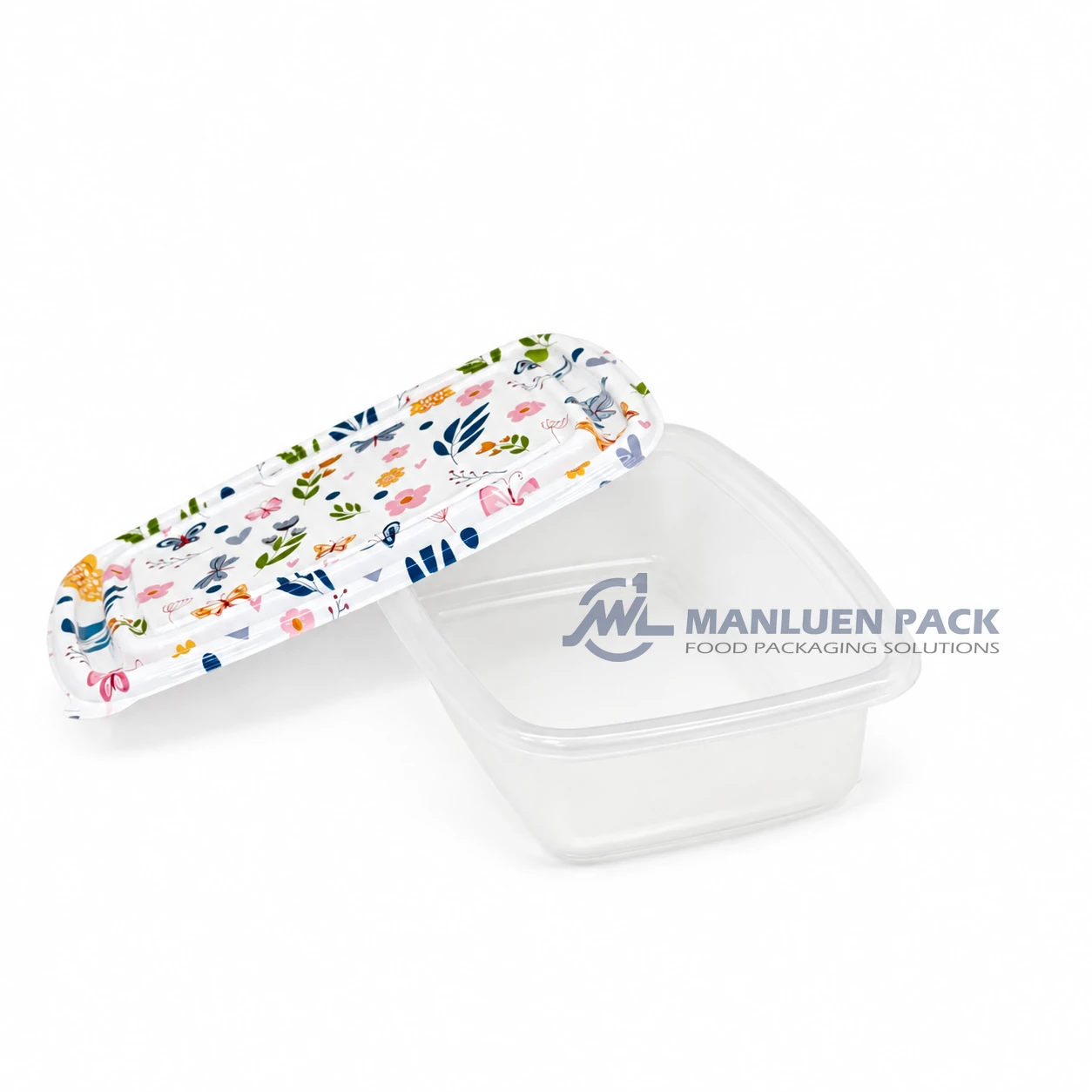
Stackable deli containers can help organize refrigerator shelves, prep stations and takeaway orders. However, empty-container nesting and filled-container stacking are different performance requirements.
An empty cup may nest compactly with others, while a filled and closed package must support the weight of additional containers without unwanted deformation.
For restaurants handling several portion sizes, standardized container diameters and compatible lids may simplify inventory when their compatibility is verified.
Microwave and Freezer Suitability
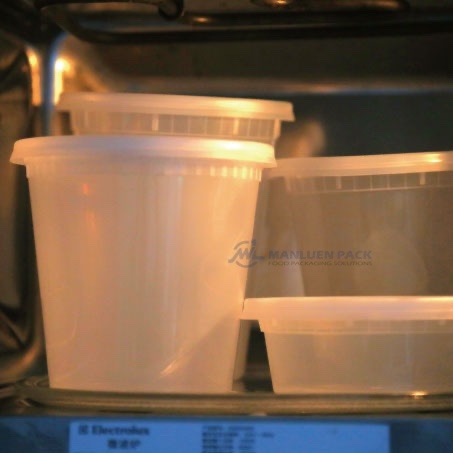
Some deli containers are designed for refrigeration, freezer storage and microwave reheating. Others are intended for chilled food display only.
A microwave-safe label should be supported by instructions relevant to the finished container, including temperature, food type, lid handling and intended heating conditions.
Likewise, freezer suitability does not establish that a container can be transferred directly between extreme temperatures without restrictions.
Transparency and Food Presentation
Clear deli containers allow kitchen staff and customers to identify the contents without opening the lid. This is useful for prepared foods, chilled products and deli displays.
For retail food sales, container shape and available label space also matter. A taller cup may work well for soups and prepared ingredients, while a shallower container can offer a different presentation for salads or desserts.
How to Choose the Right Size for Your Business
The most practical way to select deli container sizes is to begin with the most frequently sold menu items and their actual serving portions.
A deli selling several types of soup may benefit from a compact size for smaller orders and a pint or quart option for larger portions. A salad counter may need different container shapes even when the nominal capacity is the same.
Restaurants should consider how customers receive the food. Takeout and delivery require suitable closure and stacking, while refrigerated retail may place greater emphasis on visibility, labeling and shelf presentation.
It is also worth reviewing the number of container sizes the kitchen uses. Too many similar SKUs can complicate inventory and replenishment, while too few sizes can lead to unnecessary empty space or overfilled containers.
Before making a bulk purchase, test the intended food in the real container. Confirm the filling level, lid fit, handling comfort and storage performance. This is more reliable than selecting sizes from volume alone.
Wholesale Deli Containers: Case Packs and Buying Costs
For restaurants, caterers and distributors, ordering deli containers in volume requires more information than the nominal capacity.
The product specification should identify the model, material, size, packing quantity and matching lid arrangement. Buyers should also confirm whether the quoted quantity refers to container bases, lids or complete packaging sets.
For example, the Manluen C-12, C-16, C-24, C-32 and C-64 listings each show 240 PCS/CTN. That carton quantity alone does not determine the price of a completed food package.
If a supplier sells lids separately, the total cost must include the lid. Depending on the restaurant’s operation, freight, storage, labels and handling costs may also be relevant.
Complete Packaging Cost =
Container Base + Matching Lid
+ Required Accessories
For international wholesale orders, buyers should also compare shipping terms, carton dimensions, minimum order quantity and estimated delivery timing. Case quantities and pallet loading arrangements are supplier- and product-specific, not universal standards for each ounce size.
Ordering Deli Containers from Manluen Pack
Manluen supplies food packaging for commercial buyers, including restaurants, catering businesses, food processors and distributors. The deli container range includes multiple PP capacities for prepared food, takeaway and storage applications.
Wholesale minimum order requirements generally start from 30 cartons or 5,000 pieces, depending on the product and order configuration. The exact MOQ should be confirmed for the selected SKU.
When requesting a quote, include the required capacity, model, expected purchase quantity, lid requirements, destination and any customization needs. This allows the supplier to prepare a more useful product-specific quotation.
Frequently Asked Questions About Deli Container Sizes
What are the standard deli container sizes?
Common round deli container sizes include 8, 12, 16, 24, 32 and 64 oz. Smaller 2 oz and 4 oz portion cups are often used for condiments. The exact available range depends on the manufacturer.
How many ml is a 16 oz deli container?
A 16 US fl oz deli container has a nominal capacity of approximately 473 ml. It is also known as a one-pint container.
Is a 32 oz deli container one quart?
Yes. In the US liquid-volume system, 32 fluid ounces equal one US quart, approximately 946 ml.
What is the difference between 16 oz and 32 oz deli containers?
A 32 oz container has twice the nominal capacity of a 16 oz container. However, their physical dimensions depend on the product design. One series may use the same diameter with different heights, while another may not.
How tall is a 16 oz deli container?
There is no universal height. For example, Manluen’s C-16 deli container is listed at Ø115 × 81 mm. Other 16 oz models may have different measurements.
Do 8 oz, 16 oz and 32 oz deli containers use the same lid?
Some compatible product families use a common lid across multiple capacities, but this is not guaranteed. Confirm compatibility through the manufacturer’s product series and lid SKU.
What size deli container is best for soup?
An 8–12 oz container may work for smaller soup portions, while 16 oz and 32 oz are common options for pint- and quart-size orders. Choose according to the restaurant’s actual serving, filling level and lid performance.
Is a 24 oz deli container larger than a pint?
Yes. A 24 US fl oz container equals 1.5 US pints, approximately 710 ml.
How much does a 64 oz deli container hold?
A 64 oz deli container has a nominal capacity of 2 US quarts, equivalent to half a US gallon or approximately 1,893 ml.
Are deli containers microwave-safe?
Some are. Many PP deli containers are designed for specified microwave reheating conditions, but not every plastic container or lid is microwave-safe. Always check the complete product instructions. The FDA recommends cookware specifically intended for microwave use.
Can deli containers go in the freezer?
Some deli containers are rated for freezer storage. Suitability depends on the material, construction and product instructions. Freezer-safe does not automatically mean suitable for every heating process.
Are deli container ounces the same as food ounces by weight?
No. Container capacities generally refer to fluid ounces of volume. Food weight depends on density, so the same container can hold different weights of different foods.
Are lids included with deli containers?
Some products are sold as complete container-and-lid sets, while others sell the components separately. Confirm the exact packing configuration and price before ordering.
Where can restaurants buy deli containers wholesale?
Restaurants can source deli containers from foodservice distributors, packaging wholesalers or manufacturers. Manluen Pack offers multiple PP deli container sizes for commercial purchasing and product-specific quotations.
Conclusion
Understanding deli container sizes starts with knowing the difference between capacity and dimensions. An 8 oz container equals half a pint, a 16 oz container equals one pint, and a 32 oz container equals one quart. But the actual height, diameter, lid fit and useful filling space can vary by manufacturer.
For restaurants and foodservice buyers, a good purchasing decision combines the right volume with the appropriate food-contact conditions, secure closure, practical storage and complete packaging cost.
Manluen Pack’s C-series clear PP deli containers provide a range of sizes from compact portions to larger two-quart food-storage applications. Review the individual product dimensions and request a quotation based on your intended food and order quantity.
Find the Right Deli Container Size for Your Business
Explore Manluen’s wholesale deli container collection or contact our team with your preferred capacity, dimensions, material, quantity and delivery destination.
Or browse our complete deli container collection .
References and Further Reading
- Manluen Pack — Deli Container Collection . Product capacities, materials, dimensions and carton specifications.
- Manluen Pack — C-12 12 oz Deli Container . Individual product specifications.
- Manluen Pack — C-16 16 oz Deli Container . Individual product specifications.
- Manluen Pack — C-24 24 oz Deli Container . Individual product specifications.
- Manluen Pack — C-32 32 oz Deli Container . Individual product specifications.
- Manluen Pack — C-64 64 oz Deli Container . Individual product specifications.
- National Institute of Standards and Technology (NIST) — Office of Weights and Measures . US customary-to-metric conversion factors for fluid ounces, pints, quarts and inches.
- U.S. Food and Drug Administration — Food Ingredients and Packaging . Food-contact regulatory information.
- Electronic Code of Federal Regulations — 21 CFR Part 177 . Indirect food additives: polymers.
- European Union — Regulation (EC) No 1935/2004 . General framework for food-contact materials and articles.
- FDA — Microwave Ovens. Guidance on microwave-safe cookware and manufacturer instructions.

ManLuen Plastic Packaging Company, which is specialized in the production of Plastic Food Packaging for more than 20 years. Our products are made from 100% virgin and BPA-Free PP, PS, and OPS comply with FDA and European Standards.
 EN
 ZH
 FR
 PT
 ES
 KO
 JA