
Introduction
Yes, some cardboard food containers can go in the microwave, but only when they are specifically designed for microwave heating. If your takeout box has a microwave-safe label or the manufacturer provides clear microwave instructions, you can use it within those stated conditions. If the container is unmarked, says “Do Not Microwave,” or has an unknown coating or lining, transfer the food to a microwave-safe dish before reheating.
The important distinction is between cardboard as a material and the finished food container. A plain paperboard tray, a grease-resistant takeout box, and a frozen meal package may look similar but have different heat tolerances and components.
The U.S. Food and Drug Administration (FDA) explains that microwaves generally pass through paper, glass, and many plastics while food absorbs microwave energy and heats up. However, this does not mean every container made from those materials is suitable for microwave cooking. Heat transferred from the food, packaging components, and the container’s intended use all matter.
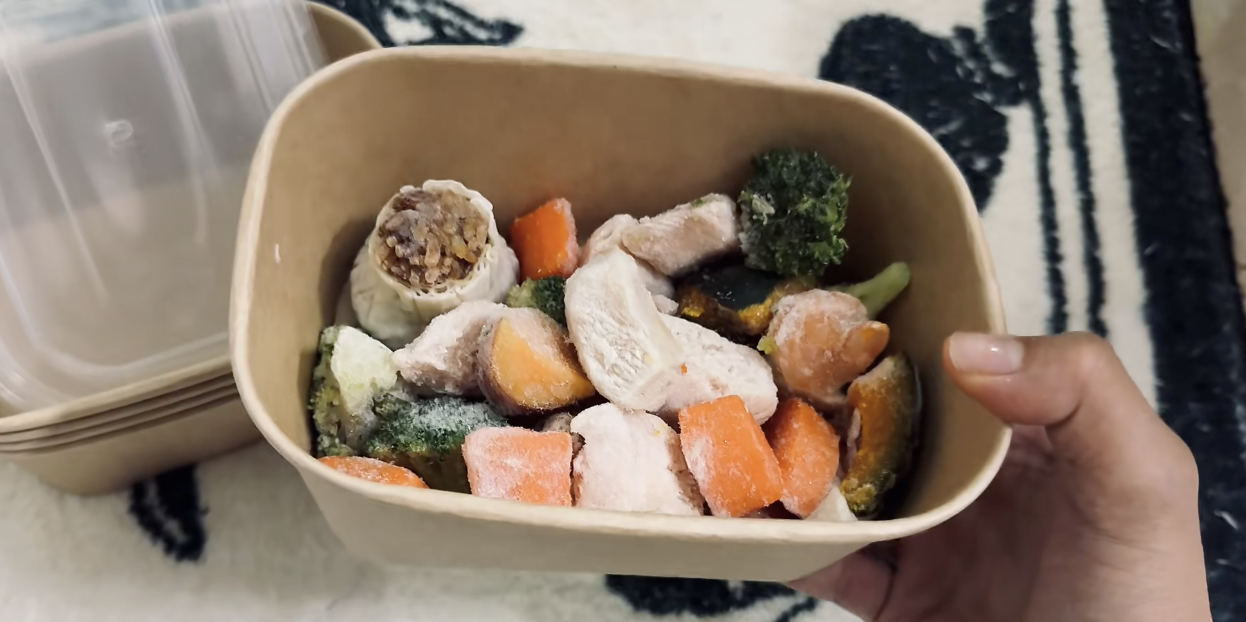
Kraft Paper Takeaway Trays
Browse the sushi tray collection for takeaway and display formats.
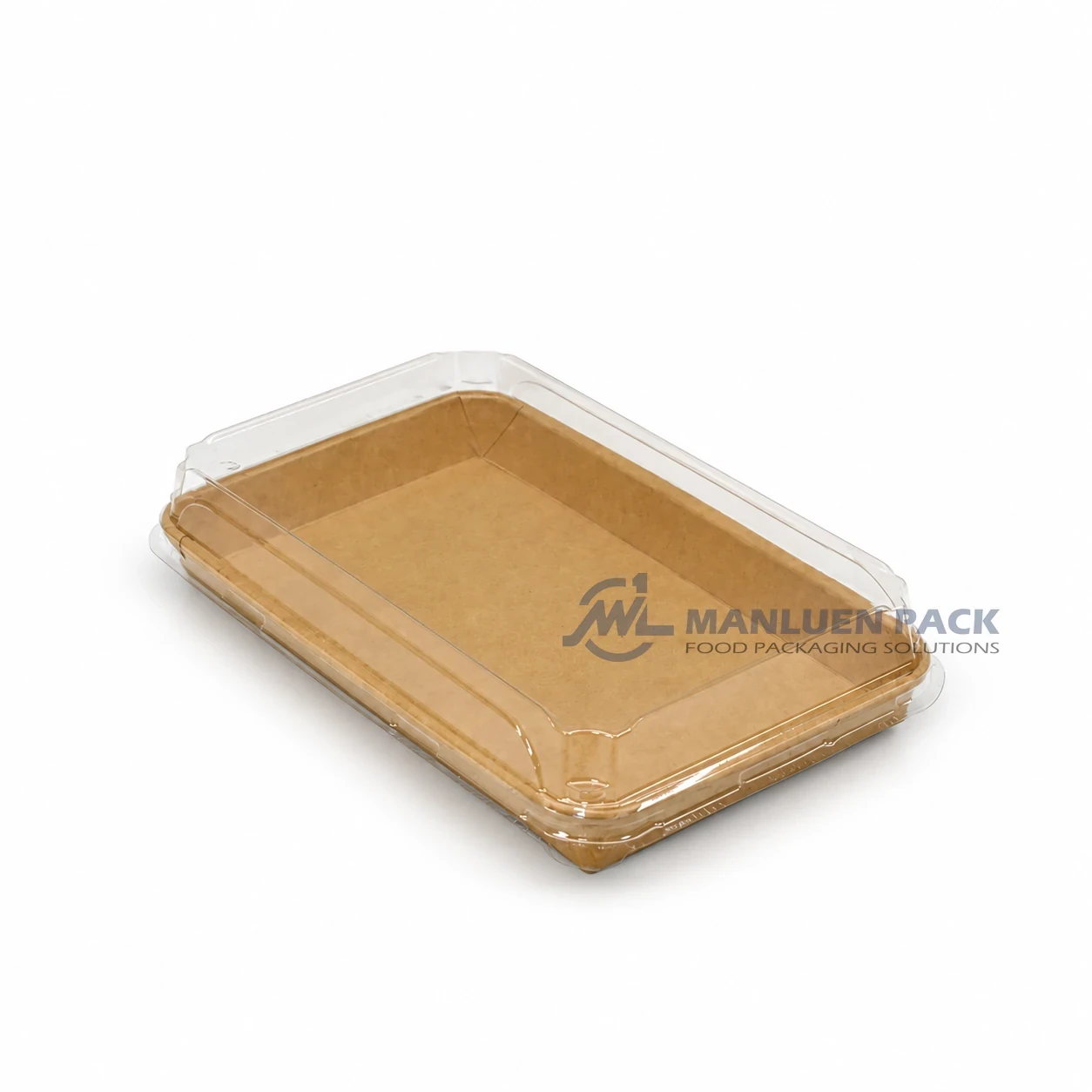
WL-1111 Kraft Paper Sushi Tray with PET Lid
A rectangular kraft paper tray with a transparent PET lid for sushi presentation and takeaway.
ITEM#: WL-1111
Size: 260 × 185 × 50 mm
Pack: 200 sets/carton
Material: Kraft paper base / PET lid
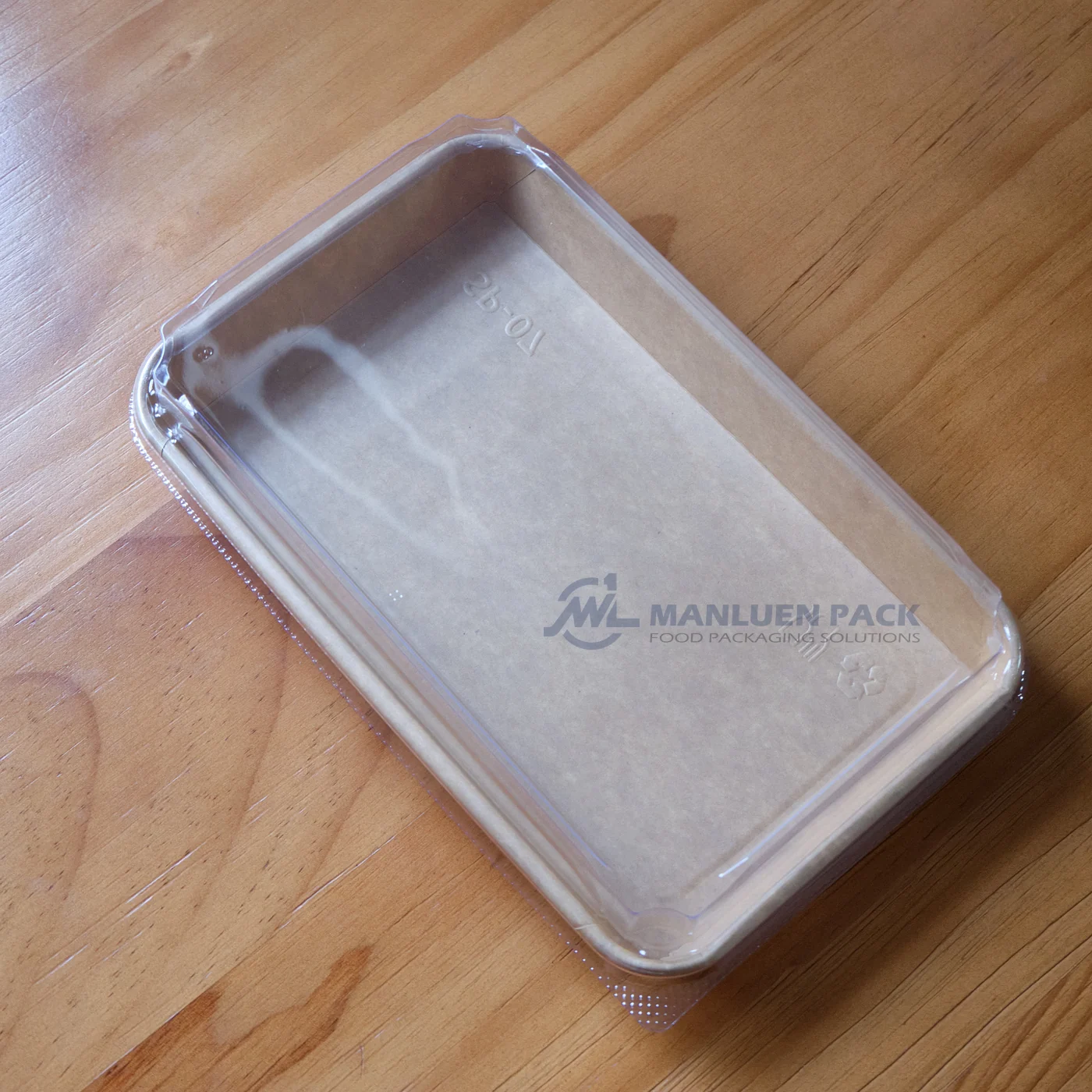
7# Kraft Paper Sushi Tray with Clear PET Lid
A kraft paper tray and clear lid combination for takeaway sushi and prepared-food display.
ITEM#: 7#
Size: Base 220 × 135 × 24 mm; lid 225 × 137 × 32 mm
Pack: 200 sets (50 sets/bag)
Material: Kraft paper base / PET lid
Why Are Some Cardboard Food Containers Microwave-Safe and Others Not?
Cardboard is a broad term. In food packaging, consumers often use it to describe paperboard cartons, kraft takeout boxes, folded food trays, and other fiber-based containers.
These products do not necessarily have the same construction.
Paperboard provides structure, but a finished food container may also contain a moisture barrier, grease-resistant treatment, adhesive, printing ink, or separate lid. Each component must be suitable for the temperatures and food-contact conditions the finished package will encounter.
Plain Cardboard and Paperboard
Plain, uncoated paperboard generally allows microwave energy to pass through rather than absorbing it as food does. That characteristic helps explain why paper-based materials can be used in certain microwave applications.
However, microwave transparency is not the same as microwave safety.
When hot food contacts paperboard, heat can transfer into the material. Moisture can soften the fibers, while sufficiently severe heating may cause browning, scorching, or deterioration. The container’s construction, condition, and actual use still determine whether it is appropriate.
Uncoated does not automatically mean microwave-safe. A plain cardboard food box with no microwave instructions should not be assumed suitable simply because it has no visible plastic lining.
The distinction also applies to brown paper grocery bags. They are not interchangeable with purpose-made microwave cooking paper. The USDA Food Safety and Inspection Service specifically advises against using brown paper bags and newspapers for microwave cooking because of sanitation and fire concerns.
Coated Cardboard Food Containers
Many restaurant takeout boxes need resistance to oil, sauces, or moisture. To provide those properties, manufacturers may use polymer coatings, films, wax treatments, or other food-contact materials.
A coating does not automatically make a container unsafe for microwave heating. Some coated packaging is specifically engineered for elevated temperatures. Others are intended only for holding, transporting, or serving food.
For example, a paperboard container might hold freshly prepared hot food without leaking, yet still lack validation for microwave reheating. Receiving hot food from a restaurant is not the same use condition as placing the package in a microwave oven.
The FDA’s guidance on food-contact substances identifies coatings, adhesives, and other packaging components as relevant to food-contact safety. Their suitability depends on the substances used and the conditions under which they contact food.
For consumers, this means that a brown kraft box with a smooth or shiny interior cannot be classified as microwave-safe by appearance alone. Nor can a container with a matte interior automatically be treated as uncoated.
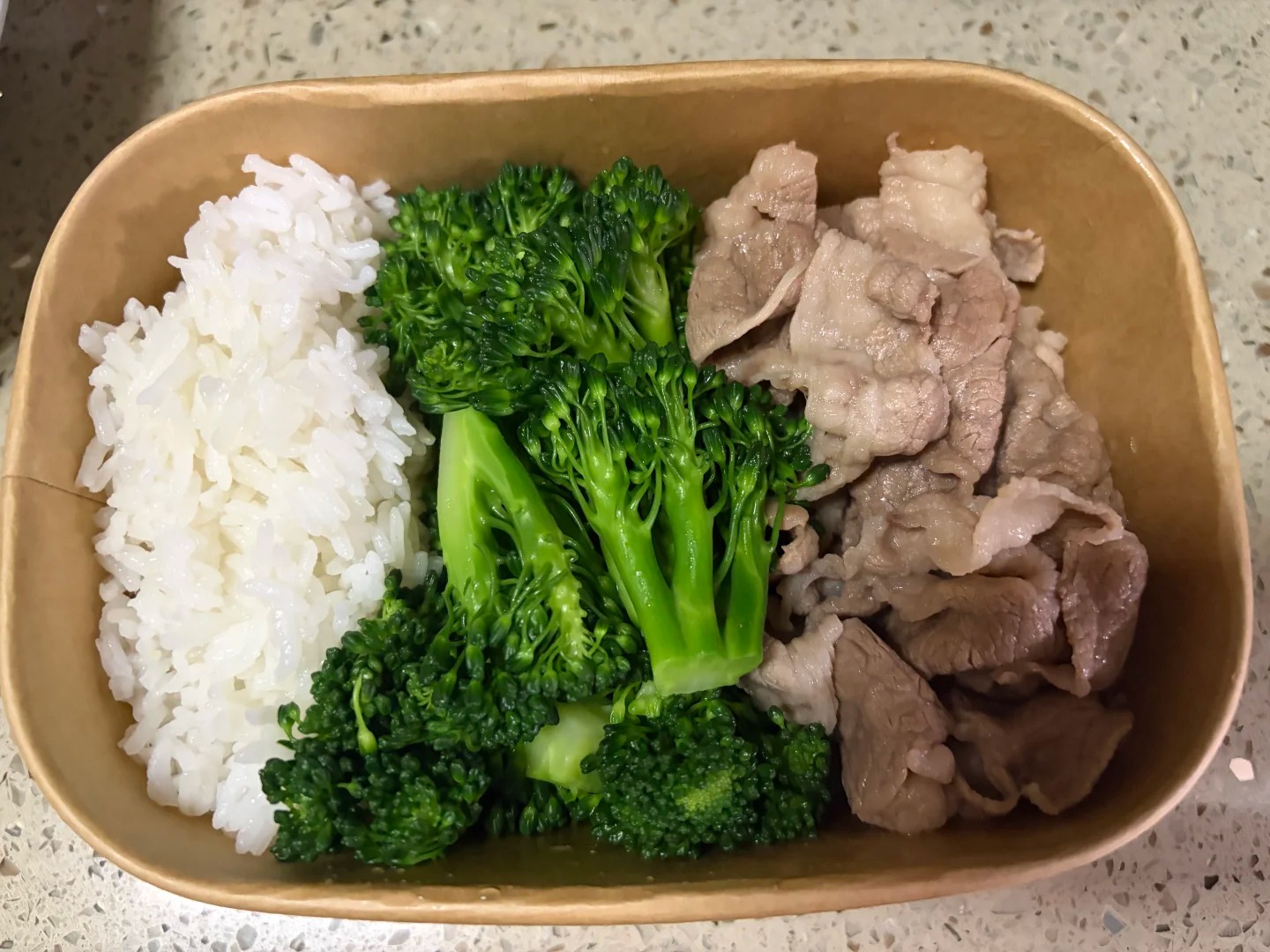
Molded Fiber and Bagasse Containers
Molded fiber food containers, including those made from sugarcane bagasse, are another category frequently confused with cardboard.
These products are generally formed from processed plant fibers rather than folded sheets of conventional paperboard. They may be designed for hot food, cold food, or specific reheating applications.
Some molded fiber containers are marketed for microwave use, but that property must be established for the particular product.
Terms such as plant-based, biodegradable, compostable, and eco-friendly describe different environmental or material characteristics. None is a substitute for a microwave-use statement.
A bagasse clamshell that is suitable for serving hot food should not automatically be considered suitable for cooking or reheating food in a microwave.
Compare hinged structures in the clamshell container range when choosing a takeaway format.
Bagasse Takeaway Containers
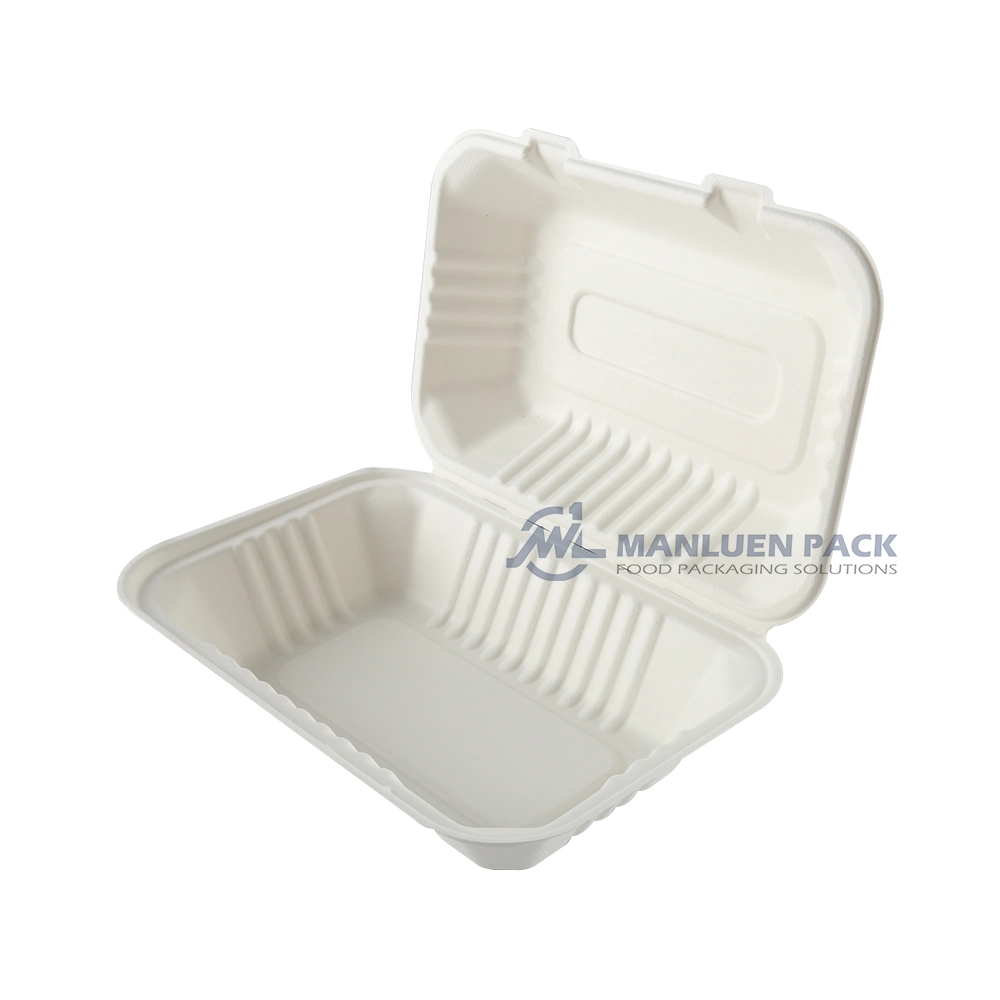
WL-BG96 Rectangle Bagasse Clamshell
A rectangular hinged bagasse container for serving and transporting prepared food.
ITEM#: WL-BG96
Size: 220 × 150 × 75 mm
Material: Bagasse
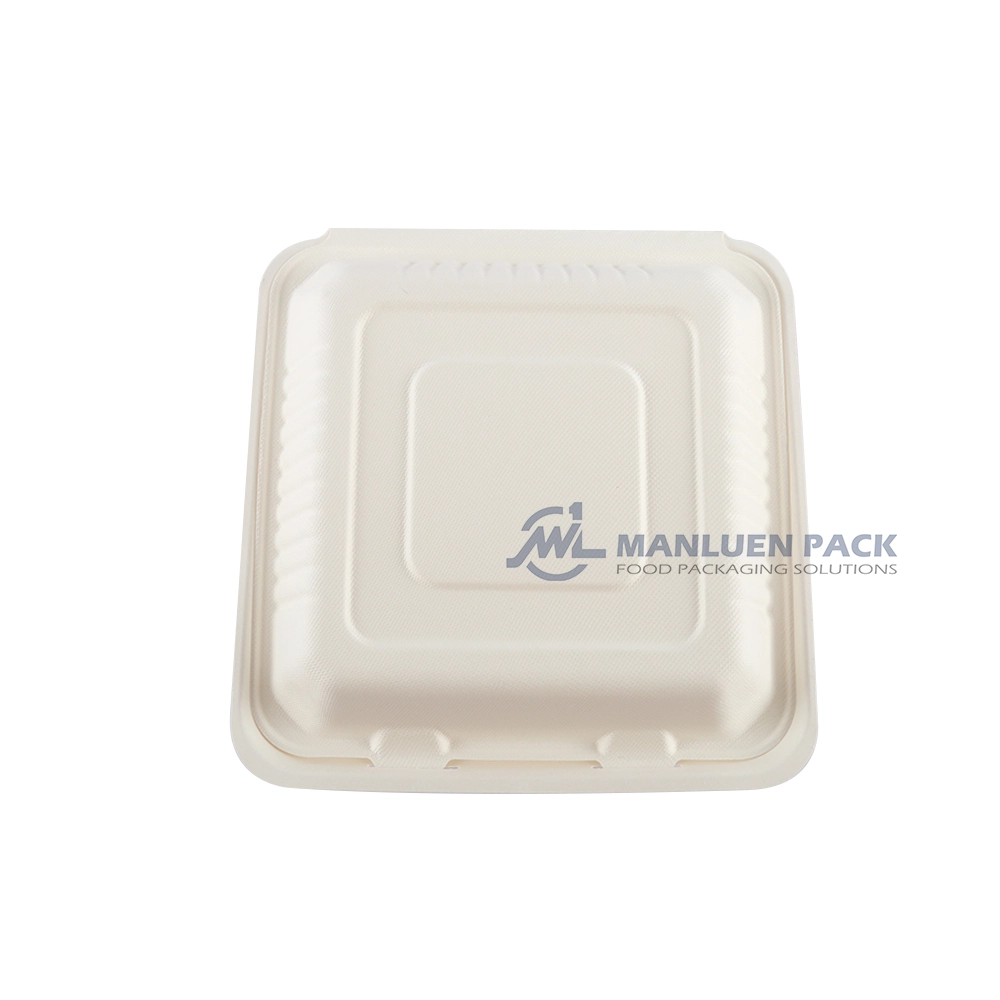
WL-BG93 Three-Compartment Bagasse Clamshell
A divided bagasse clamshell designed to keep different meal portions separated.
ITEM#: WL-BG93
Size: 230 × 230 × 75 mm
Material: Bagasse
Microwave-Ready Food Packaging
Certain paperboard packages are intentionally developed for microwave cooking. Examples include specially designed frozen meal trays and microwave popcorn packaging.
Some products incorporate microwave-interactive materials, often called susceptors, to influence how heat is generated or transferred during cooking. These structures are engineered for a particular application rather than added as an improvised modification.
The FDA’s food-contact chemistry guidance discusses microwave-only containers and microwave susceptor packaging as distinct applications with specialized migration-testing considerations.
This is why a product’s original heating instructions matter. A package specifically designed for microwave cooking can be suitable under its prescribed conditions even though an ordinary cardboard box with a similar appearance has no such assurance.
How to Tell If a Cardboard Food Container Is Microwave-Safe
The most reliable starting point is the finished product’s instructions, not its color, thickness, or whether it feels like paper.
Check the Microwave-Safe Label
Look at the bottom, sides, and any accompanying packaging or product information.
A microwave-safe statement may appear as text such as “Microwave Safe” or “Microwavable,” sometimes accompanied by a symbol depicting a microwave oven or wavy lines.
A symbol alone may not explain every permitted use, so read any accompanying instructions. A container may be suitable for reheating but not for extended cooking, or may require a particular procedure for its lid.
It is helpful to distinguish three situations.
| What the packaging says | What you should do |
|---|---|
| Microwave-safe, with specific instructions | Follow the stated time, power, food, and lid conditions |
| Do not microwave or not recommended for microwave use | Transfer the food to another suitable container |
| No microwave information available | Do not assume suitability; use a known microwave-safe container |
The absence of a label does not prove that a product will fail in the microwave. It means you lack the information needed to confirm its intended use.
If the original packaging has been discarded, the manufacturer’s product specification or instructions may provide the answer.
Do Not Confuse Recycling Symbols with Microwave Approval
A triangular recycling symbol does not establish that a container is microwave-safe.
Plastic resin identification codes, such as #5 for polypropylene (PP), identify material categories. They are not universal microwave-use certifications.
This distinction matters particularly when a cardboard container has a separate plastic lid. Even if the lid’s material is identifiable, its microwave suitability still depends on the finished product and its instructions.
Likewise, a food-contact claim or a statement that packaging uses a particular food-grade material does not automatically authorize microwave heating.
Check Every Part of the Container
A microwave-safe statement for the tray does not necessarily cover its lid or accessories.
Paperboard takeout packaging may have plastic windows, transparent lids, metal handles, staples, foil components, or other attachments. A container may also have a lining that is not visible from the outside.
Do not assume that removing a metal handle or peeling away a liner makes the remaining box microwave-safe. The manufacturer may not have designed or evaluated the modified package for that use, and removing a structural component could damage it.
If the instructions do not clearly cover the complete container, contact the manufacturer or transfer the food.
What Can Happen When You Microwave the Wrong Cardboard Container?
The principal concerns are not all the same. Some involve the package’s physical condition, others involve substances transferring into food, and some relate to fire or improper food heating.
Understanding the differences helps avoid both unnecessary alarm and misleading safety claims.
Chemical Migration from Packaging Materials
Food packaging can contain substances that move into food under certain conditions. This process is called chemical migration.
Migration depends on the materials involved, their concentration, contact time, temperature, food composition, and other exposure conditions.
It is not accurate to say that every detectable migration event is automatically dangerous. Food-contact safety assessments consider both the amount of a substance that may migrate and the potential health effects associated with that exposure.
The FDA explains that its review of food-contact substance authorizations involves migration information and toxicological data to evaluate safety for the intended use.
That qualification is essential: a material suitable for ordinary food contact is not necessarily validated for microwave heating.
For cardboard packaging, attention may be needed not only for the paper fibers but also for coatings, adhesives, inks, and other components of the finished article.
The FDA’s regulatory guidance for food-contact materials identifies separate regulatory provisions for adhesives and coatings under 21 CFR 175, paper and paperboard components under 21 CFR 176, and polymers under 21 CFR 177.
These provisions govern relevant substances and their authorized uses. They are not a blanket microwave-safety certification for every finished cardboard food container.
Heat, Grease, and Food Composition
The food inside the container can influence the temperatures experienced during reheating.
Water-rich foods, oily meals, and thick portions do not necessarily heat in the same way. Hot oil or concentrated fatty areas may create more demanding contact conditions than relatively mild warming of a water-rich food.
This is particularly relevant to packaging used for fried foods, greasy meats, cheese, or meals containing hot sauces and oils.
The FDA’s recommendations for microwave-container migration testing explicitly recognize food composition, heating time, food mass and shape, and container shape as factors affecting temperature. Its recommended testing for microwave-only food-contact applications includes both fatty-food and aqueous-food simulants under specified temperature and time conditions.
Those testing conditions are technical evaluation protocols, not suggested cooking temperatures or times for consumers.
The practical implication is that a packaging manufacturer’s microwave-use claim should be appropriate for the intended food and heating conditions. A result obtained for one application should not automatically be extended to every food type.
Scorching, Sparks, and Fire
Paperboard is combustible. Under sufficiently severe conditions, it can scorch or ignite.
Metal components can introduce another problem. Microwaves interact differently with metals than with paper or food, and certain configurations can produce electrical arcing, visible as sparks.
This is one reason ordinary takeout cartons with wire handles, foil linings, or metal fasteners should not be treated like plain microwave cookware.
The FDA’s microwave oven guidance generally advises against metal pans or aluminum foil unless the microwave oven’s instructions permit the specific use.
That is different from saying every engineered package containing a metallic layer must behave identically. Specialized microwave food packaging may use controlled microwave-interactive components, but those designs do not justify experimenting with ordinary metal-containing containers.
An empty cardboard box, an improvised paper enclosure, or a dry package being heated without its intended food load should not be treated as a safe microwave experiment.
Adding moisture to a box or placing food inside it does not independently establish microwave suitability.
Softening, Leaking, and Food Quality
Not every problem involves toxic substances or fire.
Paperboard can absorb moisture, lose stiffness, or become less stable during heating. A food box that holds a sandwich securely at room temperature may perform differently when exposed to steam and hot liquid.
Coatings or seams may also behave differently at elevated temperatures if they were not designed for those conditions.
These changes can affect how safely the container can be handled, particularly when it contains soup, pasta, or other heavy, wet foods.
Separately, microwave reheating may change the food’s texture. Bread can become chewy, while fried foods may lose their crispness. Those results do not, by themselves, demonstrate that the packaging released harmful chemicals.
Container integrity, chemical safety, and food quality are related considerations, but they should not be treated as interchangeable.
Does Microwave Time or Power Make Cardboard Safe?
There is no universal microwave time or power setting that makes every cardboard food container safe.
Advice such as “microwave cardboard for less than two minutes” or “use low power and it will be fine” leaves out too many important variables.
A 700-watt microwave running for 55 seconds is not equivalent to every other microwave operating for the same duration. More importantly, neither the power rating nor the elapsed time identifies the construction of the food container.
The amount of food, its moisture and fat content, the package design, and how heat is distributed all influence the actual conditions.
Lower power may alter the heating process, but it cannot establish that an unknown coating, adhesive, or lid is suitable for microwave use.
The same is true of using short intervals, monitoring the container, or adding parchment paper. These measures do not replace product-specific instructions.
Can You Test a Cardboard Container with a Cup of Water?
A commonly suggested household test involves placing a dish alongside a cup of water, microwaving briefly, and checking whether the dish becomes hot.
Such tests can provide limited information about how particular dinnerware responds to microwave energy. They are not a complete safety assessment of disposable food packaging.
A cardboard container that does not visibly deform during a one-minute test has not thereby been shown to meet food-contact migration requirements or perform safely with hot oil, sauces, or prolonged contact.
Nor can touching the outside reveal whether an unknown internal coating is appropriate for the intended food.
For disposable cardboard food containers, manufacturer information is more useful than an improvised test.
How to Reheat Food When the Cardboard Container Is Not Microwave-Safe
If you cannot establish that the original packaging is microwave-safe, the simplest approach is to remove the food and reheat it in suitable cookware.
A microwave-safe glass or ceramic dish is generally a practical alternative, provided the particular product is intended for that use and is free of unsuitable metallic decoration.
For wet foods such as pasta, rice dishes with sauce, soups, or vegetables, use a container capable of holding the food securely. A napkin or flat paper towel is not an equivalent replacement for a deep dish.
Covering food appropriately can help retain moisture and improve heating, but use a microwave-safe lid or another covering intended for microwave use. Follow instructions for venting steam, and do not seal food tightly in a container that is not designed for pressure buildup.
Certain wax papers, parchment papers, and microwave-safe paper towels are suitable for specific microwave uses. They are not, however, universal substitutes for a microwave-safe dish, and placing them inside an unsuitable cardboard box does not make that box acceptable.
The USDA’s microwave utensil guidance provides additional information on suitable cookware and paper products.
For refrigerated leftovers, food safety is also important. Arrange the food evenly, stir or rotate it as appropriate, and allow standing time so heat can distribute more uniformly.
According to FoodSafety.gov’s guidance on restaurant leftovers, leftovers should be reheated to an internal temperature of 165°F (74°C), checked with a food thermometer.
That temperature is a food-reheating safety target, not a temperature certification for the cardboard container.
For serving and storage needs, compare food bowl formats and food storage containers, then verify the intended use of the selected base and lid.
If preserving crispness matters, a stovetop, toaster oven, or conventional oven may produce a more desirable result for certain foods. Transfer the food to cookware suitable for the chosen appliance; do not assume that a cardboard box acceptable for microwave heating is also oven-safe.
What If You Already Microwaved Food in a Cardboard Takeout Box?
If you have already reheated and eaten food from an unmarked cardboard container, that fact alone does not establish that harmful chemical exposure occurred.
A useful assessment starts with the actual circumstances rather than a blanket assumption that every paper box is dangerous.
Consider what type of container you used, whether it had a lining or metal parts, how long it was heated, and whether anything visibly changed.
If the container remained intact and there was no scorching, smoke, unusual odor, or obvious material transfer, those observations are relevant. However, the absence of visible damage cannot prove that no substances migrated into food.
Conversely, a short, one-time use does not by itself establish a particular harmful exposure or predict a health outcome. Without knowing the package formulation and actual conditions, a precise risk assessment is not possible.
If the container scorched, produced smoke, developed a damaged or melted lining, or left visible packaging residue on the food, the prudent choice is to stop using it and discard food that may have been contaminated. Do not assume that scraping away visibly affected material makes the remaining food safe.
If you are concerned about a possible exposure or develop symptoms, seek advice from an appropriate medical professional rather than relying on generalized online reassurance.
For future meals, use the original container only when its microwave suitability can be confirmed.
Frequently Asked Questions
Can I Microwave a Cardboard Takeout Box for 30 Seconds?
Thirty seconds is not a universal safe limit. A short heating period does not establish the suitability of an unknown paperboard container, coating, or lid. If the box is labeled microwave-safe, follow its instructions. Otherwise, transfer the food.
Can I Microwave a Cardboard Food Container with the Lid On?
Only if the manufacturer confirms that both the container and lid are suitable for the intended microwave use.
A paperboard base may be paired with a plastic or other lid having different heat limitations. Some microwave-ready designs require the lid to be loosened or vented, while others require removal. Follow the instructions for the complete package rather than assuming the lid has the same properties as the base.
Can You Microwave a Pizza Box?
Do not assume an ordinary pizza delivery box is microwave-safe. Its paperboard construction may include inks, adhesives, or other components that were not intended for reheating.
For leftover pizza, move the slices to a microwave-safe plate or use suitable cookware with another reheating method. The fact that a pizza was delivered hot inside the box is not evidence that the box was designed for microwave cooking.
Can You Microwave Kraft Paper Food Containers?
Some kraft paper food containers may be designed for microwave reheating, but kraft refers to a type of paper material rather than a microwave-safety classification.
A kraft takeout box can also have a grease-resistant coating, lining, adhesive seams, or other components. Check the finished product’s specifications and heating instructions.
Can You Microwave a Tetra Pak Carton?
Do not confuse ordinary cardboard takeout packaging with aseptic beverage cartons.
Many aseptic cartons have multilayer constructions, including paperboard, polymers, and a thin aluminum barrier. Tetra Pak’s packaging information explains this construction, while the USDA advises against microwaving aseptic cartons containing aluminum foil.
Pour the contents into an appropriate microwave-safe container rather than heating an ordinary aseptic carton directly. Do not assume every carton construction is identical; follow the specific product instructions.
Does Food-Grade Cardboard Mean Microwave-Safe Cardboard?
No. Food-contact suitability concerns the materials and conditions under which a package is intended to contact food. Microwave suitability additionally requires that the finished product be appropriate for its actual heating application.
A cardboard food container may be acceptable for transporting hot food without being intended for microwave reheating. Terms such as food-grade, recyclable, or compostable do not resolve that distinction.
Bowls and Divided Meal Containers
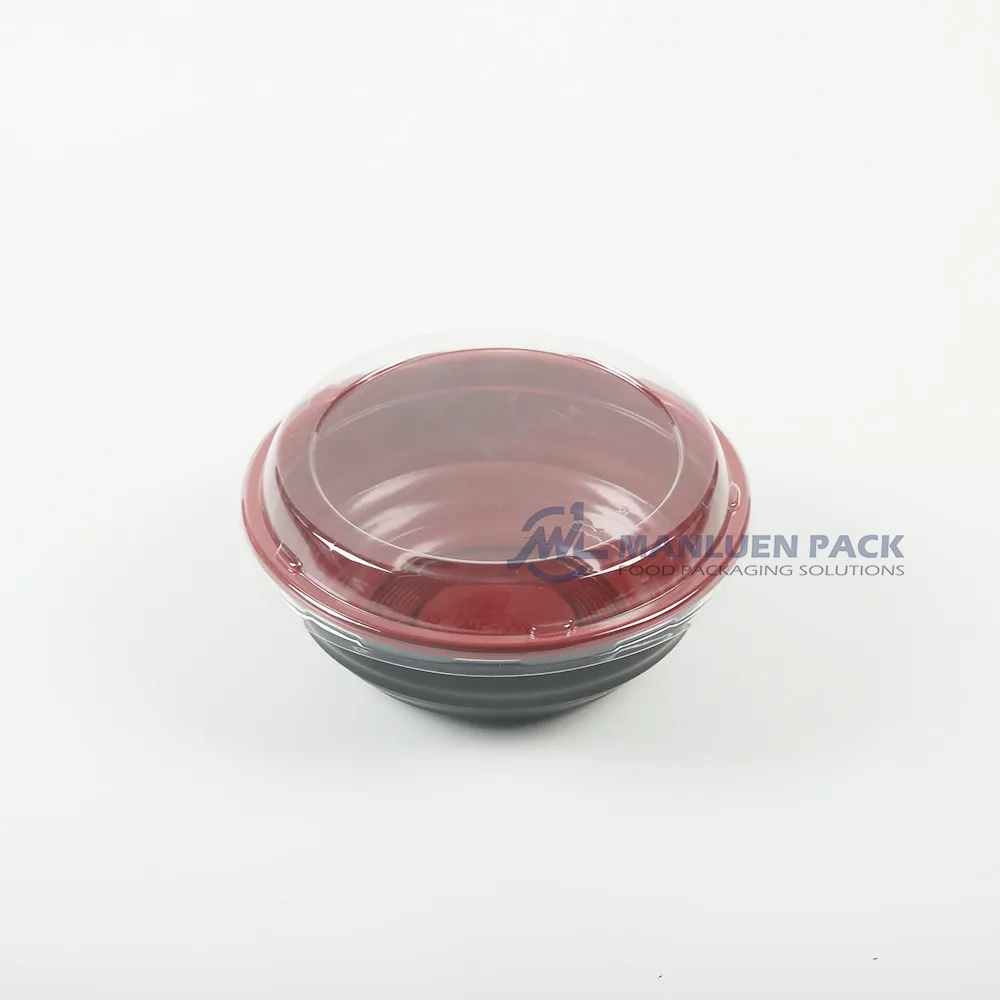
WL-700 Round Food Bowl
A round food bowl format for takeaway meals and foodservice presentation.
ITEM#: WL-700
Size: Ø172 × 79 mm
Pack: 300 PCS/CTN
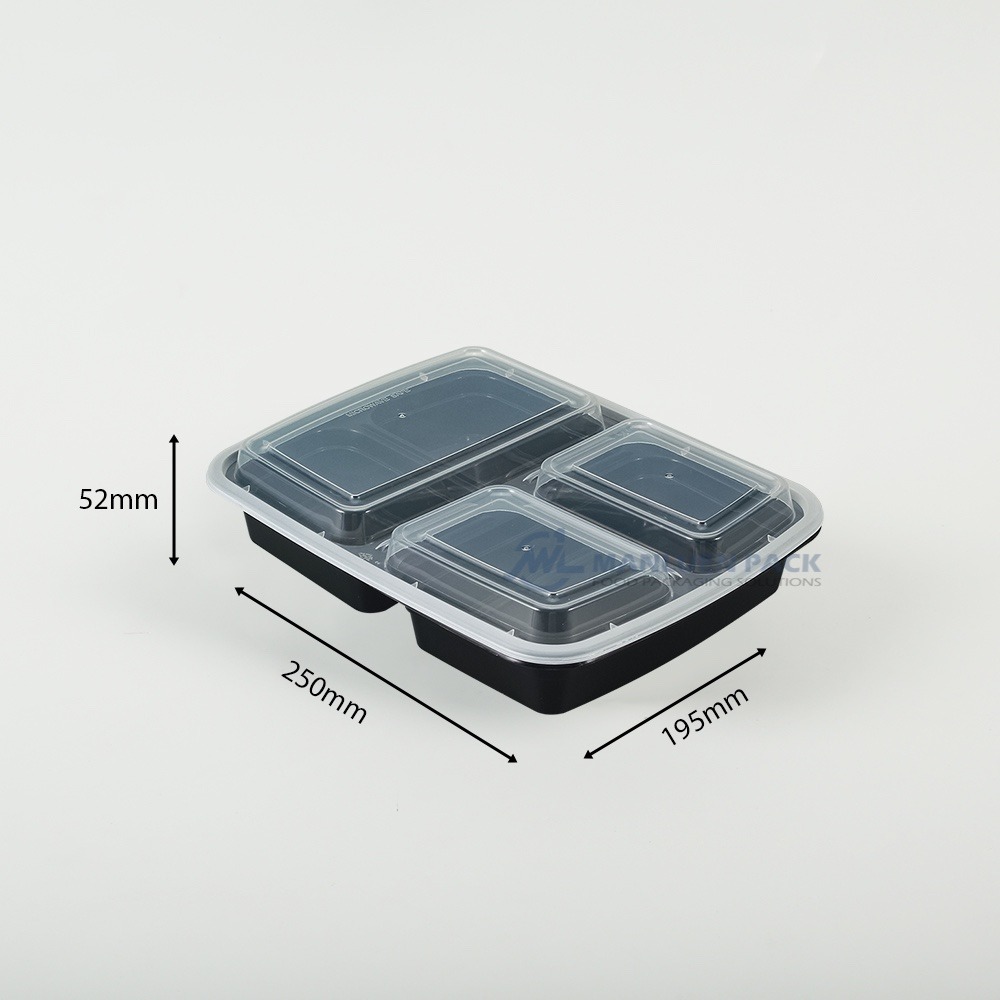
3039 Three-Compartment Meal Prep Container
A divided container format for separating multiple food portions during serving and transport.
ITEM#: 3039
Size: 250 × 195 × 52 mm
Pack: 150 PCS/CTN
Conclusion
Cardboard food containers are not all microwave-safe or all microwave-unsafe. Their suitability depends on the finished package, its materials and components, and the conditions for which it was designed.
The most dependable rule is to follow the specific container’s microwave instructions. If those instructions are missing or prohibit microwave use, transfer the food to suitable cookware. Neither a short heating time nor an apparently plain paperboard construction is enough to confirm safety.
For restaurants, foodservice distributors, and packaging buyers, microwave suitability is a product-specific requirement worth clarifying before selecting a food container. Manluen Pack supplies food packaging products for commercial applications. To discuss your packaging requirements and intended use, Contact us.

ManLuen Plastic Packaging Company, which is specialized in the production of Plastic Food Packaging for more than 20 years. Our products are made from 100% virgin and BPA-Free PP, PS, and OPS comply with FDA and European Standards.
 EN
 ZH
 FR
 PT
 ES
 KO
 JA