
Introduction
Fruit trays for parties should keep cut fruit organized, visible and easy to serve. The best tray depends on the number of guests, the type of fruit, the time spent in transit and whether the food will remain covered during display.
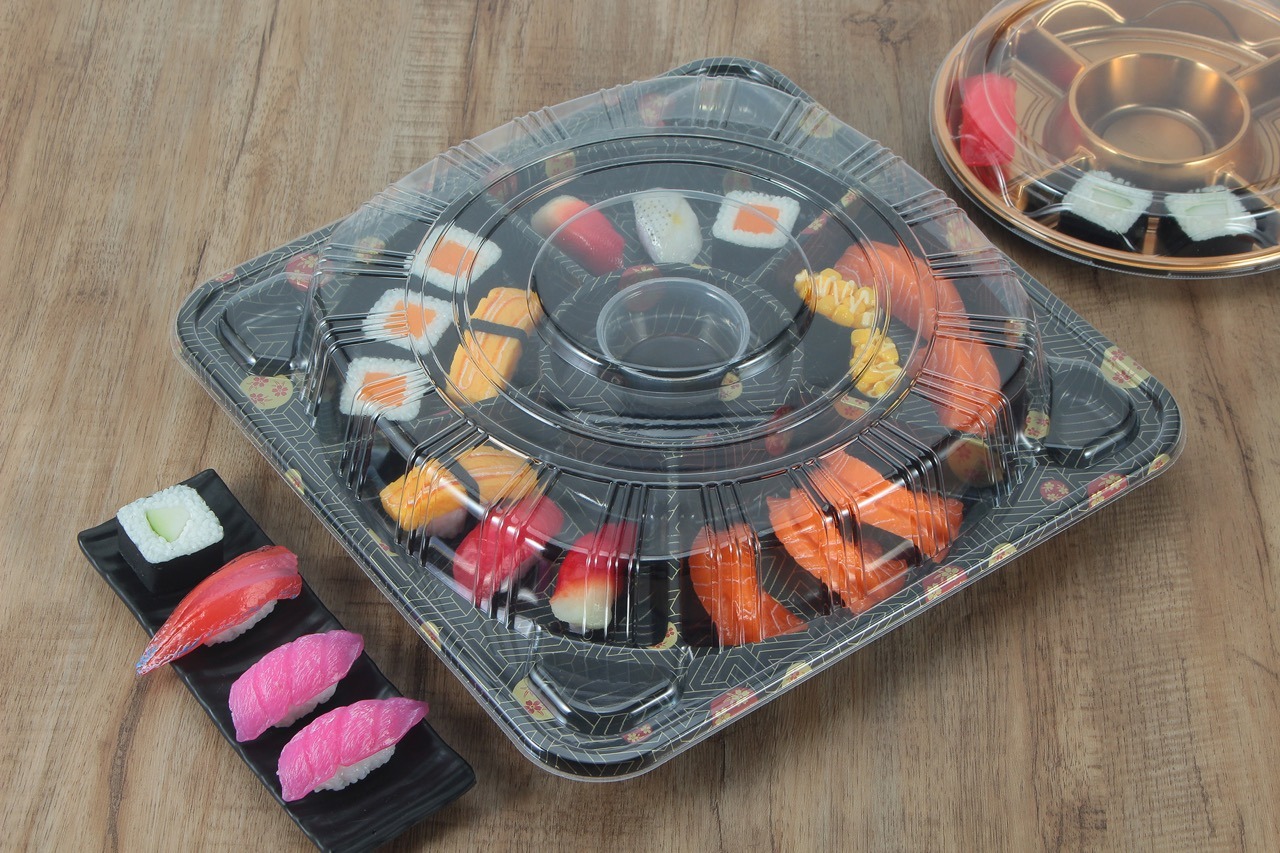
Large round party trays work well for mixed fruit, sushi, sandwiches and appetizers. The WL-64 large round party tray, shown in this guide, has a clear lid and a wide base that can accommodate fruit and other prepared foods. Buyers can also compare different plastics in our guide to food packaging materials.
This article explains how to select a tray, arrange the food and check the packaging before placing a wholesale order.
Why Fruit Trays Work Well for Parties
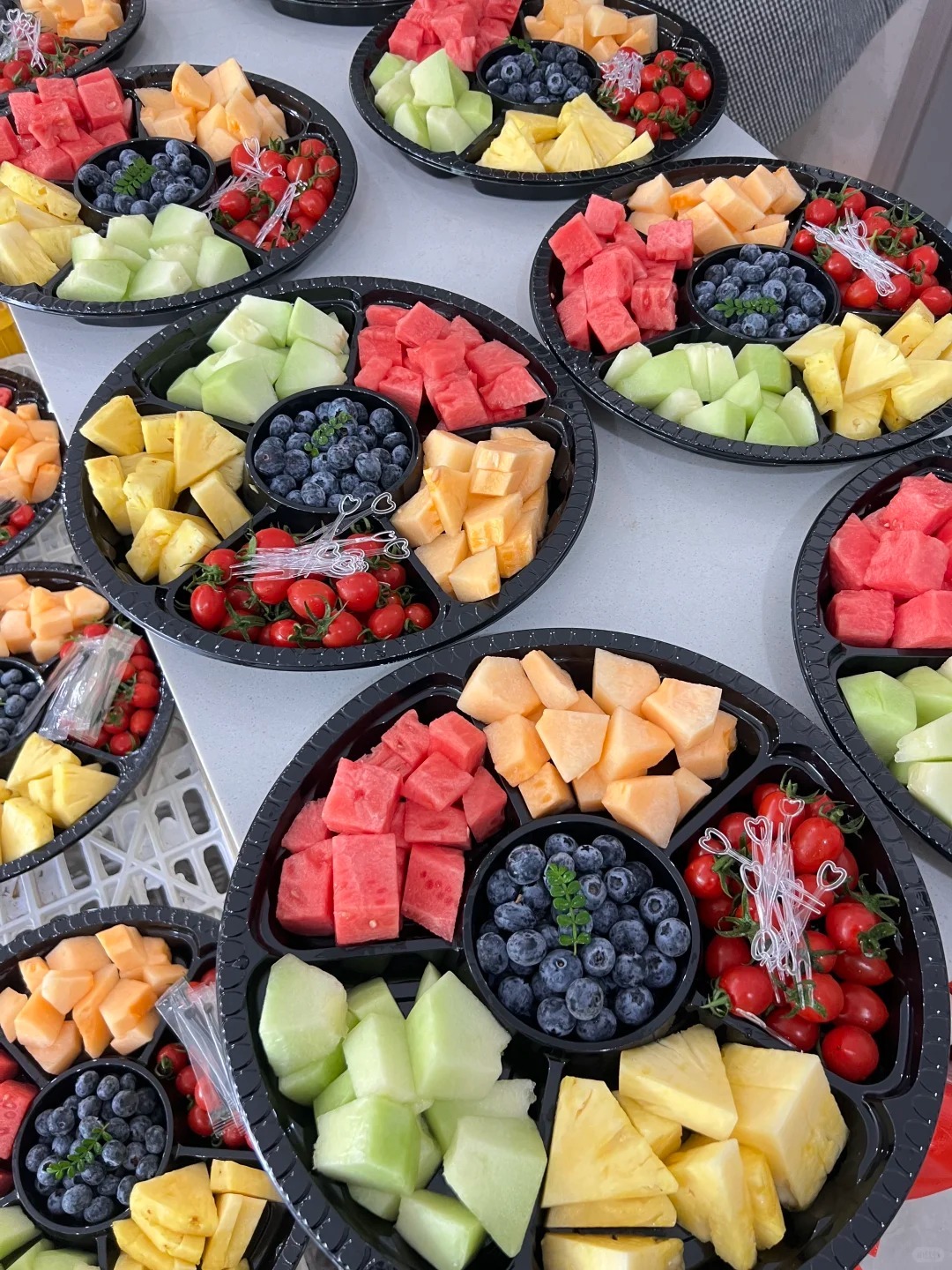
A fruit tray gives guests a clear view of the food and makes individual pieces easy to pick up. It also keeps different fruits within one defined serving area instead of spreading containers across the table.
Fruit platters are useful for birthday parties, weddings, office meetings, supermarket displays and catered events. They can sit beside sushi, sandwiches, cheese, pastries or cold appetizers without changing the basic service setup.
- Clear presentation: A transparent lid shows the arrangement before service.
- Faster setup: Staff can prepare and cover the tray before guests arrive.
- Simpler transport: A fitted lid protects the arrangement during handling.
- Controlled portions: The tray size helps the buyer plan the amount of food for each table or order.
- Easy cleanup: A disposable tray reduces the number of serving dishes that must be collected and washed.
WL-64 as a Fruit and Party Tray
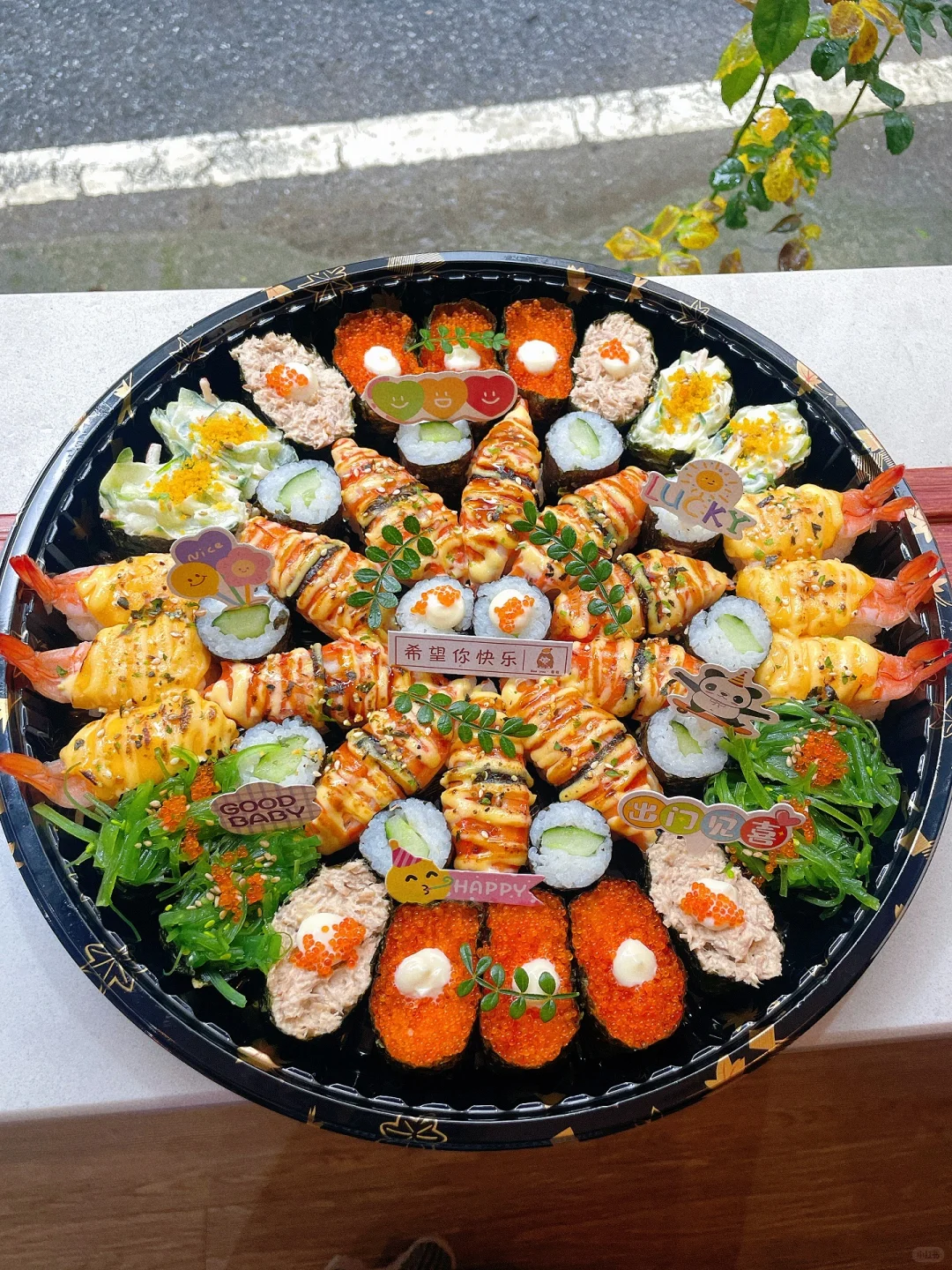
Manluen lists the WL-64 as a large round sushi party tray with a clear lid. The product page gives a base size of Ø350 × 50 mm and a lid size of Ø355 × 20 mm. It also states that the base can hold fruit, appetizers and other prepared foods in addition to sushi.
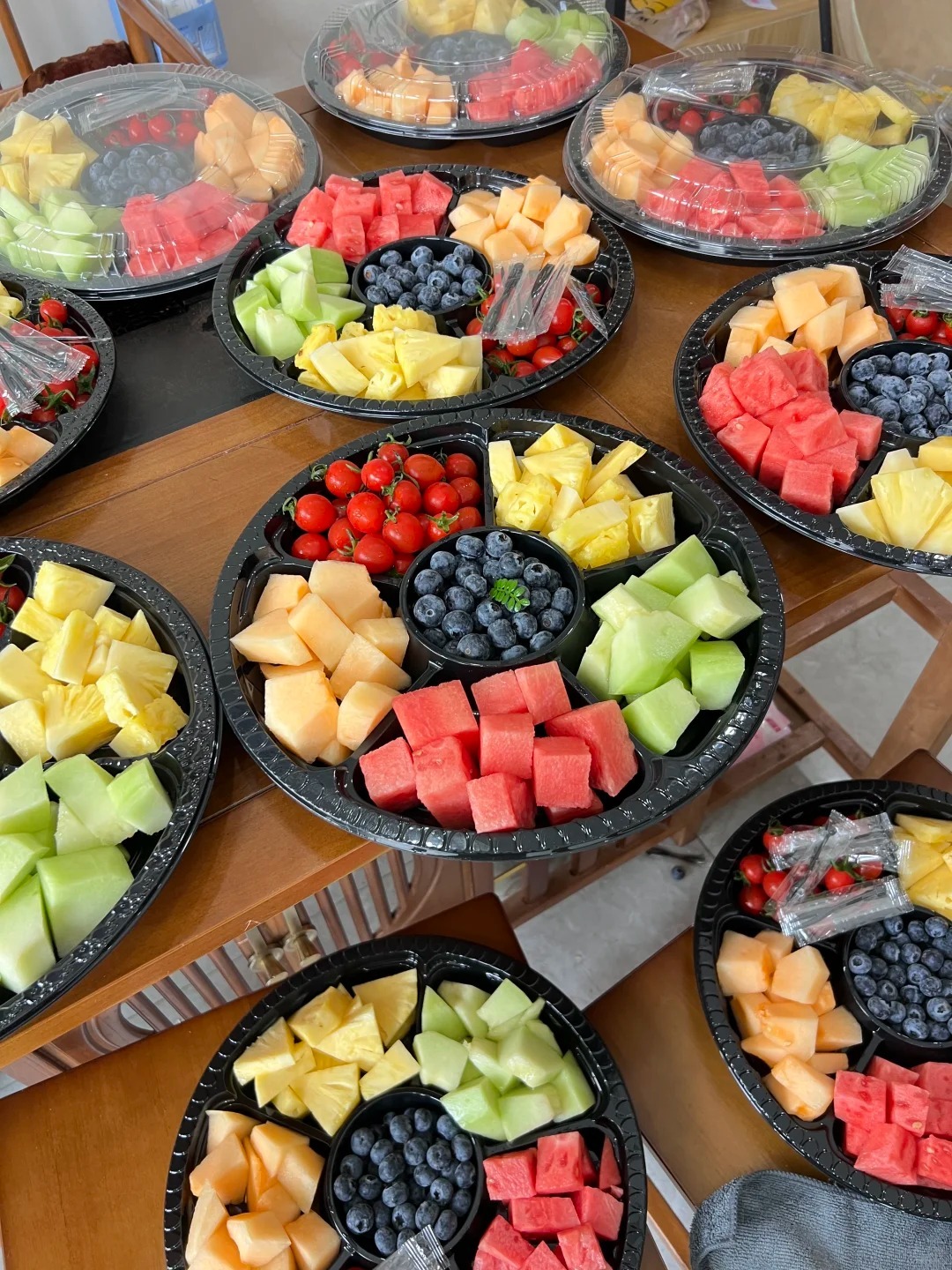
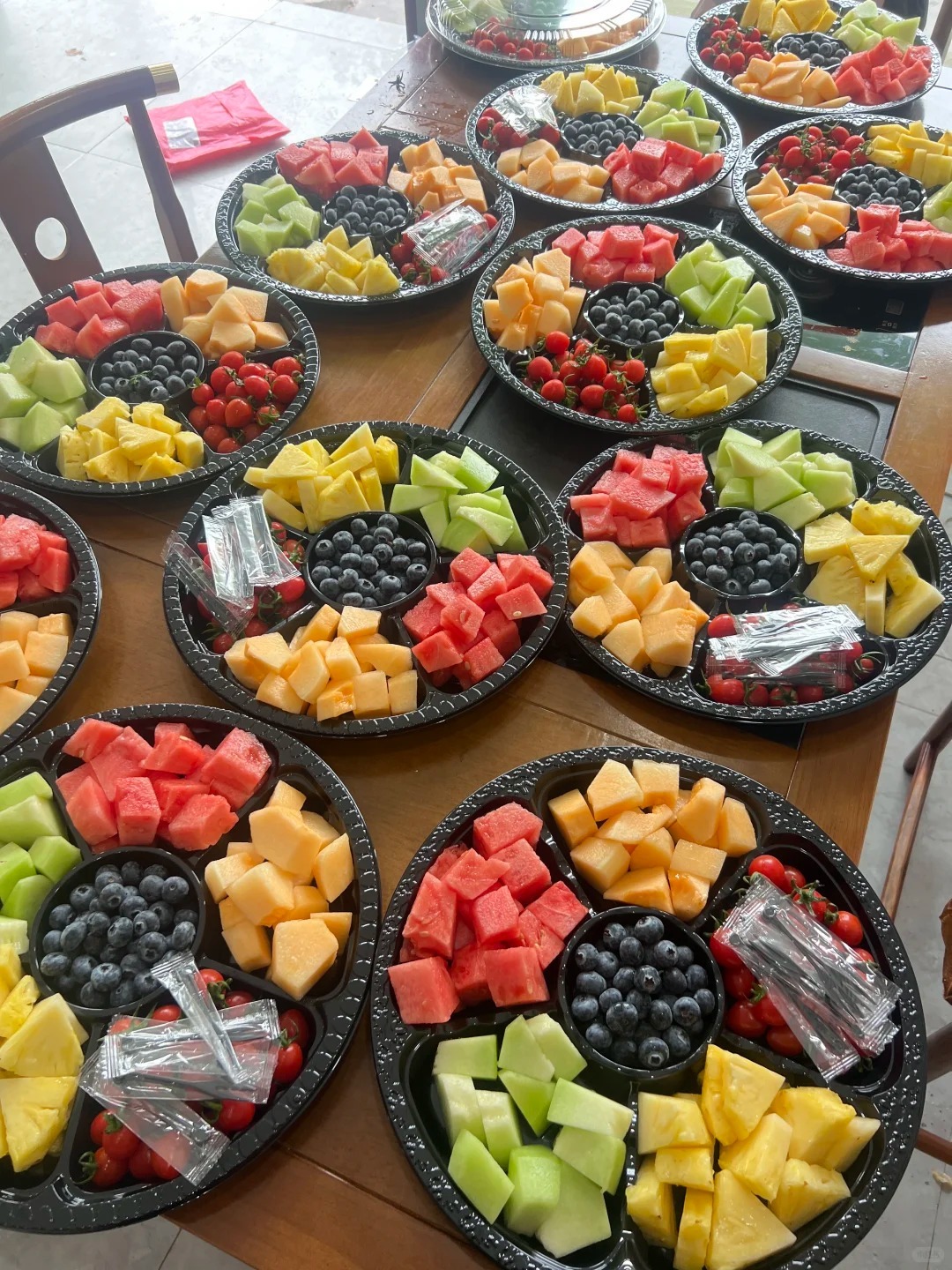
The round shape supports radial arrangements. Larger pieces can sit around the outside, while berries, grapes or a small dip cup can occupy the center. The lid keeps the food visible during refrigerated display, takeaway and short-distance transport.
The current WL-64 page lists PS, PP, PET and OPS as available material options. Buyers should confirm which material applies to the quoted base and lid because appearance alone does not identify the resin or its permitted conditions of use.
Choose the Tray Around the Menu
Start with the food rather than the tray. List the fruits and side items, estimate the prepared volume and decide whether they can share one surface. Wet fruit, dry snacks and sauces behave differently during storage and transport.
Mixed Fruit
Use firm pieces such as melon, pineapple and apple to build the main structure. Place smaller fruit such as berries and grapes in gaps. Keep very juicy fruit in a separate area or use a liner when appropriate, because excess liquid can move across the tray during transport.
Sushi and Fruit
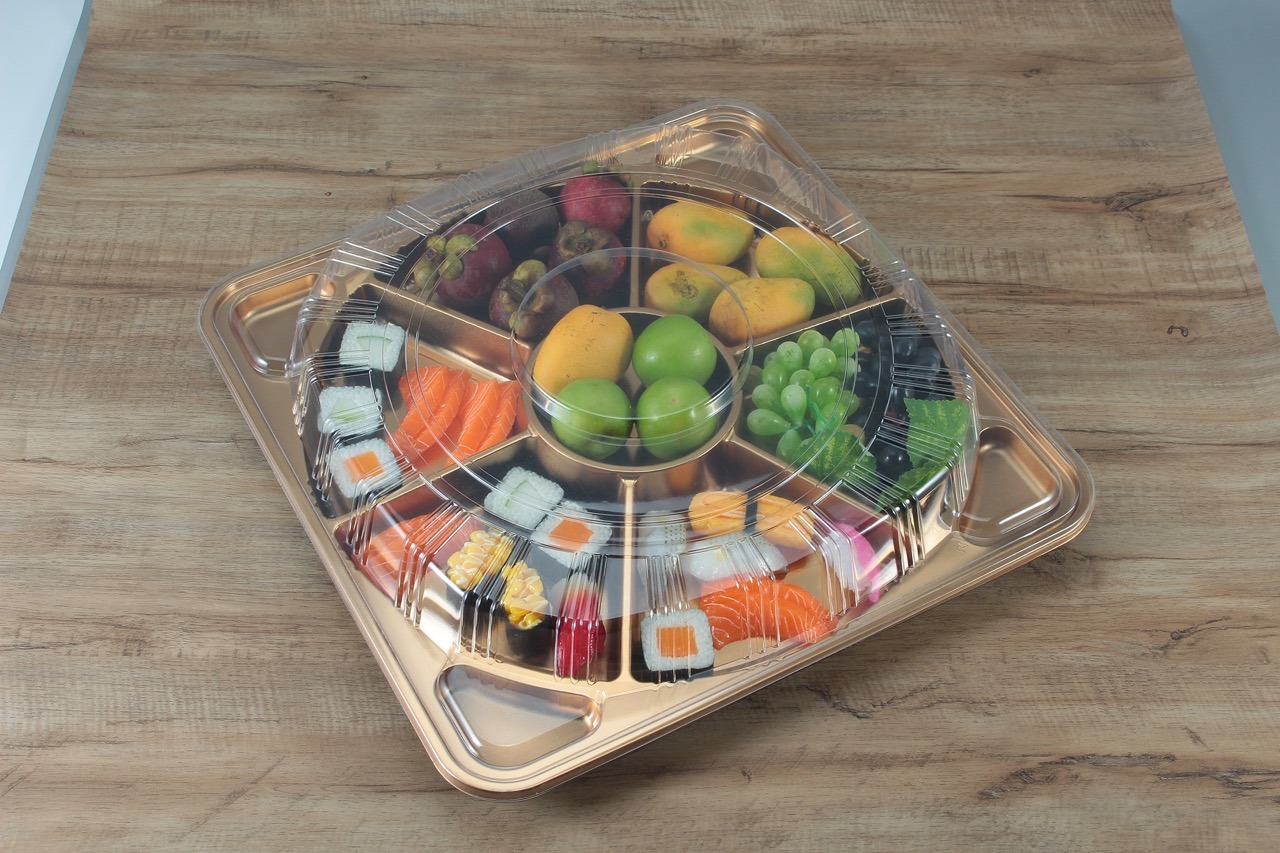
A covered round tray can support a mixed event menu, but ready-to-eat fruit should remain separate from raw seafood and the tools used to prepare it. For sushi-only packaging, see our guide to choosing disposable plastic sushi trays.
Sandwiches and Appetizers
Sandwiches need enough base area to avoid crushing and enough lid clearance for layered fillings. Small appetizers may benefit from compartments that reduce movement. Sauces and dips should go in separate closed cups or suitable plastic food bowls rather than being poured directly onto a flat platter.
Prepared Portions and Leftovers
Large display trays are not always the best option for individual portions or leftover storage. Smaller covered food storage containers can separate portions and reduce unnecessary empty space.
How Much Fruit Does a Party Tray Need?
Do not choose a tray only by its outside diameter. The usable surface, fruit shape, garnish and center cup all reduce the available space. Guest count also changes when fruit is the main snack rather than one item in a larger buffet.
A practical test uses the real menu:
- Prepare one representative serving of each fruit.
- Multiply it by the expected guest count.
- Arrange the food on a sample tray without stacking soft fruit too deeply.
- Close the lid and check that it does not touch the food.
- Weigh the completed tray and carry it by the base.
This test shows whether one tray is enough and whether the base remains stable under the finished load.
Compare Common Party Tray Formats
| Format | Best use | Main point to check |
|---|---|---|
| WL-64 large round tray | Fruit, sushi, appetizers and shared platters | Selected material, finished load and lid fit |
| WL-53 round party tray | General party-food presentation | Diameter, food height and transport setup |
| KS-65 divided party tray | Menus that need separated foods or sections | Compartment dimensions and portion plan |
| Individual covered container | Single portions and leftovers | Capacity, closure and storage temperature |
Use the comparison as a starting point. Product drawings and physical samples should decide the final choice.
Material Choice: PS, PP, PET and OPS
Party trays may use different plastics for the base and lid. Each finished configuration must be evaluated for its intended food, temperature and contact time.
PS
PS can provide a rigid base and clean presentation for cold-food applications. It should not be assumed to tolerate reheating or microwave use.
PP
PP is commonly used where greater heat resistance is needed. However, a PP resin name does not automatically make every tray or lid microwave-safe. The finished product must carry suitable instructions and supporting documentation.
PET
PET offers good clarity and is widely used for cold-food display. Standard PET trays should not be treated as microwave containers unless the exact product is designed and labeled for that use.
OPS
OPS can provide clarity and a crisp formed shape for chilled presentation. Buyers should confirm temperature limits and impact performance with the supplier.
The material should match the actual service conditions. Our guide on how to choose food packaging explains how food type, temperature, storage and transport affect the decision.
Keep Cut Fruit Cold and Protected
A lid helps protect the arrangement, but it does not replace temperature control. The FDA advises consumers to buy pre-cut produce only when it is refrigerated or surrounded by ice. It also recommends storing perishable fresh produce at 40°F (4°C) or below.
Prepare fruit with clean hands and utensils. Keep it separate from raw meat, poultry and seafood. During service, return replacement trays to refrigeration until needed rather than placing the entire event supply on the table at once.
Condensation can also affect presentation. Cool the fruit before closing the lid, avoid unnecessary temperature changes and test the finished tray under the same chilled conditions planned for the event.
Food-Contact Compliance
Terms such as “food grade” and “FDA approved” should not replace product-specific evidence. FDA explains that a food-contact substance that is a food additive must be authorized for its intended use before it is marketed in the United States. The intended food and conditions of use matter.
For a buyer, this means checking the finished tray, lid, colorants and other components for the target application. Our guide to food-grade packaging explains which documents to request. Buyers with U.S. or EU requirements can also review the plastic food packaging compliance guide.
Manluen provides general company documents on its certifications page. Ask for the report, declaration or specification that applies to the exact tray material, lid and intended market.
Transport and Display Test
Fruit shifts easily when a tray tilts. Before placing a large order, pack a sample with the heaviest expected arrangement and run a simple handling test.
- Lift the tray from the base rather than the lid.
- Check whether the base flexes under the finished load.
- Confirm that the lid remains attached when the tray is turned or moved.
- Stack the trays only as high as the supplier permits.
- Place the tray in the actual delivery carton or bag.
- Inspect the fruit and lid after a realistic delivery route.
If the arrangement slides, use a different layout, reduce the load or choose a divided tray. Do not rely on extra tape to correct a closure that does not fit.
Wholesale Buying Checklist
A clear request for quotation helps the supplier recommend the correct configuration. Include:
- Tray model, diameter and required depth
- Food type and expected serving temperature
- Base and lid material
- Desired color, pattern and clarity
- Required load and stacking method
- Order quantity, case pack and pallet requirements
- Target market and food-contact documents
- Delivery date and destination
- Label, sleeve or custom packaging requirements
Commercial terms vary by model and customization. Review Manluen’s manufacturing background, then request a sample and current quote. Test the sample with the real menu before confirming a production order.
Frequently Asked Questions
Can the WL-64 hold fruit as well as sushi?
Yes. The current product description states that its 50 mm-deep base can accommodate fruit, appetizers and other prepared foods. Buyers should still test the finished arrangement and load.
Should a fruit tray have compartments?
Compartments help separate foods with different moisture levels, flavors or portion sizes. An open round tray gives the arranger more freedom, while a divided tray controls movement more effectively.
Can disposable party trays go in the microwave?
Only when the exact tray and lid are identified, tested and labeled for microwave use. Do not rely on appearance or a general material name. Fruit trays are normally used for chilled or room-temperature service.
How do I prevent condensation inside the lid?
Cool the prepared fruit before closing the tray and maintain a steady chilled temperature. Warm fruit placed into a closed cold container can increase condensation.
What is the minimum order quantity?
MOQ depends on the model, stock, color, printing and packaging configuration. Request the current MOQ for the exact product rather than relying on a general number.
結論
The best fruit trays for parties fit the menu, remain stable under the finished load and keep the food covered during storage and transport. The WL-64 provides a large round format for fruit, sushi and appetizers, while divided and smaller containers suit different portioning needs. Confirm the material, dimensions, compliance documents and commercial terms, then test a filled sample before ordering.
For more selection and sourcing topics, browse Manluen’s food packaging guides.
References
U.S. Food and Drug Administration (FDA). Selecting and Serving Produce Safely.
Used for the refrigeration, separation and handling guidance for fresh and pre-cut produce.
U.S. Food and Drug Administration
U.S. Food and Drug Administration (FDA). Food Packaging & Other Substances that Come in Contact with Food.
Used to explain how FDA regulates food-contact substances and why the intended conditions of use matter.
U.S. Food and Drug Administration

マンルエンプラスチック包装有限公司は、20年以上にわたりプラスチック食品包装の製造を専門としています。当社の製品は、100%のバージン素材とBPAフリーのPP、PS、OPSを使用し、FDAおよびヨーロッパ基準に準拠しています。
 JA
JA  EN
EN  ZH
ZH  FR
FR  PT
PT  ES
ES  KO
KO