
Introduction
How to choose the right food packaging for your product in 2026 starts with the food itself—not with a resin code, a supplier catalog, or the lowest unit price.
The package must protect the food from production through storage, transportation, retail display, customer handling, and final use. A tray that works for chilled sushi may fail with a hot prepared meal. A clear cake container may provide excellent shelf presentation but deform during reheating. A compostable clamshell may support a sustainability goal but offer little practical benefit if the local waste system cannot process it.
For US restaurants, supermarket prepared-food teams, food manufacturers, bakeries, sushi operators, CPG brands, and importers, packaging selection also has a growing compliance dimension. FDA food-contact requirements, the US phase-out of certain PFAS grease-proofing uses, the FDA’s continuing review of phthalates, state restrictions, and the EU Packaging and Packaging Waste Regulation all affect the questions buyers should ask in 2026.
This guide explains how to choose packaging for a product by matching food requirements, material properties, package format, distribution conditions, compliance, sustainability, cost, and supplier capability.
In practical terms, how to choose the right packaging for your product and how to select the right packaging options are the same task: translate the product’s real conditions into a testable packaging specification before comparing suppliers.
How to Choose the Right Food Packaging for Your Product: The Short Answer
If you only have time to read one section, use this rule: define what the food must survive before selecting the material or container.
The right choice usually depends on four connected factors:
- Food requirements: temperature, moisture, oil, acidity, shelf life, and contamination risk.
- Package performance: barrier properties, clarity, rigidity, heat resistance, sealing, and stackability.
- Use and distribution: retail display, takeaway, delivery, refrigeration, freezing, reheating, or oven use.
- Business requirements: compliance, sustainability, total cost, branding, and supplier reliability.
There is no universal “best” food packaging material. Sushi packaging often prioritizes refrigerated product visibility and stable arrangement. Frozen-food packaging must remain durable at low temperatures. Hot prepared meals need heat resistance and secure closure. Dry foods may depend more heavily on moisture and oxygen barriers.
Before requesting samples, reverse-map the product in this order:
- Food profile → temperature, oil, moisture, acidity, shelf life.
- Use scenario → display, takeaway, delivery, freezing, reheating, or oven use.
- Container format → tray, bowl, clamshell, cup, hinged box, or foil pan.
- Material and supplier → select only after the first three decisions are clear.
Understand Your Food Product Requirements Before Choosing Packaging
Most packaging mistakes begin with the question, “Which plastic should I buy?” The better question is, “What does this food need throughout its complete lifecycle?”
A package that works for one product may perform poorly for another. Temperature, moisture, fat, acidity, shelf life, visibility, and handling conditions all change the required material and structure.
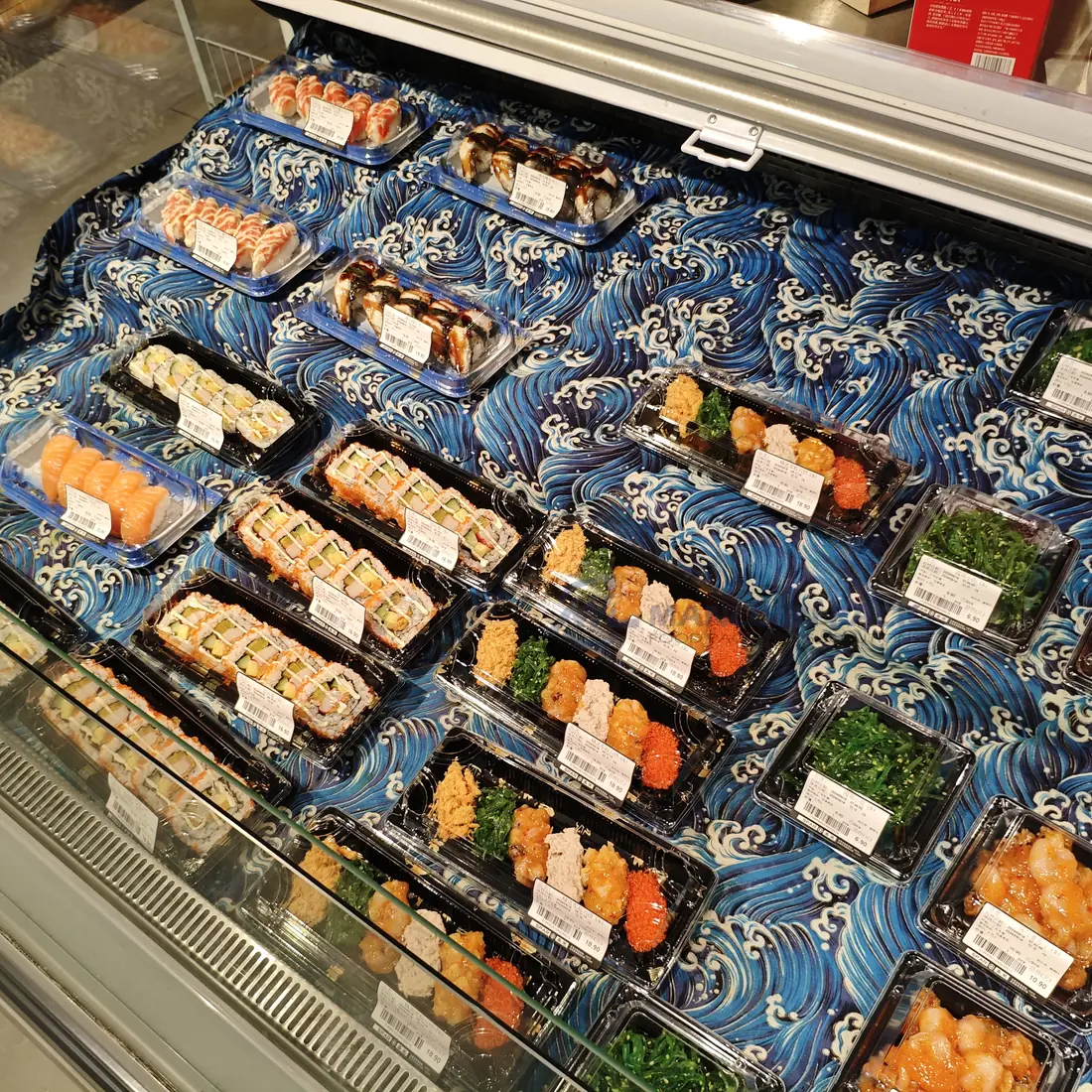
Consider the food type, temperature, and shelf life
Start by documenting the condition of the food when it enters the package and every temperature it may encounter afterward.
Ask:
- Is the food frozen, chilled, ambient, warm, or hot when packed?
- Will the customer refrigerate, freeze, microwave, bake, or grill it?
- How long must the package maintain acceptable quality?
- Does the food contain oil, sauce, acid, or high moisture?
- Can condensation, oxygen, or light damage quality?
- Does the customer need to see the food before purchase?
Refrigerated sushi, salads, cakes, and ready-to-eat meals often benefit from clear packaging because presentation affects the purchase decision. Frozen products need materials and closures that remain functional at low temperatures and tolerate handling during storage and transport. Dry products may need stronger moisture or oxygen barriers to protect texture and shelf life.
The same request—“I need a takeaway box”—can lead to different answers for a cold sushi platter, a hot roast chicken, a layered cake, or a dipping sauce. Define the food first so the package specification is based on actual performance rather than habit.

Consider product presentation and customer experience
Food packaging is both a protection system and a customer-facing display. For fresh and prepared foods, customers often use visible color, arrangement, freshness, and portion size to judge the product before purchase.
This is especially important for:
- Sushi and sashimi
- Ready-to-eat meals
- Fresh produce and salads
- Bakery products and cakes
- Supermarket prepared foods
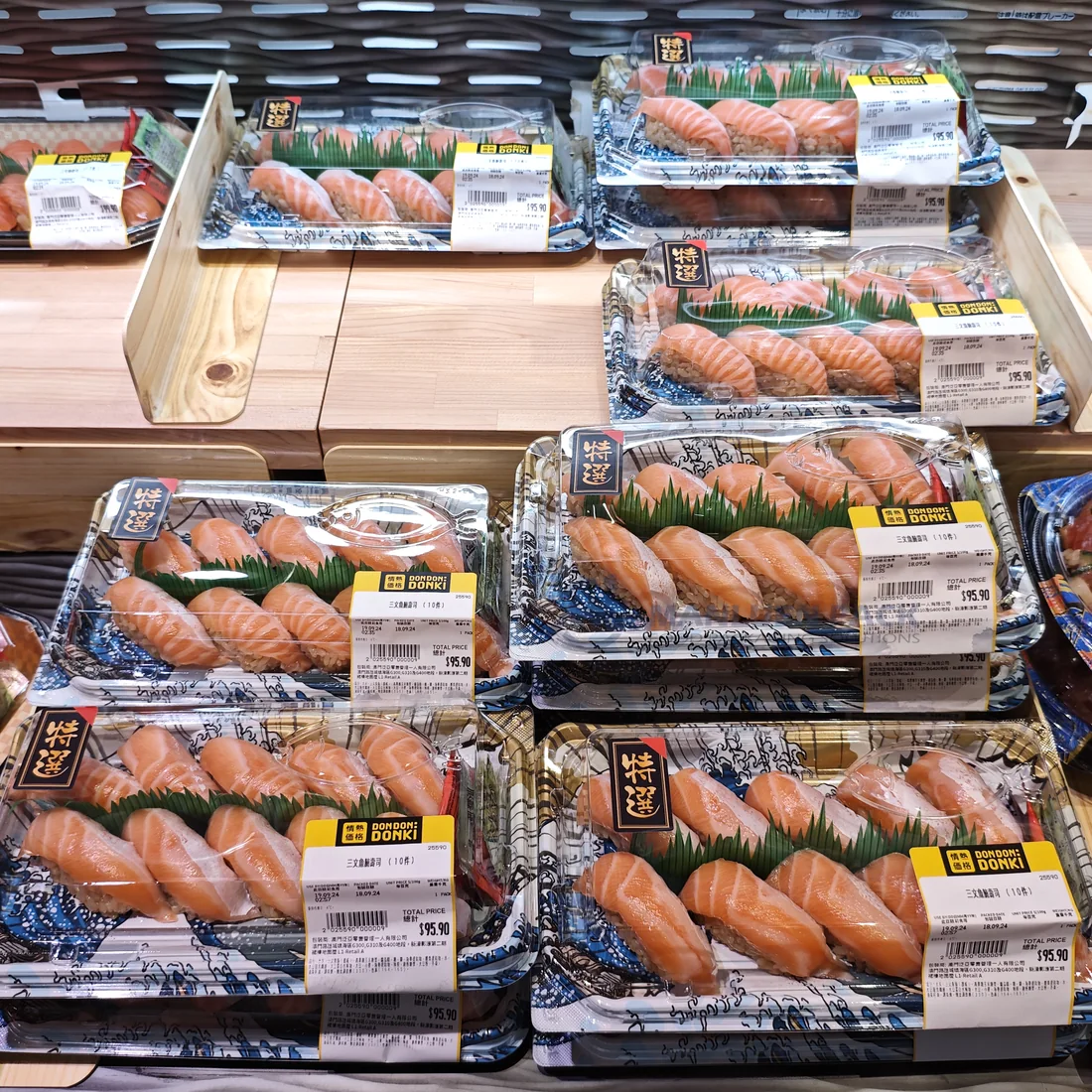
A sushi tray, for example, should keep individual pieces organized, protect the food during handling, and provide a clear view through the lid. The closure should be secure without making the package frustrating to open. The base color, lid clarity, condensation control, and portion fit all affect shelf presentation.
When evaluating appearance, consider product visibility, shelf footprint, portion arrangement, branding space, label placement, and ease of display. A package should help customers understand the product immediately without compromising protection.
Consider transportation, handling, and storage
Food packaging must perform throughout the supply chain—not only when it leaves the filling line.
During storage and transportation, packages may experience:
- Stacking and compression
- Movement, vibration, and tilting
- Temperature changes
- Condensation and humidity
- Repeated manual handling
- Long delivery times inside insulated bags
A fitted lid helps reduce spills and contamination. Stackable geometry can save restaurant, supermarket, warehouse, and distributor space. Correct sizing protects presentation while avoiding unnecessary material and shipping volume.
For imported or exported packaging, the container dimensions also affect case packing, pallet utilization, and freight cost. Test the filled package, the stacked package, and the master carton rather than approving an empty sample only.
Match common foods to the required performance
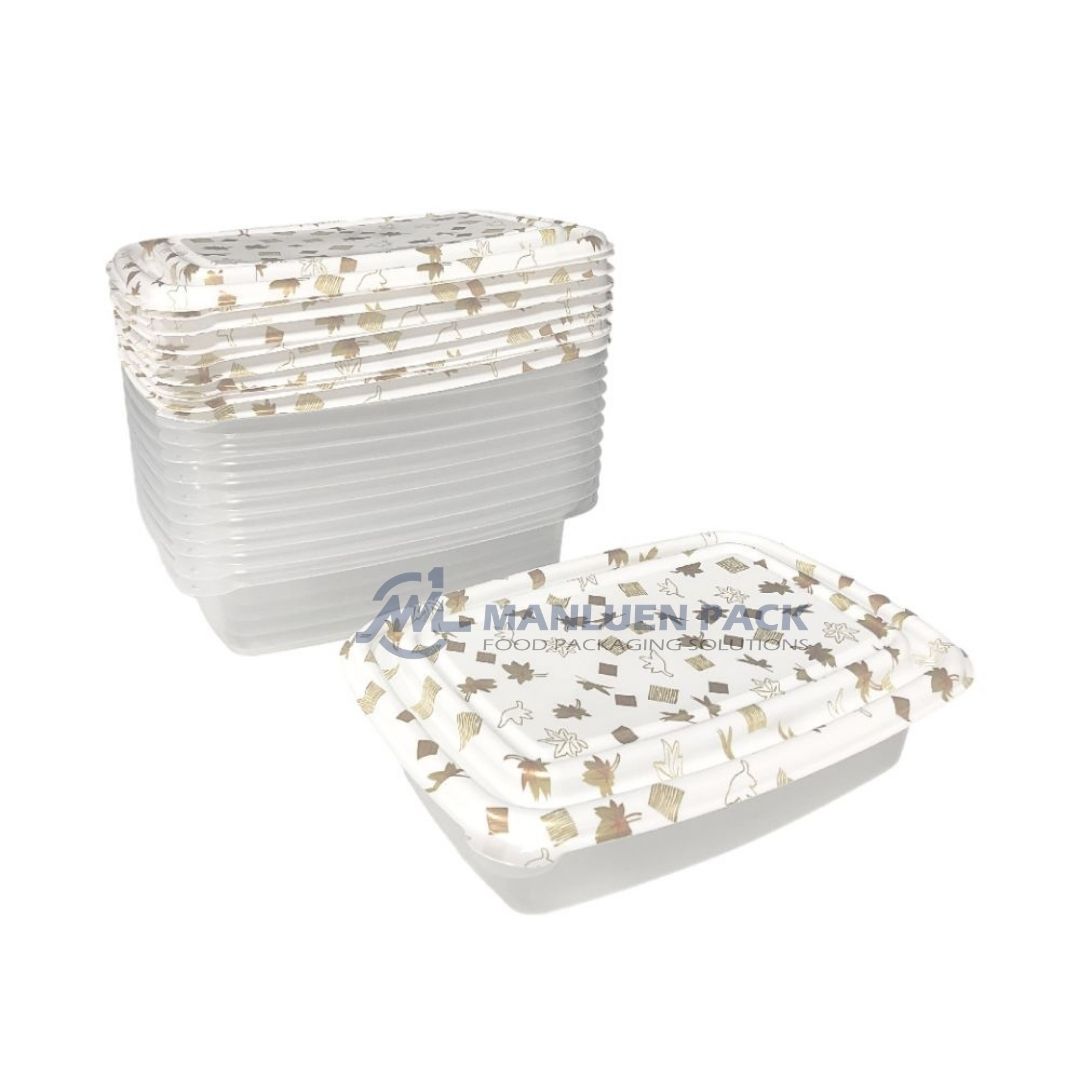
The following table is a practical starting point. Final selection should still be confirmed through supplier documentation and application testing.
| Food or Use Case | Common Material Options | Main Reason | Key Limitation to Check |
|---|---|---|---|
| Sushi and chilled retail trays | PET or OPS | High clarity and strong shelf presentation | Heat exposure and condensation |
| Prepared meals for microwave reheating | PP | Heat resistance and oil resistance | The complete container and lid must be rated for microwave use |
| Cakes and bakery display | PET or OPS | Clarity, rigidity, and product protection | Usually intended for cold or ambient use |
| Hot deli food and roast chicken | PP or aluminum | Heat and grease performance | Confirm holding, oven, and microwave conditions separately |
| Cold salads and fruit | PET, rPET, or suitable PLA | Clarity and short-term cold-food use | PLA requires controlled temperature and appropriate end-of-life infrastructure |
| Sauces and condiments | PP or other application-tested systems | Leak resistance and chemical compatibility | Check the cup, lid, seal, oil content, and acidity together |
| Freezer-to-oven meals | Aluminum or a specifically engineered system | Wide temperature range | Confirm appliance compatibility and sealing method |
Choose the Right Food Packaging Material
Once the product profile and use scenario are defined, the material options become easier to compare. Each material provides a different balance of transparency, rigidity, heat resistance, barrier performance, recyclability, compostability, and cost.
Use material limits as screening criteria, not as universal guarantees. Actual performance depends on resin grade, wall thickness, additives, colorants, package geometry, lid construction, and the manufacturer’s tested conditions of use.
| 素材 | Common Applications | Main Advantages | Main Considerations |
|---|---|---|---|
| PP | Prepared meals, soup containers, deli tubs, sauce cups | Heat resistance, toughness, and oil resistance | Moderate clarity; verify microwave and hot-fill ratings |
| PET or rPET | Sushi trays, salad containers, cake domes, chilled retail display | High clarity, rigidity, and moisture resistance | Generally unsuitable for microwave or oven use unless specifically engineered and labeled |
| PS | Lightweight trays and cost-focused applications | Low weight, consistent forming, and economical production | Brittleness, heat limits, recycling constraints, and regional restrictions |
| OPS | Clear lids, sushi packaging, bakery clamshells | Clarity and attractive display | Not microwave-safe; verify impact and regional compliance |
| PLA | Cold cups, salad lids, and short-shelf-life cold foods | Bio-based feedstock and industrial compostability for certified products | Low heat tolerance and limited composting access |
| サバージェス | Takeaway boxes, trays, bowls, and meal containers | Plant-based fiber and a natural appearance | Check grease resistance, PFAS status, certification, and local composting access |
| Aluminum | Roast foods, baked pasta, catering, and freezer-to-oven meals | High-temperature performance and strong light, oxygen, and moisture barrier | Not suitable for ordinary microwave use; presentation and lid compatibility vary |
PP food packaging
Polypropylene is a common choice for hot-food containers, prepared meals, soup tubs, bento boxes, and sauce cups. Compared with many clear food-packaging plastics, PP generally provides better heat resistance and oil resistance.
PP is often selected for microwaveable packaging, but the resin name alone does not prove that a specific container is microwave-safe. Confirm the maximum temperature, heating time, food type, fill condition, lid instructions, and any venting requirement. A thin PP cold-storage tub and an engineered microwave meal tray may share the same resin code while having very different intended uses.
Choose food-contact PP from a supplier that can provide documentation for the destination market and the intended conditions of use.
PET and rPET food packaging
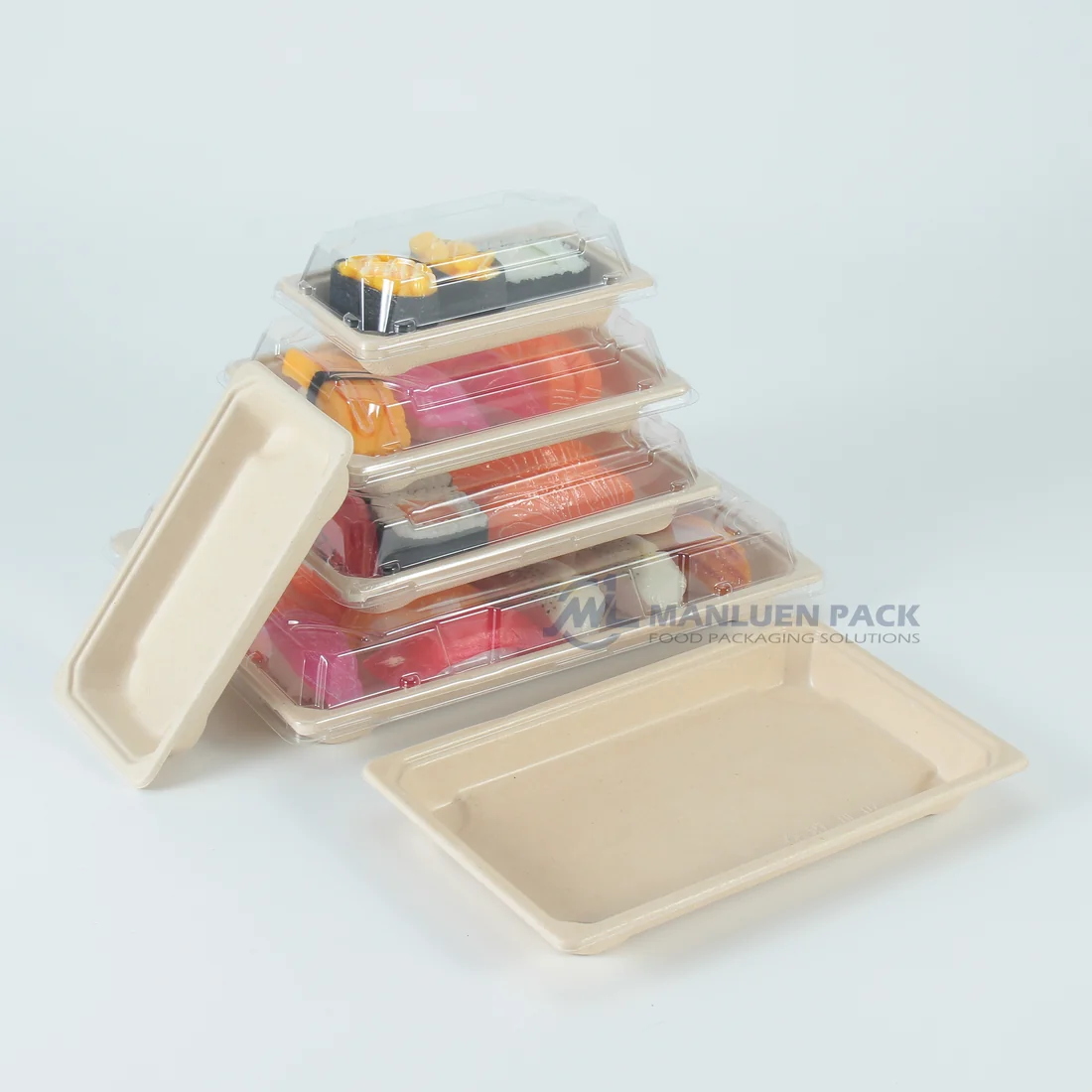
PET is widely used where product visibility and rigidity are important. Its clear appearance suits sushi trays, salad containers, bakery packaging, cake domes, chilled prepared foods, and other retail products that rely on presentation.
rPET incorporates recycled PET content. Buyers should specify the required recycled-content percentage, food-contact suitability, color and clarity tolerance, and chain-of-custody documentation rather than accepting a general “recycled” claim.
PET and rPET packages are commonly designed for cold or room-temperature use. Unless the finished package is specifically engineered and labeled for a higher-temperature application, do not use it for microwave reheating, ovens, or hot holding.
PS and OPS food packaging
Polystyrene is lightweight and economical but can be brittle. It is used in trays and other price-sensitive formats. Oriented polystyrene is processed to improve clarity and mechanical performance, making it common in clear lids, sushi packaging, salad containers, and bakery clamshells.
PS and OPS are generally unsuitable for microwave heating. They may crack, craze, soften, or perform poorly with high heat and high-fat foods. State and local restrictions on polystyrene also vary, so buyers should check every destination market before placing a high-volume order.
For chilled products, evaluate lid fit and condensation control. A clear lid loses much of its merchandising value if fogging prevents customers from seeing the food.
PLA and bagasse packaging
PLA is a bio-based polymer commonly used for cold-food and cold-beverage applications. Certified PLA products may be industrially compostable, but they typically have limited heat tolerance and are not direct substitutes for PP in hot-food or microwave applications.
Bagasse packaging is made from sugarcane fiber and is used for takeaway containers, trays, bowls, and meal boxes. It can support a plant-based material strategy, but buyers must still evaluate structure, grease and moisture performance, food-contact compliance, PFAS status, and end-of-life conditions.
A “compostable” claim should identify the applicable certification and required composting environment. If the local system does not collect the package and send it to a compatible facility, the claim may not describe what actually happens after disposal.
Aluminum food packaging
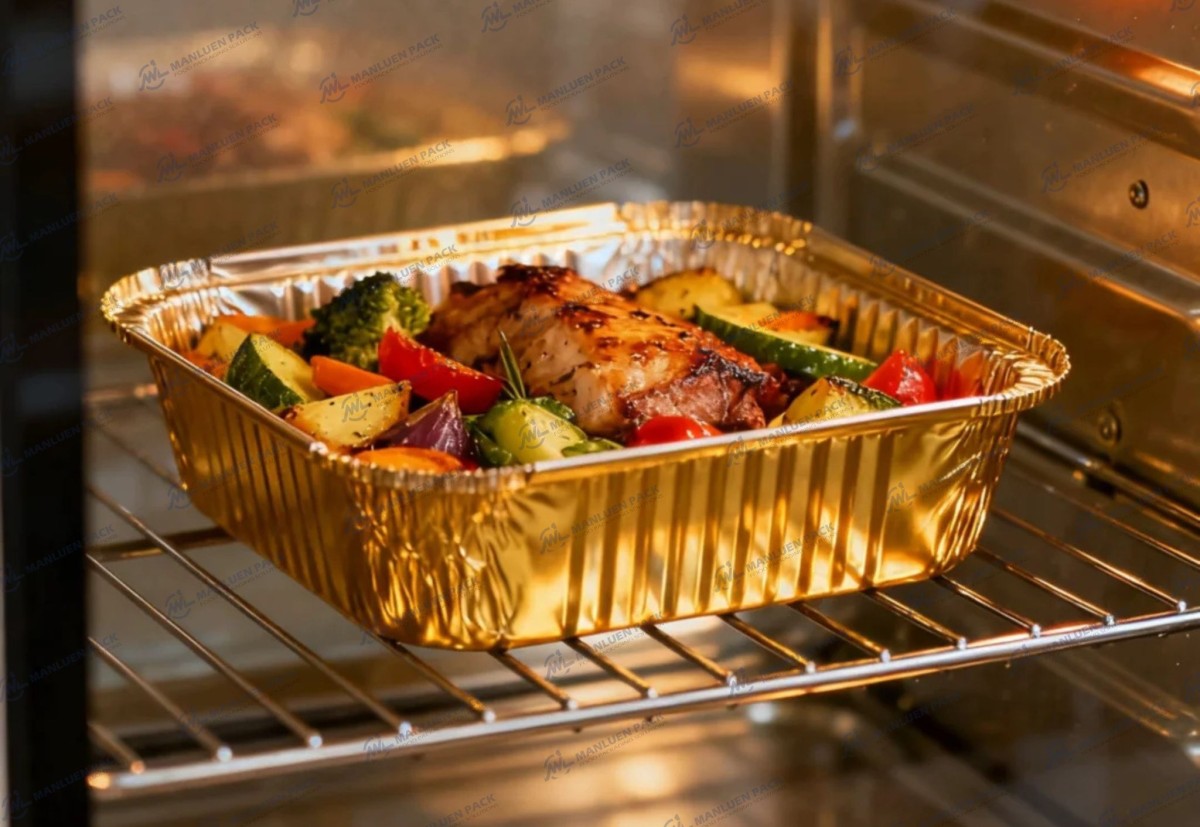
Aluminum containers are useful for roast poultry, baked pasta, catering, high-fat foods, and freezer-to-oven meal systems. They tolerate high temperatures and provide an effective barrier to light, oxygen, and moisture.
Do not assume that every foil container, lid, or coating is suitable for every oven, grill, freezer, acidic food, or sealing process. Confirm the complete system with the supplier. Aluminum should not be placed in an ordinary microwave unless both the appliance and package instructions explicitly allow it.
Use a clear order of priorities
When several materials appear suitable, evaluate them in this order:
- Food safety and regulatory suitability
- Temperature and barrier performance
- Closure, transport, and structural performance
- Product visibility and customer experience
- End-of-life fit and material efficiency
- Total cost
Unit price belongs near the end of the decision—not at the beginning. A cheaper package that leaks, deforms, hides the product, or lacks adequate documentation can create a higher total cost.
Select the Right Packaging Format for the Application
Choosing the material is only one part of selecting the right packaging options. The container format determines how well the product is filled, sealed, displayed, transported, opened, stored, and disposed of.
The same food may need different formats depending on where it is sold. A supermarket prepared meal, a restaurant takeaway order, and a frozen retail product can require different lids, depths, compartments, barriers, and labels even when the food is similar.
Packaging for retail display
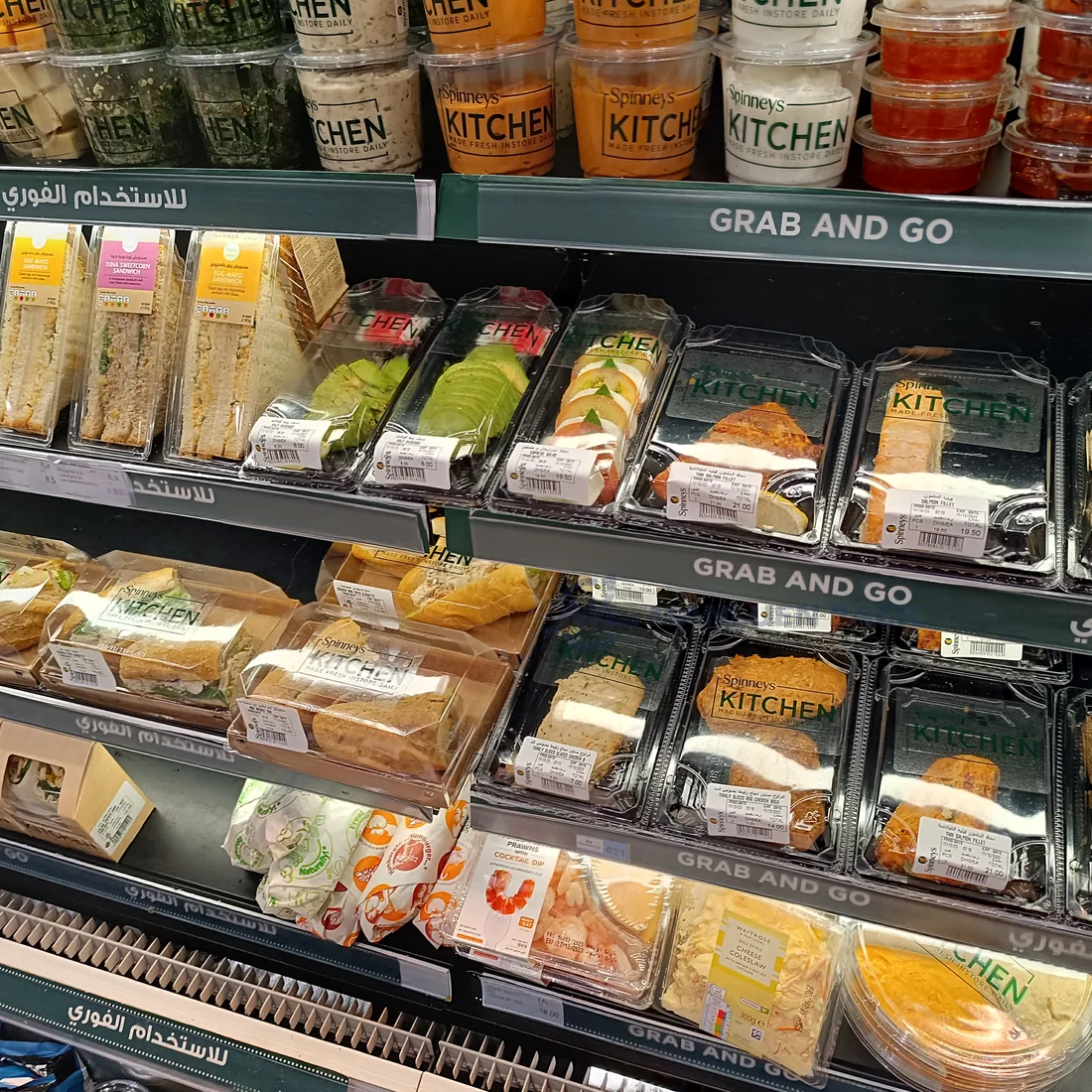
Retail food packaging should protect the product while helping customers understand it quickly. For sushi, salads, fresh produce, bakery items, and ready-to-eat meals, clear packaging can show freshness, color, ingredients, and portion size without opening the package.
Suitable retail packaging often provides:
- Clear product visibility
- Stable portion arrangement
- A consistent shelf footprint
- Efficient stacking
- Space for compliant labels and branding
- A secure but usable closure
A sushi tray with a fitted transparent lid is a useful example: the base supports the arrangement while the lid protects the food and preserves visibility. Test how the filled package looks after refrigeration, stacking, and transport—not only immediately after packing.
Packaging for takeaway and delivery
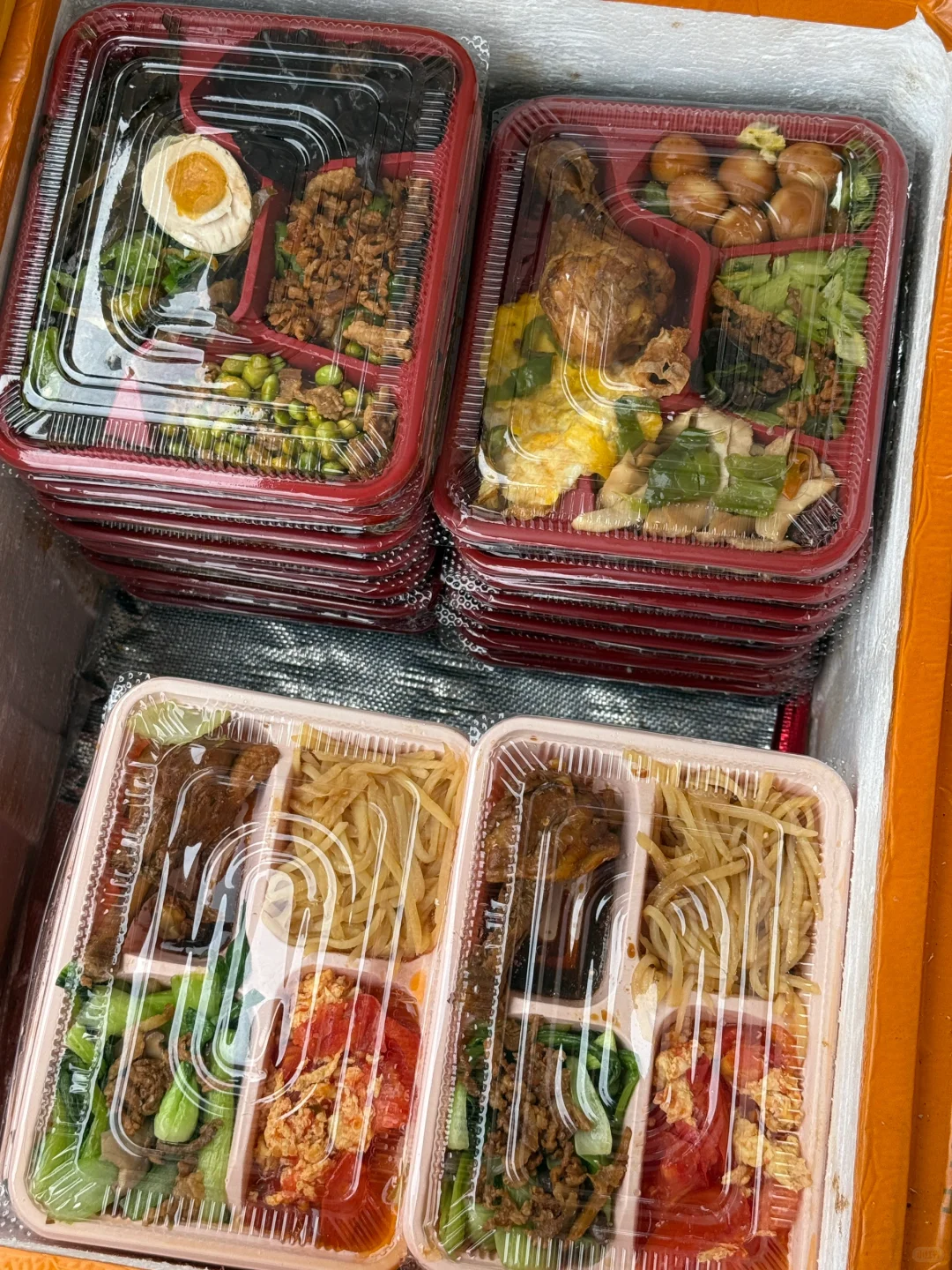
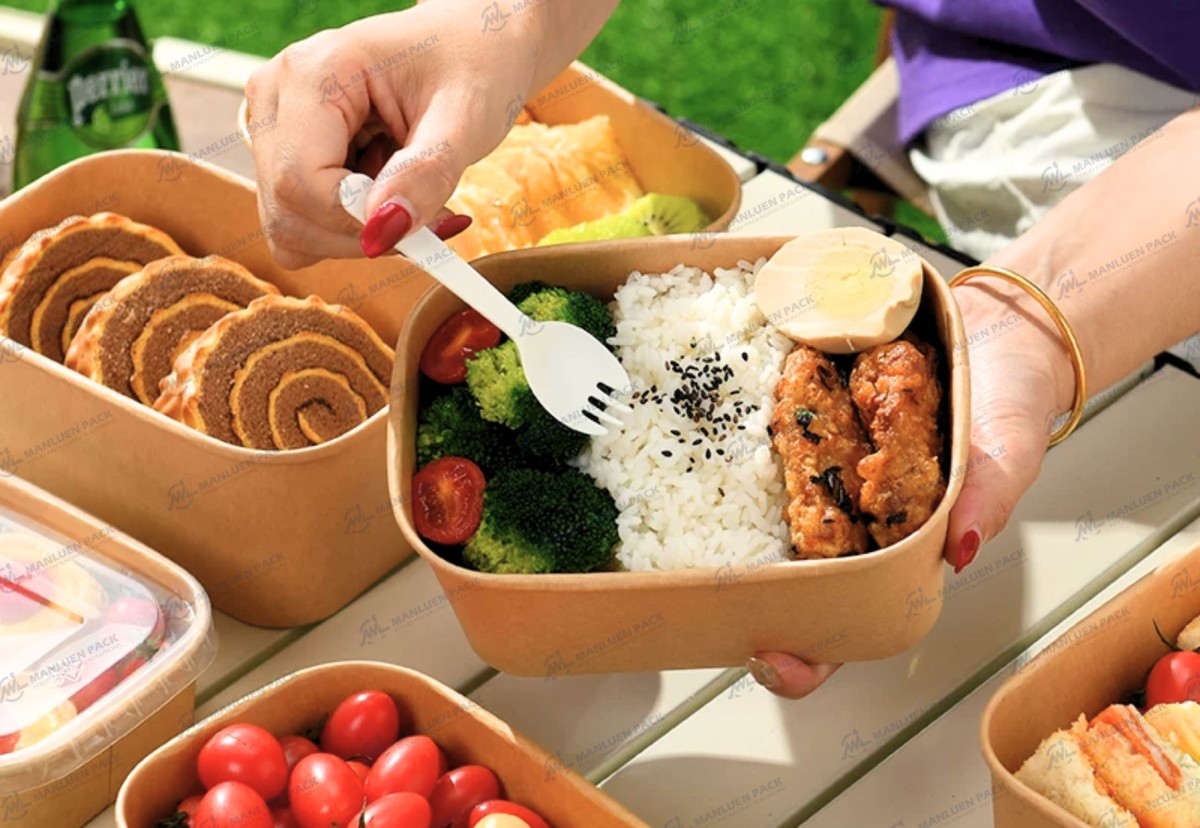
Takeaway and delivery packaging must protect food after it leaves the restaurant or production area. The package may tilt, vibrate, sit in a heated or insulated bag, and remain closed for 30 minutes or longer.
Evaluate:
- Closure: Does the lid remain secure when the filled package is tilted?
- Leak resistance: Can sauces, oils, and condensation escape?
- Venting: Does trapped steam damage texture or create pressure?
- Arrangement: Do compartments or tray features prevent movement?
- Handling: Can staff close it consistently and customers open it easily?
- Temperature: Does the material remain stable during the full delivery period?
For delivery, the packaging becomes part of the customer experience. A meal that arrives intact, easy to open, and visually organized reflects better on the product than one delivered in a technically food-safe but poorly fitted container.
Packaging for refrigerated food
Refrigerated packaging must maintain clarity, closure, and structural performance in cold, humid conditions. Condensation can obscure the product, moisture can collect in the tray, and repeated handling can disturb the arrangement.
Check material suitability at the actual storage temperature, lid fit after cooling, anti-fog performance when required, drainage or absorbency needs, and the effect of labels on recyclability and visibility.
For sushi and other presentation-led chilled foods, a clear PET or OPS component may be appropriate, but the exact base-and-lid combination should be tested with the filled product.
Packaging for frozen food
Frozen-food packaging needs to remain strong at low temperatures and during changes between production, cold storage, transportation, retail, and consumer handling. Some materials become brittle when cold, while weak seals may open after impact.
Test the package after a realistic freeze cycle. Include drop handling, seal integrity, stacking, condensation during temperature change, label adhesion, and any intended freezer-to-microwave or freezer-to-oven transition.
Do Not Skip Food-Contact Compliance in 2026
Material selection without compliance verification creates unnecessary risk. A package can look correct and still lack documentation for the destination market, food type, temperature, or contact time.
Compliance also applies to more than the base resin. Lids, liners, gaskets, inks, adhesives, coatings, colorants, and recycled content can introduce separate requirements.
FDA food-contact requirements
In the United States, food-contact substances are regulated according to their identity and intended conditions of use. Applicable requirements may come from the Code of Federal Regulations, an effective Food Contact Notification, a prior sanction, or another valid regulatory basis.
A supplier should be able to identify the exact resin or material grade, the applicable regulatory basis, and any restrictions. The documentation should match the finished package and intended use rather than referring vaguely to “FDA approved plastic.”
Ask whether the package is suitable for:
- The specific food type, including fatty, aqueous, acidic, or dry food
- The intended temperature and contact time
- Hot filling, refrigeration, freezing, microwave reheating, or oven use
- Repeated use or single use
- The destination market
PFAS in grease-resistant paper and fiber packaging
In February 2024, the FDA announced that grease-proofing substances containing certain PFAS were no longer being sold by manufacturers for food-contact use in US paper and paperboard packaging. In January 2025, the agency determined that 35 related Food Contact Notifications were no longer effective because those uses had been abandoned.
Buyers sourcing paper or molded-fiber food packaging should request a written PFAS statement and supporting test or compliance information appropriate to the product. “Plant-based,” “fiber,” and “compostable” do not by themselves establish that a grease-resistant treatment is PFAS-free.
FDA phthalates review
Phthalates have historically been used as plasticizers in PVC and in some adhesives, sealants, lubricants, and other food-contact components. In May 2026, the FDA released a scientific evaluation of eight phthalates still authorized as plasticizers for food-contact use and proposed grouping four of them for a future cumulative risk assessment.
The review is continuing. A 2026 supplier questionnaire should therefore cover flexible components, gaskets, lid liners, adhesives, and sealing compounds—not only the primary PP or PET container.
EU PPWR and cross-border sourcing
Regulation (EU) 2025/40 on packaging and packaging waste entered into force on February 11, 2025 and applies generally from August 12, 2026. It introduces a broad framework covering packaging minimization, recyclability, labeling, recycled content, reuse, and producer obligations, with different requirements and transition dates.
US-only buyers are not automatically subject to EU rules. However, a supplier serving both US and EU customers may already be improving material traceability, recyclability data, and documentation systems. Ask suppliers with an EU footprint how they separate market-specific requirements and how changes to an EU design could affect the US version.
State and local requirements
US state and local rules can affect polystyrene, PFAS, recycled content, labeling, and chemical warnings. California Proposition 65 may also require an exposure assessment or warning for listed chemicals under the applicable conditions.
Do not rely on a single national compliance statement when distributing across multiple states. Confirm the sales destinations, printed inks, pigments, adhesives, and food-contact layers with qualified regulatory support.
Minimum documents to request
The exact package will determine the required file set, but a professional buyer should normally request:
- A Declaration of Compliance or equivalent statement identifying the product and regulatory basis
- Material specifications for the base, lid, liner, coating, ink, and adhesive where relevant
- Applicable Food Contact Notification numbers or CFR references
- Migration or extractables testing appropriate to the intended food and conditions of use
- A Certificate of Analysis or lot-specific quality record when required by the purchasing specification
- PFAS, BPA, phthalate, and heavy-metal statements where relevant
- Recycled-content, compostability, or chain-of-custody evidence for environmental claims
- Traceability records connecting the shipment to production lots and raw materials
Documentation should be current, product-specific, and consistent with the actual shipment. A generic certificate for a different resin grade or package style is not sufficient.
Balance Sustainability and Packaging Cost
“Sustainable” is not a single material property. The practical result depends on material use, food protection, transport efficiency, collection systems, sorting, recycling or composting infrastructure, and the accuracy of the claim made to customers.
The most suitable option is the one that protects the food, meets compliance requirements, and has a credible end-of-life pathway in the market where it is sold.
Compostable does not mean it will be composted
PLA and bagasse products may be certified for industrial composting, but the package still needs collection and access to a facility that accepts the material. Some composting programs accept food and yard waste but reject serviceware or bioplastics.
Before using a compostable claim, confirm:
- The certification standard and certifying body
- Whether the claim applies to the complete package, including lid and label
- The required industrial or home-composting conditions
- Collection and processing availability in the destination market
- Whether food residue helps or prevents acceptance
Verify recycled content and recyclability separately
Recycled content describes what went into the package. Recyclability describes whether the finished package can realistically be collected, sorted, and processed after use. They are related but not interchangeable.
For rPET, request the post-consumer recycled percentage, food-contact basis, chain of custody, and any color or performance tolerances. For any recyclable claim, check the complete construction and the local system—not only the base resin.
Prefer simpler, correctly sized structures
Mono-material structures can improve recyclability when the local system accepts the material. Mixed constructions—such as a tray, dissimilar lid film, paper label, and adhesive layer—can be harder to sort or recycle.
Material reduction can also be effective when it does not weaken performance. Practical options include:
- Choosing the correct container size
- Reducing unnecessary empty space
- Lightweighting after compression, leak, and transport testing
- Optimizing case and pallet dimensions
- Using compatible base-and-lid materials where practical
- Avoiding decorative components that prevent recovery
The first sustainability check should be food protection. Packaging that causes spills, damage, contamination, or food waste may erase the benefit of a small material reduction.
Use total cost instead of unit price
The lowest quoted price per piece does not necessarily create the lowest overall cost. Evaluate:
- Container, lid, label, and tooling cost
- Minimum order quantity and inventory carrying cost
- Storage space and case-pack efficiency
- Freight, pallet utilization, and import cost
- Filling-line speed and labor
- Leakage, breakage, deformation, and customer refunds
- Compliance testing and documentation
- Waste handling and extended producer responsibility fees where applicable
- Recall, rejection, and supplier-change risk
A simple comparison model is:
Total packaging cost = purchase cost + logistics cost + operating cost + expected failure cost + compliance cost + end-of-life cost.
This model makes trade-offs visible. A slightly more expensive tray may reduce product movement, returns, storage volume, or sealing failures enough to lower the total cost.
How to Choose a Packaging Partner for CPG Products
Knowing how to choose a packaging partner for CPG products is as important as choosing the material. Many failures are caused by inconsistent production, weak tooling control, incomplete documentation, or poor sample-to-shipment discipline rather than by the polymer itself.
Use a written specification and compare suppliers against the same evidence.
| Check | What to Ask For | Why It Matters |
|---|---|---|
| Regulatory capability | Product-specific food-contact basis for each destination market | Prevents vague or mismatched compliance claims |
| Lot documentation | Declaration of Compliance, Certificate of Analysis, and traceability records as required | Connects the shipment to the approved material and specification |
| Third-party testing | Recent reports from an appropriate accredited laboratory | Confirms performance or migration claims under defined conditions |
| Quality system | Relevant certifications, internal inspection plan, calibration, and corrective-action process | Shows whether quality is controlled consistently |
| Raw-material traceability | Resin or fiber supplier records, recycled-content controls, and lot tracking | Supports investigations and change control |
| Sample-to-production control | Approved golden sample, first-article inspection, in-process checks, and pre-shipment inspection | Reduces the gap between an approved sample and the delivered order |
| Technical support | Clear answers about temperature, food type, closure, filling, sealing, and transport tests | Demonstrates application knowledge rather than catalog-only selling |
| Capacity and continuity | Tooling ownership, production capacity, backup equipment, lead times, and change-notification process | Protects supply continuity as volume grows |
| Range and consolidation | Compatible trays, lids, cups, clamshells, and other required formats | Can reduce coordination work when quality is consistent across categories |
Test the package with the real product
Do not approve a package from dimensions, photos, or an empty sample alone. Use the actual food, fill weight, temperature, sealing method, label, storage time, transport route, and customer-use condition.
A useful qualification process can include:
- Written application requirements and drawings
- Material and compliance review
- Empty-container dimensional inspection
- Filled-product leak, closure, and presentation tests
- Temperature, shelf-life, stack, drop, and transport simulation
- Filling-line or restaurant workflow trial
- Approved golden sample and signed specification
- First production-lot inspection before full release
Look beyond certifications
Certifications can support supplier evaluation, but they do not replace product-specific evidence. Ask how long the manufacturer has produced food-contact packaging, which categories it specializes in, how it controls tooling and raw-material changes, and how it handles complaints.
Flexible trial quantities, responsive technical support, and multilingual sales assistance may be valuable for cross-border projects, but the final decision should still rest on documented capability, testing, consistency, and total cost.
Common Mistakes When Choosing Food Packaging
Avoid these recurring selection errors:
- Choosing a familiar resin for every product: PP, PET, OPS, fiber, and aluminum solve different problems.
- Approving an empty sample: Fit, leakage, fogging, movement, and deformation appear with the real food and real conditions.
- Assuming a resin code proves the intended use: The finished package—not only the polymer family—must be suitable for the application.
- Ignoring the lid: Bases, lids, films, liners, and vents may use different materials and temperature limits.
- Optimizing only for shelf appearance: Attractive packaging still needs to survive filling, stacking, delivery, and customer handling.
- Using broad environmental claims: “Recyclable,” “compostable,” and “biodegradable” need evidence and market-specific context.
- Buying on unit price alone: Freight, storage, failures, labor, and compliance can outweigh a small price difference.
- Accepting generic compliance paperwork: Documents should match the product, material grade, intended use, and destination market.
- Skipping change control: A resin, colorant, thickness, mold, or supplier change can affect performance and compliance.
Frequently Asked Questions
What is the best food packaging material?
There is no universal best material. The right choice depends on food type, temperature, shelf life, oil and moisture content, storage, transport, customer use, destination-market rules, and end-of-life systems. PP is often useful for heat-resistant containers, while PET and OPS are common for clear chilled-food display. Aluminum, PLA, bagasse, and other materials serve different applications.
How do I choose packaging for a new food product?
Document the food profile, required shelf life, temperature range, distribution route, customer use, presentation needs, package format, compliance requirements, and target cost. Then compare materials, request product-specific documentation, and test the package with the real food under realistic conditions.
What packaging is best for sushi products?
Sushi packaging commonly uses a structured tray with a fitted clear lid so customers can see freshness and arrangement. PET and OPS are common options for clear chilled-food packaging. The final choice should also consider condensation, closure, product movement, refrigeration, stacking, transport, local restrictions, and whether the base and lid remain compatible throughout use.
Is PP food packaging safe for microwave use?
PP is commonly used for microwave-safe food containers, but the resin code alone is not enough. Confirm that the finished container is specifically labeled or documented for the intended microwave conditions. Check the base and lid separately, follow venting and heating instructions, and do not reheat in damaged or cold-storage-only tubs.
What is the difference between OPS and PET for sushi trays?
Both can provide clear product display. PET is known for clarity and rigidity, while OPS is commonly used for clear lids and clamshells with attractive presentation. Neither should be assumed suitable for microwave heating. Compare impact performance, condensation control, closure fit, regional restrictions, recyclability, and the supplier’s tested temperature range.
Is compostable food packaging better than plastic packaging?
It depends on the food, required performance, certification, collection system, and local processing infrastructure. Compostable packaging can be useful when a compatible system exists. Recyclable plastic can be useful when it is correctly designed and actually collected. A package that fails to protect the food is not automatically the better environmental choice because it uses a plant-based material.
How do I select the right packaging options for delivery?
Test the filled package for leakage, tilting, vibration, stacking, steam, condensation, temperature retention, opening, and presentation after the expected delivery time. Use a closure and venting design that matches the food. Consider how multiple packages fit in the delivery bag and whether staff can close them consistently during peak service.
What documents should a food-packaging supplier provide?
The required documents depend on the package and market, but buyers commonly request a product-specific compliance statement, applicable CFR or Food Contact Notification basis, specifications, migration or performance test reports, lot traceability, and relevant chemical or environmental declarations. Verify that every document matches the actual product and intended conditions of use.
Will the EU PPWR affect a US-only business?
Not automatically. The regulation applies to packaging placed on the EU market. However, suppliers serving both markets may change materials, labels, recycled content, or documentation in response to EU requirements. US buyers should ask whether those changes affect their own product specification, supply continuity, or compliance files.
Conclusion: How to Choose the Right Food Packaging for Your Product in 2026
How to choose the right food packaging for your product in 2026 is not a question of which plastic looks best or which supplier quotes the lowest price. It is a connected decision involving food fit, package performance, distribution, customer use, compliance, sustainability, total cost, and supplier discipline.
Start with the food. Map the temperature, moisture, oil, acidity, shelf life, presentation, transport, and final-use requirements. Use those conditions to choose the container format and material. Then verify the complete package—including the lid, liner, label, ink, adhesive, and recycled or fiber content—with product-specific documents and realistic testing.
Three practical actions can improve the next sourcing decision:
- Reverse-map the most important products from food profile to use scenario, package format, and material.
- Update purchasing specifications to require application-specific compliance, traceability, change control, and performance testing.
- Compare suppliers using total cost and sample-to-production discipline—not unit price and certificates alone.
The right packaging protects the product from production to final consumption, supports the customer experience, and gives the buyer evidence that the package is suitable for the intended market and use.
References
U.S. Food and Drug Administration (FDA). Packaging & Food Contact Substances.
Used for explaining the US regulatory framework for substances that contact food.
U.S. Food and Drug Administration
U.S. Food and Drug Administration (FDA). FDA, Industry Actions End Sales of PFAS Used in US Food Packaging.
Used for the February 2024 market phase-out of PFAS-containing grease-proofing substances for paper food packaging.
U.S. Food and Drug Administration
U.S. Food and Drug Administration (FDA). FDA Determines Authorization for 35 Food Contact Notifications Related to PFAS Are No Longer Effective.
Used for the January 2025 status of the 35 PFAS-related Food Contact Notifications.
U.S. Food and Drug Administration
U.S. Food and Drug Administration (FDA). Phthalates in Food Packaging and Food Contact Applications.
Used for the May 2026 scientific evaluation and continuing post-market review of authorized phthalates.
U.S. Food and Drug Administration
European Union. Regulation (EU) 2025/40 on Packaging and Packaging Waste.
Used for the PPWR entry-into-force and general application dates and the regulation’s packaging framework.
EUR-Lex
U.S. Federal Trade Commission (FTC). Green Guides.
Used for guidance on qualifying recyclable, compostable, and other environmental marketing claims.
Federal Trade Commission
U.S. Environmental Protection Agency (EPA). Recycling Basics and Benefits.
Used for the role of local collection and processing systems in packaging recovery.
U.S. Environmental Protection Agency
Association of Plastic Recyclers (APR). Design Guide for Plastics Recyclability.
Used for practical design considerations affecting the recyclability of plastic packaging systems.
Association of Plastic Recyclers

マンルエンプラスチック包装有限公司は、20年以上にわたりプラスチック食品包装の製造を専門としています。当社の製品は、100%のバージン素材とBPAフリーのPP、PS、OPSを使用し、FDAおよびヨーロッパ基準に準拠しています。
 JA
JA  EN
EN  ZH
ZH  FR
FR  PT
PT  ES
ES  KO
KO