
はじめに
ガラス容器包装は持続可能か? 場合による—特に、容器に大量のリサイクルガラスが含まれている場合、クリーンなリサイクルストリームで収集されている場合、または地域のリターンシステムで何度も再利用されている場合に限る。ただし、ガラスは自動的に最も環境負荷の低い包装材料ではない。製造には非常に高温の炉が必要であり、その重量は軽量な代替品と比較して輸送時の排出量を増加させる可能性がある。.
したがって、最も合理的な答えは条件付きである: ガラス容器包装は、完全なシステムが容器またはその材料を循環させながら、重量、破損、洗浄、輸送を管理している場合に最も持続可能である。. 地域で返却されるリフィル可能なボトルは、長距離輸送されて一度使い捨てられる重い使い捨てジャーとは異なる環境的提案である。.
このガイドは、ガラスの利点と欠点、リサイクルと再利用が結果にどのように影響するか、 ガラスとプラスチック, 、アルミニウム、 紙, との比較、そして食品包装の購入者が環境に関する主張を行う前に検討すべき点について説明している。.
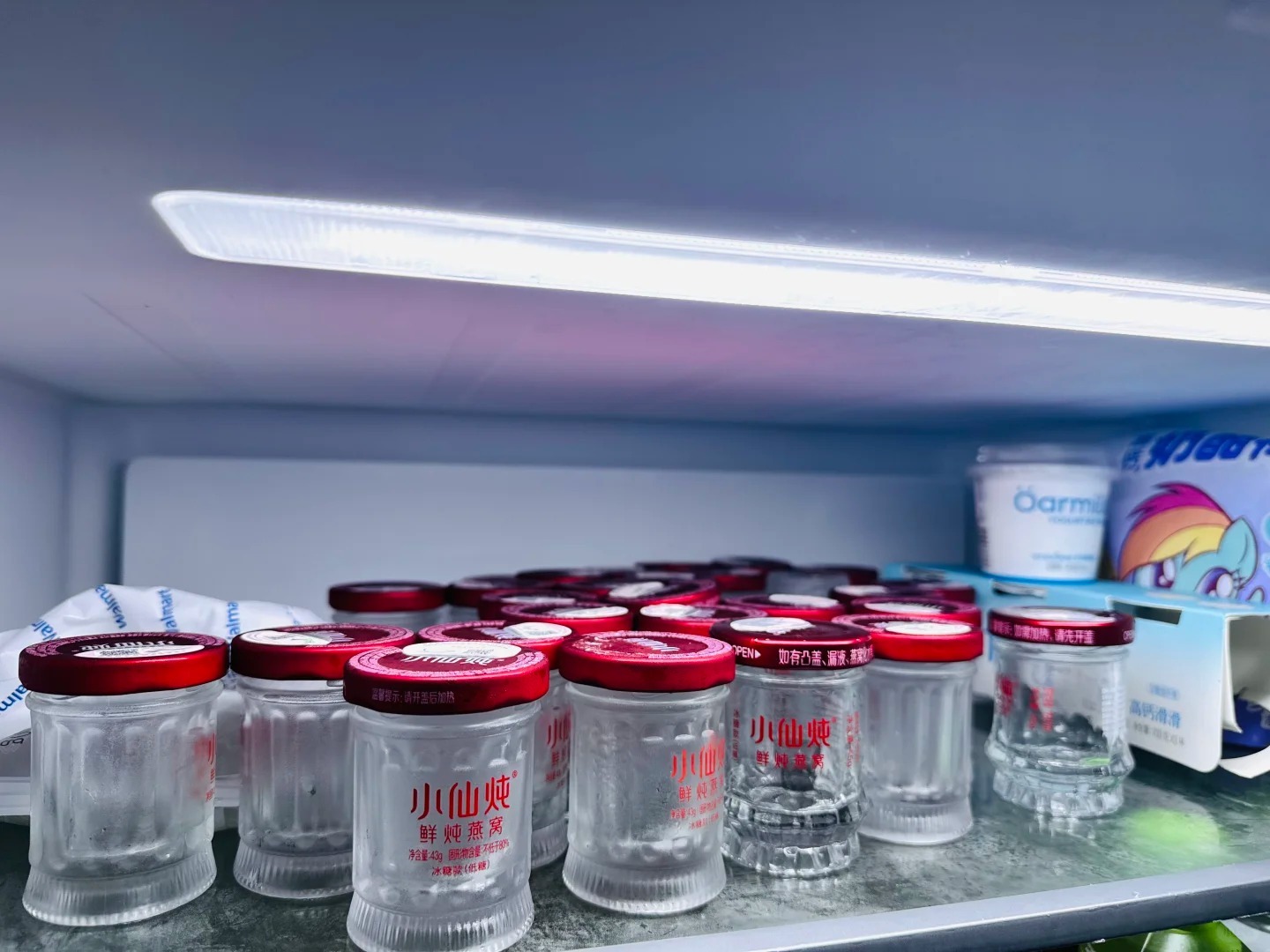
ガラス容器包装は持続可能か?短い答え
はい、ガラス容器包装は持続可能になり得るが、適切な条件下でのみ可能である。. その最大の利点は、容器のガラスが新しいボトルやジャーにリサイクルできること、リサイクルされた破砕ガラスが未使用の原料を置き換えること、リフィル可能な容器が複数回の使用を通じて製造の影響を広げることにある。主な欠点は、エネルギー集約的な溶融、高い包装重量、破損や収集不良により循環システムが機能しなくなるリスクである。.
| 質問 | 実用的な答え |
|---|---|
| ガラスはリサイクル可能か? | はい。適切に分類された容器用ガラスは、スクラップガラスに処理され、新しいガラス容器に再利用されることがあります。実際の回収状況は、地域の収集、選別の質、色の要件、最終市場へのアクセスに依存します。. |
| リサイクルされたガラスは環境負荷が低いですか? | 通常そうです。スクラップガラスは未使用の鉱物の代わりとなり、全て未使用のバッチよりも低エネルギーで溶かすことができます。. |
| 再利用可能なガラスは常により良いですか? | いいえ。高いリターン率、十分な再利用サイクル、効率的な洗浄、低破損率、短いまたは最適化されたリバースロジスティクスルートがある場合に最も効果的です。. |
| ガラスはプラスチックより環境に優しいですか? | すべての用途でそうではありません。ガラスは再利用やクローズドループリサイクルにおいてより強力である場合がありますが、軽量プラスチックは材料や輸送の負担を軽減し、一部の食品をより効率的に保護できる場合があります。. |
なぜガラス容器包装は持続可能なのか
1. 容器用ガラスはクローズドループリサイクルを支援できる
適切な状態で収集された瓶やジャーは、粉砕してスクラップガラスにし、洗浄、選別、再溶融して新しい容器に再利用できます。これは、技術的にはリサイクル可能でもほとんど同じ用途に戻らない包装構造に比べて大きな利点です。ガラスは定義上ダウンサイクルする必要はなく、収集と処理のインフラがそれをサポートすれば、ボトルからボトル、ジャーからジャーのループにとどまることができます。.
その区別は重要です。「リサイクル可能」は素材の能力を表し、「リサイクルされた」は実際に何が起こったかを示します。したがって、持続可能性の評価では、パッケージがリサイクルできるかどうかだけでなく、地域のプログラムがそれを受け入れるかどうか、回収されたガラスが容器製造に十分に清潔かどうか、近くの最終市場がそれを使用するかどうかも問う必要があります。.
2. スクラップガラスは未使用素材の需要を減らす
従来の容器用ガラスは主に二酸化ケイ素、炭酸ナトリウム、石灰石から作られています。回収されたスクラップガラスを使用することで、この未使用バッチの一部を置き換え、新しい鉱物の採掘、処理、輸送の必要性を減らします。また、適切なガラスを廃棄から逸らすこともできます。.
色分離は、メーカーが使用できるスクラップガラスの量に影響を与えることがあります。透明、琥珀、緑色のガラスは異なる品質と色の要件を持っているため、混合または汚染された収集は、清潔で色制御された材料よりも価値が低くなる場合があります。.
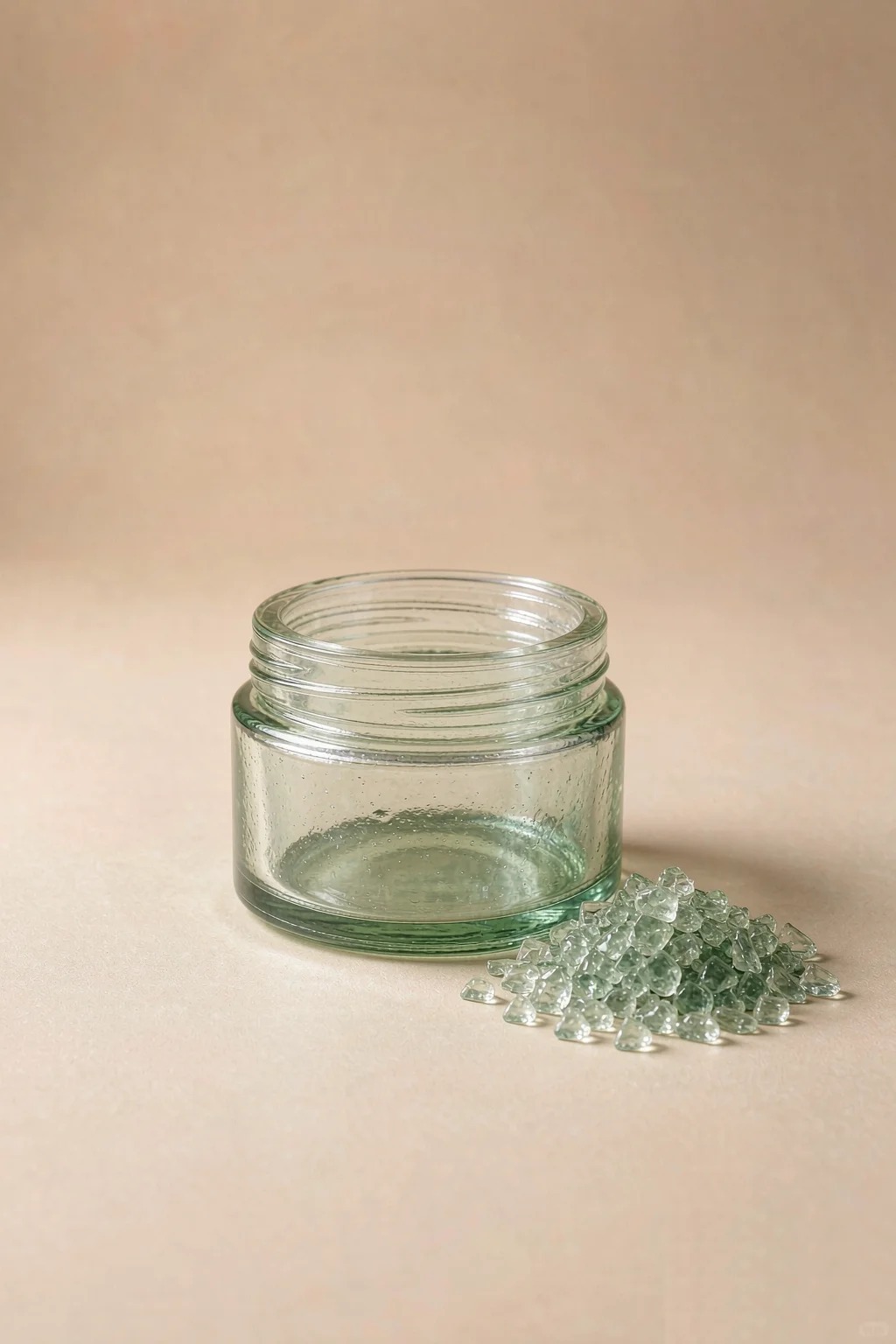
3. リサイクルガラスは溶解エネルギーを削減できる
スクラップガラスは、完全に未使用原料から作られたバッチよりも少ないエネルギーで溶かすことができます。 ガラス包装協会 は、製造に使用されるスクラップガラスの量が増えるほど、エネルギーコストが約2%–3%低減することを示しています。ヨーロッパの容器ガラスのライフサイクル研究によると FEVE 100%のスクラップシナリオは、100%のバージン素材シナリオよりも25.4%少ない溶解エネルギーを使用したことが判明しました。.
これらの数値は製造の利点を示しており、すべてのガラス容器が同じ環境負荷を持つことを保証するものではありません。炉の燃料、電力源、リサイクル素材の割合、容器の重量、工場の効率、輸送距離は依然として結果を変える要因です。.
4. 再利用可能なガラスは、多くの輸送回数にわたって生産の影響を分散できる
耐久性のあるガラス瓶やジャーは、収集、検査、洗浄、再充填が可能です。十分な回転数を経ると、その製造負担は一度の充填ではなく、複数の使用にわたって共有されます。これがガラスの最も強力な持続可能性の理由ですが、容器だけではその利益は生まれません。リターンシステムがそれを実現します。.
ガラス容器の環境上の欠点は何ですか?
高温での生産
ガラス炉は非常に高温で運転されます。溶解に必要なエネルギーや燃料燃焼、原料反応に伴う排出物は、生産段階を重要なものにします。スクラップの使用増加、軽量容器、効率的な炉、低炭素エネルギー、熱回収の改善によりこの負担を軽減できますが、完全になくすことはできません。.
輸送重量
同じ容積の製品について、使い捨てのガラス容器はプラスチックボトル、パウチ、コーティングされたカートン、アルミ缶よりも重いことが多いです。より多い包装質量は積載効率を低下させ、燃料消費を増加させる可能性があります。特に長距離輸送では顕著です。輸入容器の輸送、充填済み製品の配送、空容器の返却を無視した比較は、ガラスの優位性を過大評価する可能性があります。.
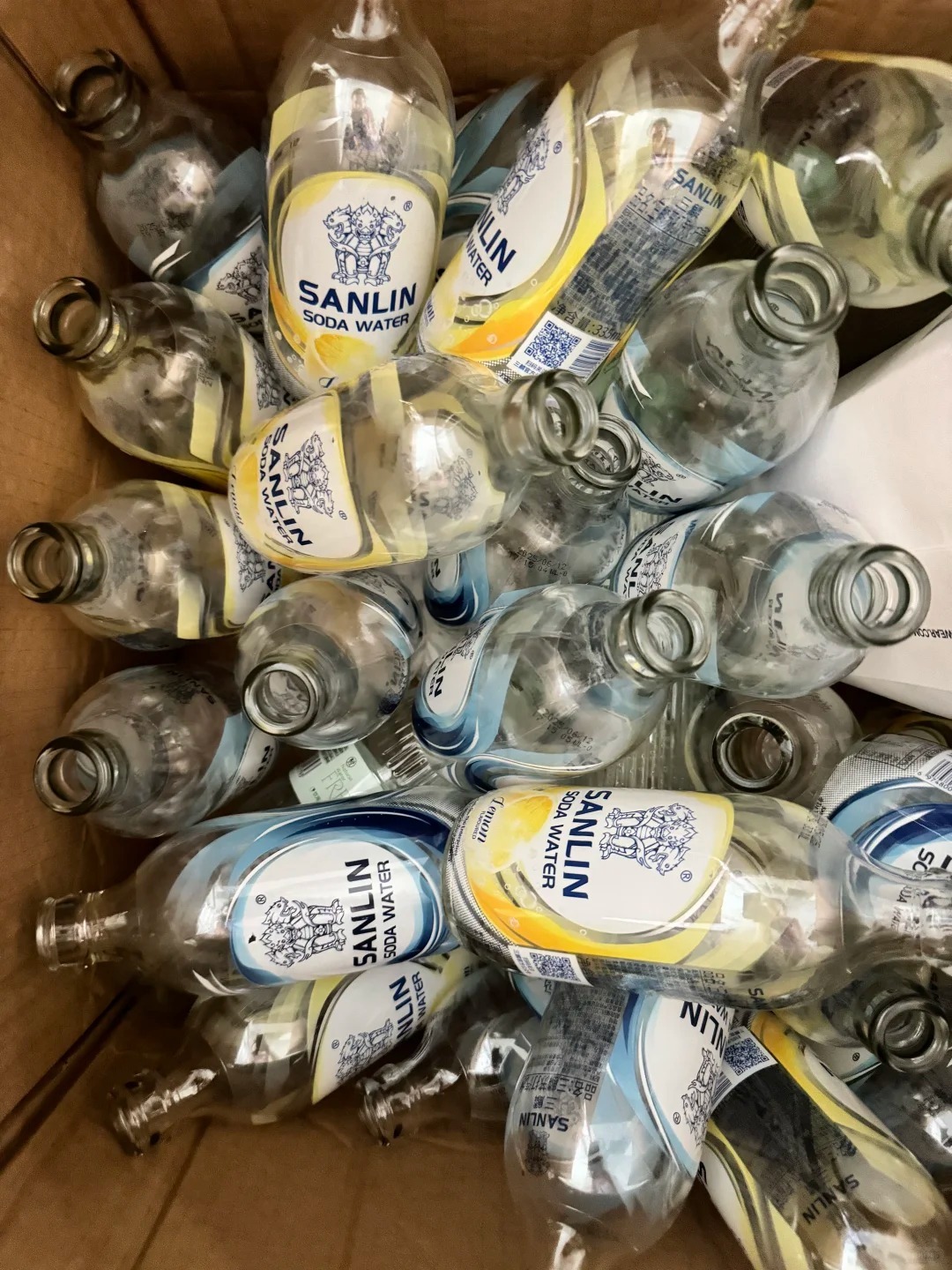
破損と製品ロス
Glass provides a rigid barrier but can break during filling, transport, retail handling, consumer use, or return logistics. Breakage increases packaging loss and may also cause product loss. Because producing the food or beverage can carry more environmental impact than producing its package, preventing spoilage and damage is often more important than minimizing package impact in isolation.
Collection does not guarantee closed-loop recycling
Broken ceramics, heat-resistant cookware, stones, metals, and mixed colors can contaminate recovered glass. Very small fragments can also be difficult to sort in mixed-material facilities. Some collected material becomes aggregate or is discarded rather than returning to new containers. Buyers should avoid treating a recycling symbol or a general claim of recyclability as proof of local bottle-to-bottle recycling.
Single-Use Glass vs Reusable Glass
The distinction between single-use and reusable packaging is more important than the word “glass” alone.
- Single-use glass is manufactured, filled, distributed, used once, and then recycled or discarded. Its performance depends heavily on lightweighting, recycled content, collection, and transport distance.
- Reusable glass adds collection, reverse transport, sorting, washing, inspection, and refilling. Those extra operations create impacts, but successful reuse can avoid manufacturing a new container for each sale.
Lifecycle research consistently shows that the outcome is system-specific. A 2025 peer-reviewed study of wine bottles in Germany found reusable glass favorable in four of five evaluated impact categories under its modeled conditions, while also identifying washing and reverse transport as important burdens. Another beverage-packaging study found strong potential for returnable glass at high return rates but poor carbon performance for disposable glass in the system assessed.
These studies should not be converted into a universal “break-even number.” A refill system’s result changes with bottle design, trip distance, vehicle loading, wash temperature, energy source, loss rate, and the number of successful rotations.
Five questions that determine whether reuse works
- What percentage of containers comes back? Low return rates force the operator to manufacture replacements.
- How many successful rotations are achieved? Theoretical durability is less useful than documented average trips.
- How far do empties travel? Local pooling and efficient backhauls can reduce the penalty of moving heavy empty containers.
- How efficient is washing? Water, heat, detergent, drying, and wastewater treatment belong in the calculation.
- How much breakage and rejection occurs? Damaged, scuffed, or contaminated containers shorten system life.
How Sustainable Is Glass Recycling in Practice?
Recycling performance varies greatly by market. The latest comprehensive U.S. municipal-solid-waste dataset published by the U.S. Environmental Protection Agency covers 2018: approximately 3.1 million tons of glass containers were recycled, equal to a 31.3% recycling rate, while 7.6 million tons of glass were landfilled. The year matters; these figures should not be presented as a 2024 or 2026 national rate.
European industry data reported by FEVE indicates a 79% collection-for-recycling rate across the European glass value chain. That figure is not directly comparable with the U.S. EPA number because geographic scope, reporting methods, and waste systems differ, but it demonstrates how infrastructure and policy can change real-world recovery.
Collection quality is as important as collection quantity. According to the ガラス包装協会, deposit-return systems produce substantially more clean, furnace-ready cullet than commingled curbside collection. The organization reports that ten U.S. states currently operate beverage-container deposit programs. Source-separated bins, deposit returns, careful color sorting, and stable local end markets can all improve the chance that a glass container becomes another container.
Is Glass More Sustainable Than Plastic, Aluminum, or Paper?
No packaging material wins every comparison. The correct unit is the complete package delivering the required amount of product—not one gram of material considered by itself. Shelf life, leakage, closures, secondary packaging, transport, recovery, and reuse must all be included.
| 素材 | Potential strengths | Important limitations | Often a good fit when |
|---|---|---|---|
| Glass | Rigid; strong product barrier; can support container-to-container recycling and refill systems | Heavy; breakable; energy-intensive melting; recovery varies by location | Recycled content is high, routes are short, or a high-return reuse system exists |
| プラスチック | Lightweight; versatile; good barrier and seal performance with little material | Recovery varies by resin and format; films, dark colors, and multilayers can be difficult to recycle | Low weight, clarity, impact resistance, leak prevention, or cold-chain performance is essential |
| Aluminum | Lightweight; strong barrier; valuable recycling stream | Primary aluminum production is energy intensive; coatings and format affect suitability | A lightweight, high-barrier package with established metal recovery is needed |
| Paper or carton | Renewable fiber; low weight; efficient shipping and printing | Moisture or oxygen barriers may require coatings and layers that complicate recovery | A simple fiber structure provides enough protection and clean paper recycling is available |
For a wider overview of material properties, see ManLuen’s guide to food packaging materials. Buyers comparing practical formats can also review the company’s food storage container range.
Is Glass Packaging Sustainable for Food?
Glass is well suited to many sauces, preserves, beverages, condiments, and shelf-stable foods because it is rigid, can provide an effective barrier, and allows product visibility. Yet sustainability depends on the entire pack and process.
A food package may include a metal or plastic closure, liner, label, adhesive, tamper-evident component, sleeve, and transport case. These parts affect sealing, separation, recycling, and total material use. A jar body being recyclable does not mean every component follows the same route.
Operational fit also matters. Buyers should validate filling temperature, pasteurization or sterilization conditions, thermal shock, impact resistance, closure compatibility, headspace, line speed, and distribution hazards. A package that fails during processing or allows food loss is not a sustainable choice.
For takeaway soup, compare disposable hot-soup bowls and lid options against the same serving volume and delivery conditions when evaluating alternatives to glass; material choice and sustainability need separate checks.
ManLuen’s guide on how to choose the right food packaging explains how product, process, and distribution requirements should shape material selection.
What Do Current U.S. Packaging Rules Mean for Glass?
Environmental regulation should be checked by market, package format, and effective date. For example, California’s packaging extended-producer-responsibility program under SB 54 covers a broad range of single-use packaging. CalRecycle states that permanent regulations took effect on May 1, 2026. Producers of covered material generally must participate in an approved producer-responsibility organization plan by January 1, 2027, unless a valid alternative applies.
This does not make every glass format automatically compliant or exempt. Businesses should confirm whether they are a regulated producer, how the specific package is categorized, what reporting or fee obligations apply, and whether recycled-content, labeling, deposit, or local collection rules also affect the product. Food-contact compliance is a separate issue from environmental claims; the relevant material, intended conditions of use, supplier documentation, and applicable jurisdiction must be reviewed. For a U.S.-focused starting point, see what agency regulates food packaging.
How to Make Glass Packaging More Sustainable
Increase verified recycled content
Specify a practical cullet target with the supplier and ask how it is measured. Consider color and appearance tolerances, because demanding perfect clarity or unusual colors can restrict recovered-content options.
Lightweight without compromising performance
Reducing glass mass can lower raw-material use and transport burdens. Lightweighting should be tested against filling pressure, thermal shock, top load, impact, line handling, pallet stability, and consumer use. A fragile package that increases breakage can cancel the material savings.
Design the full pack for recovery
Use closures, labels, inks, adhesives, and decoration that do not unnecessarily disrupt local sorting and remelting. Provide disposal instructions that match the actual destination market rather than using a generic global statement.
Shorten and optimize distribution routes
Source close to filling operations when feasible, maximize pallet and truck utilization, reduce empty space, and use return trips efficiently. Transport planning is especially important for heavy packaging and reusable systems.
Build reuse around measured performance
Track return rate, average rotations, wash energy, water use, breakage, rejection, replacement purchases, and reverse-logistics distance. Claims should be based on the system’s observed performance, not merely on the fact that a bottle is physically refillable.
Support better collection
Where volumes justify it, source-separated collection, deposit arrangements, retail take-back, or direct partnerships with processors can produce cleaner cullet than mixed collection. Confirm that the recovered material has an end market before describing the system as closed loop.
Buyer Checklist: Is Glass the Right Sustainable Package?
- Product protection: Does glass protect shelf life and prevent leakage or contamination under the intended conditions?
- Process compatibility: Has the complete package been tested for filling, heating, cooling, capping, handling, and distribution?
- Container weight: Can the design be lightweighted safely, and how does its filled-pack weight compare with alternatives?
- Recycled content: What verified cullet percentage does the supplier use for this color, plant, and production run?
- Local recovery: Is container glass accepted and actually processed in each sales market?
- Reuse feasibility: What return rate, rotation count, washing efficiency, and breakage rate can the system realistically achieve?
- Closures and labels: Can components be separated or managed by the intended recovery route?
- Transport: What are the supplier-to-filler, distribution, and return distances, and are loads efficiently utilized?
- Evidence: Are environmental claims supported by current, product-specific data rather than broad material assumptions?
- Regulatory scope: Have food-contact rules, labeling requirements, deposit laws, and packaging EPR obligations been checked for the destination market?
よくある質問
Is glass packaging 100% sustainable?
No material is impact-free. Glass can be recycled and reused, but it still requires raw materials, high-temperature manufacturing, transport, and an effective recovery system. “100% sustainable” is too broad to substantiate.
Can glass be recycled indefinitely?
Container glass can undergo repeated remelting without the inherent polymer degradation associated with some plastics. In practice, repeated recycling depends on collection, contamination control, color specifications, processing yield, and demand from glass manufacturers.
Does recycled glass save energy?
Yes. Cullet melts more efficiently than an all-virgin batch. GPI reports an approximately 2%–3% energy-cost reduction for every 10% cullet used, while FEVE’s European lifecycle study modeled a 25.4% melting-energy saving for 100% cullet versus 100% virgin raw materials.
Is glass better than plastic for the environment?
Sometimes, but not universally. Refillable glass with high return rates and short routes may perform well, while heavy disposable glass shipped long distances can have a larger climate burden than a lightweight plastic package. Product protection, recycled content, recovery, and transport must be compared for the actual application.
Is reusable glass always the best option?
No. It needs a high return rate, enough successful rotations, efficient washing, low loss, and optimized reverse logistics. Without those conditions, the additional transport and cleaning burdens may outweigh the avoided production.
Why is glass recycling different from one location to another?
Programs differ in collection method, sorting equipment, acceptable colors and formats, contamination, hauling distance, and access to glass manufacturers or other end markets. Buyers should check local guidance instead of assuming that acceptance is universal.
What is the most important sustainability metric for glass packaging?
There is no single universal metric. For single-use glass, container weight, recycled content, transport, and actual recycling rate are central. For reusable glass, return rate and completed rotations should be added, along with washing and reverse logistics. A lifecycle assessment is the best tool for comparing meaningful alternatives on an equivalent product-delivery basis.
結論
Glass packaging is sustainable when its circular advantages work in the real world. High cullet content, lightweight design, clean collection, efficient local transport, and successful reuse can make glass a strong choice. Heavy single-use containers, long routes, low recycling rates, and poorly managed returns can produce the opposite result.
The purchasing question should not be “Is glass good or bad?” It should be: Which complete packaging system protects this product with the lowest credible lifecycle impact in the markets where it will be sold? Compare function first, then container weight, recycled content, reuse performance, logistics, and the actual end-of-life route. That approach produces a defensible decision—and a sustainability claim buyers and customers can trust.
情報源とさらなる資料
- U.S. EPA: Glass—Material-Specific Data
- Glass Packaging Institute: Environmental Benefits of Glass Recycling
- Glass Packaging Institute: How Deposit Return Impacts Glass Recycling
- FEVE: Container Glass Life Cycle Assessment
- CalRecycle: Packaging Extended Producer Responsibility
- Cleaner Environmental Systems: Reusable and Single-Use Wine Bottle Life Cycle Study

マンルエンプラスチック包装有限公司は、20年以上にわたりプラスチック食品包装の製造を専門としています。当社の製品は、100%のバージン素材とBPAフリーのPP、PS、OPSを使用し、FDAおよびヨーロッパ基準に準拠しています。
 JA
 EN
 ZH
 FR
 PT
 ES
 KO