
Introduction
OPS (Oriented Polystyrene) is a transparent, lightweight, rigid plastic material made by stretching polystyrene sheet to create a molecularly oriented structure. It is widely used in food packaging where product visibility, stiffness and efficient material use are important. Common OPS packaging includes clear hinged clamshell containers, bakery boxes, deli containers, produce trays and transparent food lids.
In many commercial applications, OPS sheet is biaxially oriented, meaning it has been stretched in both the machine direction and the transverse direction. This process changes the mechanical behavior of polystyrene and helps produce clear, relatively stiff packaging from thin sheets. However, OPS has limitations, particularly in heat resistance, impact performance and practical recycling availability.
For restaurants, supermarkets, bakeries and packaging distributors, the important question is not simply whether OPS is a good plastic. It is whether OPS provides the right balance of visibility, protection, temperature suitability, packaging cost and disposal options for a specific product.
This guide explains how OPS is manufactured, its advantages and disadvantages, common food packaging applications, and how it compares with PET, PP and other polystyrene materials. It also introduces actual OPS food packaging options available from Manluen Pack.

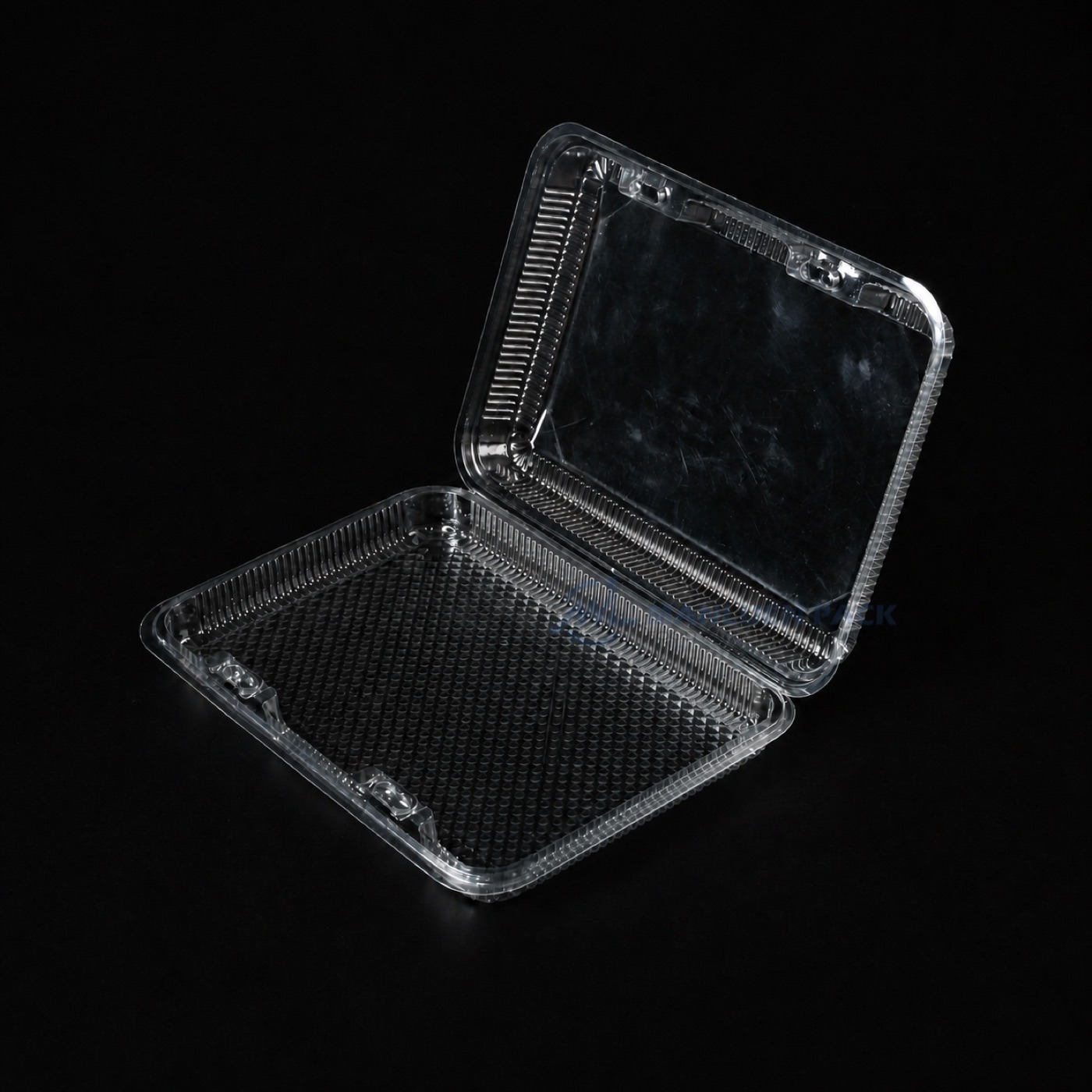
WL-CM002 Fruit Clamshell
A clear square hinged container for berries, cherry tomatoes and chilled fresh-food presentation.
Listed material: OPS
Dimensions: 156 × 150 × 65 mm
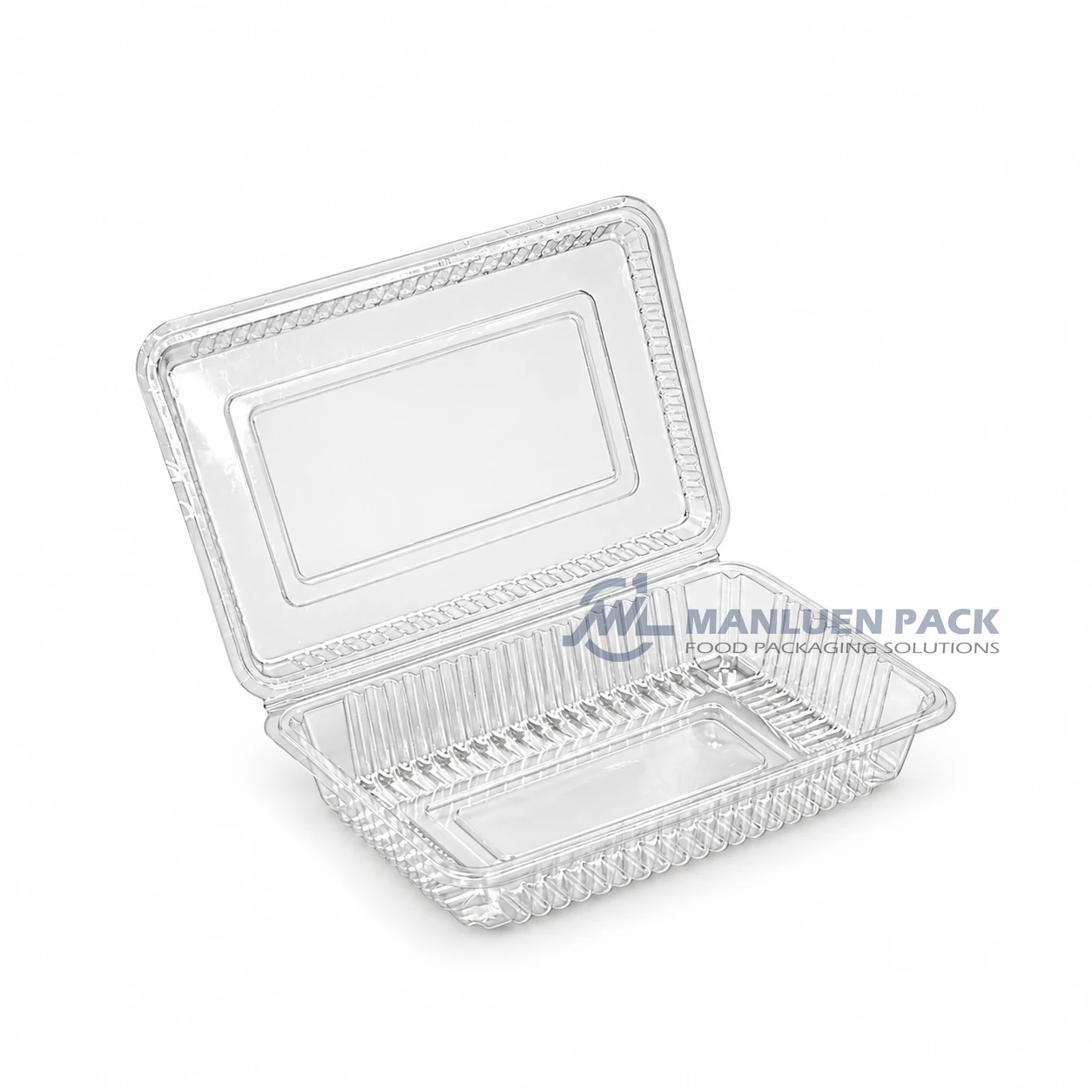
WL-CM004 Bakery Box
A wide rectangular hinged box for cookies, pastries and bakery assortments that benefit from transparent display.
Listed material: OPS
Dimensions: 285 × 205 × 50 mm
WL-1H Hinged Deli Container
A shallow rectangular display container for small deli portions, snacks and chilled prepared foods.
Listed material options: PS / OPS
Dimensions: 166 × 105 × 40 mm

WL-20B Boat-Shaped Sushi Tray
A boat-shaped tray and lid format for arranging sushi portions in a distinctive takeaway presentation.
Listed material options: PS / OPS / PET
Base: 190 × 116 × 38 mm
Lid: 195 × 118 × 40 mm
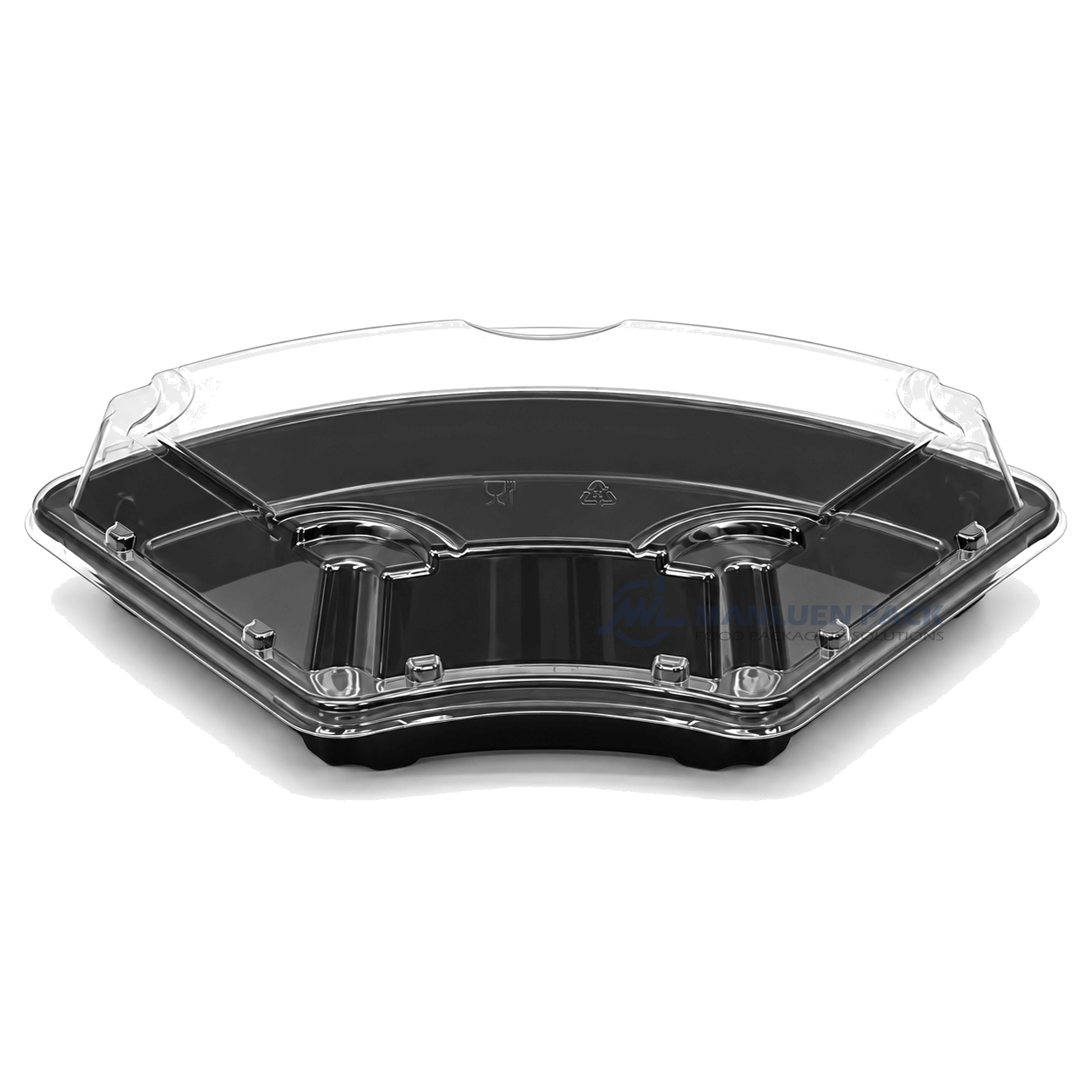
WLC-017 Fan-Shaped Sushi Tray
A curved fan-shaped tray with a fitted clear lid for visually arranged sushi and chilled-food assortments.
Listed material options: PS / OPS / PET
Specify the required material for the base and lid when requesting a quote.

WL-250 Round Divided Platter
A round compartment platter for sharing assortments, with separate sections for different food items.
Listed material options: PS / PP / PET / OPS
Base: Ø250 × 26 mm
Lid: Ø265 × 28 mm
OPS Plastic Material at a Glance
| Property | OPS Material Overview |
|---|---|
| Full name | Oriented Polystyrene |
| Alternative term | BOPS (Biaxially Oriented Polystyrene), when referring specifically to biaxially oriented material |
| Polymer family | Polystyrene (PS) |
| Resin identification code | #6 PS |
| Appearance | Generally clear, glossy and rigid |
| Typical density | Approximately 1.04–1.06 g/cm³, depending on grade |
| Common processing | Sheet extrusion, orientation and controlled thermoforming |
| Typical applications | Bakery clamshells, deli containers, clear lids, food trays and produce packaging |
| Main advantages | High clarity, useful stiffness, low weight and potential material efficiency |
| Main limitations | Heat sensitivity, potential cracking or scratching, and limited recycling access in many markets |
| Microwave suitability | Not assumed; must be verified for the exact finished product |
| Food contact | Possible when the finished formulation and intended conditions meet applicable requirements |
The table describes general material characteristics rather than guaranteed specifications for every OPS package. Finished-product performance depends on material grade, sheet thickness, orientation, container geometry, additives and processing conditions.
How Is OPS Plastic Made?
The defining feature of OPS is its orientation process. Polystyrene resin is first converted into a sheet, and the sheet is then stretched under controlled conditions. The stretching creates a more oriented molecular structure, changing the mechanical properties of the finished material.
OPS used for food packaging is often produced through biaxial orientation, which means stretching in two directions. This should be distinguished from the thermoforming process used later to manufacture individual food containers.
1. Polystyrene Resin and Sheet Extrusion
Production begins with polystyrene resin. The resin is processed into a continuous plastic sheet through extrusion, with temperatures, cooling and sheet dimensions controlled according to the production requirements.
The resulting sheet provides the base material for further stretching and orientation. It is important to distinguish the original polystyrene resin from the finished oriented sheet because their processing history and performance are not identical.
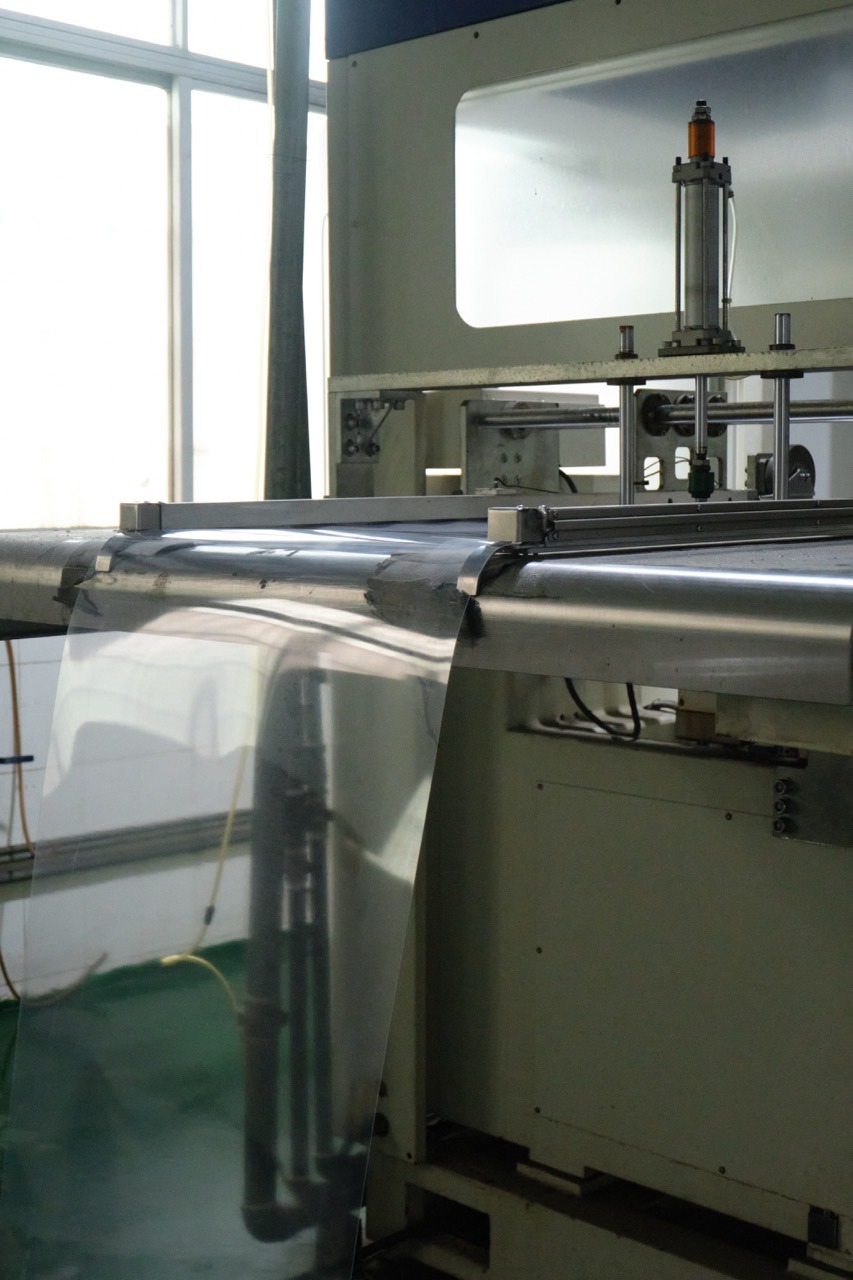
2. Longitudinal and Transverse Stretching
During orientation, the sheet is stretched along the machine direction (MD) and, in biaxial processes, the transverse direction (TD). This changes the arrangement of polymer chains and can improve stiffness and strength in specific directions.
The final mechanical performance depends on the orientation process and resulting material structure. It should not be assumed that orientation improves every property equally or makes OPS universally more impact-resistant than alternative plastics.
3. Optional Surface Treatment and Sheet Finishing
Some OPS sheet products receive additional surface treatments or coatings, depending on their intended use. Examples may include treatments addressing static electricity, fogging or other surface requirements.
Coating is not necessarily a mandatory step in every OPS manufacturing process. Any coating or additive intended for food packaging must also be considered when evaluating the finished product’s food-contact suitability.
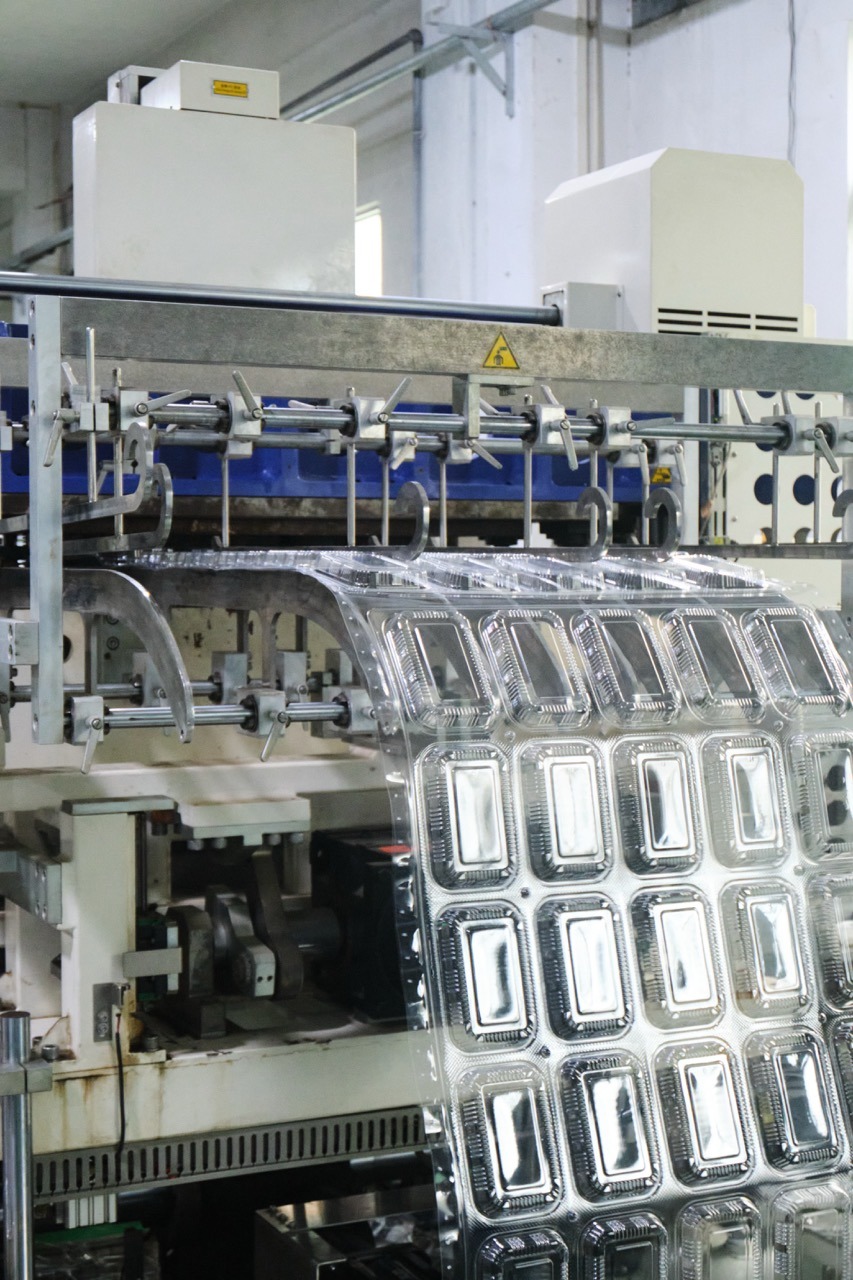
4. Thermoforming OPS into Food Packaging
Finished OPS sheet can be processed into containers through controlled thermoforming. In general, this involves heating the sheet to a suitable forming condition, shaping it using tooling and forming pressure or vacuum, and then cooling and trimming the package.
For packaging manufacturers, the important technical challenge is that oriented polystyrene can undergo shrinkage or relaxation when heated. Forming equipment and processing conditions must therefore be selected to account for the behavior of the oriented sheet.
This is why thermoforming and orientation should not be described as the same process. Orientation creates the material structure; thermoforming converts a suitable sheet into a packaging shape.
What Are the Main Properties of OPS Plastic?
OPS combines several properties that make it useful for particular food packaging applications. At the same time, each of these properties must be considered alongside the material’s limitations.
High Transparency and Gloss
Optical clarity is one of the most recognizable characteristics of OPS packaging. Clear containers help shoppers inspect bakery goods, produce and ready-to-eat foods before opening the package. A glossy surface can also contribute to the appearance of retail display packaging.
However, clarity should not be confused with scratch resistance. OPS surfaces can be susceptible to scratching under some handling conditions, and the visual quality of the finished package also depends on material quality, forming conditions and surface treatment.
Stiffness and Structural Rigidity
Orientation helps OPS achieve useful stiffness, making it suitable for certain thin-wall packaging structures. In food containers, stiffness helps a tray or lid maintain its intended shape during normal handling.
Yet stiffness is not the same as toughness. A highly rigid material may still crack under impact, sharp bending or localized stress. The overall strength of an OPS container also depends on wall thickness, corner design, ribs, hinges and closure features.
Low Weight and Material Efficiency
OPS has a typical density of approximately 1.05 g/cm³, compared with roughly 1.37 g/cm³ for certain PET grades. At exactly the same sheet area and thickness, the lower density means that OPS uses less material by weight.
For example, comparing densities of 1.05 and 1.37 g/cm³ at equal volume gives an approximate 23% weight difference. But this calculation does not establish that an actual OPS container will be 23% cheaper or lighter than a functionally equivalent PET container.
Different plastics may require different sheet thicknesses and structural designs to achieve the same performance. Raw material prices, forming efficiency, trimming losses and transport costs also affect the finished packaging cost.
Heat Sensitivity and Shrinkage
Heat sensitivity is an important limitation of OPS. Because the material has been stretched and oriented, exposure to unsuitable temperatures can cause molecular relaxation, dimensional changes or shrinkage.
There is no single universal operating temperature that accurately describes every finished OPS container. Material grades, processing methods and package designs differ, so temperature performance should be checked at the product level.
OPS is widely used in packaging for chilled and ambient-temperature food presentation. Some specially designed OPS products may have manufacturer-specified operating conditions extending into higher temperatures, but those specifications should never be generalized to every OPS package.
Impact and Scratch Resistance
OPS offers useful rigidity for display packaging, but its resistance to impact or cracking may be less favorable than some alternative materials, including selected PET grades. This becomes important when packages are repeatedly handled, stacked, transported or exposed to mechanical stress.
Scratch resistance is another consideration for retail presentation. A packaging buyer should evaluate the actual finished container, rather than selecting a resin solely from a general list of material advantages.
What Is OPS Used for in Food Packaging?
OPS packaging is used in several food-service and retail applications where visibility and relatively rigid plastic construction are useful. The final suitability of a container depends on its design, the food being packed and the temperature and handling conditions.
Bakery and Dessert Packaging
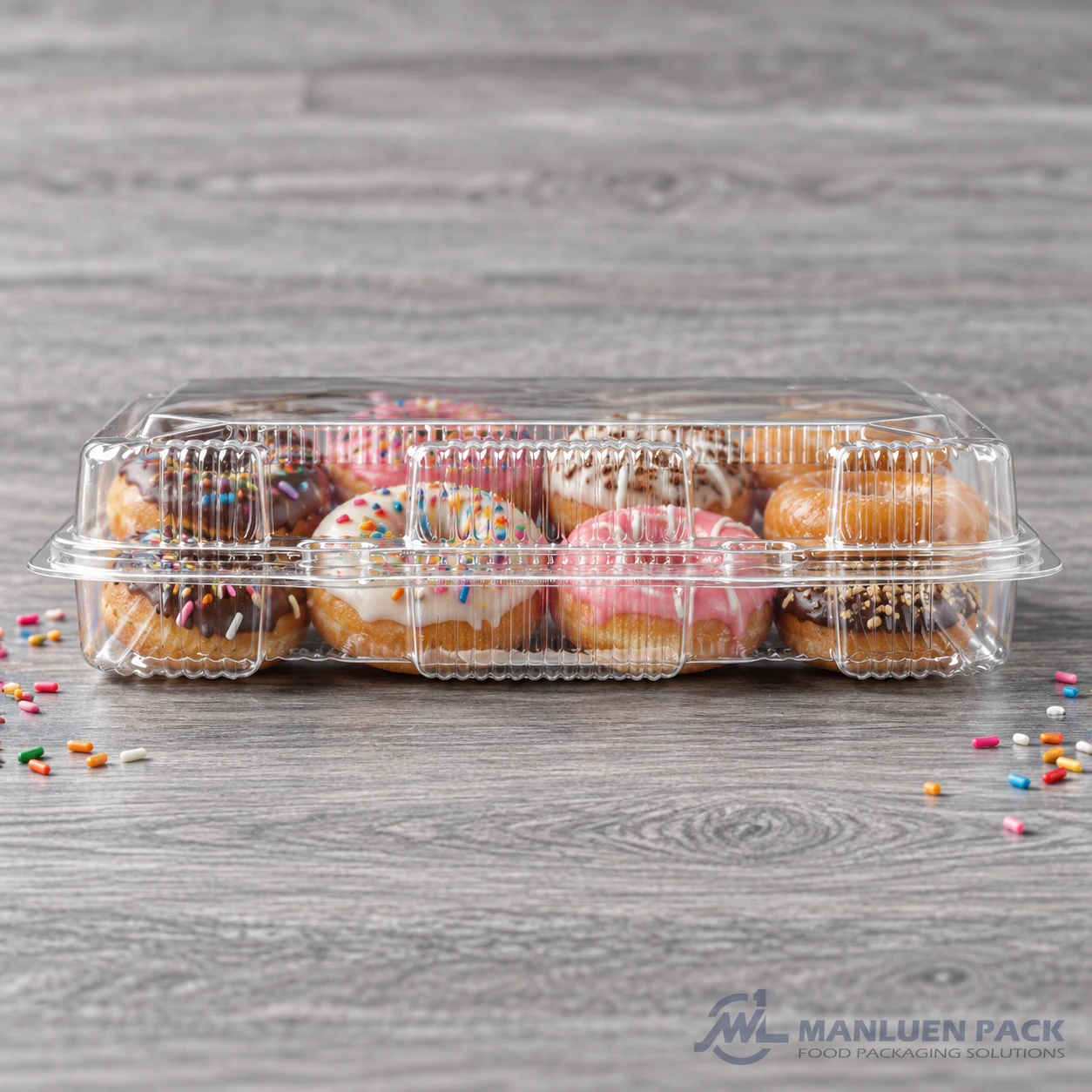
Transparent OPS clamshell containers can display cookies, pastries, muffins and other bakery items while providing a defined protective shape. This can be particularly useful in bakery counters, supermarket bakery departments and grab-and-go displays.
Packaging dimensions are important. A shallow box may suit cookies or pastry assortments, while taller products need greater lid clearance. The best package should allow the lid to close without crushing decorative toppings or delicate food surfaces.
Deli and Grab-and-Go Containers
OPS containers are also used for prepared-food displays in delicatessens, convenience stores and takeaway counters. Their clear structure allows customers and staff to identify products while keeping the packaging closed.
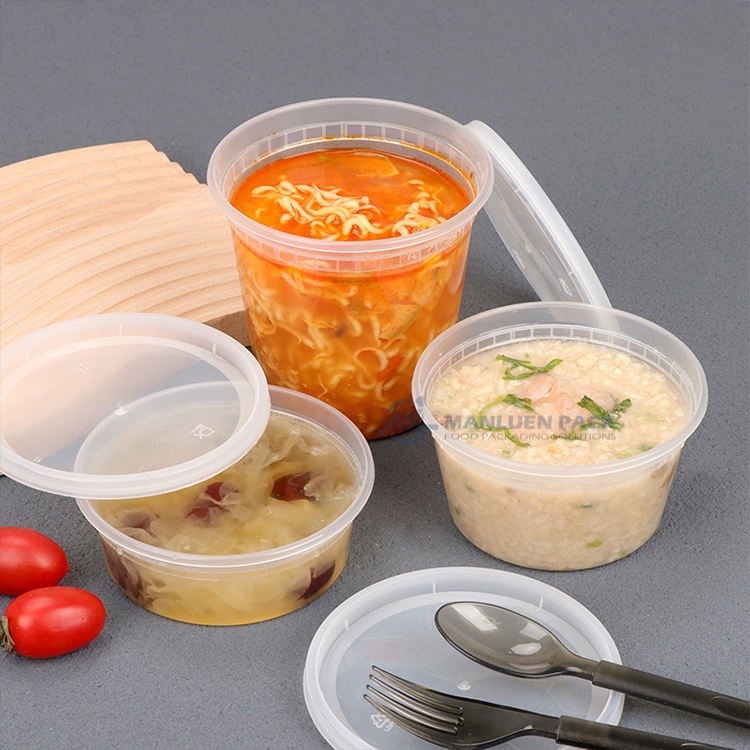
Typical applications include selected salads, sandwiches, snacks and chilled prepared foods. Liquid-heavy products require separate evaluation of closure design and leak resistance. An OPS clamshell should not automatically be treated as a sealed soup container simply because it has a lid.
Sushi Packaging and Transparent Lids
Clear OPS packaging can support the presentation of sushi and other visually arranged prepared foods. For sushi trays, transparent packaging helps customers inspect the contents while the container structure provides separation from routine handling.
However, some sushi packaging systems use a different material for the base and transparent lid. An OPS lid does not mean that the entire package is made from OPS. Buyers should confirm the material composition of each component and its intended food-contact conditions.
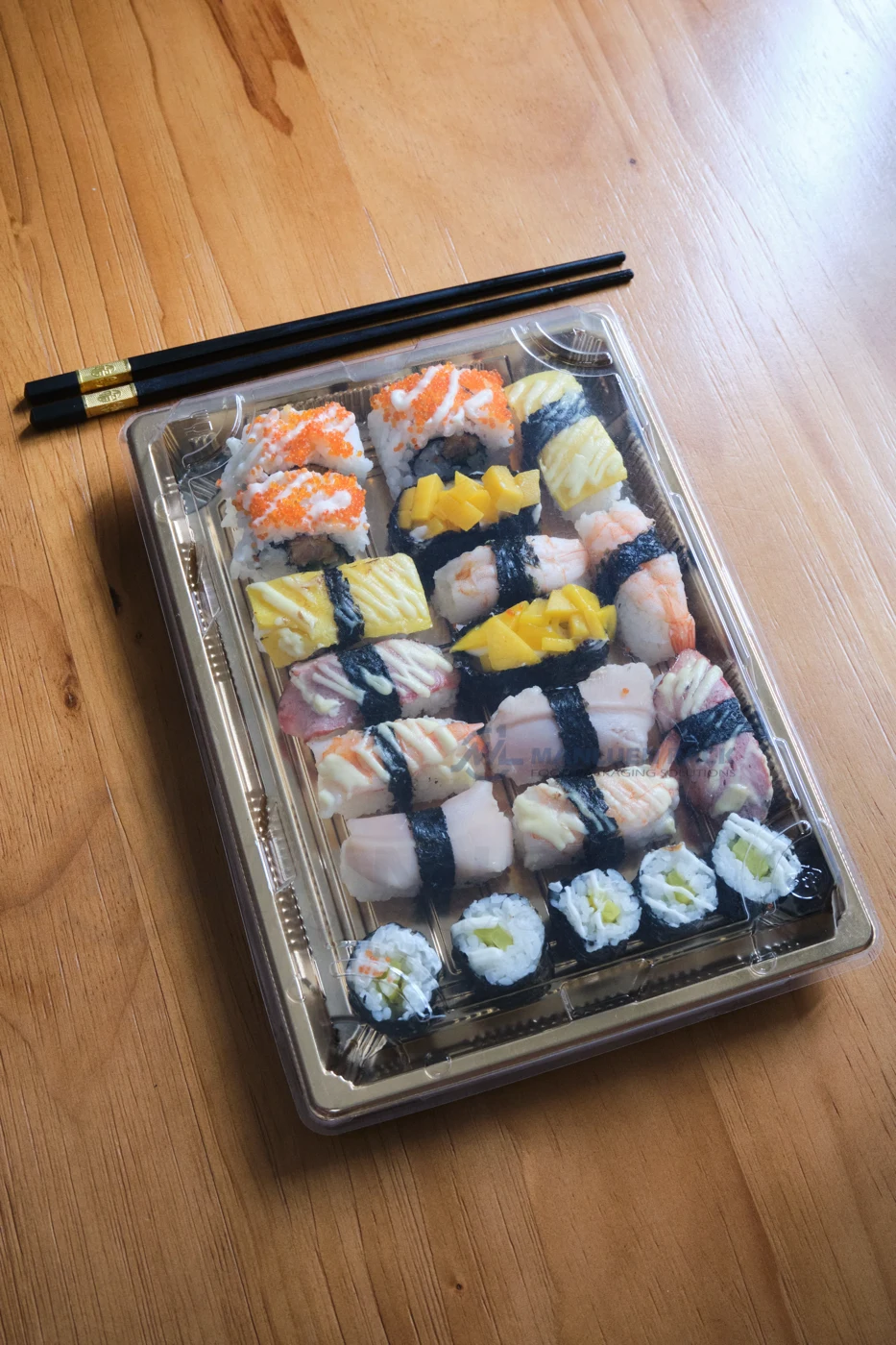
Manluen Sushi Trays with OPS Material Options
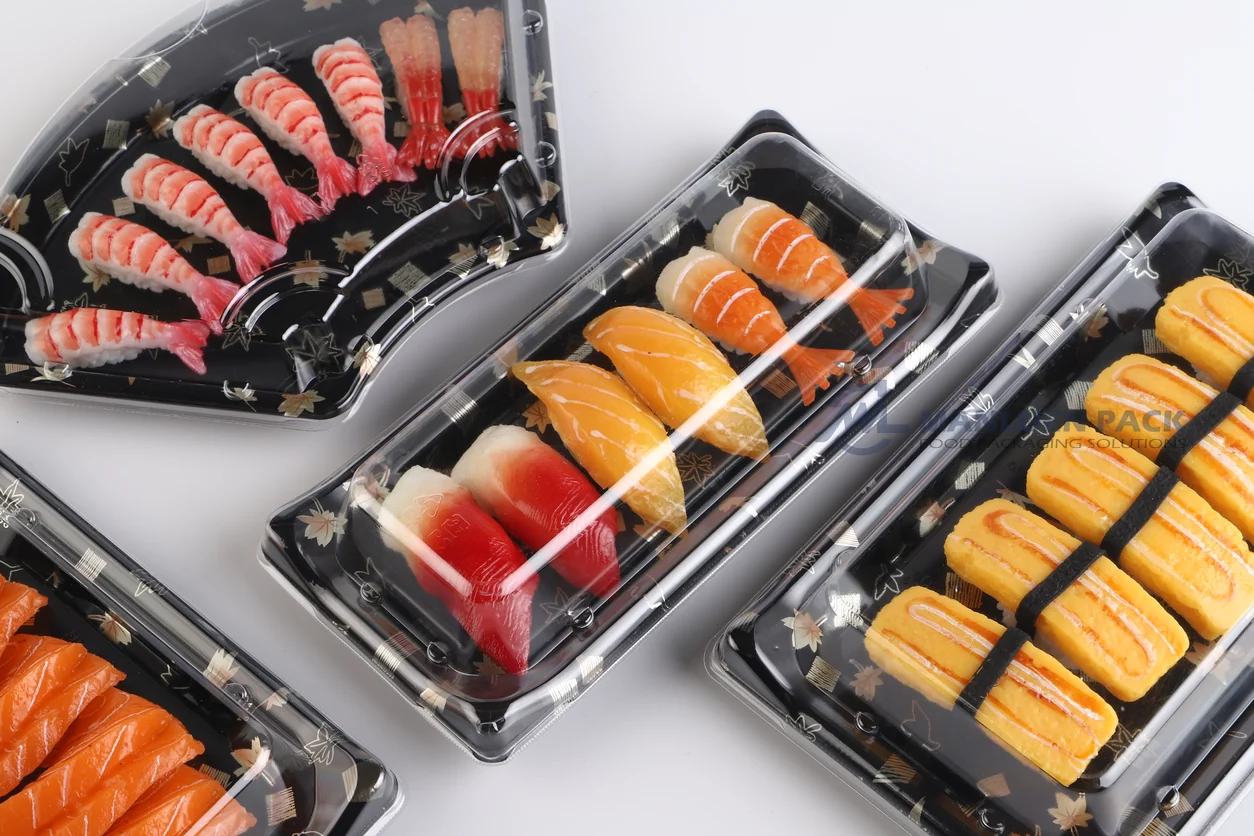
Manluen sushi packaging can be supplied in different materials, including OPS for suitable configurations. The models below list OPS among their material options. The product photos illustrate the shapes and presentation; they do not establish the resin used in the pictured sample.
When requesting a quote, specify the material for the tray base and lid separately. Confirm which component is available in OPS, the required thickness, matching closure and intended chilled-food conditions. A listed material option does not mean every base-and-lid combination is supplied in that material as standard.

WL-0.6 Small Sushi Tray
A compact rectangular tray for smaller sushi assortments and chilled takeaway portions.
Listed material options: PS/PP/PET/OPS. Request the required OPS component when specifying your order.
Listed size: Lid: 167×92×31; Base: 163×90×20; Listed carton quantity: 600. Confirm whether the quotation covers bases, lids or complete sets.

WL-01 Sushi Display Tray
A slim rectangular display format for neatly arranged sushi portions.
Listed material options: PS/PP/PET/OPS. Request the required OPS component when specifying your order.
Listed carton quantity: 600. Confirm whether the quotation covers bases, lids or complete sets.

WL-05 Sakura Sushi Tray
A broader rectangular format for mixed sushi selections and prepared-food display.
Listed material options: PS/PP/PET/OPS. Request the required OPS component when specifying your order.
Listed size: Lid: 188×132×31; Base: 184×128×20; Listed carton quantity: 400. Confirm whether the quotation covers bases, lids or complete sets.

WL-09 Large Sushi Tray
A larger rectangular format for sushi assortments requiring more display area.
Listed material options: PS/PP/PET/OPS. Request the required OPS component when specifying your order.
Listed size: 241*148*45mm; Listed carton quantity: 300. Confirm whether the quotation covers bases, lids or complete sets.
WLC-017 Fan-Shaped Sushi Tray
A curved fan-shaped format for distinctive sushi arrangements and chilled presentation.
Listed material options: PS/OPS/PET. Request the required OPS component when specifying your order.
Listed carton quantity: 300. Confirm whether the quotation covers bases, lids or complete sets.
WL-250 Round Compartment Sushi Platter
A round divided platter for sharing assortments and separating different prepared-food items.
Listed material options: PS/PP/PET/OPS. Request the required OPS component when specifying your order.
Listed size: Lid: Ø265×28; Base: Ø250×26; Listed carton quantity: 200. Confirm whether the quotation covers bases, lids or complete sets.
Explore Manluen’s sushi tray collection to compare additional shapes and sizes, or request an OPS configuration for your selected model.
Fresh Produce Trays and Punnets
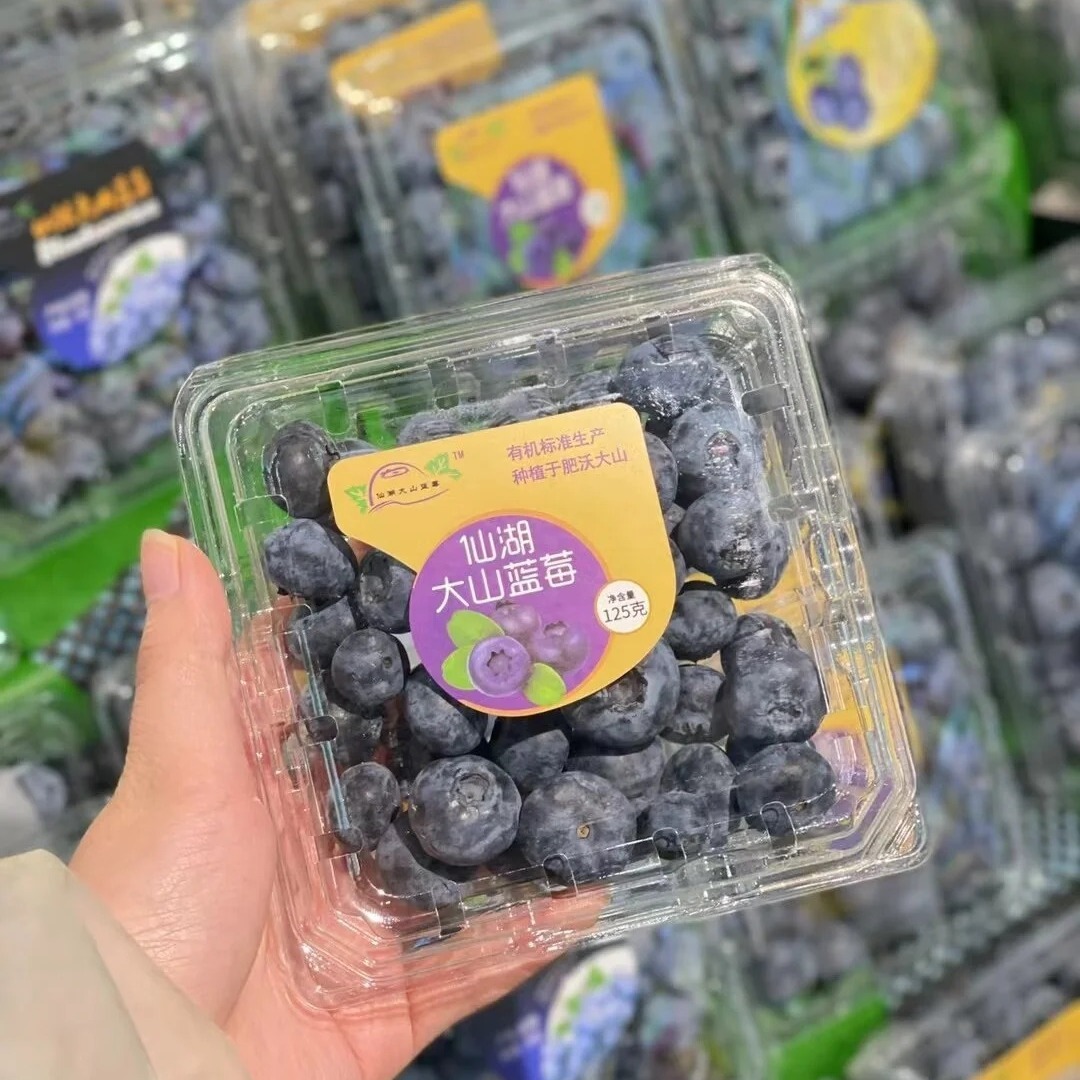
OPS can also be used in selected produce trays, fruit containers and punnets. These packaging types benefit from transparency, particularly when displaying berries, cherry tomatoes and other small produce items.
Fresh produce packaging may require ventilation, condensation management and appropriate storage conditions. The presence of clear OPS material alone does not establish that a container is suitable for every type of fruit or vegetable.
Transparent Covers and Retail Display Packaging
OPS is also used for certain transparent lids, covers and display components. In these applications, the lid’s transparency, rigidity and fit may be as important as the material used for the base.
For wholesale buyers, the relevant specification should therefore identify whether the product is an OPS base, OPS lid, complete OPS clamshell or a mixed-material packaging assembly.
More OPS Clamshell Sizes from Manluen
For larger bakery items, taller fresh-food portions and wide retail displays, Manluen provides additional clear OPS clamshell sizes. These models offer different footprints and depths for packaging selection.
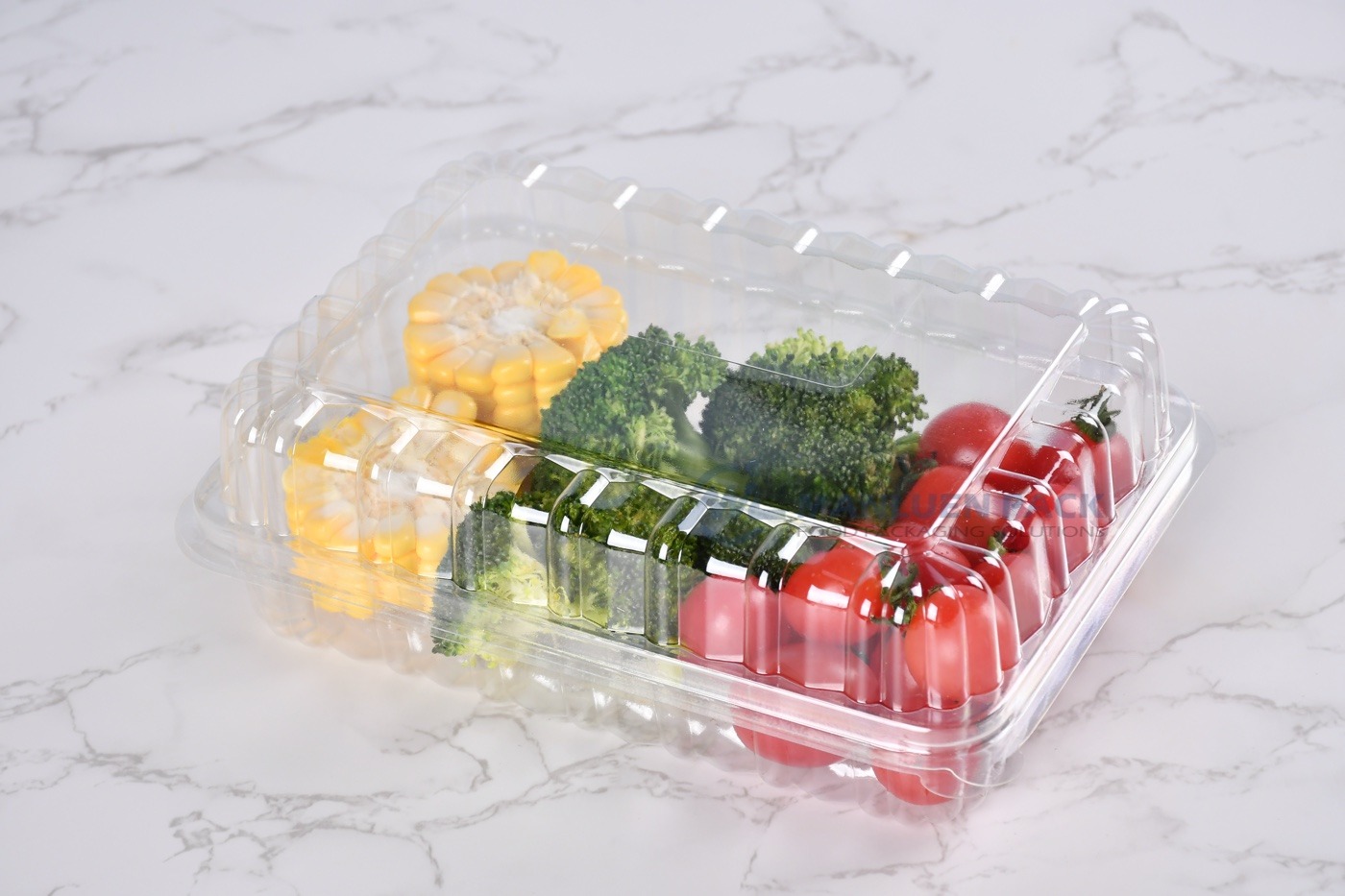
WL-CM003H Deep OPS Clamshell
A deeper flip-top container for vegetables, layered salads and foods requiring additional headspace.
215 × 150 × 70 mm; OPS; 300 pieces/carton
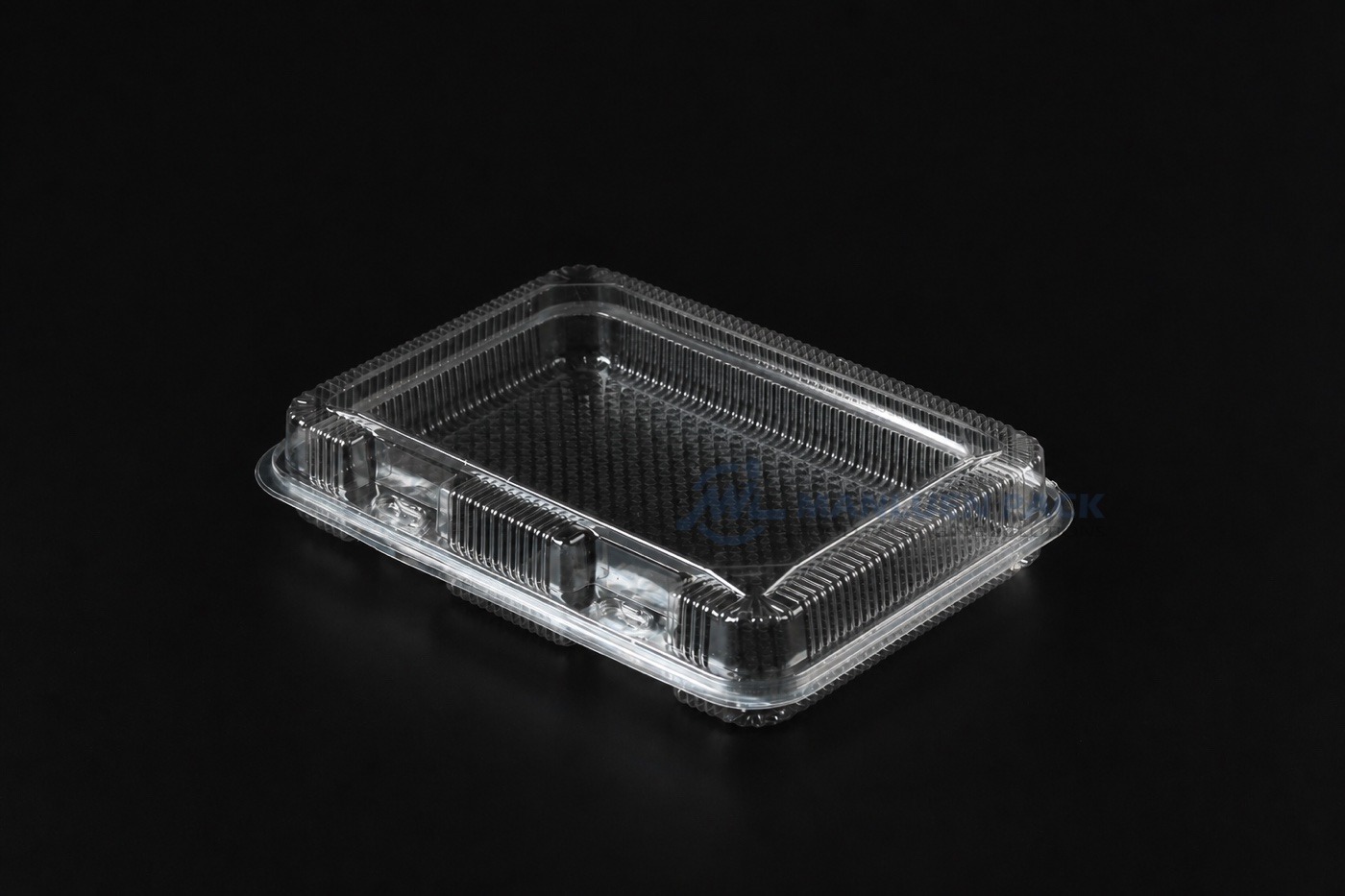
WL-CM004 Large OPS Bakery Box
A wide, relatively shallow clear container for cookies, pastries, bakery assortments and retail displays.
285 × 205 × 50 mm; OPS; 250 pieces/carton
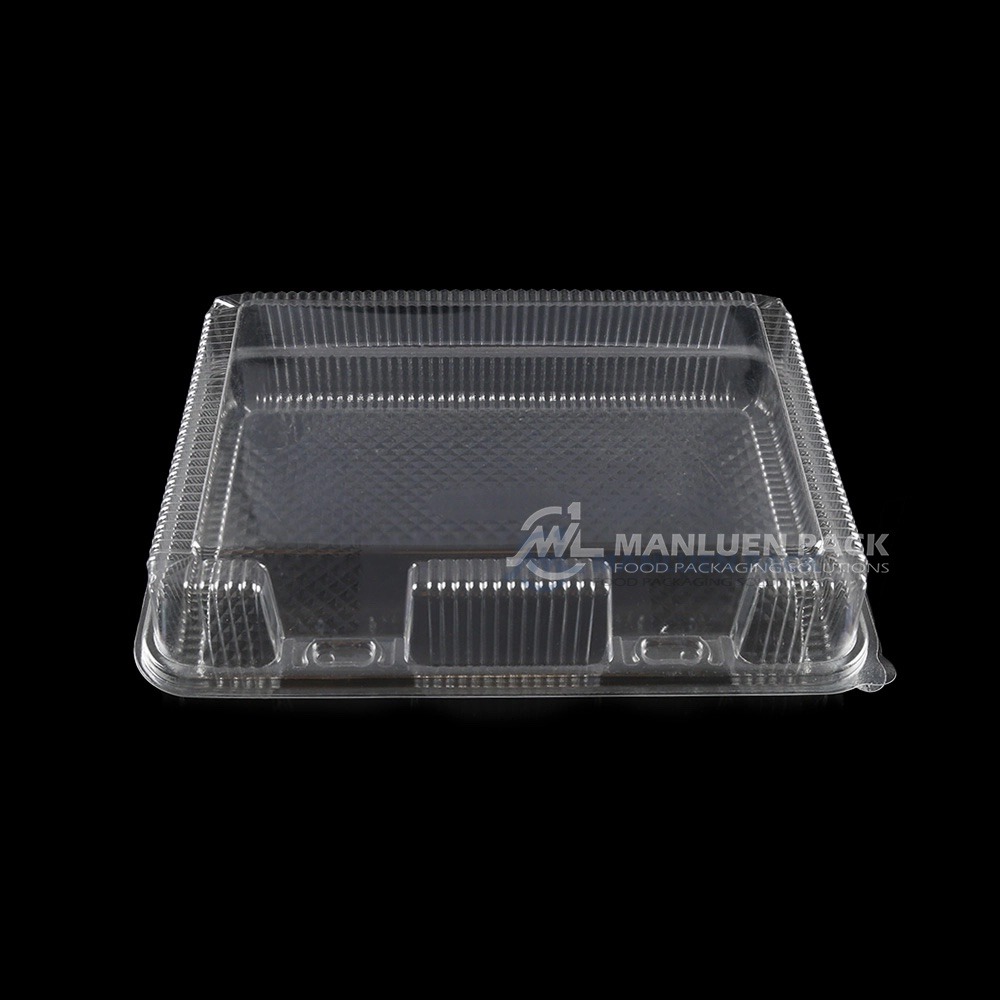
WL-CM005 Large Deep OPS Container
A wider and deeper OPS clamshell for larger fresh-food portions and prepared-food presentation.
285 × 205 × 60 mm; OPS; 250 pieces/carton
These Manluen products are examples of OPS packaging with different physical dimensions and intended applications. Buyers should choose by actual food size, closure requirements, temperature conditions and packaging performance—not by transparency alone.
Explore the complete Manluen wholesale clamshell container range for additional material and size options.
OPS vs PET vs PP: Which Packaging Material Is Better?
OPS, PET and PP are widely encountered in food packaging, but their properties are not interchangeable. OPS is particularly associated with transparent, rigid display packaging. PET is another important transparent thermoforming material, while PP is frequently chosen for food containers requiring suitable temperature performance.
No material is automatically best in every application. The correct comparison depends on the grade, thickness, package design, food type and intended use.
| Property | OPS | PET / APET | PP |
|---|---|---|---|
| Typical appearance | Highly transparent | Highly transparent | Translucent to clear, depending on grade |
| Rigidity | High stiffness | Good stiffness, grade-dependent | Grade- and structure-dependent |
| Impact performance | Can be relatively brittle | Often offers better toughness in comparable packaging applications | Often offers useful toughness, depending on grade |
| Heat sensitivity | Orientation-related shrinkage and heat limitations | Conventional APET has heat limitations | Suitable grades can support higher-temperature uses |
| Microwave suitability | Do not assume suitability | Do not assume suitability for conventional APET | Some finished PP containers are microwave-rated |
| Common food packaging | Bakery, deli, clear clamshells, lids | Cold food trays, produce, bakery and retail display | Meal prep boxes, selected soup containers and takeaway packaging |
| Resin code | #6 PS | #1 PET | #5 PP |
| Recycling considerations | Limited collection in many markets | More established infrastructure in many markets, but trays differ from bottles | Acceptance varies by region and format |
OPS vs PET Packaging
OPS and PET can both provide high transparency, making them useful in bakery, produce and prepared-food packaging. One key difference is mechanical performance: selected PET grades may offer better impact resistance and resistance to cracking than OPS in comparable applications.
PET may also provide advantages in certain barrier applications. However, barrier performance should be evaluated using the complete packaging system, particularly where containers include vents, seams or non-hermetic lids. Choosing PET alone does not guarantee an extended food shelf life.
Recycling is another difference. PET has relatively established recycling infrastructure in many markets, but PET bottles and thermoformed food trays do not necessarily have the same collection and recovery rates. OPS packaging may face more limited collection opportunities, particularly where polystyrene is not accepted in municipal recycling programs.
For a food producer considering replacing OPS with PET, it is important to compare the actual finished packages rather than looking only at the resin name. Material thickness, tooling, formed dimensions, closure fit, freight weight and pricing may all change.
OPS vs PP Packaging
OPS is frequently selected for high-visibility packaging, whereas PP offers a different balance of mechanical and thermal characteristics. Some PP containers are designed for hot food and microwave reheating, but those uses must be confirmed from the finished product specifications.
For example, a chilled bakery display may benefit from an OPS clamshell, while a prepared meal intended for reheating may require a suitable PP container instead.
Manluen offers PP deli container options and other polypropylene food packaging formats, allowing buyers to compare products according to their use rather than treating OPS as a universal packaging material.
OPS vs GPPS, HIPS and EPS
OPS belongs to the polystyrene family, but it should not be confused with other widely used forms of polystyrene.
| Material | Full Name | Key Distinction |
|---|---|---|
| OPS | Oriented Polystyrene | Polystyrene processed to create an oriented sheet structure |
| GPPS | General-Purpose Polystyrene | Generally transparent, rigid and relatively brittle |
| HIPS | High-Impact Polystyrene | Impact-modified polystyrene, commonly less transparent or opaque |
| EPS | Expanded Polystyrene | Foamed polystyrene with a cellular, lightweight structure |
These materials differ in modification, structure and processing. They should not be treated as interchangeable simply because they share the broader polystyrene name.
What Are the Disadvantages of OPS Packaging?
OPS has clear advantages in selected display-oriented packaging, but several limitations can influence material selection.
Heat-Related Shrinkage and Deformation
Because OPS is oriented, its dimensional stability under heat requires careful consideration. Incorrect temperature exposure may cause deformation or shrinkage. Buyers should not assume that a clear OPS food container is appropriate for microwave reheating or unrestricted hot filling.
Potential Brittleness and Surface Scratching
OPS can provide useful stiffness, but its resistance to sharp impacts, bending and scratching may be less favorable than certain alternative packaging materials. The actual outcome depends on sheet thickness, forming quality and container structure.
Limited Recycling Access
OPS generally falls under resin identification code #6 PS. Although polystyrene can be recycled through suitable processes, post-consumer OPS food packaging is not consistently accepted by municipal recycling programs. Food contamination, sorting limitations and insufficient end markets can further reduce practical recycling opportunities.
Not Suitable for Every Food or Packaging Format
OPS is not automatically the best choice for heavy loads, hot meals, long-duration liquid storage or products requiring high barrier performance. A packaging buyer should identify the primary performance requirement before choosing the material.
Is OPS Plastic Safe for Food Packaging?
OPS can be used for food-contact packaging when the finished material formulation and intended use meet applicable food-contact requirements. However, the name Oriented Polystyrene alone does not establish that every OPS container is suitable for direct contact with every food.
Food-contact suitability depends on factors such as resin composition, additives, potential migration, food type, contact time and temperature. Coatings and other components must also be considered where present.
OPS Food Packaging in the United States
In the United States, food-contact plastics must satisfy the applicable requirements under the FDA framework. Polystyrene-related provisions include 21 CFR 177.1640 — Polystyrene and Rubber-Modified Polystyrene, where applicable.
Compliance should be established for the relevant finished material and intended food-contact conditions. General advertising phrases such as “FDA approved plastic” should not replace appropriate technical documentation.
OPS Food Packaging in the European Union
Food-contact plastic materials placed on the European Union market are subject to relevant requirements, including Regulation (EC) No 1935/2004 and the applicable provisions of Regulation (EU) No 10/2011, as amended.
Importers should confirm that the selected product is supported by appropriate declarations and test documentation for its intended conditions of use. A manufacturer’s general quality management certification is not a substitute for finished-product food-contact compliance.
Can OPS Plastic Be Microwaved?
OPS packaging should not be assumed microwave-safe. The material’s orientation-related thermal behavior makes temperature suitability an important consideration, and many OPS packaging formats are designed primarily for display and other applications that do not require reheating.
Some finished OPS products may have manufacturer-specified temperature ranges for particular uses. However, a published maximum operating temperature is not equivalent to microwave approval.
Microwave heating involves the food, container, lid, heating duration and potentially uneven temperatures. These conditions must be addressed by the product’s specific instructions or validation.
For restaurants offering meals intended to be reheated by customers, it may be more appropriate to compare tested PP meal containers or other packaging formats designed for the required use.
Is OPS Packaging Recyclable?
OPS is a polystyrene-based material normally identified by the #6 resin code. This identifies the resin family but does not guarantee acceptance in local recycling systems.
In principle, suitable polystyrene materials can be collected and reprocessed. In practice, OPS food packaging may face limited collection, sorting and reprocessing options, depending on the region.
Why OPS Recycling Can Be Difficult
Thin-wall OPS packaging can be lightweight and relatively bulky during collection. Small packaging items may be difficult for automated sorting systems to recover. Food contamination can create additional processing problems, and recycling facilities may not have a reliable market for the recovered polystyrene.
OPS and PET should also be properly separated when necessary for recycling because they are different polymers. Their similar transparent appearance does not make them compatible within the same reprocessing stream.
Does Recyclable Mean Environmentally Friendly?
No single material property establishes that a package is environmentally preferable in every situation. Lower resin density, potential recyclability and reduced material use are relevant factors, but so are production impacts, food protection, transport, local collection systems and end-of-life treatment.
Similarly, substituting PET for OPS does not automatically guarantee a lower carbon footprint. Meaningful environmental comparisons should evaluate equivalent finished packaging systems under clearly defined conditions.
Restaurants and retailers should check local collection guidance before making recyclability claims to customers. Where certified recycling or specialized collection programs are available, acceptance should be confirmed for the actual packaging format.
Should You Replace OPS Packaging with PET?
Some food brands and packaging buyers are evaluating PET alternatives because of impact performance, recycling requirements and changes in sourcing preferences. But there is no universal requirement to replace every OPS package.
An existing OPS container may remain appropriate when it meets the food’s temperature, handling, presentation and packaging requirements. Changing material may be justified when the buyer needs a different mechanical performance, a specific recycling outcome or compliance with a local packaging restriction.
Before switching to PET, compare the complete package: not only transparency and resin type, but also thickness, shape, closure fit, available tooling, total weight, product protection and supply arrangements.
If only a transparent lid uses OPS, replacing that lid material may require a different technical assessment than replacing a complete OPS hinged container. A change in lid material can alter stiffness, closure performance and manufacturing tolerances.
The better approach is to choose the material according to the application, not to treat OPS or PET as universally superior.
How to Choose OPS Food Containers for Wholesale Purchasing
For restaurants, food processors, retailers and distributors, the purchase specification should begin with the food rather than the material name alone. A transparent bakery package, produce punnet and takeaway deli container may need different dimensions, structures and closure features even if all three use OPS.
Check the Intended Food and Temperature
Confirm whether the package will be used for ambient display, chilled storage, takeaway handling or another defined condition. For foods requiring reheating, verify the suitability of the entire package rather than assuming that OPS can serve the same purpose as a microwave-rated PP container.
Compare Actual Dimensions and Lid Clearance
A container’s length, width and height determine how food fits inside. Packaging intended for pastries or decorated desserts should provide enough clearance to avoid compressing the contents. Fresh produce may require attention to ventilation, while prepared-food displays may benefit from a broader viewing area.
Test the Closure and Structural Performance
For hinged OPS containers, evaluate the actual hinge, rim and closure design. An attached lid simplifies some packing operations, but the presence of a hinge does not automatically prove that the package is leak-proof or tamper-evident.
Where liquid resistance or special sealing performance is required, request evidence for the complete product and test it under realistic handling conditions.
Confirm Carton Quantities and Material Specifications
Wholesale buyers should verify the exact SKU, finished dimensions, material grade, pieces per carton and whether the quoted item includes all components. Carton specifications and loading arrangements can vary significantly between similar-looking container sizes.
Manluen Pack offers multiple clear OPS clamshell models with documented dimensions and packing quantities. Wholesale minimum order requirements generally begin from 30 cartons or 5,000 pieces, depending on the product and order configuration. The final requirement should be confirmed for the selected model.
For an accurate quotation, provide your preferred product model, estimated quantity, destination, intended food and any requirements for material selection, packaging performance or customization.
Frequently Asked Questions About OPS Plastic
What does OPS stand for in plastic packaging?
OPS stands for Oriented Polystyrene. In many food packaging applications, OPS sheet is biaxially oriented and may also be called BOPS, or Biaxially Oriented Polystyrene.
Is OPS plastic the same as polystyrene?
OPS belongs to the polystyrene family, but it has undergone an orientation process that changes its structure and certain mechanical properties. It is not identical in processing history or performance to ordinary unoriented polystyrene.
What is OPS plastic used for?
OPS is used for clear bakery clamshells, deli containers, transparent lids, produce packaging, food trays and other display-oriented products where clarity and stiffness are important.
What are the main advantages of OPS packaging?
Its main advantages include transparency, glossy appearance, useful stiffness and relatively low material density. In suitable designs, these characteristics can support efficient thin-wall packaging.
What are the disadvantages of OPS plastic?
OPS can be heat-sensitive, may be susceptible to cracking or scratching under some conditions, and faces limited post-consumer recycling access in many markets. Its suitability depends on the specific finished package.
Is OPS plastic microwave-safe?
Do not assume so. Microwave suitability must be verified for the exact finished OPS container and its intended heating conditions. Many OPS food packages are intended for applications that do not require reheating.
Is OPS plastic safe for food contact?
OPS can be suitable for food-contact uses when the finished material formulation meets applicable requirements under its intended conditions of use. Compliance should be confirmed through product-specific documentation.
Can OPS containers be used in a freezer?
Freezer suitability depends on the material grade and product design. Cold storage performance and low-temperature impact resistance are different properties, so buyers should follow the manufacturer’s actual product specifications.
Is OPS plastic recyclable?
OPS belongs to the #6 polystyrene resin family and can be reprocessed through suitable recycling systems. However, local collection and actual recycling availability may be limited and should be verified.
Is OPS better than PET?
Neither material is best in every application. OPS can offer advantages in clarity, stiffness and low-density packaging designs, while PET may offer better impact performance and more developed recycling infrastructure in some markets. The finished product requirements determine the better choice.
What is the difference between OPS and HIPS?
OPS is polystyrene processed by orientation, while HIPS is impact-modified polystyrene. HIPS commonly has greater impact toughness but is usually less transparent or opaque.
Is OPS packaging suitable for bakery products?
OPS is commonly used for bakery packaging, especially cookies, pastries and other products that benefit from transparent display. Package dimensions, food temperature and structural protection must still be checked.
Can an OPS food container be leak-proof?
Leak resistance depends on the finished container’s closure design rather than OPS material alone. A particular container may offer improved resistance to spills, but this should be verified under realistic transport conditions.
Where can I buy OPS food containers wholesale?
OPS packaging can be sourced from specialist food packaging manufacturers and distributors. Manluen Pack offers clear OPS clamshell containers in multiple sizes for bakery, produce, deli and takeaway packaging. Buyers can review individual product specifications and request a wholesale quotation.
Final Thoughts
OPS (Oriented Polystyrene) remains a useful material for selected transparent food packaging applications. Its combination of clarity, stiffness and relatively low density makes it particularly relevant to bakery boxes, clear clamshells, deli containers and display-oriented packaging.
However, OPS is not a universal substitute for PET or PP. Heat sensitivity, possible cracking or scratching, food-contact conditions and recycling availability must be considered alongside its visual and structural advantages.
For commercial buyers, the best approach is to evaluate the finished packaging system. Material, container geometry, sheet thickness, closure design, intended temperature and overall cost all influence whether OPS is appropriate.
Explore Manluen Pack’s wholesale clamshell containers to compare OPS and alternative plastic packaging options, or contact our team with your required dimensions, materials, quantities and delivery destination.
References and Further Reading
- Reliancepak. What Is OPS Plastic Material? June 30, 2025. Material definition, properties and common packaging applications.
- Munot Plastics. Oriented Polystyrene (OPS) Packaging. https://www.munotplastics.com/materials/. OPS clarity, thermoforming and packaging applications.
- Inline Plastics. Where Is OPS Today, and Have Food Industry Pros Abandoned It? July 28, 2025. https://www.inlineplastics.com/blog/where-is-ops-packaging-today. Orientation, heat sensitivity, recycling challenges and PET alternatives.
- Dart Container. Oriented Polystyrene (OPS) — Material Guide. https://www.dartcontainer.com/resources/tools/material-guide/ops-oriented-polystyrene. OPS applications, material identification and recycling considerations.
- Packaging Technology Today. Transitioning OPS to PET. May 1, 2024. Discussion of replacing OPS in bakery and dessert packaging.
- U.S. Food and Drug Administration. Food Ingredients and Packaging. https://www.fda.gov/food/food-ingredients-packaging.
- U.S. Electronic Code of Federal Regulations. 21 CFR 177.1640 — Polystyrene and Rubber-Modified Polystyrene. https://www.ecfr.gov/current/title-21/chapter-I/subchapter-B/part-177/section-177.1640.
- European Parliament and Council. Regulation (EC) No 1935/2004 on Materials and Articles Intended to Come into Contact with Food. https://eur-lex.europa.eu/eli/reg/2004/1935/oj.
- European Commission. Regulation (EU) No 10/2011 on Plastic Materials and Articles Intended to Come into Contact with Food. https://eur-lex.europa.eu/eli/reg/2011/10/oj.
- Manluen Pack. Clamshell Containers — Wholesale Food Packaging. https://www.manluenpack.com/product-category/clamshell-containers/. OPS and other material options, product dimensions and wholesale specifications.

ManLuen Plastic Packaging Company, which is specialized in the production of Plastic Food Packaging for more than 20 years. Our products are made from 100% virgin and BPA-Free PP, PS, and OPS comply with FDA and European Standards.
 EN
 ZH
 FR
 PT
 ES
 KO
 JA