
Introduction
Polypropylene (PP) is used for food packaging because it combines useful heat resistance, resistance to oils and moisture, low weight, durability and versatile manufacturing. It is a common choice for takeaway meals, bento boxes, food-storage tubs and suitably rated microwave-reheating containers. The right grade and design matter. A PP tray for hot-food service is not automatically microwave-safe, freezer-safe or suitable for repeated reuse. This guide explains the six main reasons for choosing PP, its limitations, food-contact requirements and the checks buyers should make before ordering.
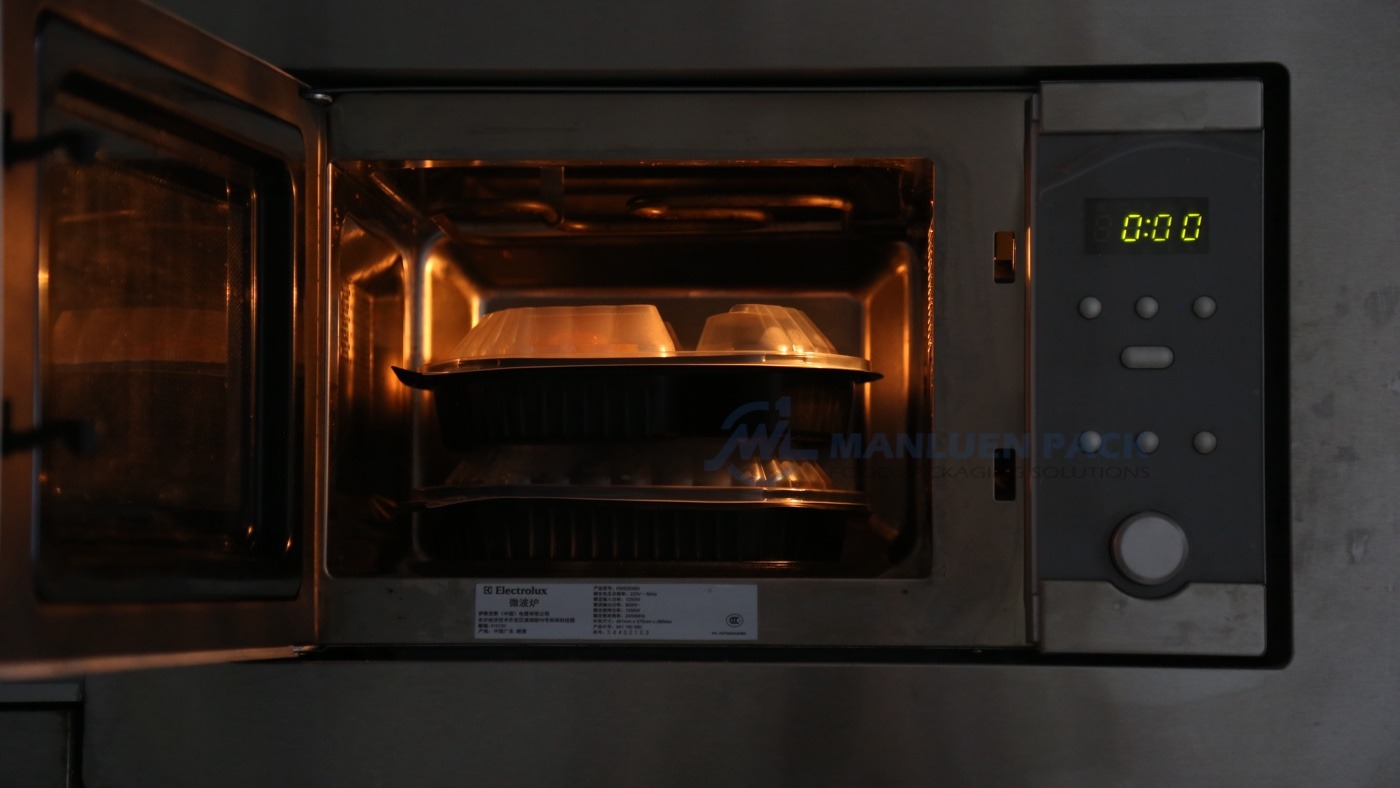
PP Meal Containers from Manluen
Compare three compartment layouts for different menu combinations. Product photos show the format; heating and lid-handling requirements must be confirmed for the selected configuration.
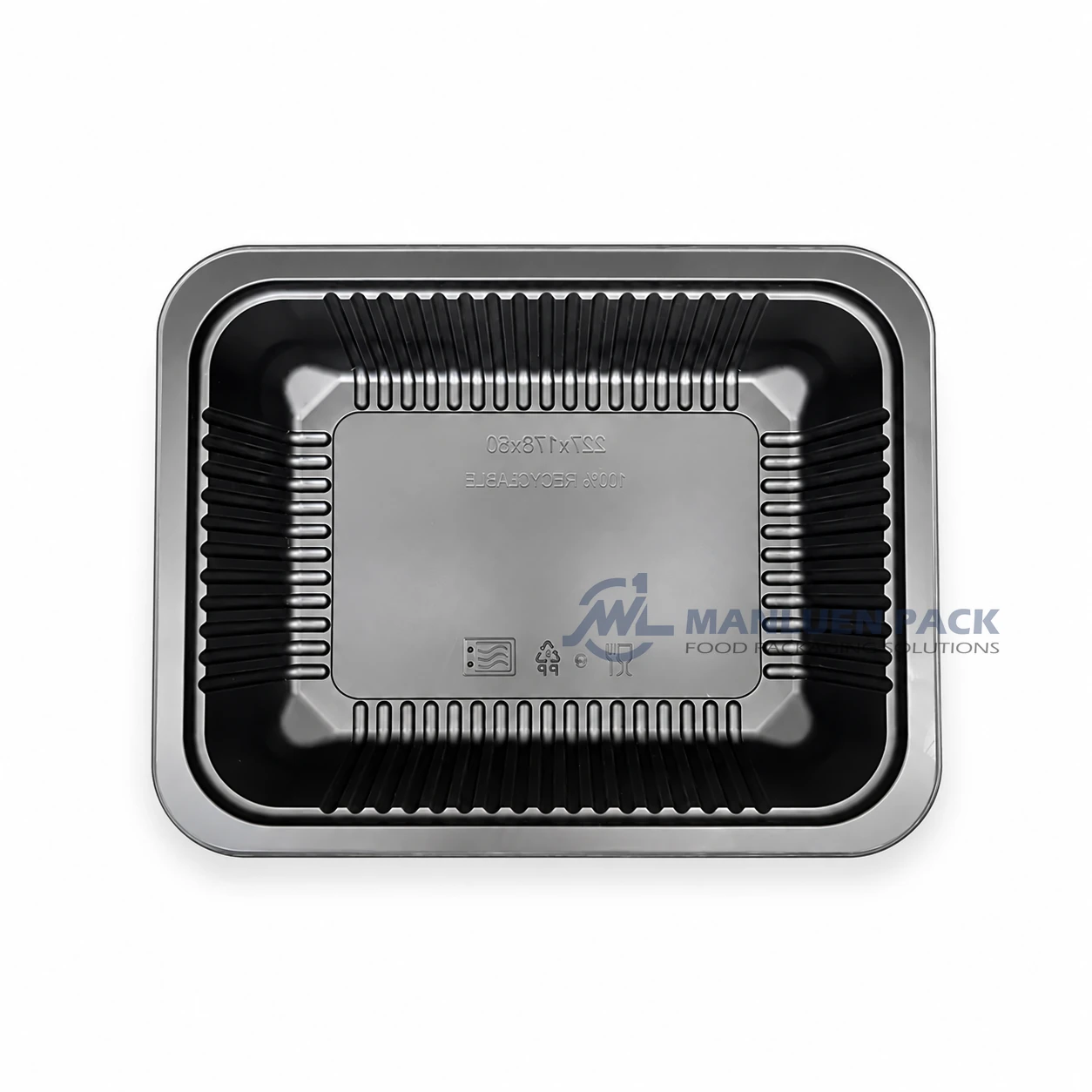
WL-2015-4 Single-Compartment Meal Box
An open rectangular interior for rice dishes, pasta and complete meals that do not need dividers.
Listed material: PP. Confirm the base, lid or closure materials and product-specific use instructions.
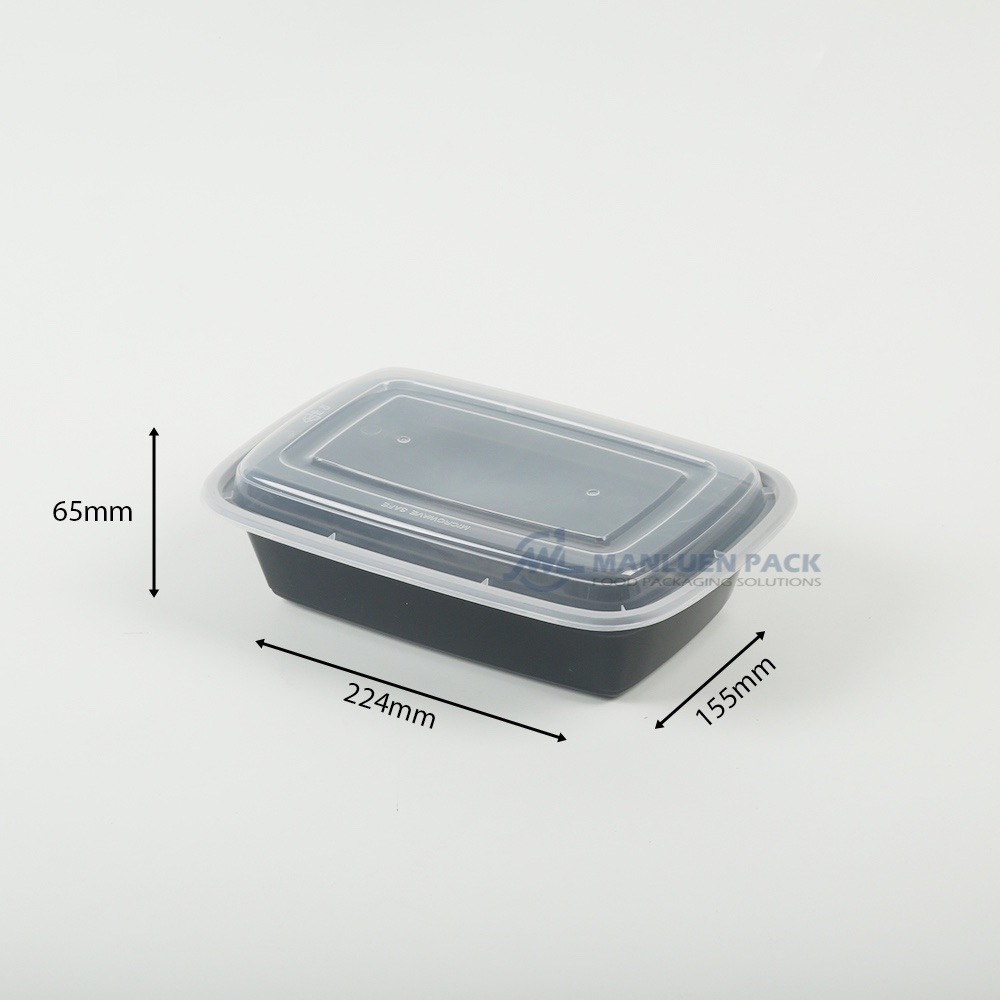
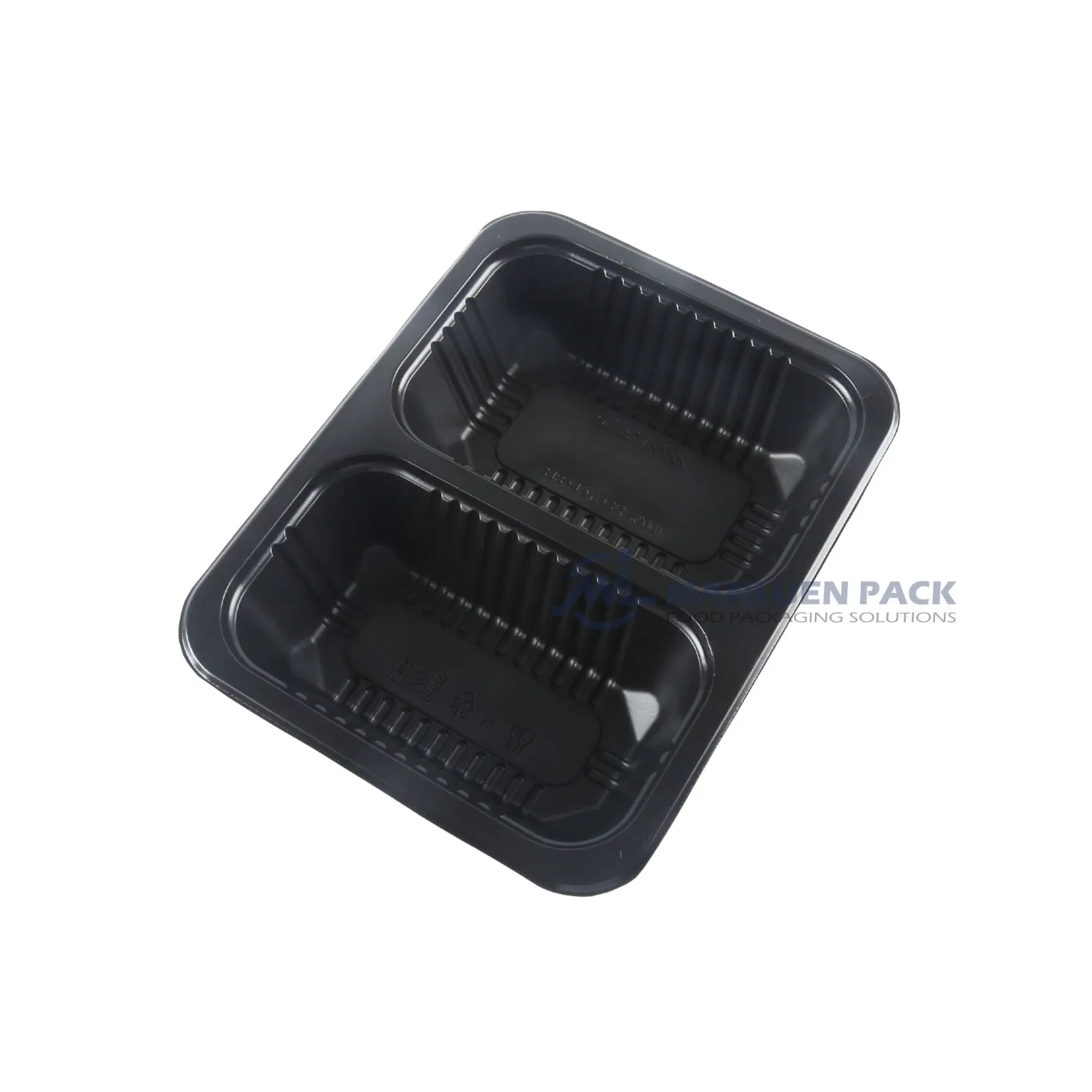
2030 Two-Compartment Meal Container
Two sections keep a main dish and side organized in one package.
Listed material: PP. Confirm the base, lid or closure materials and product-specific use instructions.
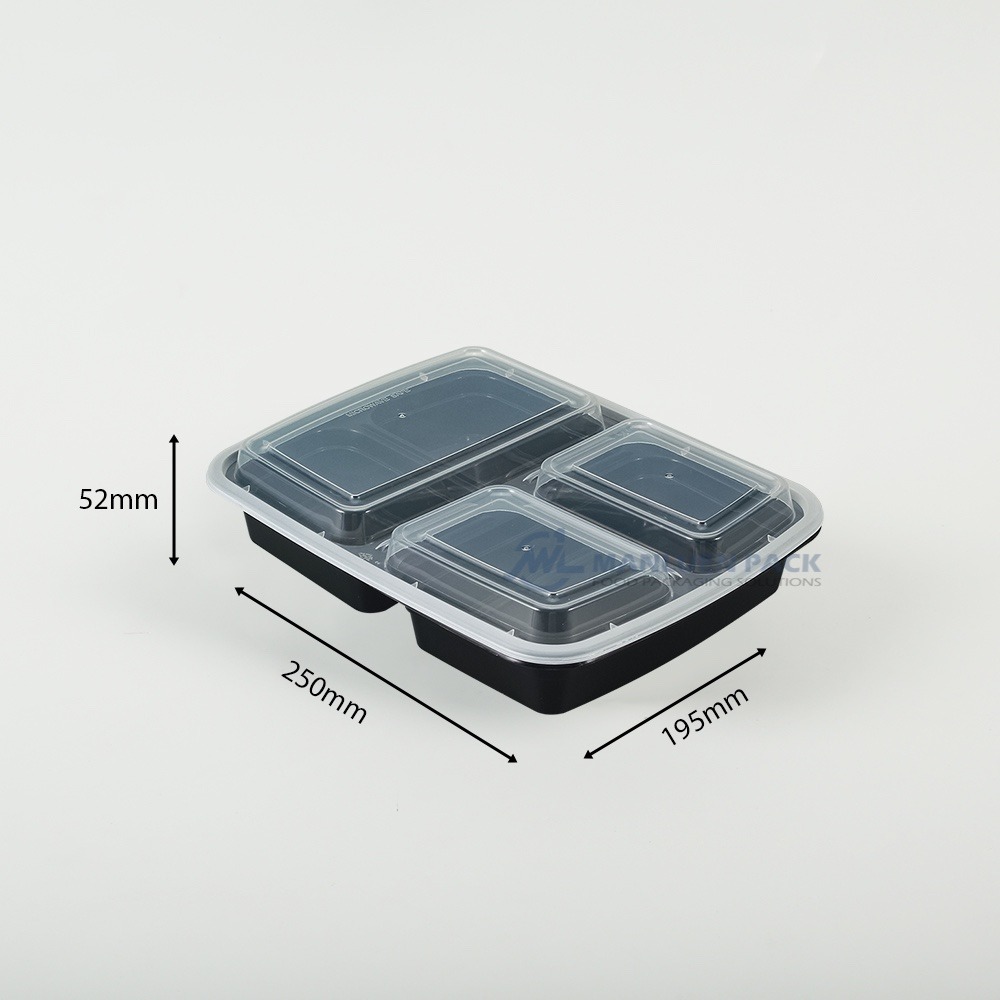
3039 Three-Compartment Meal Tray
Three sections organize rice, protein and vegetables; dividers do not by themselves establish liquid-tight separation.
Listed material: PP. Confirm the base, lid or closure materials and product-specific use instructions.
What Is Polypropylene (PP) in Food Packaging?
Polypropylene is a lightweight, semi-crystalline thermoplastic made from propylene monomers. It belongs to the polyolefin family and is identified by resin identification code 5. PP can be heated, shaped, and cooled into different packaging products. Manufacturers use processes such as thermoforming, injection molding, and extrusion to produce rigid containers, trays, lids, and flexible packaging films. Several properties distinguish polypropylene from other common packaging plastics:
| Property | Typical PP Characteristics |
|---|---|
| Density | Approximately 0.89–0.92 g/cm³ |
| Melting temperature | Approximately 160–170°C for many PP homopolymers |
| Heat resistance | Relatively high among common commodity packaging plastics |
| Chemical resistance | Good resistance to many oils, fats, acids, and alkalis |
| Moisture barrier | Generally good |
| Oxygen barrier | Relatively limited without additional barrier materials |
| Mechanical properties | Good stiffness and fatigue resistance; impact strength varies by grade |
| Recycling identification | Code 5 (PP) |
These values describe general material characteristics rather than guaranteed performance specifications for every finished package. Importantly, polypropylene comes in different grades. Homopolymer PP often emphasizes stiffness. Random copolymer and clarified grades can improve optical properties, while impact copolymer grades are selected for improved toughness. The supplier’s grade data should establish the actual balance of heat and impact performance. This versatility allows manufacturers to select PP formulations according to the requirements of different food packaging products.
6 Reasons Why Polypropylene Is Used for Food Packaging
1. Heat Resistance for Hot Foods and Microwave Applications
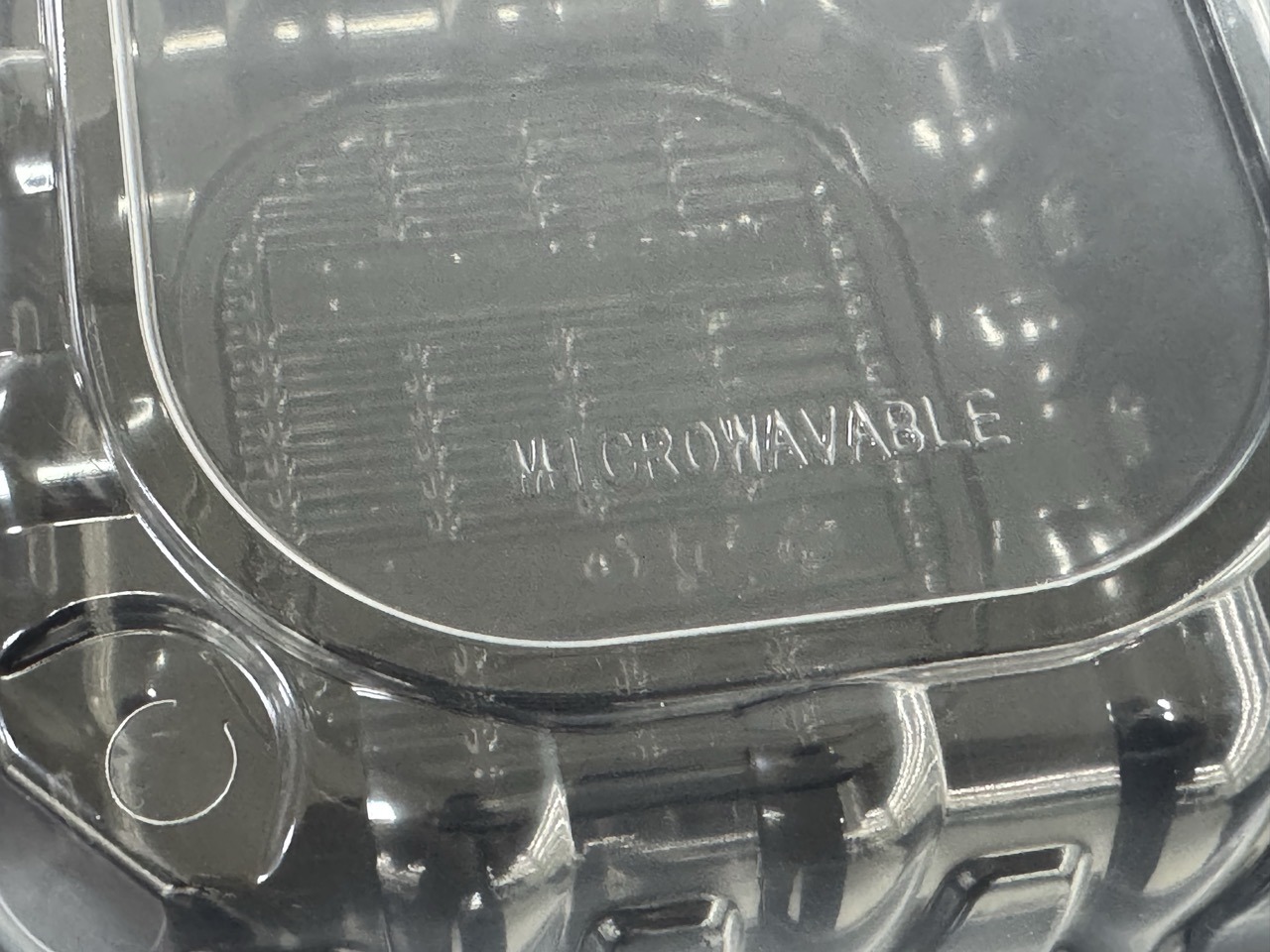
PP can accommodate many hot-food and hot-fill applications when the resin grade and finished structure are designed for them. Some packages are also validated for microwave reheating. The polymer’s melting temperature is not the package’s safe-use limit. Heat, load and time can cause deformation below melting. Specify the intended filling temperature and heating conditions rather than using a resin melting-point figure as permission to reheat food. See the microwave section below for base, lid and venting checks.
2. Resistance to Oils, Grease, and Chemicals
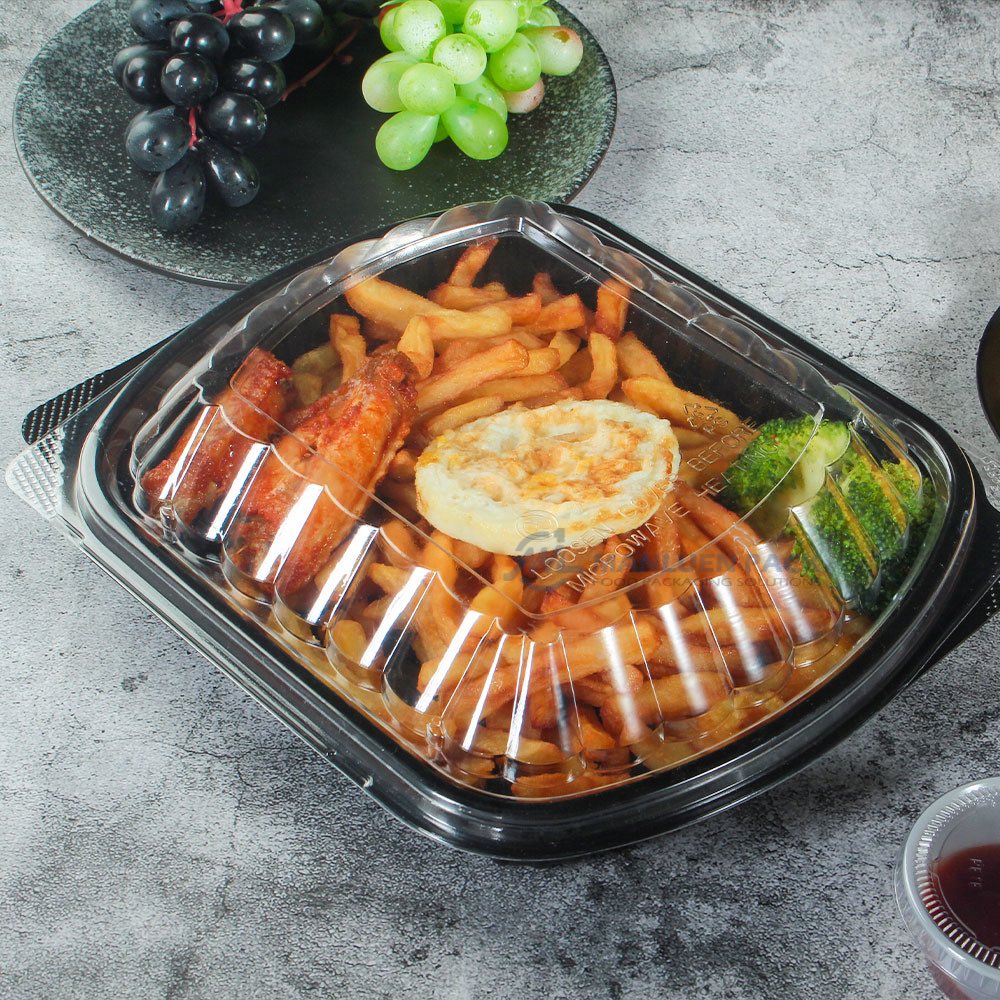
PP resists many oils, fats and aqueous food ingredients, making it useful for rice, noodles, meat portions, dressings, dairy and mixed prepared meals. This helps a suitable container retain its function during contact with moist or oily foods. Resistance depends on the substance, temperature and exposure time. Chemical compatibility is distinct from food-contact compliance: additives, colorants and potential migration still need assessment for the intended food.
3. Lightweight Construction with Good Durability
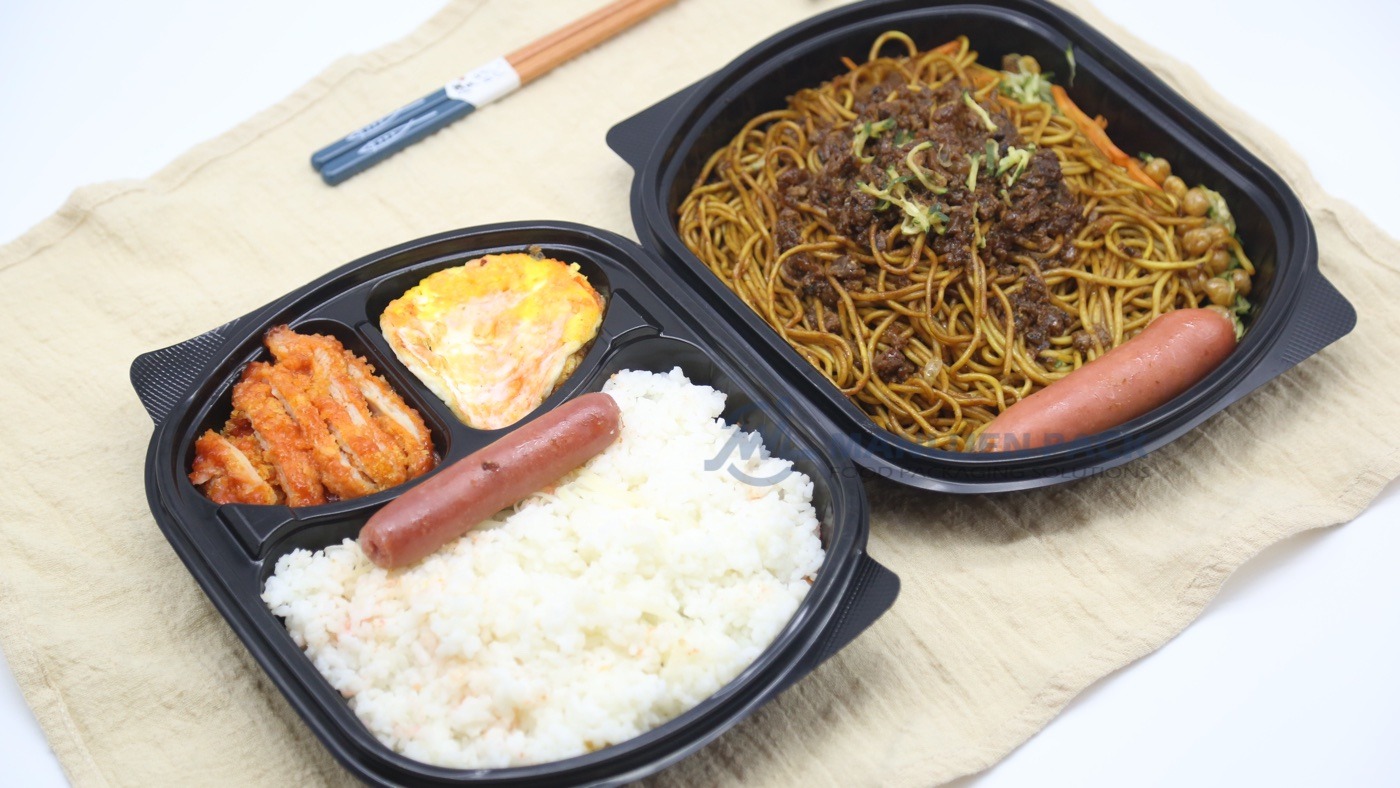
PP’s low density supports lightweight containers with useful stiffness and toughness. For commercial kitchens, this can simplify handling and reduce the material weight per package. Actual freight savings depend on nesting, carton volume and loading as well as weight. Impact performance varies by grade and temperature. Reinforcing ribs, corner design and wall-thickness distribution affect whether a light tray withstands stacking and delivery. Test a filled sample rather than treating low weight as proof of strength.
4. Moisture Resistance for Food Protection
PP provides a useful water-vapor barrier for applications including dairy tubs, prepared meals, snacks and dry-food films. However, moisture barrier, oxygen barrier and leak resistance are different properties. PP alone may not provide enough oxygen protection for sensitive foods or extended shelf life. Structures incorporating suitable barrier materials, such as EVOH, can address that need, but their seal, shelf-life performance and recycling compatibility require separate evaluation. An open seam or vent can dominate performance regardless of the resin’s barrier properties.
5. Versatility in Packaging Design and Manufacturing
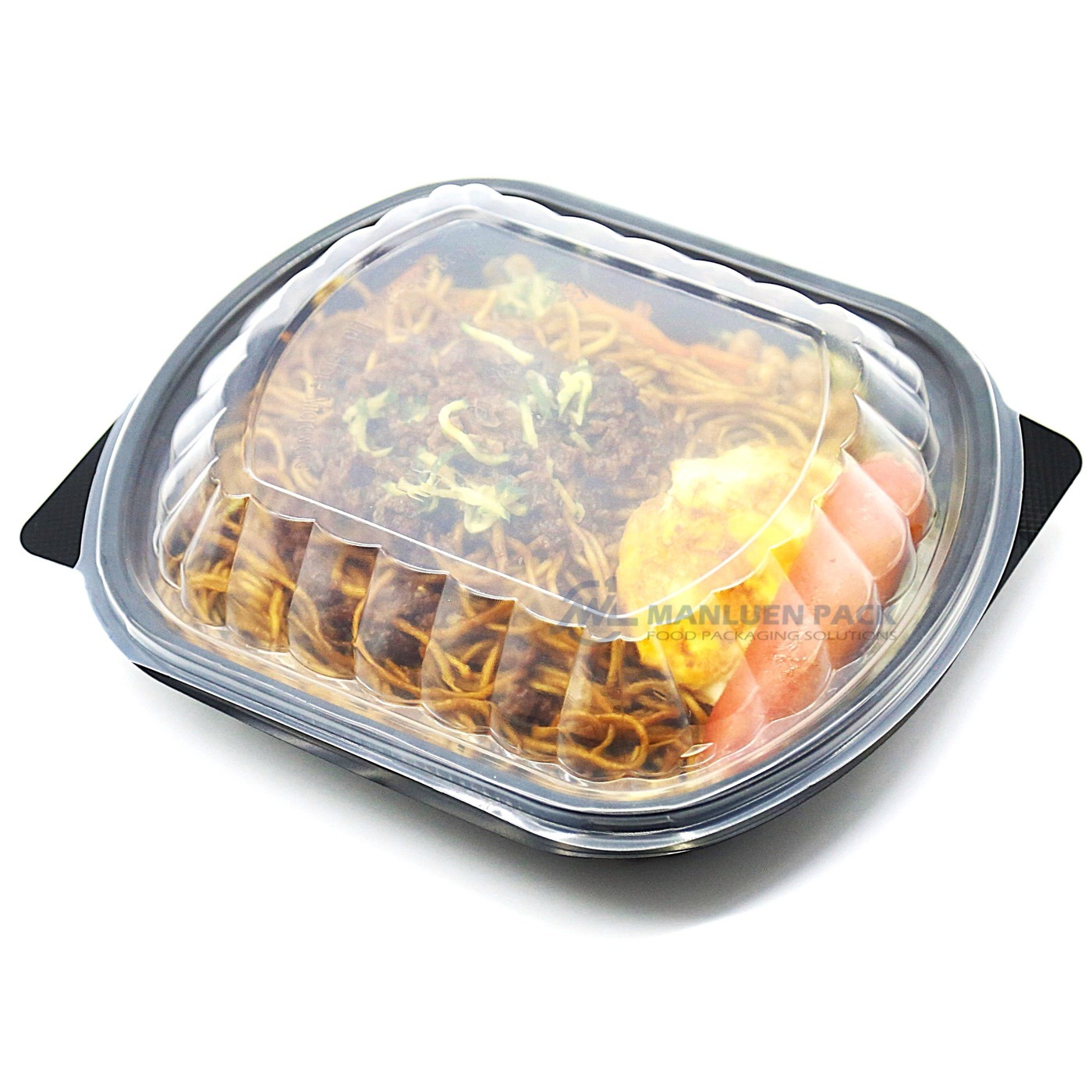
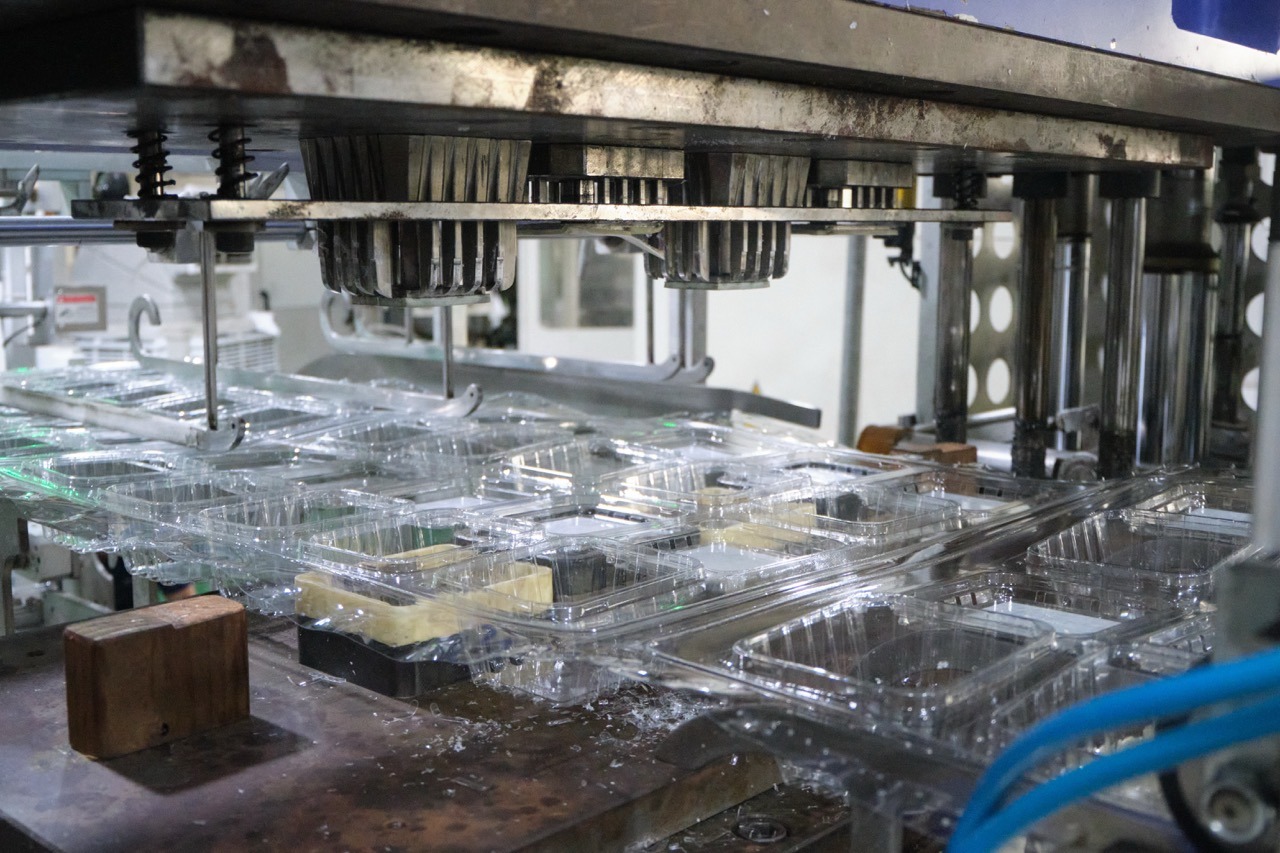
Rigid PP packaging is commonly made by thermoforming or injection molding. Thermoforming heats sheet, shapes it against a mold and trims the cooled part. Injection molding injects molten material into a tool and can produce detailed containers, lids and closures. These methods support round, square and rectangular packs, divided trays, storage tubs and disposable plates. Appropriate PP grades also offer flex-fatigue resistance for integral “living” hinges. Tooling, resin choice, order volume and equipment determine the actual customization options. PP films, including oriented films, use different processing and sealing specifications from rigid trays.
6. Cost-Effective Production for Large-Volume Food Packaging
Established production methods and opportunities to optimize part weight can make PP economical at suitable volumes. The relevant comparison is the cost of a usable packaging set, including the base, lid, tooling, production quantity, customization, freight and losses. PP is not always cheaper than another material. Compare equivalent food capacity, structural performance and packing configuration; a low unit price has little value if closures fail or staff must repack orders.
What Types of Food Packaging Are Made from Polypropylene?
Polypropylene is used in both rigid and flexible food packaging. Its properties make it particularly useful for packaging formats requiring a combination of strength, low weight, and resistance to heat or moisture.
| Packaging Type | Why PP Is Used |
|---|---|
| Takeaway food containers | Heat resistance, lightweight construction, and durability |
| Bento boxes | Structural rigidity and compatibility with compartment designs |
| Microwaveable meal trays | Suitable heat-resistant grades can support microwave reheating applications |
| Hinged food containers | Toughness and good flex-fatigue performance |
| Yogurt and dairy tubs | Moisture resistance and economical production |
| Disposable plates | Lightweight structure and useful stiffness |
| Food storage containers | Chemical resistance and durability |
| Flexible films | Moisture barrier and processing versatility; heat sealability depends on the film grade and layer structure |
For foodservice businesses, polypropylene is particularly relevant when selecting containers for cooked meals, rice dishes, noodles, and other prepared foods. For example, a multi-compartment PP bento box can separate different food portions, while a properly designed hinged container can simplify food packing and handling. The suitability of either product ultimately depends on its finished design, closure system, and intended food-contact conditions.
Hinged and Round PP Container Formats
Hinged boxes and deli cups serve different packing workflows. Check closure fit, practical filling volume and loaded stacking with the real food.
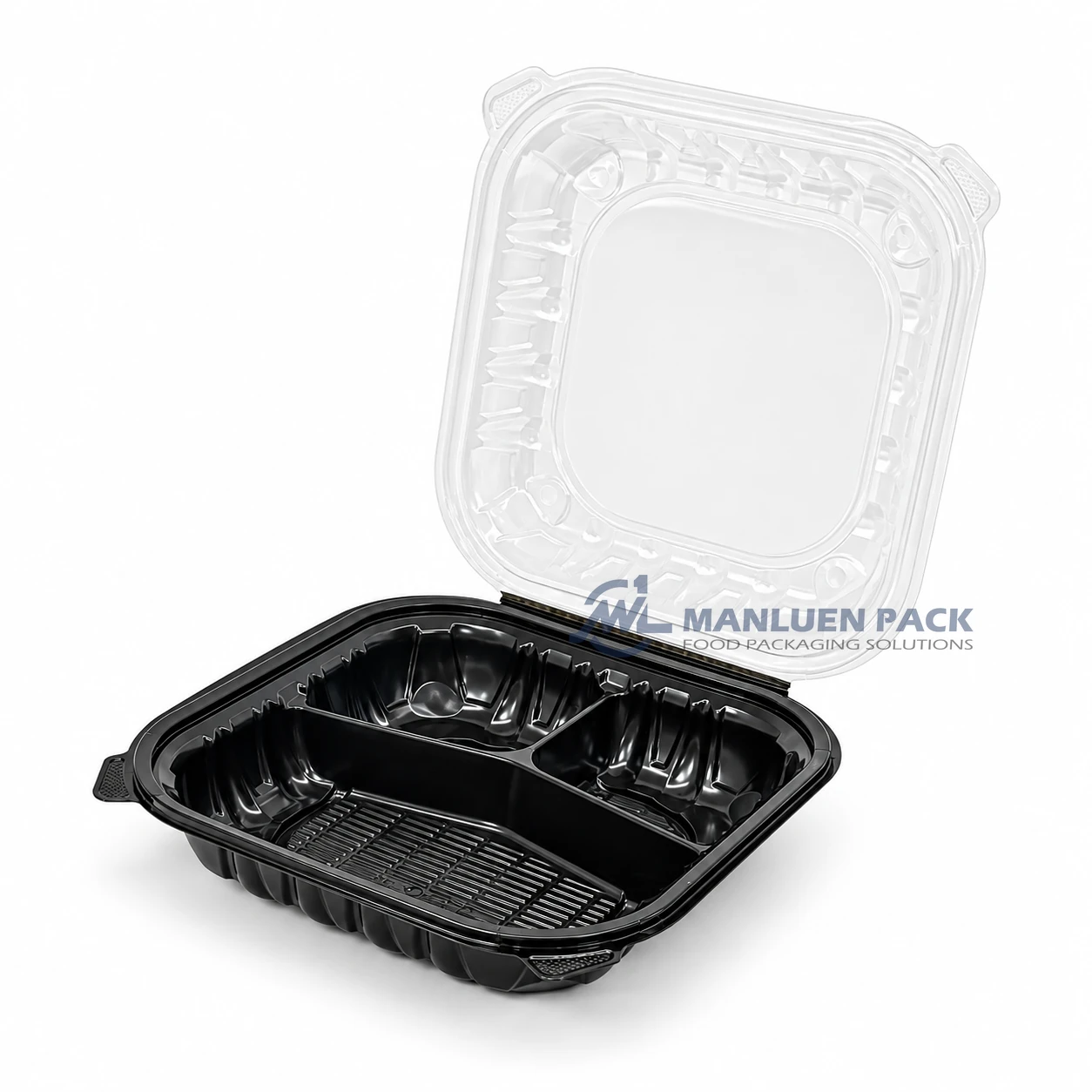
WL-BW103 Hinged Meal Box
An attached-lid format with three sections for convenient meal packing.
Listed material: PP. Confirm the base, lid or closure materials and product-specific use instructions.
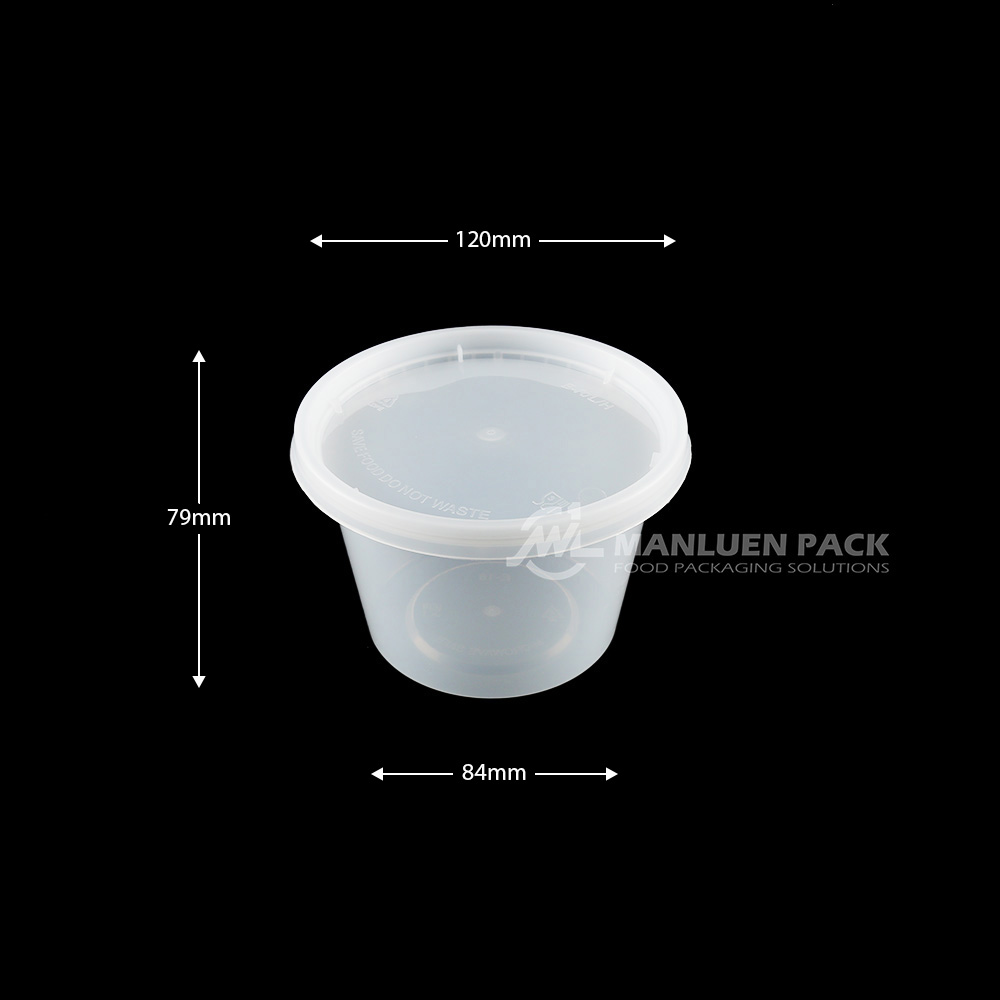
C-16 One-Pint Deli Container
A compact round format for soup portions, deli foods and prepared ingredients.
Listed material: PP. Confirm the base, lid or closure materials and product-specific use instructions.
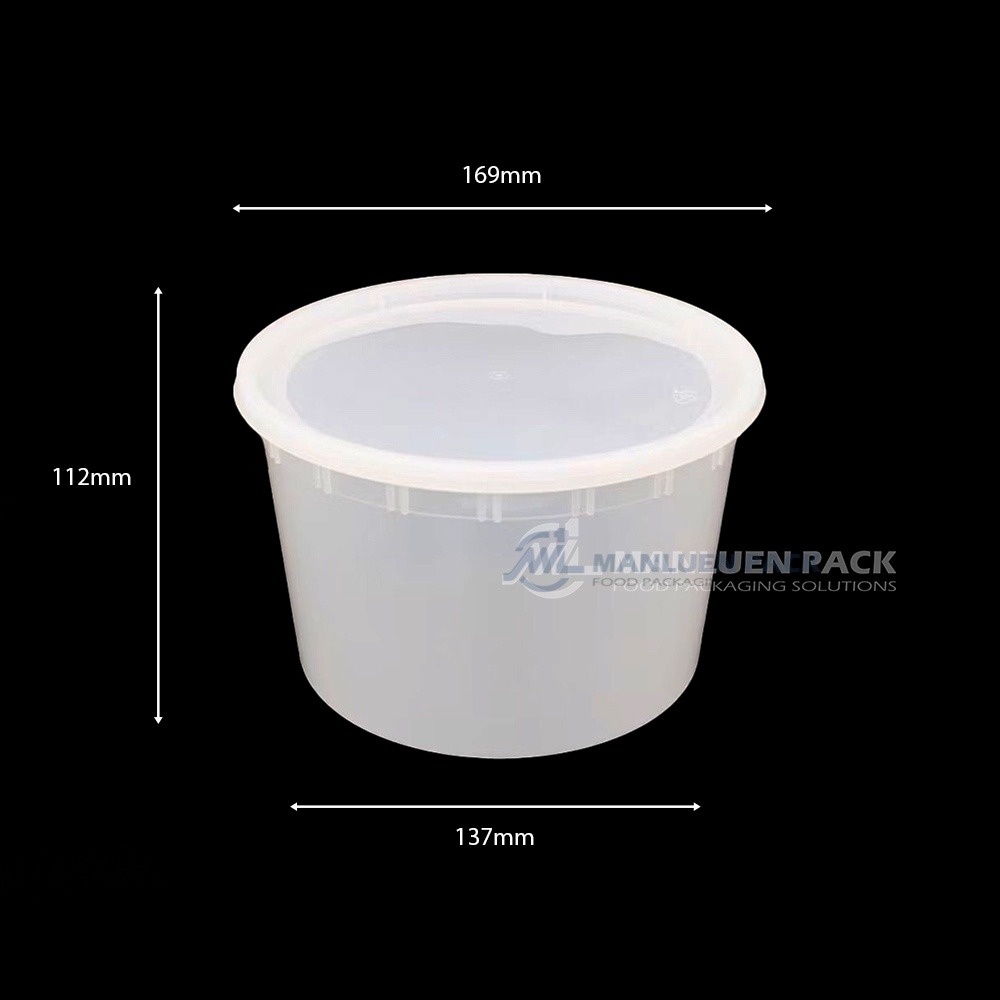
C-64 Large Deli Container
A wider round format for larger portions, ingredient storage and catering.
Listed material: PP. Confirm the base, lid or closure materials and product-specific use instructions.
Is Polypropylene Safe for Food Packaging?
PP can be used for food-contact packaging when the formulation and finished article meet the applicable requirements for the intended food, contact time and temperature. PP polymer chemistry does not use BPA as a building block, but “BPA-free” alone is not evidence of complete food-contact compliance. Assess the resin grade, additives, colorants, manufacturing controls and migration under the expected conditions. Chang et al. (2019) examined antioxidant migration from PP under different food-simulant and temperature conditions, illustrating why exposure conditions matter rather than establishing one universal rating for all containers.
In the United States, 21 CFR 177.1520 addresses applicable olefin polymers, subject to its specifications and limitations; other provisions may cover ingredients or uses. In the EU, relevant frameworks include Regulation (EC) No 1935/2004 and Regulation (EU) No 10/2011, as amended. Request documentation covering the actual product and application.
Can Polypropylene Food Containers Go in the Microwave?
Some can, when the complete package has suitable manufacturer instructions. The FDA recommends cookware specifically manufactured for microwave use; a #5 resin code is not a microwave approval. Check whether the lid must be removed, loosened or vented, and follow the stated food type, duration and heating limits. Distinguish reheating from cooking, and validate oily foods where local temperatures may become high. Microwave suitability does not establish conventional-oven suitability, unrestricted reuse or performance under every heating condition.
Polypropylene vs. PET, PS, and PE for Food Packaging
Polypropylene is not the only plastic used in food packaging. Polyethylene terephthalate (PET), polystyrene (PS), and polyethylene (PE) also serve important roles. The best choice depends on the food product, required temperature resistance, appearance, strength, and packaging design.
| Material | Key Advantages | Common Applications | Important Considerations |
|---|---|---|---|
| PP | Good heat resistance, chemical resistance, low weight, and useful toughness | Hot-food containers, bento boxes, meal trays | Transparency, oxygen barrier, and cold-temperature performance vary by grade |
| PET | High clarity, good stiffness, and useful gas barrier properties | Cold-food trays, clear containers, beverage bottles | Standard PET packaging is not automatically suitable for high-temperature use |
| PS | Good rigidity and economical processing for certain products | Disposable trays, cups, and foodservice packaging | Generally more brittle and less heat-resistant than many PP grades |
| PE | Good chemical resistance and flexibility; properties vary by grade | Food bags, films, bottles, and flexible packaging | Many PE grades have lower stiffness and heat resistance than PP |
When Should You Choose PP Instead of PET?
Suitable PP containers are often selected for hot meals and validated reheating, while PET packaging is frequently chosen for clear chilled displays. Clarified PP can improve visibility, and specialized CPET can support selected heating uses. Compare the exact grades and finished designs rather than treating all PP or PET products as identical.
When Is PP Better Than PS or PE?
PP often provides greater toughness than ordinary GPPS and greater stiffness and heat resistance than many flexible PE grades. PE may be preferable where flexibility or certain cold-temperature properties are priorities; modified PS and PE grades also change the comparison. Choose by the required balance of food compatibility, structure, temperature and complete-set cost.
What Are the Limitations of Polypropylene Food Packaging?
Despite its advantages, polypropylene has several limitations that packaging buyers should consider. Limited oxygen barrier: PP does not provide the high oxygen barrier required for every shelf-stable or oxygen-sensitive food product. Additional barrier layers may be necessary. Low-temperature brittleness: Some conventional PP grades become more brittle in freezing conditions. Impact-modified grades may be more appropriate for frozen-food applications. Variable transparency: Standard PP is often less transparent than PET, although clarified PP grades can improve visibility. Heat-related deformation: PP can soften or deform under certain temperature, load, and time conditions, even below its melting point. Environmental concerns: PP is generally derived from fossil-based feedstocks and can contribute to persistent plastic waste when improperly managed.
These limitations do not make polypropylene unsuitable for food packaging. Rather, they show why packaging materials should be selected according to their actual operating requirements.
Is Polypropylene Food Packaging Recyclable?
PP is mechanically recyclable, but resin code #5 does not guarantee local collection or successful recovery. Check acceptance for the actual container, lid, color, size and any multilayer structure. Food residues, labels, additives and incompatible materials can affect sorting and reprocessing. Recycle Now’s guidance for pots, tubs and trays illustrates the need to follow local collection instructions and remove food residues. Recycling into a non-food product and recycling back into direct food contact are different outcomes. The review by Cecon et al. (2021) examines safety and contamination challenges for post-consumer polyolefins. Do not assume recycled PP is food-contact suitable without the appropriate process and product evidence.
For environmental comparisons, consider material quantity, food protection, actual reuse cycles where applicable and the available waste system. Reducing weight can reduce resin demand, but broad environmental claims need an assessment with a stated basis.
PP Bowls and Condiment Packaging
A main-food bowl and a separate condiment bottle can keep serving components organized. These examples are not a universal heat or leak-resistance rating.

WL-42 Round Food Bowl
A round bowl format for prepared-food portions; confirm the lid material and actual fill requirement.
Listed material: PP. Confirm the base, lid or closure materials and product-specific use instructions.
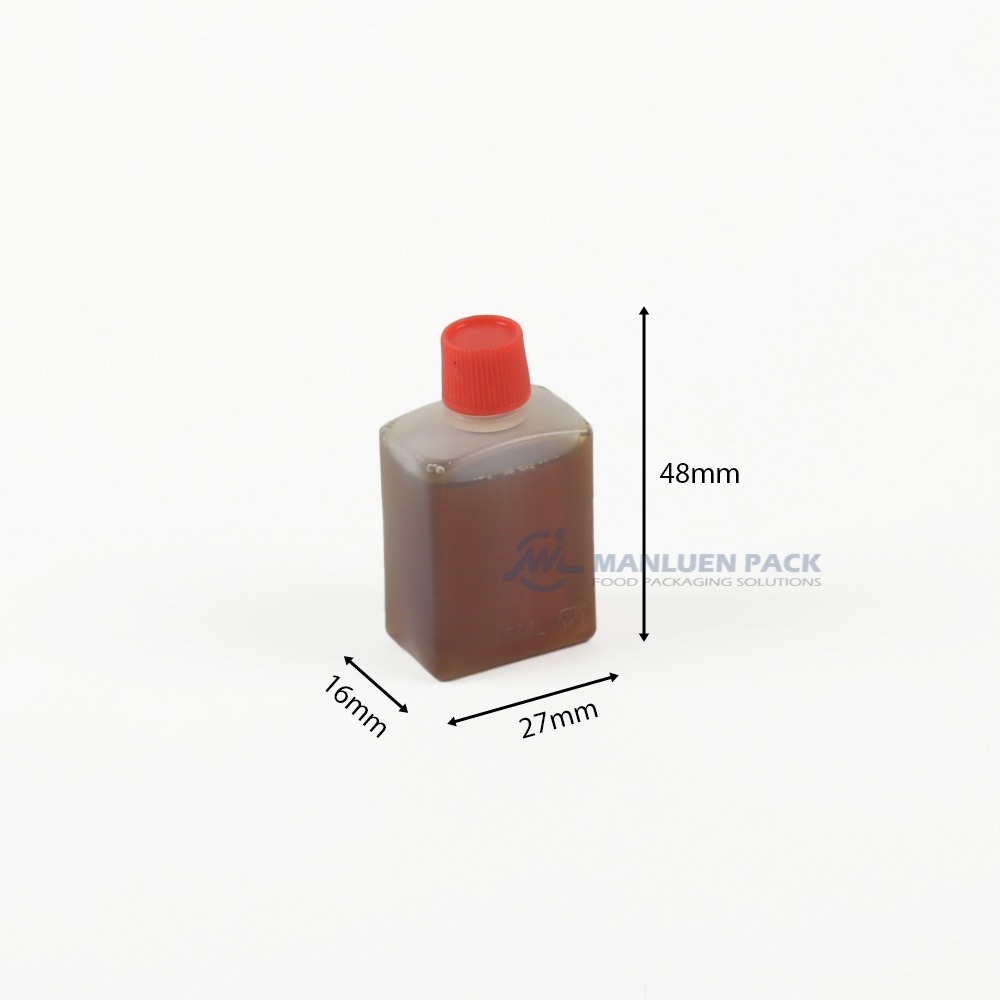
WL-15ML Condiment Bottle
A small bottle for single-serving soy sauce and other liquid condiments.
Listed material: PP. Confirm the base, lid or closure materials and product-specific use instructions.
How to Choose the Right PP Food Packaging
For foodservice businesses, distributors, and packaging wholesalers, selecting polypropylene containers requires more than choosing a material labeled PP. The following questions can help narrow the options:
- What type of food will the container hold? Consider oil content, moisture, acidity, portion size, and whether different foods need separate compartments.
- What temperatures will it encounter? Determine whether the container will be used for cold storage, hot filling, food delivery, or microwave reheating.
- How important are strength and closure performance? Evaluate rigidity, impact resistance, lid fit, and leakage performance.
- What dimensions and designs are required? Consider container capacity, compartment layout, stacking, and storage requirements.
- What compliance documentation is available? Confirm suitability for the target market and intended food-contact conditions.
- What order quantities and customization options are needed? Discuss available sizes, colors, tooling requirements, and bulk packaging arrangements with the supplier.
Working with a food packaging manufacturer can help buyers evaluate these requirements and select an appropriate container design. At Manluen Pack, we manufacture and supply food packaging products for restaurants, supermarkets, foodservice distributors, and wholesale buyers. Our product range includes PP food trays, bento containers, hinged containers, and disposable plates, with product-specific options for size, color, and packaging requirements. Explore our bento boxes, hinged containers and deli containers, or contact our team to discuss wholesale specifications.
Frequently Asked Questions About Polypropylene Food Packaging
Why is polypropylene preferred for many food containers?
Polypropylene offers a useful balance of heat resistance, chemical resistance, durability, low weight, and manufacturing efficiency. These characteristics make it practical for a wide variety of food packaging products.
Is polypropylene suitable for hot food?
Yes, appropriately designed PP containers can be suitable for hot food. The actual temperature limits depend on the material grade, wall thickness, container design, and intended use conditions.
Is PP plastic food-safe?
PP can be used safely in food-contact applications when the finished packaging complies with applicable regulations and is used under its specified conditions. A PP recycling code alone does not establish food-contact compliance.
Is polypropylene better than PET for food packaging?
Neither material is universally better. PP is often selected for heat-resistant food containers, while PET is frequently preferred for transparent cold-food packaging. The intended application determines which material is more appropriate.
Can polypropylene be used for frozen food packaging?
Yes, certain PP grades can be used for frozen-food packaging. However, conventional PP may become brittle at low temperatures, so appropriate impact performance should be verified.
Is polypropylene biodegradable?
No. Conventional polypropylene is not biodegradable under normal environmental conditions. Although it can be recycled through suitable systems, it should not be described as compostable or biodegradable.
Conclusion
PP is a practical starting point for many prepared-food packages because it balances heat performance, low weight, moisture resistance and manufacturing flexibility. Its value depends on the finished package: the right grade, geometry, lid, food-contact evidence and operating instructions. Before ordering, test real portions under the expected filling, delivery and reheating conditions, then compare complete-set cost. Explore Manluen’s food packaging products or request a wholesale quotation with your required dimensions, materials, quantity and destination.
References
- U.S. Food and Drug Administration (FDA). 21 CFR § 177.1520 – Olefin Polymers. Electronic Code of Federal Regulations. https://www.ecfr.gov/current/title-21/section-177.1520
- European Parliament and Council. (2004). Regulation (EC) No 1935/2004 on Materials and Articles Intended to Come into Contact with Food. EUR-Lex. https://eur-lex.europa.eu/eli/reg/2004/1935/oj
- European Commission. (2011). Commission Regulation (EU) No 10/2011 on Plastic Materials and Articles Intended to Come into Contact with Food. EUR-Lex. https://eur-lex.europa.eu/eli/reg/2011/10/oj
- Chang, Y., et al. (2019). Experimental and Theoretical Study of Polypropylene: Antioxidant Migration with Different Food Simulants and Temperatures. Journal of Food Engineering, 244, 142–149. https://doi.org/10.1016/j.jfoodeng.2018.09.028
- Cecon, V. S., et al. (2021). The Challenges in Recycling Post-Consumer Polyolefins for Food Contact Applications: A Review. Resources, Conservation and Recycling, 167, 105422. https://doi.org/10.1016/j.resconrec.2021.105422
- Elsevier. Polypropylene — overview. Background reading on PP and packaging.
- U.S. FDA. Microwave Ovens. Manufacturer instructions and cookware guidance.
- Recycle Now. Plastic pots, tubs and trays. Collection guidance and food-residue handling.

ManLuen Plastic Packaging Company, which is specialized in the production of Plastic Food Packaging for more than 20 years. Our products are made from 100% virgin and BPA-Free PP, PS, and OPS comply with FDA and European Standards.
 EN
 ZH
 FR
 PT
 ES
 KO
 JA