
Introduction
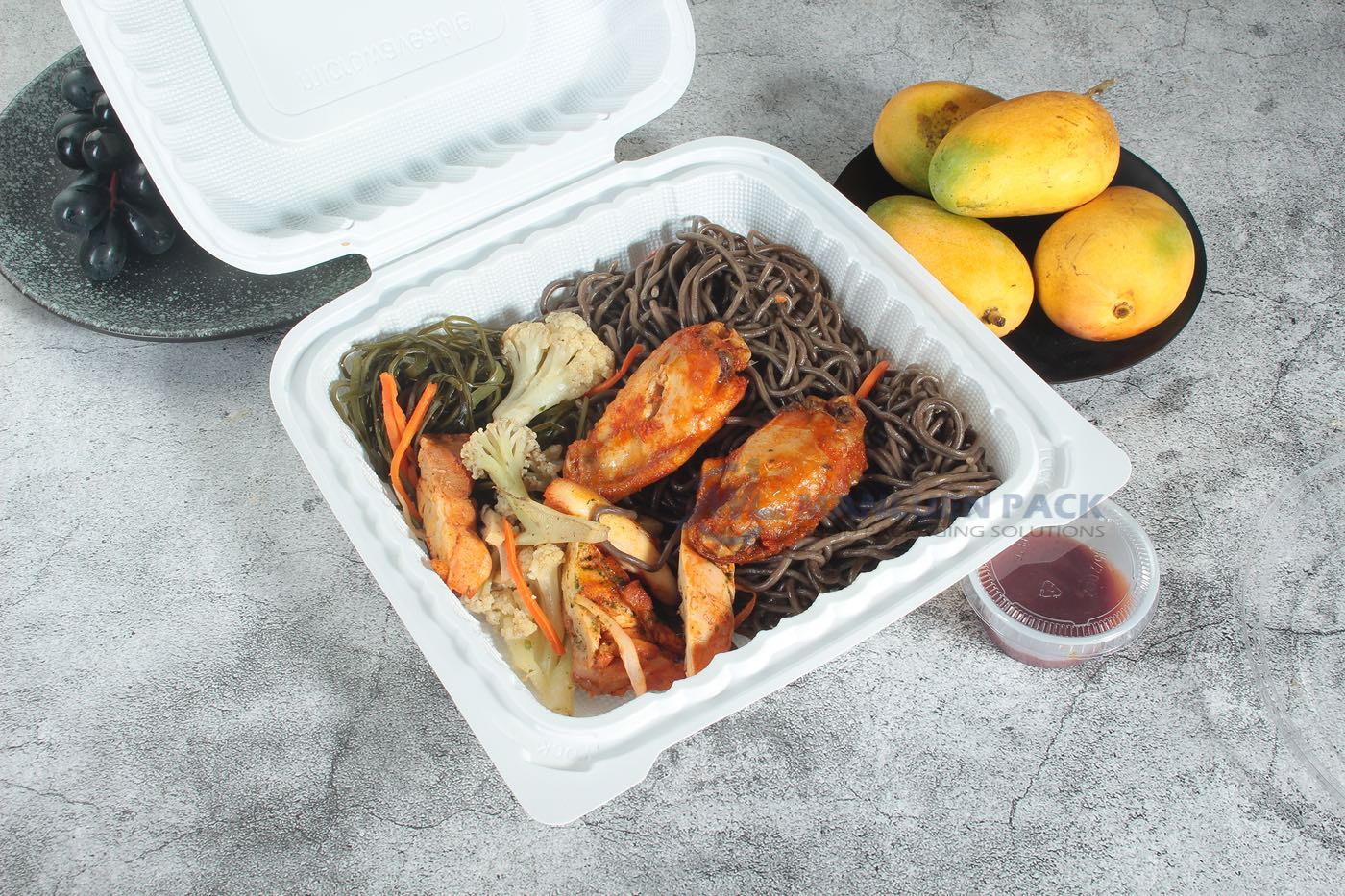
WL-P91 is a large square polypropylene clamshell container for takeaway meals, catering, delis, and prepared-food service. Its one-piece hinged structure keeps the lid attached to the base, which can simplify filling and closing during busy service periods.
The current WL-P91 specification lists a closed size of 230×230×75 mm, PP construction, and 150 pieces per carton. Black and white versions are available. The original product information also lists a nominal capacity of approximately 1,360 ml, but buyers should confirm the current usable fill volume for their food and portion.
This guide explains how the black WL-P91 9×9 clamshell container and its white counterpart can fit foodservice operations, what they should not be assumed to do, and how to test the package before a wholesale order.

| Model | Material | Closed size | Quantity per carton |
| WL-P91 | PP | 230×230×75 mm | 150 pieces |
What Is the WL-P91 Clamshell Container?
WL-P91 is a one-compartment 9×9-inch hinged food container. The base and lid form one piece, so staff do not need to store or match separate lids. This format is designed for full takeaway portions such as rice dishes, pasta, sandwiches, burgers, salads, chicken, and combination meals.
The model is part of Manluen’s wider range of clamshell containers. Buyers who need a light-colored package can compare the white WL-P91 clamshell container. Both versions list the same external size, material, and carton quantity.
The WL-P91 is not a clear display container. Its black or white PP structure is better suited to prepared meals than applications where customers need full visibility through the base and lid.
Why the Hinged Design Helps Foodservice Operations
An attached lid reduces loose components at the packing station. Staff can fill, close, label, and stack an order without searching for a separate lid. This can be useful for restaurants, takeout counters, caterers, food trucks, and commissary kitchens.
The design also saves space when nested. However, buyers should test how easily containers separate from the stack. Excessive nesting force can slow packing, while a weak hinge or closure can create failures during delivery.
Check these points with samples:
- How quickly staff can separate and close each container
- Whether the hinge stays aligned after refrigeration or heating
- Whether the closure remains engaged during transport
- Whether the opening tab is easy for customers to use
- Whether labels or tamper seals adhere to the surface
Manluen’s guide to what clamshell packaging is explains the difference between hinged packages, separate-lid containers, and other clamshell materials.

PP Material and Food-Contact Use
WL-P91 uses polypropylene. PP is commonly selected for prepared-food containers because it combines low weight, toughness, and useful heat performance. These general properties do not make every PP container suitable for every food or temperature.
In the United States, 21 CFR 177.1520 covers specified olefin polymers, including polypropylene, for food-contact use subject to its provisions. A finished container also includes pigments, fillers, processing aids, and other components that must suit the intended use.
Buyers should request product-specific evidence rather than rely on the phrase “FDA approved.” The guide to food-grade packaging explains why the regulatory status of a resin is not the same as universal approval of a finished container.
The broader food packaging materials guide compares PP with PET, PS, OPS, paper, bagasse, aluminum, and glass.
Is WL-P91 Microwave-Safe?
The current product description identifies WL-P91 as a microwaveable PP food box. Buyers should still request the latest instructions for the exact color and production version before use.
Microwave performance depends on the resin grade, additives, wall thickness, food, fill weight, starting temperature, heating time, and power level. A material melting point is not a consumer heating limit. Do not convert a polymer melting point into a blanket claim such as “safe to 110°C” or “safe for repeated heating.”
Use the container only under the supplier’s stated conditions:
- Confirm that the exact SKU is labeled for microwave use.
- Check whether the lid must be opened, vented, or left unlatched.
- Use the stated time and power level.
- Avoid heating an empty container.
- Do not use the box in an oven, under a grill, or over an open flame.
- Discard a container that is cracked, warped, or otherwise damaged.
The plastic food packaging compliance guide provides more detail on matching materials to intended use and destination-market requirements.

What Foods Work Well in WL-P91?
The large one-compartment format suits meals that benefit from an open base area. Examples include:
- Rice, pasta, and noodle dishes
- Burgers, sandwiches, and wraps
- Chicken with side dishes
- Salads, disposable sushi assortments, and other cold prepared meals
- Catering portions and combination meals
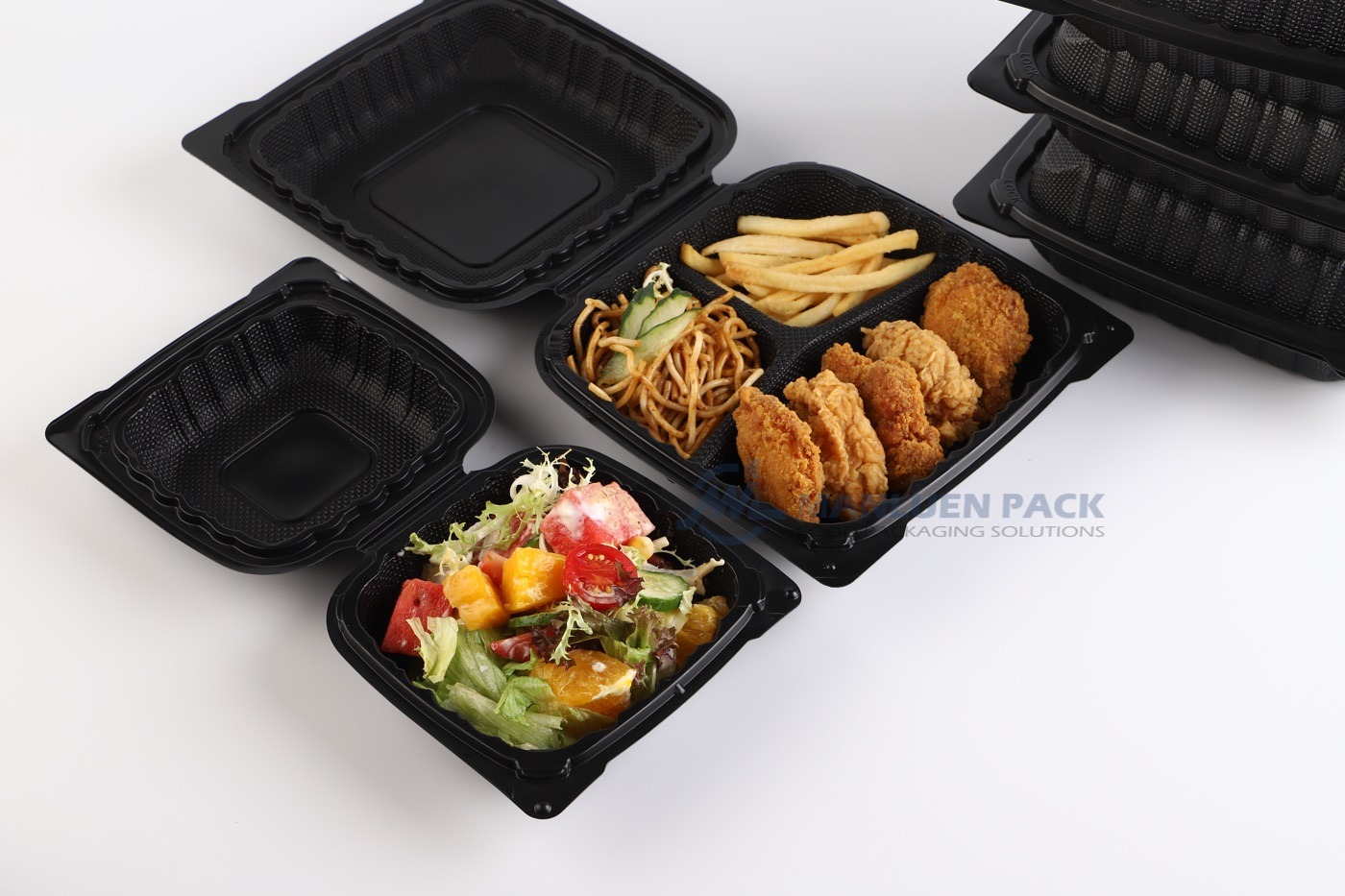
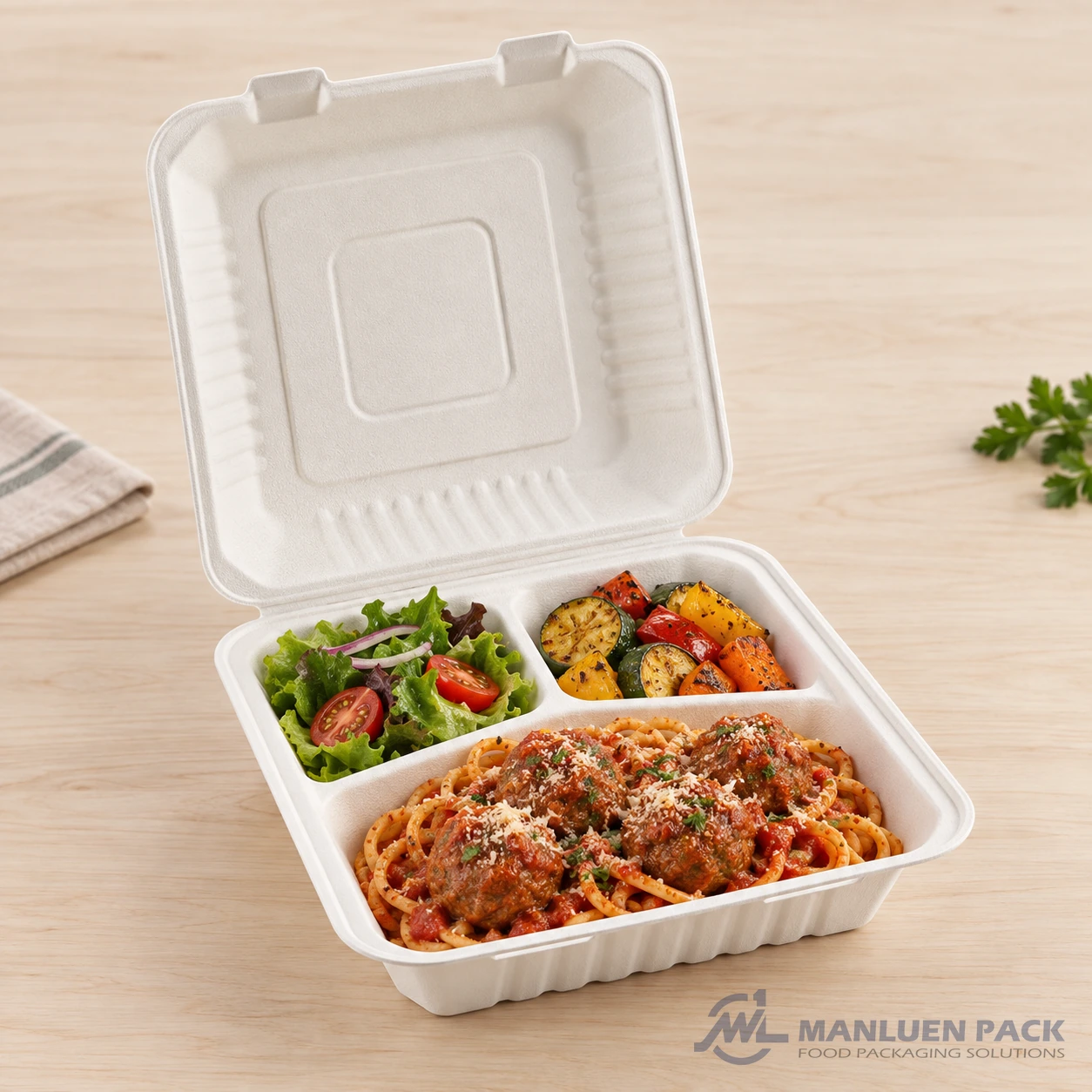
WL-P91 may not be the best choice when several foods must remain completely separated. For divided meals, the WL-P83 black three-compartment clamshell provides separate sections.
Thin soups and large amounts of liquid also require caution. A snap-closed clamshell should not be described as leak-proof without testing. A purpose-designed deli or soup package may provide a better fit for liquid foods.
How to Test Closure, Leakage, and Strength
Do not approve WL-P91 from an empty sample or product photograph. Test it with the heaviest, hottest, oiliest, and most moisture-rich foods in the intended menu.
- Fill the container to the planned portion weight.
- Close it using the normal staff process.
- Hold it for the full expected waiting and delivery time.
- Tilt and carry it in the actual delivery bag or carton.
- Stack it at the expected height and inspect the bottom package.
- Check the hinge, rim, corners, base deflection, closure, and food movement.
- Repeat after refrigeration or microwave heating when those uses apply.
This test shows whether the container works with the real food. It is more useful than broad claims about “unbeatable durability” or a “precision-engineered seal.”
Ventilation, Crispness, and Condensation
Hot fried food releases steam. A fully closed box can trap that moisture and soften the surface of fries, chicken, or baked food. Venting can help, but it may also reduce heat retention or allow sauce to escape when the box tilts.
If ventilation is required, ask whether the chosen WL-P91 version supports a vented configuration. Test the vent size and position with the actual menu. Do not assume that a custom feature is standard on every unit.
For chilled food, inspect condensation after refrigeration and display. PP is not fully transparent, so the package is usually selected for handling and heat performance rather than crystal-clear product display.

Stacking, Storage, and Delivery
The 230×230 mm footprint requires more shelf and bag space than smaller clamshells. Measure the packing station, storage rack, delivery bag, and shipping carton before approval.
The current product specification lists 150 pieces per carton and a carton size of 460×285×470 mm. Use those figures to estimate storage and freight needs, then confirm them on the final purchase specification.
During a stack test, check whether the lid contacts the food and whether the bottom container deforms. Weight, food temperature, stacking height, and travel time can all change the result.
Customization and Branding
Color, labels, sleeves, and printing can help a restaurant identify orders or present its brand. Customization may also change lead time, MOQ, cost, and product performance.
Before approving a custom order, confirm:
- The color specification and permitted tolerance
- The printable or label area
- Ink, adhesive, and label suitability for the food temperature
- Whether customization changes food-contact documentation
- Whether the hinge and closure still perform after production changes
A snap closure is not automatically tamper-evident. If the business needs visible evidence of opening, add a compatible seal or select a purpose-designed feature. The guide to tamper-evident packaging explains this distinction.
Recycling and Environmental Claims
PP is a recyclable resin, but local collection and processing determine whether a used WL-P91 is actually recycled. Food residue, labels, pigments, sorting equipment, and local end markets all affect acceptance.
Do not state that the container can be recycled in most municipal programs without evidence for the target market. Avoid broad “eco-friendly” claims. Give customers local disposal instructions where possible.
Compostable liners do not make a PP container compostable. Mixed-material additions can also make separation harder. Buyers comparing alternatives should consider food protection, material use, collection infrastructure, and the risk of food waste. The sustainable food packaging guide provides a structured way to review these trade-offs.
WL-P91 Compared with Other Clamshell Models
WL-P91 works when a large one-compartment square base matches the meal. Other models may fit different portions or layouts:
- WL-P83: 8×8-inch format with three compartments for separated meals.
- WL-P96: 9×6-inch rectangular format for narrower portions, sandwiches, or combination meals.
- WL-P61: 6×6-inch format for smaller portions and side dishes.
The article on the WL-P83 three-compartment clamshell covers divided meals. The WL-P96 rectangular clamshell guide explains the narrower format.
Use Manluen’s guide on choosing the right food packaging to compare portion, material, temperature, storage, and delivery requirements.
Wholesale Buyer Checklist
Before ordering WL-P91, provide the supplier with:
- Food type, portion weight, and sauce content
- Fill, holding, refrigeration, transport, and reheating conditions
- Required color, label, printing, or tamper seal
- Destination market and required compliance documents
- Order quantity, carton requirements, and delivery schedule
- Sample and performance-testing requirements
Request a product specification, material declaration, applicable regulatory basis, relevant migration or extractables reports, traceability information, and instructions for use. Review Manluen’s company information and certification records, then use the request-a-quote form for current sample terms, MOQ, lead time, and documents.
Frequently Asked Questions
What size is WL-P91?
The listed closed size is 230×230×75 mm, commonly described as a 9×9-inch clamshell. Confirm the usable internal dimensions and fill volume for the current production version.
What material is WL-P91?
The current black and white product specifications list PP.
Can WL-P91 go in a microwave?
The current product description identifies it as microwaveable. Follow the model-specific heating and venting instructions supplied with the exact SKU. Do not treat PP as permission for unlimited time, temperature, or repeated heating.
Is WL-P91 leak-proof?
Do not assume it is leak-proof for every liquid. Test the closure with the actual food, fill level, holding time, and delivery route. Use a purpose-designed liquid container when necessary.
What is the WL-P91 minimum order quantity?
MOQ can vary with stock, color, printing, packaging, and production schedule. Request current terms for the exact black or white version.
Conclusion
WL-P91 is a large PP clamshell designed for full takeaway meals. Its attached lid, 9×9-inch footprint, and black or white options can suit restaurants, catering, delis, and prepared-food service.
Approve it only after testing the real food, closure, stack, delivery route, and microwave conditions. Confirm the current product specification, compliance documents, MOQ, and lead time before ordering.
Sources and Further Reading
U.S. Electronic Code of Federal Regulations. 21 CFR 177.1520—Olefin Polymers.
Used for the US regulatory provisions covering specified polypropylene and other olefin polymers intended for food-contact applications.
Electronic Code of Federal Regulations
U.S. Food and Drug Administration. Packaging & Food Contact Substances.
Used for the FDA framework covering food-contact substances and intended conditions of use.
U.S. Food and Drug Administration
European Union. Commission Regulation (EU) No 10/2011 on Plastic Materials and Articles Intended to Come into Contact with Food.
Used for the EU framework governing plastic food-contact materials and articles.
EUR-Lex
U.S. Environmental Protection Agency. Recycling Basics and Benefits.
Used for the role of collection, sorting, processing, and end markets when evaluating recycling claims.
U.S. Environmental Protection Agency

ManLuen Plastic Packaging Company, which is specialized in the production of Plastic Food Packaging for more than 20 years. Our products are made from 100% virgin and BPA-Free PP, PS, and OPS comply with FDA and European Standards.
 EN
 ZH
 FR
 PT
 ES
 KO
 JA