
Introduction
Is cardboard packaging better than plastic? It often is for dry goods, shipping boxes, bakery products, retail cartons, and other one-way uses where clean fiber can enter an established paper-recycling system.
Plastic is often the better fit for wet or oily foods, clear chilled displays, leak-resistant containers, high-barrier packaging, and durable reusable systems.
Paper packaging is therefore not automatically better than plastic, and plastic is not automatically the worse choice.
The better option is the package that protects the product with the least practical amount of material, works under the intended temperature and transport conditions, and has a credible reuse, recycling, or composting route in the market where it will be sold. In short, cardboard or paper packaging is usually the stronger choice when the product is dry, the package is used once, a fiber-only design can provide enough protection, and paper recycling is available.
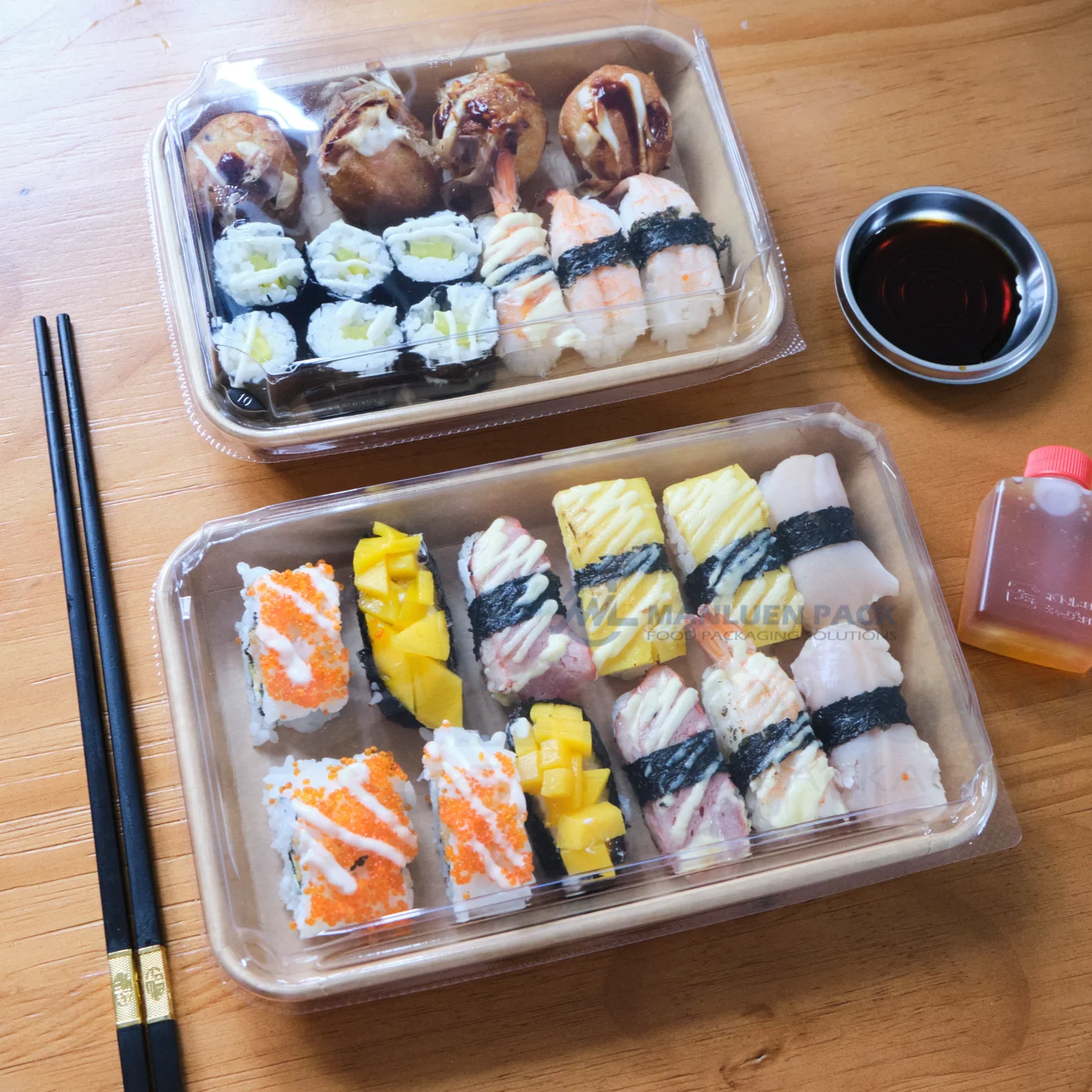
Plastic is usually the stronger choice when the package must resist water, oil, oxygen, puncture, repeated handling, or leakage; remain clear; use very little material; or survive refrigeration, freezing, reheating, or repeated reuse.
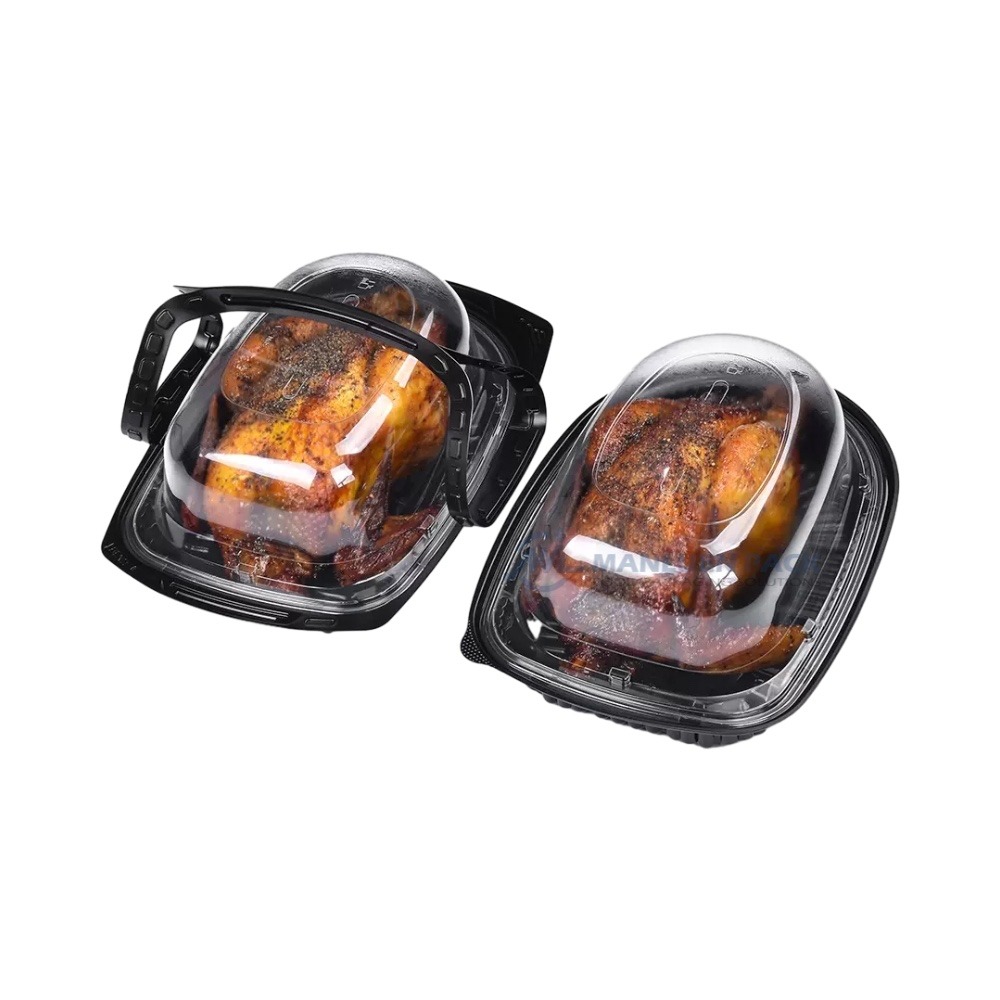
The decision changes when coatings, laminates, food residue, product damage, transport weight, or reuse cycles are included.
A plain corrugated box and a plastic-lined paper food cup are not the same recycling proposition. Likewise, a lightweight single-use plastic tray and a heavy reusable plastic crate are not the same system. This guide compares paper, cardboard, and plastic across lifecycle impact, recycling, food safety, performance, cost, and current US packaging rules.
It is written for restaurants, bakeries, sushi counters, prepared-food brands, distributors, and private-label buyers who need a defensible purchasing decision rather than a one-line material claim.
| Decision Factor | Paper or Cardboard | 塑料 |
|---|---|---|
| Feedstock | Primarily wood fiber; renewable when responsibly sourced | Usually fossil-based, although recycled and bio-based grades exist |
| Recycling | Strong for clean corrugated board and simple fiber structures | Varies widely by resin, color, size, format, and local collection |
| Package weight | May require more material for the same barrier or strength | Thin films and molded parts can provide high performance at low weight |
| Moisture and grease | Limited without a coating, liner, treatment, or hybrid structure | Usually strong, depending on the resin and finished design |
| Oxygen and aroma barrier | Often requires a coating or laminate | Can be engineered efficiently, including in multilayer structures |
| Transparency | Normally requires a separate window or clear lid | Readily available in PET, OPS, and other clear formats |
| Printing and branding | Excellent printable surface | Good, but the method depends on the resin and package format |
| Best-fit examples | Shipping cases, dry foods, sleeves, cartons, bakery boxes | Soups, sauces, chilled display, sealed trays, reusable logistics |
Why Is Paper Packaging Better Than Plastic in Some Applications?
Paper and cardboard have genuine advantages, but each advantage depends on how the fiber is sourced, converted, used, and recovered.
1. Fiber can come from a renewable and traceable source
Conventional plastic is generally made from fossil feedstocks. Paper and cardboard are made primarily from wood fiber, which can be regenerated when forests are responsibly managed.
Renewable does not mean impact-free. Forestry, pulping, drying, converting, and transport all use resources. Buyers should therefore ask for a clear fiber specification and credible chain-of-custody evidence rather than relying on a brown color or the word “natural.” The Forest Stewardship Council explains that chain-of-custody certification tracks certified material through manufacturing and distribution.
2. Clean cardboard has a mature recovery system
Corrugated cardboard has one of the most established packaging-recycling routes in the United States. The American Forest & Paper Association reported that 70%–75% of cardboard available for recovery was recycled in 2025, including more than 33 million tons. AF&PA also reported a 61%–65% recycling rate for paper overall.
These are industry-reported national figures, not a guarantee that every paper package will be accepted. Local rules, coatings, adhesives, wet-strength additives, attached films, and food residue can change the result. Buyers should confirm acceptance for the complete package in the destination market.
3. Paper works well for many short-life, low-barrier uses
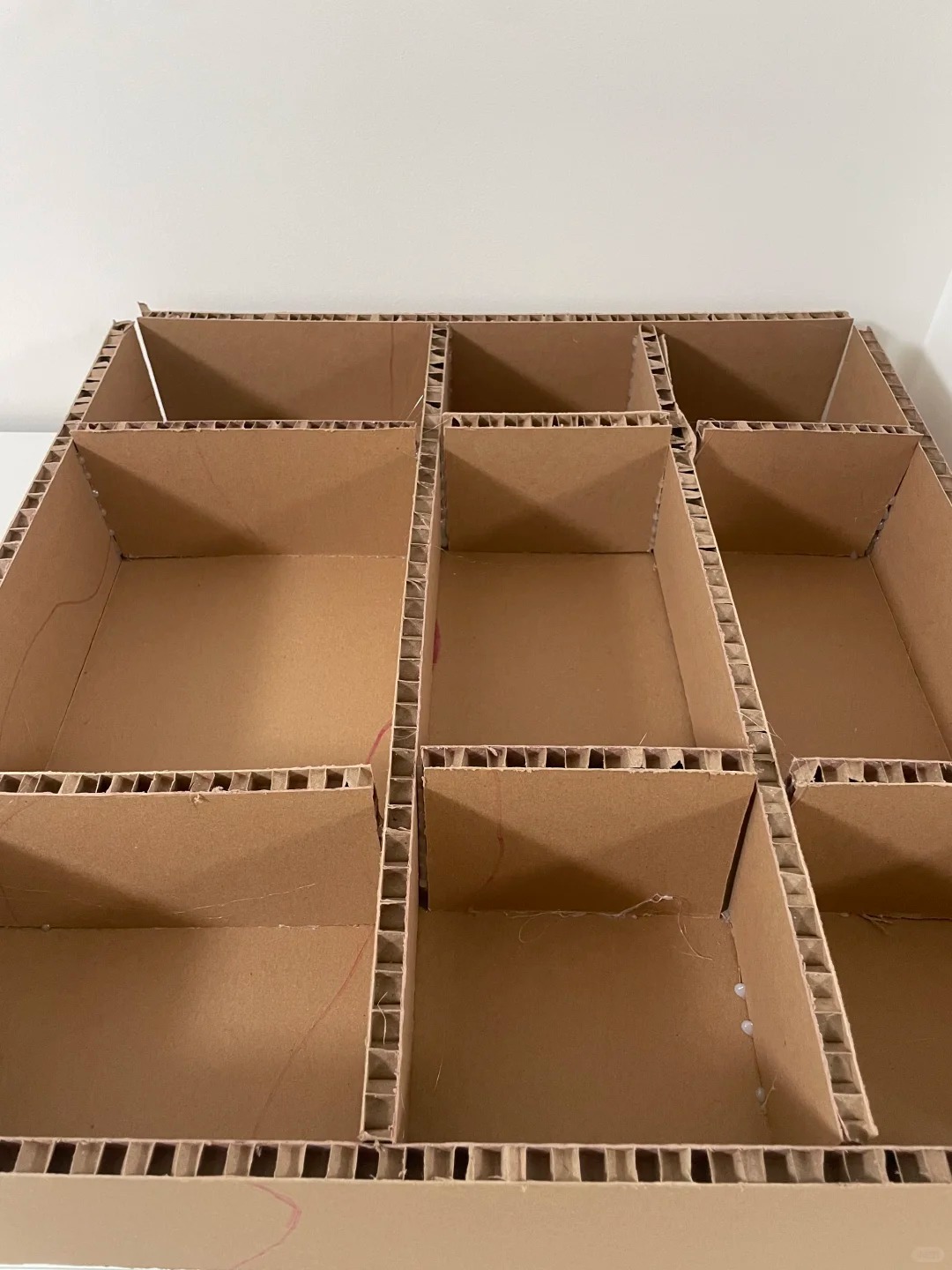
Dry bakery items, cereal cartons, sleeves, takeaway boxes for low-moisture foods, retail cartons, and secondary packaging often need stiffness, printability, and basic physical protection rather than a strong moisture or oxygen barrier. In these applications, a simple fiber structure can perform the required job without adding a long-lived plastic format.
4. Corrugated cardboard is efficient for one-way distribution
Corrugated board combines cushioning, compression strength, stackability, printable surfaces, and flat storage before use. It is particularly effective for ecommerce, master cartons, produce cases, and one-way foodservice distribution where a return system for reusable crates does not exist.
Why Is Plastic Packaging Sometimes Better Than Paper?
Plastic has serious end-of-life challenges, but replacing it without checking performance can increase material use, product loss, or food waste.
1. Plastic can deliver more barrier with less material
Thin plastic films and lightweight molded containers can resist moisture, grease, leakage, and puncture with relatively little material. A paper alternative may need extra thickness, a polymer coating, an adhesive, or a laminate to perform the same function.
The US Environmental Protection Agency recommends both material efficiency and recovery as parts of sustainable packaging management. This is why a comparison should use an equivalent packaging function, not one kilogram of paper versus one kilogram of plastic.
2. Plastic can protect wet, oily, or oxygen-sensitive food
Soups, sauces, deli foods, cut fruit, seafood, and chilled prepared meals may require leak resistance, moisture control, sealing, or a clear barrier. PET, PP, PE, and other plastics can provide these functions in different formats. The exact resin and package still need to match the food, temperature, contact time, and storage method.
Product protection is part of sustainability. A package that fails and causes food to be discarded wastes the food, the package, and the resources used to process and transport both.
3. Clear plastic supports display and handling
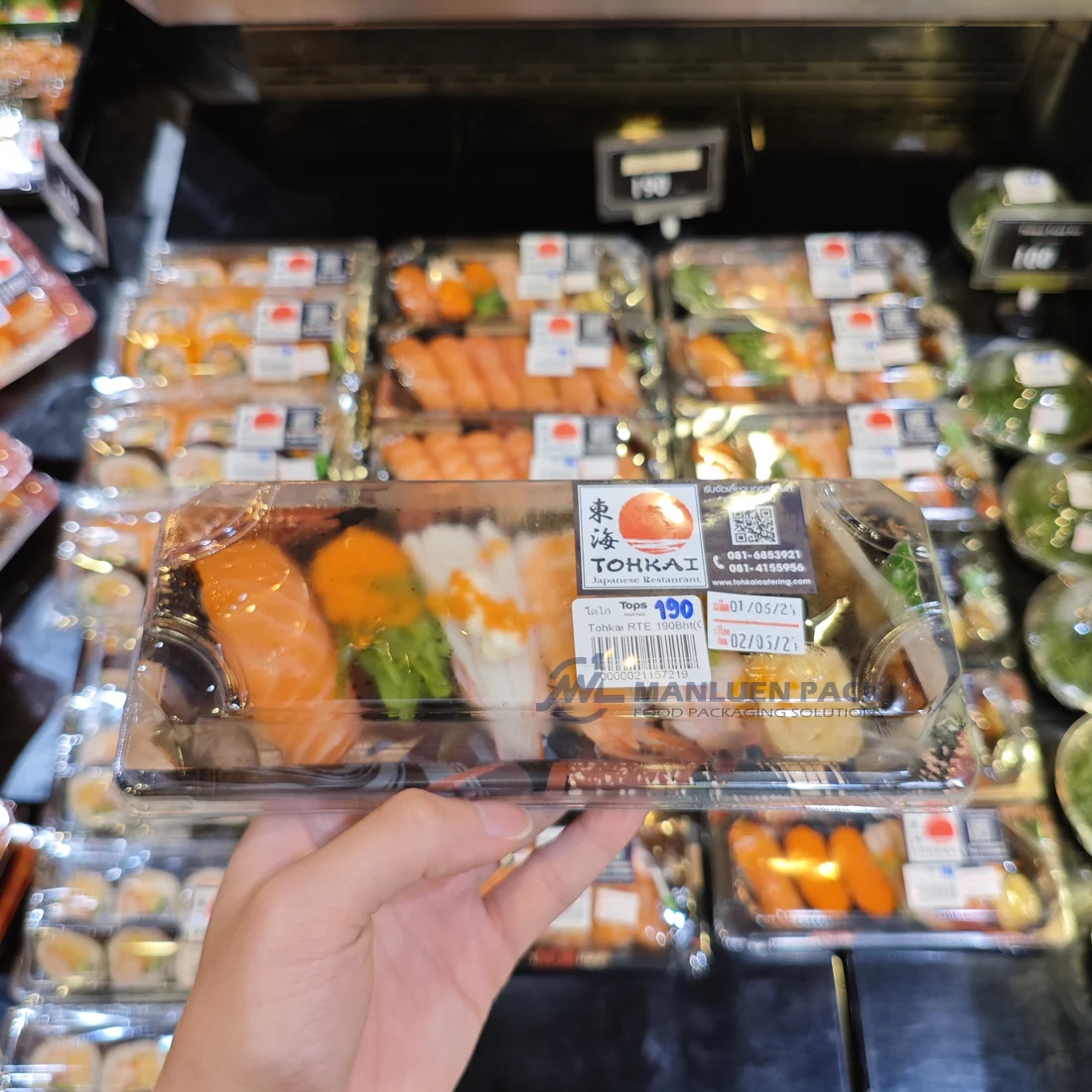
For sushi, salads, fruit, cakes, and cold deli products, a clear lid or container lets staff and customers see the product without opening it. Visibility can help with presentation, portion checks, and stock rotation. Paper can support a similar presentation, but it normally needs a separate transparent window or lid.
4. Durable plastic can support repeated reuse
A reusable plastic tote or crate uses more material than one disposable cardboard box, but its manufacturing impact is divided across every successful trip. Reuse can be attractive in closed logistics networks with high return rates, efficient cleaning, short backhaul distances, and low loss.
The United Nations Environment Programme’s lifecycle reviews emphasize that alternatives do not automatically outperform plastic in every impact category and that reuse and the wider delivery system often matter more than the material name alone.
Lifecycle Impact: Why There Is No Universal Carbon Winner
Carbon comparisons are useful only when the study compares packages that deliver the same service. The functional unit might be 1,000 protected meals, one ton of food delivered without damage, or a set number of successful reuse cycles. Per-kilogram material figures can be misleading because paper and plastic may need different weights, coatings, or secondary components to perform the same job.
A useful lifecycle comparison should include:
- Raw-material production and recycled content
- Material weight required for equivalent protection
- Energy and water used in manufacturing
- Case pack, pallet density, and transport distance
- Product damage, leakage, spoilage, and food waste
- Actual reuse cycles, return transport, and washing
- Local recycling, composting, incineration, or landfill conditions
This also explains why a study of reusable plastic crates cannot prove that every plastic food package is better than cardboard, and why a study of clean corrugated boxes cannot prove that every coated paper container is better than plastic.
What About Coated Paper and Hybrid Packaging?
Many paper food packages are hybrids. A cup may have a polymer lining, a frozen-food carton may have a moisture barrier, and a grease-resistant tray may include a coating, adhesive, or film. These layers can be necessary for food protection, but they change the recycling and food-contact questions.
The Confederation of European Paper Industries notes that coatings, laminates, and other treatments can make paper recycling more challenging. It recommends designing combinations so they deliver the required function without unnecessarily obstructing fiber recovery and checking the applicable national collection protocol.
Before approving coated paper packaging, ask:
- What are the fiber, coating, film, adhesive, ink, and label materials?
- Is every food-contact component suitable for the intended food and temperature?
- Can the coating separate during the target paper-recycling process?
- Does the local program accept this complete format, not just uncoated paper?
- Does any compostability certification cover the complete package and its components?
- Is there a written statement addressing intentionally added PFAS?
Paper vs. Plastic Is Not the Only Choice
The market also includes molded fiber, bio-based polymers, recycled-content plastics, and hybrid packages. These options can solve specific problems, but none removes the need to verify performance and end-of-life conditions.
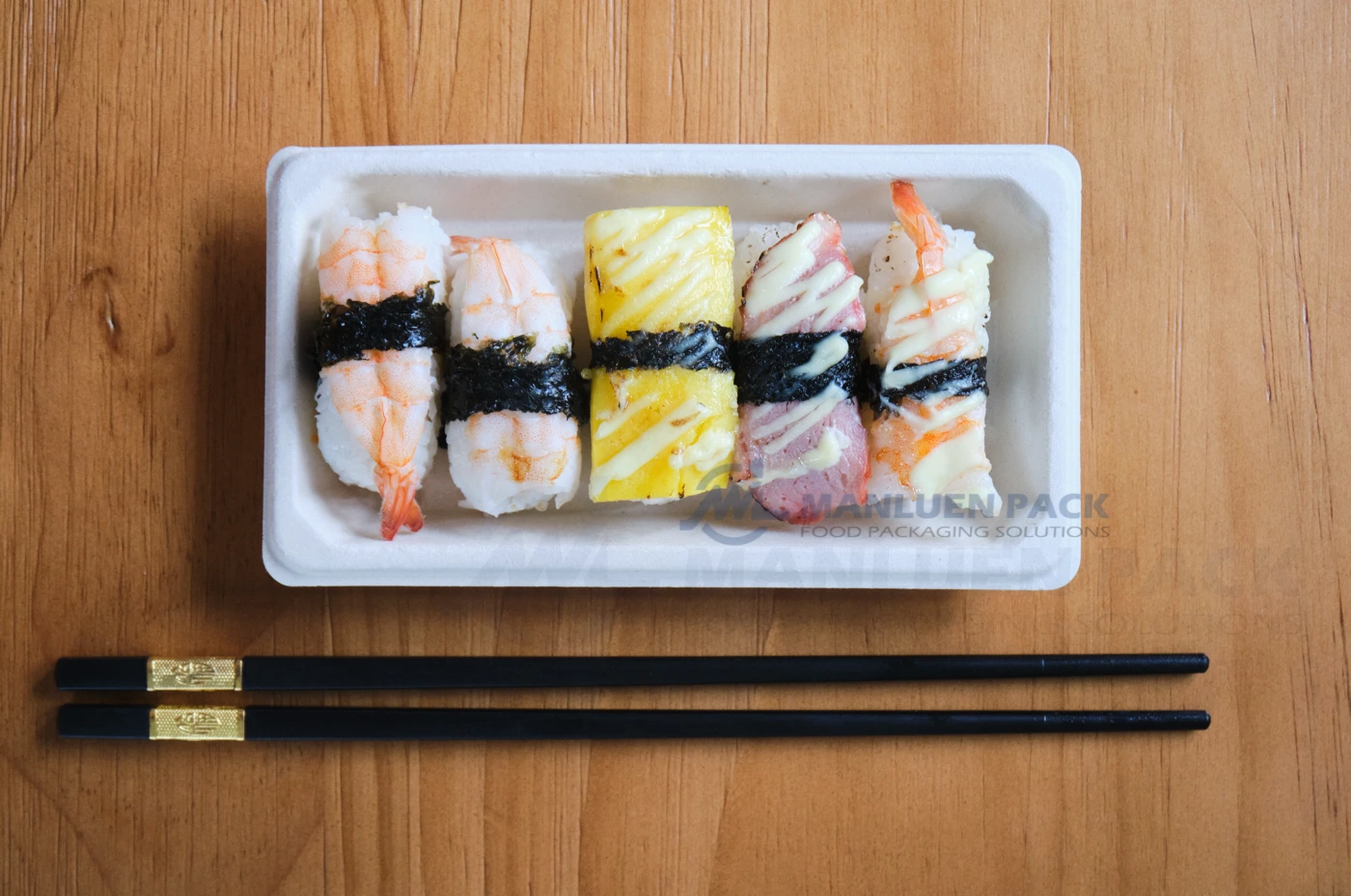
- Bagasse and molded fiber: useful for plates, trays, bowls, and takeaway containers. Grease resistance, liquid holdout, heat performance, PFAS status, and compostability depend on the finished formulation.
- PLA: a bio-based plastic commonly used in clear cold-food packaging and serviceware. Certified PLA is normally intended for a defined composting system and should not be mixed with conventional PET recycling.
- CPLA: a crystallized PLA formulation used where more heat resistance is needed. The safe service temperature still depends on the specific finished product and its documentation.
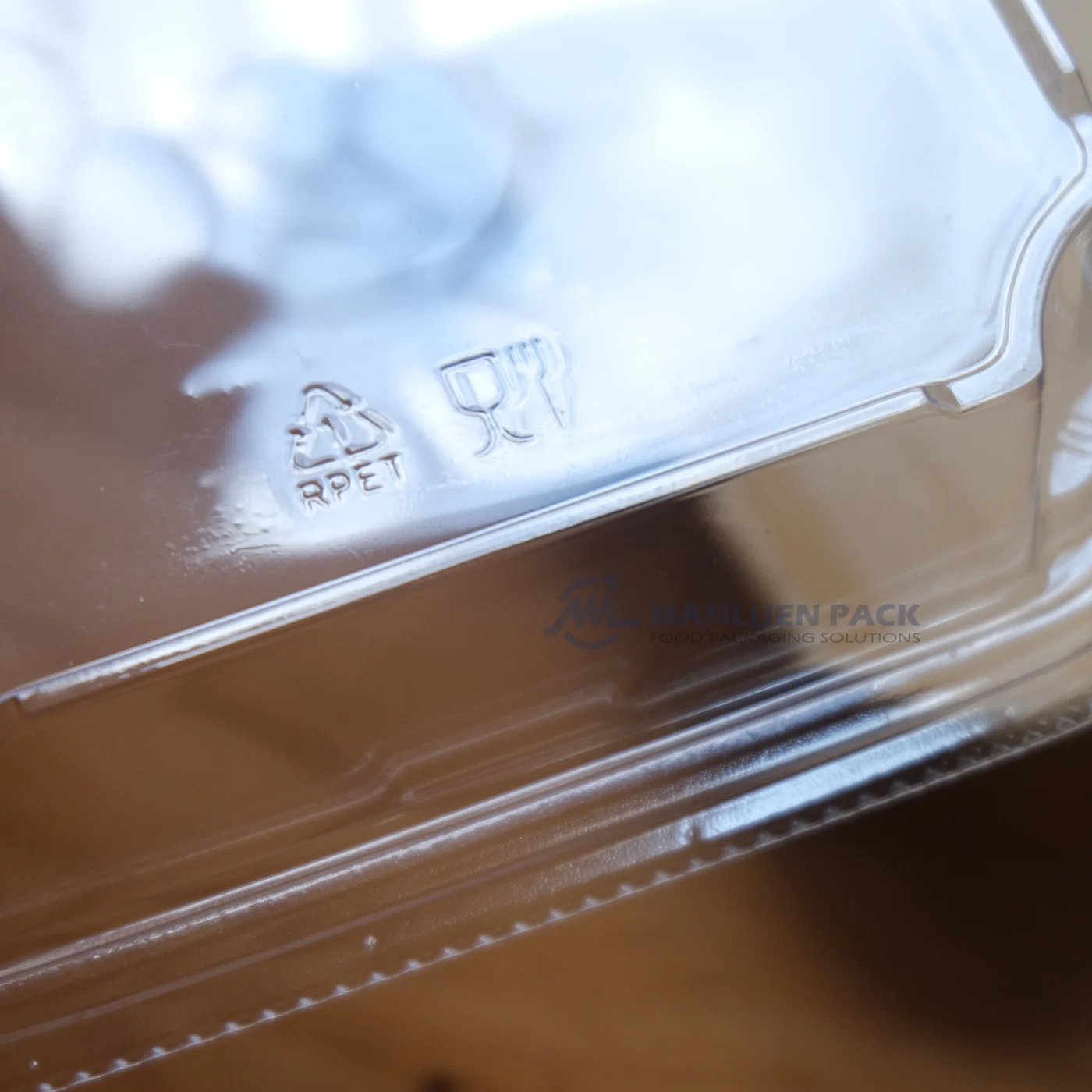
- rPET and rPP: recycled-content versions of familiar plastics. Buyers should verify the percentage, food-contact basis, color and clarity limits, source controls, and traceability.
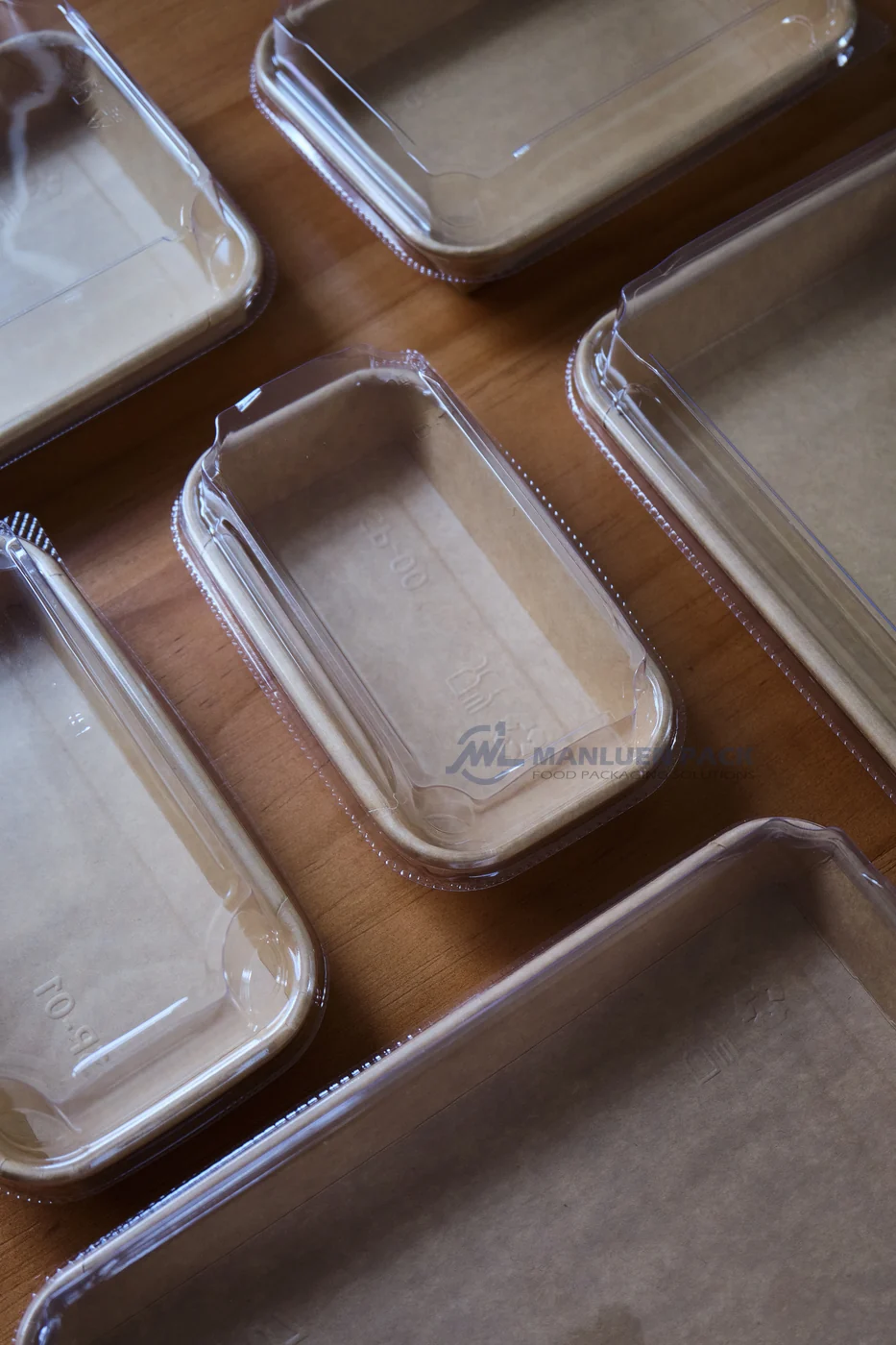
- Hybrid paper-plastic designs: can reduce the amount of plastic or provide a fiber-led appearance while keeping a clear lid or functional barrier. The components may need separate disposal instructions.
“Bio-based,” “recycled,” and “compostable” describe different attributes. A bio-based package is not automatically compostable, recycled content does not guarantee local recyclability, and a compostable package offers little practical benefit when it is sent to a disposal system that cannot process it.
Is Cardboard More Recyclable Than Plastic?
Clean corrugated cardboard is more consistently recovered than many plastic foodservice formats in the United States, but neither material name guarantees recyclability.
Cardboard can lose compatibility when it contains non-separable films, foil, wax, heavy wet-strength treatments, or too much food residue for the local mill. The common claim that every greasy pizza box belongs in landfill is also too broad. AF&PA reports that ordinary amounts of grease and cheese are generally compatible with the paper-recycling process, while local program rules still control acceptance.
Plastic recycling varies by resin and package design. PET bottles and HDPE containers may have established collection in many communities, while films, black items, small lids, multilayer pouches, PS or OPS formats, and heavily contaminated food containers may have limited routes.
The Federal Trade Commission advises companies to qualify a recyclable claim when appropriate facilities are not available to at least 60% of the consumers or communities where the product is sold. In practice, buyers should verify the precise package format against local collection guidance before printing an unqualified claim.
Which Material Is Better for Food Packaging?
Start with the food and use conditions. The following table is a shortlist, not a universal specification.
| Food or Application | Common Best-Fit Options | Why | What to Verify |
|---|---|---|---|
| Cookies, bread, and dry snacks | Kraft paper, paperboard, or corrugated cardboard | Low barrier demand, good printing, established fiber recovery | Grease level, window material, recycled content, fiber sourcing |
| 寿司, sashimi, and chilled display | PET, OPS, PP, or a paper base with a clear lid | Visibility, lid fit, condensation control, chilled handling | Material identity, refrigeration, leakage, local recovery, heat restrictions |
| Hot soup, sauces, and wet meals | Application-rated PP or a verified coated/fiber system | Leak, oil, heat, and moisture resistance | Fill temperature, seal, venting, microwave instructions, coating |
| Fried or oily takeaway food | PP, molded fiber, or PFAS-free coated paper designed for the food | Grease resistance and short delivery performance | PFAS statement, grease test, temperature, end-of-life route |
| Cakes and pastries | Paperboard, corrugated board, PET, OPS, or a hybrid | Rigidity, frosting clearance, impact protection, display | Stacking, closure, window/lid recovery, refrigeration humidity |
| Frozen food | Coated paperboard, PE film, PP, or a multilayer structure | Low-temperature toughness and moisture control | Freeze cycle, condensation, seal integrity, reheating method |
| One-way shipping | Corrugated cardboard | Cushioning, compression, printability, flat storage | Humidity, load, stacking, recycled content, box recovery |
| Closed-loop transport | Reusable plastic crates or totes | Durability across many trips | Return rate, actual cycles, washing, loss, backhaul distance |
For a broader material comparison, see Manluen Pack’s guide to food packaging materials. Buyers comparing prepared-food formats can also review food storage containers 和 sushi tray options as practical examples of how the food and presentation needs affect the material choice.
Food-Contact Safety: Paper and Plastic Both Need Evidence
“Paper,” “plastic,” “food grade,” and a resin identification code are not complete safety determinations. In the United States, the regulatory basis must cover the substances that may migrate from the complete package under its intended conditions of use.
The US Food and Drug Administration evaluates food-contact substances using exposure and toxicology information. Its framework distinguishes food types and conditions such as fatty, acidic, dry, refrigerated, frozen, hot-filled, and reheated uses. A package suitable for refrigerated storage is not automatically suitable for hot filling or microwave heating.
Buyers should request:
- The exact resin, fiber, coating, colorant, adhesive, and other food-contact components
- The regulatory basis for the intended food type and conditions of use
- Product-specific compliance documentation rather than a generic resin data sheet
- Relevant migration or extractables testing matched to time and temperature
- Separate evidence for microwave, freezer, oven, recycled-content, BPA-free, or PFAS-free claims
- Lot traceability and written change-control procedures
Manluen Pack’s guide to which agency regulates food packaging explains why a broad “FDA approved” statement is not a substitute for matching the authorization to the finished article and intended use.
PFAS in Paper Food Packaging: What Changed?
Grease-resistant paper historically used several types of barriers, including some PFAS-containing grease-proofing agents. In February 2024, the FDA announced that manufacturers were no longer selling PFAS-containing grease-proofing substances for food-contact use in the US market. In January 2025, the agency determined that 35 related Food Contact Notifications were no longer effective because those uses had been abandoned, with a June 30, 2025 compliance date for certain existing stocks.
This is a specific regulatory history, not proof that every paper package is PFAS-free and not a universal ban on every PFAS use in every food-contact application. For a paper or molded-fiber container, request a finished-product statement covering intentionally added PFAS and any supporting test or supplier documentation required by the destination market.
Compostable and Biodegradable Claims Need Qualification
Paper, molded fiber, PLA, and coated structures should not be called compostable merely because they contain plant-based material. The complete package may include lids, coatings, labels, adhesives, inks, and additives that change its end-of-life behavior.
The FTC’s Green Guides state that a compostable claim needs reliable evidence for the complete product and should be qualified when suitable municipal or institutional facilities are not widely available. BPI’s commercial certification program uses ASTM D6400 as its base assessment standard, with additional standards available for eligible formats.
Before using a compostable claim, confirm:
- The certifying organization and applicable standard
- The exact certified SKU and every included component
- Whether the claim is for commercial or home composting
- Whether the target community collects the package
- How customers should separate lids, labels, or films
“Biodegradable” is not a shortcut. The FTC cautions against unqualified degradable claims for items whose customary disposal route is landfill, incineration, or recycling.
Reusable Plastic vs. Disposable Cardboard
Reusable plastic and disposable cardboard should be compared as systems.
Reusable plastic can work well when:
- The network is closed and return rates are high
- The container survives many documented cycles
- Cleaning is efficient and appropriate for the application
- Backhaul distances are controlled
- Loss and damage remain low
Disposable cardboard can be more practical when:
- The shipment is one-way
- Customers are dispersed
- Volumes do not support return logistics
- The product is dry and humidity exposure is controlled
- A strong local corrugated-recycling route exists
Calculate impact and cost per successful use. Do not divide the impact of a reusable crate by a theoretical cycle count that the actual operation cannot achieve.
Is Paper Packaging Cheaper Than Plastic?
Not always. A simple corrugated carton may be economical, while a coated, printed, windowed, or multilayer paper food package may cost more than a lightweight plastic alternative. A reusable plastic tote costs more initially but may become economical across many cycles.
Compare total delivered cost, including:
- Container, lid, coating, label, and printing
- Tooling and minimum order quantity
- Case pack, pallet use, storage space, and freight
- Filling labor and sealing equipment
- Leakage, crushing, spoilage, returns, and rejected loads
- Compliance testing and documentation
- Recycling, composting, washing, return, or disposal costs
Unit price matters, but cost per protected product or successful use is the more useful purchasing measure.
How Should a Business Choose Between Paper and Plastic?
Use this sequence before requesting a quotation or approving a material change.
1. Define the product
Record moisture, fat, acidity, aroma sensitivity, fill weight, fill temperature, storage temperature, and required shelf life.
2. Map every condition of use
Include filling, sealing, refrigeration, freezing, transport, display, delivery, reheating, serving, and disposal.
3. Set the minimum performance specification
Define leakage, oxygen or moisture barrier, clarity, closure, impact, stacking, compartment, tamper-evidence, and label requirements. Avoid requesting performance the product does not need.
4. Compare equivalent finished packages
Compare the full paper and plastic structures at the size and thickness needed to protect the same product. Include lids, liners, windows, labels, and secondary packaging.
5. Verify the destination market
Check food-contact rules, material restrictions, extended producer responsibility, labeling, recycling access, and composting infrastructure where the package will be sold.
California is one example of why destination matters. Under SB 54, the state’s packaging producer-responsibility program targets a 25% reduction in single-use plastic, a 65% recycling rate for single-use plastic packaging and foodservice ware, and recyclable or compostable covered packaging by 2032. CalRecycle’s material-category determinations and implementation guidance should be checked for the actual format rather than inferred from the material name.
6. Test the filled package
Test real food, temperature, storage time, seals, stacking, vibration, drops, condensation, and customer use. An empty sample cannot prove foodservice performance.
7. Require evidence before making environmental claims
Verify recycled-content percentages, fiber chain of custody, PFAS statements, recyclability access, and compostability certification. Avoid broad claims such as “eco-friendly” or “100% green.”
For a fuller sourcing sequence, use Manluen Pack’s food packaging selection guide.
How Manluen Pack Can Support a Material Comparison
Manluen Pack supplies both plastic and fiber-based foodservice formats, allowing buyers to compare packages against the actual food rather than forcing every application into one material family.
For example, buyers can compare clear plastic display formats with hybrid kraft-paper formats such as the 3# kraft paper sushi box with a clear PET lid or the smaller 0# kraft paper sushi tray with a clear PET lid. The hybrid design also illustrates an important point: the paper base and plastic lid may have different disposal routes.
When requesting samples or a quotation, provide the food, fill weight, temperature, shelf life, transport route, lid and compartment needs, destination market, order volume, printing requirements, and environmental targets. Final suitability should be confirmed through specifications, compliance documents, and filled-package testing.
常见问题
Is cardboard packaging better than plastic?
Cardboard is often better for dry goods, retail cartons, shipping, and other one-way uses where a simple fiber structure can protect the product and enter an established recycling system. Plastic may be better when moisture resistance, strong barriers, clarity, low weight, secure sealing, or repeated reuse is required.
Is paper packaging better than plastic?
Sometimes. Paper can offer renewable fiber, good printing, and mature recovery for clean formats. Plastic can deliver high barrier performance with less material and protect wet or chilled products more effectively. Compare complete packages that perform the same job.
Why is paper packaging better than plastic in some cases?
Paper can use responsibly sourced renewable fiber, and clean paper or cardboard often fits established recycling systems. It is especially effective for low-moisture products and one-way secondary packaging that does not need a complex coating.
Is plastic always worse for the environment?
No. Plastic creates persistent-waste and recovery challenges, but a lightweight plastic package may use less material, reduce transport weight, prevent food loss, or support many reuse cycles. Its benefit depends on the actual format and system.
Is all paper packaging recyclable?
No. Films, foil, wax, coatings, wet-strength additives, adhesives, and food residue can affect compatibility. Check the full package with the local recycling program or relevant assessment protocol.
Is cardboard biodegradable?
Uncoated fiber can break down biologically under suitable conditions, but coatings and composite layers may change that behavior. A marketer should not make an unqualified biodegradable claim without evidence that matches the product and its customary disposal route.
Are paper food containers automatically PFAS-free?
No. The US market phase-out covered PFAS-containing grease-proofing substances described by the FDA, but buyers should still request a product-specific statement and any evidence required by the destination market.
Is paper packaging cheaper than plastic?
Not necessarily. Cost depends on size, thickness, coating, printing, order quantity, shipping efficiency, product loss, and disposal. Compare total delivered cost per protected product, not only the container price.
What is the best material for sushi packaging?
Clear PET or OPS is commonly used for chilled presentation, while PP may suit a different application with verified temperature requirements. A kraft-paper base with a clear lid offers a fiber-led appearance but remains a hybrid package. Verify condensation, lid fit, leakage, refrigeration, food-contact status, and local recovery.
结论
Cardboard and paper packaging are often better than plastic for dry foods, printed cartons, shipping cases, and other one-way uses where simple fiber construction provides enough protection and a real recycling route exists.
Plastic remains a practical choice for wet, oily, chilled, clear-display, leak-resistant, and high-barrier applications, as well as reusable systems that achieve enough cycles. Coated paper may bridge some performance gaps, but the coating can change food-contact documentation, recyclability, compostability, and cost.
The best purchasing rule is simple: define the product and conditions of use first, compare functionally equivalent finished packages, minimize unnecessary material, test with the actual food, and verify the end-of-life route and every environmental claim in the destination market.
References
United Nations Environment Programme. Addressing Single-Use Plastic Products Pollution Using a Life Cycle Approach.
Used for the lifecycle perspective and the importance of reuse and system design.
United Nations Environment Programme
U.S. Environmental Protection Agency. Sustainable Packaging.
Used for material-efficiency and recovery principles.
U.S. Environmental Protection Agency
American Forest & Paper Association. Paper Industry Announces 2025 U.S. Paper Recycling Rates.
Used for the 2025 US paper and cardboard recovery figures.
American Forest & Paper Association
Confederation of European Paper Industries. Paper-Based Packaging Recyclability Guidelines.
Used for the effect of coatings, laminates, and national collection systems on fiber recovery.
Cepi
U.S. Food and Drug Administration. Food Packaging & Other Substances that Come in Contact with Food.
Used for the US food-contact authorization and safety-assessment framework.
U.S. Food and Drug Administration
U.S. Food and Drug Administration. Food Types & Conditions of Use for Food Contact Substances.
Used for matching packaging to food type, temperature, storage, and reheating conditions.
U.S. Food and Drug Administration
U.S. Food and Drug Administration. FDA Determines Authorization for 35 Food Contact Notifications Related to PFAS Are No Longer Effective.
Used for the January 2025 PFAS grease-proofing update and compliance date.
U.S. Food and Drug Administration
Federal Trade Commission. Environmental Claims: Summary of the Green Guides.
Used for recyclable, compostable, degradable, recycled-content, and broad environmental marketing claims.
Federal Trade Commission
California Department of Resources Recycling and Recovery. SB 54 Plastic Pollution Prevention and Packaging Producer Responsibility Act.
Used for California’s 2032 packaging, source-reduction, and recycling targets.
CalRecycle
Forest Stewardship Council. Chain of Custody Certification.
Used for certified fiber traceability through manufacturing and distribution.
Forest Stewardship Council
Biodegradable Products Institute. Commercial Compostability Certification.
Used for the role of third-party certification and ASTM D6400 in commercial-compostability assessment.
Biodegradable Products Institute

万联塑料包装公司专业生产塑料食品包装已有 20 多年的历史。我们的产品由 100% 原生和不含双酚 A 的 PP、PS 和 OPS 制成,符合 FDA 和欧洲标准。
 ZH
ZH  EN
EN  FR
FR  PT
PT  ES
ES  KO
KO  JA
JA