
Para compradores que comparam embalagens em várias linhas de alimentos refrigerados, os mesmos materiais, fechos e verificações de manuseio também se aplicam a bandejas descartáveis de sushi usados por supermercados, restaurantes e balcões de takeaway.
Introdução
The best bento lunch box is the one that fits the food, portion, serving temperature, transport time, and disposal plan.
A compact box may suit sushi, snacks, and side dishes.
A larger box may work better for a complete takeaway meal. Material choice matters just as much as size because PP, PET, PS, and OPS do not have the same heat resistance or display properties.

ManLuen’s WL-8507 bento lunch box is a compact disposable container with a black base and fitted lid. Its listed size is 168 × 126 × 50 mm, with 550 pieces per carton. The product is available in different material options, so buyers must confirm the selected material and intended use before making claims about microwaving, freezing, or hot filling.
This guide explains how bento boxes work, how to compare materials and sizes, and what food-service buyers should verify before ordering. You can also browse ManLuen’s full bento box range to compare formats.

What Is a Bento Lunch Box?
A bento lunch box is a single-meal container based on the Japanese practice of arranging several foods in one compact package. A bento may hold rice or noodles, a protein, vegetables, fruit, pickles, or a small dessert.
Many bento boxes use separate compartments, but compartments are not required. Some models use one open cavity and rely on food cups, dividers, or careful arrangement. Others use two, three, or more molded sections. The right structure depends on the menu.
Modern bento packaging falls into two broad groups:
- Reusable lunch boxes are designed for repeated washing and personal meal preparation. They may use durable plastic, stainless steel, glass, or other materials.
- Disposable bento boxes are designed for takeaway, delivery, catering, supermarkets, and prepared-food counters. They focus on fast packing, stacking, presentation, and controlled single use.
The WL-8507 belongs to the disposable food-service group. Buyers looking for a wider overview can read ManLuen’s guide to caixas de bento de plástico descartável.
WL-8507 Specifications and Suitable Uses
The WL-8507 is one size within ManLuen’s WL-8500 series. It sits between the smaller WL-8505 and the larger WL-8510.
| Item | WL-8507 specification |
|---|---|
| Product size | 168 × 126 × 50 mm |
| Listed material options | PS / PP / PET / OPS |
| Cor | Black base |
| Carton quantity | 550 pieces |
| Tamanho da caixa | 530 × 370 × 350 mm |
Its compact rectangular format suits prepared foods, snacks, fruit, side dishes, sushi, and smaller takeaway portions. The black base provides contrast, while the fitted lid protects the food and supports retail display.
Do not use dimensions alone to judge capacity. The internal shape, rim, lid clearance, and food density all affect how much the box holds in practice. Ask for samples and test them with the actual menu before confirming portion size.
Benefits of a Bento Lunch Box
Organized presentation
A bento format helps staff arrange a complete meal in a predictable way. Divided models keep foods apart. Single-cavity models give more flexibility for larger items or custom arrangement.
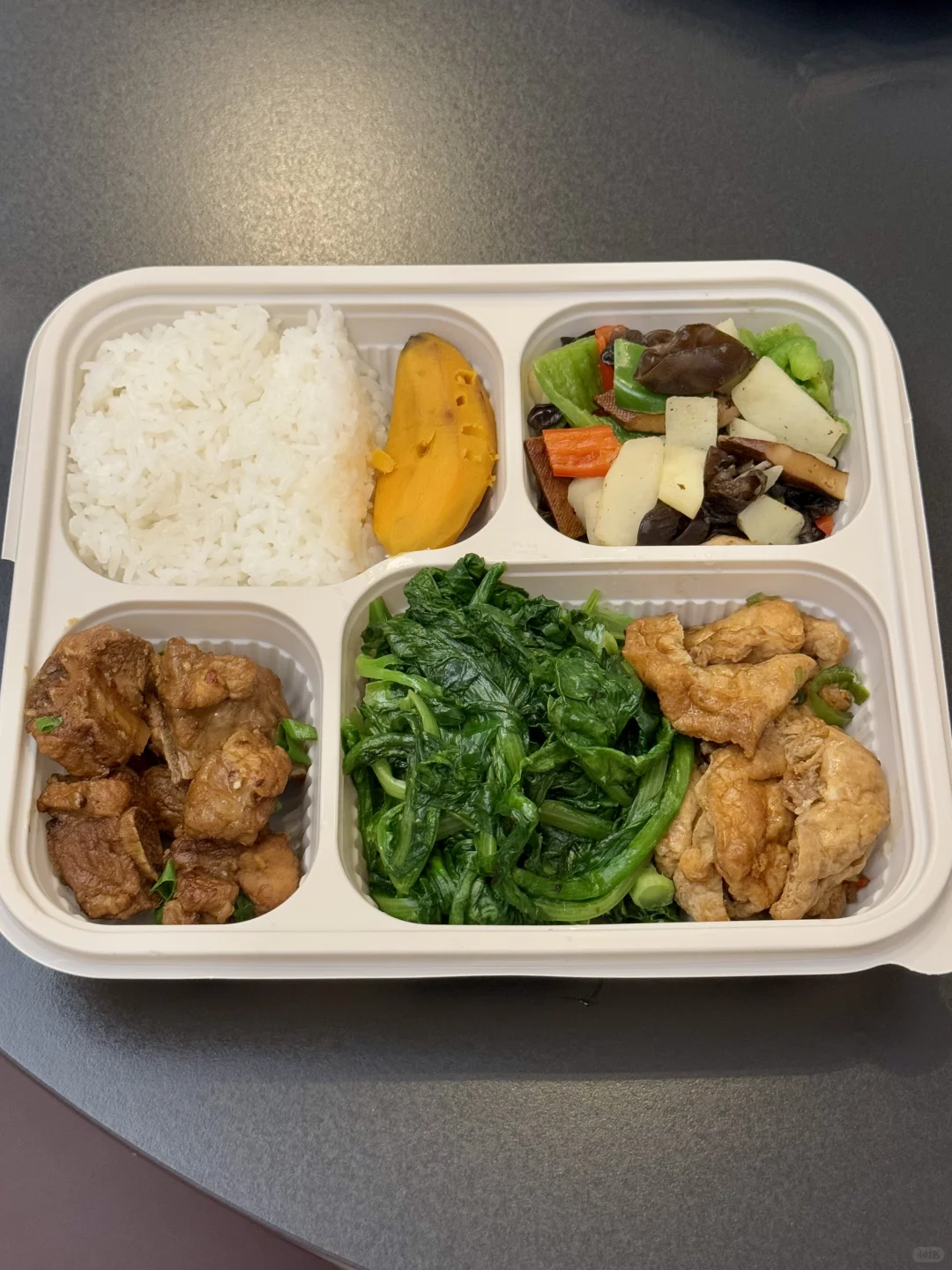
Faster takeaway packing
Preformed disposable boxes require no folding. Staff can fill the base, check the rim, close the lid, and move the meal to pickup or delivery. This can simplify service during busy periods.
Consistent portions
A fixed container size gives kitchen teams a clear visual guide. It can support more consistent servings, but the box should not replace a measured recipe or portion-control procedure.
Efficient storage and transport
Stackable bases and lids can reduce storage space and speed up packing. Buyers should still test loaded boxes under the actual stacking height and delivery route. A box that stacks well when empty may behave differently when filled with hot or heavy food.
For delivery-specific issues such as lid security, spills, and stacking, see how to choose a to-go bento box and ManLuen’s guide to a disposable bento box with a lid.
Compare Bento Box Materials
The WL-8507 product range lists PS, PP, PET, and OPS options. These materials serve different purposes. The exact construction may also use a different lid material from the base.
| Material | Common strengths | What buyers must confirm |
|---|---|---|
| PP | Good toughness and better heat resistance than many clear display plastics | Maximum food temperature, microwave instructions, lid material, and heating time |
| PET | Clear appearance and strong cold-food presentation | Temperature limit; standard PET should not be assumed microwave-safe |
| OPS | High clarity and crisp presentation for chilled or room-temperature foods | Heat limit, brittleness under cold conditions, and transport performance |
| PS | Light weight, easy forming, and economical food presentation | Heat restrictions and suitability for oily or hot food |
Material names alone do not establish compliance or performance. The FDA evaluates food-contact substances for specific intended uses and conditions. Buyers should confirm the food type, temperature, contact time, and any reheating or frozen-storage requirement for the exact version they order.
For a broader comparison, read what materials are used for food packaging. If reheating matters, consult the material-specific guidance in Can You Microwave Food in a Plastic Container? and follow the instructions supplied for the exact container.
Como Escolher a Caixa de Almoço Bento Certo
1. Start with the menu
List the main food types, portion weights, sauces, oils, and side dishes. A dry snack box has different needs from a hot curry meal. If flavors must stay separate, use molded compartments or individual food cups.
2. Define the temperature
Record the temperature at filling, during holding, and at service. Do not describe a box as heat-resistant or microwave-safe without a product-specific limit. FDA guidance treats food type and conditions of use as part of the safety assessment.
3. Choose the size
The WL-8507 suits smaller portions. If it is too compact, compare the WL-8510 stackable bento container or the larger WL-8525 takeaway bento box. Request samples of two or three sizes and pack the same meal in each.
4. Test the lid and transport route
Fill the box with the actual meal. Close the lid as staff would during service. Then tilt, stack, refrigerate, and transport it for the expected delivery time. Check the rim for trapped food because residue can prevent a complete closure.
“Fitted lid” does not always mean liquid-tight. Soups and thin sauces may need a dedicated sealed container or a separate sauce cup.
5. Review food-contact documents
Ask for documents that match the SKU, material, and destination market. A useful file should identify the material, intended food type, temperature, contact time, and relevant test or regulatory basis. ManLuen’s guide to embalagens de grau alimentar explains why “food-grade” is not a complete specification.
For U.S. sourcing, avoid relying only on a broad “FDA approved” statement. The FDA authorizes food-contact substances for particular uses, rather than giving one universal approval to every finished package. See what agency regulates food packaging for the practical distinction.
6. Check carton and storage efficiency
Container price is only part of the cost. Compare pieces per carton, carton dimensions, warehouse space, lid matching, packing speed, damaged units, and freight. The WL-8507 specification lists 550 pieces per carton, but buyers should confirm current packing details on the quotation.
ManLuen’s article on choosing the right food packaging provides a wider procurement checklist.
Tips for Packing a Bento Meal
- Choose foods that fit the transport plan. Keep thin sauces in a separate sealed cup unless the main container is tested for liquids.
- Use the available space. Place the main food in the largest area and use smaller spaces or cups for sides.
- Cool food correctly before chilled transport. Do not close hot food in a cold-food box and assume the package will control temperature.
- Keep the rim clean. Food or oil on the rim can interfere with lid closure.
- Close and inspect every box. Press around the edge and check for visible gaps before stacking.
- Add labels after the lid is secure. Include the meal name and any handling or reheating instructions required by the business.
Packaging does not replace temperature control. The USDA advises keeping perishable lunches at 40°F (4.4°C) or below and using at least two cold sources when refrigeration is unavailable. Hot food should remain at 140°F (60°C) or above in a suitable insulated container. These instructions concern food safety during transport; they do not mean a disposable bento box is insulated.
Cleaning, Reuse, and Disposal
Reusable and disposable bento boxes need different care.
For a reusable lunch box, follow the manufacturer’s washing, dishwasher, freezer, and microwave instructions. Clean removable seals and dry all parts before storage. Replace the box if it cracks, warps, or no longer closes correctly.
The WL-8507 is sold as disposable food packaging. Do not present a disposable unit as a reusable household lunch box unless the exact product has been designed and validated for repeated use. USDA guidance also advises discarding used disposable food packaging after lunch rather than reusing it.
Disposal depends on the selected resin, local collection rules, food residue, and whether the lid and base use the same material. A resin name does not guarantee local recycling. Avoid broad “eco-friendly” claims unless evidence covers the complete package and the actual recovery system. For sourcing context, see sustainable food packaging trends and supplier checks.
Buying Bento Boxes for Food Service
Before approving a wholesale order, collect the following information:
- exact model and material;
- base and lid dimensions;
- pieces per carton and carton size;
- recommended food and temperature range;
- microwave, refrigeration, and freezing restrictions;
- food-contact documents for the destination market;
- sample quantity and production sample approval;
- MOQ for stock and custom versions;
- printing, label, or color requirements;
- lead time, payment terms, and shipping terms.
O disposable bento box market guide gives additional context for buyers comparing suppliers and product formats. For multi-item catering or party service, a multi-compartment party tray may suit the menu better than a compact lunch box.
ManLuen supplies bento containers to restaurants, retailers, distributors, caterers, and prepared-food businesses. Buyers can review the company’s certification information, but should still request documents for the exact material and SKU included in the quotation.
Perguntas Frequentes
Is the WL-8507 microwave-safe?
Do not assume every WL-8507 version is microwave-safe. The product page lists PS, PP, PET, and OPS material options, and they have different temperature limits. Request written microwave instructions for the exact base and lid combination. The FDA also advises using cookware specifically manufactured for microwave use.
Is the WL-8507 leakproof?
It has a fitted lid, but buyers should test it with the actual food and delivery route. “Leakproof” should be used only when the specified box has passed an appropriate filled-product test. Pack thin sauces separately when necessary.
Can I freeze food in a bento box?
Only if the supplier confirms frozen-storage suitability for the exact material and construction. Cold temperatures can change impact strength and lid fit. Leave room for food expansion and test the full freeze-thaw cycle before commercial use.
What size is the WL-8507?
The listed external size is 168 × 126 × 50 mm. Test the internal usable space with the actual meal because shape and lid clearance affect capacity.
Is a bento box suitable for soups?
A standard fitted-lid bento box is not automatically suitable for soup. Use a container designed and tested for liquids, or pack soup and sauces in separate sealed containers.
How do I request samples or a quote?
Send the model, material, required quantity, food type, filling temperature, destination market, and any custom requirements through ManLuen’s request-a-quote page. You can also call +86 17328007523 or email info@manluenpack.com.
Conclusão
Choose a bento lunch box by use, not by appearance alone. Confirm the food, temperature, portion, material, lid performance, and transport conditions. The WL-8507 offers a compact format, but its PS, PP, PET, and OPS versions should not be treated as interchangeable.
Test samples with the real menu and request product-specific documents before ordering. For more packaging and sourcing guidance, browse ManLuen’s food packaging articles.
Fontes e Leitura Adicional
- ManLuen — WL-8507 Black Bento Box with Lid. Used for product dimensions, carton quantity, material options, and stated applications.
- U.S. Food and Drug Administration — Food Packaging and Food Contact Substances. Used for the intended-use and food-contact authorization explanation.
- U.S. Food and Drug Administration — Food Types and Conditions of Use for Food Contact Substances. Used to explain why food type, storage, and heating conditions matter.
- U.S. Food and Drug Administration — Microwave Ovens. Used for the instruction to select containers made for microwave use.
- USDA Food Safety and Inspection Service — Keeping Bag Lunches Safe. Used for cold-source, hot-holding, and disposable-package guidance.
- Federal Trade Commission — Environmental Claims: Summary of the Green Guides. Used for guidance on qualified environmental claims.

ManLuen Plastic Packaging Company, especializada na produção de Embalagens de Alimentos de Plástico há mais de 20 anos. Os nossos produtos são feitos de PP virgem e livre de BPA, em conformidade com os padrões da FDA e Europeus.
 PT
 EN
 ZH
 FR
 ES
 KO
 JA