
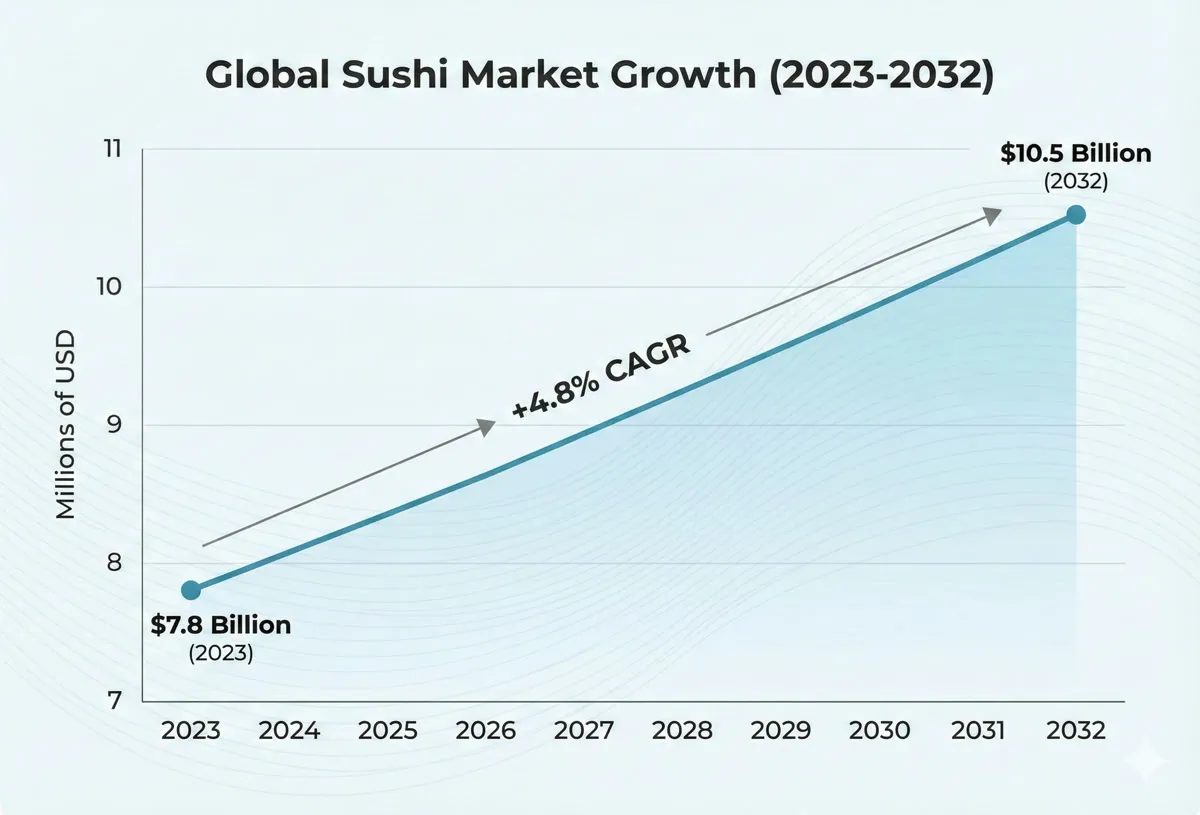
The global sushi market, valued at $7.8 billion in 2023 and projected to exceed $10.5 billion by 2032, is experiencing a transformation driven by sustainability concerns. As consumers increasingly prioritize environmentally responsible packaging, sushi restaurants and food service operators face mounting pressure to adopt sustainable sushi packaging solutions without compromising food quality or presentation. This comprehensive guide explores the latest trends, materials, and strategies for implementing sustainable sushi packaging in 2026.
Whether you’re a restaurant owner, catering service, or food delivery business, understanding these sushi packaging trends 2026 is essential for staying competitive while meeting customer expectations for eco-friendly solutions.
Key Market Insights
| Metric | Value | Trend |
|---|---|---|
| Global Sushi Market | $10.5B by 2032 | +4.8% CAGR |
| Sustainable Packaging Demand | 64% consumers | +15% YoY |
| Biodegradable Growth | +28% annually | Strong |
| Takeout Market Share | 45% of orders | Growing |
Why Sustainable Sushi Packaging Matters
The sushi industry has traditionally relied heavily on plastic packaging due to its practical benefits: durability, cost-effectiveness, and excellent food preservation properties. However, the environmental impact of single-use plastics has prompted a fundamental shift in how businesses approach eco-friendly sushi container solutions.
Adopting sustainable sushi packaging offers multiple benefits:
- Environmental Impact Reduction: Biodegradable and compostable materials significantly reduce landfill waste
- Consumer Appeal: Modern customers actively seek businesses aligned with their values
- Regulatory Compliance: Proactive adoption prepares businesses for upcoming regulations
- Brand Differentiation: Sustainable packaging sets businesses apart in a competitive market
Material Innovation Trends
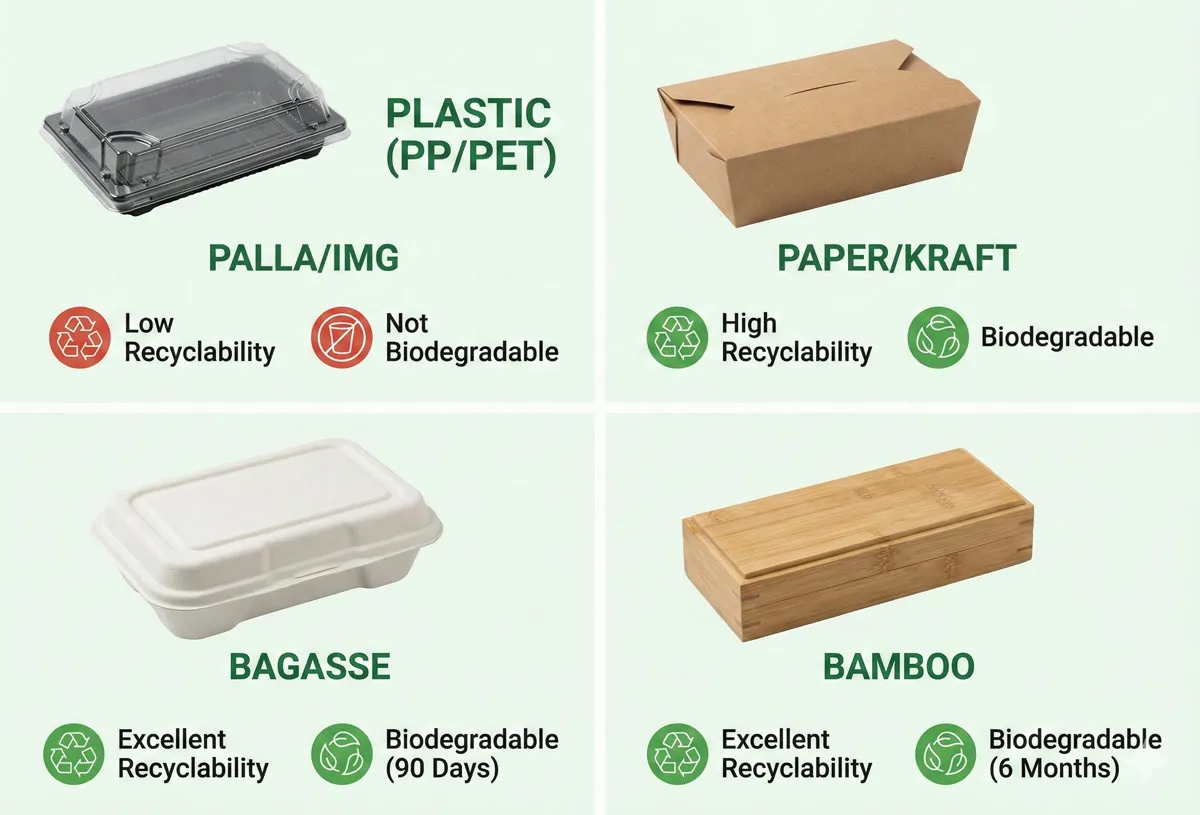
The quest for sustainable sushi packaging alternatives has driven significant innovation in packaging materials. Understanding the characteristics of each material helps businesses make informed decisions when selecting eco-friendly sushi container solutions for their specific needs.
Sushi Packaging Materials Comparison
| Feature | Plastic (PP/PET) | Paper/Kraft | Bagasse | Bamboo |
|---|---|---|---|---|
| Recyclability | Low | High | Excellent | Excellent |
| Biodegradable | No | Yes | Yes | Yes |
| Cost | $ | $$ | $$ | $$$ |
| Food Safety | Excellent | Excellent | Excellent | Excellent |
Biodegradable Material Options
| Material | Source | Decomposition Time | Certifications |
|---|---|---|---|
| Bagasse | Sugarcane fiber | 90 days | FDA, Compostable |
| PLA | Corn starch | 180 days | BPI Certified |
| Bamboo | Bamboo grass | 6 months | FSC Certified |
| RPET | Recycled PET | Recyclable | FDA Approved |
Sustainability has become a primary driver of packaging innovation in 2026. According to industry reports, 64% of consumers actively consider environmental impact when making food purchasing decisions. Bagasse (sugarcane fiber) has emerged as a leading alternative for sustainable sushi packaging, offering excellent insulation properties while being fully compostable. Bamboo packaging represents another growing segment, particularly for premium sushi presentations, combining sustainability with aesthetic appeal.
Compliance and Regulatory Trends
Governments worldwide are implementing stricter environmental regulations, making sustainable packaging not just a consumer preference but a business necessity:
- EU Packaging and Packaging Waste Directive: Mandatory recyclability requirements coming into effect
- UK Plastic Packaging Tax: £200/tonne rate for packaging with less than 30% recycled content
- Global Plastics Treaty: International agreement negotiations progressing
Businesses that proactively adopt sustainable sushi packaging position themselves ahead of regulatory requirements while appealing to environmentally conscious consumers.
Application and Scenario Solutions
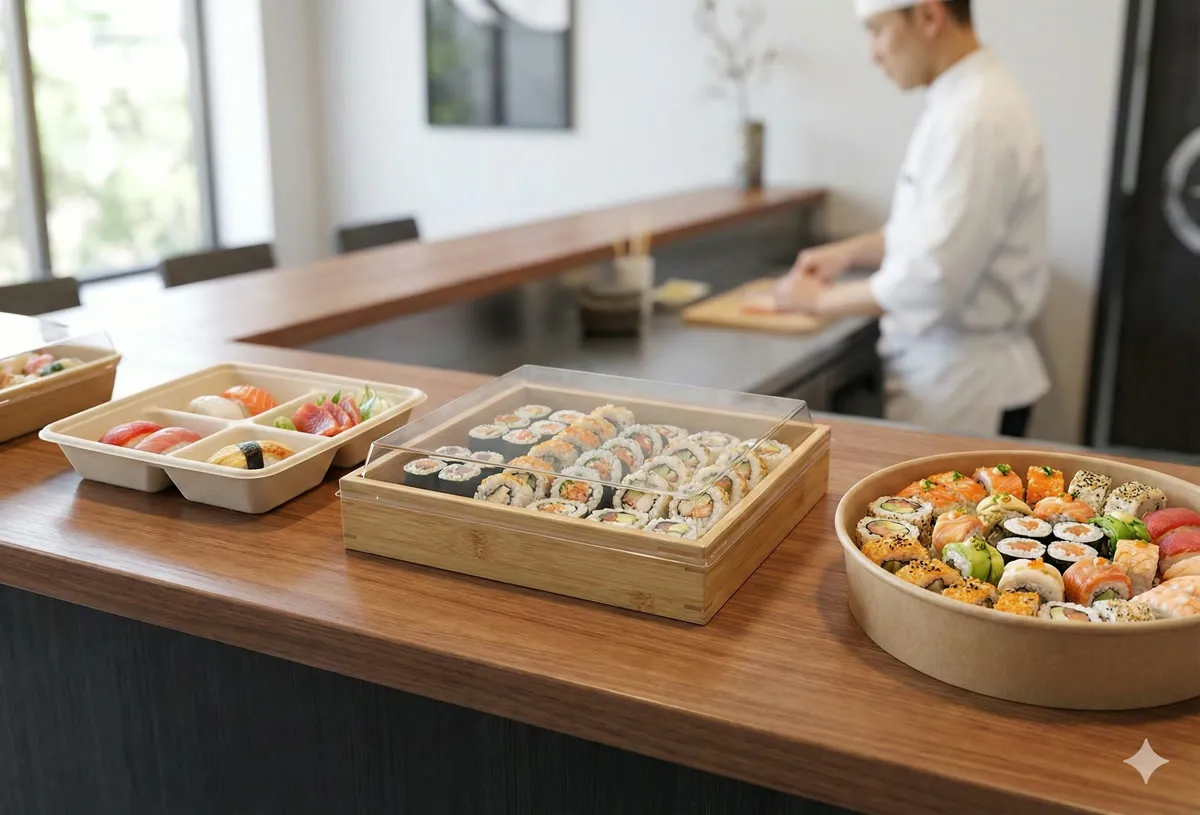
| Cuisine Type | Recommended Solutions | Key Features |
|---|---|---|
| Sushi Roll | Rectangular trays with clear lids | Visual appeal, freshness visibility |
| Nigiri | Shallow compartmentalized boxes | Individual placement, presentation |
| Sashimi | Multi-section containers | Separation, ice pack compatibility |
| Party Platters | Large tray systems | Bulk capacity, sharing format |
Consumer Behavior Trends
Modern consumers evaluate sustainable sushi packaging and biodegradable sushi box options based on multiple factors:
- Sustainability Credentials: Recyclable, compostable, or biodegradable materials preferred by 64% of consumers
- Visual Presentation: Packaging contributes to perceived food quality
- Brand Values: Environmental responsibility reflects on restaurant brand
Research indicates that consumers are willing to pay premium prices for sustainably packaged food.
Conclusion
Sustainable sushi packaging represents both a challenge and opportunity for businesses in the food service industry. With the global sushi market continuing its strong growth trajectory and consumer preferences shifting toward environmental responsibility, adopting eco-friendly sushi container solutions has become essential for long-term success.
The transition to sustainable packaging requires careful planning, supplier relationships, and potentially higher initial investment. However, the long-term benefits—regulatory compliance, enhanced consumer loyalty, and meaningful brand differentiation—make it a worthwhile investment for forward-thinking businesses.

ManLuen Plastic Packaging Company, which is specialized in the production of Plastic Food Packaging for more than 20 years. Our products are made from 100% virgin and BPA-Free PP, PS, and OPS comply with FDA and European Standards.
 EN
EN  ZH
ZH  FR
FR  PT
PT  ES
ES  KO
KO  JA
JA