
Executive Summary
The Japanese sushi tray market is undergoing a significant transformation in 2026, driven by sustainability regulations, consumer demand for eco-friendly packaging, and evolving food safety standards. B2B buyers face critical decisions between traditional plastic, RPET, bagasse, and PLA materials while navigating complex compliance requirements including FDA certification and UK Plastic Packaging Tax.
This comprehensive guide analyzes current market trends, compares material options, evaluates Chinese wholesale suppliers, and provides actionable sourcing strategies for restaurants, supermarkets, and food service distributors seeking competitive advantage in the sushi packaging sector.
Market Overview: 2026 Sushi Packaging Landscape
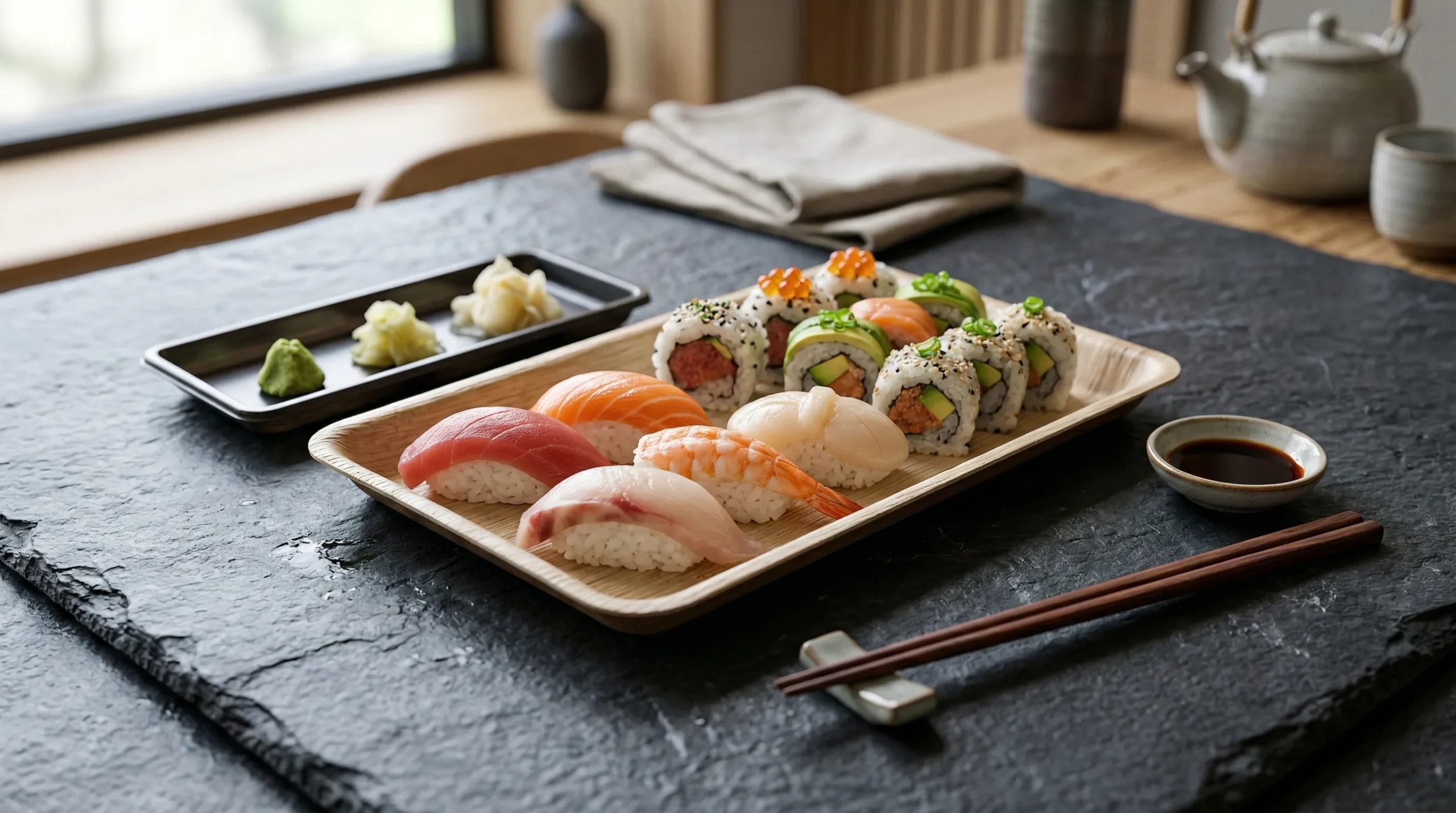
The global sushi packaging market continues its robust growth trajectory, with the Japan packaging market alone projected to expand from $76.88 billion in 2025 to $104.90 billion by 2032, representing a CAGR of 4.54% [1]. Within this broader market, sushi-specific containers represent a high-growth segment driven by increasing consumer demand for convenient, ready-to-eat Japanese cuisine.
Key Market Drivers
- Sustainability Regulations: More businesses transition from conventional plastic to RPET and bagasse alternatives to avoid tax penalties, particularly in European markets [2]
- Consumer Preferences: Growing demand for transparent, eco-friendly packaging that showcases product quality
- Food Safety Standards: Increased emphasis on FDA-certified, BPI-certified compostable materials
- Cost Optimization: Wholesale buyers seeking competitive pricing from Chinese manufacturers without compromising quality
Market Size and Growth Projections
| Segment | 2025 Value | 2032 Projection | CAGR |
|---|---|---|---|
| Japan Packaging Market | $76.88 billion | $104.90 billion | 4.54% |
| Japan Fresh Food Packaging | $4.94 billion | $5.99 billion | 3.92% |
| Eco-Friendly Sushi Trays | Growing segment | Market leadership | 6.2%+ |
Data sources: Fortune Business Insights [1], Knowledge Sourcing Reports [3]
Material Comparison: Choosing the Right Sushi Tray for Your Business
Selecting appropriate sushi tray materials requires balancing cost, sustainability, functionality, and regulatory compliance. The 2026 market offers four primary material categories, each with distinct advantages and limitations.
Material Comparison Matrix
| Material | Cost per Unit | Eco-Rating | Heat Resistance | Best Application |
|---|---|---|---|---|
| Traditional Plastic (PP/PET) | $0.06-0.15 | Low | Up to 100°C | Budget-conscious, domestic markets |
| RPET (Recycled PET) | $0.12-0.22 | High | Up to 70°C | European markets, sustainability-focused brands |
| Bagasse (Sugarcane Fiber) | $0.18-0.28 | Highest | Up to 85°C | Premium eco-brands, compostable requirements |
| PLA (Bioplastic) | $0.20-0.35 | Highest | Up to 60°C | Cold sushi displays, premium positioning |
Traditional Plastic (PP/PET)
Conventional plastic sushi trays remain cost-effective for high-volume operations. Typical wholesale pricing ranges from $0.06-0.15 per unit with MOQs of 10,000+ sets [4]. However, regulatory pressure is increasing:
- UK Plastic Packaging Tax applies to packaging with less than 30% recycled content
- EU Single-Use Plastics Directive restricts certain plastic food containers
- Consumer preference shifting toward sustainable alternatives
RPET (Recycled PET)
RPET represents the fastest-growing segment for sustainability-conscious buyers who require food-safe recycled materials. Key advantages include:
- Tax Compliance: Meets UK Plastic Packaging Tax requirements with 30%+ recycled content
- Clarity: Maintains transparent appearance for product visibility
- Recyclability: Fully recyclable in existing PET recycling streams
- Cost Balance: Moderate price premium over virgin plastic
Industry innovations include kp Tray2Tray®, a fully recycled and recyclable food-safe solution gaining traction in European markets [5].
Bagasse (Sugarcane Fiber)
Bagasse sushi trays, made from sugarcane byproducts, offer superior environmental credentials:
- BPI Certified Compostable: Breaks down within 180 days in commercial composting facilities [6]
- Natural Appearance: Unbleached, earthy aesthetic appeals to eco-conscious consumers
- Microwave Safe: Suitable for hot food applications up to 85°C
- No PFAS: Free from harmful “forever chemicals”
Wholesale pricing typically ranges $0.18-0.28 per unit, with premium positioning justifying higher retail prices.
PLA (Polylactic Acid)
PLA bioplastics, derived from corn starch or sugarcane, represent the premium eco-friendly segment:
- 100% Bio-based: Made from renewable plant resources
- Crystal Clear: Superior transparency for product display
- Compostable: Certified compostable in industrial facilities
- Temperature Limitations: Best for cold applications (sushi, sashimi, salads)
China Wholesale Supplier Landscape

China remains the dominant manufacturing hub for sushi packaging, with approximately 97% of global food container production originating from Chinese factories [7]. Understanding the supplier landscape is critical for successful sourcing.
Major Manufacturing Regions
- Guangdong Province: Dongguan, Shenzhen – Specialized in high-quality plastic and RPET trays
- Fujian Province: Fujian Longyi Plastic Products – Large-scale disposable food container production
- Zhejiang Province: Jiasheng, Yulong Packaging – Eco-friendly and custom packaging solutions
- Shandong Province: Qingdao Qimei Plastics – Export-focused manufacturers
Supplier Evaluation Criteria
| Criterion | Weight | Key Questions |
|---|---|---|
| Certifications | 25% | FDA, BPI, ISO 9001, EU compliance? |
| MOQ Flexibility | 20% | Can they accommodate trial orders? |
| Lead Time | 20% | Production + shipping timeline? |
| Quality Control | 20% | In-house QC, third-party inspection? |
| Customization | 15% | Logo printing, custom sizes, mold development? |
Verified Supplier Examples
Based on market research, established suppliers include:
- Dongguan Sunyo Plastic Co., Ltd. – FDA certified, $0.215-0.277 per unit, 200 sets MOQ [4]
- Fujian Longyi Plastic Products Co., Ltd. – High-volume production, $0.06-0.15 per unit, 10,000 sets MOQ [4]
- Jiasheng Packaging – Eco-friendly specialization, custom solutions available [8]
- Xiamen Elements Packaging Co., Ltd. – 100% recyclable products, factory-direct pricing [9]
Important: Always request samples, verify certifications independently, and conduct factory audits before placing large orders.
Regulatory Compliance: Navigating Global Standards
2026 brings heightened regulatory scrutiny for food packaging. Non-compliance risks include fines, product recalls, and reputational damage.
Key Regulations by Market
United States (FDA)
- FDA 21 CFR compliance required for food contact materials
- All plastic containers must meet FDA food safety standards
- Documentation required for customs clearance
European Union
- EU Framework Regulation (EC) No 1935/2004
- Single-Use Plastics Directive restrictions
- REACH compliance for chemical substances
United Kingdom
- UK Plastic Packaging Tax: £210.82 per tonne for packaging with less than 30% recycled content [2]
- Extended Producer Responsibility (EPR) requirements
- Plastic Packaging Tax Registration mandatory for importers
Australia
- BPI certification recognized for compostable claims
- Australian Packaging Covenant Organisation (APCO) guidelines
Certification Requirements
| Certification | Purpose | Market | Cost |
|---|---|---|---|
| FDA | Food safety compliance | USA | $$ |
| BPI | Compostability verification | USA/AU | $$$ |
| ISO 9001 | Quality management | Global | $$ |
| EU 10/2011 | Plastic food contact | EU | $$ |
Sourcing Strategy: Best Practices for B2B Buyers
Step 1: Define Requirements
- Material type (plastic, RPET, bagasse, PLA)
- Size specifications (standard vs. custom)
- Volume requirements (MOQ considerations)
- Certification needs (FDA, BPI, etc.)
- Budget constraints
Step 2: Supplier Identification
- Search platforms: Alibaba, Made-in-China, Global Sources
- Trade shows: Canton Fair, China Food Packaging Expo
- Industry referrals and peer recommendations
- Verify business licenses and export credentials
Step 3: Sample Evaluation
- Request samples from 3-5 shortlisted suppliers
- Test for durability, leak resistance, temperature tolerance
- Evaluate packaging quality and shipping protection
- Assess communication responsiveness
Step 4: Negotiation
- Price negotiation based on volume commitments
- Payment terms (T/T, L/C, PayPal for samples)
- Lead time agreements and penalty clauses
- Quality guarantee and return policies
Step 5: Quality Control
- Pre-production sample approval
- In-production inspection (optional third-party)
- Pre-shipment inspection mandatory
- Establish defect tolerance thresholds
Step 6: Logistics
- Incoterms clarification (FOB, CIF, DDP)
- Freight forwarding arrangements
- Customs documentation preparation
- Import duty calculation
Cost Analysis: Total Landed Cost Calculation
Understanding true costs beyond unit price is essential for accurate budgeting and pricing decisions.
Total Landed Cost Components
| Component | Percentage | Notes |
|---|---|---|
| Unit Price (FOB) | 60-70% | Base product cost from supplier |
| Ocean Freight | 10-15% | Varies by volume, route, fuel costs |
| Import Duties | 5-10% | Depends on HS code, country of import |
| Customs Brokerage | 2-3% | Documentation and clearance fees |
| Insurance | 1-2% | Cargo insurance recommended |
| Warehousing | 3-5% | Storage and distribution costs |
Example: 10,000 Unit Order (RPET Sushi Trays)
- Unit Price: $0.18 × 10,000 = $1,800
- Ocean Freight (LCL): ~$300
- Import Duty (5%): $90
- Customs Brokerage: $75
- Insurance: $25
- Total Landed Cost: ~$2,290 ($0.229 per unit)
Note: Actual costs vary significantly by destination, shipping method, and current market conditions.
Emerging Trends Shaping 2026 and Beyond
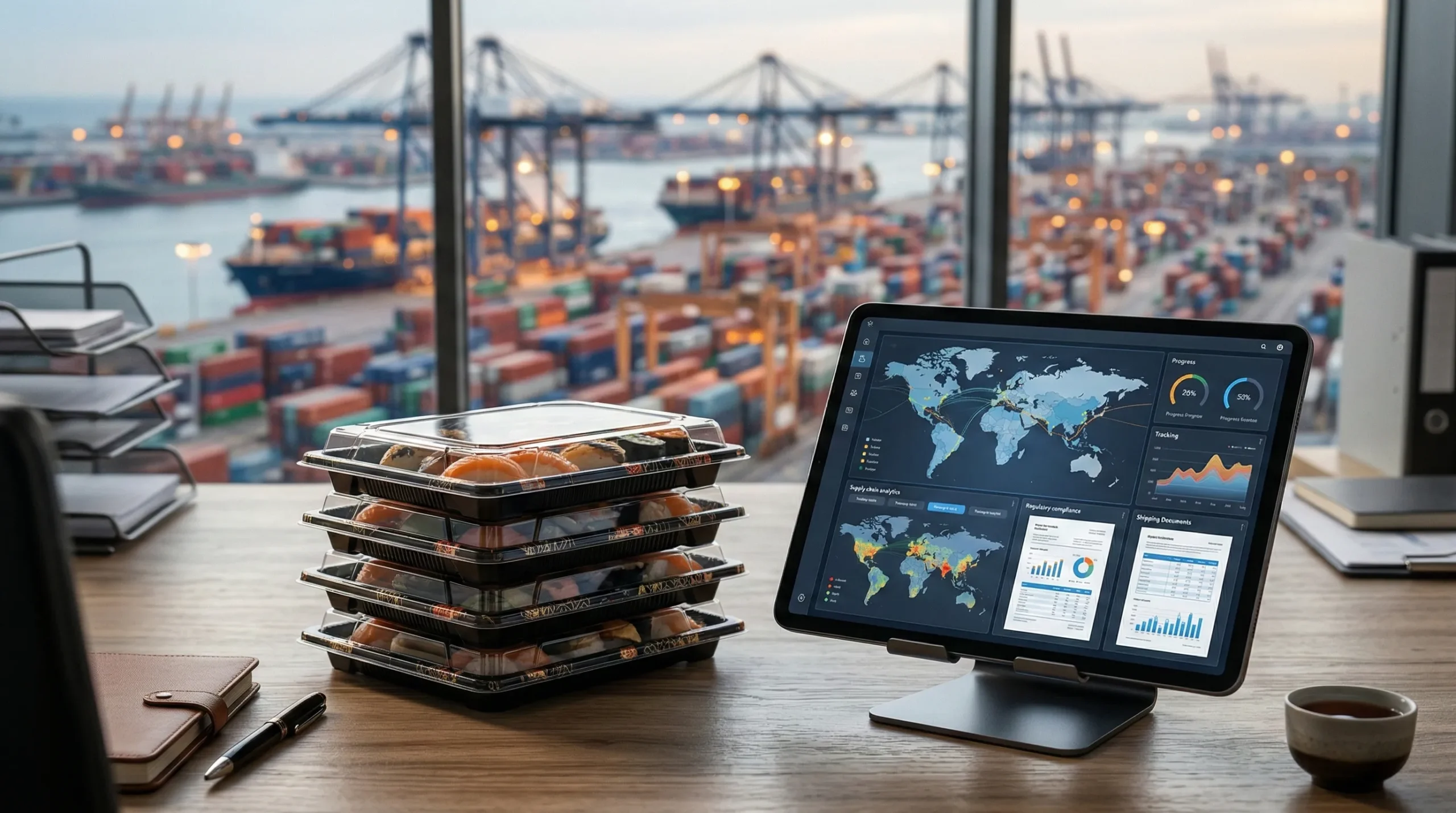
1. Smart Packaging Integration
Packaging is no longer just about protection. In 2026, it is increasingly expected to support flexibility by providing decision-ready data. Smart and connected packaging can deliver insights on condition, location, and handling [10]. Applications include:
- Time-temperature indicators for freshness monitoring
- QR codes for supply chain transparency
- NFC tags for consumer engagement
2. Mono-Material Design
Industry shift toward single-material construction simplifies recycling:
- All-PET tray and lid combinations
- Elimination of mixed materials
- Improved recycling stream compatibility
3. Customization and Branding
Competitive differentiation through:
- Custom mold development for unique shapes
- In-mold labeling and embossing
- Brand-specific color matching
- Window designs for product visibility
4. Supply Chain Resilience
Post-pandemic lessons drive:
- Diversified supplier base (not single-source)
- Safety stock strategies
- Nearshoring considerations for critical markets
- Digital supply chain visibility tools
Action Checklist: Sourcing Japanese Sushi Trays in 2026
Pre-Sourcing Preparation
- ☐ Define material requirements based on target market regulations
- ☐ Establish budget parameters including total landed cost
- ☐ Identify certification requirements (FDA, BPI, etc.)
- ☐ Determine order volume and MOQ flexibility needs
Supplier Evaluation
- ☐ Source 5-10 potential suppliers from verified platforms
- ☐ Request samples from top 3-5 candidates
- ☐ Verify certifications independently
- ☐ Conduct video factory tours or third-party audits
- ☐ Check references from existing customers
Order Execution
- ☐ Negotiate pricing, payment terms, and lead times
- ☐ Sign detailed purchase agreement with quality specifications
- ☐ Arrange pre-production sample approval
- ☐ Schedule in-production and pre-shipment inspections
- ☐ Coordinate logistics and customs clearance
Post-Order Review
- ☐ Conduct quality inspection upon receipt
- ☐ Document any defects or issues
- ☐ Provide feedback to supplier for continuous improvement
- ☐ Evaluate supplier performance for future orders
Conclusion
The Japanese sushi tray market in 2026 presents significant opportunities for B2B buyers who navigate material selection, supplier evaluation, and regulatory compliance strategically. Key success factors include:
- Material Strategy: Balance cost, sustainability, and functionality based on target market requirements
- Supplier Due Diligence: Verify certifications, conduct audits, and start with trial orders
- Regulatory Compliance: Stay ahead of evolving regulations, particularly in European markets
- Total Cost Understanding: Calculate landed costs, not just unit prices
- Long-term Partnerships: Build relationships with reliable suppliers for consistent quality and capacity
As sustainability regulations tighten and consumer preferences shift toward eco-friendly packaging, early adopters of RPET, bagasse, and PLA materials will gain competitive advantages in their respective markets. The key is making informed decisions based on comprehensive market intelligence, thorough supplier evaluation, and clear understanding of total costs and compliance requirements.
This guide synthesizes market data from industry reports, supplier directories, and regulatory sources to provide actionable intelligence for B2B sushi packaging buyers. For specific sourcing assistance, consult with verified trade professionals and conduct independent due diligence.

ManLuen Plastic Packaging Company, which is specialized in the production of Plastic Food Packaging for more than 20 years. Our products are made from 100% virgin and BPA-Free PP, PS, and OPS comply with FDA and European Standards.
 EN
EN  ZH
ZH  FR
FR  PT
PT  ES
ES  KO
KO  JA
JA