
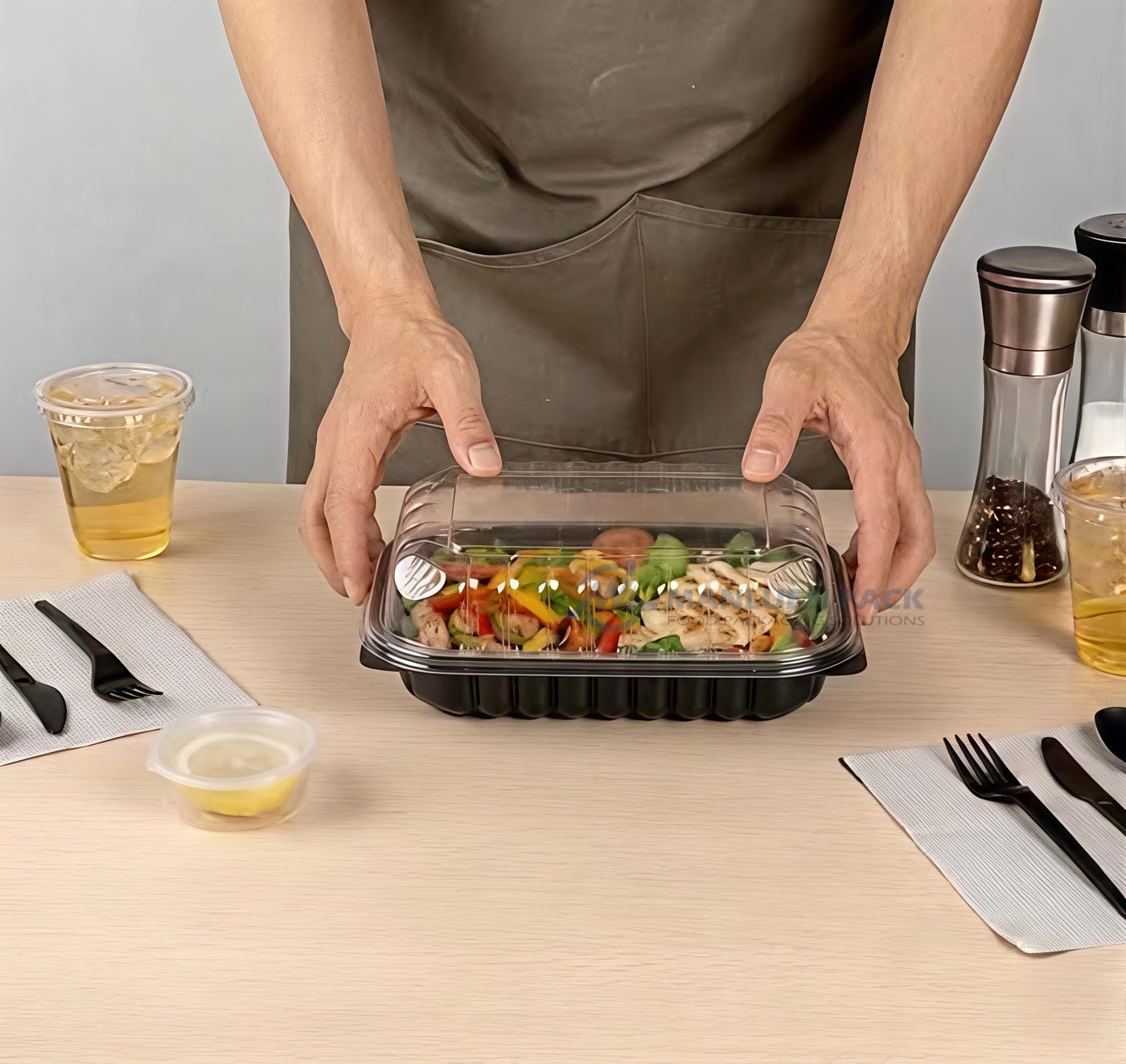
In restaurant takeout and delivery, packaging has a direct effect on how food arrives at the customer. Food quality remains the priority, but the container also needs to protect the meal, support efficient service, and match the way the food will be stored and transported.
To-go containers are widely used because their hinged construction combines the base and lid in a single package. Depending on the material and design, clamshell containers can be used for burgers, sandwiches, fried food, salads, fruit, desserts, and many other takeaway applications.
This guide looks at how restaurants can choose suitable clamshell packaging, including biodegradable and plastic options, while considering menu requirements, customization, purchasing volume, and day-to-day usability.

重要なポイント
- 製品: Biodegradable clamshell packaging and other hinged food containers are commonly used for takeaway, delivery, catering, and ready-to-eat foodservice applications.
- Materials: Clamshell containers are available in several materials, including PP, PET, paper-based materials, and molded fiber. The suitable option depends on food temperature, moisture, grease, visibility, and disposal requirements.
- Capacity: Sizes vary by model. A container around 570 ml can suit many individual meal portions, while larger and smaller formats are available for different menu items.
- 最適な用途: Restaurants, caterers, food trucks, cafés, delis, and retail ready-to-eat counters.
- 調達先: ManLuen supplies food packaging for wholesale applications. Relevant compliance documentation can be reviewed on the 認証ページ.
1. What Is a Clamshell Container?
A clamshell container is a hinged packaging format in which the lid and base are connected. The package opens and closes in a similar way to a natural clamshell, which is where the name comes from.
In foodservice, clamshell packaging is used across a wide range of applications, from small snack and dessert containers to larger takeaway boxes for complete meals. Depending on the design, the container can help protect food during handling, simplify packing, and reduce the need to match separate lids and bases.
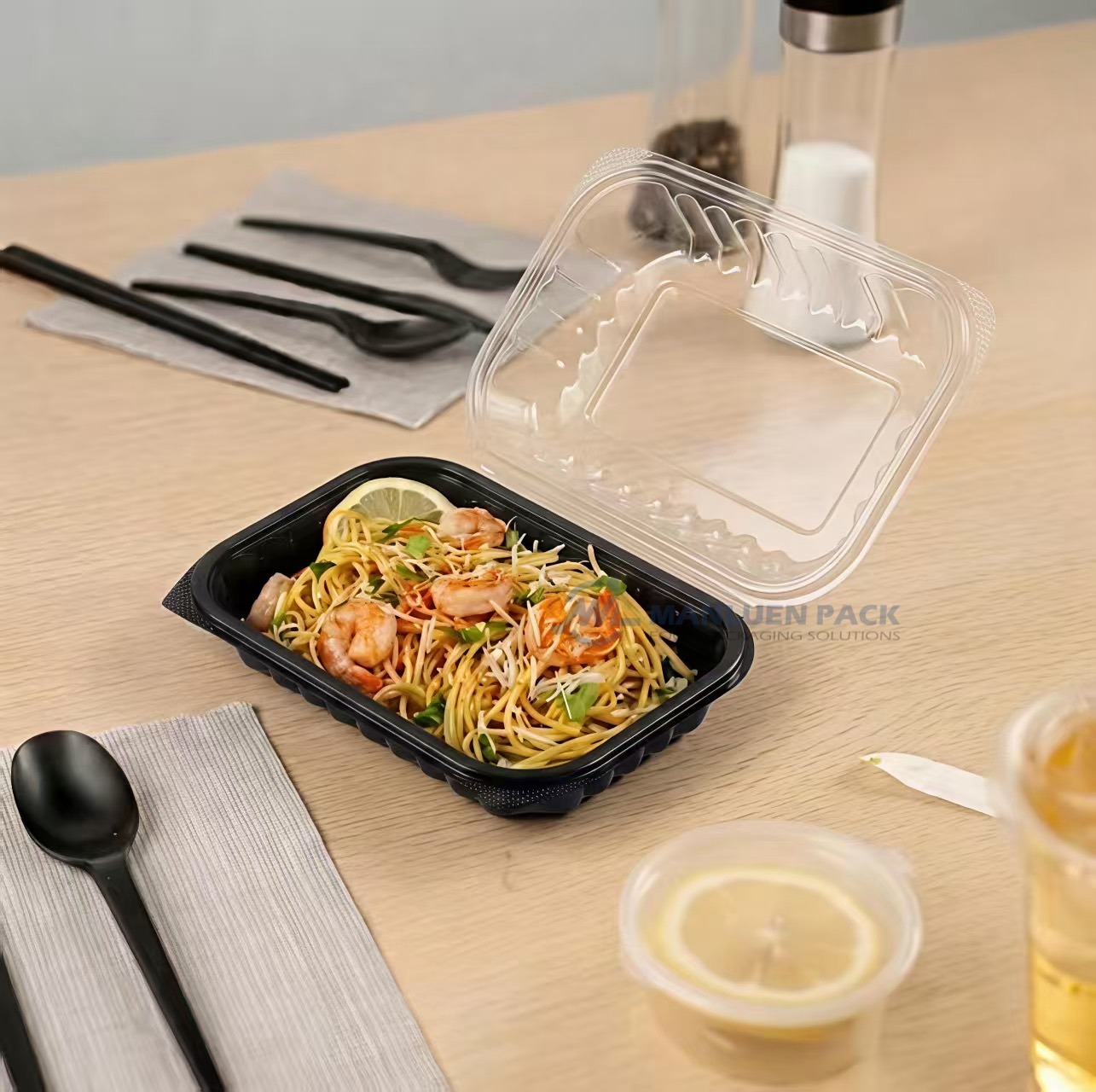
For restaurants, the main advantage is practical. A well-selected clamshell container can make packing faster while giving the food enough protection during takeaway or delivery. However, the material, closure, dimensions, ventilation, and temperature resistance still need to match the food inside.
2. Where Biodegradable Clamshell Packaging Fits
Restaurants are paying more attention to the environmental profile of takeaway packaging, which has increased interest in biodegradable and compostable food containers.
堆肥化可能 clamshell containers can be suitable for businesses that want to reduce their reliance on conventional plastic packaging, particularly where appropriate collection and composting systems are available.
However, material claims should always be considered together with actual use conditions. A biodegradable or compostable container still needs to provide adequate resistance to grease, moisture, heat, and handling for the intended food.
Restaurants should also distinguish between terms such as biodegradable, compostable, recyclable, and recycled content. They describe different material characteristics and end-of-life pathways and should not be treated as interchangeable.
3. Choose the Right Clamshell Container for the Menu
Not every clamshell container performs the same way. Matching the packaging to the actual menu is usually more useful than choosing one format for every application.
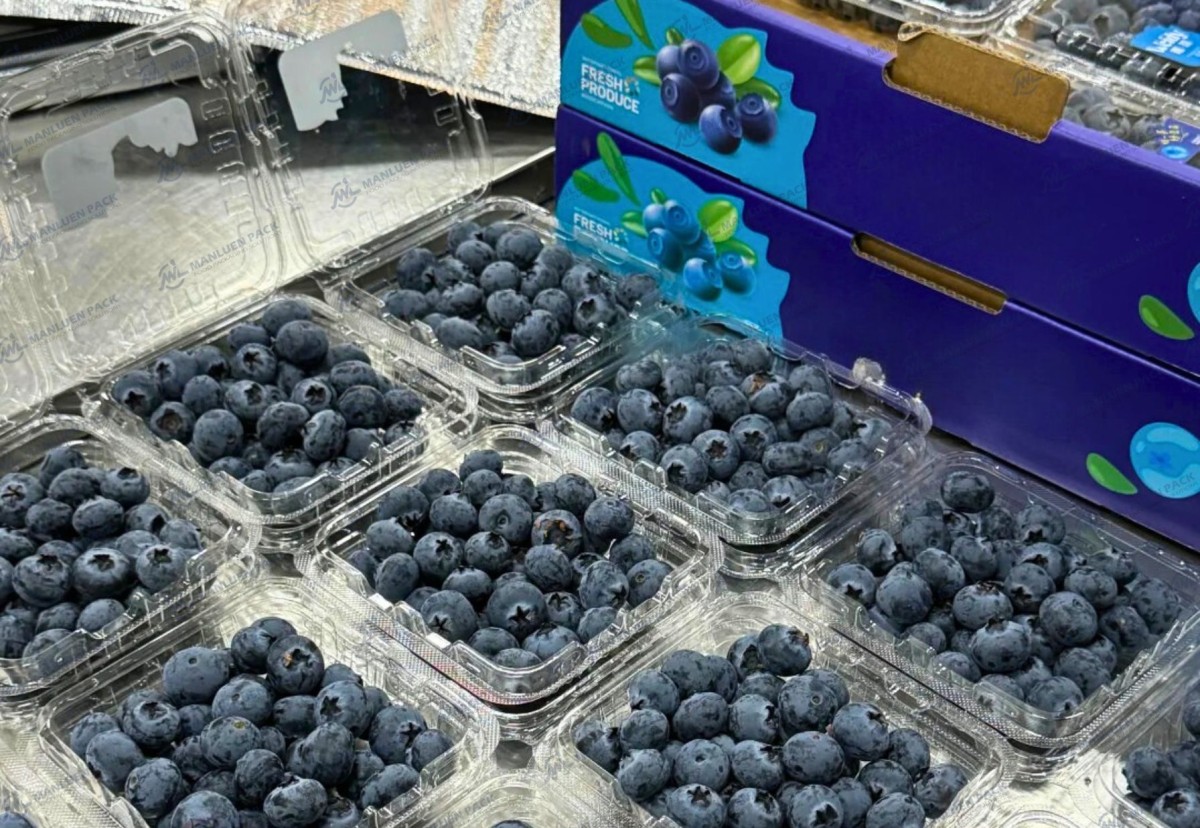
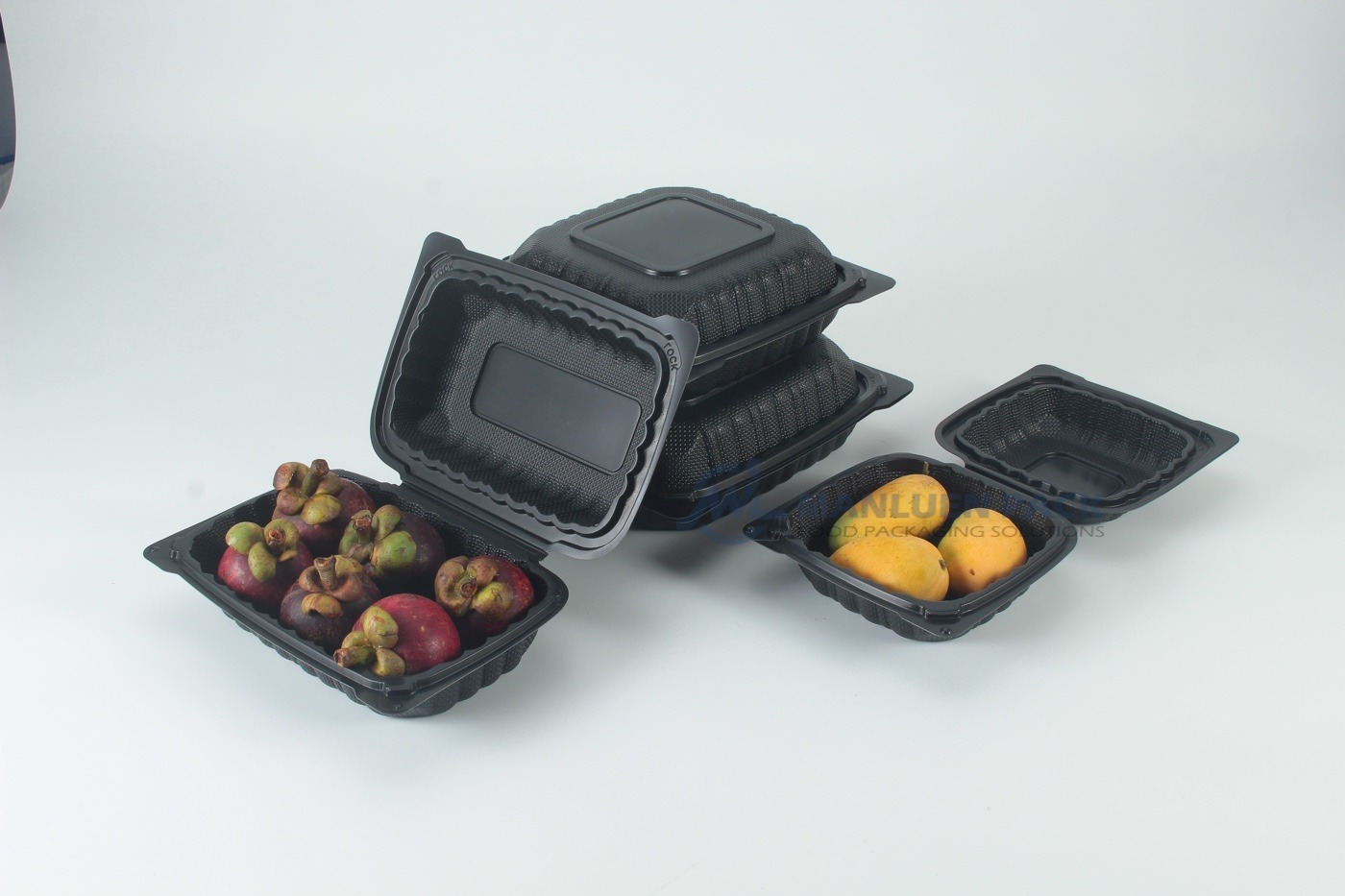
Produce clamshell packaging: Clear containers are commonly used for berries, cut fruit, vegetables, salads, and other products where visibility is important. The design should also provide enough protection during stacking, storage, and retail handling.
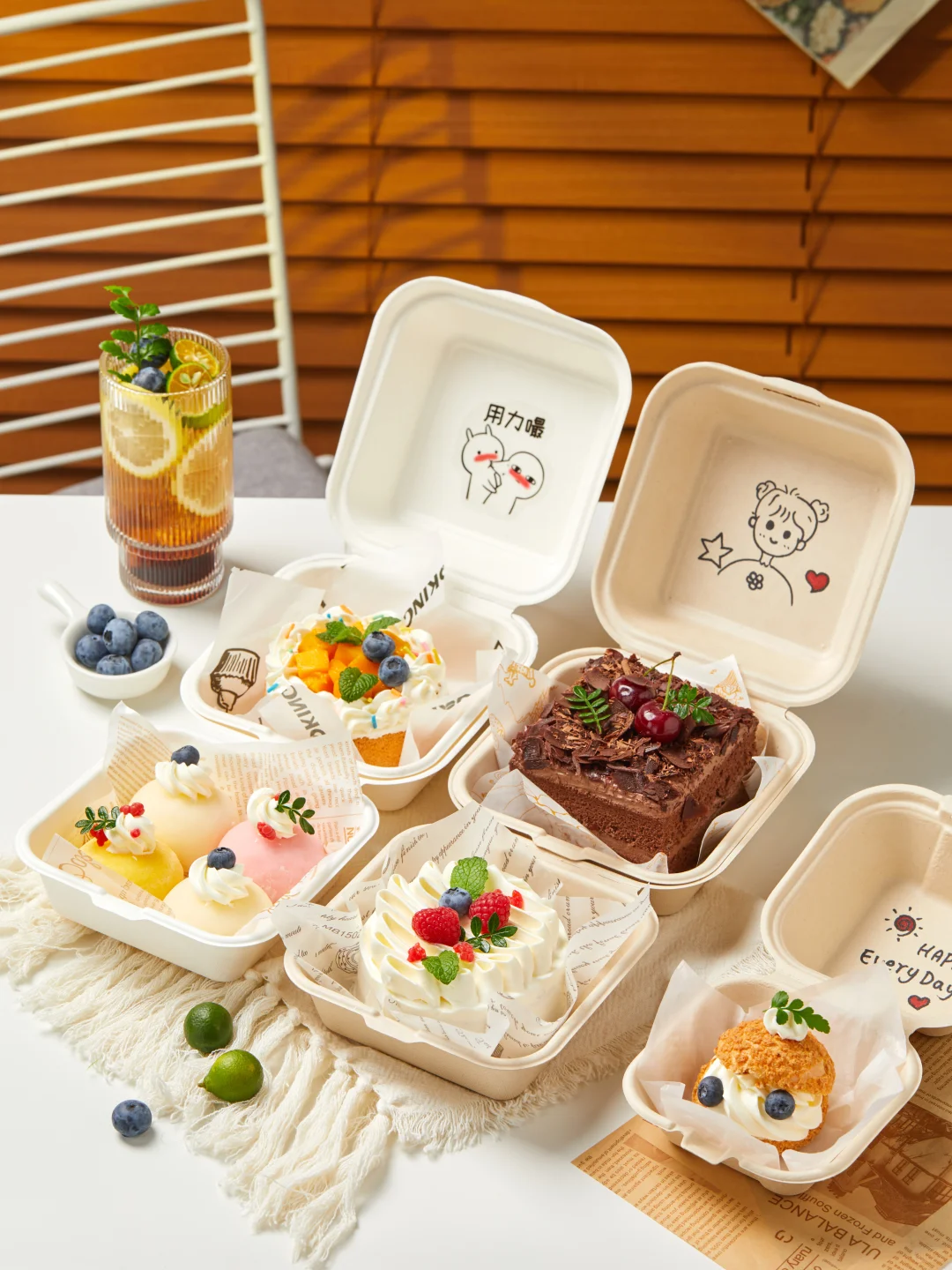
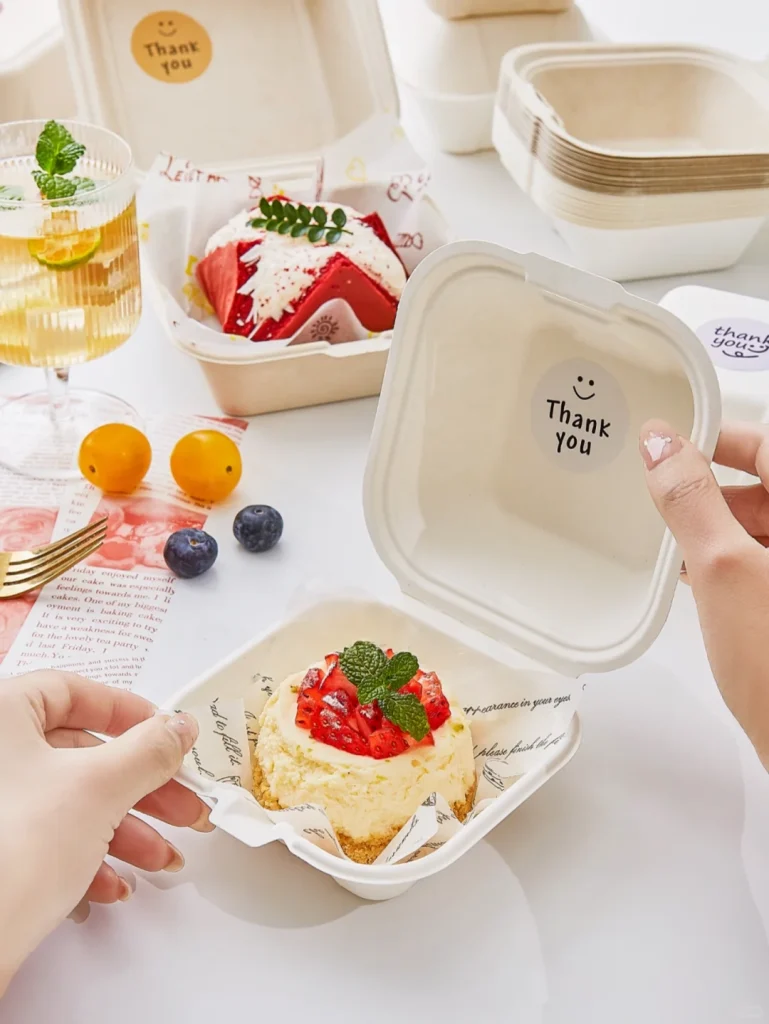
Paper and fiber-based clamshell boxes: These formats are often used for burgers, sandwiches, fried food, and other takeaway meals. Grease resistance, moisture performance, heat tolerance, and any applicable coating should be checked according to the food.
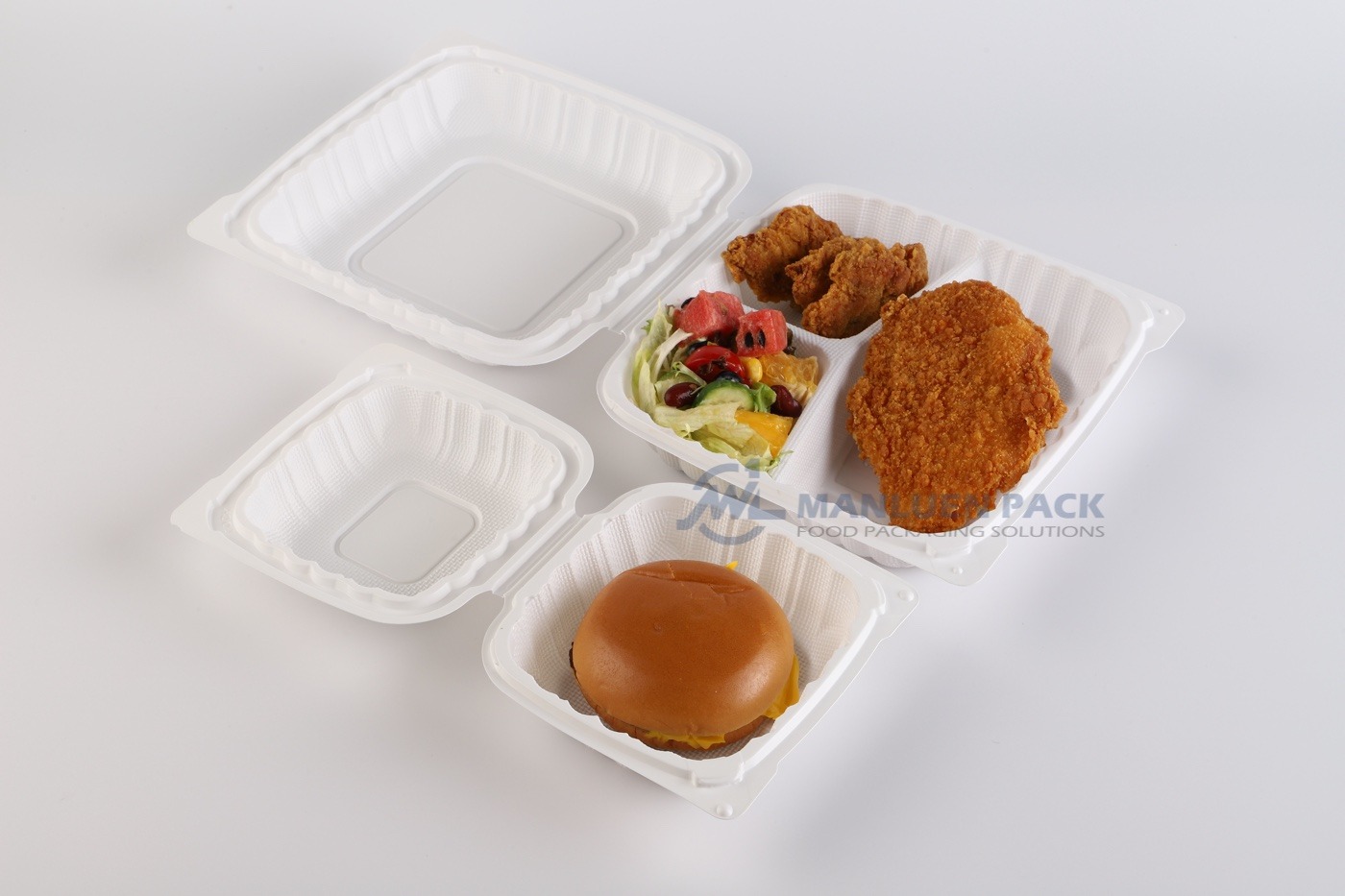
Plastic clamshell packaging: PET and PP are commonly used where visibility, rigidity, moisture resistance, or specific temperature performance is required. PET is frequently used for cold-food presentation, while suitable PP containers can be used for warmer applications depending on the individual product specification.
Reusable clamshell containers: Reusable formats can work in controlled return systems or loyalty programs where customers are expected to return or reuse the container. The cleaning, collection, and reuse process needs to be considered as part of the system.
Clamshell trays: Shallower formats can be useful for snacks, side dishes, bakery items, or smaller portions where a deep takeaway box is unnecessary. For chilled rolls and nigiri, use purpose-designed 使い捨てプラスチック寿司トレイ that provide a low-profile base and clear presentation.
4. Custom Clamshell Packaging for Restaurant Branding
Custom packaging can give restaurants a consistent appearance across takeaway and delivery orders, but effective customization does not need to turn the package into an advertisement.
Restaurant logos, brand colors, contact details, QR codes, or short messages can be incorporated where the packaging structure and printing method allow it.
Practical information can also be useful. Heating instructions, storage guidance, allergen notices, or disposal information can make the package more informative for customers.
The most suitable approach depends on order volume and packaging format. Some businesses may use direct printing, while others may achieve the same branding effect with labels, sleeves, or secondary packaging.
5. Buying Clamshell Containers Wholesale
For restaurants and foodservice businesses with consistent packaging demand, wholesale purchasing can reduce per-unit costs and make inventory planning more predictable.
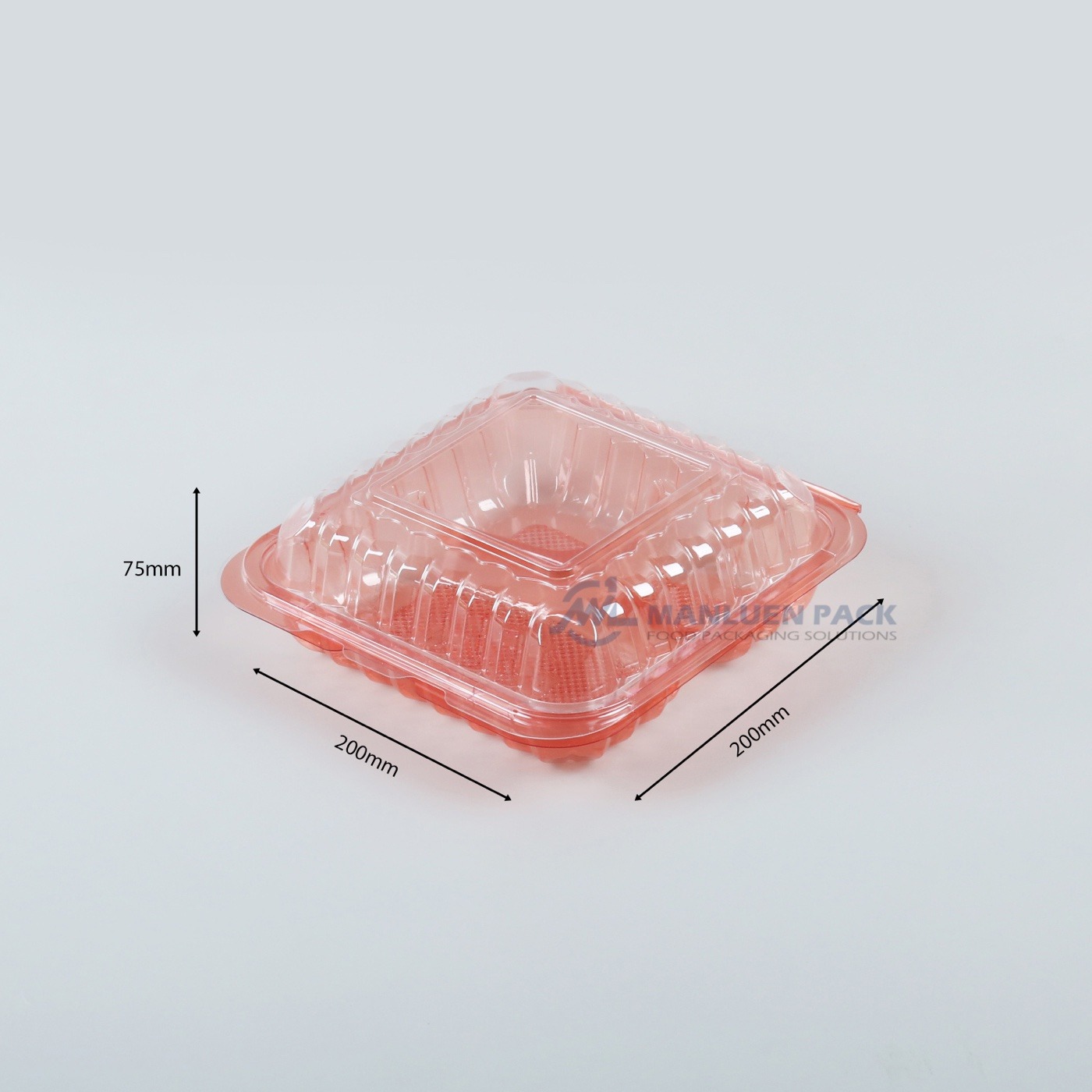
When comparing clamshell packaging manufacturers, price should not be the only consideration. Buyers should also review product dimensions, material specifications, carton quantities, lid or closure performance, food-contact documentation, production lead time, and whether the supplier can maintain consistent specifications across repeat orders.
Clamshell containers wholesale orders can also help businesses prepare for predictable periods of high demand, such as weekends, holidays, catering seasons, or promotional campaigns.
For customized packaging, it is useful to confirm minimum order quantities, printing requirements, tooling costs, production schedules, and whether existing moulds can meet the intended application before committing to a large order.
6. Check How the Clamshell Opens, Closes, and Stacks
Usability is easy to overlook when packaging is evaluated only from a specification sheet. In practice, employees and customers interact with the container every time it is filled, closed, carried, opened, or stored.
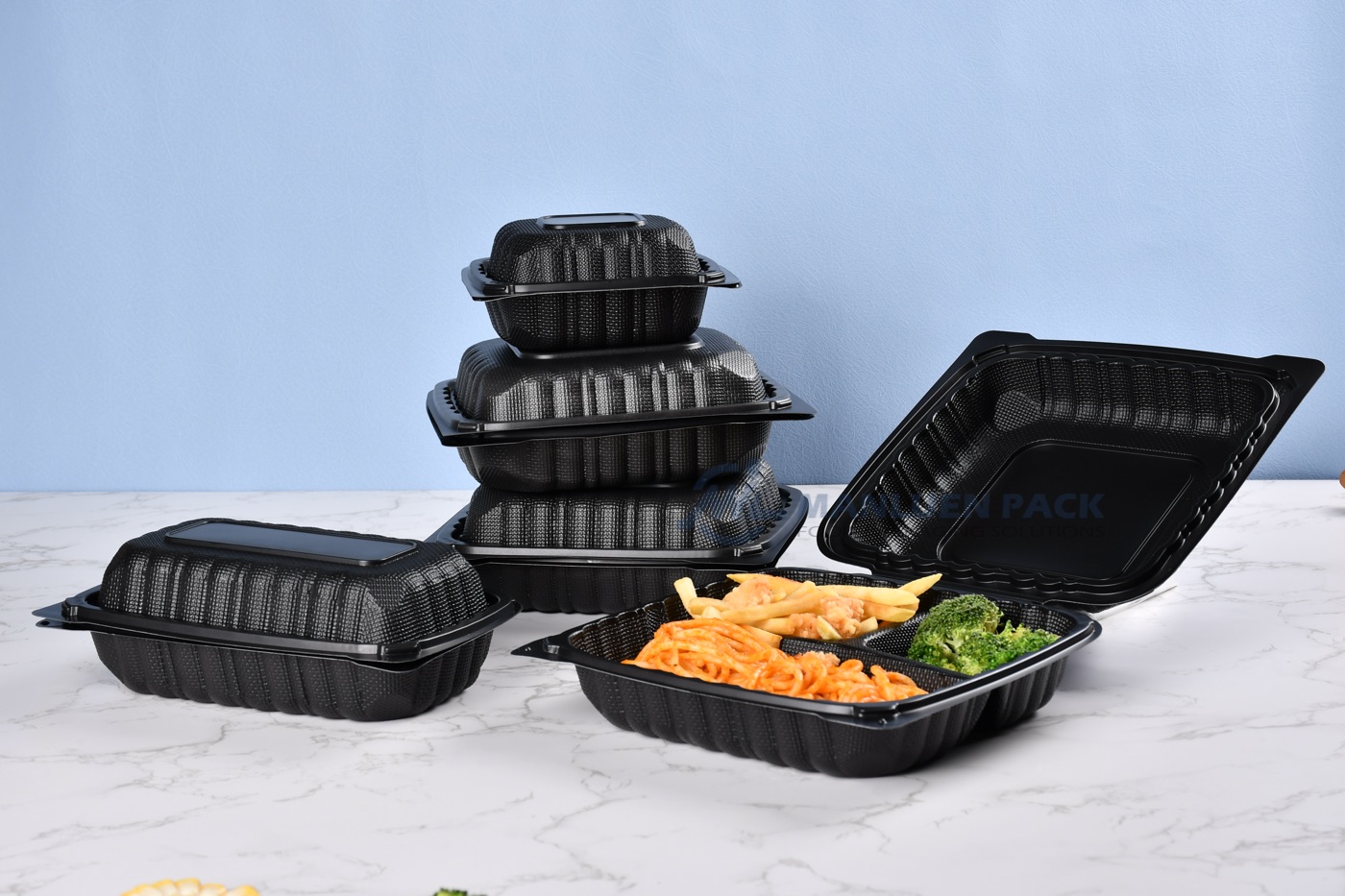
A clamshell should open without excessive force while still maintaining an appropriate closure during transport. The hinge should also work consistently through normal packing and handling.
Stacking is another practical factor. A stable base and compatible top geometry can make storage and transportation easier, particularly when restaurants prepare multiple takeaway orders at the same time.
The best way to evaluate these details is to test samples with the actual food and workflow rather than judging the container only by its appearance.
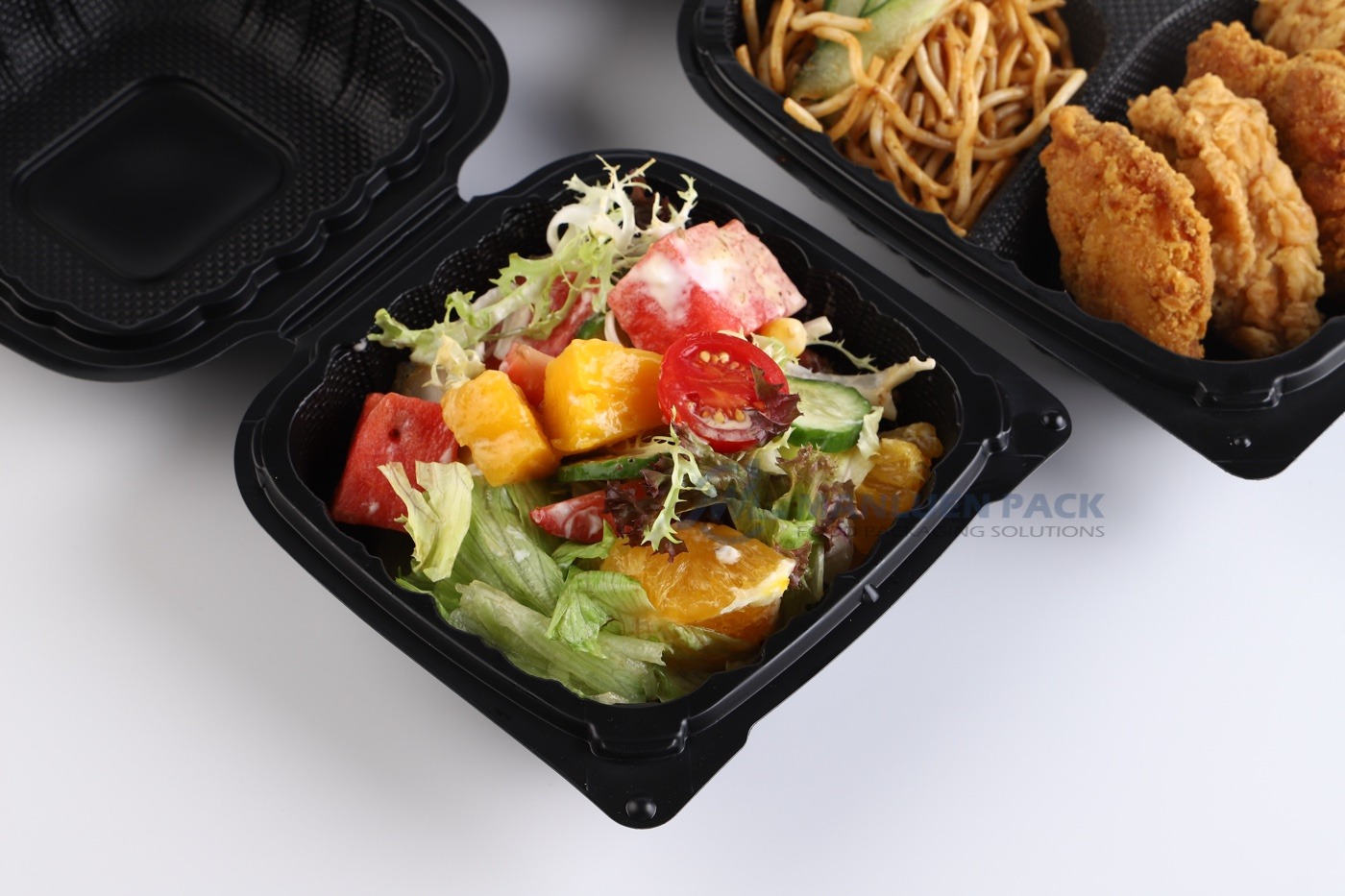
7. Packaging Can Influence the Complete Takeaway Experience
Customers generally encounter the packaging before they begin eating the food. A container that arrives crushed, opens unexpectedly, traps too much condensation, or is difficult to handle can affect the overall experience even when the meal itself has been prepared correctly.
On the other hand, packaging that fits the portion, protects the food, opens easily, and presents the meal well supports a more consistent takeaway experience.
This does not mean packaging alone creates customer loyalty. Instead, it works as one part of the complete restaurant service, alongside food quality, delivery time, ordering convenience, and customer service.
結論
The right clamshell packaging depends on the food, not simply on whether a container is plastic, paper, biodegradable, or compostable.
Restaurants should consider serving temperature, grease and moisture, portion size, visibility, closure, transportation, storage, and expected disposal route when comparing different options. For businesses purchasing in volume, consistency of supply and packaging specifications also become important.
Biodegradable clamshell packaging can be one useful option within this broader selection process, while PP, PET, paper-based, and other structures continue to serve applications where their particular performance is required.
Testing the complete package with the actual menu remains one of the most practical ways to determine whether a clamshell container is suitable before moving to a larger wholesale order.
情報源とさらなる資料
The material safety and food-contact information referenced in this article can be reviewed through the following primary regulatory sources:
- FDA 21 CFR Part 177 — Indirect Food Additives: Polymers
- EU Regulation 10/2011 — Plastic Food Contact Materials
お問い合わせ方法
電話番号:+86-17328007523
メール:info@manluenpack.com
よくある質問
Are clamshell food containers microwave-safe?
It depends on the material and the specific product. PP is commonly used for microwaveable food packaging because of its heat resistance, but microwave suitability should always be confirmed for the individual container. Follow the manufacturer’s stated heating and temperature instructions.
What is the minimum order quantity for wholesale clamshell containers?
Standard configurations may start at approximately 5,000–10,000 units depending on the product. Custom printing, colors, dimensions, or new mould development may require different minimum quantities. To サンプルとカスタマイズされた見積もりをリクエストする, provide the required material, dimensions, quantity, application, and target market.
Do ManLuen clamshell containers meet FDA and EU food-contact requirements?
Food-contact requirements and supporting documentation vary by material and individual SKU. ManLuen provides relevant testing and compliance documentation for applicable food packaging. You can review available information on the 認証ページ or request documentation for a specific SKU.

マンルエンプラスチック包装有限公司は、20年以上にわたりプラスチック食品包装の製造を専門としています。当社の製品は、100%のバージン素材とBPAフリーのPP、PS、OPSを使用し、FDAおよびヨーロッパ基準に準拠しています。
 JA
JA  EN
EN  ZH
ZH  FR
FR  PT
PT  ES
ES  KO
KO