
Introduction
According to the National Restaurant Association, nearly three-quarters of U.S. restaurant traffic now takes place off-premises. About 47% of adults pick up takeout at least once a week, and 37% order delivery weekly.
This demand keeps disposable bento boxes relevant for restaurants, supermarkets, catering companies, food distributors, and delivery operators. At the same time, buyers now expect more than a low-cost container. They need packaging that fits the food, survives transport, meets local regulations, and comes with reliable documentation.
How to Read the Disposable Bento Box Market in 2026
The term disposable bento box does not describe one strictly defined product category. It can include compartment food containers, lidded meal trays, clamshell lunch boxes, takeaway boxes, and ready-meal trays.
This makes market sizing difficult. Most public reports place these products inside larger categories such as disposable food containers, foodservice packaging, or takeaway packaging. A market value for one of those categories should not be presented as the size of the disposable bento box market alone.
Buyers can get a clearer view by following the factors that directly affect the product:
- Growth in takeaway and delivery orders
- Demand for better temperature and moisture control
- Changes in food-contact and packaging regulations
- Use of recycled-content and fiber-based materials
- Supplier documentation and production consistency
- Total packaging, freight, tax, and compliance costs
These factors explain how the market is changing without relying on a questionable headline number.
The Market Signals That Matter in 2026
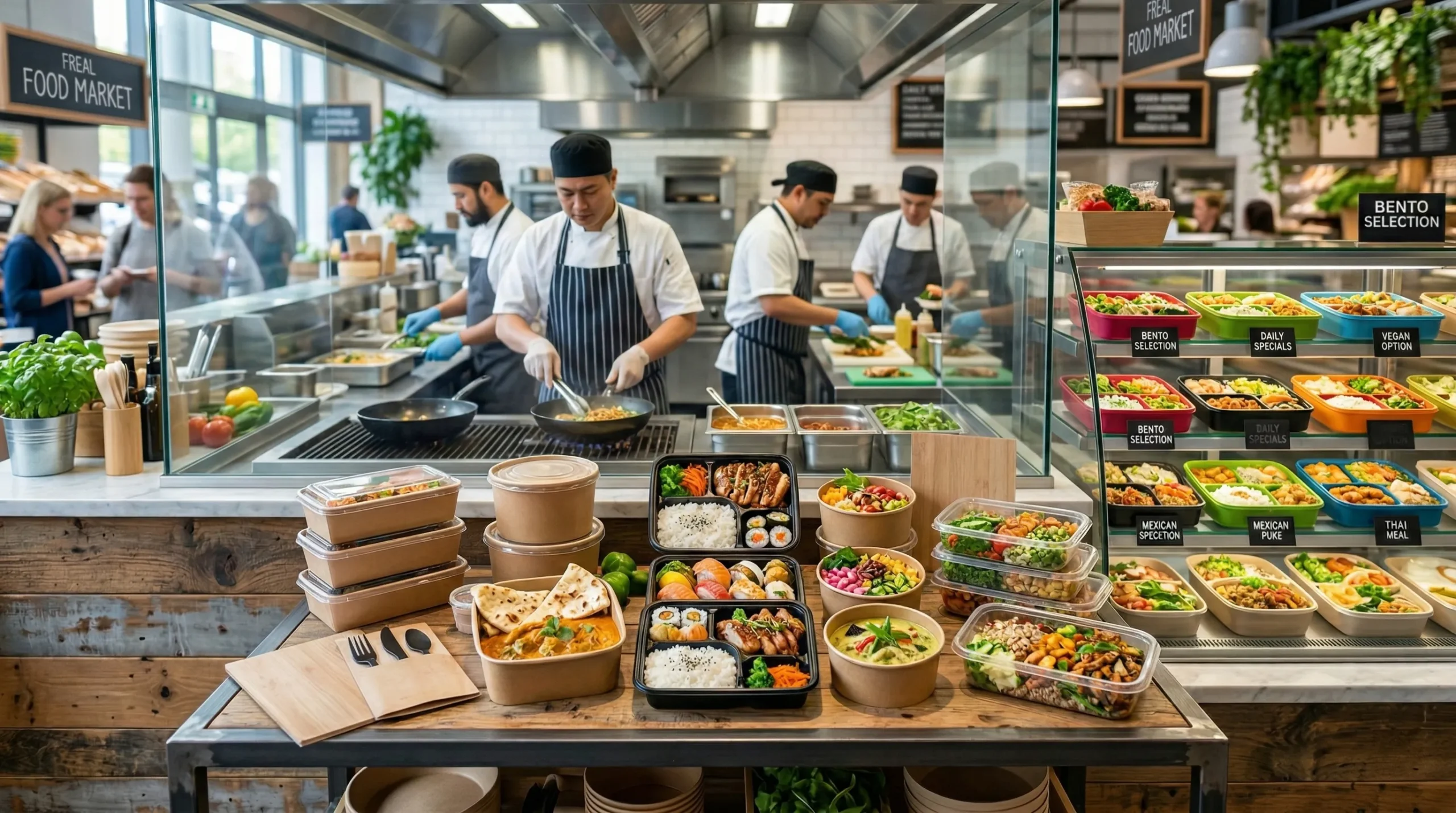
Off-Premises Dining Keeps Demand High
The clearest source of demand is off-premises dining. Nearly 75% of U.S. restaurant traffic now comes from takeaway, delivery, drive-through, and other off-premises orders, according to the National Restaurant Association.
This changes what restaurants need from their packaging. Food may spend 20 minutes or longer inside a delivery bag. Containers must remain closed, stack properly, limit movement, and keep sauces or side dishes separate.
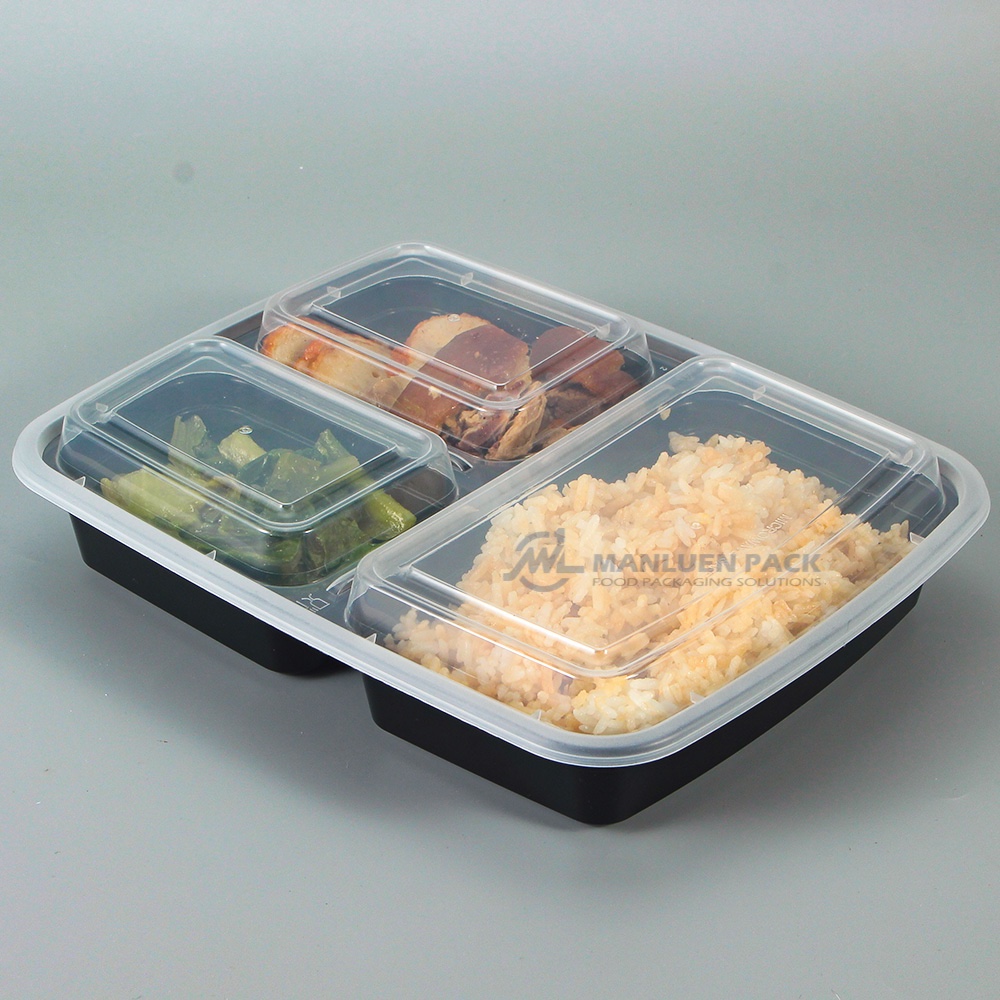
Compartment design is especially useful for rice meals, proteins, vegetables, sushi, noodles, and combination dishes. It helps restaurants pack several foods in one container without mixing everything together.
Better Packaging Can Expand the Menu
Packaging affects which foods restaurants can sell for takeaway and delivery. National Restaurant Association research found that 90% of off-premises customers would order a wider variety of food if better packaging maintained temperature, taste, and quality.
More than half said they would pay extra for better packaging. That figure reached 60% among Gen Z and millennial adults. The findings show that packaging can influence both menu options and customer spending.
A restaurant selling fried food may need ventilation to reduce condensation. A rice meal with sauce may need strong compartment separation. Cold prepared food may require a clear lid and good shelf presentation. One container rarely works equally well for every menu item.
Buyers Want Practical Sustainability
Sustainability has become a purchasing and compliance issue. According to Eurostat, the EU generated 79.7 million tonnes of packaging waste in 2023. Plastic packaging waste reached 35.3 kg per person, and 42.1% of that plastic packaging waste was recycled.
These numbers help explain why buyers are asking about recycled content, recyclability, material reduction, and alternatives to conventional plastic.
However, changing the material does not automatically improve the environmental result. Actual performance depends on several factors:
- The amount of material used
- The weight and transport volume of the package
- Food contamination after use
- Whether the lid and base use different materials
- Local collection and sorting systems
- Access to recycling or industrial composting facilities
Buyers should ask suppliers for clear material information and evidence supporting environmental claims.
Regulation Is Now a Market Driver
Packaging regulation now affects product design, material selection, documentation, and cost. Buyers should include compliance requirements in the RFQ instead of checking them after choosing a container.
EU PPWR Is Already Applying
The EU Packaging and Packaging Waste Regulation began applying across the European Union on August 12, 2026. The rules are being introduced in stages rather than on one single date.
According to the European Commission, important requirements covering packaging recyclability, recycled plastic content, reuse, empty space, and certain single-use plastic formats will take effect from 2030 and later.
Buyers selling disposable bento boxes into the EU should provide the destination market in their RFQ. They should ask the supplier for:
- The exact material structure
- The weight of each packaging component
- Recycled-content information where applicable
- Food-contact compliance documents
- Information supporting recyclability or other environmental claims
Buyers should also be careful with broad statements such as “PPWR compliant.” The supplier should explain which requirement and implementation date the product is designed to meet.
UK Plastic Packaging Tax in 2026
Desde April 1, 2026, the UK Plastic Packaging Tax rate is £228.82 per tonne for taxable finished plastic packaging components containing less than 30% recycled plastic, according to HM Revenue & Customs.
This does not mean every disposable plastic bento box carries the same tax. Liability depends on the component, recycled content, importer or manufacturer, and any applicable exemption.
For UK orders, buyers should request the resin type, recycled-content percentage, component weight, and evidence supporting the recycled-content claim.
U.S. FDA Food-Contact Rules
The FDA does not issue a general certification for a finished disposable bento box. It regulates the substances used in food-contact materials and the conditions under which they may contact food.
According to the U.S. Food and Drug Administration, a food-contact substance may be supported through an applicable 21 CFR provision, GRAS status, prior sanction, a Threshold of Regulation exemption, or an effective Food Contact Substance Notification.
The intended use matters. A material suitable for cold, dry food is not automatically suitable for hot or fatty food.
A useful RFQ should state:
- The type of food
- The filling temperature
- The expected contact time
- Whether the food is refrigerated or frozen
- Whether the container will be reheated
- Whether the food is oily, acidic, aqueous, or dry
Buyers should request documents that match these conditions instead of accepting a general “FDA approved” statement.
U.S. State EPR Programs
Packaging requirements are also changing at the state level. Oregon launched its Recycling Modernization Act program on July 1, 2025. It covers packaging, paper products, and food serviceware.
Under the extended producer responsibility system, obligated producers help fund the state’s recycling system through a producer responsibility organization. The Oregon Department of Environmental Quality confirmed that producer payments began when the program launched.
Companies selling packaging into states with EPR programs need accurate information about material type, package weight, product format, and the company legally responsible for placing the packaging on the market.
Material Trends: Fit the Container to the Food
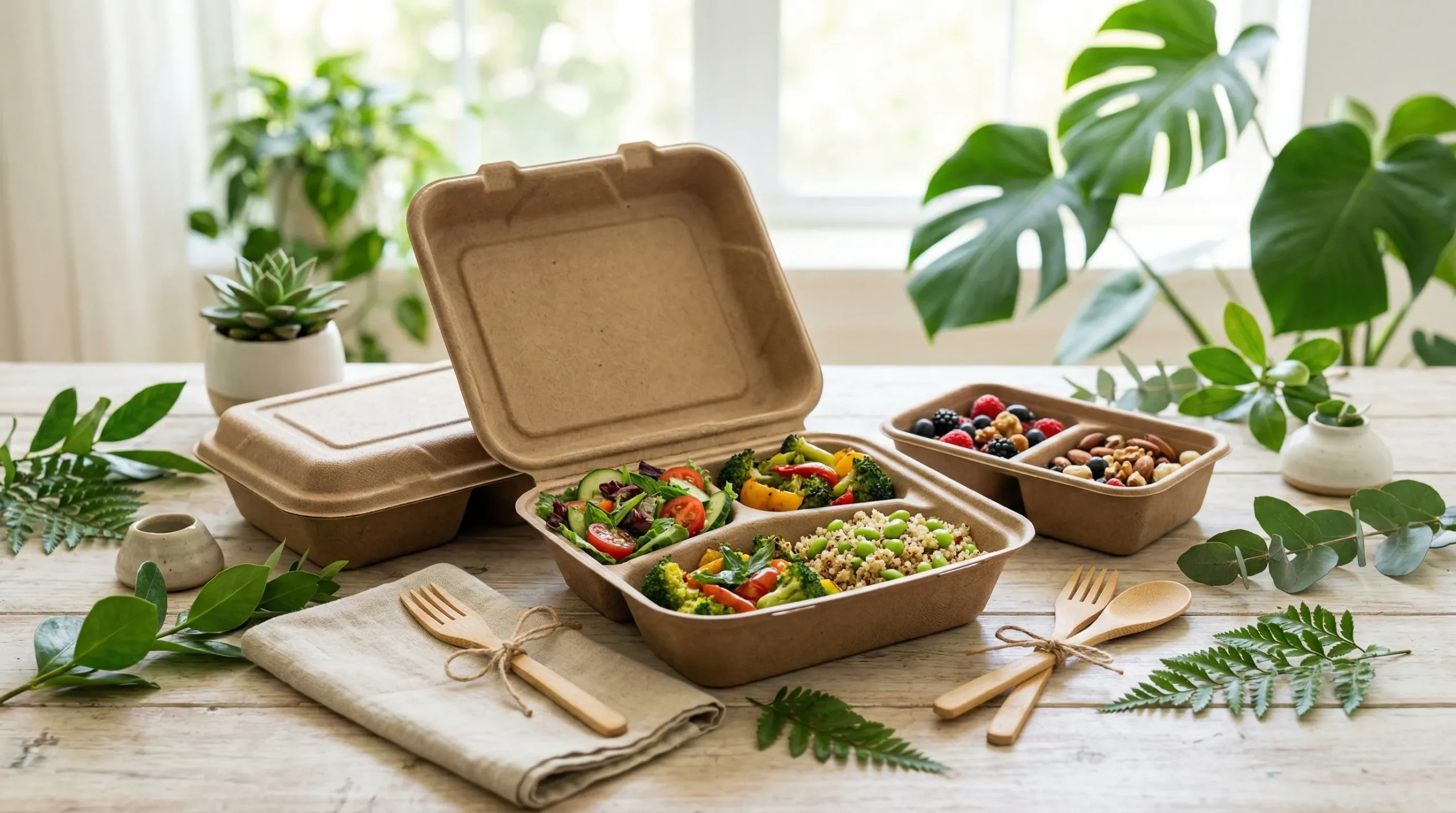
Material selection should start with the food. A hot rice meal has different packaging needs from a refrigerated salad, sushi set, bakery item, or supermarket ready meal.
PP, PET, RPET, bagasse, and PLA are all used in food packaging. None is automatically the best option. Buyers need to compare temperature, food type, visibility, transport, disposal systems, and regulations.
| Material | Typical Uses | Main Advantages | Key Limitations | End-of-Life Reality |
|---|---|---|---|---|
| PP | Hot meals, takeaway boxes and compartment meal trays | Lightweight, durable and commonly used for warm-food containers | Microwave use, temperature range, sealing and lid fit depend on the resin grade and container design | PP may be recyclable where suitable collection and recycling systems exist. Local acceptance varies. |
| PET | Cold meals, salads, bakery products, clear lids and display packaging | High clarity and good product visibility | Standard PET should not be used for reheating or high-temperature food unless the manufacturer specifically confirms it | PET has established recycling streams in many markets, but collection and recovery vary. |
| RPET | Cold-food trays and clear containers where recycled content is required | Uses recycled PET and can support recycled-content targets | Food-contact suitability depends on the recycling process, material, food, and intended conditions of use | RPET may enter PET recycling streams where accepted. Recycled content does not guarantee actual recycling. |
| Bagazo | Molded-fiber trays, takeaway meals and clamshell lunch boxes | Made from plant fiber and available in many foodservice formats | Moisture, oil, barrier coatings, temperature and contact time can affect performance | Some finished products may be industrially compostable. Buyers must check the full structure, certification, and local facilities. |
| PLA | Cold-food containers, clear lids and selected bio-based packaging | Bio-based and clear in certain packaging formats | Conventional PLA has limited heat resistance and is generally unsuitable for hot-food applications | Compostable PLA normally requires an industrial composting facility. It will not quickly break down in every environment. |
Verify Performance for the Exact Product
The name of a material does not tell buyers everything about the finished package.
A PP container is not automatically microwave-safe. Its temperature range depends on the resin grade, wall thickness, container design, lid, food, and heating conditions.
The same applies to leakage. No material makes a container automatically leak-resistant. Leakage depends on the lid-and-base design, closure, flange shape, manufacturing tolerance, and the food being packed.
Buyers should ask the supplier to confirm the following information for the exact SKU:
- Recommended temperature range
- Hot-fill suitability
- Refrigerated or frozen storage conditions
- Microwave or reheating instructions
- Applicable food types
- Test method and test report
- Lid compatibility
Buyers should also test samples with the actual food. Water-only tests may not show how the container performs with hot oil, acidic sauces, steam, or long transport times.
Recycled and Compostable Are Different Claims
A recyclable package still depends on local collection and processing. Food residue, labels, colors, multilayer structures, and incompatible lids may reduce the chance of recovery.
Recycled plastic used for food packaging also needs suitable safety controls. Both the U.S. FDA and the European Commission have specific requirements for recycled plastics used in food-contact materials.
Compostability is a separate issue. A bagasse or PLA package should not be described as universally compostable simply because of its base material. Coatings, inks, labels, lids, and additives can change the result.
Buyers should check whether the claim applies to the complete product and whether the destination market has the required composting facilities.
ManLuen supplies cajas bento in different formats and compartment layouts. Buyers should compare the products according to their food, temperature, transport, target market, and disposal system.
Where Disposable Bento Boxes Are Used
Disposable bento boxes are used wherever complete meals need to be portioned, displayed, stored, or transported. The right specification depends on the application.
| Application | Typical Use | Main Packaging Requirements |
|---|---|---|
| Restaurant Takeout | Rice, noodles, meat, vegetables, side dishes and combination meals | Secure lid, suitable portion size, compartment separation, stackability and correct temperature range |
| Food Delivery | Meals transported by delivery platforms or couriers | Stable stacking, secure closure, movement control and separation of sauces and side dishes |
| Supermarket Ready Meals | Pre-packed lunches, deli meals and refrigerated ready-to-eat products | Product visibility, labeling space, reliable lid fit, shelf efficiency and suitable storage conditions |
| Sushi and Cold Prepared Food | Sushi sets, sashimi, salads, cold appetizers and deli items | Clear presentation, stable tray shape, secure lid and protection against excessive food movement |
| Catering and Events | Boxed meals, conferences, corporate catering and group meal service | Fast packing, consistent portions, easy stacking and efficient carton storage |
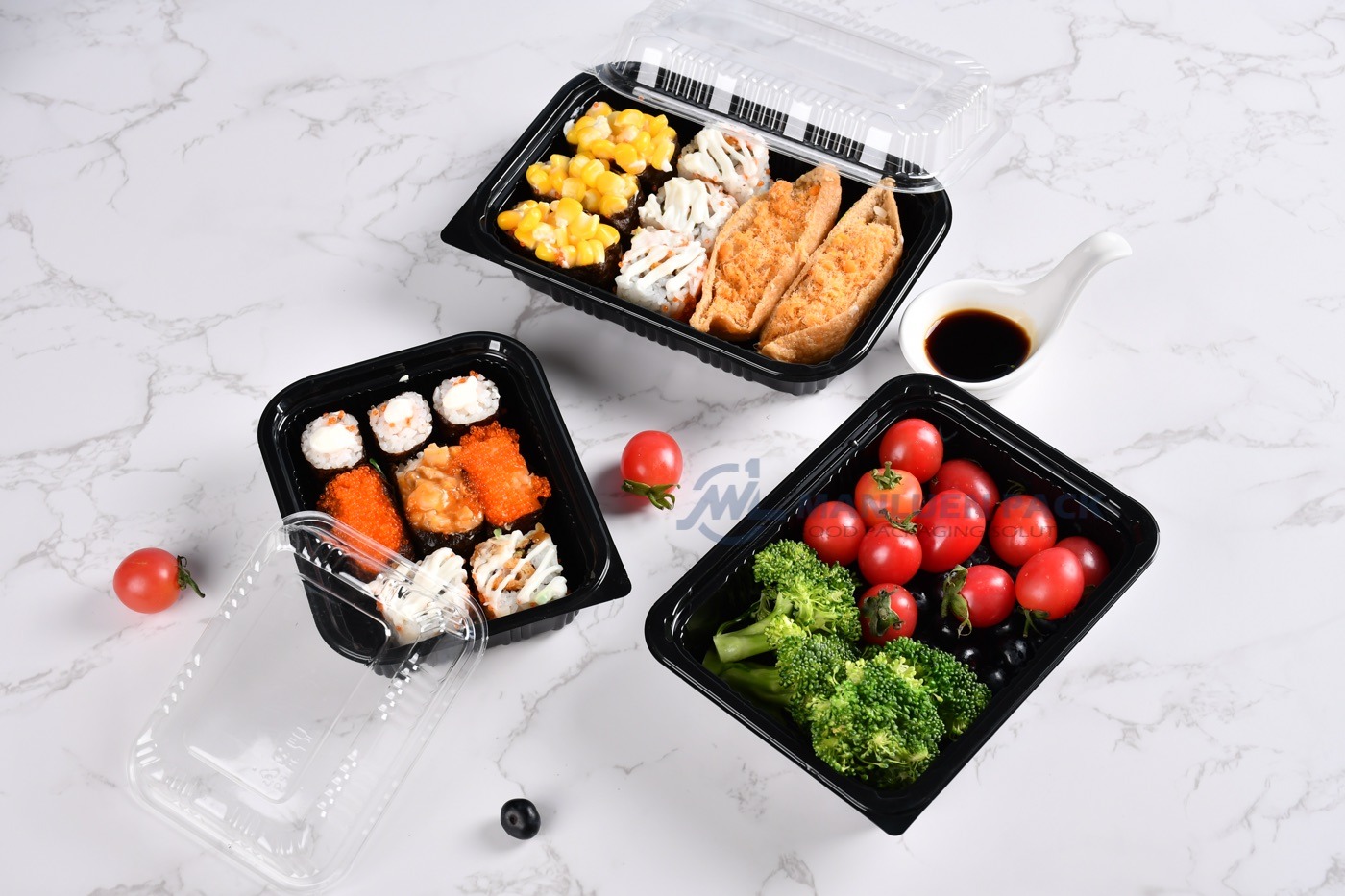
Presentation matters for sushi and other cold prepared foods. These products often use shallow trays with clear lids so customers can see the food. The tray also helps stop individual pieces from moving during transport and display.
Buyers can compare different formats in ManLuen’s sushi tray range.
The product name is less important than its function. Buyers should first define the food, portion, temperature, transport time, display requirements, and lid style. They can then choose the correct tray or container.
Supplier Insights: What Buyers Should Check
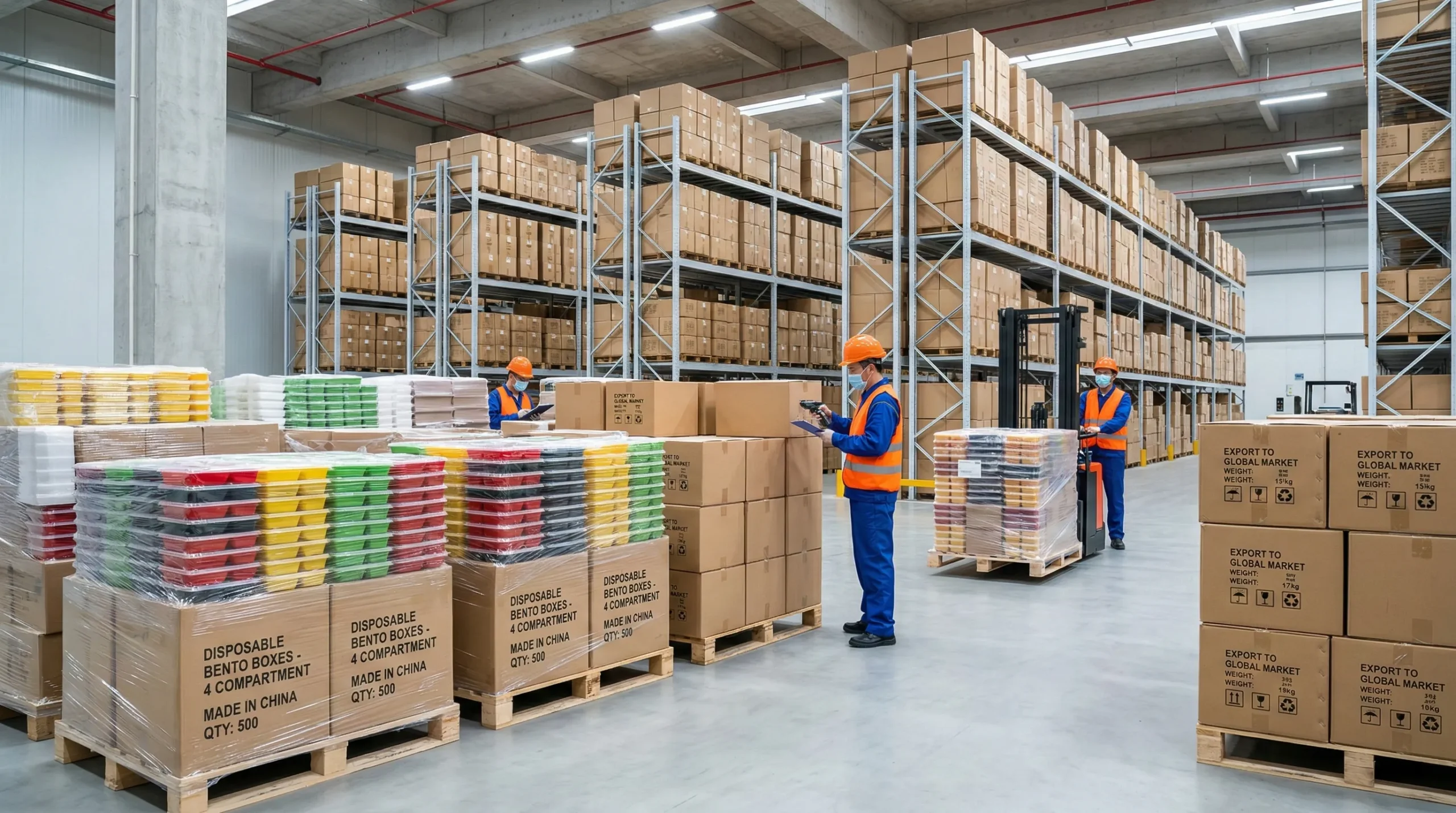
Buyers should choose suppliers based on documented capability rather than an online ranking. A suitable supplier must be able to make the required product consistently and support the regulations of the destination market.
Product and Tooling Capability
Start with the exact product. Ask whether the supplier has an existing mould or needs to make new tooling.
Confirm the following details:
- Container dimensions
- Capacity and compartment layout
- Base and lid materials
- Lid type and closure design
- Available colors
- Printing or labeling options
- Unit weight
- Pieces per carton
- Tamaño de la caja
If the project requires customization, ask who owns the mould and how the supplier approves designs, samples, and later changes.
Buyers can read about ManLuen’s manufacturing background on the Sobre Nosotros page.
Food-Contact Documentation
Do not accept a simple “food grade” o “FDA approved” claim as complete evidence.
Ask for documents that match the material, product, destination market, and use conditions. Depending on the project, these may include:
- Material declarations
- Migration test reports
- Statements of food-contact compliance
- Applicable 21 CFR or EU regulatory references
- Quality-system certificates
- Recycled-content documentation
- Compostability certificates for the complete product
Check the product or material named in each document. A report for one resin, thickness, or product should not automatically be applied to every item in a supplier’s catalog.
ManLuen publishes available certification and compliance information for buyers reviewing export requirements.
Quality and Change Control
A good initial sample does not guarantee consistent mass production. Buyers should ask how the factory controls:
- Container dimensions
- Unit weight
- Lid fit
- Closure strength
- Surface appearance
- Color consistency
- Packing quantity
- Carton strength
Buyers should also require change control. Changes to resin, recycled content, tooling, color, lid structure, labels, cartons, or production processes can affect performance and compliance.
The supplier should notify the buyer before making a material or specification change. For repeat orders, the purchase specification should identify the approved sample, critical dimensions, tolerances, inspection method, and packing standard.
Put Commercial Terms in Writing
MOQ, sample time, lead time, payment terms, and tooling charges are not fixed across the industry. They depend on the SKU, material, quantity, customization, mould requirements, and factory schedule.
Buyers should request written confirmation of:
- MOQ for the exact SKU
- Sample cost and completion date
- Mould or tooling charges
- Production lead time after approval
- Unit price
- Carton packing details
- Payment terms
- Incoterm
- Shipping port
- Quotation validity
To receive a useful quotation, buyers should provide the dimensions, material, compartment layout, order quantity, food application, destination market, and required documents when they request a quote.
What Will Shape Growth Through 2030
The market will not be shaped by one headline growth figure. Demand, regulation, packaging performance, and total sourcing cost will have a greater effect on purchasing decisions.
Off-Premises Dining Will Keep Performance Important
Takeaway and delivery are now established restaurant channels. They are no longer temporary services added during the pandemic.
This will support demand for containers that work during transport. Restaurants will pay more attention to compartment layout, lid fit, container depth, ventilation, visibility, and temperature suitability.
More buyers may also use different containers for different menu groups instead of forcing every meal into one standard box.
Regulation Will Require Better Product Data
Packaging rules are increasing the amount of information buyers need from suppliers.
EU PPWR requirements will gradually place more attention on recyclability and recycled plastic content. The UK Plastic Packaging Tax already makes recycled-content data relevant to cost. U.S. state EPR programs also require better information about materials and packaging weight.
Suppliers will increasingly need to provide:
- Material composition
- Component weights
- Recycled-content percentages
- Food-contact documents
- Destination-market compliance information
- Evidence supporting recycling or composting claims
Total Landed Cost Will Matter More Than Unit Price
The lowest unit price is not always the lowest final cost.
Buyers must also consider:
- Pieces per carton
- Carton dimensions
- Shipping volume
- Container weight
- Import duties
- Packaging taxes
- EPR fees
- Warehouse space
- Rejected products
- Food leakage or delivery damage
A change from conventional plastic to recycled-content plastic or molded fiber can affect more than the container price. It may change stacking efficiency, weight, barrier performance, storage requirements, freight cost, and regulatory obligations.
Buyers should compare total landed cost and actual performance instead of choosing a product solely because it has the lowest price or the strongest environmental slogan.
2026 Buyer Checklist
Before approving a disposable bento box, check the exact product against the actual use and destination market.
| Check | What to Confirm |
|---|---|
| Food and Use Conditions | Food type, filling temperature, refrigerated storage, reheating, transport time, and contact with sauces, oil, or acidic food |
| Material and Lid | Base material, lid material, recycled content, compartment layout, closure type, and whether the lid and base were designed as one system |
| Samples and Tests | Test the actual food, stacking, lid fit, transport, leakage, deformation, storage, and reheating conditions |
| Food-Contact Basis | Request documents that match the material, SKU, food, temperature, contact time, and intended market |
| Destination-Market Rules | Check applicable food-contact, recycling, recycled-content, packaging tax, EPR, labeling, and compostability requirements |
| Weight and Logistics | Confirm unit weight, pieces per carton, carton dimensions, pallet configuration, shipping volume, and warehouse requirements |
| Change Control | Require notice before changes to resin, recycled content, tooling, dimensions, color, lid, labels, cartons, or production processes |
| Commercial Terms | Confirm price, MOQ, sample terms, tooling charges, lead time, payment terms, Incoterm, shipping port, and quotation validity |
A detailed RFQ helps the supplier recommend a suitable container. It also reduces the risk of selecting packaging that meets the target price but fails during filling, transport, storage, or compliance checks.
Preguntas frecuentes
What is a disposable bento box?
A disposable bento box is a single-use meal container used for takeaway, delivery, catering, or ready-to-eat food. It often has several compartments for separating rice, meat, vegetables, sauces, and side dishes.
How large is the disposable bento box market?
There is no reliable public dataset that measures disposable bento boxes as a separate global market. Most research groups these products with disposable food containers, takeaway packaging, or foodservice packaging. Values for those broader industries should not be presented as the size of the bento box market alone.
What materials are used for disposable bento boxes?
Common materials include PP, PET, RPET, bagasse, and PLA. The right choice depends on the food, temperature, transport conditions, visibility requirements, destination market, and local recycling or composting infrastructure.
Is every PP bento box microwave-safe?
No. Microwave suitability depends on the resin grade, container design, wall thickness, lid, food, and heating conditions. Follow the instructions for the exact product and do not assume that every PP container can be microwaved.
What changed under the EU PPWR in 2026?
The EU Packaging and Packaging Waste Regulation began applying on August 12, 2026. The requirements are being introduced in stages. Major measures covering recyclability, recycled plastic content, and some single-use packaging formats generally begin from 2030 and later.
How should buyers verify a disposable bento box supplier?
Check the supplier’s product capability, tooling, food-contact documents, quality-control process, change-control procedure, and written commercial terms. Test samples under the actual conditions of use and make sure the supporting documents match the material, product, and destination market.
Conclusion
Demand for disposable bento boxes remains tied to takeaway, delivery, catering, and ready-meal sales. The package must keep food organized, remain closed during transport, and fit the restaurant or retailer’s normal packing process.
Material choice is only one part of the decision. Buyers must also consider food-contact rules, temperature, lid design, shipping efficiency, recycled-content requirements, packaging taxes, EPR programs, and local waste systems.
Good sourcing starts with a clear product specification. Buyers should request written documents, test the actual food in approved samples, and confirm all commercial terms before mass production. For product options or project pricing, buyers can request a quote from ManLuen.
Last updated: September 2026.

ManLuen Plastic Packaging Company, especializada en la producción de embalaje de alimentos de plástico durante más de 20 años. Nuestros productos están hechos de PP virgen y libre de BPA, cumpliendo con las normas de la FDA y europeas.
 ES
ES  EN
EN  ZH
ZH  FR
FR  PT
PT  KO
KO  JA
JA