
Introduction
Is food packaging safe? In most cases, yes—when the complete package is made from properly authorized food-contact materials, manufactured under controlled conditions, and used for the food, temperature, and contact time it was designed to handle.
That final condition matters. A clear PET cake dome may be an excellent choice for a chilled dessert but a poor choice for microwave reheating. A polypropylene meal tray may be suitable for hot food, yet the same material name does not prove that every colorant, lid, label, or recycled-content formulation is suitable for the same use.
Regulation is also moving quickly. In January 2025, the U.S. Food and Drug Administration determined that 35 food contact notifications related to PFAS grease-proofing uses were no longer effective after manufacturers abandoned those uses. On May 27, 2026, the FDA published a new scientific evaluation of eight authorized phthalate plasticizers. In the European Union, Regulation (EU) 2025/40 on Packaging and Packaging Waste entered into force on February 11, 2025 and generally applies from August 12, 2026.
This guide explains what food grade packaging means, how it differs from food-safe packaging, why “FDA approved” is often the wrong question, how chemical migration is evaluated, and how buyers can match PP, PET, OPS, glass, fiber, and other materials to real foods. It also turns the 2025–2026 regulatory changes into a practical supplier-verification checklist.
What Is Food Grade Packaging? The Quick Answer
Food-grade packaging is packaging made from substances that have an appropriate regulatory basis for food contact and are suitable for the package’s intended conditions of use.
Safety is not established by the resin name or recycling code alone. It depends on the complete food-contact system, including:
- The base resin, paper, glass, metal, or fiber
- Colorants, additives, processing aids, coatings, and barrier layers
- Inks, adhesives, seals, liners, lids, and other components
- The type of food, especially whether it is aqueous, acidic, alcoholic, or fatty
- Contact temperature, contact time, filling method, storage, freezing, and reheating
- Manufacturing controls and the regulatory requirements of the destination market
For a buyer, the practical question is therefore not simply, “Is this material food grade?” It is: “Is this exact package, with all of its components, documented for my food and my intended use?”
Is Food Packaging Safe?
Food packaging is generally safe when four conditions are met:
- The materials have a valid food-contact status. Each component that may reasonably migrate to food must be covered by an applicable authorization, regulation, notification, exemption, or other lawful basis.
- The package is manufactured consistently. Correct resin identity, controlled additives, clean production, traceability, and change control reduce the risk of unintended contamination or formulation drift.
- The finished design is suitable for the food. A package for dry cookies faces different migration and barrier demands from one used for oily sauce, acidic fruit, or hot soup.
- The user follows the intended conditions. A cold-food container should not be assumed safe for hot filling, an oven, or a microwave unless the manufacturer specifically supports that use.
Regulators evaluate food-contact substances by considering migration into food and the toxicological significance of the resulting dietary exposure. This is why a material can be lawful for one set of conditions but not automatically suitable for every application.
Food-contact compliance also does not mean that a package is indestructible. Cracked, warped, heavily scratched, or heat-damaged containers should be replaced. A single-use package should not be repeatedly washed and reheated unless the supplier has designed and documented it for reuse.
Food Grade vs Food Safe: What Is the Difference?
The terms are related, but they focus on different parts of the decision.
| Term | Main Focus | Question It Answers | Example |
|---|---|---|---|
| Food grade | Material and regulatory suitability | Is the material appropriate for food contact under stated conditions? | A documented food-contact grade of PP resin |
| Food safe | The finished package in actual use | Is the complete container safe for this food, temperature, time, and process? | A finished PP meal container specifically rated for microwave reheating |
A food-grade resin is only the starting point. If an unsuitable pigment is added, an adhesive is used outside its supported conditions, or the finished container is exposed to temperatures beyond its rating, the complete package may not be food safe for that application.
The most reliable buyer specification connects both concepts: it identifies the exact material and regulatory basis, then states the intended food types, temperature range, contact time, storage method, and reheating or freezing requirements.
Why “FDA Approved” Is Usually the Wrong Question
“FDA approved” is widely used as a marketing shortcut, but it can create the wrong expectation. The FDA does not issue a universal approval certificate for every finished food container. Instead, the regulatory status of each food-contact component is established through one or more legal pathways.
In the United States, a substance used in food packaging may be supported by:
- An applicable food-additive regulation in Title 21 of the Code of Federal Regulations
- An effective Food Contact Notification (FCN)
- A generally recognized as safe conclusion for the intended use
- A prior sanction issued before the current food-additive framework
- A Threshold of Regulation exemption
- Another applicable exclusion or exemption
An FCN is especially important to read carefully because it is effective only for the named manufacturer or supplier, the identified substance, and the stated conditions of use. A competitor cannot automatically rely on someone else’s FCN merely because its material has a similar trade name.
This makes “What is the regulatory basis for every food-contact component?” a better buyer question than “Is it FDA approved?”
What Documents Should a Buyer Request?
Depending on the product and destination market, a supplier file may include:
- The exact resin or material grade and manufacturer
- The applicable 21 CFR citation, FCN number, or other U.S. regulatory basis
- A letter of guaranty, statement of compliance, or declaration of compliance where applicable
- A list of intended food types and conditions of use
- Relevant overall or specific migration test reports
- Statements covering BPA, PFAS, phthalates, heavy metals, or other substances when relevant to the material, market, or customer specification
- Traceability information and confirmation that formulation changes will be communicated
These documents are not interchangeable. A laboratory report is not a substitute for a valid regulatory basis, and a generic resin declaration does not automatically cover inks, adhesives, coatings, or the finished article.
How Chemical Migration Affects Packaging Safety
Packaging and food interact at their contact surface. Very small amounts of a packaging substance may transfer into food, a process known as migration. Food-contact assessments consider whether that migration creates a dietary exposure of concern under the intended conditions.
Three variables are especially important.
1. Temperature
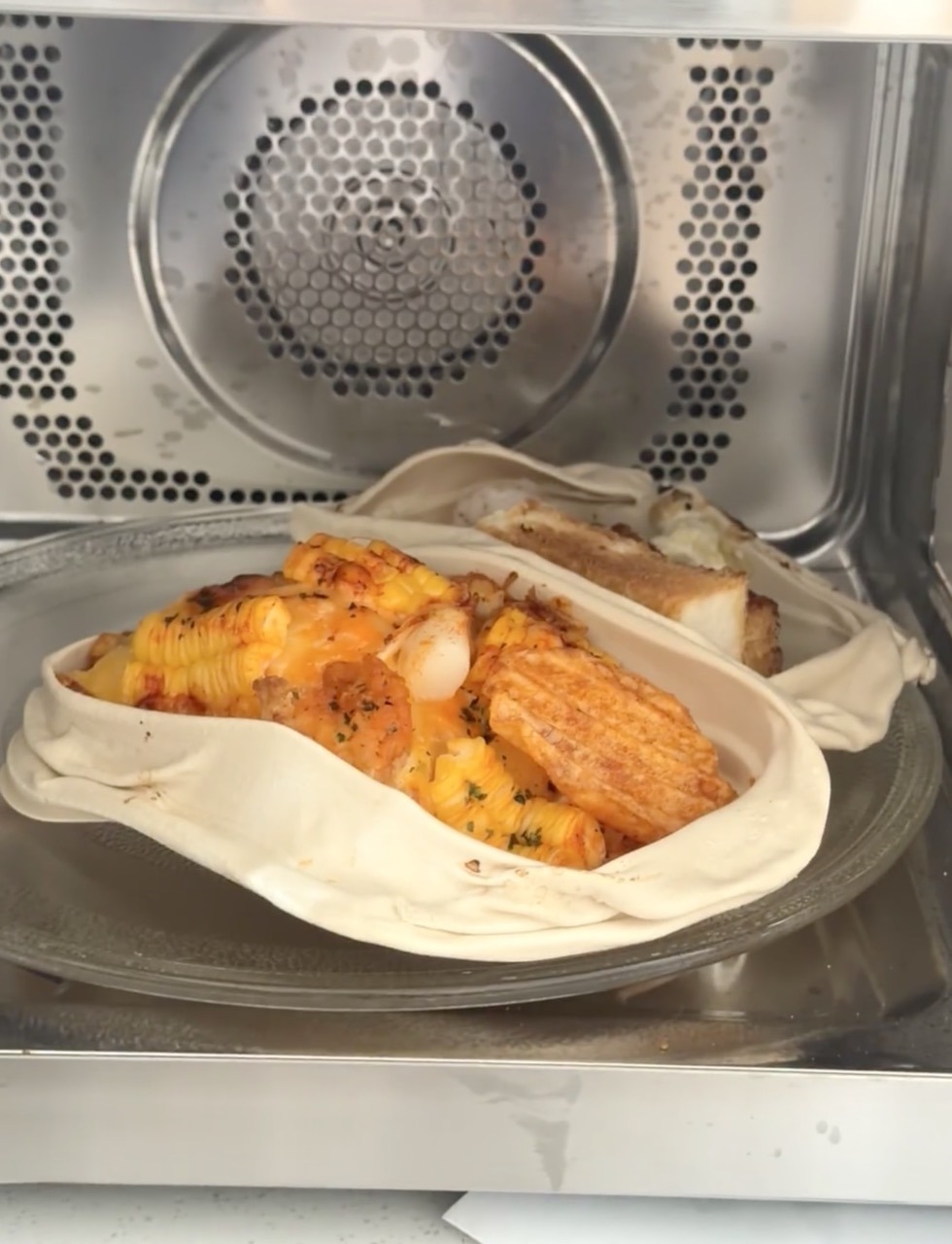
Higher temperatures often increase the rate of migration. A package intended for refrigerated sushi may not be suitable for hot filling or microwave reheating. “Microwave safe” should be supported for the finished container and lid, not inferred from a recycling code.
2. Food Type
Fatty, acidic, alcoholic, aqueous, and dry foods interact differently with packaging. Oils can extract some substances more readily, while acidic foods can challenge certain metal surfaces or coatings. Regulatory tests use food simulants selected to represent these categories.
3. Contact Time
Five minutes of service is not the same as months of shelf storage. A takeaway tray, retort pouch, freezer tub, and shelf-stable bottle therefore require different evaluations even when they contain related materials.
Geometry and package condition also matter. A high surface-area-to-food ratio, damaged surface, thin wall, or repeated heating cycle can change exposure. This is why emerging research on particle release during heating deserves continued attention, but secondary reports should not be turned into precise safety claims until the original study, test setup, and real-world relevance have been reviewed.
What Is the Safest Food Packaging Material?
There is no single safest material for every food and every supply chain. The safest choice is the one with a verified food-contact status that performs reliably under the intended conditions.
| Material | Best-Suited Uses | Main Advantages | Important Limitations |
|---|---|---|---|
| Glass | Sauces, beverages, jars, reusable storage, and premium foods | Strong barrier, chemical stability, transparency, and reuse potential | Heavy, breakable, and energy-intensive to transport |
| PP | Hot meals, cajas bento, soup tubs, deli cups, and rated microwave applications | Good heat resistance, toughness, low weight, and moisture resistance | Clarity is usually lower than PET; microwave suitability remains product-specific |
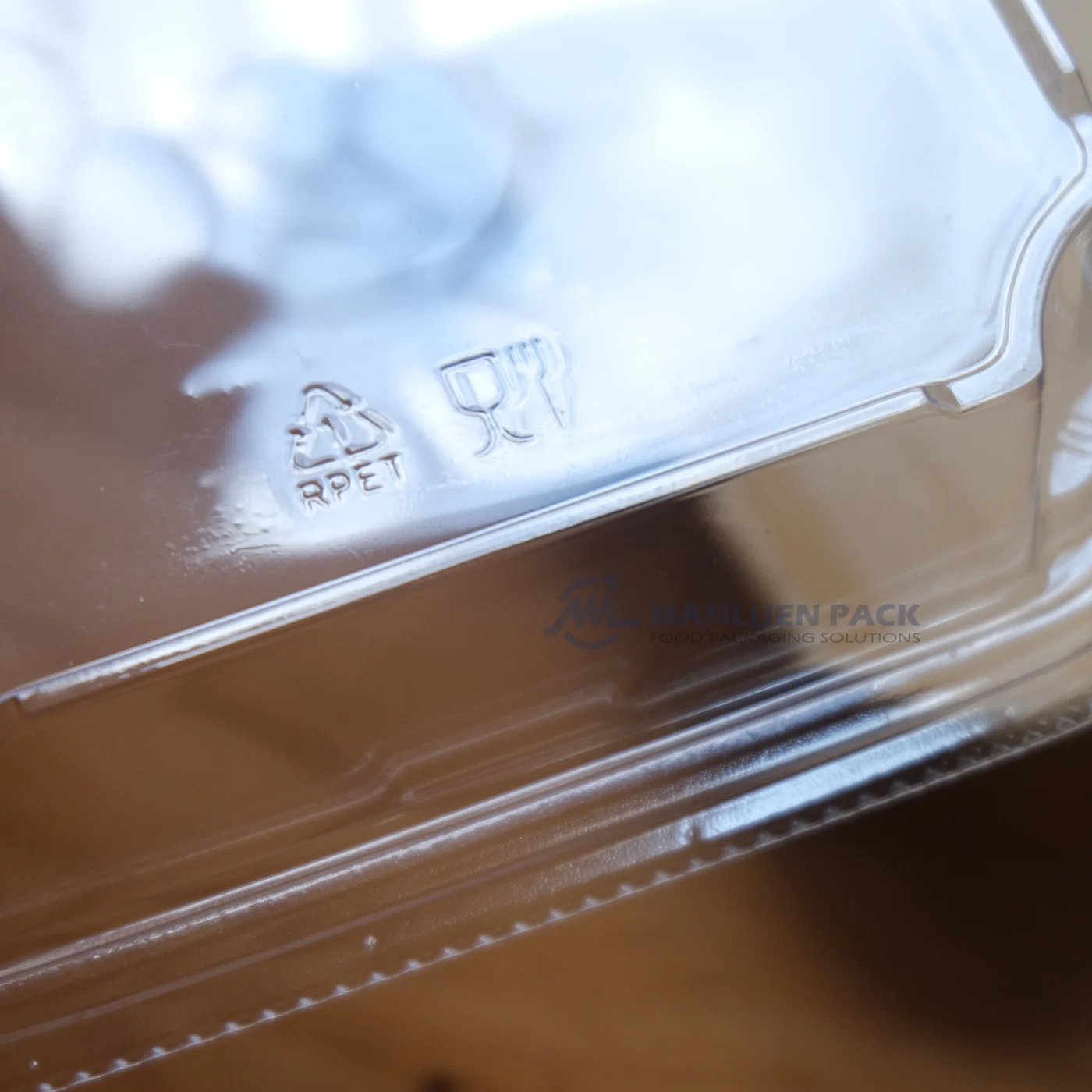
| PET | Cold salads, sushi, fruit, bakery displays, bottles, and clear lids | High clarity, stiffness, and good cold-display performance | Standard PET takeaway packaging should not be assumed suitable for microwaves or high heat |
| HDPE or LDPE | Bottles, liners, bags, freezer films, and squeeze containers | Moisture resistance, toughness, and broad format flexibility | Heat and barrier performance depend heavily on grade and structure |
| OPS or PS | Cold bakery, cookie, produce, sushi-lid, and presentation-focused applications | OPS offers attractive clarity and stiffness; PS can be economical and formable | Generally not the first choice for hot or microwave service; recycling access and local restrictions vary |
| Paperboard or molded fiber | Dry foods, bakery, takeaway meals, plates, bowls, and sleeves | Printability, stiffness, familiar fiber appearance, and potential renewable content | Grease and moisture resistance may require a coating or liner that changes recyclability or compostability |
| Certified compostable materials | Selected foodservice programs with organics collection | Can support a controlled composting system and reduce conventional plastic use in some applications | Bio-based does not automatically mean compostable, recyclable, heat-safe, or litter-free |
Virgin material is not automatically the only safe option. Recycled plastic can be used safely when the recycling process, input controls, intended use, and applicable regulatory requirements are properly addressed. Buyers should request product-specific documentation rather than treating “virgin,” “recycled,” “BPA-free,” or a recycling number as a complete safety conclusion.
PP vs PET vs OPS for Disposable Food Packaging
PP, PET, and OPS frequently appear in disposable food packaging, but they solve different problems.
| Decision Factor | PP | PET | OPS |
|---|---|---|---|
| Typical appearance | Translucent or opaque | Very clear and rigid | Clear, glossy, and stiff |
| Typical service | Hot meals and selected reheating uses | Chilled and ambient display | Cold display and bakery presentation |
| Heat performance | Usually the strongest of these three, subject to the finished package rating | Standard grades are generally for cold or ambient use | Generally intended for cold or ambient use |
| Common formats | Bento boxes, soup containers, sauce cups, and meal trays | Sushi trays, salad bowls, fruit containers, and cake domes | Clear lids, cookie trays, bakery clamshells, and deli displays |
| Main buyer check | Microwave, hot-fill, oil, and lid compatibility | Cold-use temperature, clarity, impact resistance, and recycled-content status | Temperature limit, brittleness, local restrictions, and end-of-life route |
When to Choose PP
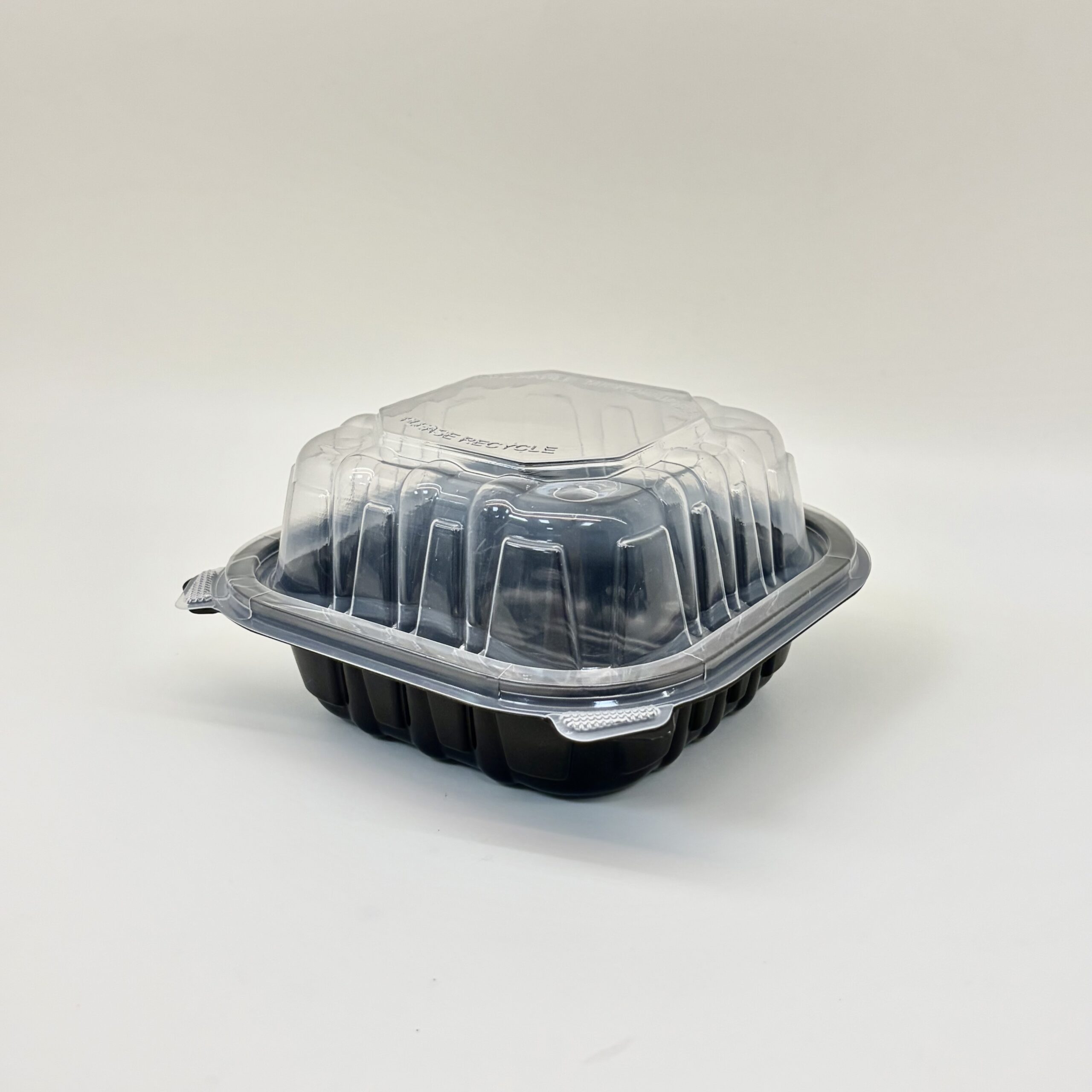
Choose PP when heat resistance and toughness are more important than crystal-clear presentation. It is frequently used for hot takeaway meals, rice dishes, bento boxes, soups, and portion cups. If reheating is required, obtain a temperature-and-time statement for the exact base and lid. Do not assume that every item marked with resin code #5 has the same microwave performance.
When to Choose PET
Choose PET when consumers need to see chilled food clearly. It suits sushi, salads, cut fruit, cold deli items, cakes, and clear lids or domes. It is not a default choice for conventional ovens or microwaves. Specialized heat-resistant PET structures exist, but they must be specified separately.
When to Choose OPS
Choose OPS when a light, stiff, glossy display package is needed for cold or ambient foods such as cookies, bakery products, and some sushi or deli presentations. It should not be treated as a hot-soup or microwave material unless the supplier provides a specific validated construction—which is uncommon for standard OPS foodservice packaging.
Material-to-Food Selection Table
A recycling-code ranking cannot tell a food business which package will work. Start with the food and service conditions instead.
| Food or Application | Common Starting Material | Why It Fits | What the Buyer Must Confirm |
|---|---|---|---|
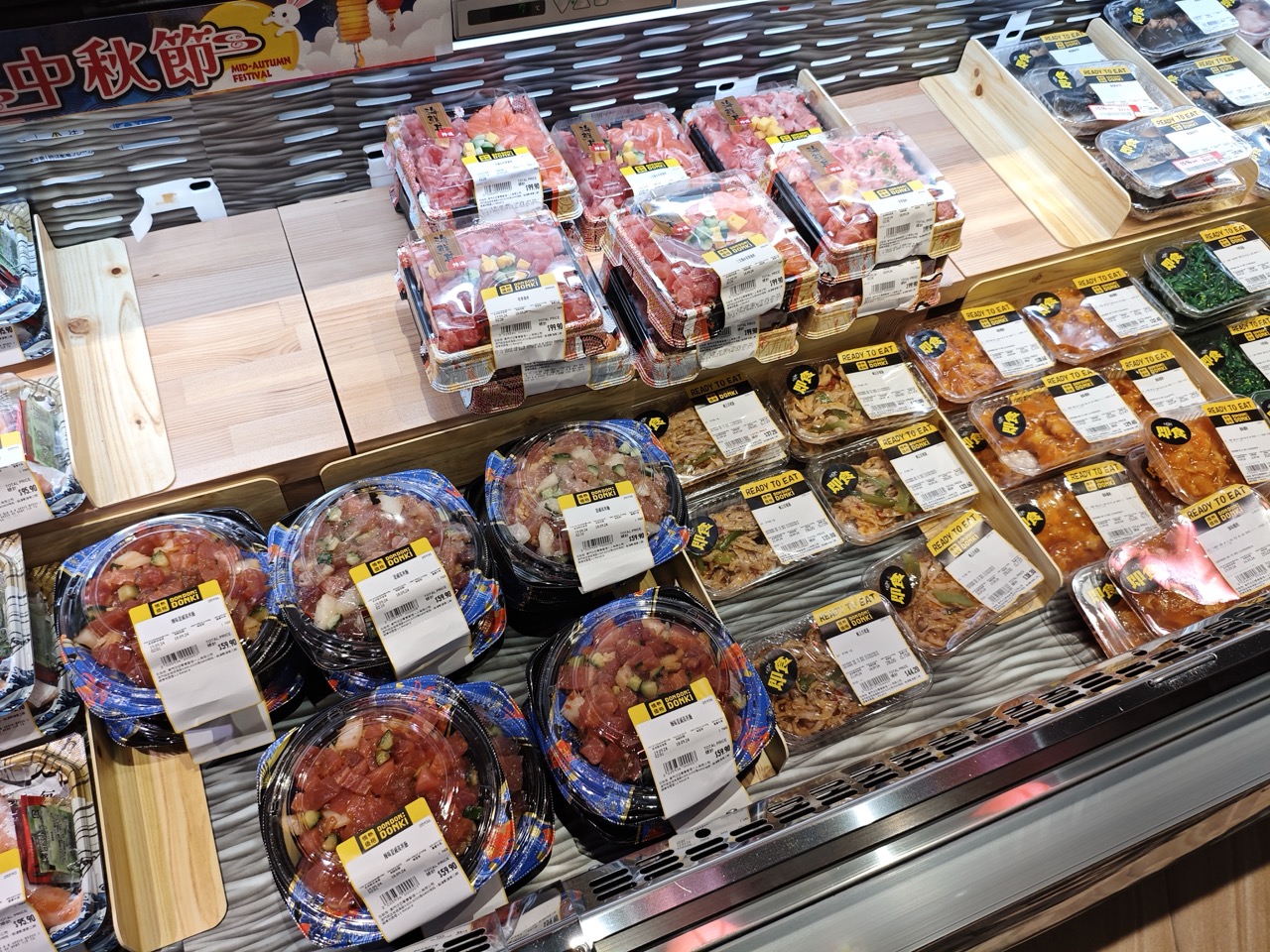
| Sushi and sashimi | PET or PS/PP base with a clear PET or OPS lid | Cold performance, rigid presentation, moisture resistance, and visibility | Cold-use rating, secure closure, anti-fog needs, raw-food hygiene, and component documentation |
| Hot bento or rice meal | PP | Heat resistance, toughness, and compatibility with compartmented designs | Hot-fill temperature, oil resistance, microwave time, venting, and lid rating |
| Hot soup | Rated PP tub and lid, or a suitable coated fiber system | Leak resistance and better hot-food performance | Seal integrity, fill temperature, fat content, transport time, and lid deformation |
| Cold salad or cut fruit | PET | Clarity, stiffness, and chilled-display appeal | Refrigerated impact strength, condensation management, closure, and shelf life |
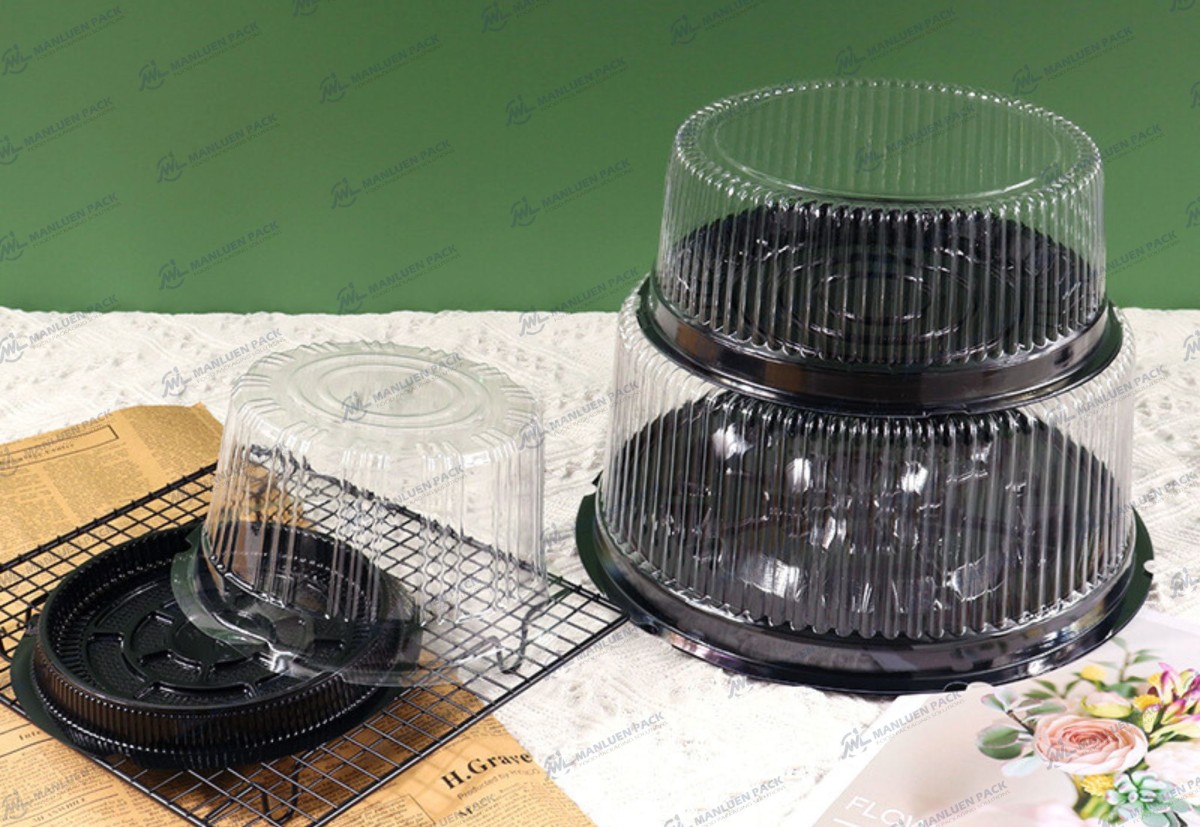
| Cake or pastry | PET or OPS dome with an appropriate base | High product visibility and crush protection | Cold versus ambient use, grease contact, hinge strength, and stacking |
| Sauce or condiment cup | PP or PET depending on temperature | Small portion control and good moisture resistance | Acidity, oil content, fill temperature, snap-fit or film seal, and leak testing |
| Frozen food | Low-temperature-rated PP, PE, PET, or multilayer structure | Maintains containment at low temperature | Freezer brittleness, seal strength, thawing instructions, and reheating compatibility |
| Dry cookies or snacks | OPS/PET tray, paperboard carton, or barrier film | Presentation, portion protection, or moisture barrier | Shelf-life barrier, grease resistance, tamper evidence, and recycling design |
This table is a starting point, not a substitute for validation. Product geometry, thickness, color, closure, transport route, and filling equipment can make two packages made from the same polymer perform differently.
Materials and Claims That Need Extra Caution
Unverified “BPA-Free” Claims
BPA-free describes the absence of one substance; it does not prove full food-contact compliance or suitability for heat. Buyers still need the material identity, regulatory basis, and intended-use statement.
PVC, PS, and Restricted Formats
These materials are not automatically unlawful in every market, but formulations and local restrictions require careful review. Expanded polystyrene foodservice products, for example, face bans or limitations in some jurisdictions. PVC formulations may require closer attention to plasticizers and intended use.
Recycled Plastic Without Process Documentation
Recycled content should have traceable input controls and a food-contact basis appropriate to the destination market. A sustainability statement by itself does not establish safety.
Bio-Based or Compostable Packaging
“Plant-based,” “bio-based,” “biodegradable,” and “compostable” are not synonyms. A PLA lid or molded-fiber tray may still need additives, coatings, or a plastic liner. Compostability claims should identify the standard, certification, accepted facility type, and complete package components. Under the EU PPWR, using bio-based or compostable material does not automatically satisfy recyclability or post-consumer recycled-content rules.
Damaged or Misused Containers
Do not heat a package that is intended only for cold food. Avoid repeated use of a single-use container, and discard packages that are cracked, distorted, delaminated, deeply scratched, or unable to close securely.
2025–2026 Food Packaging Regulatory Updates
1. FDA PFAS Food-Contact Notifications
In 2024, the FDA announced that grease-proofing substances containing certain PFAS were no longer being sold for food-packaging uses in the United States. In January 2025, the agency determined that 35 related FCNs were no longer effective because the manufacturers had abandoned those uses.
This is an important market exit, but it should be described accurately. It does not mean the FDA issued a universal finding that every PFAS in every material was unsafe. For buyers of grease-resistant paper, wrappers, bakery liners, and molded-fiber containers, the practical response is to request a current PFAS statement covering coatings and processing aids—not merely the base paper or fiber.
2. FDA’s 2026 Phthalate Evaluation
On May 27, 2026, the FDA published a scientific evaluation of eight phthalates that remain authorized as plasticizers in certain food-contact applications. The agency proposed treating four—DEHP, DCHP, DIOP, and DINP—as a chemically or pharmacologically related group for future cumulative risk assessment and said its post-market review is continuing.
This publication is an evaluation, not a blanket ban on all phthalates or all plastic food packaging. Buyers using flexible PVC, seals, gaskets, coatings, or other plasticized components should obtain formulation-specific information and monitor subsequent FDA action.
3. EU Packaging and Packaging Waste Regulation
Regulation (EU) 2025/40 entered into force on February 11, 2025 and generally applies from August 12, 2026. It combines chemical restrictions, packaging minimization, recyclability, recycled content, labeling, and other circularity measures.
For food-contact packaging, the regulation sets PFAS thresholds from August 12, 2026: 25 ppb for any PFAS measured with targeted analysis, 250 ppb for the sum of targeted PFAS, and 50 ppm for PFAS including polymeric PFAS, subject to the regulation’s measurement and documentation provisions. It also retains a total concentration limit of 100 mg/kg for lead, cadmium, mercury, and hexavalent chromium in packaging or packaging components.
The recycled-content targets are category-specific. Subject to the regulation’s timing, calculation rules, and exemptions, the 2030 minimum is 30% for contact-sensitive packaging whose main component is PET and 10% for contact-sensitive non-PET plastic packaging; the corresponding 2040 figures are 50% and 25%. Separate targets apply to beverage bottles and other plastic packaging. The PPWR also uses recyclability grades A, B, and C, with design-for-recycling and recycled-at-scale requirements phased in over time.
For exporters, this means a U.S. food-contact statement cannot double as EU PPWR compliance. Chemical restrictions, recycled content, recyclability, labeling, and food-contact rules must be mapped separately for each product and market.
The 30-Second Supplier Verification Checklist
Before approving a food package, ask the supplier these questions:
- What is the exact material and grade? Obtain the resin, fiber, coating, liner, adhesive, ink, colorant, and lid construction—not only “PP,” “PET,” or “paper.”
- What is the regulatory basis? Request the relevant 21 CFR citation, effective FCN, declaration, guaranty, or other supporting basis for the destination market.
- Which foods are covered? Confirm suitability for aqueous, acidic, fatty, alcoholic, and dry foods as relevant.
- Which temperatures and times are covered? Specify hot fill, room temperature, refrigeration, freezing, microwave reheating, oven use, and maximum contact duration.
- Does the documentation cover the finished article? Check the base, lid, label, ink, adhesive, coating, and seal rather than relying on a resin-only statement.
- Are relevant test reports available? Review the laboratory, sample identity, standard, simulants, temperatures, duration, results, and report date.
- Are restricted-substance statements current? Ask for BPA, PFAS, phthalate, and heavy-metal information when relevant to the material and market.
- Is recycled content controlled? Confirm its source, percentage, regulatory status, traceability, and whether the claim is calculated per item or as a production average.
- Will changes be communicated? Require notice before any change to resin, supplier, colorant, coating, production site, or recycled-content source.
- Has the package been tested in the real process? Run filling, sealing, stacking, leakage, drop, transport, cold, heat, and reheating trials using the actual food or a justified equivalent.
A vague “FDA approved” statement without a material grade, legal basis, and conditions of use should trigger follow-up. The goal is not to collect the largest certificate folder; it is to build a short, traceable evidence chain from each component to the finished package and its real application.
Preguntas frecuentes
Is plastic food packaging safe?
Yes, plastic food packaging can be safe when its components have an appropriate food-contact status and the finished package is used within its intended conditions. “Plastic” is a broad category, so safety cannot be judged from the word alone.
Does food grade mean FDA approved?
Not necessarily. Most finished food packages do not receive individual FDA approval. Their components must instead have a valid regulatory basis, such as an applicable 21 CFR regulation, effective FCN, GRAS status, prior sanction, or exemption.
Does the recycling code prove a container is food safe?
No. Resin identification codes help identify a general plastic family. They do not certify the finished formulation, additives, manufacturing quality, food type, temperature limit, or microwave suitability.
Is #5 PP always microwave safe?
No. PP often has better heat resistance than many common clear takeaway plastics, but microwave safety belongs to the exact finished container and lid. Follow the supplier’s temperature, time, venting, and reheating instructions.
Can PET or OPS containers hold hot soup?
Standard PET and OPS takeaway containers are usually selected for cold or ambient food, not hot soup or microwave reheating. Use a package specifically rated for the fill temperature and contact conditions, commonly an appropriate PP system or validated fiber alternative.
Is glass safer than plastic?
Glass is chemically stable and provides an excellent barrier, but it is heavier and breakable. A properly documented plastic package may be safer operationally where low weight, drop resistance, heat sealing, or transport efficiency is critical. The right comparison depends on the application.
Does BPA-free mean food safe?
No. BPA-free addresses only one substance. It does not establish the regulatory status of all components or prove suitability for hot food, microwaves, long storage, or a particular market.
Is PLA safer or more sustainable than conventional plastic?
Not automatically. PLA can be suitable for certain cold-food applications and may be industrially compostable when the complete package is certified. Its safety, heat performance, collection route, and environmental outcome still depend on the formulation and local infrastructure.
Does imported food packaging need separate FDA approval?
The FDA generally regulates the food-contact substances and their intended uses rather than issuing a separate approval for each finished imported container. The importer should verify that every component has an appropriate U.S. regulatory basis and that the product is truthfully represented and used within those conditions.
What is the fastest way to verify a supplier?
Ask for the exact material grade, the regulatory basis, the intended food types, the temperature-and-time limits, and a component list covering the lid, coating, ink, and adhesive. Then match the supporting documents and test reports to the actual SKU—not merely to a generic sample.
Conclusion
Food packaging is generally safe when the complete package is legally supported, consistently manufactured, correctly matched to the food, and used as intended. No recycling code, “BPA-free” statement, or “FDA approved” logo can replace that full evaluation.
For cold sushi, salad, fruit, and bakery display, PET or OPS may offer the clarity buyers need. For hot bento meals, soup, and validated reheating applications, PP is often the stronger starting point. Glass, metal, paperboard, molded fiber, PE, and certified compostable materials each have useful roles when their weight, barrier, temperature, and end-of-life tradeoffs fit the application.
The best buying process is simple: define the food and real use conditions first, select a material that can perform under those conditions, and verify the exact package through traceable regulatory documents and product testing. With PFAS, phthalate review, recycled-content rules, and recyclability requirements evolving in 2025–2026, buyers should treat compliance as a product-specific, market-specific process rather than a one-time supplier slogan.
References
U.S. Food and Drug Administration (FDA). Food Packaging & Other Substances That Come in Contact with Food: Information for Consumers.
Used for the definitions of food-contact substances, the FDA review framework, migration, and recycled-plastic considerations.
U.S. Food and Drug Administration
U.S. Food and Drug Administration (FDA). Packaging & Food Contact Substances.
Used for the U.S. food-contact regulatory framework and links to Food Contact Notification resources.
U.S. Food and Drug Administration
U.S. Food and Drug Administration (FDA). Determining the Regulatory Status of Components of a Food Contact Material.
Used for the regulatory bases applicable to food-contact components and the manufacturer-specific nature of Food Contact Notifications.
U.S. Food and Drug Administration
U.S. Food and Drug Administration (FDA). Food Types & Conditions of Use for Food Contact Substances.
Used for explaining how food type, temperature, processing, storage, and reheating conditions affect a food-contact evaluation.
U.S. Food and Drug Administration
U.S. Food and Drug Administration (FDA). Is It Really “FDA Approved”?
Used to distinguish formal FDA approval from the other regulatory pathways that apply to many products and ingredients.
U.S. Food and Drug Administration
U.S. Food and Drug Administration (FDA). Market Phase-Out of Grease-Proofing Substances Containing PFAS.
Used for the 2024 market phase-out and the January 2025 determination that 35 PFAS-related Food Contact Notifications were no longer effective following abandonment.
U.S. Food and Drug Administration
U.S. Food and Drug Administration (FDA). Phthalates in Food Packaging and Food Contact Applications.
Used for the May 27, 2026 scientific evaluation of authorized phthalate plasticizers and the continuing post-market review.
U.S. Food and Drug Administration
U.S. Food and Drug Administration (FDA). Food Ingredient & Packaging Inventories.
Used as the official index for Food Contact Notifications and other food-ingredient and packaging inventories.
U.S. Food and Drug Administration
European Food Safety Authority (EFSA). Food Contact Materials.
Used for the European food-contact safety framework and the role of migration and exposure assessment.
European Food Safety Authority
European Union. Regulation (EU) 2025/40 on Packaging and Packaging Waste.
Used for the PPWR entry-into-force and application dates, PFAS and heavy-metal limits, recycled-content categories, and recyclability grades.
EUR-Lex
DS Smith. PPWR: The Packaging and Packaging Waste Regulation Explained.
Used as an industry interpretation of PPWR circularity, minimization, recyclability, recycled-content, and reuse obligations.
DS Smith
REACH24H. Food Contact Materials in the United States.
Used for the buyer-side overview of U.S. food-contact compliance pathways and supplier documentation.
REACH24H
Intertek. Food Contact Materials Testing and Food Packaging Analysis.
Used for the role of analytical testing across material development, compliance, and finished-package verification.
Intertek
Good Housekeeping. Recycling Symbols on Plastics: What the Numbers Mean.
Used only as a consumer-facing reference for resin identification codes; the article does not treat those codes as safety certifications.
Good Housekeeping

ManLuen Plastic Packaging Company, especializada en la producción de embalaje de alimentos de plástico durante más de 20 años. Nuestros productos están hechos de PP virgen y libre de BPA, cumpliendo con las normas de la FDA y europeas.
 ES
ES  EN
EN  ZH
ZH  FR
FR  PT
PT  KO
KO  JA
JA