
Introduction
Compostable packaging is packaging designed to break down through biological processes under specified composting conditions, without leaving harmful residues that compromise the quality of the finished compost. Instead of remaining as a persistent packaging material, it undergoes biodegradation and disintegration as part of a managed composting process. Depending on the product, this may require an industrial composting facility or a suitable home composting system.
Common examples include certain molded fiber food containers, bagasse trays, paper-based packaging, compostable bags, and products made from specially formulated biodegradable polymers.
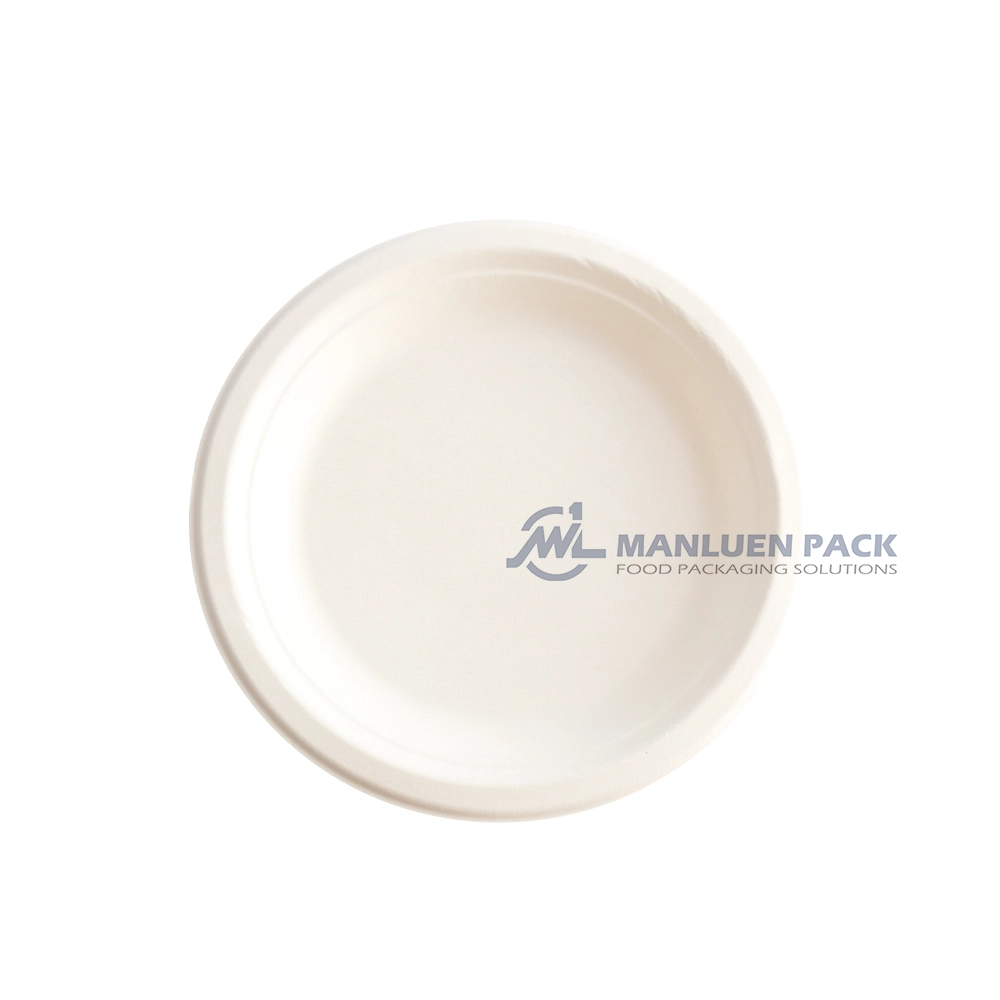
Bagasse formats for food service
Compare representative tray, clamshell, and plate formats. Verify finished-product compostability evidence and the accepted disposal route before purchasing.


However, compostable does not mean that packaging will decompose anywhere it is discarded. Temperature, moisture, oxygen, microorganisms, product composition, and the availability of appropriate composting facilities all influence whether it can be processed successfully.
This distinction matters for businesses replacing conventional packaging. A product may meet recognized compostability standards but still be unsuitable for home composting, incompatible with local waste collection services, or unable to provide the protection required for a particular food.
Understanding compostable packaging therefore involves more than identifying environmentally preferable materials. It requires knowing how the packaging is made, how its compostability is verified, where it can be processed, and when it offers a practical alternative.
How Does Compostable Packaging Work?
Compostable packaging breaks down through the activity of microorganisms, including bacteria and fungi, within a suitable composting environment.
During composting, microorganisms act on organic materials, converting biodegradable carbon into substances such as carbon dioxide, water, and microbial biomass. Some organic matter contributes to the resulting compost, which can be used to improve soil properties.
The process depends on several interacting conditions. Temperature influences microbial activity and chemical reactions within materials. Moisture supports biological activity, while adequate oxygen is essential for aerobic composting. The material’s chemical composition, thickness, coatings, and physical structure also influence how quickly it breaks down.
The US Environmental Protection Agency (EPA) describes composting as the managed aerobic biological decomposition of organic materials. The resulting compost can contribute organic matter and nutrients to soil, supporting soil health and plant growth.
For certified compostable packaging, three different performance requirements are especially important.
Biodegradation, Disintegration, and Compost Quality
Biodegradation concerns the biological conversion of a material by microorganisms. For compostable plastics, testing evaluates whether the material’s organic carbon is sufficiently converted under specified conditions, rather than simply breaking into smaller pieces.
Disintegration concerns physical breakdown. A package must lose its recognizable structure sufficiently during composting so that problematic fragments do not remain in the finished material. A thin film and a thick molded container made from related polymers may behave differently, even if their chemical composition is similar.
Compost quality and ecotoxicity address whether the tested material adversely affects the resulting compost, including its ability to support plant growth. Applicable standards also include restrictions or evaluations for certain substances and contaminants.
These requirements explain why a material becoming brittle, fragmenting, or disappearing from view does not, by itself, prove compostability.
The Biodegradable Products Institute (BPI) identifies biodegradation, disintegration, and ecotoxicity as central elements of compostability assessment.
Crucially, a material’s performance under controlled testing conditions must not be confused with its behavior in a landfill, ocean, roadside environment, or unmanaged compost pile.
What Is Compostable Packaging Made Of?
Compostable packaging can be manufactured using plant fibers, starch-based materials, biodegradable polymers, and combinations of different components.
The materials commonly associated with this category include:
| Material | Typical packaging applications | Important considerations |
|---|---|---|
| Bagasse (sugarcane fiber) | Molded food trays, bowls, plates, and clamshell containers | Coatings, additives, and finished-product construction affect compostability |
| PLA (polylactic acid) | Certain transparent containers, cups, films, and other rigid or flexible packaging | Often designed for industrial composting; PLA is not automatically home compostable |
| Starch-based materials | Certain bags, films, and molded packaging | Commercial products may contain polymer blends or additives |
| Paper and wood pulp | Paper bags, food containers, wraps, and coated paperboard | Paper composition, coatings, adhesives, and food contamination affect disposal options |
| Bamboo and agricultural fibers | Certain molded fiber trays, plates, and foodservice products | Plant-fiber content alone does not establish compostability |
| PHA and other biodegradable polymers | Selected films, coatings, and specialty packaging | Performance depends on polymer formulation and the finished product |
| Mushroom- and seaweed-based materials | Selected protective packaging and emerging packaging applications | The final formulation and applicable testing determine compostability |
These are material categories and potential applications, not a claim that every product made from them is compostable.
For a wider comparison of fiber, plastics, metal, and glass, see the food packaging materials guide.
For example, bagasse is the fibrous material remaining after extracting juice from sugarcane. It can be processed into molded food packaging, but a finished container may also incorporate a moisture-resistant coating or other components. The compostability of the bagasse fibers alone does not establish that the complete coated container will meet compostability requirements.
For buyers comparing physical formats rather than assuming a compostability claim, Manluenpack’s clamshell container range includes OPS, PP, and bagasse options for different foodservice applications.
For portioned sushi and chilled presentation, the wider sushi tray range offers additional formats to compare.
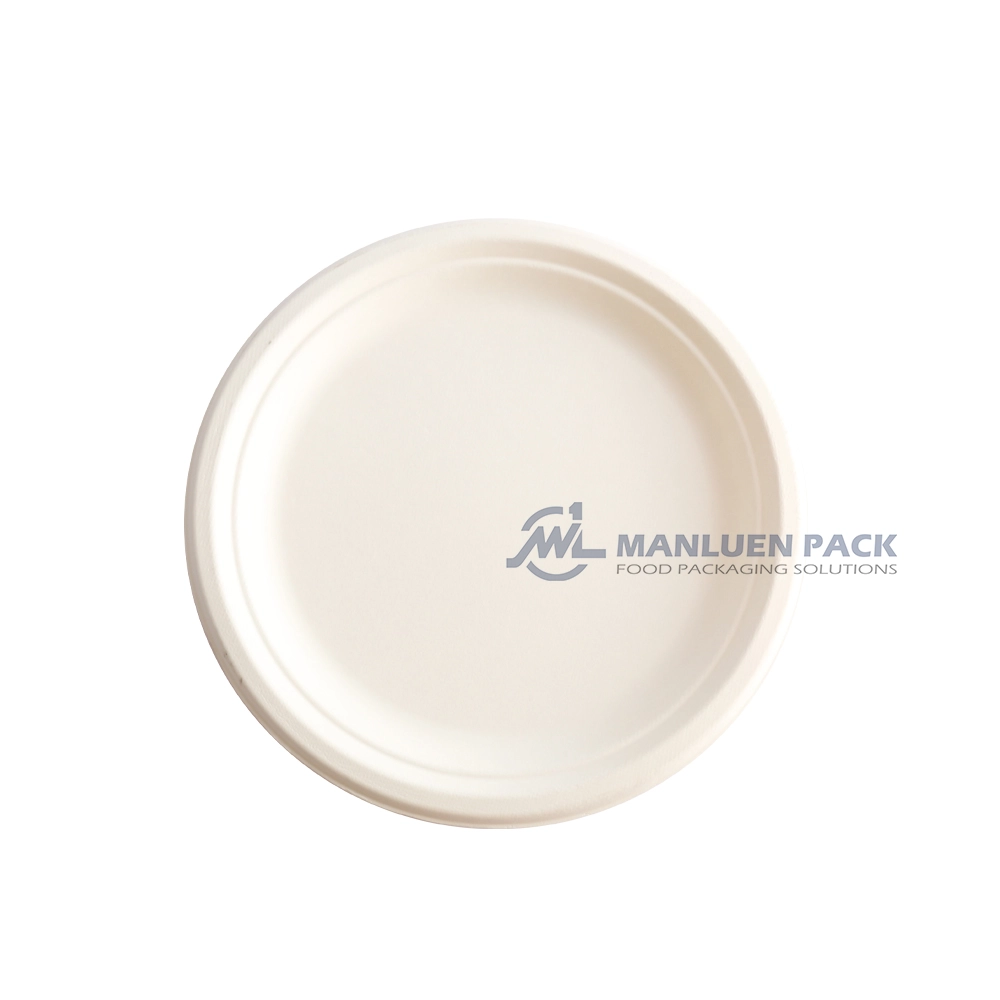
More bagasse formats to compare
A single compartment and a larger serving plate address different menu requirements. Product shape and material do not replace certification or local acceptance checks.

Similarly, PLA is commonly associated with plant-derived raw materials, but its biological breakdown can depend heavily on the processing environment. A transparent package made from PLA should not be assumed to decompose in a backyard compost pile.
The same principle applies to lids, labels, adhesives, inks, and other parts of a package. A compostable tray combined with an unverified plastic lid is not automatically an entirely compostable packaging system.
Does Plant-Based Packaging Mean Compostable Packaging?
No. Plant-based, biobased, biodegradable, and compostable describe different characteristics.
A biobased material is derived wholly or partly from biological resources. That identifies its source, not necessarily its end-of-life behavior.
For instance, bio-based polyethylene can be manufactured using renewable feedstocks while retaining the basic characteristics of conventional polyethylene. Its biological origin does not make it compostable.
Conversely, certain biodegradable polymers can be manufactured from fossil-derived raw materials and may be compostable when their finished formulations meet the relevant requirements.
The USDA BioPreferred Program explains biobased content as a measure of biological origin and cautions that greater renewable content does not necessarily establish superior environmental performance or safety.
In short, what a package is made from and how it behaves during composting must be evaluated separately.
Industrial Compostable vs. Home Compostable Packaging
One of the most important distinctions is whether a package is designed for industrial composting or home composting.
These terms describe different processing environments, not merely different product names.
Industrial Compostable Packaging
Industrial composting, sometimes called commercial composting, takes place in managed facilities that control or monitor conditions such as temperature, moisture, aeration, and processing time.
Many facilities operate at elevated temperatures that support the breakdown of certain compostable polymers and other organic materials.
Industrial compostable packaging is designed to satisfy requirements under these conditions. This may include certain PLA-based products, compostable foodservice items, and specialized bags or films.
However, a package certified for industrial composting should not automatically be placed in a backyard compost pile. Home systems may not consistently provide the temperatures and other conditions necessary for its breakdown.
Industrial composting certification also does not guarantee that every commercial composting facility will accept the product.
Home Compostable Packaging
Home compostable packaging is intended to break down under conditions representative of functioning home composting systems, which generally operate at lower and more variable temperatures than industrial facilities.
Products certified for home composting are evaluated using requirements intended for those environments.
Even so, real-world performance may differ between households.
A small compost bin exposed to prolonged cold weather, insufficient moisture, or limited aeration may process organic materials more slowly than a well-managed pile.
BPI’s home composting guidance explicitly notes that breakdown times vary with composting conditions and that certification does not guarantee successful decomposition in every home system.
The practical distinction is:
| Industrial compostable | Home compostable | |
|---|---|---|
| Intended environment | Managed commercial or municipal composting | Suitable household composting systems |
| Temperature | Typically higher and more controlled | Generally lower and more variable |
| Certification | Industrial compostability requirements | Separate home compostability requirements |
| Typical limitation | Requires access to an accepting facility | Depends on home composting conditions and management |
| Disposal decision | Confirm that the local commercial facility accepts the product | Confirm home certification and follow the applicable composting instructions |
Neither designation should be interpreted as permission to litter or discard a product into the natural environment.
How Long Does Compostable Packaging Take to Decompose?
There is no universal decomposition time that applies to every compostable package.
Time depends on the material, thickness, design, composting system, and the specific characteristic being measured.
For example, BPI’s certification framework describes commercial laboratory disintegration testing over periods of up to 84 days and biodegradation testing over six months. Its home compostability framework involves different testing temperatures and longer periods, including biodegradation testing over 12 months.
These are defined testing periods, not promises that every certified product will completely disappear in a real composting facility within those times.
See BPI’s compostability certification requirements for the distinctions between testing environments.
Actual processing times may differ. A facility might screen materials before they fully disintegrate, while a home composting system may slow substantially during cold weather.
Any manufacturer claim that a particular package decomposes within a specified number of days should therefore identify the supporting test conditions and the product to which the claim applies.
Compostable vs. Biodegradable vs. Recyclable Packaging
These three terms are frequently used together, but they answer different questions.
Compostable vs. Biodegradable
Biodegradable describes the ability of a material to undergo biological degradation through microorganisms.
By itself, the term does not establish a universal decomposition time, a particular disposal environment, or whether the resulting material will meet compost quality requirements.
Compostable packaging is subject to more specific conditions: it must demonstrate appropriate biodegradation, disintegration, and compatibility with the intended composting process.
Accordingly, compostable materials are biodegradable under their specified composting conditions, but biodegradable materials are not necessarily compostable.
A biodegradable material may require environmental conditions different from those available in a commercial composting facility. It might also degrade too slowly or fail other compostability requirements.
In the United States, the Federal Trade Commission’s Green Guides address these terms as environmental marketing claims. The FTC requires appropriate scientific substantiation and cautions against unqualified degradable claims that cannot be supported under customary disposal conditions.
This is particularly important because the appearance of terms such as biodegradable, naturally degradable, or plant-based on packaging does not establish that it belongs in a compost bin.
Compostable vs. Recyclable
Recycling and composting rely on different processing systems.
Recycling generally involves collecting and processing suitable materials so they can be used in manufacturing new products. Composting involves biological processing of accepted organic materials into compost.
A PET food container may be eligible for recycling in a program that accepts its particular type and form. A certified compostable PLA container may instead require an industrial composting service.
Compostable plastics generally should not be mixed with conventional plastic recycling. Their different chemical structures can create problems in recycling operations.
The EPA’s recycling guidance specifically warns that compostable plastics can contaminate and disrupt conventional plastic recycling streams.
However, the categories are not entirely mutually exclusive. Certain uncoated paper or fiber-based packages may be suitable for recycling and composting, depending on their composition, cleanliness, and local acceptance rules.
The relevant question is not simply whether the material is theoretically recyclable or compostable, but whether the actual product can enter an available processing system.
A recycling symbol, resin identification code, or compostability claim should never replace checking the local waste program’s instructions.
What Certifications Should Compostable Packaging Have in the United States?
Compostability claims should be supported by suitable evidence. For American buyers, ASTM standards and recognized third-party certification programs are important reference points.
It is necessary to distinguish between a technical standard, a test report, and a certification.
A standard establishes requirements. Testing evaluates a material or product against specified criteria. Third-party certification provides an additional verification process under the certifier’s program.
ASTM D6400 and ASTM D6868
ASTM D6400 is a major US specification covering plastics and products made from plastics designed for aerobic municipal and industrial composting.
The active ASTM D6400-26 specification addresses requirements for identifying and labeling plastics intended to compost satisfactorily under specified industrial or municipal composting conditions.
ASTM D6868 addresses finished products incorporating plastics or polymers as coatings or additives with paper and other suitable substrates.
For example, a paper-based food container with a polymer coating cannot be assessed solely by assuming that its paper component will decompose. The complete product must satisfy the applicable requirements.
The ASTM D6868-21 specification addresses disintegration, inherent biodegradation, and the absence of adverse effects on the ability of finished compost to support plant growth.
These standards concern the defined composting conditions. They are not general guarantees of degradation in home compost piles, landfills, soil, or marine environments.
BPI Compostability Certification
The Biodegradable Products Institute (BPI) provides third-party compostability certification programs in North America.
BPI uses ASTM D6400 as the base standard for its commercial compostability certification, with additional assessment routes available for eligible products under its certification framework.
BPI also offers a separate home compostability certification program based on the French standard NF T 51-800.
When checking certification, buyers should confirm the actual product rather than relying only on a supplier’s statement that the raw material is compostable.
BPI maintains a public database of certified compostable products, allowing users to search by company, brand, product name, or SKU and check the relevant certification status.
Certification details should match the product being purchased, including applicable dimensions, thickness, construction, and designated composting environment.
CMA and Real-World Composting Performance
The Compost Manufacturing Alliance (CMA) provides another relevant form of evaluation, including field-based disintegration testing intended to reflect commercial composting operations.
This is useful because laboratory testing and actual facility processing are not identical.
However, CMA certification and conditional acceptance are distinct mechanisms. Neither should be interpreted as a requirement that every composting facility accept the listed product.
Its certification and acceptance requirements explain the relevant distinctions and material categories.
Does Certification Mean a Composting Facility Will Accept the Packaging?
Not necessarily.
Certification supports a claim about a product’s performance under specified conditions. Acceptance is a separate operational decision made by the waste collection service or composting facility.
A facility may decline certified compostable packaging because its processing cycle is too short for certain products, because its equipment removes packaging during screening, or because operators are concerned about contamination from conventional plastics that resemble compostable products.
Some facilities process only food scraps and yard trimmings.
The EPA’s sustainable foodservice purchasing guidance recommends choosing commercially compostable foodservice products only when a local program accepts the relevant items and suitable collection services are available.
Certification tells you what a product has been evaluated to do. Local acceptance tells you whether there is a practical route for it to be composted. Both matter.
How to Dispose of Compostable Packaging Properly
The appropriate disposal method depends on the package and the available local waste services.
A useful decision process is:
- Identify the exact packaging material and claim. Determine whether the item is labeled as commercially compostable, home compostable, recyclable, or merely biobased. Do not assume these terms mean the same thing.
- Check the certification and product instructions. Look for evidence covering the finished product, including any lids, coatings, labels, or other components.
- Confirm local acceptance. Ask the municipality, waste hauler, or composting facility whether it accepts that specific category of packaging. A food scraps collection program does not necessarily accept compostable plastics or foodservice containers.
- Use only an approved disposal route. Place the item in the appropriate compost collection system if accepted. Use home composting only when the product is suitable for it. If no suitable composting option exists, follow local disposal instructions rather than putting it into conventional recycling without confirmation.
For businesses, this may also mean reviewing the waste hauler’s accepted-material list before changing packaging supplies.
Clear instructions are especially important for restaurants, cafeterias, supermarkets, and other environments where customers dispose of packaging themselves.
A label that simply says “compostable” may be insufficient if the product requires industrial composting that is unavailable to most customers.
The FTC’s Green Guides call for qualifications to compostability claims when products cannot be safely composted at home in a timely manner or when suitable facilities are not sufficiently available.
What Happens if Compostable Packaging Goes to a Landfill?
A landfill is not the same as a composting facility.
Industrial composting relies on managed aerobic conditions, while many landfills contain oxygen-poor environments that do not provide the conditions required for commercial compostability.
Certain organic materials can decompose through anaerobic biological processes in landfills, potentially producing methane. Other materials, including some compostable polymers, may persist for long periods because conditions are unsuitable for their breakdown.
Therefore, landfill disposal should not be presented as an equivalent alternative to composting.
The EPA explains that anaerobic decomposition of organic waste in landfills can generate methane, a powerful greenhouse gas.
Compostable packaging certification does not establish how quickly a particular package will degrade in a landfill or whether it will produce methane under those conditions.
Is Compostable Packaging Suitable for Anaerobic Digestion?
Not automatically.
Anaerobic digestion processes organic materials in the absence of oxygen and can produce biogas and digestate. It is different from the aerobic composting process used to evaluate most commercially compostable packaging.
A facility that accepts food scraps for anaerobic digestion may not be equipped to break down compostable containers or films.
The EPA’s explanation of anaerobic digestion describes the distinct biological process involved.
Businesses using organic waste collection services should therefore confirm whether their waste is sent to composting, anaerobic digestion, or another processing system, and whether packaging is accepted.
What Are the Environmental Benefits of Compostable Packaging?
Compostable packaging can offer environmental benefits in suitable applications, particularly when it supports the collection and processing of food waste.
One potential benefit is reducing the amount of accepted organic material sent to landfills. Proper composting can help recycle organic matter and nutrients into soil amendments.
Compostable foodservice packaging can also make some food waste collection systems more convenient.
For example, consider a cafeteria that uses certified compostable bowls and plates, offers clearly labeled collection bins, and works with a facility that accepts those items alongside food scraps.
In that setting, customers may be able to dispose of food residue and accepted foodservice packaging together, reducing the need to separate heavily food-soiled containers from remaining food.
This can support a coordinated organics collection program, provided contamination is controlled.
For buffet or event service, plate sizes and formats are another part of the menu-planning decision. Select the serving format first, then verify whether the exact product meets the collection program’s requirements.
Compostable alternatives may also be useful for certain small packaging components that frequently enter food waste streams, such as produce stickers or food-related labels. Replacing a problematic component with a properly verified and accepted compostable alternative could help reduce contamination, although actual benefits depend on product design and processing practices.
These examples illustrate an important principle: compostable packaging may be most useful when it improves the management of food waste, not simply when it replaces conventional plastic.
Does Compostable Packaging Reduce Plastic Pollution?
It can help reduce reliance on certain conventional plastic products when suitable alternatives are used and managed properly.
However, compostable packaging is not a solution to littering or marine plastic pollution.
Materials designed to biodegrade in controlled composting conditions may behave very differently in rivers, oceans, or other unmanaged environments.
The EPA’s National Strategy to Prevent Plastic Pollution recognizes the importance of preventing plastic pollution throughout the material life cycle, including improving systems for certified compostable products.
No compostability claim should be interpreted as permission to discard packaging into the environment.
Is Compostable Packaging Always Better for the Environment?
No. Environmental performance depends on the entire packaging system.
Producing packaging can require raw materials, land, water, energy, manufacturing inputs, and transportation. Different materials also have different weights, functional properties, and disposal requirements.
A plant-based product may involve agricultural inputs or substantial processing. An industrially compostable package may still end up in a landfill if suitable services are unavailable.
At the same time, a conventional package that is collected and successfully recycled may perform differently from a compostable alternative that cannot access a composting system.
These comparisons are not settled simply by choosing a material labeled compostable.
A meaningful life cycle assessment considers functionally comparable packaging products and relevant environmental effects across raw material sourcing, manufacturing, distribution, use, and end-of-life treatment.
Importantly, compostable packaging is still often single-use packaging. It does not automatically eliminate the resource consumption associated with manufacturing disposable products.
For many applications, preventing unnecessary packaging or using a practical reusable system deserves consideration before switching between disposable materials.
The EPA’s foodservice guidance prioritizes reusable foodservice ware within a functioning collection and washing system. It recognizes certified compostable foodservice products as a possible alternative when appropriate collection and composting infrastructure exists.
The environmental benefits of any choice ultimately depend on how the complete system performs.
When Is Compostable Packaging the Right Choice for Food Businesses?
The suitability of compostable packaging depends on what the package must accomplish and what happens after use.
For restaurants, takeout businesses, supermarkets, delis, and prepared-food counters, the strongest use cases often involve food-soiled packaging that is difficult to recycle but can be collected alongside food scraps through a verified composting program.
For example, a foodservice operation might consider compostable plates, bowls, or containers for on-site dining when an accepting commercial facility and a reliable collection system are already available.
A controlled environment such as a cafeteria, stadium, or event venue can sometimes make consistent disposal instructions easier to implement than a retail product distributed across many different communities.
However, the packaging must still satisfy its primary function.
Food Protection and Shelf Life Come First
For food packaging, material selection affects more than waste disposal.
A container may need to withstand oil, moisture, pressure, temperature changes, transportation, or extended storage.
Certain foods require moisture barriers, while others benefit from ventilation or controlled gas exchange. A fresh produce package and a container for hot, oily prepared food may need substantially different properties.
If changing to a compostable alternative shortens shelf life, increases leakage, requires additional refrigeration, or contributes to food spoilage, the resulting environmental impact may outweigh the anticipated packaging benefit.
The EPA emphasizes the importance of preventing wasted food in its food waste prevention guidance.
Therefore, replacing conventional packaging should involve evaluating the actual food application, not just the packaging material.
For soups and liquid-based meals, compare food bowl formats against the portion size and handling conditions. For chilled or portioned meals, compare food storage containers against the required closure, compartments, and storage conditions. These application ranges help assess alternatives; a product’s material and disposal route still need to be checked separately.
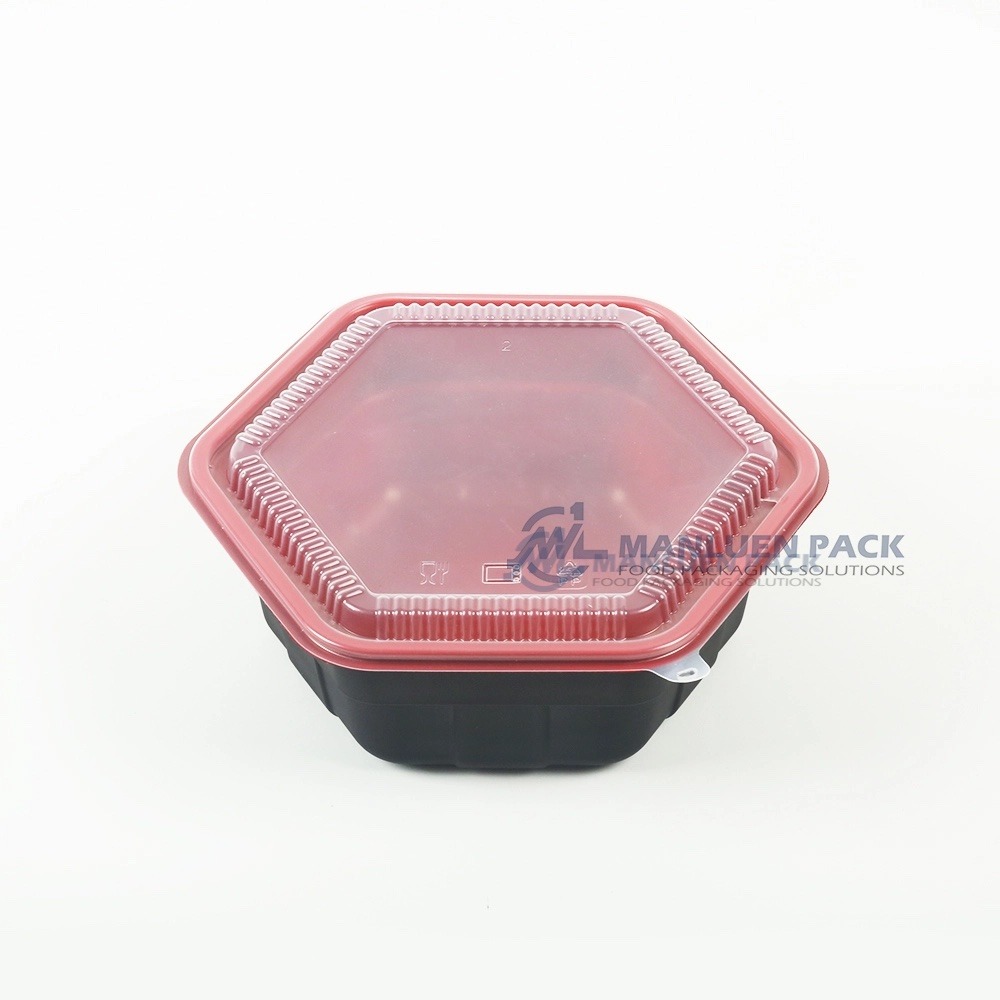
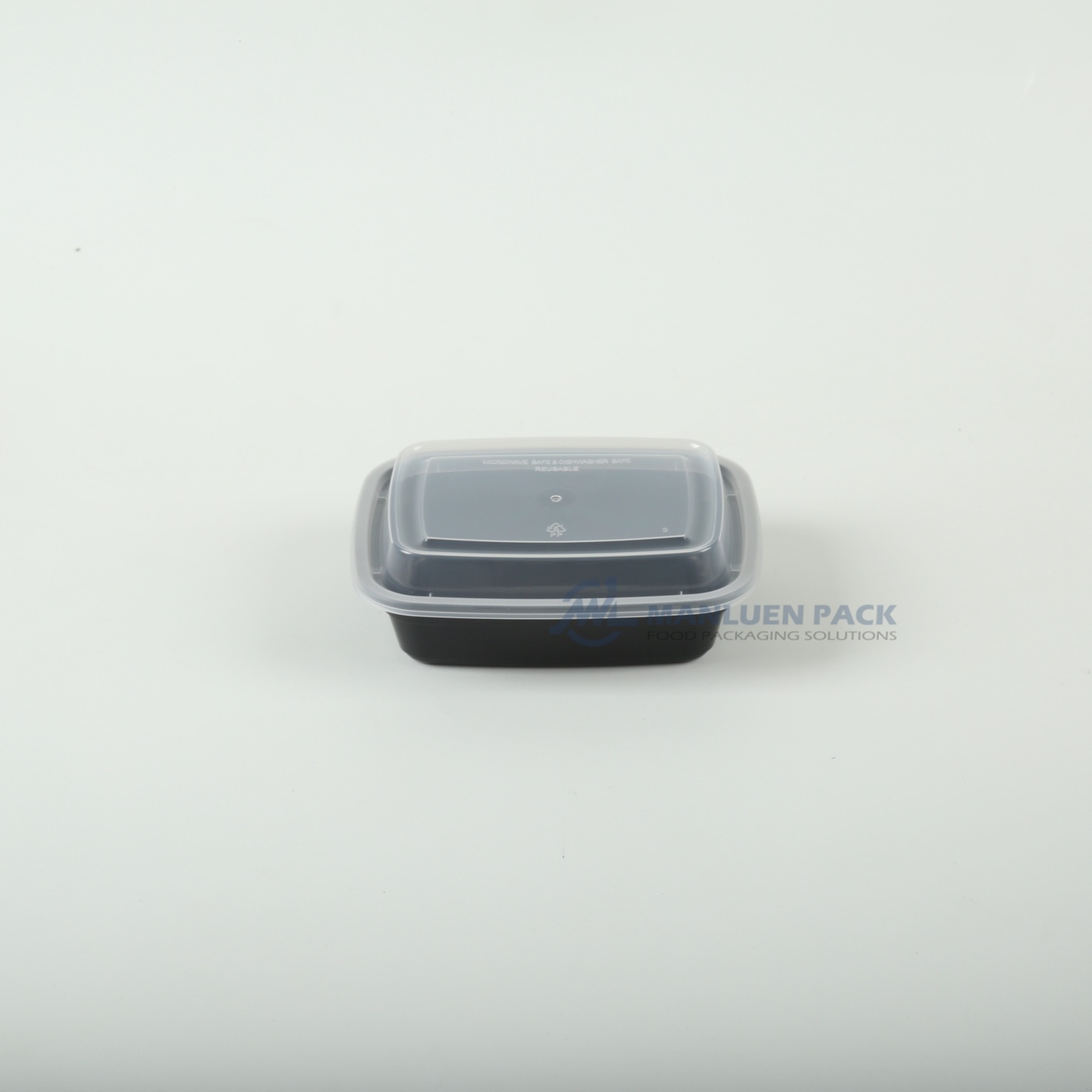
Compare containers for storage and takeaway
These PP options illustrate alternative food-service formats. They are not presented as compostable; choose according to the food, handling conditions, and available disposal route.
Compostable Packaging and Food Contact Safety
Another important distinction is that compostability certification is not the same as food contact compliance.
A material that meets a compostability standard is not automatically suitable for direct contact with every food.
For example, a package intended to hold refrigerated produce may have different safety and performance requirements from one designed for hot food or prolonged contact with fatty foods.
The US Food and Drug Administration regulates food contact substances through applicable authorizations and regulatory pathways. Compliance depends on the substance, formulation, and intended conditions of use.
The FDA’s food contact guidance explains how these substances are evaluated, including consideration of migration into food and expected consumer exposure.
For food packaging procurement, compostability documentation and food contact compliance information should be requested and assessed separately.
Similarly, compostable does not mean microwave-safe, oven-safe, freezer-safe, leakproof, or suitable for every type of food. Those properties require their own supporting evidence.
When comparing a plastic alternative for reheating, the guide to microwaving food in plastic containers explains the separate questions to check before use.
What Should Businesses Check Before Buying Compostable Packaging?
For commercial buyers, the most useful approach is to evaluate a complete packaging solution rather than choosing a material based only on its environmental description.
Start with the intended use: food type, contact conditions, temperature, storage duration, transportation requirements, and the level of protection needed.
Next, identify the actual material and construction. For molded fiber or paperboard packaging, the relevant details may include coatings, adhesives, and any separately supplied lids. For compostable plastics, polymer blends, thickness, and other components may affect performance.
Then review the certification evidence. It should correspond to the complete product and the intended composting environment, rather than only to a raw ingredient.
Finally, verify the available waste collection pathway and consider procurement costs, operational changes, and customer disposal instructions.
An inexpensive package that cannot protect the food is not a successful replacement. Likewise, a certified industrially compostable container may provide limited practical benefit in a market where no facility accepts it.
Packaging suppliers should be able to provide specific, supportable information about the products being evaluated. Unsupported claims such as “100% environmentally friendly,” “completely harmless,” or “decomposes anywhere” should not substitute for relevant testing and documentation.
For businesses selling into different US states, labeling requirements also deserve attention. State rules may impose additional restrictions beyond federal environmental marketing guidance.
For example, CalRecycle’s environmental labeling guidance explains California restrictions affecting compostability, biodegradability, and related claims. Requirements should be checked for the states where products will be sold or distributed.
Frequently Asked Questions About Compostable Packaging
Can Paper and Cardboard Packaging Be Compostable?
Yes, certain paper and cardboard products can be compostable, but the answer depends on their construction and treatment.
Uncoated paper made from suitable fibers may behave differently from coated paperboard containing plastic films, adhesives, inks, or other treatments.
Some paper-based packaging may also be recyclable, depending on its condition and local recycling requirements.
Neither paper nor cardboard should be assumed compostable solely because it originated from wood fibers. The actual finished product and available disposal system determine the appropriate decision.
Are Compostable Packaging Materials Plastic-Free?
Not necessarily.
Some compostable packaging contains biodegradable polymers, including materials that are classified as plastics.
PLA-based products are one example, while certain coated fiber products may combine plant fibers with polymer components.
Consequently, compostable and plastic-free are separate claims. A compostability certification does not automatically establish that the product contains no plastic.
Can Compostable Packaging Be Used for Hot Food?
Some compostable packaging products are designed for hot food applications, but others are not.
Heat resistance depends on the complete material formulation, coating, structure, and intended use.
A package may be commercially compostable yet unsuitable for hot liquids, oily foods, microwave heating, or prolonged high-temperature contact.
Foodservice buyers should request product-specific temperature and food contact information rather than treating compostability as a performance specification.
Does Compostable Packaging Turn Entirely Into Fertilizer?
Not literally.
During aerobic composting, biodegradable material is processed by microorganisms. Some organic carbon is converted into carbon dioxide and microbial biomass, while other organic matter may contribute to the finished compost.
The resulting compost can improve soil properties, but the packaging itself does not necessarily contribute substantial quantities of plant nutrients.
Compostability should therefore not be confused with fertilizer value.
Can Compostable Packaging Be Thrown Into Ordinary Trash?
If no suitable composting service is available and local guidance requires disposal with ordinary trash, that may be the practical option.
However, disposal in ordinary trash does not deliver the intended benefit of composting, and it does not mean the packaging will quickly decompose in a landfill.
It is also not appropriate to place compostable plastic into conventional recycling merely to avoid throwing it away.
The preferred route is always the one supported by the actual product instructions and local waste management system.
Conclusion: Compostability Is a Verified Property, Not a Universal Environmental Guarantee
Compostable packaging is designed to undergo biological breakdown under specified composting conditions while meeting requirements concerning disintegration and the quality of the resulting compost.
Its potential value is real, particularly in foodservice settings where certified packaging can support the collection of food scraps through a functioning composting system.
But that value depends on several conditions working together.
The material must be appropriate for the packaging application. The finished product must have suitable evidence supporting its compostability claim. An accepting composting system must be available, and consumers or businesses must dispose of the package correctly.
It is equally important to consider food protection, waste prevention, recycling options, and the environmental impacts of producing the packaging in the first place.
The most useful question is not simply whether packaging is compostable, but whether it can be used effectively, collected correctly, and actually composted in the system available to its users.
That distinction helps businesses and consumers make packaging decisions based on verified performance and realistic end-of-life outcomes rather than environmental claims alone.
Discuss your next food packaging project with Manluen Pack. Contact us with your food type, serving temperature, portion size, and intended disposal route to discuss available formats and request product-specific specifications.

ManLuen Plastic Packaging Company, which is specialized in the production of Plastic Food Packaging for more than 20 years. Our products are made from 100% virgin and BPA-Free PP, PS, and OPS comply with FDA and European Standards.
 EN
 ZH
 FR
 PT
 ES
 KO
 JA