
Introduction
The best takeout containers for restaurants depend on the food being served. For hot meals and rice dishes, polypropylene (PP) containers are often a practical option when the finished packaging is rated for the intended temperature. Clear plastic clamshells work particularly well for salads, sandwiches, sushi and cold prepared foods. Bagasse and properly designed paper containers offer alternatives for many takeaway meals, while aluminum containers are useful for oven-ready dishes and catering. Soups, curries and sauces require containers with closures tested for liquid transport.
A restaurant serving burgers, a sushi bar preparing chilled assortments and a delivery kitchen packing curry bowls should not automatically use the same container. Each needs a different balance of food protection, temperature suitability, visibility, sealing, portion size and cost.
This guide compares the main types of restaurant takeout containers, explains which materials work best for different foods and shows how to evaluate packaging before ordering wholesale.
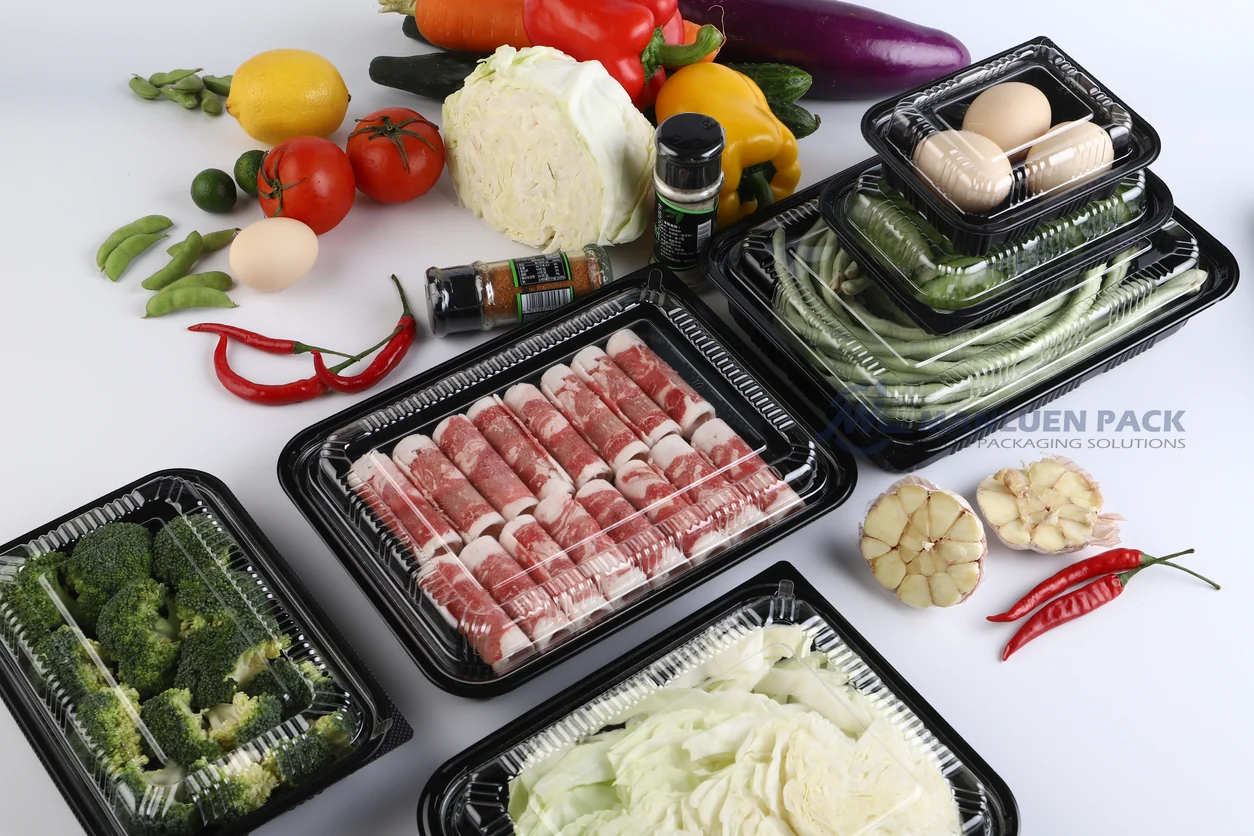
Quick Answer: Which Takeout Container Is Best for Your Restaurant?
| Restaurant Food or Application | Recommended Container | Common Material Options | What Matters Most |
|---|---|---|---|
| Hot meals, rice and pasta | Rectangular meal prep box | PP, suitable fiber-based packaging | Temperature rating, lid fit, stacking |
| Meals with several sides | Two- or three-compartment container | PP, bagasse | Compartment layout, closure, portion size |
| Salads and cold prepared meals | Clear clamshell or salad bowl | PET, PS/OPS, suitable PP | Visibility, condensation, closure |
| Sushi and sashimi | Display tray with clear lid | PS, PET, OPS, PP, bagasse combinations | Presentation, lid clearance, chilled handling |
| Burgers and sandwiches | Hinged clamshell or paper burger box | PP, paperboard, bagasse | Height, grease management, ventilation |
| Soups and curries | Round deli or soup container | Suitable PP or coated paper container | Tested leak resistance, temperature rating |
| Fried foods | Vented clamshell or suitable paper box | Paperboard, bagasse, PP | Steam management, grease resistance |
| Sauces and dressings | Portion cup or condiment bottle | PP, PET where appropriate | Small capacity, secure closure |
| Oven-ready and catered meals | Aluminum food tray | Aluminum with compatible lid | Oven instructions, handling, food compatibility |
| Family meals and sharing platters | Large tray or covered platter | PP, PET, PS/OPS, aluminum | Capacity, strength, secure transport |
There is no universal winner. A container that performs well with cold sushi might be unsuitable for piping-hot soup, while a microwave-rated meal tray may provide less product visibility than a clear display clamshell.
For most restaurants, the best starting point is to identify the foods being packed most frequently, shortlist suitable container formats and test the complete base-and-lid system before committing to a recurring order.
1. PP Meal Prep Containers: Best for Hot Meals and Everyday Takeout
Polypropylene, commonly called PP, is widely used in restaurant meal containers because it combines lightweight construction with useful heat resistance. It is a practical material for rice dishes, pasta, cooked vegetables, prepared meals and certain reheating applications.
However, not every PP container should automatically be treated as microwave-safe or suitable for prolonged exposure to high heat. The specifications of the finished tray, lid and any other components must support the intended use.
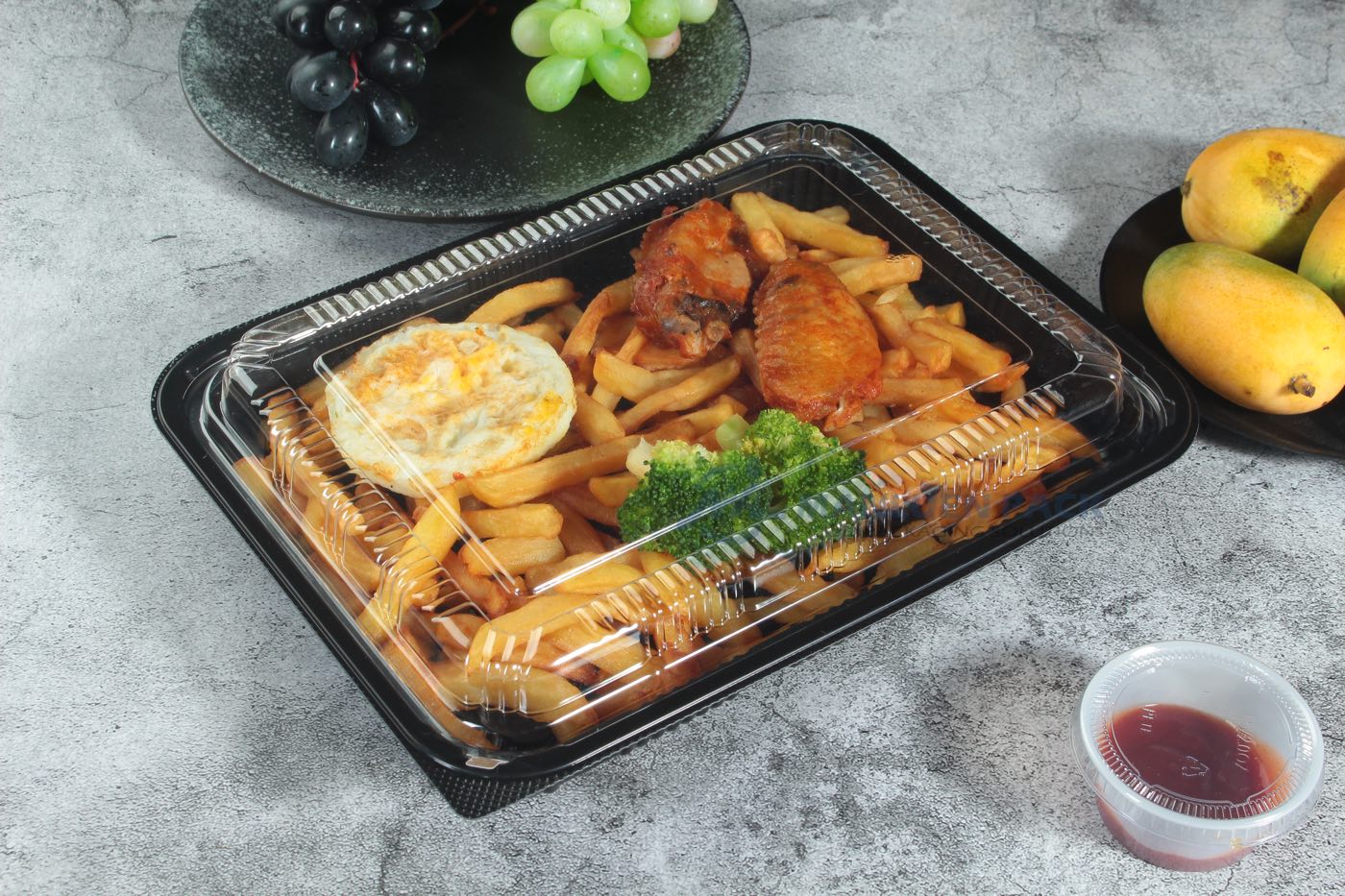
For restaurants, rectangular PP containers have several operational advantages. They provide a predictable packing area, can be supplied in different depths and may be designed for stacking during preparation or delivery. Black bases with transparent lids are particularly common in meal-prep and takeaway applications because the base provides a consistent presentation while the lid allows the contents to be identified.
A single-compartment container is often appropriate for pasta, rice bowls and foods that do not need separation. It also offers a more flexible interior for dishes with unusual shapes.
For meals combining several components, divided containers may be more useful.
Recommended Manluen PP Meal Containers
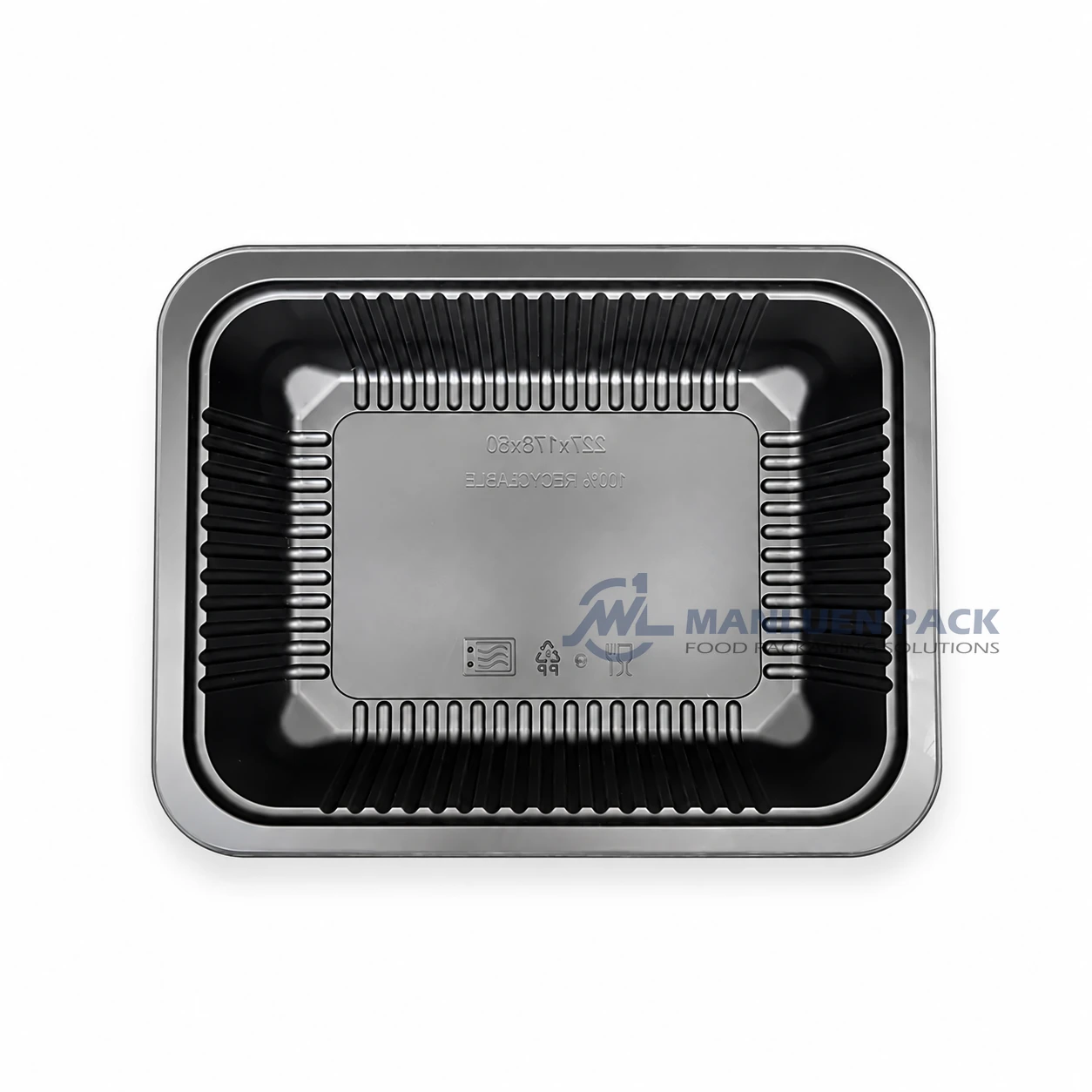
WL-2015-4 Single-Compartment PP Bento Box
An open interior for complete meals and rice-based dishes.
230 × 180 × 50 mm; PP; 100 pieces/carton
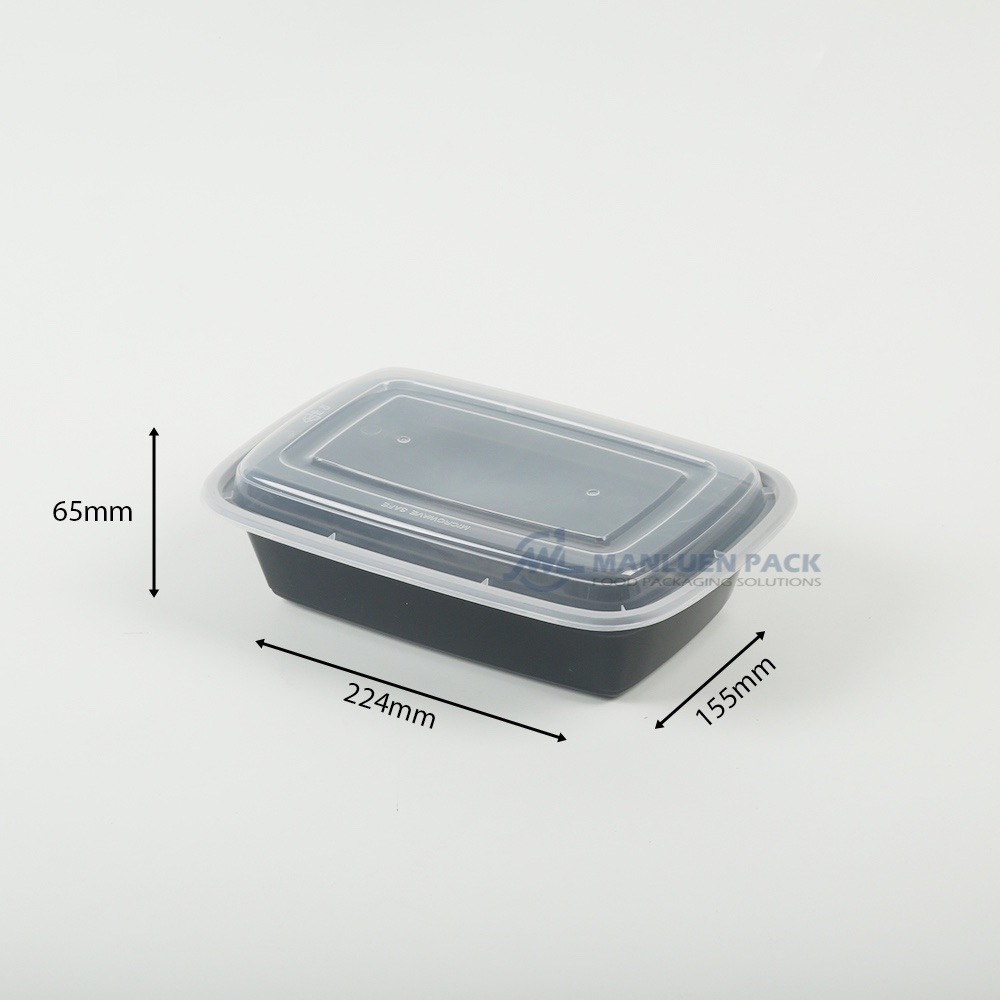
2030 Two-Compartment PP Meal Prep Container
Suitable for separating a main dish and side portion.
225 × 156 × 54 mm; PP; 150 pieces/carton
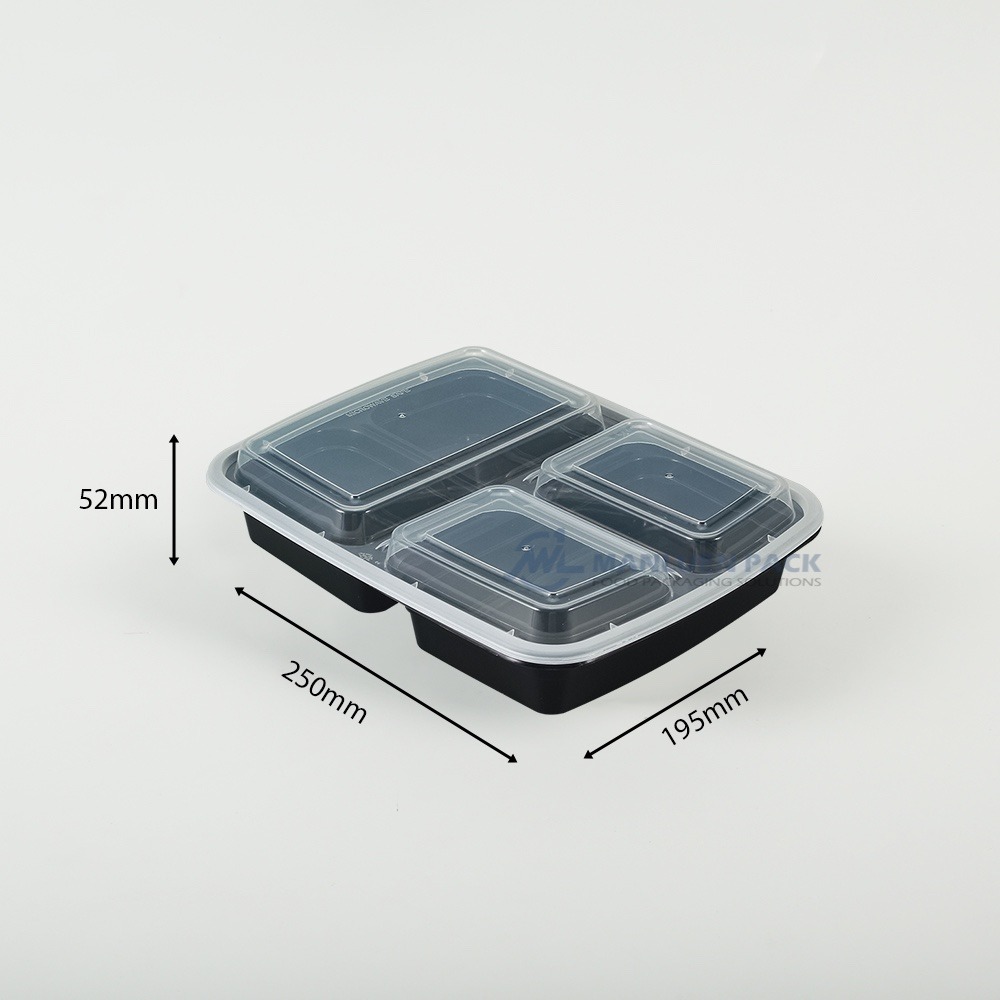
3039 Three-Compartment PP Meal Prep Container
Designed for meals requiring three organized sections.
250 × 195 × 52 mm; PP; 150 pieces/carton
Buying tip: Test the actual food temperature, weight and lid fit. If customers are expected to reheat meals, verify the instructions for both the base and lid rather than assuming that the entire set shares the same temperature rating.
2. Compartment Takeout Containers: Best for Rice Combos and Multi-Item Meals
Divided takeout containers are especially useful when a restaurant serves meals containing different foods in the same order. A three-compartment container can organize rice, protein and vegetables, while a two-compartment design may be sufficient for a main dish and a side.
The main advantage is separation. Food components can be arranged without relying on individual smaller containers, which may simplify portioning and packing.
But more compartments are not always better.
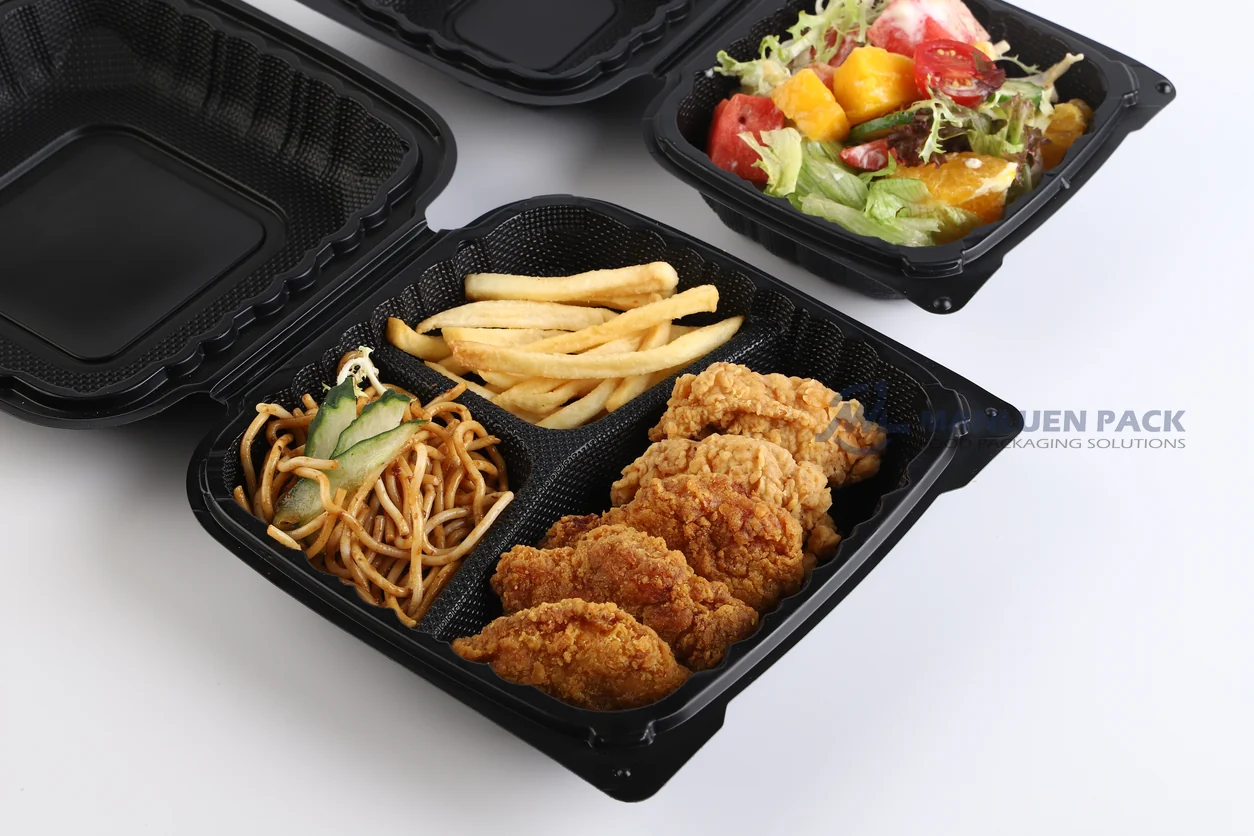
A single-compartment tray may be more suitable for noodles, pasta or dishes served over a shared base. Certain traditional platters also require an uninterrupted surface rather than divided sections. For example, foods arranged across a large flatbread or other common serving base may not fit naturally into a compartmented meal box.
Compartment walls also do not necessarily provide liquid-tight separation. If a curry, sauce or dressing must remain completely separate, a sealed portion cup may still be needed.
For high-volume restaurants, choosing between one-, two- and three-compartment containers should be based on actual menu combinations rather than assumptions about which design looks more convenient.
More Options for Divided Restaurant Meals
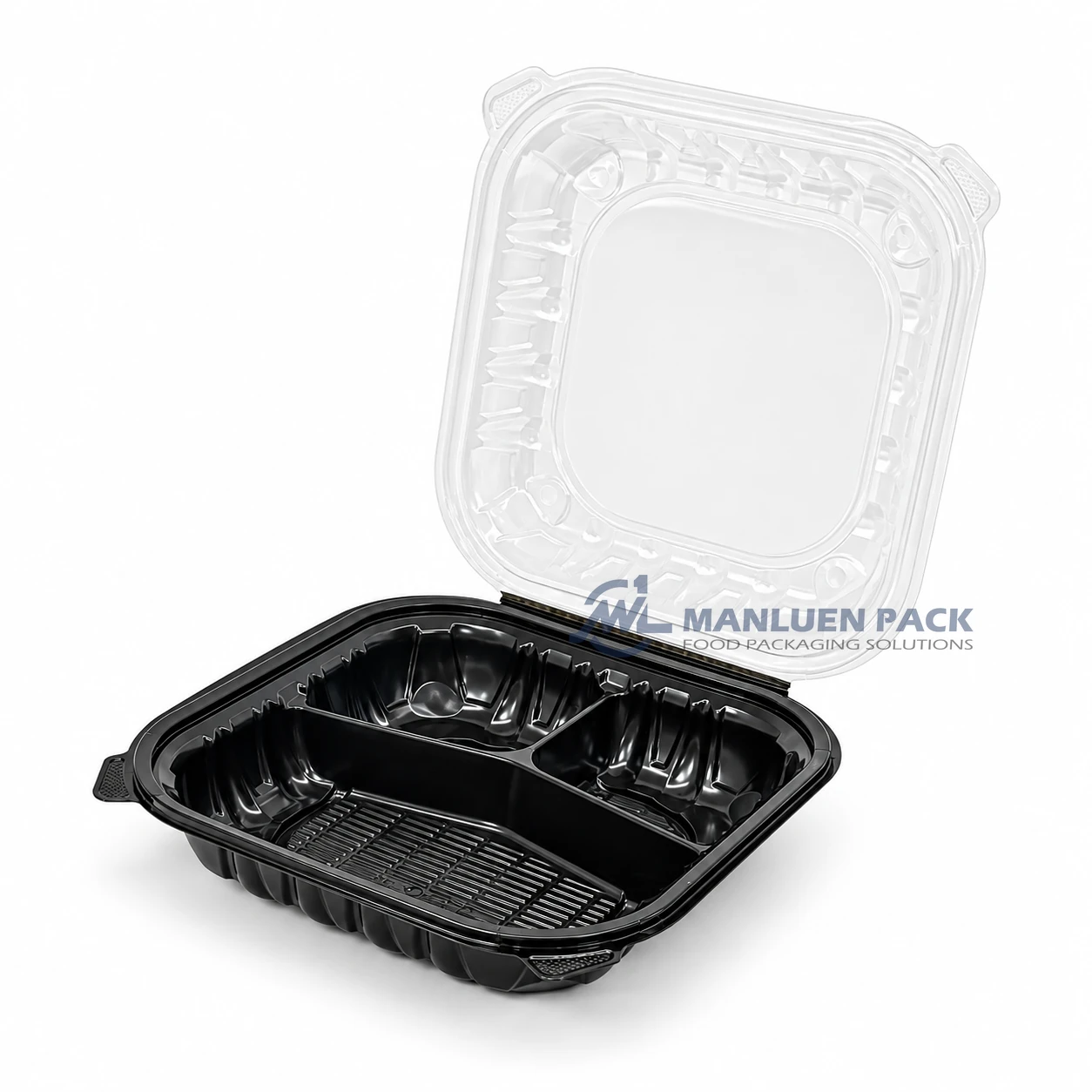
WL-BW103 Three-Compartment PP Hinged Clamshell
Combines three internal sections with an attached lid.
220 × 250 × 80 mm; PP; 150 pieces/carton
3039 Three-Compartment Meal Prep Tray
A separate-lid rectangular meal tray for organized takeaway portions.
250 × 195 × 52 mm; PP; 150 pieces/carton
A hinged clamshell may reduce the need to handle separate lids during packing. A two-piece system can provide a different appearance or storage arrangement. The better choice depends on the restaurant’s preparation process and how securely each design closes.
3. Clear Clamshell Containers: Best for Salads, Sandwiches and Cold Food Display
Clear clamshell containers are widely used for food that customers benefit from seeing before opening the packaging. Typical applications include salads, sandwiches, fruit portions, desserts and cold prepared foods.
Their main advantage is visibility. In a deli or refrigerated display, transparent packaging can help communicate the food’s appearance while protecting it from routine handling.
These containers may use PET, PS, OPS or selected PP formulations, depending on the product. Those materials should not be treated as interchangeable. Their temperature performance, stiffness and handling characteristics differ, and the final package should be selected for the actual food and storage conditions.
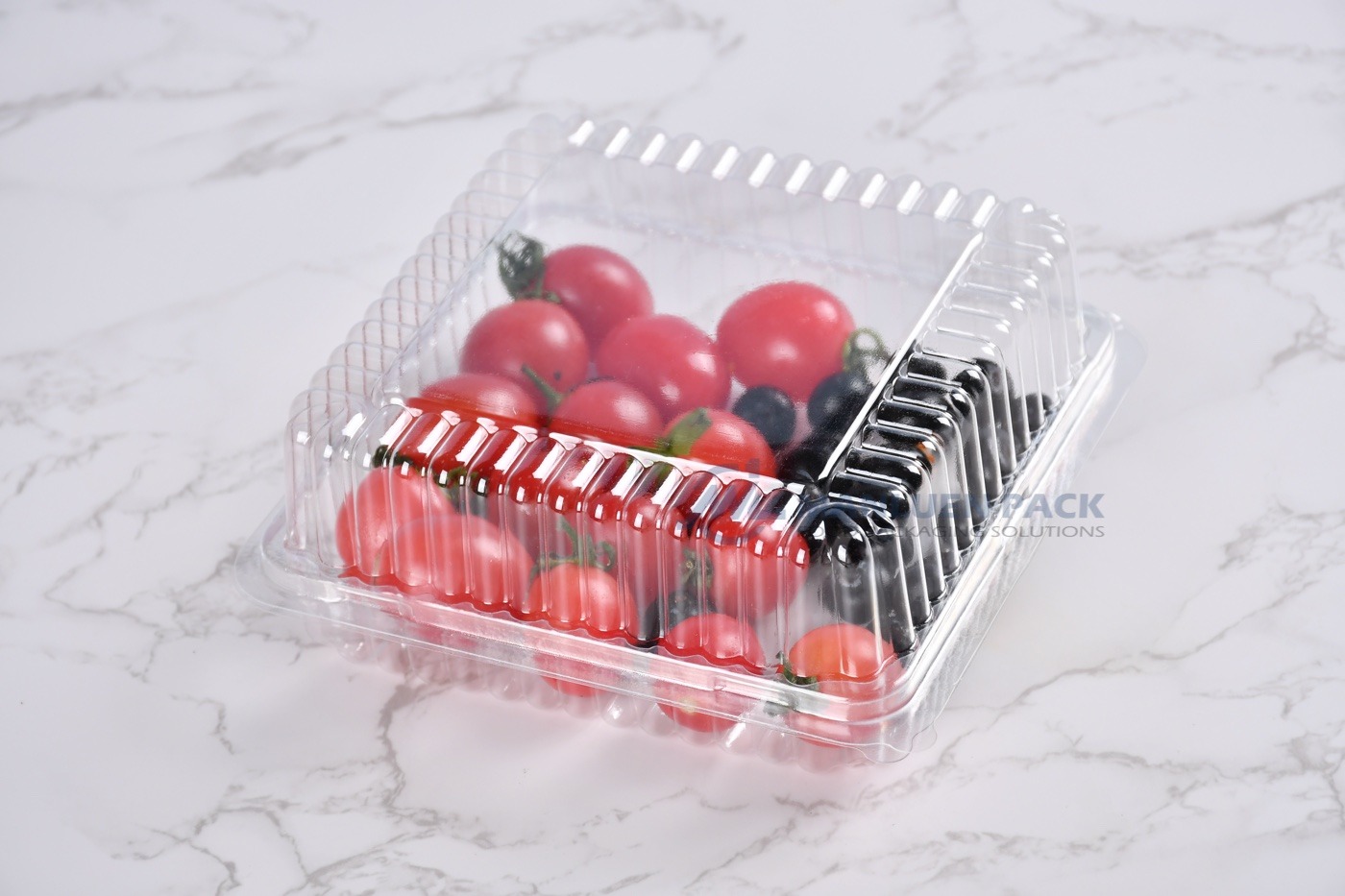
Hinged clamshells are convenient because the lid remains connected to the base, reducing the chance of mismatched components during packing. However, a hinged closure is not automatically leak-proof. Many clear display containers are intended for relatively dry foods rather than soups or large quantities of sauce.
For cold prepared meals, buyers should also consider condensation, available headspace and whether the container can be stacked without damaging its contents.
Clear Takeout Packaging from Manluen
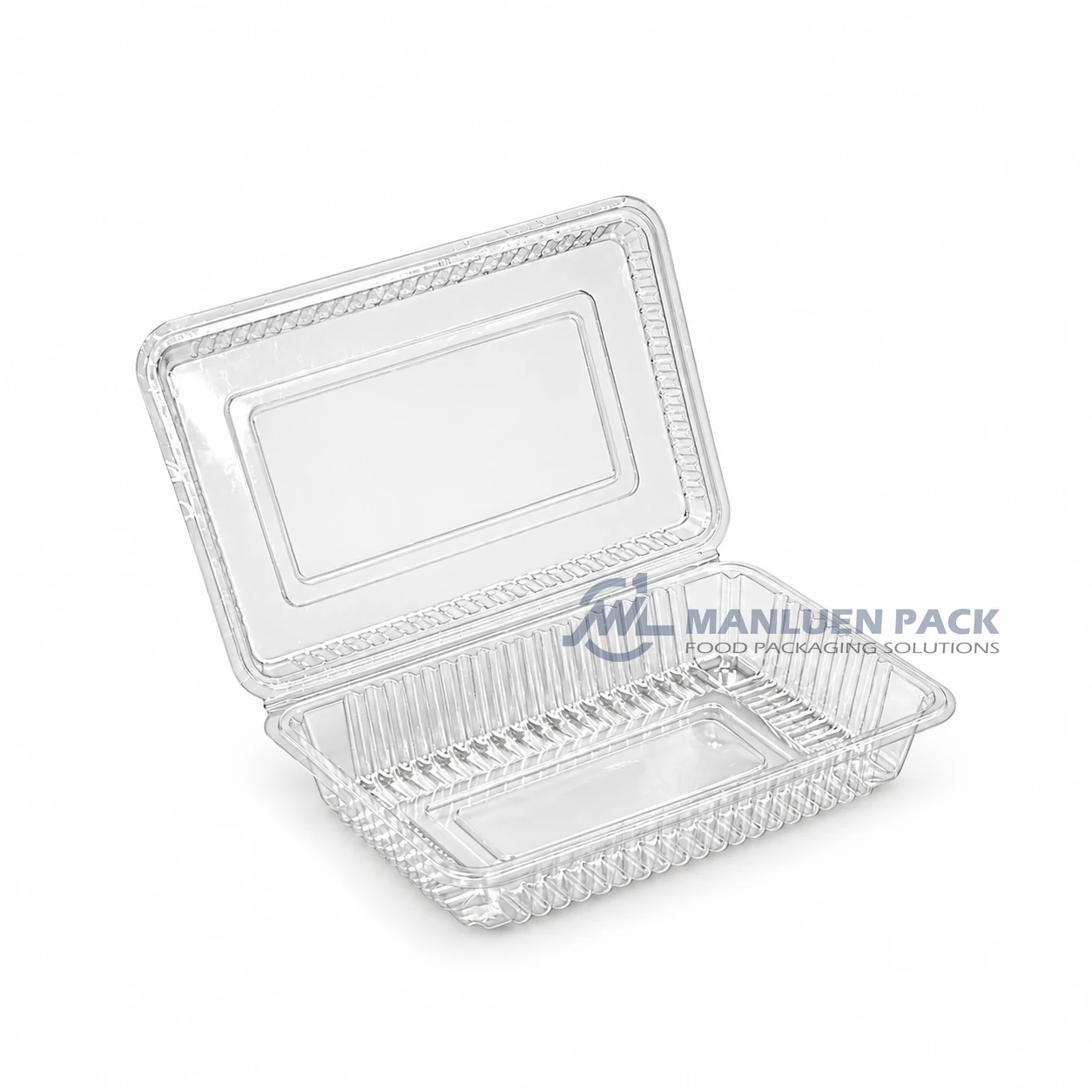
WL-1H Clear Rectangular Hinged Container
For smaller cold food portions, snacks and prepared-food display.
166 × 105 × 40 mm; PS/OPS; 2,000 pieces/carton
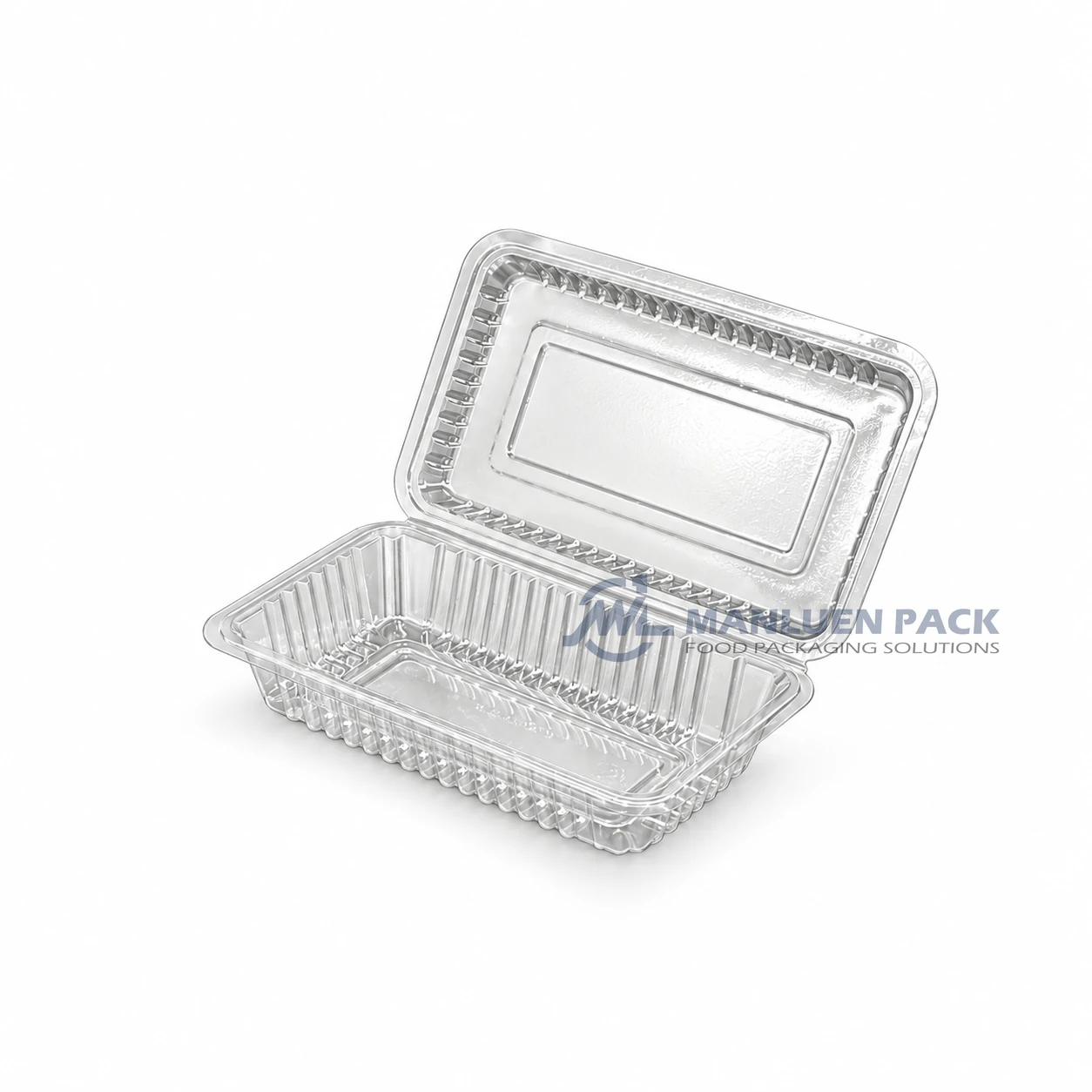
WL-2H Medium Clear Clamshell
A larger transparent format for deli and takeaway presentation.
199 × 130 × 40 mm; PS/OPS; 2,000 pieces/carton
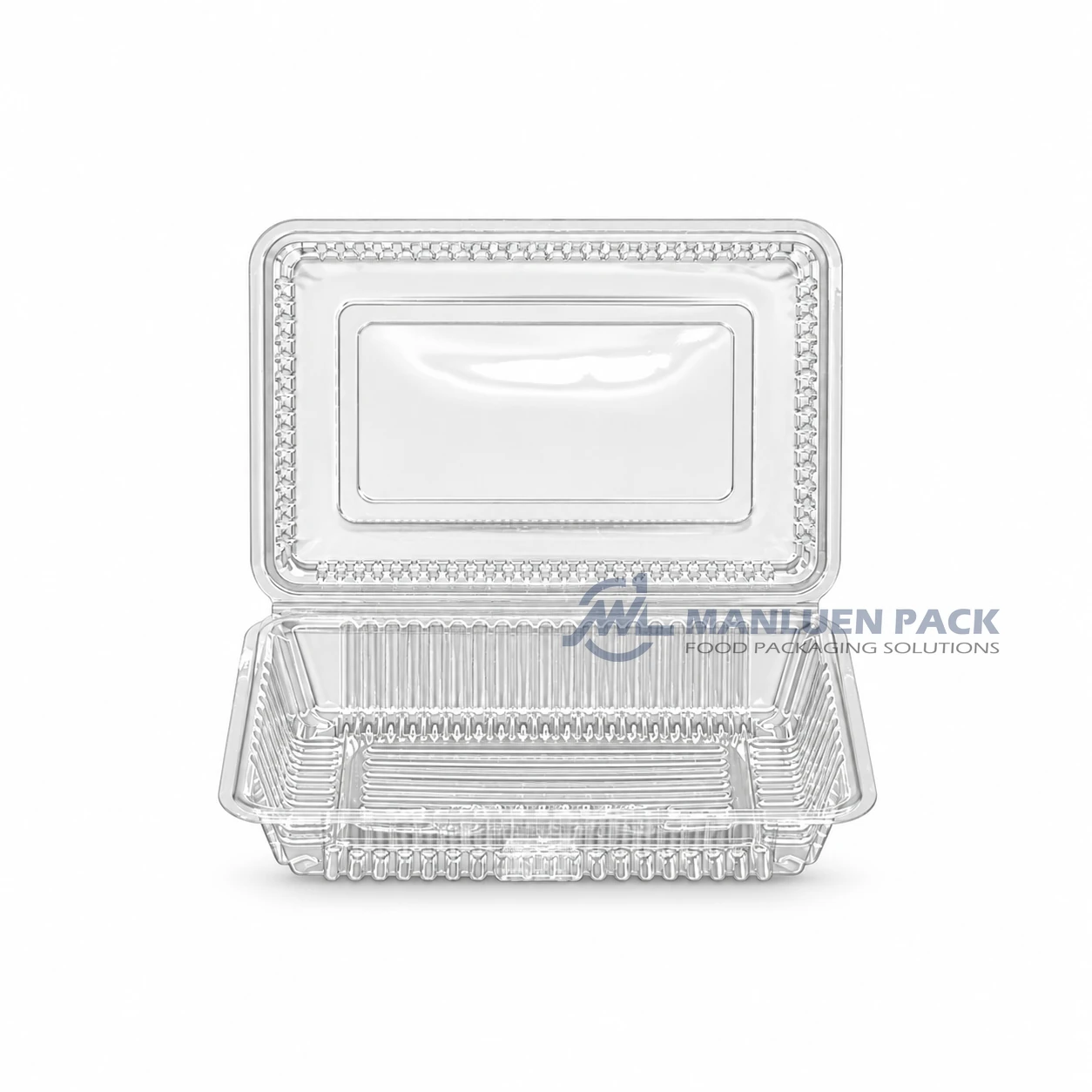
WL-4H Large Clear Hinged Deli Container
For larger cold portions and retail-ready foods.
215 × 140 × 40 mm; PS/OPS; 2,000 pieces/carton
When choosing clear food containers, evaluate the actual container dimensions alongside the product’s height. The lid should close without pressing directly on sandwiches, decorative toppings or other delicate contents.
4. Sushi Takeout Containers: Best for Chilled Food Presentation
Sushi packaging has its own requirements. For sushi restaurants, supermarkets and prepared-food counters, the container is not only a means of transportation. It also provides a display surface for carefully arranged portions.
A contrasting tray base can help present nigiri, maki and sashimi, while a clear lid allows customers to view the assortment without opening the package. The chosen shape should fit the number and arrangement of pieces while leaving enough clearance between the food and lid.
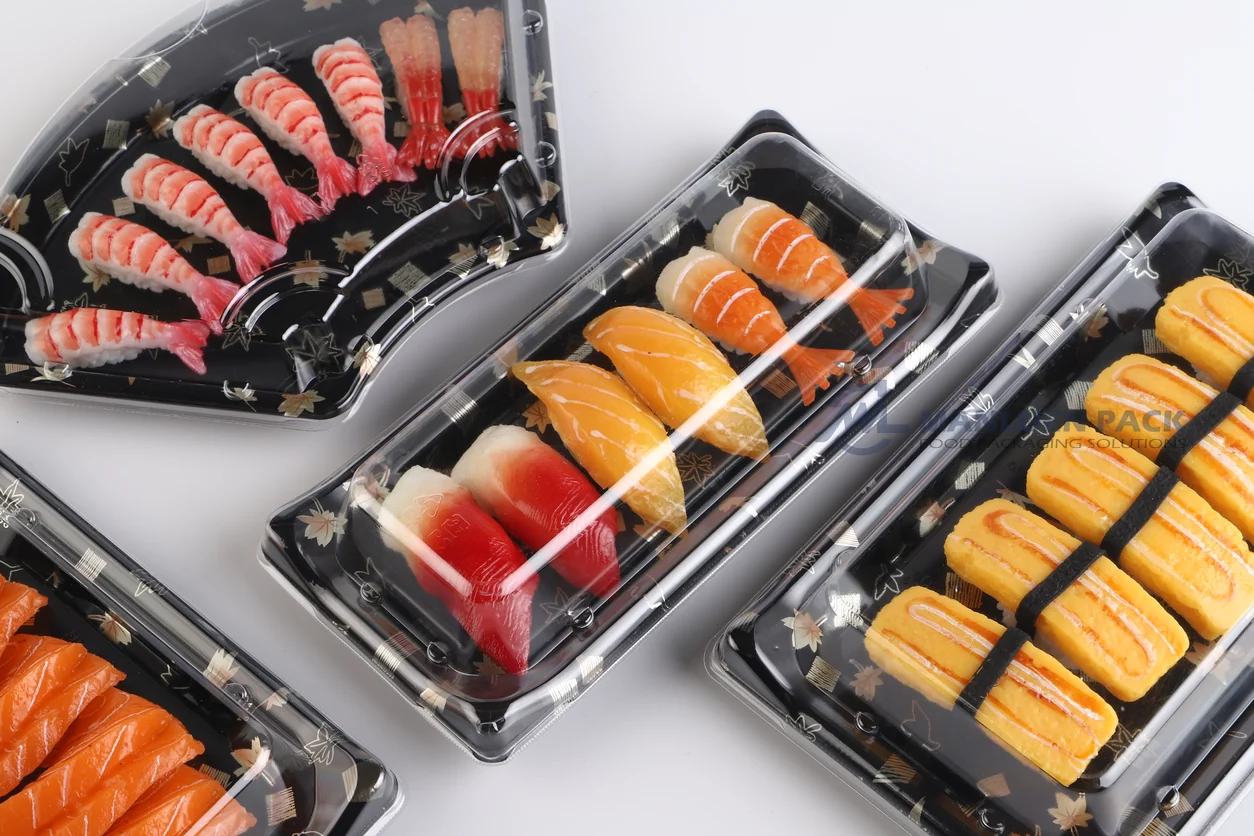
Rectangular trays work for standard portions, while fan-shaped and boat-shaped platters can accommodate more distinctive arrangements. Round divided platters are suitable for some shared assortments that benefit from separate sections.
For chilled food, buyers should confirm the product’s intended storage and transportation conditions. A transparent lid does not replace appropriate food-temperature control or a well-managed delivery process.
Manluen Sushi Packaging Selection
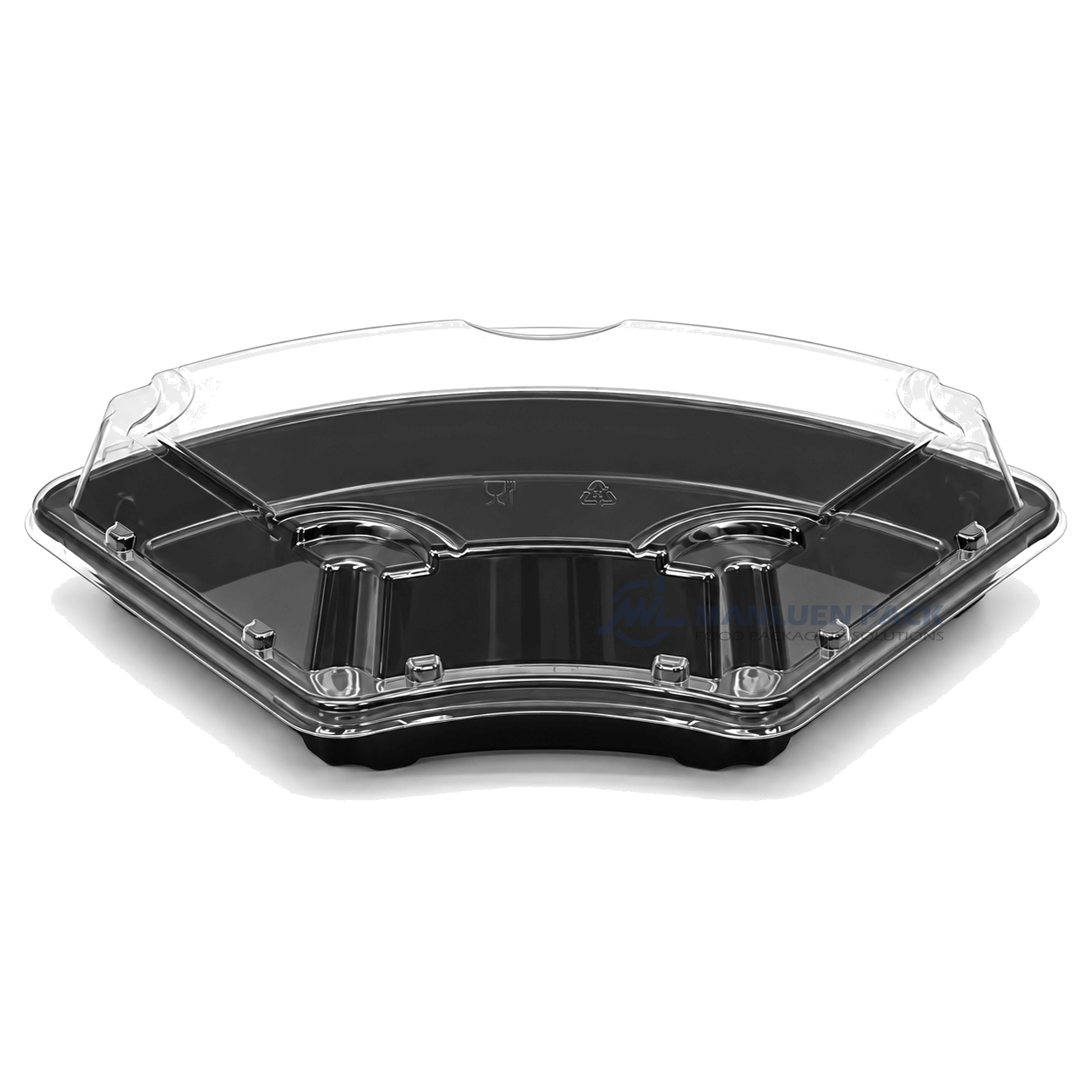
WLC-017 Black Fan-Shaped Sushi Tray
A curved format for arranged sushi displays.
Base 255 × 161.4 mm; lid 261.1 × 167.1 mm

WL-B19 Large Gold Sushi Boat
A large covered serving format for catering and sharing assortments.
584 × 303 × 70 mm; 100 sets/carton

WL-250 Round Compartment Sushi Platter
A divided round platter for mixed prepared-food assortments.
Base Ø250 × 26 mm; lid Ø265 × 28 mm; 200 sets/carton
For restaurants offering both individual sushi orders and family-size platters, using a coordinated range of tray sizes may help standardize packing and presentation.
5. Bagasse Takeout Containers: Best for Selected Plant-Fiber Packaging Applications
Bagasse is a molded fiber material produced from sugarcane processing residue. It is commonly used in disposable food trays, clamshells, plates and selected takeaway containers.
For restaurants considering plant-fiber packaging, bagasse provides an alternative appearance and material option to conventional rigid plastic packaging. It can be suitable for many hot and cold foods when the finished product has been designed for the intended conditions.
However, bagasse performance depends on more than the fiber itself. Coatings, surface treatments, construction, food temperature and contact time can all influence grease resistance, moisture resistance and structural stability.
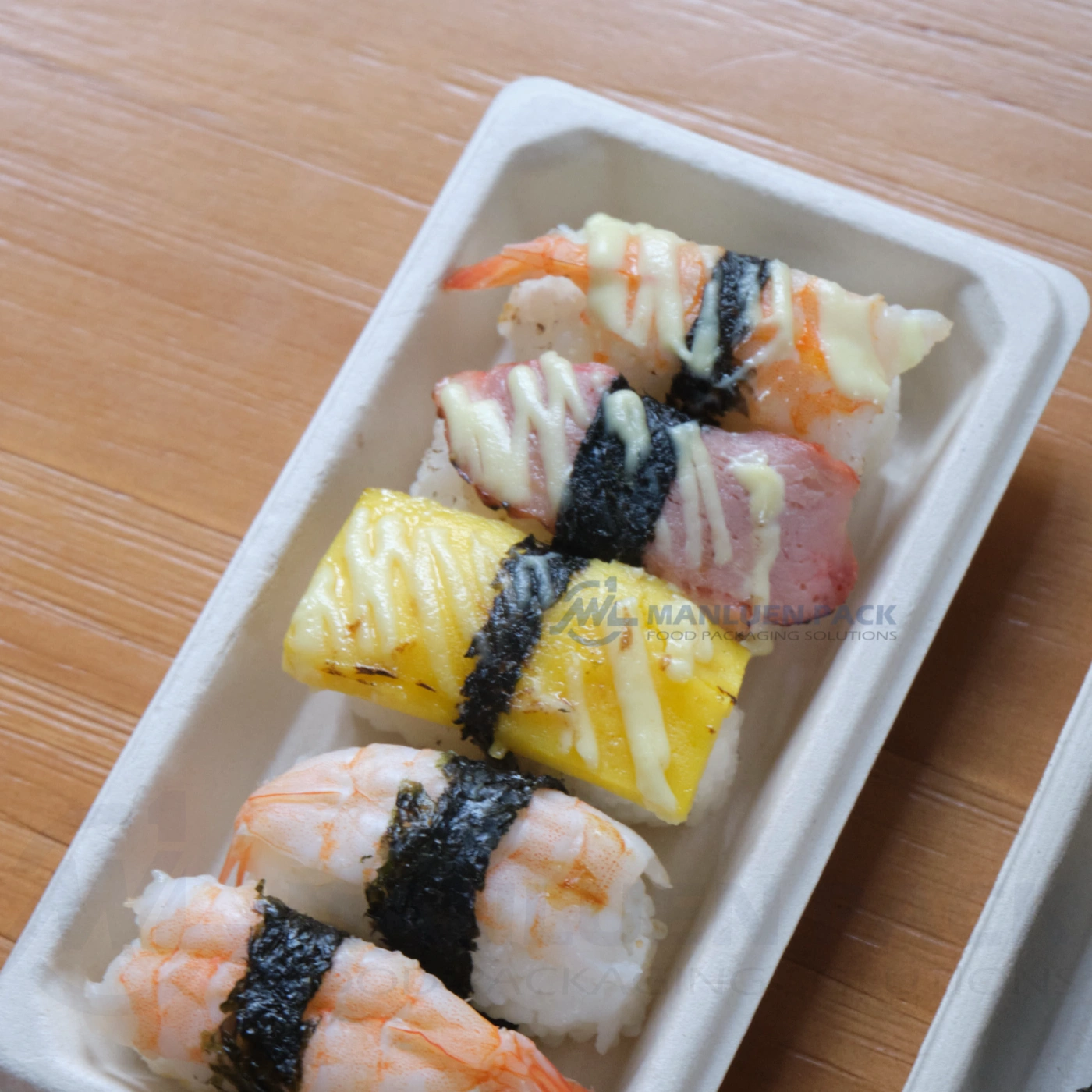
Not every bagasse container is suitable for hot soup, microwave heating or long-duration contact with oily foods. Restaurants should verify the specifications of the exact finished product, including any lining and compatible lid.
Compostability also requires careful interpretation. A package described as compostable should have relevant evidence for the claim, and practical disposal depends on whether an appropriate composting program accepts the completed packaging.
Manluen Bagasse Sushi Tray Alternatives


These products provide plant-fiber base options for sushi takeaway and prepared-food presentation. Buyers should assess the complete base-and-lid combination, including material composition and applicable disposal requirements.
6. Paper Takeout Boxes: Best for Burgers, Sandwiches and Selected Prepared Foods
Paperboard and kraft takeout boxes remain common across cafés, burger restaurants, noodle shops and takeaway counters. They are available in folded cartons, hinged burger boxes, tuck-top containers, sandwich wedges and other shapes.
One advantage is packaging versatility. A paperboard box can provide a convenient surface for printed branding, and some formats can be stored flat before use.
However, paper packaging is not one uniform material. Uncoated paperboard behaves differently from products with grease-resistant coatings or plastic linings.
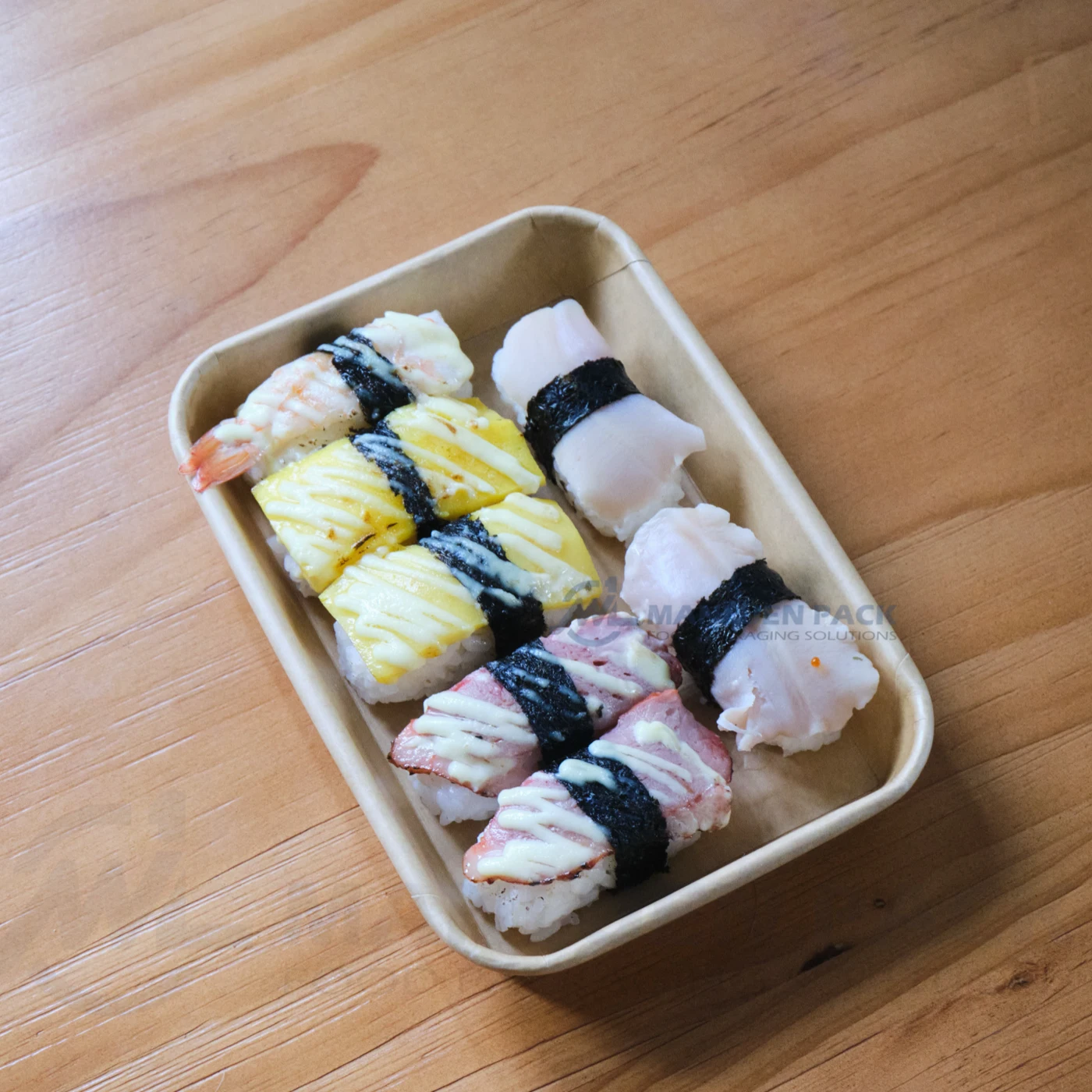
A paper box that performs well with a relatively dry sandwich may not be appropriate for a serving of hot curry. In particular, liquid resistance and closure performance must be evaluated separately from the box’s general strength.
For burgers and fried foods, moisture management can be important. If steam becomes trapped in a closed package, the texture of crispy products may change during delivery. Suitable venting or packaging design can help manage this problem, but must be balanced against temperature retention and spill protection.
Paper packaging is best selected according to the specific food and the finished product’s barrier characteristics—not solely because the material is described as natural, recyclable or eco-friendly.
7. Deli and Soup Containers: Best for Curries, Broths and Liquid Foods
Soups, curries, gravies and other liquid-rich foods require more attention to closure performance than many dry takeaway meals.
Round deli containers and purpose-designed soup bowls are common choices because their shapes accommodate liquid or semi-liquid foods and can support portion standardization.
A restaurant may use smaller containers for side dishes, medium containers for single-serving soups and larger containers for family portions. The appropriate capacity depends on the menu, not simply on the largest size available.
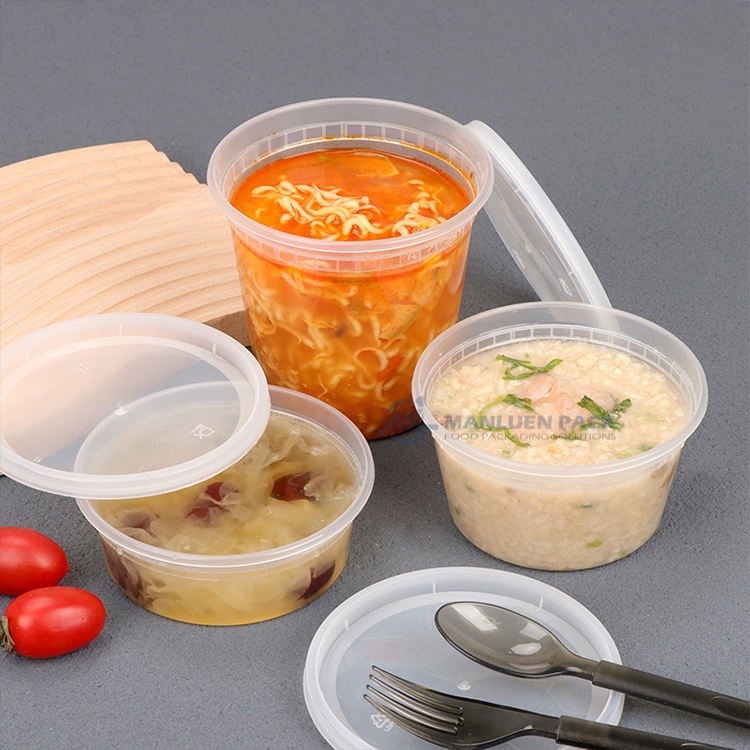
Material choice is equally important. Some PP deli containers are designed for hot filling or reheating, while other clear plastic containers are intended primarily for chilled applications. Paper soup containers may use linings that affect both performance and disposal requirements.
For liquid foods, buyers should evaluate the complete lid-to-container seal under realistic transport conditions. A lid described as secure or leak-resistant does not necessarily mean the container can be tilted, shaken or carried sideways without leakage.
Related Manluen Food Container Range
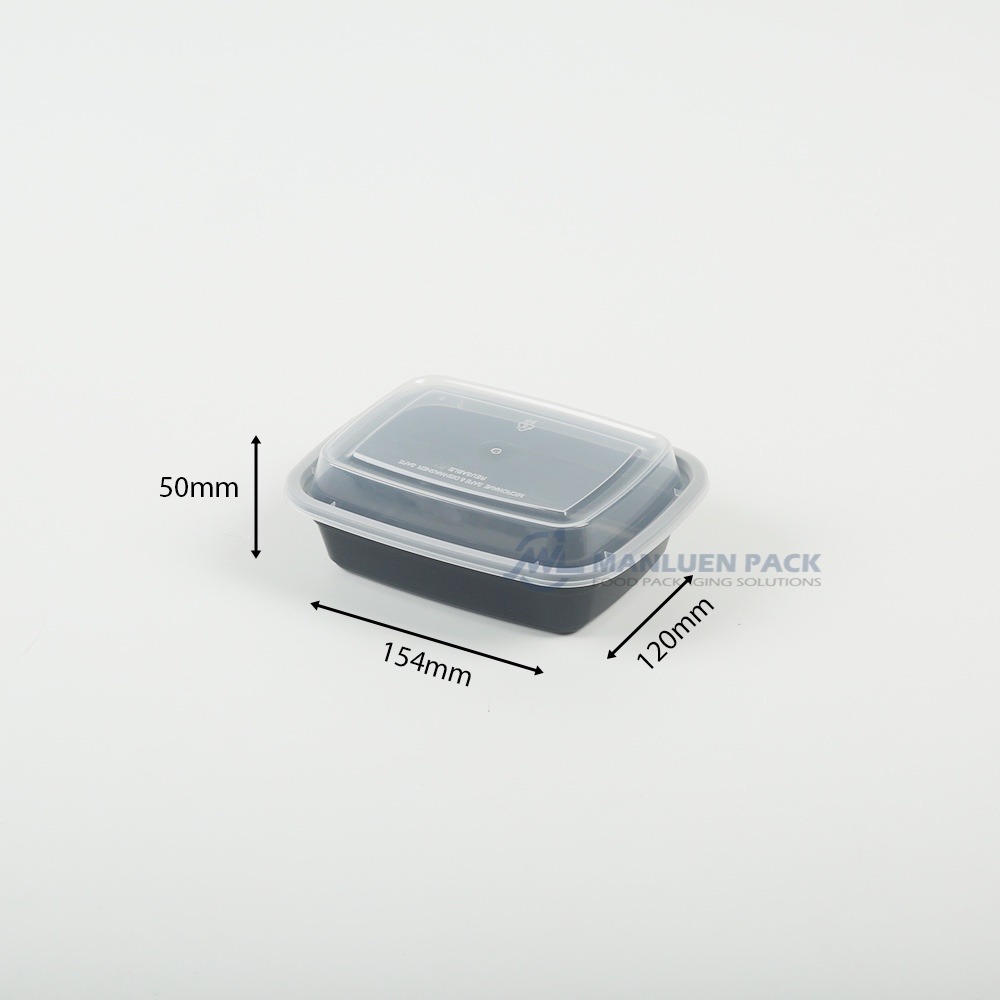

For soup and curry applications, request product-specific material and closure information before choosing a container. Do not substitute a clear display clamshell for a tested liquid container merely because both have lids.
8. Portion Cups and Sauce Containers: Best for Dressings, Dips and Condiments
Small condiment containers are essential to many takeaway meals. They allow restaurants to package sauces, dressings and dips separately rather than placing them directly against the main food.
This can help manage portion size and preserve the intended presentation of the meal. It also gives customers flexibility over when and how much sauce they add.
Portion cups commonly use small capacities measured in fluid ounces, while miniature condiment bottles may be listed in milliliters. Both formats can be suitable for restaurant use, but they serve somewhat different packing needs.

A round sauce cup may be convenient for thicker dips or dressings. A small bottle can be practical for individual portions of soy sauce and other liquid condiments.
As with larger containers, closure quality matters. Buyers should check whether lids are supplied as part of a complete set, whether they fit securely and whether the container is appropriate for the sauce and temperature involved.
Manluen Sauce and Condiment Packaging
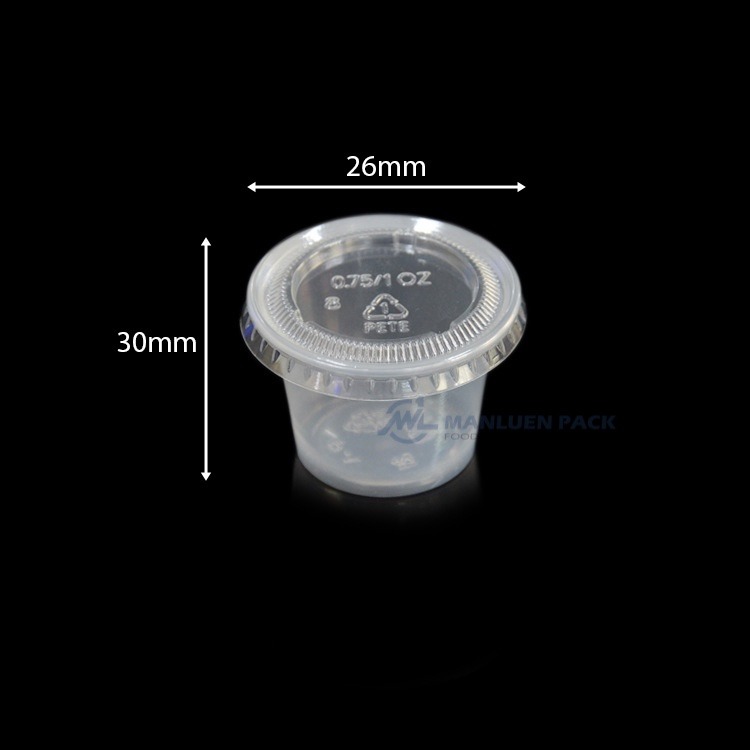
WL-1OZ Disposable Portion Cup with Lid
For dressings, dips and individual condiment portions.
1 oz; Ø26 × 30 mm; PP/PET options; 2,500 pieces/carton
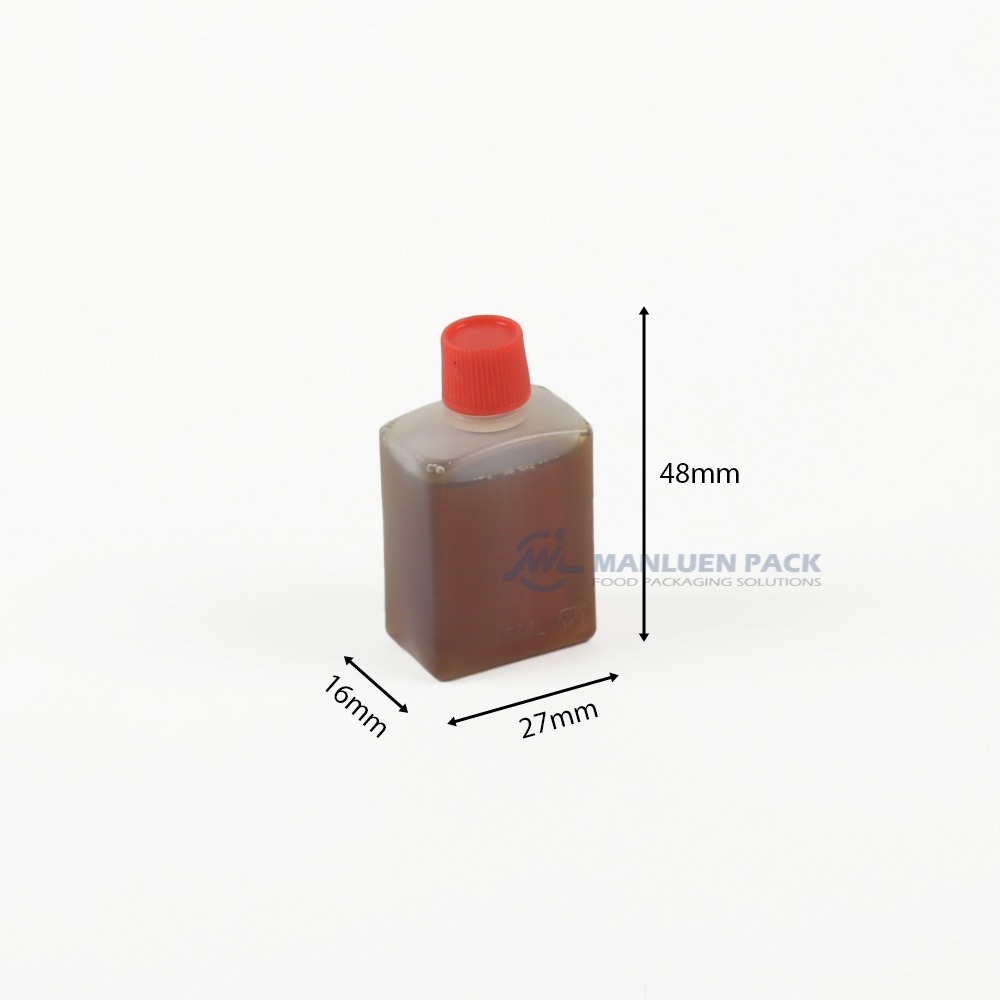
WL-15ML Mini Sauce Bottle
For single-serving soy sauce and other liquid condiments.
15 ml; 48 × 27 × 16 mm; PP; 5,600 pieces/carton
Restaurants should compare the cost of a complete main-meal packaging set, including any sauce cups or bottles that are routinely included in each order.
9. Aluminum Foil Containers: Best for Oven-Ready Meals and Catering
Aluminum food containers are widely used for selected baked dishes, prepared meals and catering applications. Their main strength is that appropriate aluminum containers can tolerate cooking and heating conditions that would not be suitable for many standard plastic or paper packages.
They are commonly used for baked pasta, roasted foods, side dishes and other oven-prepared meals.
However, aluminum is a strong conductor of heat rather than a conventional insulating material. Keeping a meal warm during delivery depends on the complete packaging system, including its lid, any insulated carrier and the length of the journey.
Food compatibility should also be considered. Acidic or salty foods can interact with aluminum under certain conditions, so buyers should follow the manufacturer’s food-contact and heating instructions.
Lids may use plastic, paperboard or other materials, and their performance limits can differ from those of the aluminum base. A tray that can enter an oven does not mean the attached lid is oven-safe.
Manluen Aluminum Food Packaging

WL-1650 Aluminum Foil Food Container
Listed capacity 510 ml; 200 × 110 × 45 mm; aluminum base with PS/PET lid options; 1,000 pieces/carton
For foodservice buyers, aluminum containers are worth comparing when oven compatibility is an important requirement. The intended oven, microwave, storage and transport conditions must be assessed separately for each complete packaging configuration.
10. Foam and Insulated Containers: Best When Thermal Insulation Is a Priority
Foam takeout containers, including expanded polystyrene (EPS) products, have historically been used for foodservice applications where lightweight construction and thermal insulation are important.
A foam structure can help slow heat transfer under certain conditions, but insulation does not mean unlimited heat resistance. Foam containers should not automatically be considered appropriate for microwave heating or high-temperature foods.
They are also subject to restrictions in some jurisdictions, and restaurant buyers need to verify applicable local rules before purchasing certain single-use foam food containers.
For many restaurants, the decision between foam and alternative packaging will involve temperature performance, food compatibility, local requirements and disposal considerations.
11. Catering Containers and Large Sharing Platters
Restaurants that offer catering, group meals or family-style takeaway often need larger packaging formats than those used for individual orders.
Large trays and platters must support the weight of the food while allowing staff to handle and transport the order safely. The container should also have enough usable surface area for the intended arrangement.
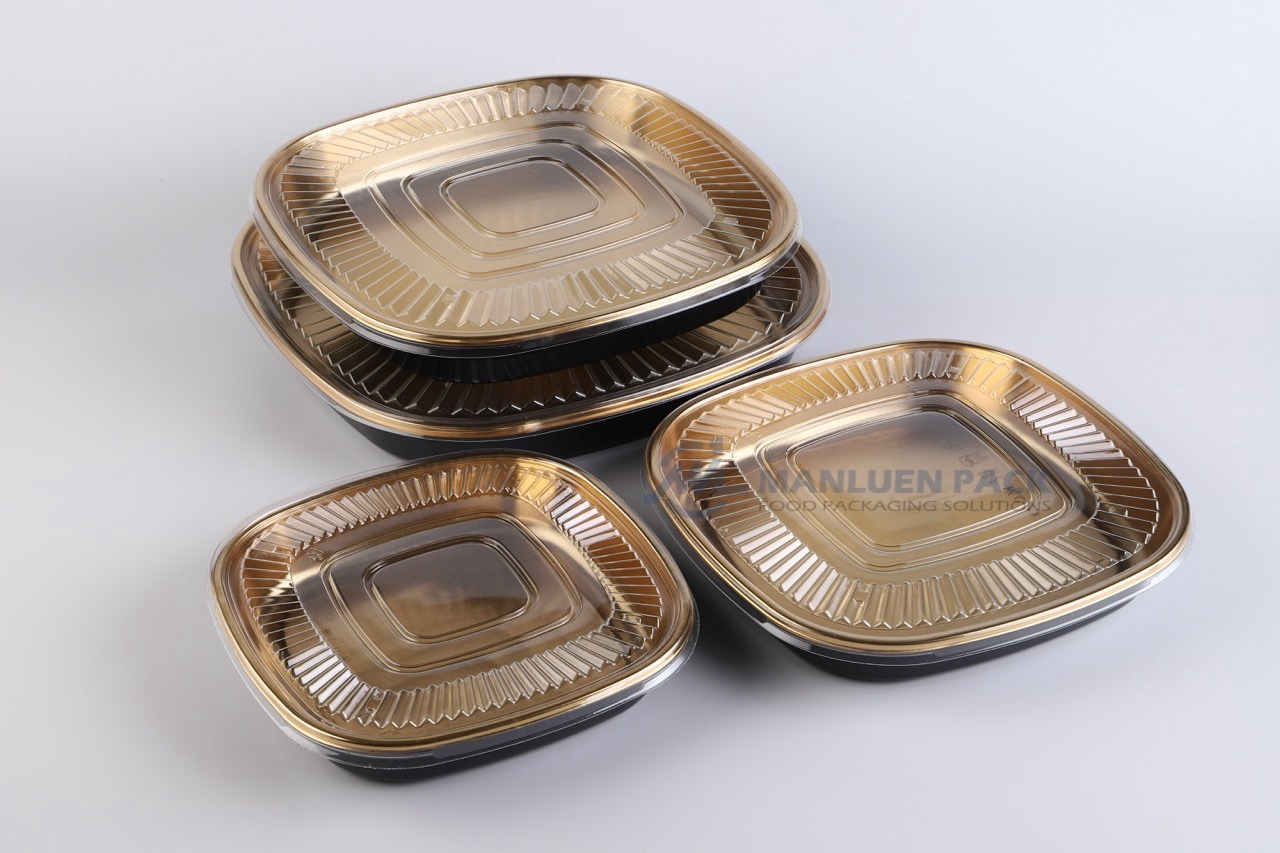
A large sharing platter of sushi requires a different internal layout from a deep tray of cooked pasta or a large portion of rice.
For this reason, capacity should not be the only deciding measurement. Tray dimensions, material stiffness, lid clearance and the complete package weight also matter.
Manluen Large-Format Food Presentation
WL-B19 Large Gold Sushi Boat
Designed for large sushi assortments, events and catering displays.
584 × 303 × 70 mm; 100 sets/carton
WL-250 Round Divided Sushi Platter
Provides separate sections for sharing assortments.
Base Ø250 × 26 mm; lid Ø265 × 28 mm; 200 sets/carton
Before ordering a large catering tray, test how staff will lift, carry and stack a fully loaded package. Food weight and delivery arrangements may require additional transport support.
Comparing Takeout Container Materials
Although container shape determines how a meal fits, material selection influences several important performance characteristics.
| Material | Common Strengths | Main Limitations to Check | Typical Applications |
|---|---|---|---|
| PP | Useful heat resistance, lightweight, versatile | Finished-product microwave and temperature limits | Hot meals, bento boxes, selected deli containers |
| PET | High clarity and good presentation | Conventional PET heat limitations | Salads, cold foods, desserts |
| PS / OPS | Clear or rigid display formats | Temperature and brittleness considerations | Sushi, cold takeaway and display containers |
| Paperboard / Kraft | Printability, multiple box structures | Grease barriers, moisture and coatings | Burgers, sandwiches, selected takeaway meals |
| Bagasse | Molded plant-fiber formats | Grease, moisture, coatings, composting conditions | Clamshells, trays, selected meal packaging |
| Aluminum | Suitable for certain oven-ready applications | Lid compatibility and food-contact conditions | Baked meals, catering, roasted dishes |
| EPS Foam | Lightweight thermal insulation | Heat limits, local restrictions and disposal | Selected takeaway food applications |
| Glass | Reusable rigid container | Weight, breakage, return and cleaning | Managed reusable meal systems |
A product’s food-contact suitability cannot be determined from its material name alone. Additives, coatings, manufacturing processes, components and the intended food-contact conditions all matter.
How to Choose Takeout Containers for Your Restaurant
Start with Your Menu, Not the Packaging Material
Before comparing PP, PET, paper or bagasse, review the foods your restaurant actually sells for takeaway.
Identify which items are served hot, which are chilled, which contain substantial liquid and which require separate compartments. Also consider foods that are fragile, tall or unusually shaped.
A sushi shop may prioritize attractive presentation and shallow trays. A rice-bowl restaurant may need single-compartment PP containers. A meal-prep business may prefer divided, stackable trays. A soup-focused restaurant needs reliable lids and appropriate filling-temperature performance.
Starting with the food prevents the mistake of choosing one material and forcing every menu item into the same packaging.
Check Container Capacity and Physical Dimensions
Container capacity is useful, but it is not the entire specification.
Two containers with similar nominal capacities may have very different shapes. A shallow rectangular tray provides a different packing area from a tall round bowl.
For solid meals, internal length, width and height are often especially important. For soups and other liquids, capacity and secure filling headspace are also essential.
Test the fit with actual menu portions. The lid should close correctly without compressing the food, and the container should not leave so much unused space that contents shift unnecessarily during delivery.
Test the Lid and Complete Packaging System
One of the most common purchasing mistakes is comparing the price or performance of a container base without checking the lid.
Some takeout containers include attached lids. Others use separately supplied lids that may be available in different materials or shapes.
The base and lid should be treated as one packaging system. Buyers should confirm compatibility, closure strength, appropriate temperature use and the total price per completed set.
This is particularly important for soup bowls, round deli containers and paper food containers with separate clear lids.
Consider Delivery Performance
Restaurant packaging must perform after it leaves the kitchen.
During delivery, containers may be carried in bags, stacked with other orders, moved through different temperatures or tilted unexpectedly.
A successful takeaway package should protect the food under the transport conditions reasonably expected for the operation.
For hot food, steam and condensation can affect texture. For liquids, seal performance is critical. For fragile foods, adequate support and lid clearance are important.
Where relevant, tamper-evident features can help show whether a package may have been opened. However, tamper evidence should not be confused with leak resistance or guaranteed food safety.
Evaluate Kitchen Packing and Storage Efficiency
Packaging influences daily kitchen operations.
Stackable or nestable containers may reduce storage space before packing. Hinged containers can simplify handling by keeping the lid attached. Two-piece containers may offer different display and storage options but require staff to manage matching bases and lids.
The best choice depends on the restaurant’s workflow.
For high-volume operations, test how quickly staff can fill, close, label and bag each format. An inexpensive container that consistently slows packing or requires frequent adjustment may not be the best operational purchase.
Calculate the Cost Per Complete Takeout Order
The cost of a restaurant takeout package includes more than the advertised container price.
For a typical meal, the full packaging system may include a base, a lid, a sauce container, a bag, a label and other necessary components.
A useful purchasing comparison is:
Complete Packaging Cost Per Order = Main Container + Lid + Portion Cups + Required Accessories
For a more comprehensive assessment, restaurants can also include shipping, storage, losses and operational handling costs.
When comparing wholesale products, use matching quantities and equivalent specifications. A 200-piece carton and a 500-piece carton cannot be evaluated fairly by comparing their total prices alone.
Buyers purchasing internationally should also account for the applicable shipping terms, import charges, transit times and inventory requirements.
Reusable vs. Disposable Takeout Containers
Disposable containers remain practical for many restaurants because they do not normally require the operator to recover the packaging after delivery.
Reusable containers can offer benefits in certain foodservice environments, especially when businesses can establish a reliable collection and cleaning process.
Possible operating models include refundable deposits, organized return points, reusable foodware programs or customer-owned containers.
However, the economic and environmental benefits of reuse depend on actual reuse cycles, return rates, transportation, washing, losses and replacement requirements.
A container designed to survive 100 washing cycles will not necessarily complete 100 cycles in an operating program.
For restaurants that primarily deliver through third-party platforms and cannot reliably collect containers after use, disposable food packaging may remain the more manageable option.
For schools, corporate cafeterias, closed-campus foodservice or fixed-route catering businesses, reusable systems may be easier to organize.
Restaurants considering customer-provided reusable containers should check their applicable food safety rules and handling procedures.
Are Compostable Takeout Containers Better Than Plastic?
Compostable packaging can be appropriate for restaurants that have specific waste-management goals and access to suitable disposal programs. But a compostable label does not automatically mean a container is the best option for every food or location.
A paper container may include a plastic lining. PLA is a polymeric plastic even when manufactured from plant-based feedstocks. Bagasse packaging can differ in coatings and grease resistance. Recyclability, biodegradability and compostability refer to different material or disposal characteristics.
The choice should reflect the actual packaging structure, food-contact suitability, product performance and local collection infrastructure.
Likewise, describing PP or PET as recyclable does not guarantee that a food-soiled container will be accepted by every recycling program.
For purchasing decisions, specific evidence about materials and recognized certifications is more useful than general environmental claims.
Wholesale Takeout Containers: What Restaurant Buyers Should Ask
Restaurants and food distributors purchasing packaging in volume should establish clear specifications before requesting a quote.
A useful request identifies the intended food, container dimensions or capacity, preferred materials, required lid design, approximate order quantity and delivery destination.
If custom printing, new molds, color changes or alternative carton packing are required, those requirements should be included early in the discussion because they may affect price, tooling and minimum order quantity.
Buyers should also confirm which items are stocked and which require custom production. Manufacturing lead time, shipping transit time and final delivery timing are separate considerations.
Manluen Pack supplies disposable restaurant food packaging for wholesale purchasing, including PP meal trays, divided bento boxes, clear clamshells, sushi trays, bagasse alternatives, aluminum food containers and sauce packaging. Product-specific dimensions and carton quantities are available through the company’s catalog.
Minimum ordering requirements begin from approximately 30 cartons or 5,000 pieces, depending on the product and order configuration. Exact requirements should be confirmed for the selected SKU.
Frequently Asked Questions
What is the best takeout container for hot food?
PP meal containers are a practical option for many hot takeaway meals when the specific finished package is rated for the required temperature. Suitable bagasse and paper products may also work for certain dishes. The best choice depends on heat exposure, moisture, closure and the food being packed.
Which takeout containers are best for soups and curries?
Choose a purpose-designed soup or deli container with a compatible lid and verified liquid-transport performance. The container must also be suitable for the food’s filling temperature. Do not assume that every hinged clamshell or paper box is suitable for liquid food.
Are plastic takeout containers microwave-safe?
Some are, but not all. Certain PP containers are designed for microwave reheating, while many transparent display containers made from conventional PET, PS or OPS are not. Always check the finished product’s instructions, including the lid.
What are the best takeout containers for salads?
Clear clamshells and salad bowls are common choices because they allow customers to see the food. PET and certain other transparent materials are often used for chilled-food presentation. Dressing should be packaged separately when appropriate.
Are bagasse takeout containers compostable?
Some bagasse containers are marketed or certified as compostable, but compostability should be verified for the finished product. Coatings, lids and local composting conditions can affect whether the complete package is accepted.
Are reusable containers cheaper than disposable containers?
They can be in systems where containers are returned and reused frequently enough to offset the initial purchase, washing, transport and handling costs. There is no single break-even number that applies to every restaurant.
What size takeout containers should restaurants use?
The correct size depends on the meal. Restaurants should consider both nominal capacity and actual internal dimensions, including lid clearance. Testing real menu portions is more reliable than selecting one standard size for every dish.
What is the difference between leak-resistant and tamper-evident packaging?
Leak resistance concerns whether food or liquid can escape during handling and transport. Tamper evidence concerns whether an opening action leaves a visible sign. A package may offer one function without necessarily providing the other.
Are lids usually included with takeout containers?
Some products include an attached or matching lid, while others sell the base and lid separately. Always check the product listing and calculate the price of the complete packaging set.
Where can restaurants buy takeout containers wholesale?
Restaurants can source packaging through local foodservice distributors, specialist packaging suppliers or manufacturers. The right channel depends on product requirements, order quantity, customization and delivery location. Manluen Pack offers wholesale food packaging across several restaurant container categories.
Final Thoughts
The best takeout containers for restaurants are not necessarily the most expensive, the most transparent or the ones carrying the most environmental claims. They are the containers that fit the menu, protect food during realistic delivery conditions and support efficient restaurant operations at an acceptable total cost.
For hot meals, suitable PP containers are often a practical starting point. For chilled prepared foods, transparent clamshells can provide strong product visibility. For sushi, appropriately sized display trays help maintain presentation. Bagasse and paper packaging offer additional material choices, while aluminum containers, sauce cups and larger catering trays serve more specialized needs.
Before purchasing in volume, test the actual food, confirm the complete packaging specification and compare the cost per usable order.
Explore Manluen Pack’s wholesale takeout containers to compare bento boxes, sushi packaging, clamshells and other foodservice products—or contact our team with your required sizes, materials, quantities and delivery destination.
References and Further Reading
- Good Start Packaging. To-Go Boxes and Compostable Takeout Containers. https://www.goodstartpackaging.com/
- Restaurantware. Paper Take-Out Boxes. https://www.restaurantware.com/
- CuBE Packaging. Best Takeout Containers for Restaurants in 2026: Reusable vs. Disposable Buyer’s Guide. https://www.cubep.com/best-takeout-containers-restaurants-2026
- Boelter. Types of Takeout Containers: Packaging Solutions for Off-Premise Dining. https://www.boelter.com/
- New Denizen. Why I Stopped Asking for Disposable Takeout Containers: Living the BYOB Life. https://www.newdenizen.com/
- U.S. Food and Drug Administration. Food Ingredients and Packaging. https://www.fda.gov/food/food-ingredients-packaging
- U.S. Electronic Code of Federal Regulations. 21 CFR Part 177 — Indirect Food Additives: Polymers. https://www.ecfr.gov/current/title-21/chapter-I/subchapter-B/part-177
- European Parliament and Council. Regulation (EC) No 1935/2004 on Materials and Articles Intended to Come into Contact with Food. https://eur-lex.europa.eu/eli/reg/2004/1935/oj
- European Commission. Regulation (EU) No 10/2011 on Plastic Materials and Articles Intended to Come into Contact with Food. https://eur-lex.europa.eu/eli/reg/2011/10/oj
- Manluen Pack. Food Packaging Product Catalog. https://www.manluenpack.com/products/

ManLuen Plastic Packaging Company, which is specialized in the production of Plastic Food Packaging for more than 20 years. Our products are made from 100% virgin and BPA-Free PP, PS, and OPS comply with FDA and European Standards.
 EN
 ZH
 FR
 PT
 ES
 KO
 JA