
Introduction
How do you choose a packaging wholesaler? Choose a supplier that can provide packaging suited to your product, demonstrate consistent quality and applicable food-contact compliance, deliver the required quantities, and agree to clear commercial terms. Compare specifications, samples, documentation, lead times, and total delivered cost before placing a bulk order.
For food businesses, the decision starts with the food and its conditions of use. A sauce cup needs a reliable closure and compatibility with its contents. A chilled sushi tray needs presentation and lid fit. A reheatable meal container needs evidence covering the complete package and intended heating conditions.
This guide explains how to find suppliers, qualify their products, conduct a proportionate audit, and compare quotations. It also covers wholesale packaging for sauces, condiments, and specialty foods.
Seven Checks for Choosing a Packaging Wholesaler
| Check | Main question | Evidence to request |
|---|---|---|
| Product fit | Does the exact package work for the food and process? | SKU specification, drawing, material structure, matching lid |
| Food-contact suitability | Does the documentation cover the intended use and market? | Applicable declaration, authorization basis, supporting reports |
| Material control | Can inputs and finished batches be traced? | Material specifications, lot records, change-control procedure |
| Quality and testing | Will bulk production match the approved sample? | Inspection plan, functional tests, defect criteria |
| Supply reliability | Can the supplier support orders and reorders? | SKU-specific MOQ, stock status, production and delivery schedule |
| Total cost and terms | What will accepted packaging cost at your location? | Itemized quotation, freight basis, payment and remedy terms |
| Customization and future changes | Can the supplier manage development and specification changes? | Tooling agreement, approval process, claim evidence, notification rules |
Use product suitability and essential compliance requirements as approval gates. Compare cost and service among candidates that meet those requirements. A low price should not offset a package that cannot perform the required job.

Packaging Wholesaler vs Manufacturer vs Distributor
A manufacturer produces packaging. A wholesaler sells commercial quantities, potentially from several factories. A distributor may add local stock, delivery, credit, and access to several product ranges. These roles can overlap.
Direct manufacturing can be useful for custom tooling, recurring volumes, and technical development. A distributor can be practical for smaller mixed orders or frequent deliveries. A sourcing wholesaler may coordinate several materials and production partners.
Ask who manufactures each selected product, who maintains its technical records, and who is responsible for defects. Trading activity is not inherently a warning sign, and a high or low MOQ does not identify a supplier’s business model.
Also check whether different product categories come from different sites. A supplier may thermoform plastic trays in-house while sourcing molded fiber or aluminum products from partners. This arrangement can work well when the approved sites, specifications, traceability, and corrective-action responsibilities are clear.
Consolidation can reduce purchasing administration, but it can also concentrate supply risk. Confirm how a single supplier would maintain your priority SKUs if one production site, tool, or raw-material source became unavailable.

How Do I Find a Packaging Supplier?
Start with a written requirement, then search manufacturer websites, specialist distributors, industry directories, trade shows, and referrals from relevant food businesses. Search by application and format, such as wholesale sauce cups with lids, rather than relying only on a broad packaging-supplier search.
Shortlist companies with relevant products and delivery coverage. Verify the legal business name, address, contact details, and manufacturing or sourcing role. Independently confirm payment instructions, especially when a beneficiary or bank account changes.
Ask each candidate the same initial questions: which SKU fits the application, whether matching lids are available, what documentation covers it, whether samples can be supplied, and what quantities and delivery dates are realistic. A clear response provides a starting point for verification; a polished website or testimonial is not approval evidence.
For an unfamiliar overseas supplier, confirm the contracting entity and factory address through independent business records where available. Arrange a live factory discussion or site assessment if the order justifies it, and obtain references for comparable products with the customer’s permission. Verify invoices and bank beneficiaries through a previously established contact channel before sending a deposit.
Check 1: Define the Exact Package
Record the food, portion size, weight, acidity, fat content, filling temperature, storage time, distribution conditions, and reheating requirements. Then define the container’s dimensions, usable capacity, closure, color, compartments, and accessories.
Two containers with the same nominal capacity may have different footprints, depths, fill lines, and stacking behavior. Confirm dimensions with samples and drawings. Match the lid by SKU rather than appearance.
For a wider material comparison, see Manluen’s guide to food packaging materials. Material names help narrow the options, but the finished package determines performance.
Check 2: Verify Food-Contact Documentation
Request documents covering the selected package and its intended use. In the US, FDA explains that a food-contact article’s regulatory status depends on its individual components. An applicable regulation, effective Food Contact Notification, or another valid pathway may establish the basis; every resin does not need its own FCN.
If an FCN is cited, verify its substance, identified manufacturer or supplier, and permitted conditions. A notification for another manufacturer’s material is not automatically applicable. A generic FDA registration number or certificate should not replace this review.
For EU sales, assess the general food-contact framework, good manufacturing practice, and applicable material-specific requirements. Plastic articles generally require an applicable declaration of compliance and supporting documentation. Requirements for other destination markets need their own assessment.
Build a Market-Specific Document File
Use a compliance matrix that connects each SKU and manufacturing site to its destination markets. For the US, record the relevant authorization basis and use limitations. For EU plastic packaging, record the declaration of compliance, applicable restrictions, and supporting assessment. For Japan, Saudi Arabia, or another destination, obtain a current assessment of the requirements applicable to the actual material and article.
Terms such as “LFGB tested,” “Japan compliant,” or “SASO certified” need explanation: which requirement was assessed, which product was covered, and who issued the document? A test against one national requirement is not a universal approval for all materials, markets, and uses.
Check that reports identify the tested material or item, sample description, method, conditions, result, and issuing laboratory. Where accredited testing is required, verify that the relevant test falls within the laboratory’s accreditation scope. There is no universal rule that every report expires after twelve months or that every packaging product needs the same test panel.
A resin report alone may not cover the finished article’s colorants, coatings, adhesives, printing, or lid. See how food packaging compliance is established for the broader framework.
Ask the supplier to explain how the tested sample represents the ordered construction. Where a product family is covered by one assessment, document the technical reason rather than assuming that all containers made from the same polymer are equivalent. Additional declarations, such as allergen, latex, or melamine-related statements, should respond to a material-specific concern or customer requirement.
Check 3: Review Materials and Traceability
Ask how the supplier identifies approved materials, checks incoming lots, controls regrind or recycled content, and traces finished cartons back to production records. Request a traceability demonstration using a real batch rather than a general promise.
Examine Incoming Inspection and Batch Records
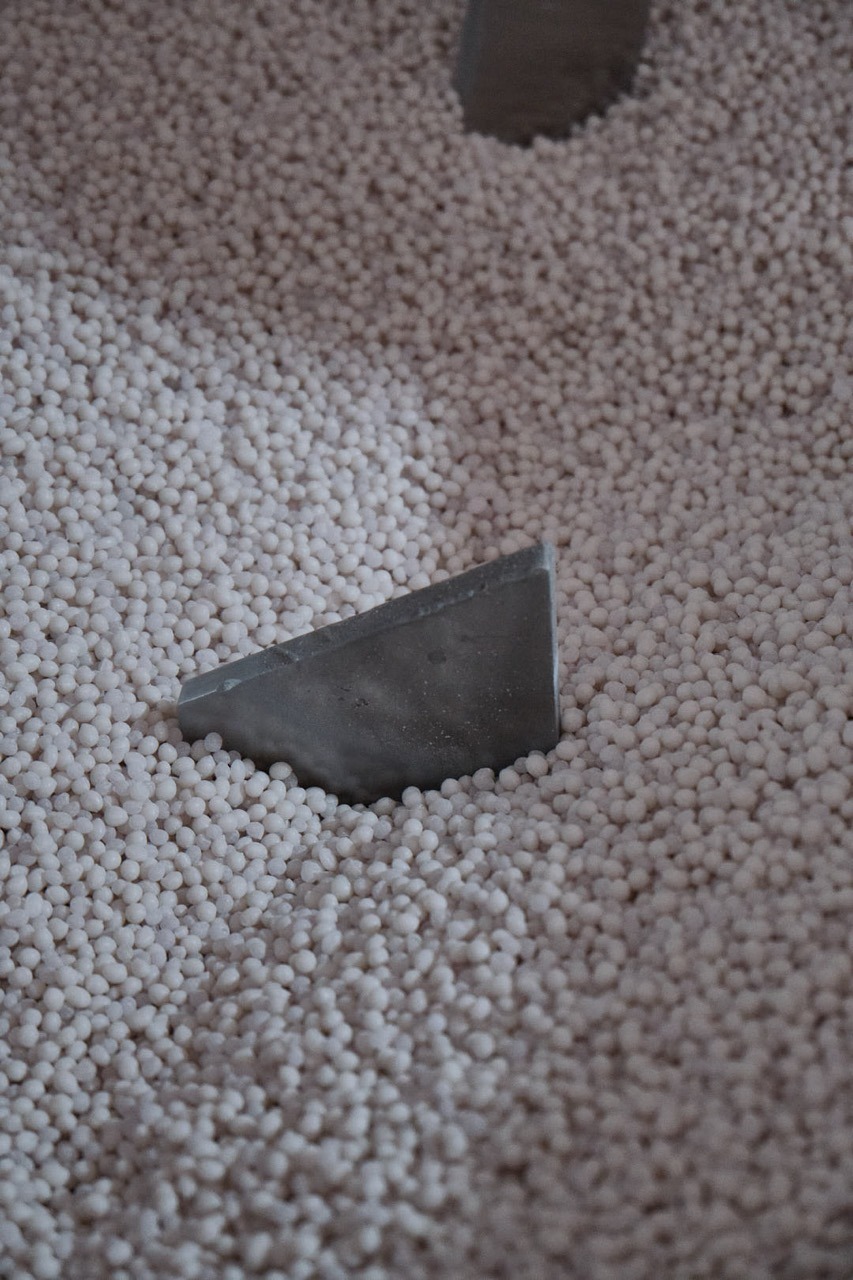
Review how incoming material labels and supplier certificates are checked against the purchase specification. Relevant checks can include identity, appearance, moisture, melt-flow behavior, or contamination, depending on the polymer and process. The supplier should explain which characteristics are verified for each lot, which rely on supplier data, and how an out-of-specification lot is quarantined.
Trace a carton code back to the production date, line or machine, approved formulation, input lots, inspection results, and shipment. Ask how records are retained and how the supplier would identify other customers or batches affected by a material problem. Agree a practical response time for traceability requests.
Virgin material is not a substitute for compliance, and recycled material is not automatically unsuitable. If recycled content is specified, verify the source, percentage, process controls, and basis for the intended food-contact use.
FDA’s recycled-plastics guidance highlights the possibility that contaminants can remain in recovered material and migrate into food. Where a supplier relies on a recycling-process assessment or FDA no-objection letter, verify the process, feedstock, and use limitations. A letter for one process should not be treated as a general authorization for unrelated recycled material.
Agree which changes require notification or approval. Resin source, colorant, coating, dimensions, tooling, manufacturing site, and lid design can affect a previously approved package.
Check 4: Test Samples and Agree on Quality Controls
Inspect dimensions, rim condition, closure, wall consistency, sharp edges, deformation, contamination, and odor. Test representative samples with the actual food and the expected filling, storage, transport, and heating conditions.
For sauce cups, check leakage after closure and realistic handling. For meal trays, examine stacking and loaded strength. For lidded display packs, confirm visibility, fit, and resistance to accidental opening. Use a trial production run when handmade or specially prepared samples may not represent routine output.
Separate functional tests from food-contact testing and distribution testing. ASTM D5276 addresses free-fall testing of loaded containers; ASTM D4169 addresses distribution-system performance. Select an appropriate ASTM or ISTA procedure for the actual shipping environment and customer requirements. A test number should not be added merely to make a specification look comprehensive.
Write an inspection plan defining lot size, sampling method, defect categories, measurements, acceptance criteria, and actions after failure. Do not apply a generic AQL number to every defect, particularly safety-critical defects. Sampling acceptance does not mean that the shipment contains no defects.
Agree reasonable access for audits, pre-shipment inspection, and loading checks. Record carton counts, packing condition, markings, and loading evidence. An inspection’s scope and limitations should be clear to both parties.
Use Four Quality-Control Stages
- In-process checks: Define the critical dimensions, weight or thickness characteristics, appearance, and closure checks. Record frequency and what happens when results drift.
- Final lot inspection: Randomly select samples from an identified lot and compare them with the approved specification and defect examples.
- Pre-shipment release: Confirm inspection status, quantity, labeling, test-document availability, and any open deviations before shipment.
- Loading and receiving checks: Record dry, clean loading conditions, carton integrity, counts, markings, and shipment identification. At receipt, check damage, quantities, and traceability before releasing stock.
Third-party inspection is especially useful when a buyer cannot attend the factory. Agree access, timing, selection methods, reporting, reinspection charges, and release authority before production. Refusal to allow an agreed inspection needs resolution, but security rules or restrictions on unannounced visits do not by themselves prove poor quality.

Match Tests to the Actual Application
| Test area | Example assessment | What to define first |
|---|---|---|
| Food-contact suitability | Relevant extraction, migration, or other assessment | Complete composition, food type, contact time, temperature, destination market |
| Functional performance | Closure, leak resistance, stacking, deformation | Fill level, contents, orientation, load, duration, acceptance criteria |
| Thermal use | Hot fill, refrigeration, freezing, or permitted reheating | Actual temperature cycle, heating instructions, body and lid configuration |
| Distribution | Drop, vibration, compression, or selected simulation sequence | Filled shipping carton, pallet or parcel configuration, route and handling |
ISTA 3A addresses individual packaged products moving through parcel delivery systems. Customer-specific procedures, including relevant e-commerce programs, have separate scopes. Do not describe every FBA or third-party-logistics shipment as requiring the same test.
Agree the test plan before the bulk run: sample source, conditioning, method and edition, quantities, acceptance criteria, laboratory, cost, and response to failure. A successful room-temperature leak test does not validate hot filling, and an unusually severe test unrelated to the application can also give misleading purchasing conclusions.
How to Conduct a Packaging Supplier Audit
A supplier audit reviews whether the relevant site and processes can repeatedly meet your requirements. It can combine document review, remote assessment, and an on-site visit. Scope it around the product, process risk, order value, and customer obligations.
- Confirm identity and scope: Identify the legal supplier, factory, subcontractors, and activities covered by the audit.
- Follow material flow: Review receiving, storage, production, packing, finished-goods identification, and dispatch.
- Examine controls: Check hygiene, contamination prevention, equipment maintenance, calibration, inspection, and nonconforming-product handling.
- Trace a batch: Connect incoming materials, production records, inspection results, and shipped cartons.
- Review complaints: Examine investigations, root causes, corrective actions, and evidence that actions worked.
- Close findings: Record the requirement, evidence, action owner, deadline, and verification needed before approval.
ISO 9001 can support quality-system assessment, while a relevant BRCGS Packaging Materials certification may support a packaging-site review. Check the exact site, scope, issuer, and validity. Neither certificate independently establishes every SKU’s food-contact suitability.
ISO 19011:2026 provides guidance for management-system auditing; it is not a product certification. Use competent auditors with knowledge of the relevant packaging processes. A well-documented remote review can answer some questions, while sanitation, material segregation, or an unfamiliar production process may warrant an on-site assessment.
Close the audit with specific findings supported by evidence. Distinguish immediate containment from corrective action: isolating suspect stock limits exposure, while addressing the cause prevents recurrence. Verify completion through records, follow-up samples, testing, or a return visit as appropriate. Keep unresolved critical findings out of a numerical score that could conceal their significance.
Check 5: Confirm MOQ, Capacity, and Delivery
Separate stock availability from made-to-order production. Obtain an MOQ for the exact SKU, color, print, material, and carton configuration. Confirm whether mixed-SKU orders are allowed.
Build the schedule from approval, tooling where needed, production, inspection, dispatch, freight, customs, and warehouse receipt. Ask when the lead-time clock starts and what changes restart it. A single universal China-to-US timeline is not reliable.
For repeat purchases, review SKU-specific capacity, seasonal closures, material availability, reorder notice, and backup arrangements. Consider local safety stock when a stockout would interrupt food production or service.
Ask for Available Capacity, Not Just Installed Capacity
Ask which machines and tools can make your SKU, the planned production rate, available shifts, normal downtime, and commitments to other orders. A headline count of production lines does not reveal the capacity available for your product. Request a realistic recovery plan for tool failure, a rejected lot, or an unexpected reorder.
Separate first-order development from repeat production. A custom project may require drawings, prototype approval, tooling, trials, document review, and packaging-line validation before regular manufacturing begins. Track milestone dates and responsibility for buyer approvals rather than combining all these steps into one estimated delivery date.
Plan Reorders and Seasonal Demand
Build reorder timing from your consumption, replenishment lead time, and an appropriate buffer. Review supplier delivery performance against the agreed basis: dispatch date and receipt date measure different things. Ask how stock is reserved, whether materials are shared across customers, and what forecast or blanket-order arrangement is available.
Domestic and overseas supply should be compared against the same service requirement. Overseas production may suit predictable volume, while local stock can reduce exposure to urgent demand or long transit. The most practical arrangement may combine the two.
Check 6: Compare Landed Cost and Commercial Terms
Landed cost per accepted unit = total purchase and delivery cost ÷ accepted usable units. Include the body, lid, tooling allocation, printing, export packing, freight, insurance, duties, brokerage, inland delivery, and relevant inspection costs. Track storage, financing, and operating waste separately where they affect the decision.
For example, a hypothetical shipment costing $5,000 and yielding 100,000 accepted container-and-lid sets costs $0.05 per accepted set. Compare quotes on the same basis, including lid quantities and whether the price is per piece, set, or carton.
For international purchases, state the agreed Incoterms rule, precise named place or port, and version, such as Incoterms 2020. These rules allocate defined delivery obligations, costs, and risk; payment terms, title, specifications, and defect remedies need separate agreement.
Confirm tariff classification and current duties for the actual article, material, origin, and entry date through the applicable official tariff schedule and qualified customs advice. Do not apply a blanket duty rate or classify all packaging under one heading.
Put payment milestones, inspection rights, delivery commitments, claims deadlines, replacement or credit terms, and responsibility for related freight in writing. Specify how disputes and prolonged disruption will be handled. The appropriate payment arrangement depends on the transaction and verified counterparty.
Compare More Than the Unit Price
Confirm whether lids are included, the number of complete sets per carton, carton cube, pallet loading, and usable delivered quantity. A lighter quote can conceal fewer lids, a thinner unapproved wall, or a larger shipping volume. Keep the approved construction constant when comparing prices.
For custom tooling, compare an upfront tooling charge with an amortized unit price at the same expected volume. Record what happens if annual demand is lower than forecast. Also compare exchange-rate exposure, quotation validity, freight assumptions, and any minimum shipment charge.
Clarify Payment and Import Responsibilities
Possible payment structures include a deposit and balance, documentary credit, platform-based arrangements, or credit terms for established accounts. Each has different costs and protections. A bill of lading or bank document does not independently verify that the goods meet the specification, so connect payment milestones to the agreed inspection and document process where commercially feasible.
For DDP or another delivered arrangement, identify who handles customs entry, who is the importer of record, which charges are included, and what happens if clearance is delayed. For a containerized shipment, select an appropriate delivery term with the freight provider rather than using a familiar abbreviation without considering its handover point.
Define Defect Remedies Before There Is a Dispute
State how defects are reported, what evidence is required, how samples are retained, and how disputed causes are investigated. Allocate sorting, rework, replacement, disposal, and related freight costs. Agree the response time for containment and a separate timetable for a permanent remedy.
A claim that damage occurred in transit should be assessed against packing specifications, release records, loading photographs, transport evidence, and receiving checks. Contract language should also distinguish an agreed quantity tolerance from acceptance of defective goods.
For prolonged disruption, define notification, mitigation, revised schedules, and cancellation or termination rights. Seek contract advice appropriate to the transaction rather than copying a universal liability cap or force-majeure period.
Check 7: Manage Customization and Environmental Claims
For custom work, define drawing ownership, tooling ownership, maintenance, storage, modification rights, sample approval, tolerances, and development charges. Approve a revision-controlled specification before bulk manufacture.
Request product-specific evidence for recycled content, compostability, recyclability, or PFAS-related claims when these are part of the requirement. A supplier’s experience processing PLA does not independently establish that another package meets a regulatory or environmental target.
Track destination-market changes with their actual dates and scope. A regulation’s general application date does not mean that every future recycling, recycled-content, or labeling obligation begins that day.
Make Future Requirements Specific
For each relevant market, list the package category, restricted substances, labeling or environmental claims, and any producer-responsibility obligations that affect the transaction. Determine who monitors changes and when a new formulation, test, artwork revision, or customer approval is needed.
For PFAS requirements, identify whether the applicable rule concerns intentionally added substances, a measured limit, or another defined criterion. For compostability, verify the complete certified item and conditions. For recycled content, document the percentage and basis. These are separate requirements, not one general “sustainable packaging certificate.”
For development work, confirm compatibility with your sealing equipment, denesting, labels, filling speed, and downstream packing. A custom shape that looks good in a drawing can still increase labor, jam a line, or require more carton space.

Where Can I Buy Wholesale Packaging for Sauces and Condiments?
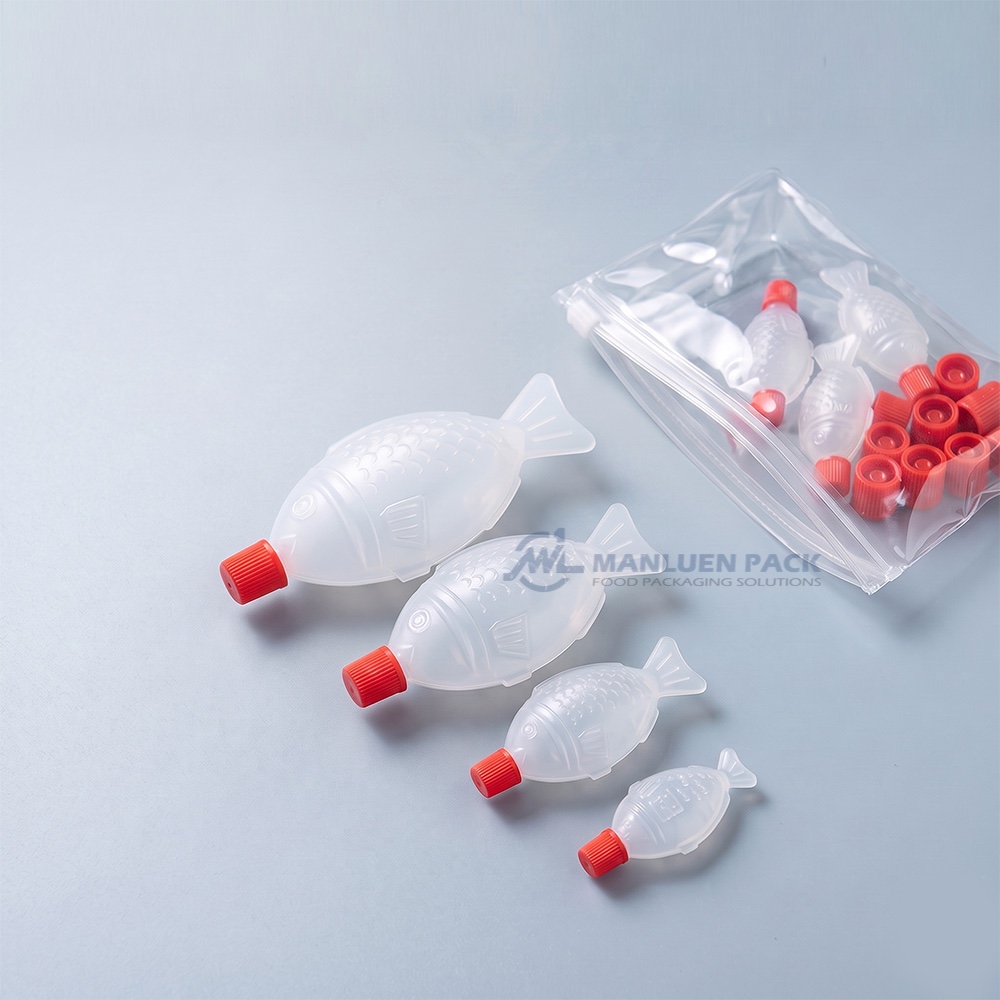
Source sauce packaging from specialist food packaging manufacturers, portion-cup wholesalers, and distributors with suitable stock and delivery coverage. Compare cups with lids, condiment bottles, and other formats according to the sauce and serving method.
Specify usable portion volume, headspace, acidity, oil content, viscosity, filling temperature, storage duration, closure, and transport. A thin soy sauce tests a closure differently from a thick dressing. FDA’s food-type and use-condition tables distinguish these food and temperature categories.
Test the Filled Sauce Package
Use the real sauce and intended portion. Check the cup or bottle after filling, closure, storage, delivery simulation, and opening. Look for leakage at the rim, cap loosening, staining, deformation, separation of a seal, and difficulty opening. Evaluate any tamper-evident feature separately from leak resistance.
Specify whether the sauce is filled cold, warm, or hot, and whether it remains refrigerated. A portion cup intended for immediate takeaway service should not automatically be used for retail shelf-life storage. Shelf-stable sauces need a validated food-preservation process and package compatibility, not merely a tight lid.
Manluen lists a portion-cup series with nominal capacities from 0.75 oz to 5.5 oz, including a 1 oz sauce cup and a 3.25 oz condiment cup. Confirm usable capacity, the exact material option, lid, and current packing details with samples before ordering.
Where Can I Find Wholesale Packaging for Specialty Foods?
Look for suppliers with demonstrated experience in the required application, then verify the selected product. Specialty-food requirements can involve presentation, oxygen or moisture protection, temperature, tamper evidence, or unusual portions.
| Application | Format to consider | Main checks |
|---|---|---|
| Sushi and chilled seafood | Sushi trays with compatible lids | Presentation, refrigeration, lid fit, and handling |
| Prepared meals | Single- or multi-compartment meal containers | Portions, sauce separation, filling and reheating conditions |
| Deli foods | Food storage containers | Usable capacity, closure, stacking, and shelf life |
| Sauces and dressings | Portion cups or condiment bottles | Food compatibility, headspace, closure, and leakage |
| Catering platters | Large trays with fitted lids | Loaded strength, dimensions, carrying, and transport |
PP is commonly used for selected hot-food applications, while PET is common in clear chilled-food packaging. Confirm the finished SKU’s conditions rather than inferring microwave suitability or service temperature from the resin name.
Specialty-food samples should reproduce the actual presentation and distribution. Check whether a sushi lid touches toppings, whether a bento compartment allows sauce crossover, whether a cake dome clears the decoration, and whether a catering tray can be carried safely when fully loaded. If the food requires modified-atmosphere or high-barrier packaging, validate the tray-and-film system and shelf life together.
What Should a Packaging RFQ Include?
- Product name, reference SKU, drawing, and sample where available.
- Food type, filling, storage, transport, shelf life, and heating conditions.
- Material structure, dimensions, tolerances, usable capacity, and lid.
- Order quantity, annual estimate, reorder frequency, and mixed-SKU needs.
- Color, artwork, printing, tooling, and other customization requirements.
- Food-contact documentation, performance criteria, and inspection plan.
- Pieces per carton, carton dimensions, pallet requirements, and markings.
- Destination, required receipt date, currency, delivery basis, and payment terms.
Ask suppliers to identify assumptions and exclusions. Compare equivalent products, approve samples and documents, and use a trial order where appropriate before increasing volume. For Manluen sourcing, begin with the relevant food packaging product and provide the application and destination with your quotation request.
How to Make the Final Supplier Decision
First eliminate candidates that cannot meet essential product, compliance, or delivery requirements. Then compare the remaining candidates using an evidence-based scorecard. Set weights around your operation: a distributor may emphasize availability and carton efficiency, while a food manufacturer may emphasize line performance and change control.
Record the evidence and unresolved questions beside each score. Useful measures include sample acceptance, completeness of the document file, traceability performance, delivery history, accepted-unit cost, and corrective-action quality. Keep mandatory failures visible even if the supplier scores well elsewhere.
Approve the first order with a documented sample, specification revision, test plan, and commercial agreement. At receipt, compare production with the retained approved sample. Review the supplier after the trial and monitor repeat orders for defects, shortages, delivery performance, and unapproved changes. Supplier approval is maintained through performance, not completed by one initial audit.
Frequently Asked Questions
What is the most important factor when choosing a packaging wholesaler?
The exact package must meet the product’s performance and applicable food-contact requirements. Compare delivery, service, and total cost after this basic suitability is established.
Does every food packaging supplier need an FDA registration number?
A generic registration claim does not establish packaging suitability. Ask for the applicable regulatory basis for the article’s components and intended use, including an effective FCN where that is the basis relied on.
What is a reasonable MOQ?
It depends on the SKU, process, color, printing, tooling, stock policy, and order mix. Request separate quantities and pricing for stock and custom options rather than applying a universal benchmark.
Do I need an on-site audit for every purchase?
No. Use a review proportionate to the product, supplier history, order size, and customer requirements. Custom or demanding food-contact applications may justify more extensive assessment.
How often should packaging be retested?
Set review and testing triggers around regulatory requirements, material or process changes, intended use, failures, and customer specifications. A fixed interval alone may miss an important change.
Is an overseas supplier always cheaper?
No. Compare accepted-unit landed cost, inventory, lead time, freight, duties, inspection, and service. Local supply can be more economical for small quantities or urgent mixed orders.
Conclusion
Choose a packaging wholesaler by verifying the actual product, supporting documents, material control, production quality, delivery capacity, and commercial terms. Use samples and a written specification to connect supplier promises with measurable requirements.
For sauces, condiments, and specialty foods, start with the contents and conditions of use. A clear RFQ and a proportionate approval process make quotations easier to compare and repeat orders easier to control.
References
- FDA. Determining the Regulatory Status of Components of a Food Contact Material.
- FDA. Food Types and Conditions of Use for Food Contact Substances.
- European Commission. Food Contact Materials Legislation.
- BRCGS. Packaging Materials Certification.
- ICC. Incoterms 2020 Overview.
- ISO. ISO 19011:2026: Guidelines for Auditing Management Systems.
- ISTA. Test Procedures and Their Distribution Scopes.
- FDA. Use of Recycled Plastics in Food Packaging: Chemistry Considerations.
- US International Trade Administration. Know Your Incoterms.

ManLuen Plastic Packaging Company, which is specialized in the production of Plastic Food Packaging for more than 20 years. Our products are made from 100% virgin and BPA-Free PP, PS, and OPS comply with FDA and European Standards.
 EN
EN  ZH
ZH  FR
FR  PT
PT  ES
ES  KO
KO  JA
JA