
소개
Sourcing wholesale party trays from China can give distributors, caterers, and foodservice brands access to a broad range of sizes, materials, lid styles, and custom options.
The difficult part is not finding a factory. It is confirming that the tray fits the food, meets the destination market’s requirements, survives transport, and arrives at a workable landed cost.
This guide covers the practical steps: choosing a tray, comparing materials, screening suppliers, reviewing samples and documents, calculating freight, and setting clear order terms. Buyers who are still defining the product can start with Manluen’s party tray range and compare the formats against their menu and sales channel.
What Is a Party Tray?
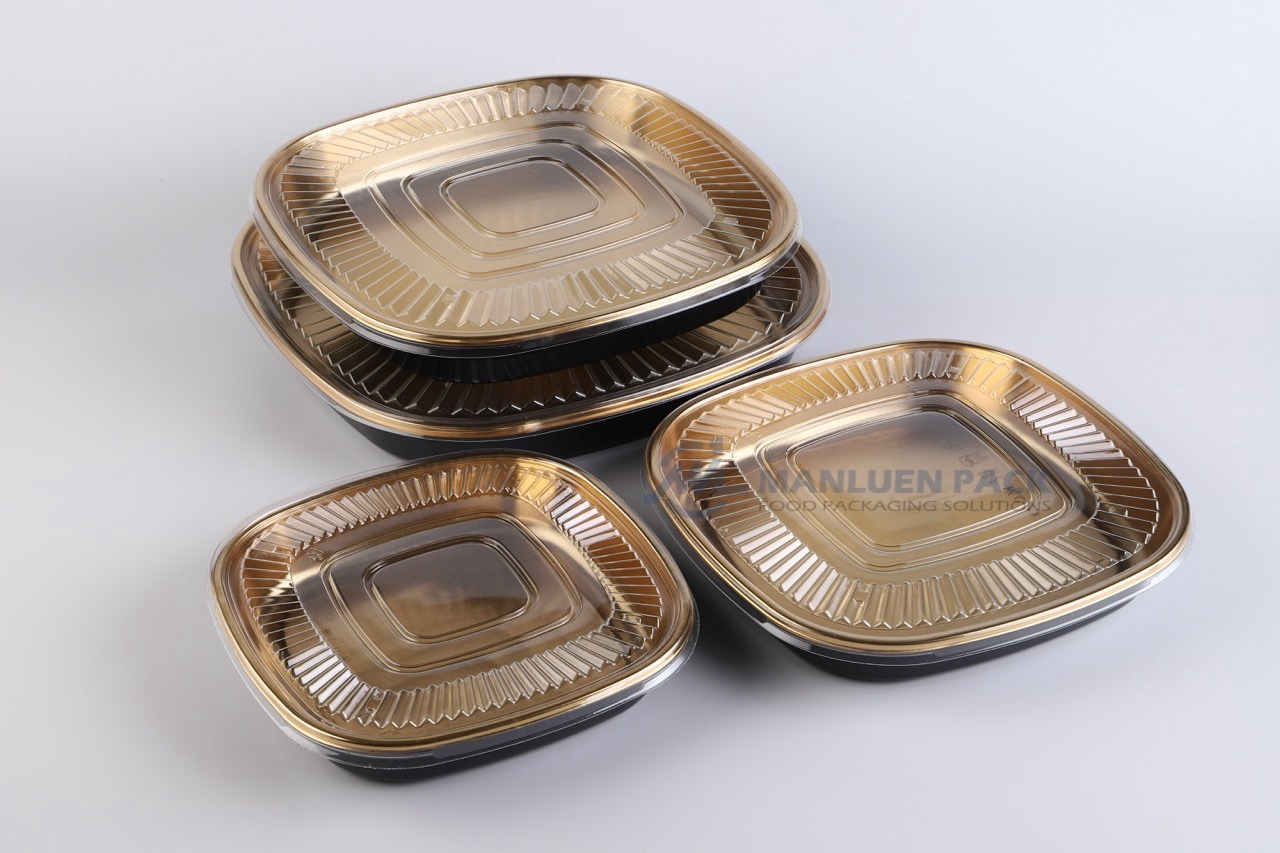
A party tray is a larger food presentation container used for appetizers, sushi, fruit, desserts, sandwiches, cold cuts, and catering assortments. It may be round, square, rectangular, or divided into compartments. Many disposable formats use a rigid base with a fitted clear lid.
Party trays differ from standard meal containers in several ways. They normally carry more food, place greater emphasis on presentation, and need enough stiffness to stay level when lifted. The lid also needs enough headroom for arranged food and a closure that remains secure during pickup or delivery.
Party Tray Formats Available from Chinese Suppliers
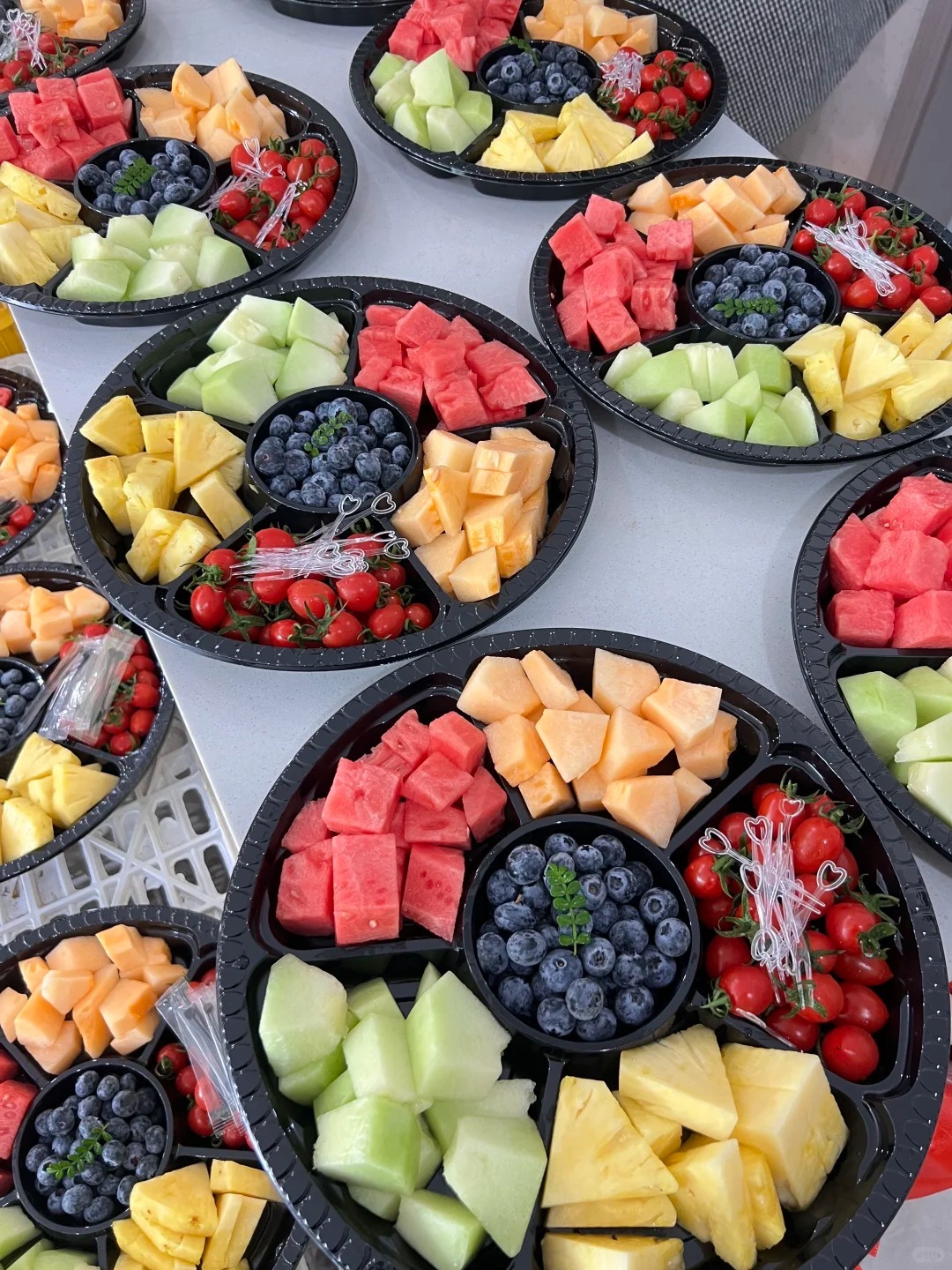
Round Trays
Round trays work well for sushi rings, fruit, pastries, deli assortments, and centered displays. They are common in catering because staff can arrange food evenly around the tray. A raised rim and fitted lid help protect the presentation.

Square and Rectangular Trays
Square and rectangular formats use shelf and carton space differently from round trays. They can suit sandwiches, sliced foods, pastries, and linear arrangements. Buyers should compare the usable internal area rather than relying only on the outside dimensions.
Divided Party Trays
Compartments separate sauces, snacks, fruit, or foods with different textures. The divider layout must match the serving plan. Narrow sections may limit usable portions even when the overall tray looks large.
Trays With Clear Lids
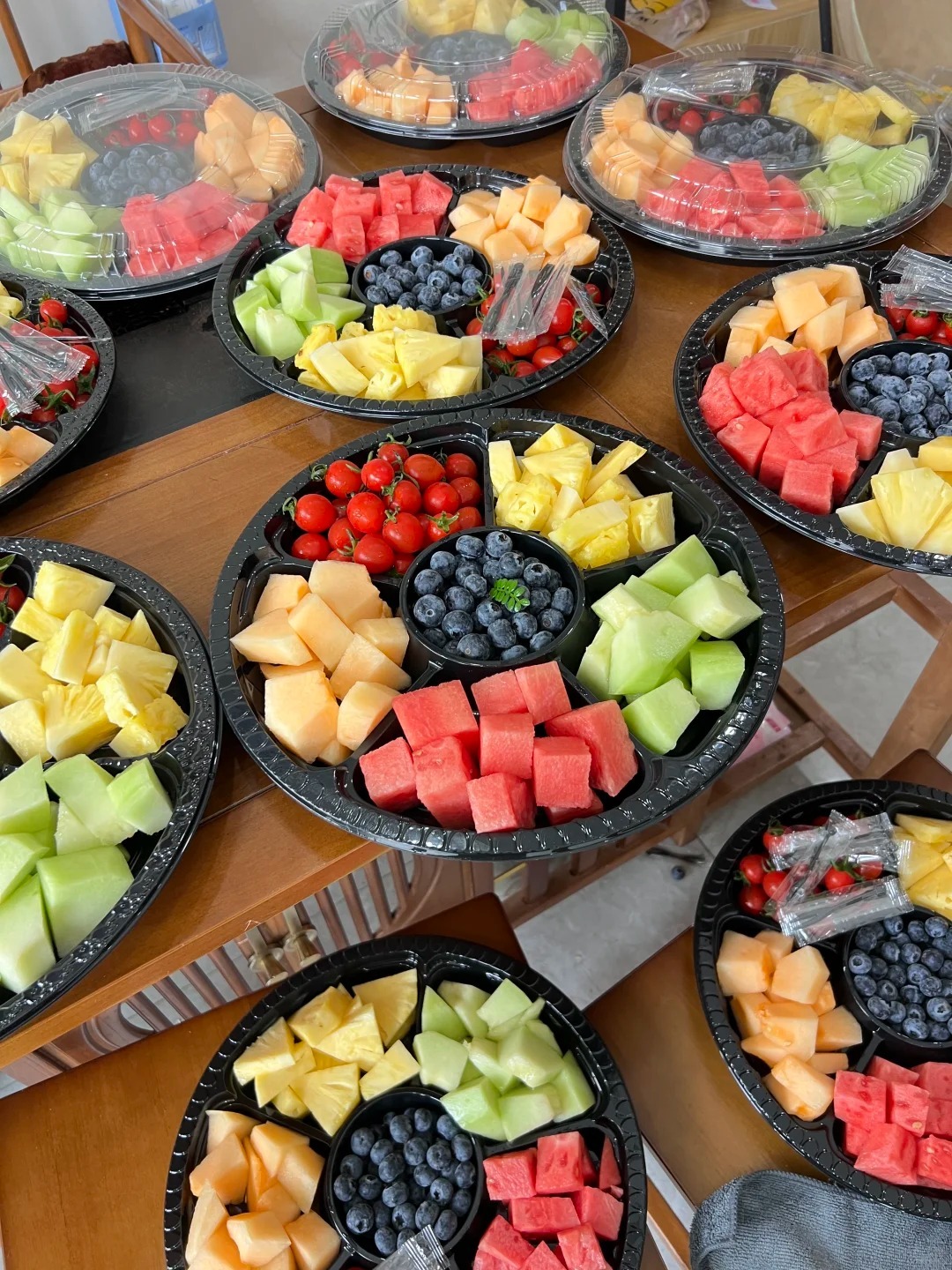
A clear lid helps customers inspect the food while keeping the arrangement covered. Check lid height, clarity, closure force, stacking, and cold-storage performance. The base and lid may use different materials, so review both components before approving the set.
How to Compare Party Tray Materials
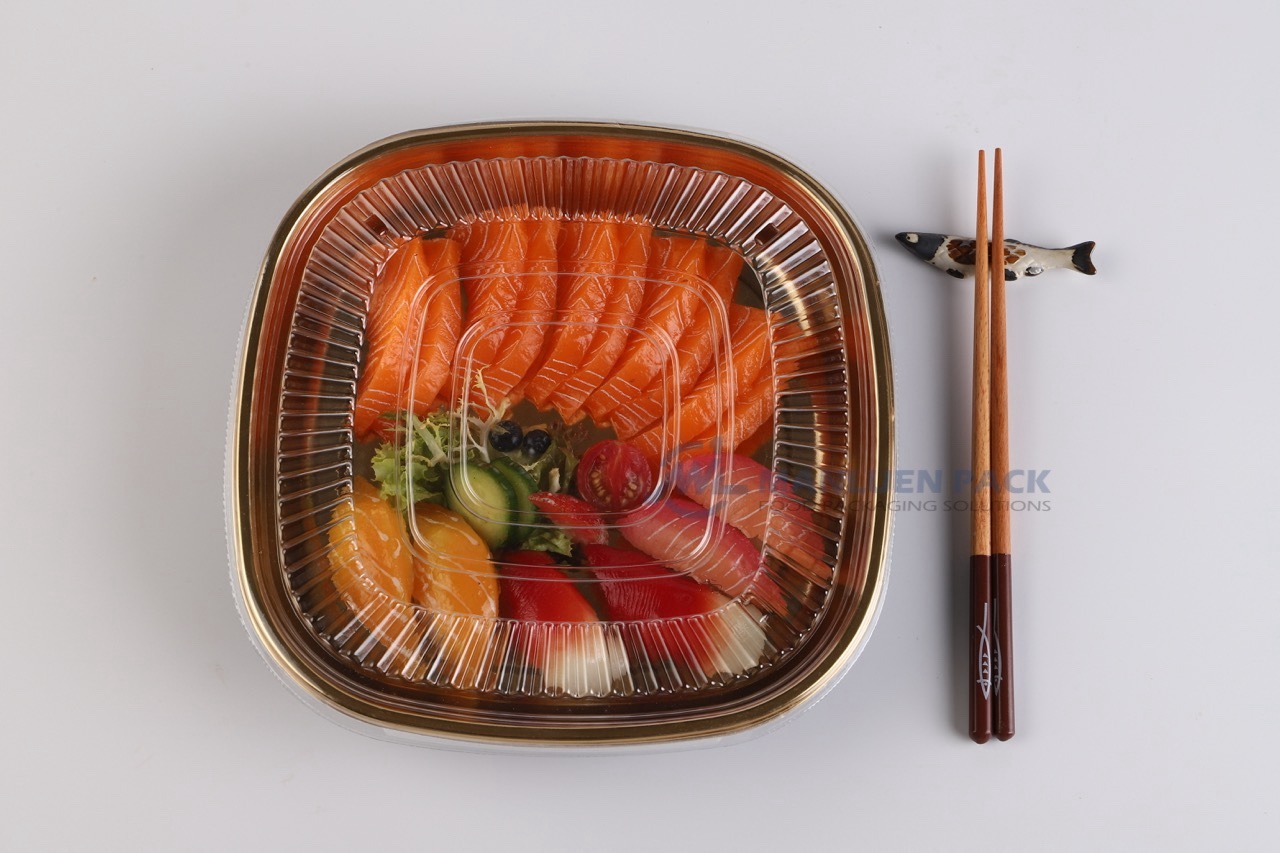
The correct material depends on food type, storage temperature, display requirements, transport time, and local disposal systems. Manluen’s food packaging materials guide gives a wider comparison of common packaging options.
| 재질 | Common reasons to use it | Questions for the supplier |
|---|---|---|
| PP | Rigid base options and suitability for some warmer applications | Exact grade, temperature limits, food types, lid material, migration basis |
| PET or rPET | Clarity and chilled display | Recycled-content evidence, intended use, color, cold performance |
| OPS or PS | Clear lids or rigid display components for selected cold uses | Brittleness, impact resistance, temperature limits, local restrictions |
| Paper or paperboard | Printable surface and a paper presentation | Coating, grease resistance, lid material, recycling instructions |
| 버가스 | Fiber-based presentation and certified compostable options | Certification scope, PFAS statement, moisture performance, facility requirements |
Do not select a tray from the resin name alone. The finished structure matters. Wall thickness, geometry, closure, lid material, additives, and intended conditions of use all affect performance and compliance.
Two Manluen Party Tray Examples
그것은 WL-53 round party tray uses a black base and is offered with PS, PP, PET, or OPS material options. The lid measures Ø265 × 28 mm, the base measures Ø250 × 26 mm, and the model is packed at 200 sets per carton. It provides a useful reference for round appetizer, sushi, or prepared-food displays.

그것은 KS-65 divided party tray measures 382 × 385 × 85 mm and is packed at 120 sets per carton. Its divided layout suits assorted foods that need separation. The listed construction uses an OPS lid with a PP base.
These examples show why buyers should request model-level data. A general party tray description does not provide the dimensions, carton volume, component materials, or compartment layout needed for a reliable quotation.

How to Screen a Party Tray Supplier in China
Confirm the Legal Business and Factory Role
Ask for the company’s registered name, business licence, factory address, export entity, and bank beneficiary details. Confirm whether the company manufactures the product or trades it from another factory. A trading company is not automatically unsuitable, but the supply chain should be clear.
Review Production Capability
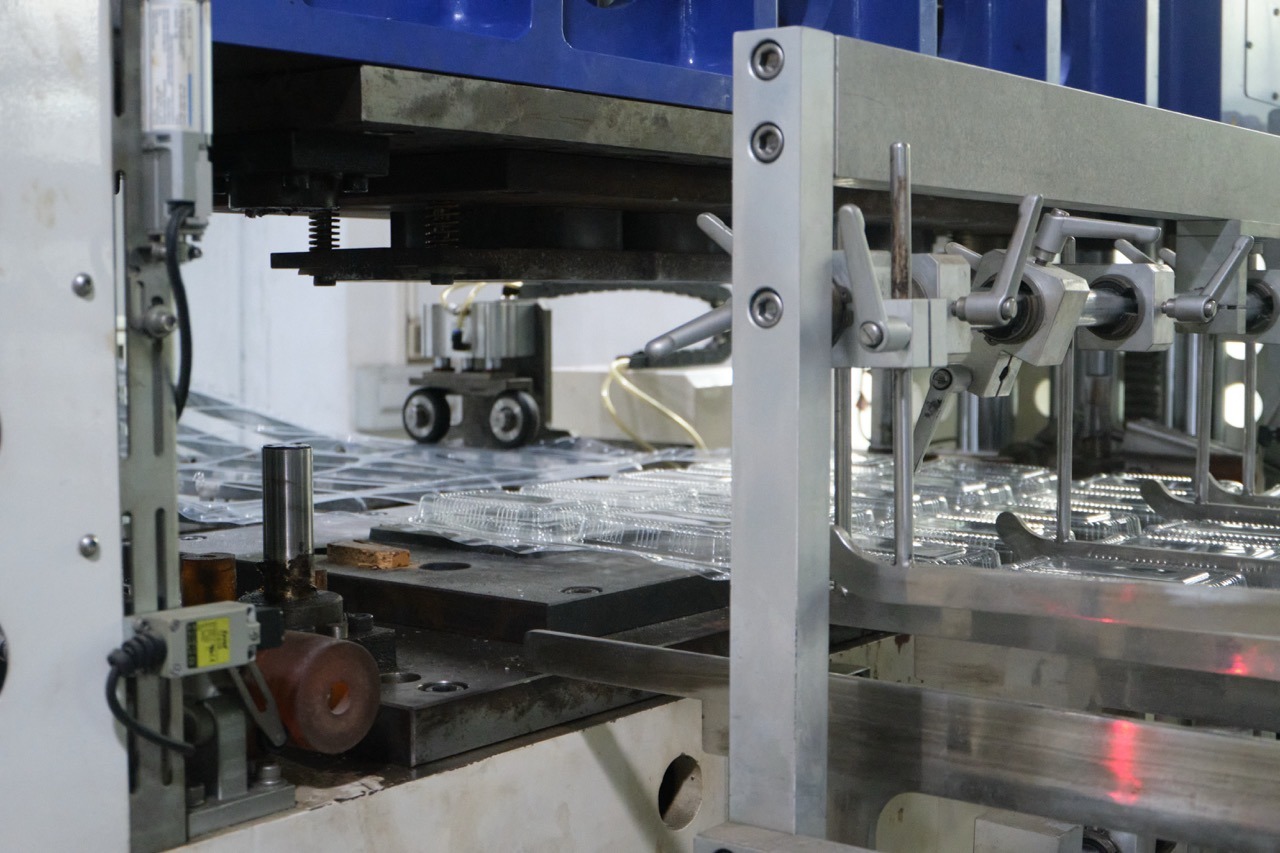
Request a list of forming equipment, mold ownership, daily or monthly capacity, normal lead time, peak-season lead time, and quality-control steps. If the order needs a custom mold or printed packaging, confirm which work is completed in-house and which work is outsourced.
Ask for Product-Specific Documents
A factory certificate does not replace food-contact evidence for the actual tray. Request the material specification, regulatory basis, test report, conditions of use, and lot traceability for the exact base and lid. Manluen’s guide to food packaging authorization explains why a generic “FDA approved” claim is not enough.
Check Communication Quality
A useful quotation should repeat the material, dimensions, color, lid type, carton quantity, quantity ordered, tooling, printing, Incoterm, payment terms, and lead time. Slow or vague answers during sampling often predict problems during production.
Sample Testing Before You Order
Always test production-representative samples. Use the real food, serving weight, storage temperature, and delivery process.
- Measure the usable internal area and lid height.
- Fill the tray to the normal service weight.
- Close the lid using ordinary staff procedures.
- Refrigerate or hold the tray under the expected conditions.
- Stack the filled trays at the planned height.
- Carry and transport them over a realistic route.
- Check for base flex, lid lifting, cracking, fogging, leaking, and food movement.
- Repeat the test with oily, acidic, or wet food when relevant.
Keep an approved sample and signed specification for comparison during incoming inspection. For a broader product-selection method, review how to choose the right food packaging.
Food-Contact Compliance for the Destination Market
United States
The U.S. FDA evaluates food-contact substances according to their identity, specifications, limitations, and intended conditions of use. The complete tray may contain several components with different regulatory bases. Buyers should confirm the status of the base, lid, colorants, additives, adhesives, and coatings where applicable.
Ask the supplier for documentation that matches the manufacturer, material, food type, temperature, and contact time. A report for one resin or a different model does not automatically cover the product being purchased.
European Union
Regulation (EC) No 1935/2004 provides the general EU framework for food-contact materials. Plastic materials and articles are also subject to Regulation (EU) No 10/2011. Buyers should request an appropriate declaration of compliance and supporting migration information for the finished construction and intended use.
Other Markets
Canada, Japan, Gulf countries, and individual U.S. states may impose additional requirements. Give the supplier a written list of destination markets before testing begins. Do not assume that a report prepared for one region satisfies every customer or regulator.
MOQ, Tooling, and Quotation Terms
There is no universal minimum order quantity for wholesale party trays. MOQ depends on the model, stock status, material, color, packing, printing, and whether new tooling is required. A stocked item may support a smaller trial order, while a custom tray normally needs enough volume to cover mold setup and production changeover.
Ask each supplier to quote the same specification. The quotation should separate:
- Unit price and quantity tier
- Base and lid materials
- Samples and courier charges
- Mold or tooling charges
- Printing plates and artwork setup
- Inner packing and export carton
- Palletizing when required
- Testing and document charges
- Incoterm and named port or place
- Production and shipping lead time
A low unit price can hide a larger carton, weak lid fit, higher breakage, or additional testing costs. Compare landed cost and usable performance, not only the factory price.
Customization and Tooling
Customization may include color, embossing, labels, printed sleeves, carton artwork, compartment layout, or a new mold. Begin with a dimensioned drawing and a clear use case. Confirm ownership of the mold, maintenance responsibility, storage period, modification fees, and the conditions for moving the mold if the commercial relationship ends.
For a custom color, approve a physical sample under normal lighting. For logo work, define the printable area and color tolerance. For a custom structure, test several tool samples before authorizing mass production.
Sustainability Claims Need Evidence
Words such as recyclable, recycled, biodegradable, and compostable describe different things. They should not be used as interchangeable marketing terms. The FTC Green Guides advise U.S. marketers to qualify environmental claims when necessary and to support them with reliable evidence.
Ask for the actual material composition, recycled-content evidence, certification scope, and disposal conditions. A bagasse tray may require industrial composting. A recyclable plastic may not be accepted in every local program. A paper tray may include a coating or plastic lid that changes the disposal route.

Freight and Import Planning
Disposable party trays are light but can occupy substantial carton volume. Freight cost may therefore depend more on cubic volume than product weight. Request the carton dimensions, gross weight, number of cartons, total cubic metres, and pallet plan before comparing freight quotations.
Choose the Shipping Method by Order Stage
- Courier: suitable for samples and urgent document packages.
- Air freight: useful for urgent commercial quantities, but often expensive for bulky trays.
- Sea freight: normally more practical for regular wholesale orders with enough planning time.
Transit time varies by origin, destination, sailing schedule, customs, and local delivery. Ask the freight forwarder for a current route-specific estimate instead of relying on a fixed number of days.
Clarify the Incoterm
State the Incoterm and named place in the purchase order. EXW, FOB, CIF, and DDP allocate cost and responsibility differently. Confirm who handles export clearance, main freight, insurance, import clearance, duties, port charges, and final delivery.

Production and Pre-Shipment Quality Control
Set measurable acceptance criteria before production. The specification can cover dimensions, weight tolerance, color, material, lid fit, visual defects, carton packing, and labeling. Agree on the inspection method and defect limits in writing.
For an important first order, consider a pre-production meeting, in-process check, and pre-shipment inspection. Inspect random cartons rather than only the supplier’s display samples. Compare the goods with the approved sample and verify carton marks, quantities, and documents before releasing the final payment.
Wholesale Party Tray Buying Checklist
- Define the food, portion layout, temperature, and delivery time.
- Select the tray dimensions, compartments, base, and lid.
- Confirm the material of every component.
- Request product-specific food-contact documents.
- Test representative samples with the real food.
- Compare carton volume and landed cost.
- Confirm MOQ, tooling, printing, payment, and lead time.
- Use a signed specification and approved sample.
- Set inspection criteria before production.
- Verify shipping documents and carton marks before dispatch.
Buyers who also source sushi packaging can review the 스시 쟁반 sourcing guide. For general party-tray selection by material and food type, see the party food tray buyer guide. When the specification is ready, request samples and a model-specific quotation from Manluen.
자주 묻는 질문
What is the normal MOQ for wholesale party trays?
MOQ varies by model and project. Stock products may allow smaller trial quantities. Custom colors, printing, materials, or molds usually require a higher quantity. Request the MOQ for the exact specification.
Are all PP party trays microwave-safe?
No. Microwave suitability depends on the complete tray and lid, material grade, food, temperature, and heating time. Use the product in a microwave only when the supplier provides written instructions for that exact model.
What documents should a U.S. buyer request?
Request the material specification, regulatory basis, test report or letter of guaranty where appropriate, intended food types and conditions of use, and lot traceability. The paperwork should identify the product being purchased.
How can a buyer reduce freight cost?
Compare nesting, pieces per carton, carton dimensions, total cubic volume, and pallet loading. A slightly different tray or packing method can reduce freight cost without changing the serving function.
Should buyers use a sourcing platform’s payment protection?
Payment protection can reduce some transaction risk, but it does not replace product specifications, samples, inspections, or contract terms. Read the current platform rules and claim deadlines before placing the order.
결론
China offers a wide choice of wholesale party trays, but a successful order starts with a precise specification. Match the tray to the food, test representative samples, verify product-specific compliance documents, and compare landed cost. Clear quality and shipping terms make supplier comparisons more reliable and reduce surprises after production begins.
출처 및 추가 자료
U.S. Food and Drug Administration. Determining the Regulatory Status of Components of a Food Contact Material. Used for the U.S. authorization routes and the need to check each component and intended use. U.S. Food and Drug Administration
U.S. Food and Drug Administration. Food Types & Conditions of Use for Food Contact Substances. Used for food-type, temperature, storage, reheating, and cooking distinctions. U.S. Food and Drug Administration
European Commission. Food Contact Materials Legislation. Used for the EU framework under Regulation (EC) No 1935/2004 and the rules applicable to plastic food-contact materials. European Commission
EUR-Lex. Commission Regulation (EU) No 10/2011 on Plastic Materials and Articles Intended to Come into Contact with Food. Used for the EU plastic food-contact framework. EUR-Lex
Federal Trade Commission. Environmental Claims: Summary of the Green Guides. Used for recyclable, compostable, recycled-content, and general environmental marketing claims. Federal Trade Commission

ManLuen 플라스틱 포장 회사는 20년 이상 플라스틱 식품 포장 생산에 특화되어 있습니다. 저희 제품은 100% 순수 원료와 BPA-Free PP, PS, OPS로 만들어졌으며, FDA 및 유럽 표준을 준수합니다.
 KO
 EN
 ZH
 FR
 PT
 ES
 JA