
Introduction
What is thermoforming? Thermoforming is a manufacturing process that heats a flat thermoplastic sheet until it becomes pliable, shapes it against a mold using vacuum, positive air pressure, mechanical assistance, or a combination of these forces, and then cools and trims it into a finished part.
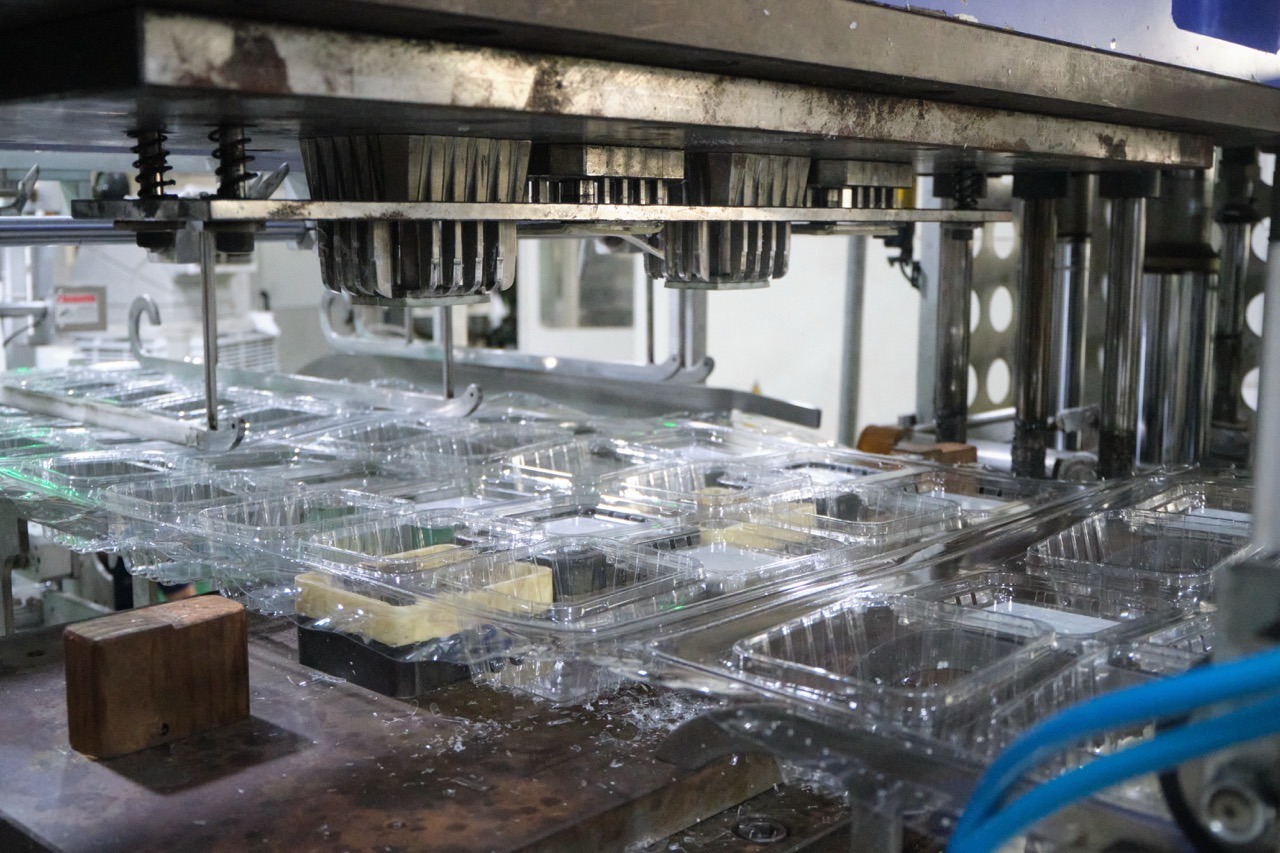
The basic sequence is heat, form, cool, and trim. In industrial production, however, sheet temperature, mold geometry, draw depth, plug design, cooling, trimming, and polymer behavior all influence the dimensions, wall-thickness distribution, and performance of the finished part.
Thermoforming is the broader process category. Vacuum forming is one type of thermoforming, while pressure forming and plug-assisted forming are other important variations. Unlike injection molding, which starts with molten resin, thermoforming begins with a pre-extruded plastic sheet supplied in rolls, cut sheets, or directly from an extrusion line.
For food packaging, thermoforming is commonly a thin-gauge, high-volume process used to manufacture trays, lids, cups, clamshells, deli containers, bakery packs, and other rigid or semi-rigid packages.
| Question | Practical answer |
|---|---|
| What is the starting material? | A thermoplastic sheet or film supplied in rolls, cut sheets, or directly from an extrusion line. |
| How is the sheet shaped? | By vacuum, positive air pressure, mechanical assistance, matched tooling, or a combination of these methods. |
| What happens after forming? | The material cools against the tool, the formed sheet is released, and the finished part is trimmed from the surrounding web. |
| Where is thermoforming used? | Food packaging, medical packaging, retail displays, appliance liners, vehicle panels, equipment housings, and many other products. |
This guide explains the complete thermoforming production line, the differences between vacuum forming and pressure forming, the role of plug assist in deep containers, the behavior of common packaging materials, and the specifications buyers should confirm before approving a thermoformed package.
How the Thermoforming Process Works
High-volume packaging is usually made on a connected production line. Although machine layouts vary, the following stages describe the normal thin-gauge sequence.
1. Sheet Extrusion and Feeding
Thermoforming starts with a flat plastic sheet, but that sheet is normally produced from small plastic resin pellets in a separate process called sheet extrusion.
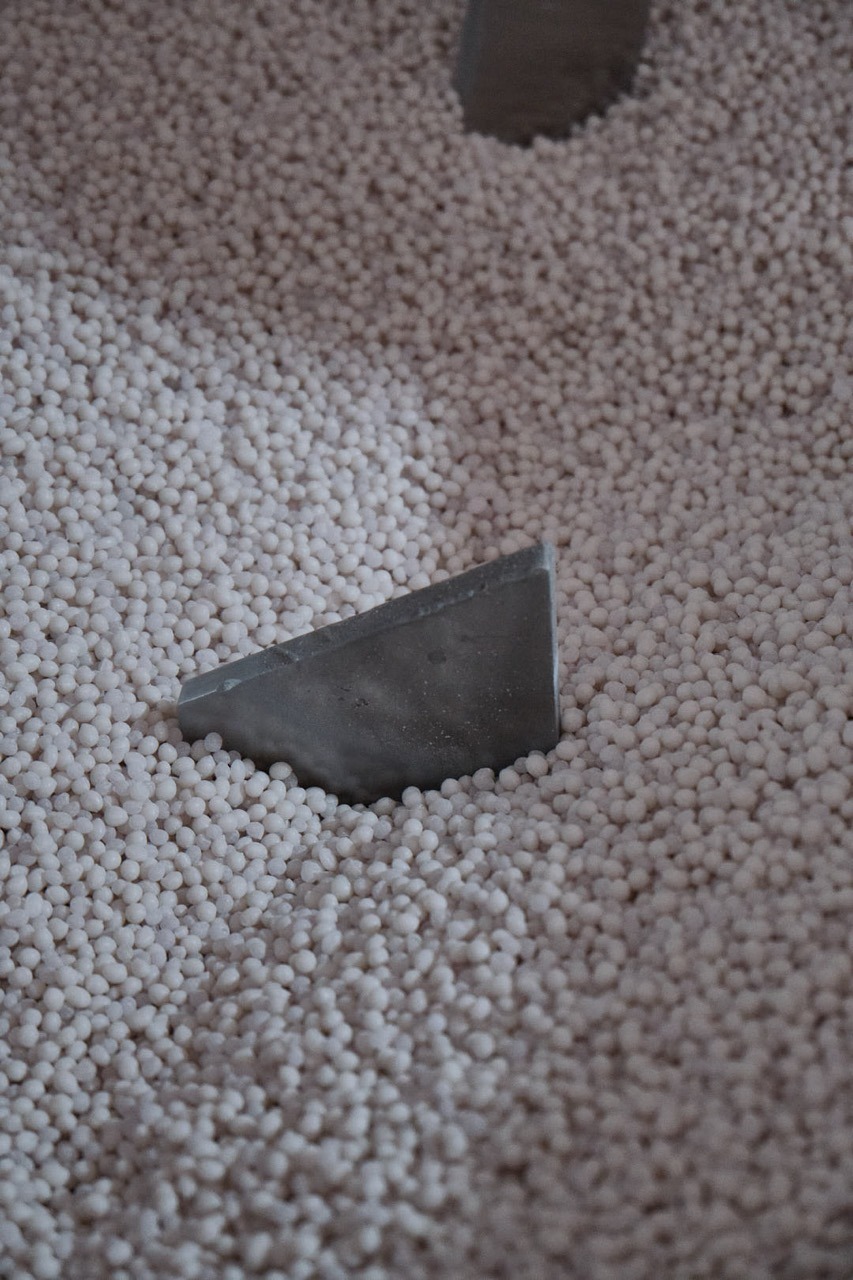
Depending on the material and grade, the resin pellets may first be dried to remove moisture. They are then fed into an extruder, where a rotating screw conveys, heats, compresses, and melts the material. The molten polymer is pushed through a wide, flat die that spreads it into a continuous sheet.
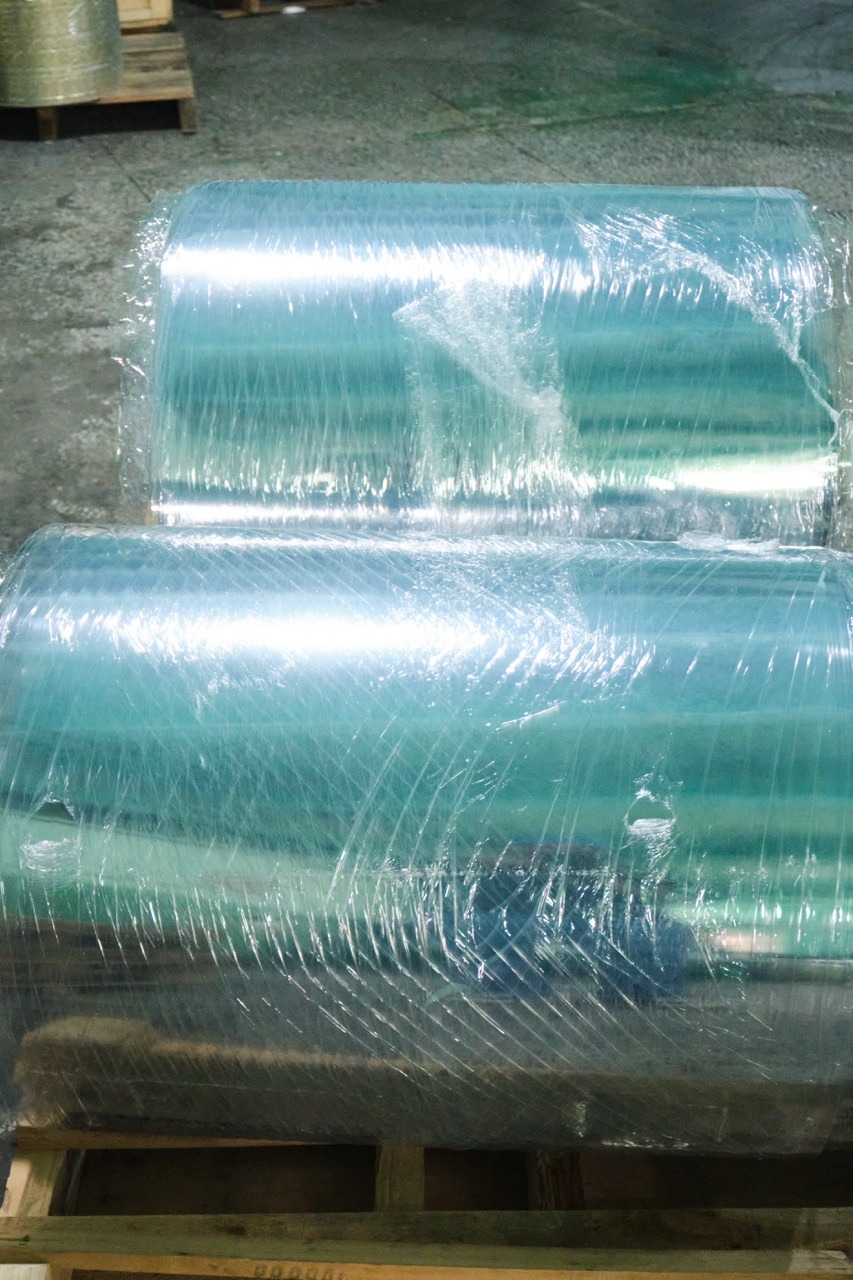
After leaving the die, the hot sheet passes through cooling or polishing rolls. These rolls cool the plastic, control its thickness, and help produce the required surface finish. The finished sheet can then be wound into large rolls for storage and transport or fed directly into an inline thermoforming machine.
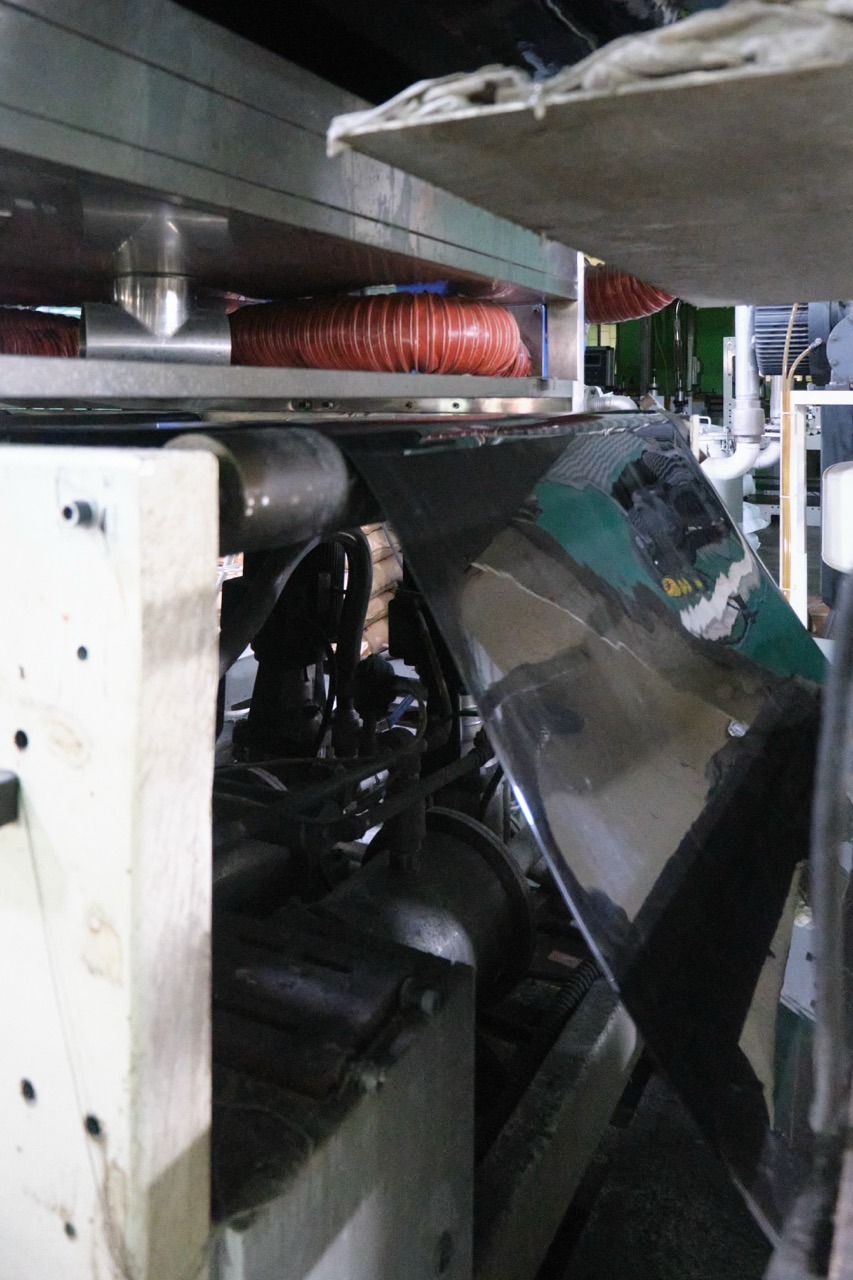
In simple terms:
plastic pellets → melting and mixing → flat-die extrusion → cooling and thickness control → rolled plastic sheet
This first stage is extrusion. It converts the original granular raw material into a continuous roll of flat sheet.
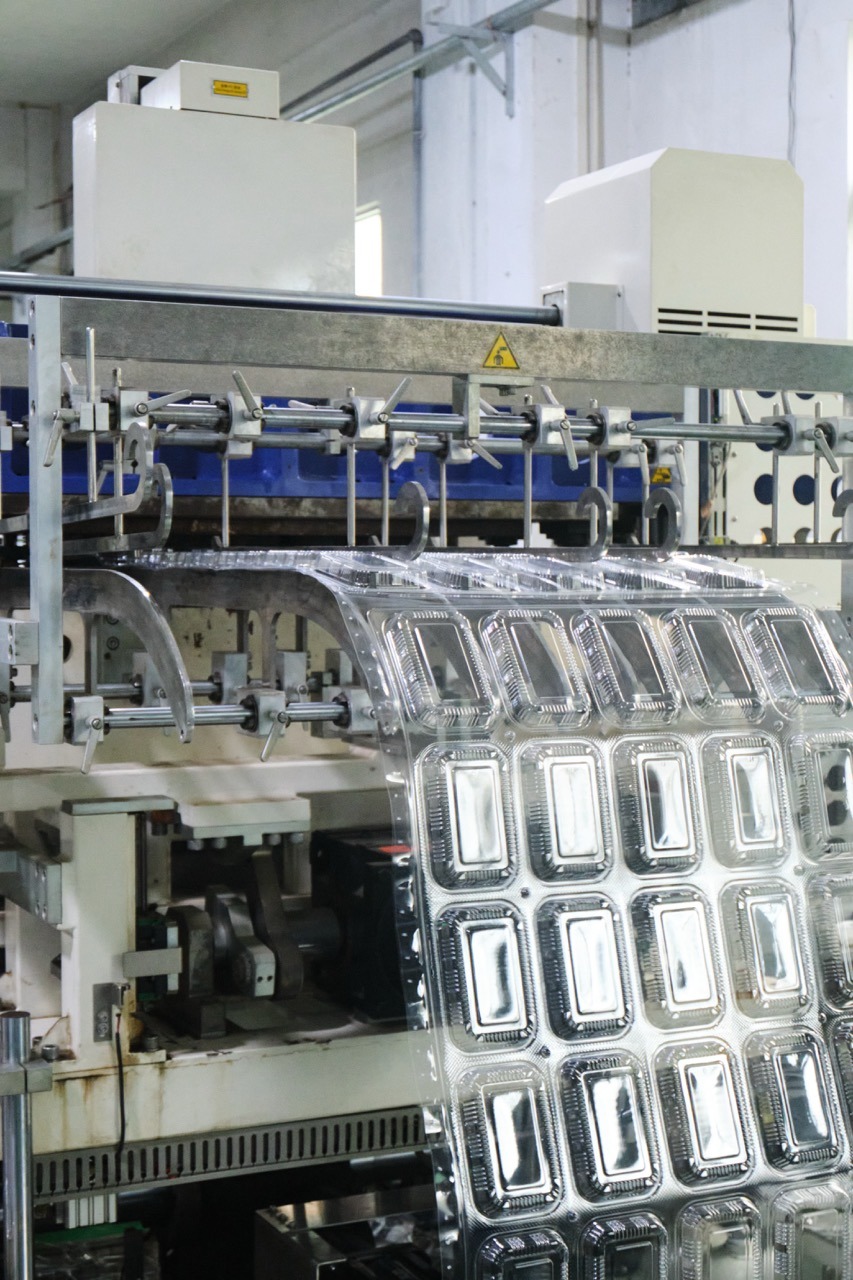
Thermoforming begins after the sheet has been produced. The roll is mounted on the thermoforming line and unwound into the machine. Indexing chains or another transport system grip the edges and move the sheet through the heating, forming, cooling, trimming, and stacking stations.
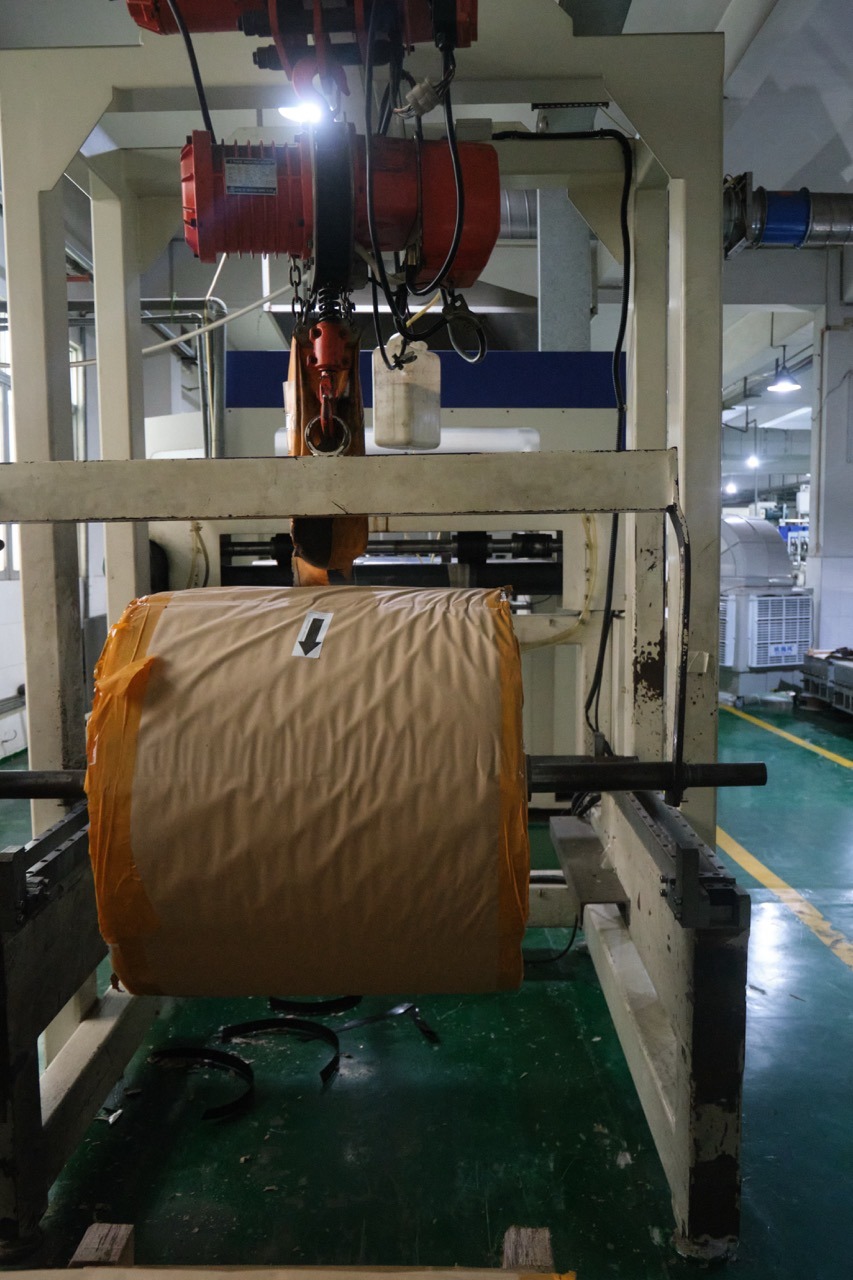
The feeding system must keep the material aligned and under controlled tension. If the sheet shifts, wrinkles, stretches prematurely, or enters the mold in the wrong position, the finished packages may have uneven walls, inaccurate rims, poor lid fit, or inconsistent trimming.
The two processes therefore perform different jobs:
- Extrusion converts plastic pellets into a continuous flat sheet.
- Thermoforming heats and reshapes that sheet into trays, cups, lids, clamshells, or other three-dimensional products.
Some manufacturers purchase ready-made sheet rolls from a specialist extruder. Others connect sheet extrusion directly to the thermoforming line. An integrated extrusion-and-forming system can eliminate the separate winding and reheating of the sheet, but it requires close control of sheet temperature, thickness, material composition, and production speed.
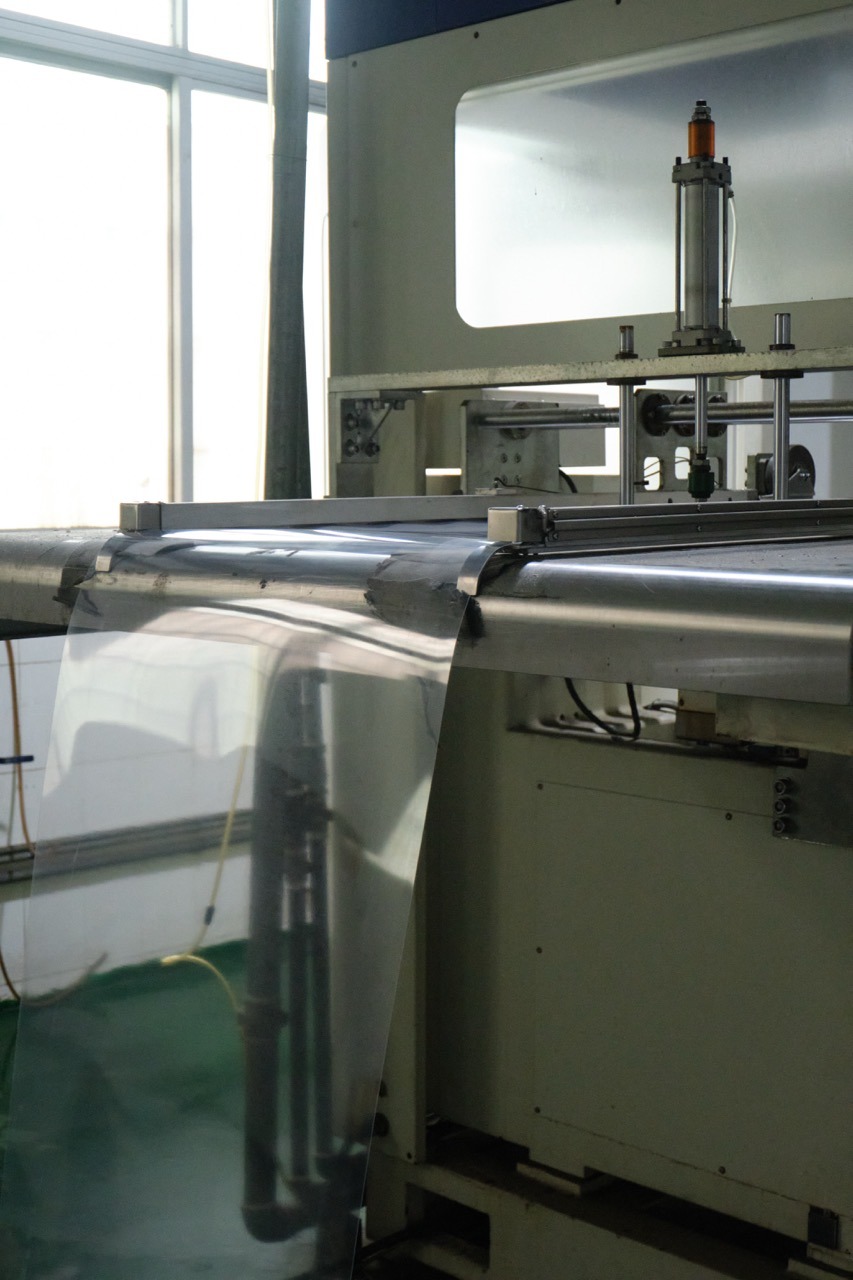
2. Heating
The sheet enters an oven or heating zone. The goal is not to turn it into a free-flowing liquid. It is heated until it becomes soft enough to stretch while remaining controllable. Heater banks may be divided into zones so different parts of the sheet receive different heat inputs.
Insufficient or uneven heating can cause incomplete forming, wrinkles, excessive thinning, poor detail, or warpage. Excessive heating can cause sag, sticking, degradation, or loss of dimensional control. The useful forming window depends on the polymer grade, sheet structure, thickness, moisture condition, geometry, cycle time, and equipment.
3. Forming
The heated sheet moves into the forming station and is clamped around the working area. Vacuum removes air between the sheet and mold, pressure forming applies compressed air from the opposite side, and a mechanical plug may pre-stretch the sheet before the final forming force is applied.
The sheet changes from a flat surface to a larger three-dimensional surface. Because the available material is redistributed during this movement, the finished wall is rarely identical in thickness at every location.
4. Cooling and release
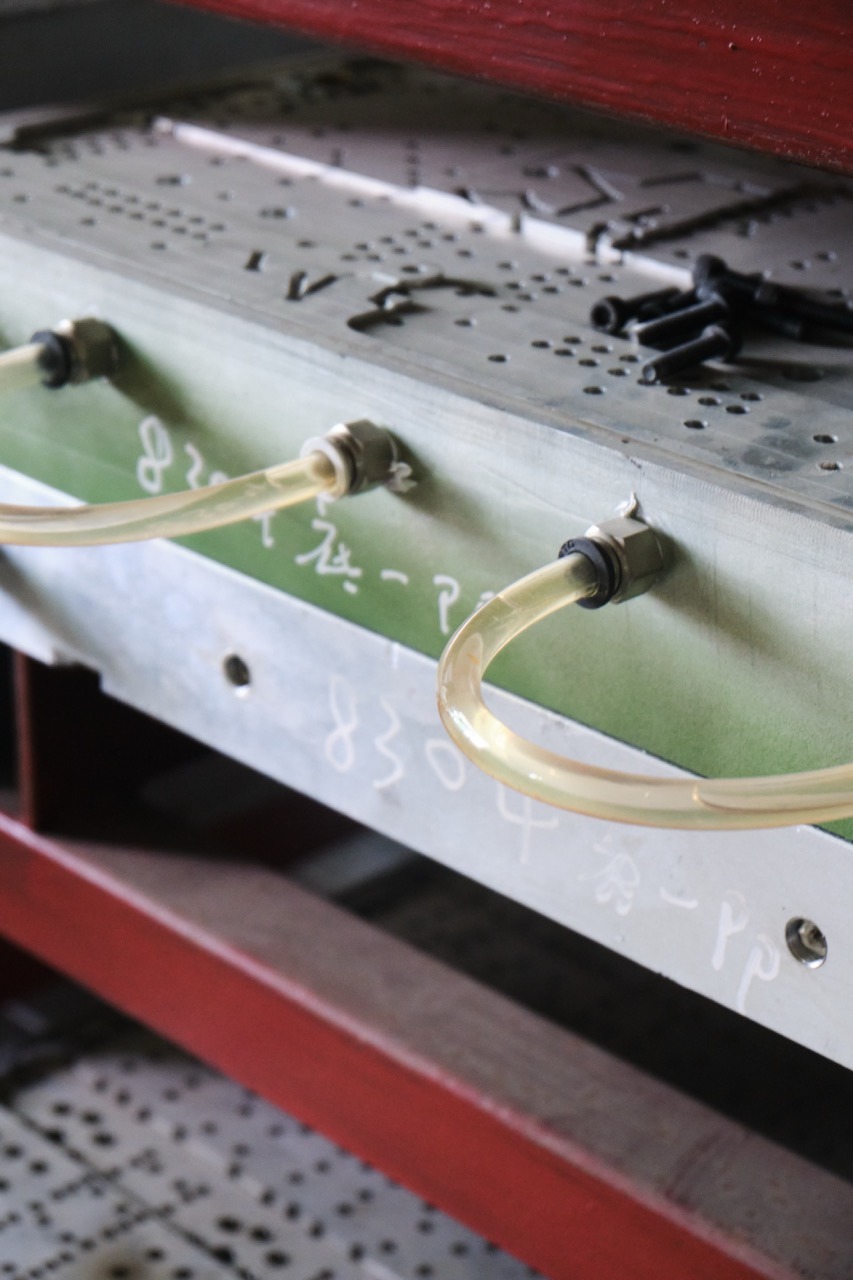
The formed material remains against the mold until it cools enough to retain its shape. Production tooling may contain temperature-control channels, and cooling can be assisted by air or other systems. Cooling affects cycle time, shrinkage, dimensional repeatability, warpage, and release.
After the part has become sufficiently rigid, reverse air, ejectors, stripper mechanisms, or other demolding aids separate the formed sheet from the tool. Draft angles and the absence of locking undercuts make this release easier.
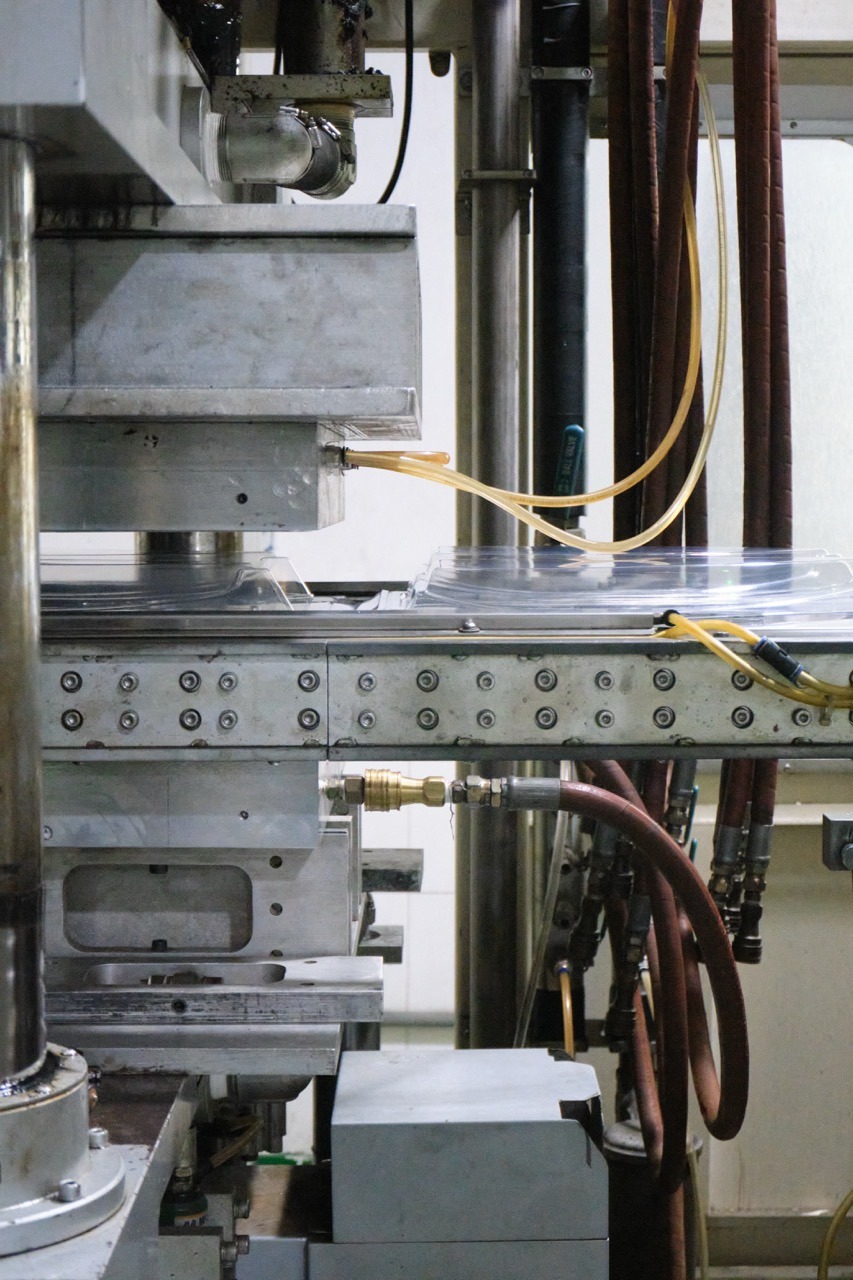
5. Trimming
The cavities are normally formed while still connected to a surrounding sheet web. A separate trimming stage cuts each finished part from that web. Thin-gauge packaging lines may use steel-rule dies, matched-metal trim tools, punch presses, or other high-speed systems. Heavy-gauge parts are often trimmed in a separate operation using CNC equipment.
Trimming affects more than appearance. In food packaging, it determines outside dimensions, rim quality, flange width, seal area, lid fit, safe handling, and stackability.
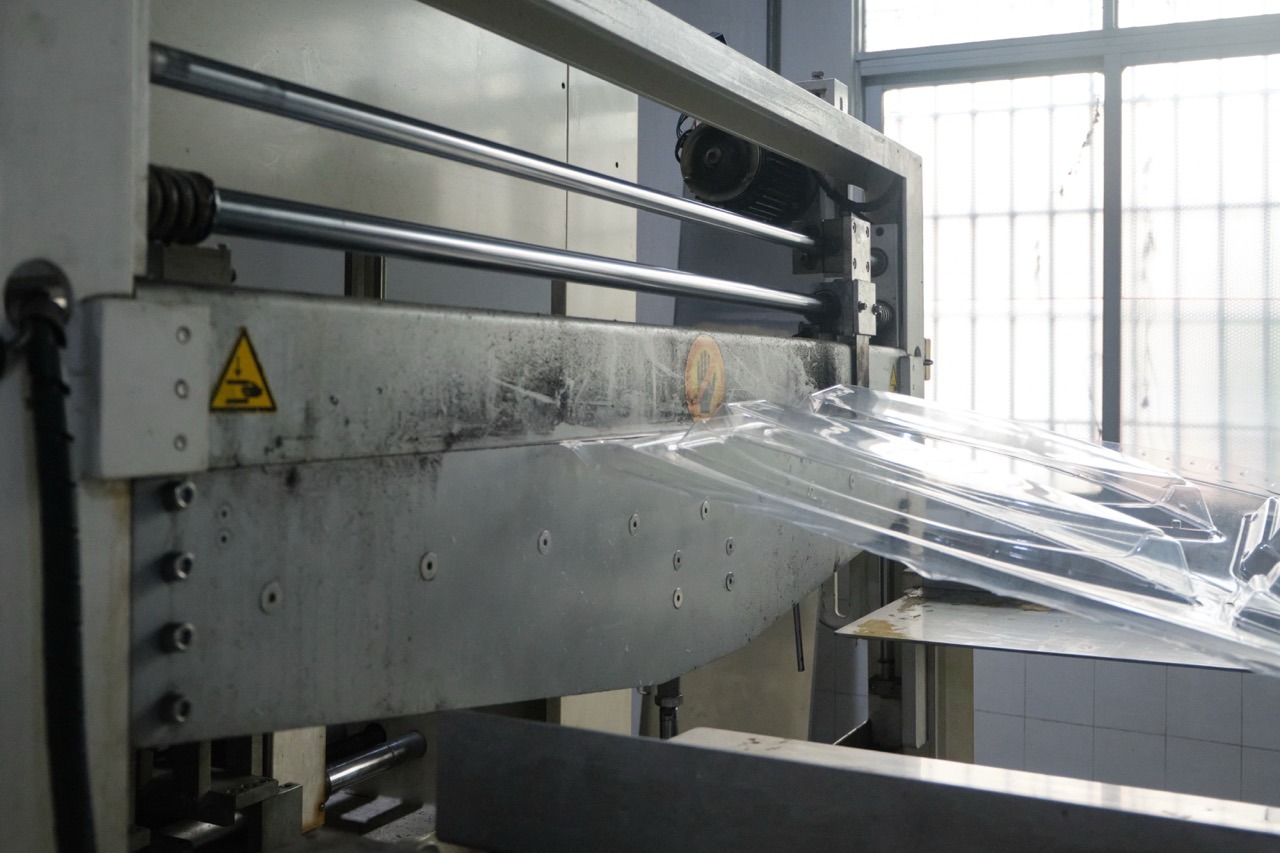
6. Inspection, stacking, and packing
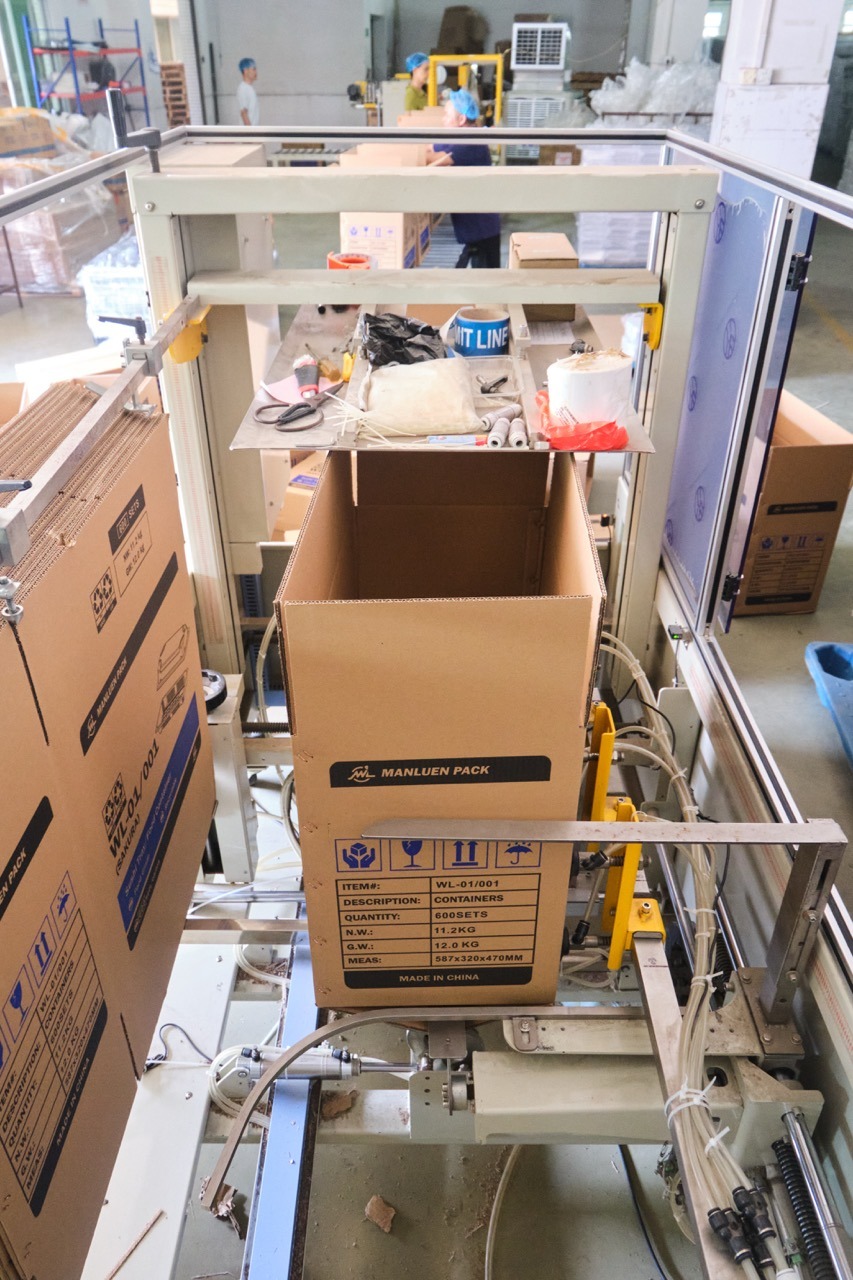
Automated packaging lines may inspect, count, stack, label, assemble, and pack parts after trimming. Quality checks can include dimensions, weight, wall thickness, visual defects, contamination, rim condition, lid fit, nesting, and stack release. Industrial thermoforming should therefore be understood as a production system rather than a single shaping step.
Thin-Gauge, Medium-Gauge, and Heavy-Gauge Thermoforming
Thermoforming is often classified by starting-sheet thickness and handling method. The boundaries are industry conventions, not universal legal standards. The Society of Plastics Engineers Thermoforming Division presents the following commonly used ranges:
| Category | Common starting-sheet range | Typical handling | Typical applications |
|---|---|---|---|
| Thin gauge | Less than about 1.5 mm | Usually roll-fed or fed directly from sheet extrusion | Trays, lids, cups, clamshells, blisters, and other packaging |
| Medium gauge | About 1.5–3 mm | Process-specific roll or cut-sheet handling | Intermediate packaging and technical products |
| Heavy gauge | More than about 3 mm | Usually individual cut sheets | Equipment housings, refrigerator liners, vehicle panels, and durable structural parts |
Thin-gauge thermoforming is the branch most relevant to disposable food packaging. Roll-fed material, multi-cavity tooling, inline trimming, and automatic stacking allow large quantities of lightweight packages to be produced efficiently. Heavy-gauge forming uses similar heating and shaping principles, but sheet handling, tool construction, trimming, production rate, and part size can be very different.
Vacuum Forming, Pressure Forming, and Plug Assist
Vacuum forming
Vacuum forming removes air from between the heated sheet and the mold. Atmospheric pressure on the opposite side then pushes the sheet against the tool surface. It is one of the simplest and most widely recognized thermoforming methods and is suitable for many trays, covers, lids, and packaging components.
Available atmospheric pressure limits how strongly the material can be driven into small surface features. Part geometry, vent placement, sheet temperature, and vacuum rate determine how completely the material reproduces the mold.
Pressure forming
Pressure forming adds positive air pressure on one side of the sheet while vacuum may be applied on the mold side. The extra pressure can improve corner definition, surface detail, texture reproduction, and dimensional definition compared with vacuum alone.
Pressure forming should not be confused with injection molding. It still reshapes a heated sheet; it does not inject molten polymer into a closed cavity.
What is plug-assisted thermoforming?
A plug assist is a mechanical tool that moves into the heated sheet before vacuum or pressure completes the final shape. Its purpose is not merely to push the sheet deeper. It pre-stretches and redistributes material so that a deep container can retain more useful thickness in its bottom, corners, and sidewalls.
Plug-assisted forming is especially important for cups, tubs, pots, deep trays, and similar thin-walled food packages. Technical sources identify plug geometry, surface friction, material, temperature, speed, depth, and timing as variables that can change the final thickness profile. Research on industrial polypropylene thermoforming likewise describes wall-thickness control as a principal measure of part quality.
A deep container is therefore not produced simply by “pulling the plastic farther.” The process must control where the material moves and where it first contacts and cools against the tool.
Why Wall Thickness Changes During Thermoforming
A flat sheet begins with a relatively consistent gauge. During forming, the same volume of material is stretched across a larger surface. Once part of the hot sheet touches a cooler mold or plug, it can lose heat and become less able to stretch while other areas continue moving. This sequence creates a thickness distribution rather than one uniform finished wall.
A thermoformed part may consequently have a thick rim, thinner sidewalls, locally thin corners, and a bottom thickness that differs from both. This is a fundamental feature of sheet stretching, not automatically evidence of defective production.
Depth of draw
A shallow tray requires less material movement than a narrow, deep cup. As draw depth increases relative to the opening, it becomes harder to distribute the sheet evenly. Deep parts may require a different starting gauge, larger corner radii, zoned heating, pressure forming, plug assist, or revised mold geometry.
Variables that control material distribution
- Starting-sheet thickness and sheet structure
- Sheet temperature and temperature uniformity
- Part depth, opening, and draw ratio
- Mold shape, draft, vents, and corner radii
- Plug shape, material, temperature, stroke, speed, and timing
- Friction between the sheet and the mold or plug
- Vacuum level, pressure, and application rate
- Tool temperature and cooling sequence
Two packages made from the same polymer and the same nominal starting gauge can therefore perform differently. Polymer name alone does not determine corner strength, lid fit, compression resistance, or final thickness.
Thermoforming Tooling: More Than a Mold
A production thermoforming system may include the forming mold, pressure box, plug assists, mounting plates, temperature-control circuits, trim tooling, eject systems, and stacking equipment. The forming mold determines the main geometry, but less visible features also affect production quality.
Draft and release
Draft gives vertical walls a slight angle so the cooled part can leave the mold. Insufficient draft can cause sticking, distortion, slow release, scuffing, or damage. Undercuts require special attention because the plastic can mechanically lock around the tooling.
Venting
Air must escape from the space between the sheet and the mold. Small vents are placed around corners, deep regions, and detailed features. Poorly positioned or blocked vents can prevent the sheet from reaching the tool surface.
Corner radii
Sharp corners concentrate stretch in a small area and can create local thinning. Appropriate radii improve material movement and reduce extreme thickness variation. A drawing that looks attractive on screen may need engineering changes before it can be formed reliably.
Tool temperature and cooling
The mold is part of the thermal process. Its temperature and cooling layout affect cycle time, shrinkage, warpage, dimensions, surface reproduction, and repeatability. Uneven cooling can produce a part that leaves the tool in specification but changes shape afterward.
Trim tooling
The forming tool creates the cavity; the trim tool creates the final edge. This distinction is important for lids, snap fits, sealing flanges, hinges, and packages that must denest automatically. A custom package is therefore not simply a new cavity size. It may require coordinated changes to forming, plug, trim, cooling, and stacking tools.
Common Thermoforming Materials for Food Packaging
Many thermoplastics can be thermoformed, but each polymer family and grade has its own forming window, stiffness, clarity, impact behavior, and temperature limits. For a broader comparison, see ManLuen’s guide to food packaging materials.
| 재질 | Useful characteristics | Common thermoformed food uses | Buyer should verify |
|---|---|---|---|
| PET | Clarity, stiffness, toughness, and good display properties | Produce packs, bakery containers, clear trays, lids, and sushi packaging | Actual temperature limits, sheet structure, recycled content, and local recovery route |
| PP | Toughness, chemical resistance, and relatively higher heat capability | Meal trays, deli containers, takeaway packs, and selected reheating applications | Finished-package reheating conditions, stiffness, sealing, and forming consistency |
| GPPS | Clarity and rigidity | Clear rigid packaging and display components | Brittleness, impact needs, and service temperature |
| HIPS | Improved impact resistance and easy forming; normally opaque | Trays, cups, inserts, and opaque bases | Heat conditions, toughness, color, and intended food type |
| OPS | High clarity and gloss | Bakery packs, clear lids, and cold-food display packaging | Brittleness, temperature range, and destination-market recovery |
| PLA and other bioplastics | Bio-based options in suitably formulated grades | Selected cold-food trays, produce packs, and clear containers | Forming window, heat resistance, food-contact status, and certified end-of-life route |
Material abbreviations are not performance certificates. For example, PP should not automatically be called microwave-safe, and PET should not be assigned one universal maximum temperature. Suitability depends on the specific grade, sheet construction, package design, manufacturing history, food type, duration, and intended conditions of use.
How Thermoforming Is Used in Food Packaging
Trays
Thermoforming is widely used for sushi bases, meat and produce trays, snack trays, ready-meal packs, and compartmented containers. Shallow trays are relatively straightforward, while deep compartments and narrow ribs require more control of material distribution.
Buyers selecting 초밥 트레이 should evaluate base rigidity, clear-lid fit, anti-fog needs, decorative geometry, stackability, and cold-food conditions rather than specifying only the resin name.
Lids and clear covers
Clear PET, OPS, and other suitable sheet materials can be formed into display lids and dome covers. The lid and base should be engineered as one system. Stiffness, flange dimensions, snap features, hinges, nesting, and dimensional shrinkage all affect closure performance.
Clamshell containers
A clamshell can integrate the base, lid, hinge, and closure features into a single formed part. This makes thermoforming useful for bakery, produce, deli, takeaway, and retail display applications. However, the hinge line, closure force, wall thickness, and trim registration must work together. Buyers can compare common clamshell container formats before deciding whether a stock or custom design is more appropriate.
Cups, pots, and deli containers
Deep cups and tall containers create demanding draw conditions. Bottom thickness, sidewall profile, rim strength, plug-assisted forming, and denesting behavior become central design issues. A container that looks correct may still fail if the bottom is too thin or the rim cannot withstand lidding and handling.
Cake and bakery packaging
Clear cake domes and bakery packs often require visibility, rigid walls, secure base-and-lid fit, sufficient product clearance, and stable stacking. These requirements affect resin selection, geometry, trim quality, and package weight. Existing cake container designs can provide useful dimensional references before new tooling is commissioned.
Thermoforming vs Injection Molding and Blow Molding
Thermoforming, injection molding, and blow molding can all produce plastic packaging, but they begin with different material forms and create different geometries.
| Process | Starting material | Forming method | Typical packaging examples |
|---|---|---|---|
| Thermoforming | Plastic sheet | Heated sheet is stretched against a mold | Trays, lids, clamshells, blisters, cups, and inserts |
| Injection molding | Polymer pellets | Molten polymer is injected into a closed mold | Tubs, closures, thick-rimmed containers, and detailed parts |
| Blow molding | Heated tube or preform | Air expands the polymer against the inside of a mold | Bottles, jars, jugs, and other hollow containers |
| Rotational molding | Polymer placed inside a heated mold | Rotation distributes material over the internal surface | Large hollow durable products |
Thermoforming vs injection molding
Thermoforming is especially efficient for broad, lightweight sheet-based parts and large forming areas. Injection molding is better suited to threads, thick bosses, complex three-dimensional details, highly controlled wall sections, and features formed on multiple sides.
Neither process is universally cheaper. Total economics depend on tool construction, cavity count, part geometry, material usage, cycle time, trim recovery, volume, tolerances, automation, and secondary operations. A generic annual-volume crossover point is unreliable because changing any of these variables changes the calculation.
Thermoforming vs blow molding
Blow molding is primarily used for enclosed hollow products. Thermoforming creates open sheet-based shapes and is more naturally suited to trays, lids, cups, and clamshells. A bottle and an open food tray may use the same polymer family but normally require different manufacturing processes.
Advantages and Limitations of Thermoforming
| Potential advantage | Related limitation or control point |
|---|---|
| Efficient high-volume production of lightweight packaging | Deep areas and corners may become thinner than the starting sheet |
| Multiple cavities can be formed in one machine cycle | Tool balance, heating, cooling, and trimming must remain consistent across cavities |
| Clear, opaque, colored, recycled-content, and multilayer sheets can be processed | Each structure changes forming behavior, food-contact documentation, and end-of-life options |
| Forming, trimming, inspection, and stacking can be automated | Automation requires controlled nesting, rim geometry, static, tolerances, and part release |
| Tooling can be practical for large thin-wall surfaces and design changes | Undercuts, threads, thick features, and enclosed shapes may require another process |
The engineering objective is not to make every package as thin as possible. It is to place enough material in the required locations to protect the food and survive filling, sealing, stacking, transport, display, and intended consumer use.
Thermoforming Scrap and Recycling
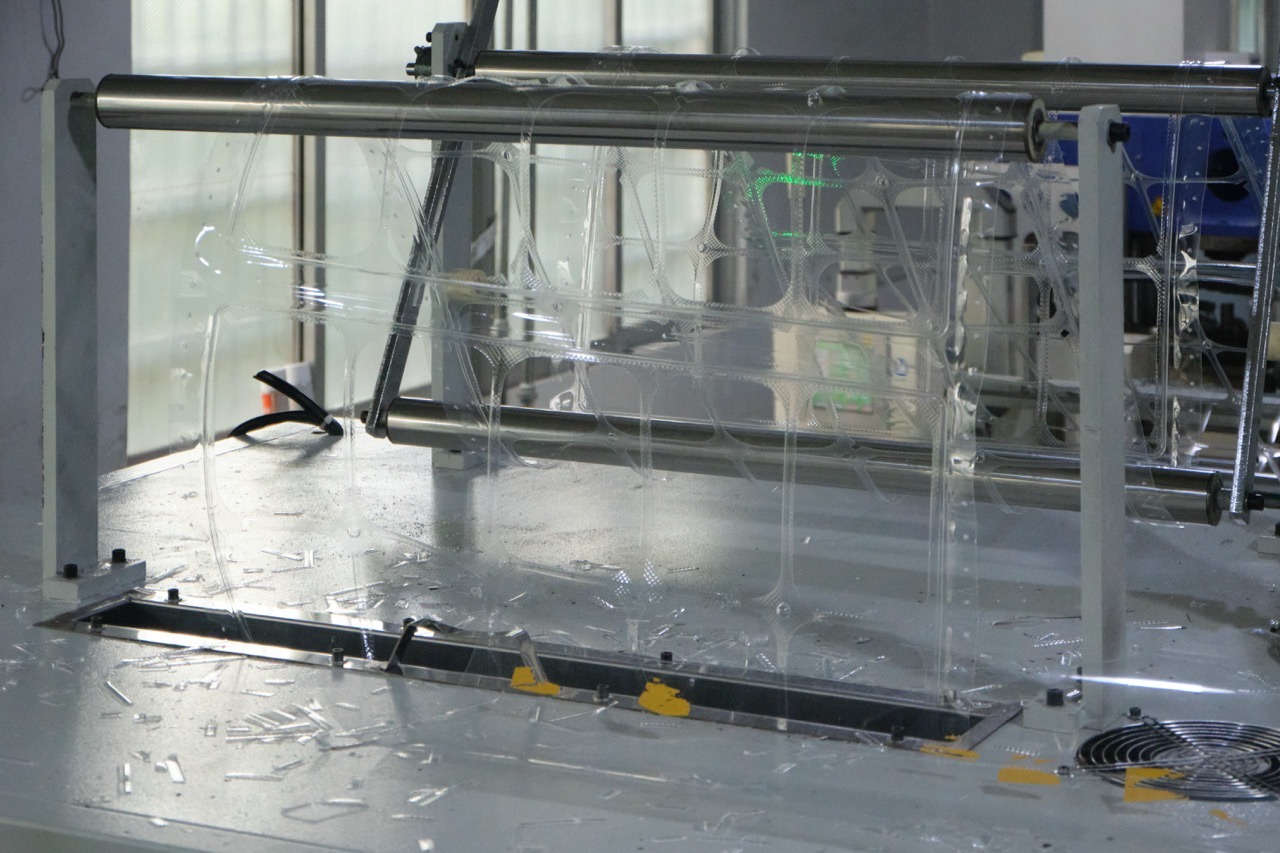
After formed parts are cut out, a surrounding skeletal web remains. This clean production scrap can often be collected, granulated, and returned to sheet extrusion or another suitable application. Whether it can be reused depends on the polymer, color, contamination, multilayer structure, quality specification, process history, and food-contact requirements.
Factory trim recovery does not make thermoforming “zero waste,” and it should not be confused with post-consumer recycling. Factory skeleton is a controlled material stream. A used package may contain food residue, labels, adhesives, inks, coatings, mixed polymers, or barrier layers, and the local collection system may not accept that format.
Recyclability also depends on design. The Association of Plastic Recyclers’ PET thermoform guidance addresses color, labels, adhesives, dimensions, additives, laminated structures, and compatibility with existing PET recovery systems. A resin being recyclable in principle does not prove that a particular finished package will be sorted and recycled in its destination market.
Food-Contact Compliance Is Based on the Finished Use
The thermoforming process itself is not “FDA approved.” In the United States, the regulatory status of the substances used in a food-contact material must cover their intended use and conditions. The FDA Inventory of Food Contact Substances includes substances listed in relevant parts of Title 21 of the Code of Federal Regulations, while separate FDA inventories cover Food Contact Notifications and other authorizations.
FDA conditions of use distinguish factors such as food type, temperature, duration, and whether the article is used for cooking, hot filling, room-temperature storage, refrigeration, or freezing. A resin family name or generic supplier statement is not enough to establish every application.
Buyers should obtain documentation for the actual resin grade, colorants, additives, recycled-content source where applicable, layer structure, and intended food-contact conditions. Migration testing or other supporting work may be required depending on the material, market, and use. ManLuen’s explanation of food-packaging regulatory responsibilities provides additional buyer context.
From a Packaging Idea to Thermoforming Production
1. Define the product and use conditions
Document the food type, oil and moisture exposure, acidity, storage period, filling temperature, refrigeration, freezing, reheating, sealing method, transport, display, and consumer handling. A cold sushi tray and a hot prepared-meal container should not automatically use the same sheet or geometry.
2. Select the material and sheet structure
Consider clarity, stiffness, toughness, heat performance, barrier needs, sealing, forming behavior, food-contact status, recycled content, recovery options, and cost. Confirm the specific grade rather than selecting only a polymer abbreviation.
3. Establish dimensions and geometry
Define length, width, depth, flange, compartments, radii, draft, closure features, stacking, nesting, and product clearance. Deep cavities, narrow openings, sharp corners, and uneven compartments can change the necessary forming strategy.
4. Prototype and test
Evaluate the actual package for lid fit, snap force, leakage, seal integrity, stacking, denesting, deformation, corner strength, filled-package drop or compression conditions, and storage performance. Material data sheets cannot replace testing of the finished design.
5. Build and validate the tooling
Production trials should confirm material distribution, dimensions, trim position, release, cooling, cavity balance, and package function. Changes to the mold may require corresponding changes to plugs, trim tools, or stacking equipment.
6. Control repeat production
Quality plans may monitor incoming sheet, temperature settings, part dimensions, weight, thickness at critical points, visual condition, contamination, rim quality, closure fit, stack release, and traceability.
What Buyers Should Specify in a Thermoforming RFQ
- Material and structure: polymer, grade requirements, color, layers, and any recycled-content target.
- Dimensions: overall length, width, depth, flange, radii, and critical tolerances.
- Food conditions: dry, wet, oily, acidic, frozen, refrigerated, ambient, hot filled, or reheated.
- Closure system: separate lid, hinged lid, snap fit, lidding film, tamper feature, or another interface.
- Display requirements: transparency, gloss, anti-fog performance, color, and decoration.
- Mechanical performance: stacking, compression, impact, puncture, denesting, and transport requirements.
- Barrier and shelf-life needs: moisture, oxygen, aroma, grease, or light protection where relevant.
- Destination markets: applicable food-contact, labeling, recycling, compostability, and producer-responsibility requirements.
- Order volume: expected annual demand, batch sizes, forecasts, and acceptable inventory strategy.
- Tool ownership and validation: stock or custom design, approval procedure, maintenance, change control, and replacement responsibilities.
- Evidence: resin declarations, regulatory support, test reports, dimensions, tolerances, and agreed inspection criteria.
These details matter more than simply asking whether a container is thermoformed. A capable supplier should translate the use conditions into a suitable material, geometry, tool set, process window, and quality plan.
자주 묻는 질문
Is vacuum forming the same as thermoforming?
No. Thermoforming is the broader category of processes that heat and shape thermoplastic sheet. Vacuum forming is one method that removes air between the sheet and mold so atmospheric pressure pushes the material against the tool.
What plastics can be thermoformed?
Many thermoplastics can be formed from sheet, including PET, PP, PS, HIPS, OPS, PVC, ABS, polycarbonate, acrylic, and selected PLA or other bioplastic grades. Their processing windows and final properties differ, and not every grade is suitable for food contact or every temperature condition.
Why do thermoformed parts become thinner?
The flat sheet stretches over a larger three-dimensional surface. Different areas contact the mold and cool at different times, so the material is distributed unevenly. Draw depth, corner radii, heating, plug assist, pressure, and mold design all affect the final profile.
What is plug-assisted thermoforming?
It is a process in which a mechanical plug pre-stretches and redistributes the heated sheet before vacuum or pressure completes forming. It is particularly useful for deep cups, tubs, and containers where uncontrolled stretching could leave critical areas too thin.
Can thermoforming make deep containers?
Yes, but increasing depth makes thickness control more difficult. Deep parts may need plug assist, zoned heating, suitable radii, an adjusted starting gauge, pressure forming, and carefully designed tooling.
Is thermoformed packaging recyclable?
Sometimes. Recyclability depends on the polymer, color, labels, adhesives, coatings, multilayer construction, food residue, package dimensions, and local sorting and end markets. In-process trim recovery and post-consumer recycling are separate questions.
Is thermoforming cheaper than injection molding?
It can be, especially for broad thin-wall parts, but there is no universal volume or cost threshold. Tooling, part geometry, material consumption, cavity count, cycle time, trim recovery, tolerance, volume, and secondary operations must be compared for the specific project.
Is thermoformed plastic FDA approved for food?
FDA does not approve thermoforming as a process or every item made from a polymer family. The substances and components used must have an appropriate regulatory basis for the intended food type and conditions of use. Buyers should obtain application-specific supporting documentation for the finished package.
결론
Thermoforming converts a flat thermoplastic sheet into a three-dimensional part through controlled heating, forming, cooling, and trimming. In food packaging, thin-gauge thermoforming enables high-volume production of trays, lids, cups, clamshells, and other lightweight containers.
The apparent simplicity of the process hides its central engineering challenge: controlling how a finite amount of sheet stretches across a mold. Material choice, temperature, draw depth, plug assist, radii, vents, cooling, trim tooling, and testing all affect the finished package. For buyers, the useful question is not merely “Is it thermoformed?” but “Which material, design, tooling, process controls, and documented conditions of use make this package suitable for the food and supply chain?”
Sources and Further Reading
- Society of Plastics Engineers Thermoforming Division: Thermoforming 101
- SPE Thermoforming Division: Plug-Assist Strategies and Thickness Control
- Journal of Materials Processing Technology: Simulation of Plug-Assisted Polypropylene Thermoforming
- U.S. FDA: Inventory of Food Contact Substances Listed in 21 CFR
- U.S. FDA: Food Types and Conditions of Use for Food Contact Substances
- Association of Plastic Recyclers: PET Thermoform Packaging Design Resources

ManLuen 플라스틱 포장 회사는 20년 이상 플라스틱 식품 포장 생산에 특화되어 있습니다. 저희 제품은 100% 순수 원료와 BPA-Free PP, PS, OPS로 만들어졌으며, FDA 및 유럽 표준을 준수합니다.
 KO
KO  EN
EN  ZH
ZH  FR
FR  PT
PT  ES
ES  JA
JA