
Introduction
Clamshell packaging is widely used across food and retail industries because it combines product protection with clear product visibility in a single container design. In food applications, clamshell containers are commonly used for fresh produce, sushi, salads, bakery products, prepared meals, and takeaway foods. Similar hinged formats are also used for retail products that require secure containment and product presentation.
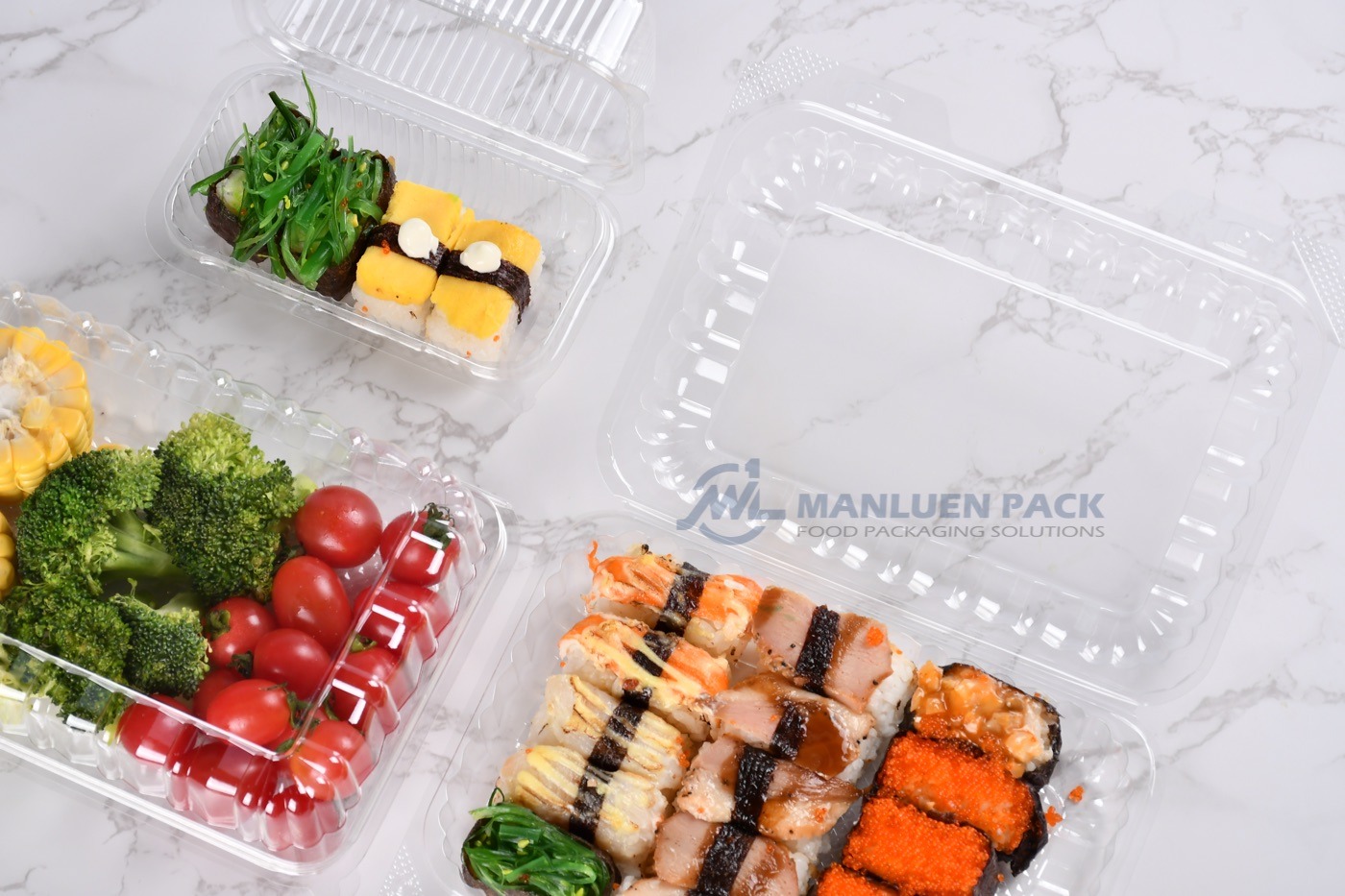
For businesses selecting packaging, the challenge is not only choosing a container with the right shape. Buyers need to consider how the package will perform with a specific product, including factors such as material properties, temperature conditions, moisture resistance, transportation requirements, and end-of-life options.
Different clamshell materials serve different purposes. Clear plastic materials such as PET are often selected when product visibility is important, while materials such as PP may be considered for applications requiring different performance characteristics. Fiber-based options, including bagasse packaging, provide alternatives for businesses evaluating compostable packaging solutions when appropriate standards and disposal systems are available.

This guide explains what clamshell packaging is, how the structure works, the materials commonly used, where clamshell containers are applied, how they are manufactured, and what factors businesses should evaluate when selecting the right packaging solution.
What Is Clamshell Packaging and How Does It Work?
Clamshell packaging is a type of container made of two connected sections that open and close through an integrated hinge. The two halves form a protective enclosure around the product, while the hinge allows the package to remain connected without requiring a separate lid.
Most clamshell containers use a closure system such as snap features, friction-fit edges, or other locking designs to keep the package closed during handling, storage, and display. Clear clamshell formats, such as PET containers, allow customers to view the product before purchase while helping protect the contents from damage and contamination.
Clamshell packaging is commonly used for food products including fresh produce, sushi, bakery items, salads, and prepared meals, as well as some retail products. However, the most suitable material and design depend on the intended application, including product type, temperature conditions, performance requirements, and available recycling or disposal systems.
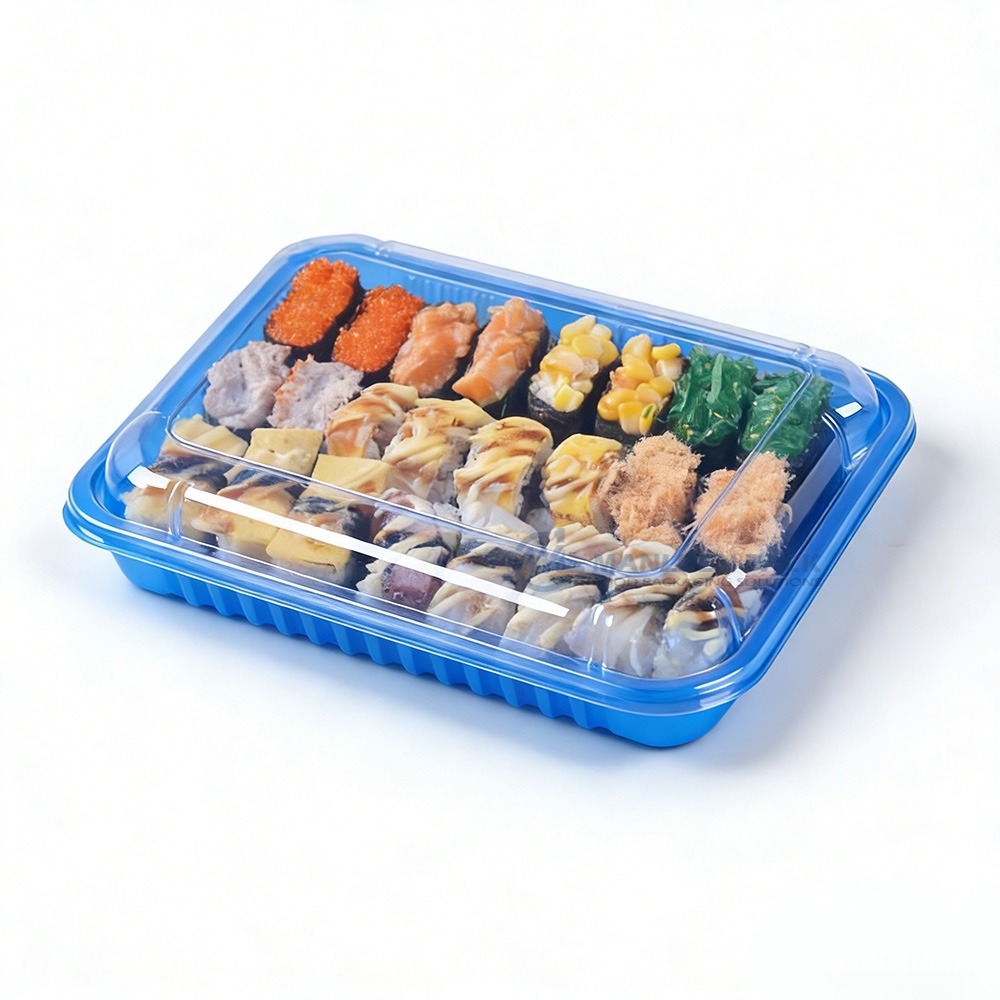
Core Structural Components
A typical clamshell package consists of several functional components that work together.
Two Connected Sections
The main body of a clamshell includes two molded sections that form the upper and lower parts of the container. When closed, these sections surround the product and provide physical protection during transportation, storage, and retail display.
The lower section is often designed as a base or cavity that holds the product in position, while the upper section acts as a cover that provides visibility and protection.
Integrated Hinge
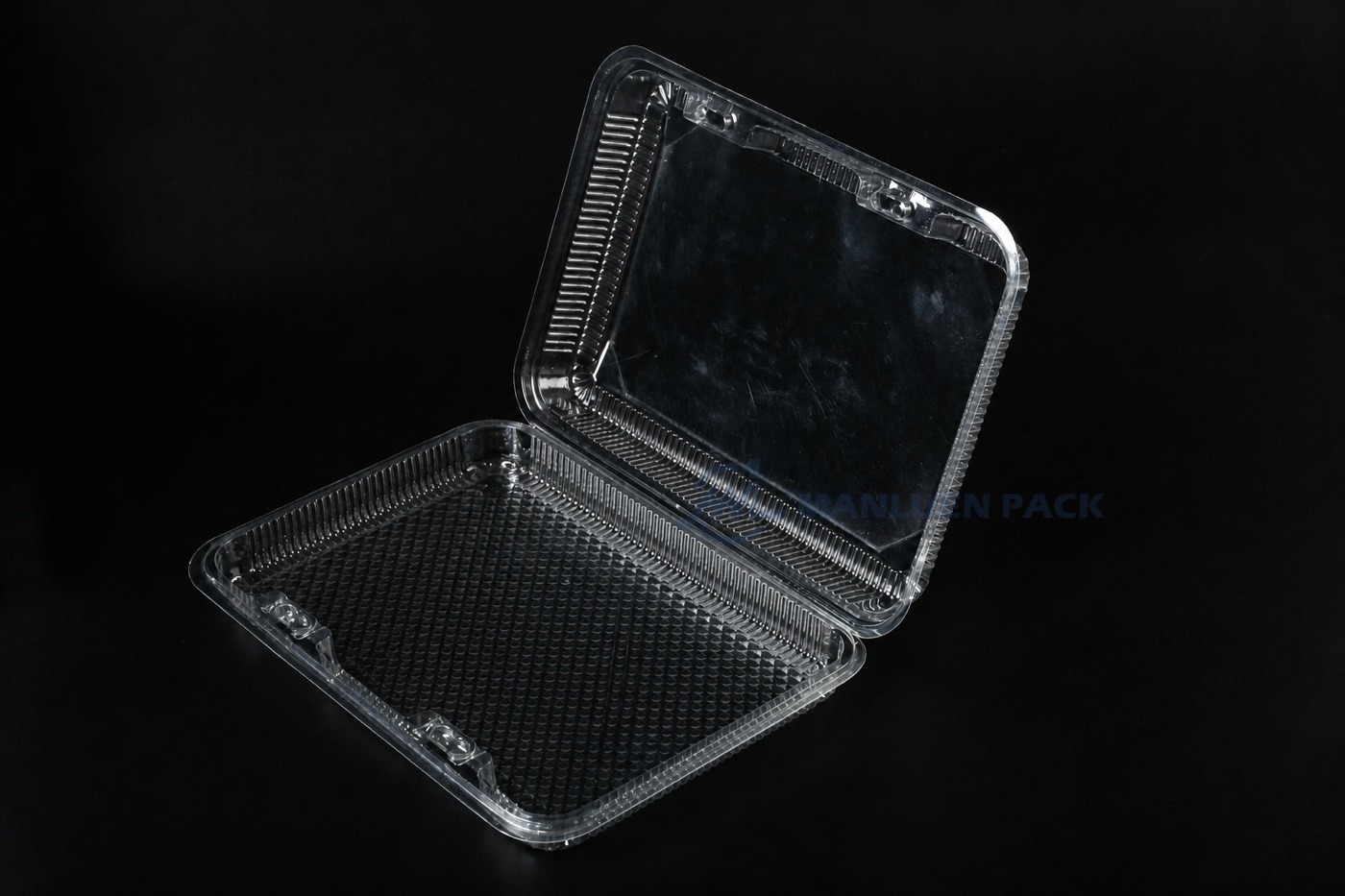
The defining feature of clamshell packaging is the hinge that connects the two sections. In many plastic clamshell containers, the hinge is formed as part of the package structure rather than added as a separate component.
This integrated design allows the package to open and close while keeping the two sections aligned. It also reduces the need for separate lid management during packaging operations.
Closure System
Clamshell containers use different closure designs depending on the application and required level of security. Common options include:
- Snap closures
- Friction-fit closures
- Locking tabs
- Sealed designs
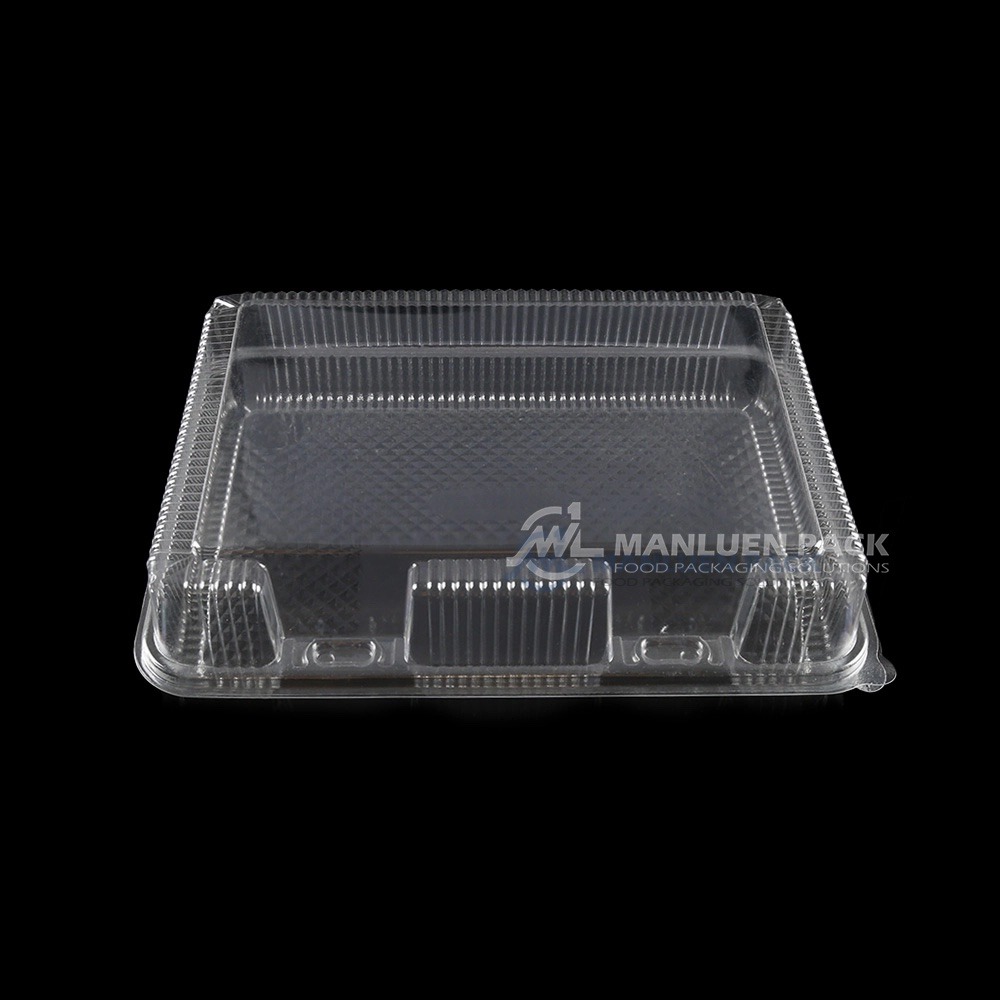
These systems help keep the package closed during handling and transportation. However, a standard snap closure should not automatically be considered tamper-evident. Tamper-evident performance requires specific design features that provide a visible indication if the package has been opened, such as breakable seals or opening indicators.
Ventilation Features
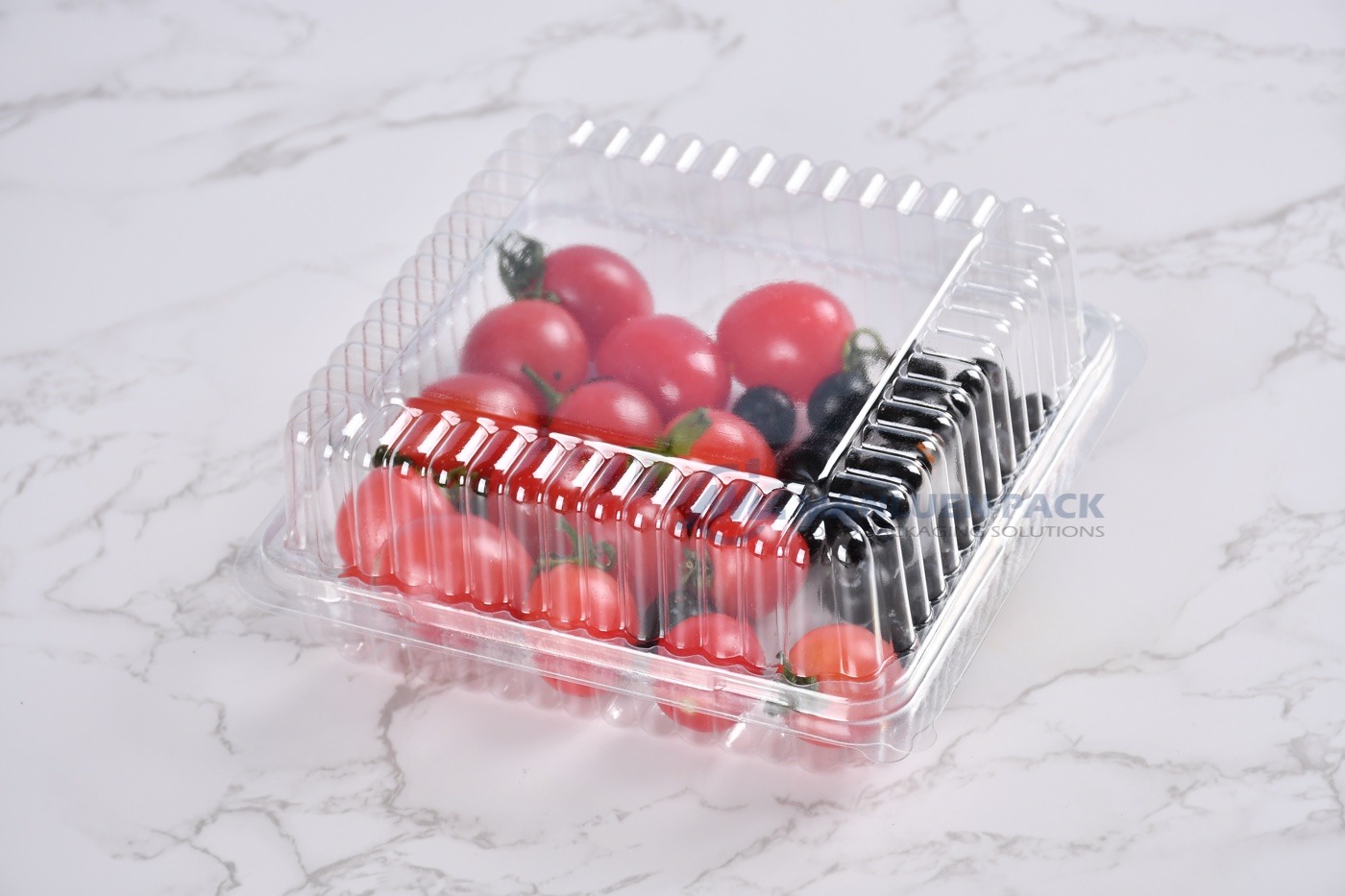
Some clamshell designs include ventilation openings to support specific product requirements. For example, fresh produce packaging may use vents to help manage airflow, while certain prepared food containers may include ventilation features to help release excess moisture or steam.
The need for ventilation depends on the food type, storage conditions, and package design.
Stacking and Display Features
Many clamshell containers are designed with flat surfaces, consistent dimensions, or nesting features that support storage, transportation, and retail display.
These structural features can help businesses organize inventory, improve shelf presentation, and reduce product damage during handling.
Clamshell vs Blister Packaging
Clamshell and blister packaging are often confused because both can use thermoformed plastic and transparent designs. However, their structures and intended uses are different.
A clamshell package is a self-contained container made from two connected sections, usually joined by an integrated hinge. The package opens and closes as a complete unit.
A blister package typically consists of a formed plastic cavity attached to another material, such as a printed paperboard backing card. The backing component provides support, branding space, or retail display functionality.
The main structural difference is that clamshell packaging contains its own hinged enclosure, while blister packaging usually relies on an additional backing component.
| 특징 | Clamshell Packaging | Blister Packaging |
|---|---|---|
| Structure | Two connected sections with hinge | Formed cavity attached to backing material |
| Closure | Integrated closure system | Often sealed to backing card |
| Common uses | Food containers, produce, bakery products, retail products | Small retail goods and consumer products |
| Opening method | Opens like a hinged container | Often separated from backing material |
Clamshell vs Separate-Lid and Other Hinged Containers
Clamshell packaging is one type of hinged container, but not every hinged container follows the traditional clamshell design.
A traditional clamshell usually has:
- Two connected sections
- An integrated hinge
- A built-in closure mechanism
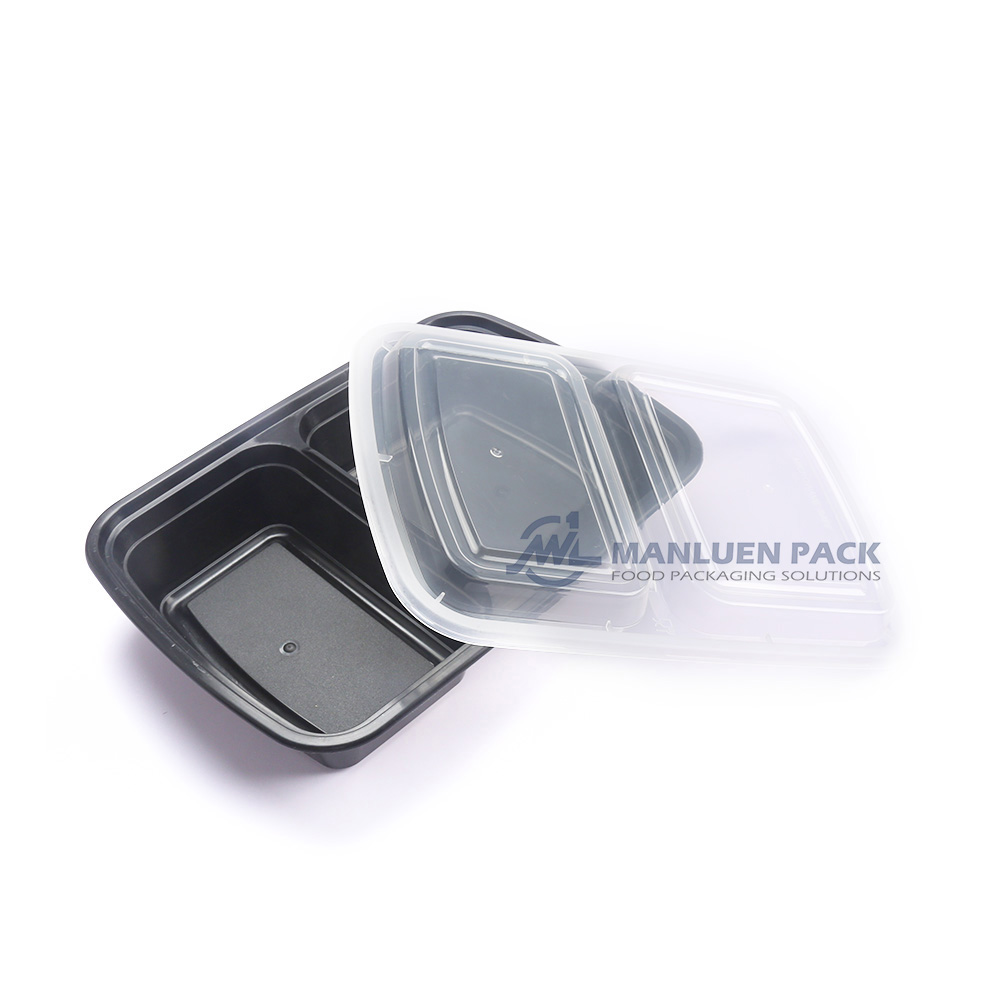
A separate-lid container typically consists of:
- A separate base
- A separate lid
- A closure system connecting the two parts after assembly
For example, many food containers use a tray-and-lid structure where the lid is manufactured separately from the base. These designs can provide different advantages depending on the application, such as easier filling, different sealing options, or specific storage requirements.
The key distinction is that clamshell packaging integrates the opening, closing, and protective functions into a connected structure, while other hinged or lidded containers may rely on separate components or different assembly methods.
What Is Clamshell Packaging Made From?
Clamshell packaging can be manufactured from several types of plastic and fiber-based materials. The material choice affects important packaging characteristics, including transparency, structural performance, heat-related performance, moisture protection, branding options, and available end-of-life pathways.
There is no single material that fits every application. Food businesses typically select clamshell materials based on the product being packaged, storage conditions, transportation requirements, and local recycling or composting systems.
PET and rPET Clamshell Packaging
Polyethylene terephthalate (PET) is one of the most common materials used for clear food clamshell containers. Its main advantage is high transparency, which allows customers to view the product without opening the package.
PET clamshells are commonly used for:
- Fresh fruits and berries
- Salads
- Bakery products
- Refrigerated food displays
Recycled PET (rPET) incorporates recycled PET material into the packaging structure and is considered for applications where recycled content is required.
However, the recyclability of PET clamshell packaging depends on factors such as local collection systems, sorting capabilities, and contamination levels.
PET is generally selected when product visibility and retail presentation are important. Its suitability for higher-temperature applications depends on the specific package design and intended use.
PP Clamshell Packaging
Polypropylene (PP) is commonly selected for clamshell applications where durability and different heat-performance characteristics are required.
PP clamshell containers are often used for:
- Prepared meals
- Takeaway foods
- Foodservice applications
Compared with PET, PP provides different performance characteristics, including impact resistance and suitability for certain food applications.
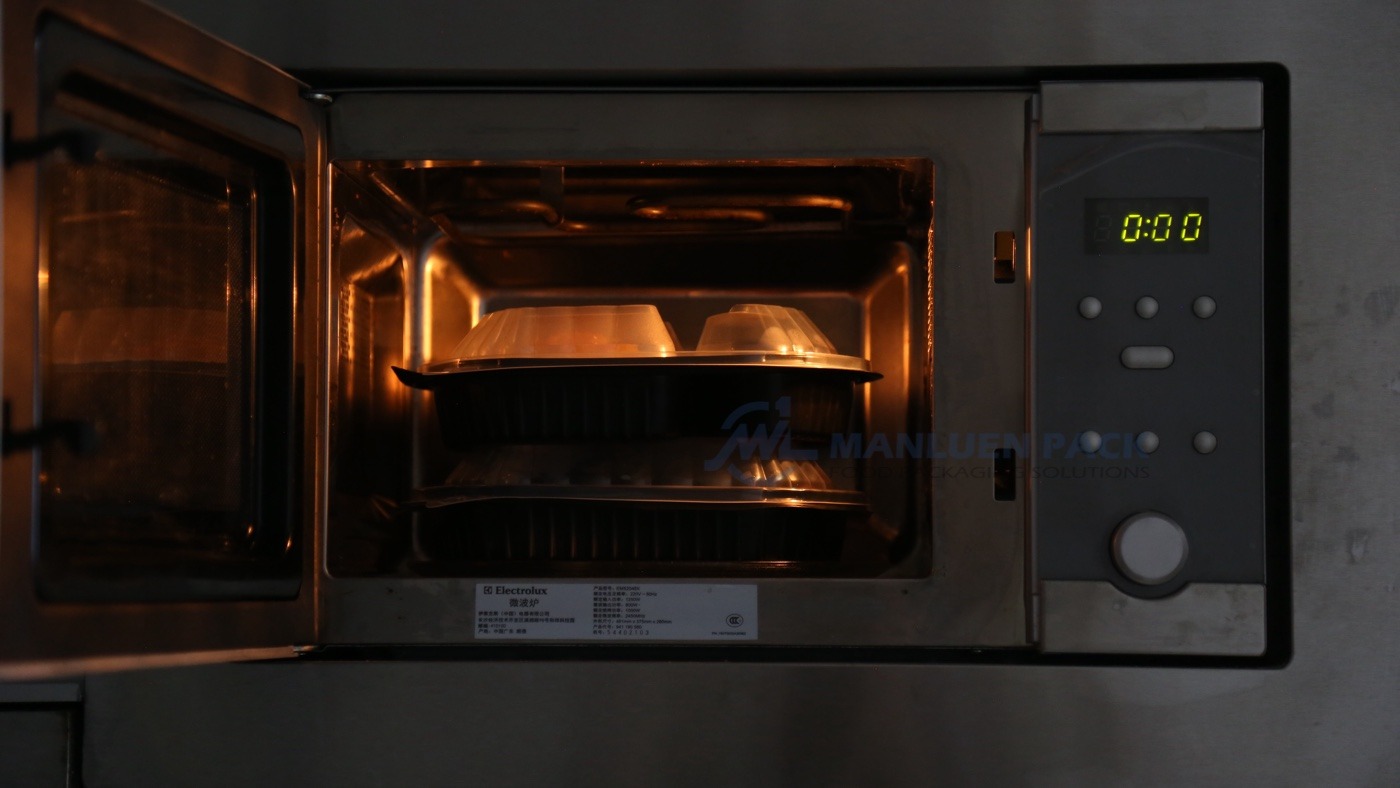
However, microwave suitability depends on the specific resin grade, additives, package design, and manufacturer testing. A PP container should only be used for microwave applications when it is specifically labeled and designed for that purpose.
PS and OPS Clamshell Packaging
Polystyrene (PS) and oriented polystyrene (OPS) are lightweight plastic materials used in some food display and retail packaging applications.
OPS is a modified form of polystyrene that provides improved clarity and stiffness compared with standard PS.
Common applications include:
- Sushi packaging
- Bakery display containers
- Cold food presentation packaging
These materials are often selected for lightweight structures and product presentation. Their suitability depends on the intended food application, storage conditions, and local recycling options.
PLA Clamshell Packaging
Polylactic acid (PLA) is a bio-based plastic used in some packaging applications where businesses are evaluating alternatives to conventional plastics.
PLA clamshell packaging is mainly considered for cold food presentation applications.
Common uses include:
- Cold food displays
- Produce packaging
- Specialty food packaging
PLA performance depends on package design and intended use. Compostability claims should be based on applicable standards and available composting systems rather than the material name alone.
Bagasse and Molded Fiber Clamshell Packaging
Bagasse is a molded fiber material made from sugarcane processing residue. It is commonly used for foodservice packaging applications.
Common uses include:
- Takeaway meals
- Catering containers
- Restaurant packaging
Molded fiber packaging provides a paper-based alternative for businesses evaluating compostable packaging solutions.
However, a bagasse clamshell should not automatically be considered compostable. Compostability depends on:
- Applicable certifications
- Product coatings or additives
- Local composting infrastructure
Paperboard Clamshell Packaging
Paperboard and kraft-based clamshell packaging are used when businesses require printable surfaces, natural appearance, or fiber-based packaging formats.
Typical applications include:
- Bakery products
- Sandwiches
- Dry food products
- Takeaway packaging
Paperboard performance depends on the complete package construction, including coatings and treatments that may affect moisture resistance, grease resistance, recycling, and compostability.
Clamshell Material Comparison
| 재질 | Visibility | Typical Temperature Role | Microwave Decision | End-of-Life Considerations | Common Food Applications |
|---|---|---|---|---|---|
| PET / rPET | High clarity and product visibility | Commonly used for refrigerated display and cold food applications | Use only when specifically designed and labeled for the application | Recycling depends on collection systems, sorting capability, and contamination levels | Fruits, berries, salads, bakery products |
| PP | Good durability with applications requiring different heat-performance characteristics | Often considered for prepared foods and foodservice applications | Some PP containers may be suitable when specifically tested and labeled | Recycling availability depends on local systems | Prepared meals, takeaway foods |
| PS / OPS | Lightweight with good presentation characteristics | Commonly used for display-oriented applications | Not generally selected for reheating applications unless specifically designed | Recycling options vary by location | Sushi, bakery displays, cold food packaging |
| PLA | Clear bio-based plastic option | Mainly used where high heat resistance is not required | Generally not selected for microwave applications | Compostability depends on applicable standards and composting infrastructure | Cold food displays, specialty packaging |
| Bagasse / Molded Fiber | Usually opaque with natural fiber appearance | Commonly used for foodservice and takeaway applications | Depends on product design and manufacturer instructions | Compostability depends on certification, coatings, and available systems | Takeaway meals, catering packaging |
| Paperboard | Printable surface with branding flexibility | Used for dry or prepared food packaging depending on construction | Depends on coating and design | Recycling or composting depends on structure and local systems | Bakery, sandwiches, takeaway foods |
Where Is Clamshell Packaging Used?
Clamshell packaging is used across food, foodservice, and retail applications where businesses need a combination of product protection, visibility, and convenient handling. The required design depends on whether the package needs ventilation, moisture resistance, secure closure, temperature suitability, or enhanced product presentation.
Fresh Produce
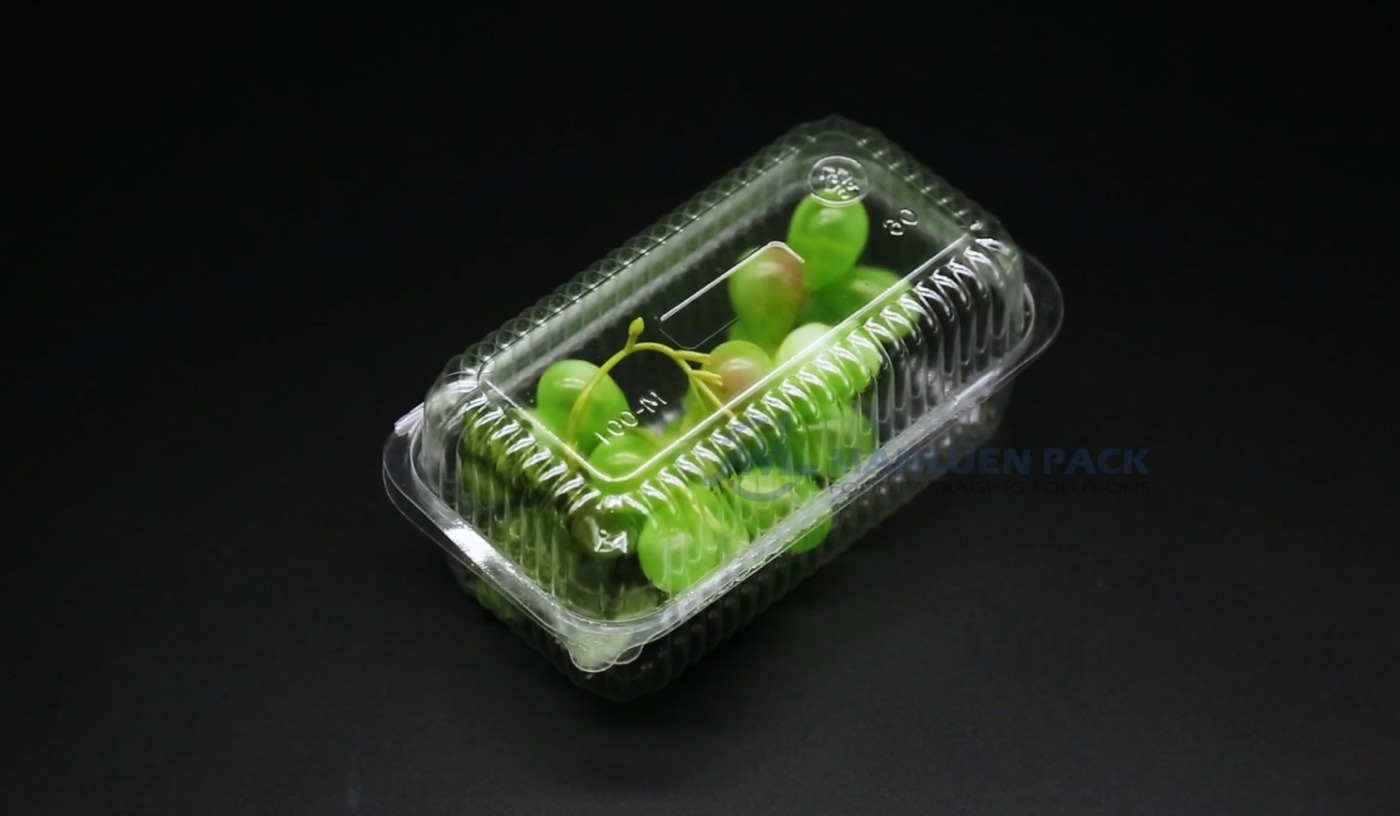
Fresh produce is one of the most common applications for clamshell packaging because fruits and vegetables often require both protection and visibility.
Typical products include:
- Berries
- Grapes
- Cut fruits
- Vegetables
- Salad ingredients
Clear clamshell containers allow customers to inspect product quality before purchase. PET is commonly selected for these applications because transparency is an important part of retail presentation.
Produce packaging may include ventilation features to help manage airflow and moisture conditions. The appropriate vent design depends on the type of produce, storage conditions, and distribution requirements.
Important design considerations include:
- Product visibility
- Ventilation requirements
- Protection against crushing
- Secure closure during transportation
Sushi, Salads, and Prepared Foods
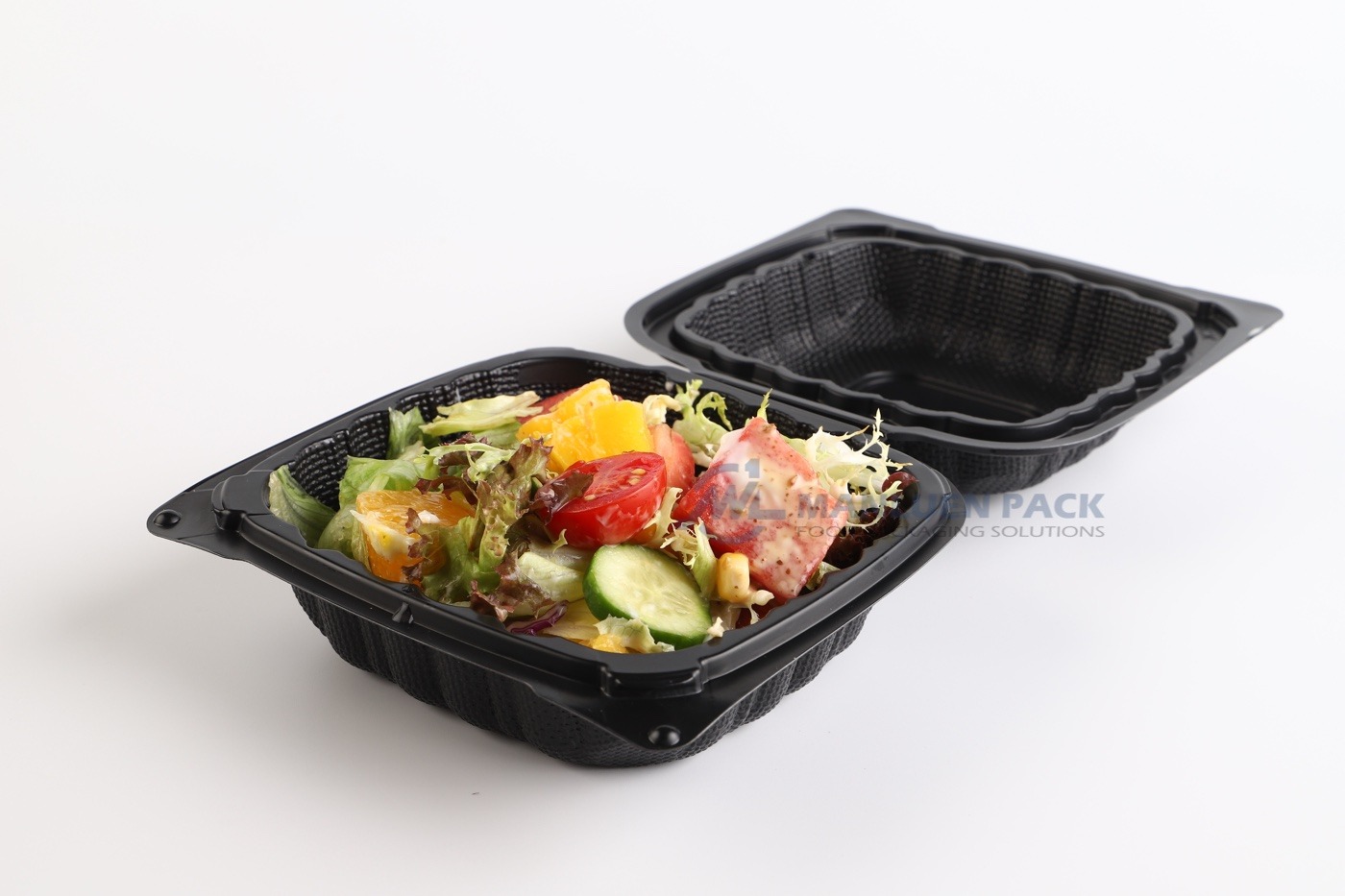
Clamshell packaging is widely used for ready-to-eat foods that require attractive presentation and convenient transport.
Common applications include:
- Sushi trays
- Salads
- Sandwiches
- Ready-to-eat meals
- Deli foods
These products often require clear presentation because customers evaluate appearance before purchase. Transparent lids allow food presentation to remain visible while reducing the need to open the package.
Important design considerations include:
- Clear display surfaces
- Secure closure
- Condensation management
- Refrigerated storage compatibility
For products where appearance is important, anti-fog features may be considered. Condensation inside a clear lid can reduce visibility, so packaging designs may incorporate materials or structures intended to improve clarity under refrigerated conditions.
Prepared meals containing sauces or moisture may also require leak resistance and structural stability during transportation.
Bakery and Confectionery
Bakery products often rely on clamshell packaging because appearance is closely connected with customer purchasing decisions.
Common uses include:
- Cakes
- Cupcakes
- Pastries
- Cookies
- Chocolate products
Clear clamshell containers help display decoration, texture, and product quality while protecting delicate items.
Bakery applications may require:
- Dome-height designs for decorated products
- Rigid walls for crush protection
- Clear visibility
- Secure closure
Hot Takeout and Catering
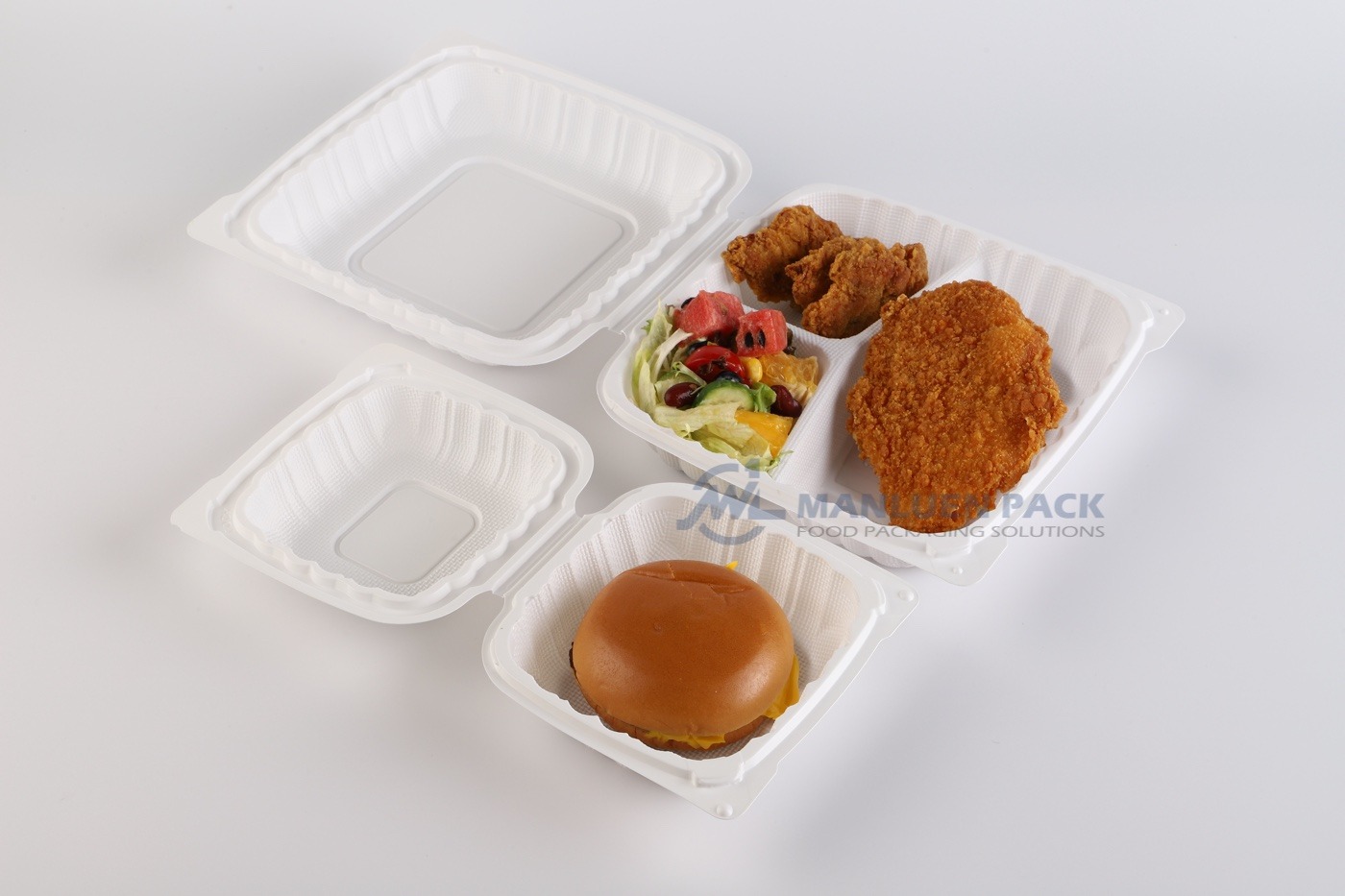
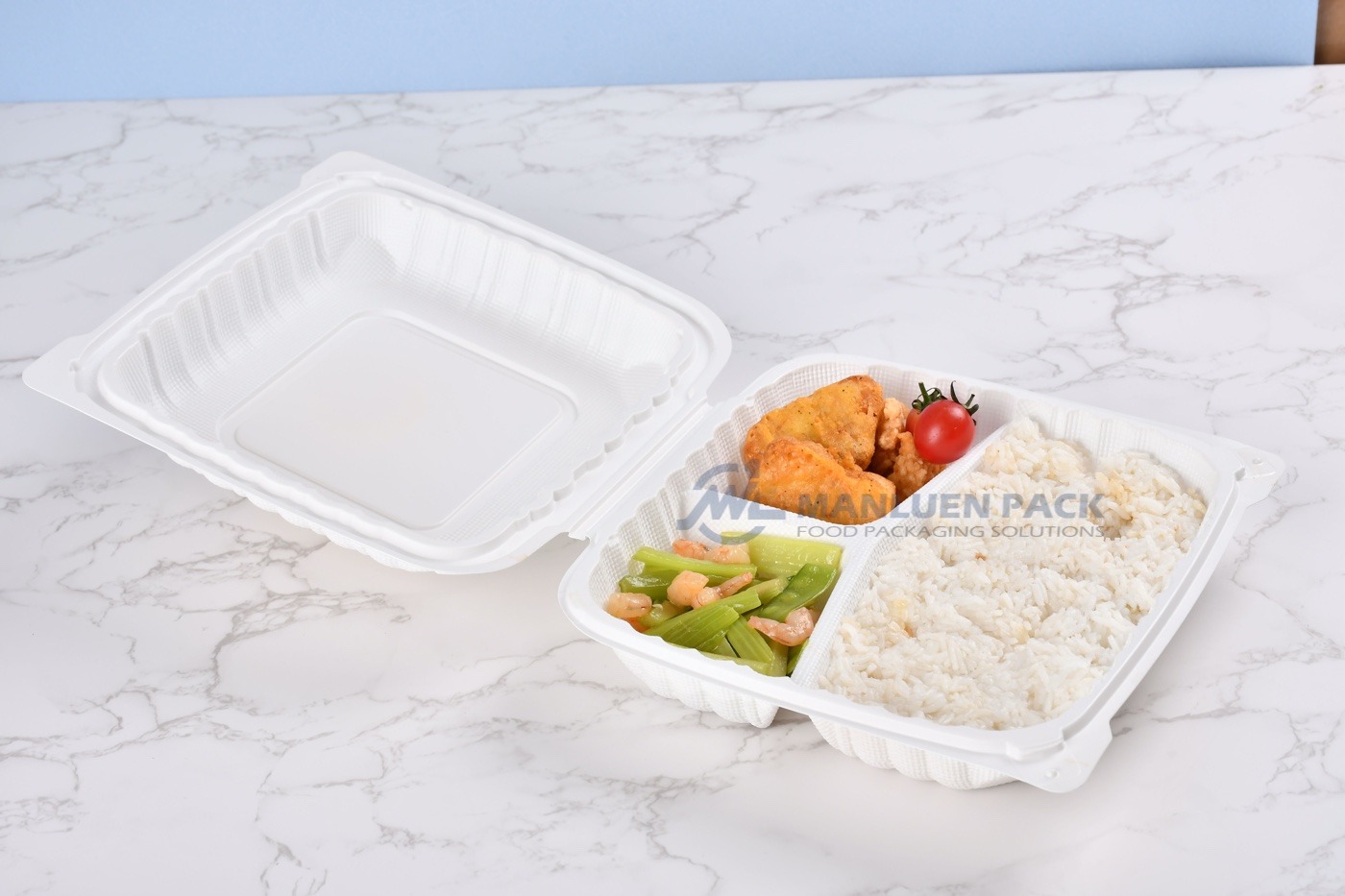
Clamshell packaging is also used for takeaway meals, catering portions, and foodservice applications where transportation performance is important.
Typical applications include:
- Restaurant takeaway meals
- Catering portions
- Grab-and-go foods
Important considerations include:
- Closure performance
- Moisture and grease resistance
- Structural stability
- Suitability for intended food conditions
Some foodservice containers include ventilation features to manage steam and moisture. The appropriate design depends on the food type and intended use.
Non-Food Retail Uses
Although strongly associated with food packaging, clamshell formats are also used for non-food retail products that require visibility and protection.
Examples include:
- Electronics accessories
- Small household products
- Hardware items
- Consumer goods
In these applications, clamshell packaging can provide:
- Product visibility
- Protection during handling
- Retail display compatibility
The best clamshell design depends on product characteristics, retail environment, and customer handling requirements.
Advantages and Limitations of Clamshell Packaging
Clamshell packaging is widely used because it combines product presentation, protection, and handling convenience in a single package format. However, the performance of a clamshell container depends on factors such as material selection, package design, and the intended application.
A package designed for refrigerated produce may have different requirements from one used for hot takeaway meals or moisture-sensitive bakery products. Understanding both the advantages and limitations helps businesses select packaging that matches their product needs.
Advantages of Clamshell Packaging
Product Visibility
One of the main advantages of clamshell packaging is product visibility.
Clear materials such as PET allow customers to inspect:
- Product appearance
- 색상
- Freshness
- Presentation quality
This is particularly useful for products such as berries, sushi, salads, and bakery items where visual evaluation influences purchasing decisions.
Unlike opaque packaging formats, transparent clamshell designs allow products to remain visible without opening the package.
Product Protection
The rigid structure of clamshell packaging helps protect products during handling, transportation, and retail display.
Compared with flexible packaging formats, rigid clamshell containers can provide additional structural support against:
- Crushing
- Deformation
- External handling damage
This makes them suitable for products that require physical protection, including delicate produce, decorated bakery items, and prepared foods.
The level of protection depends on factors including:
- Material selection
- Wall thickness
- Package geometry
- Product characteristics
Integrated Lid Convenience
A key feature of clamshell packaging is the integrated hinge design.
Because the lid and base remain connected, businesses do not need to manage separate components during packaging operations. This can simplify:
- Filling processes
- Closing operations
- Inventory management
For consumers, the integrated design provides convenient opening and closing without requiring a separate lid.
Stackability and Transportation Efficiency
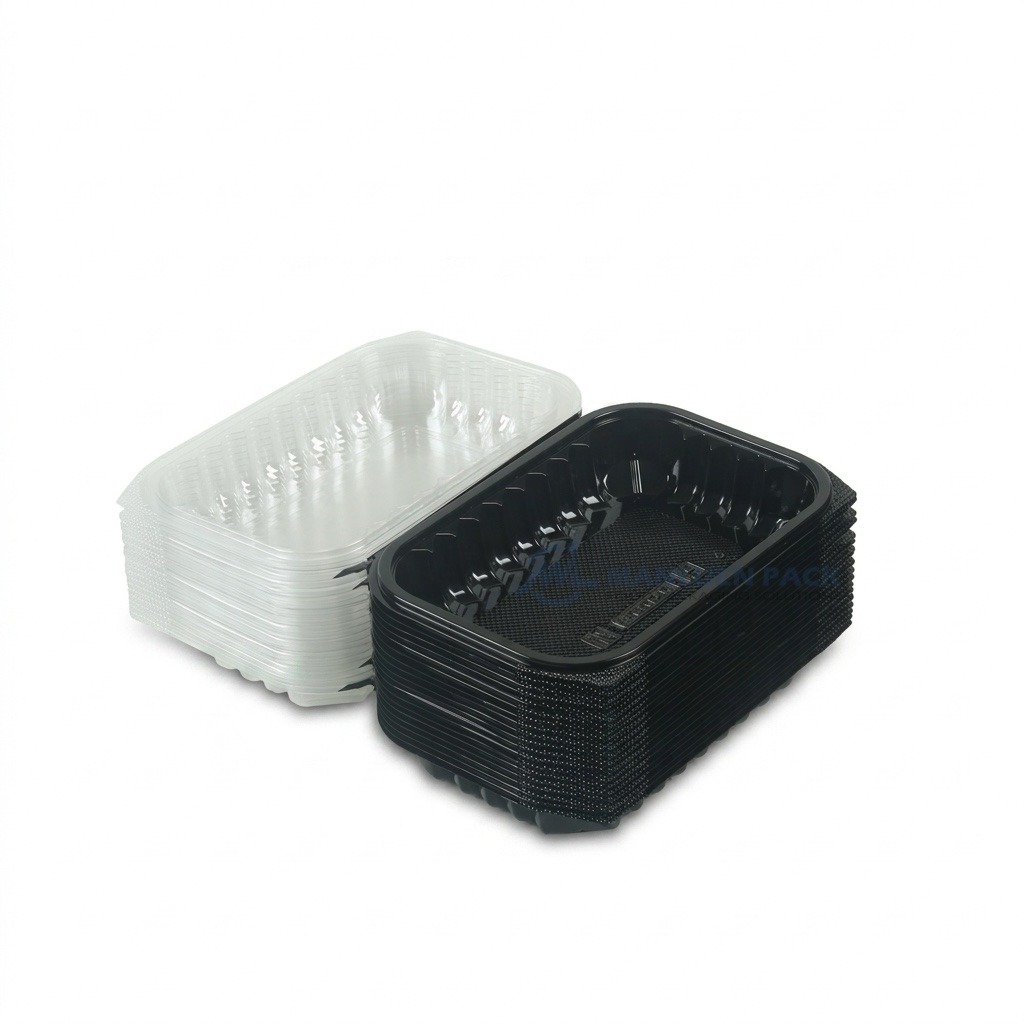
Many clamshell designs include consistent dimensions, flat surfaces, or structural features that support storage and transportation.
Potential operational benefits include:
- Easier inventory organization
- More consistent retail presentation
- Reduced product movement inside the package
Actual logistics performance depends on package dimensions, nesting design, and the transportation environment.
Branding and Product Presentation
Clamshell packaging can support branding through the package structure and labeling options.
Common approaches include:
- Product labels
- Printed areas
- Custom colors
- Package shapes designed for specific products
For transparent packaging, the product itself becomes part of the visual presentation. This is valuable for food categories where appearance is an important purchasing factor.
Optional Tamper-Evident Features
Some clamshell designs can incorporate tamper-evident features that provide visible evidence if a package has been opened.
Examples may include:
- Breakable seals
- Tear strips
- Opening indicators
- Special locking structures
However, a standard snap closure should not automatically be considered tamper-evident. A package requires specific design features intended to indicate opening or interference.
Operational Efficiency
Clamshell packaging can support packaging operations through its integrated structure and standardized design.
Potential benefits include:
- Reduced need for separate lids
- Simplified handling
- Consistent product presentation
- Easier product identification
The actual efficiency depends on the packaging process, equipment, and product requirements.
Limitations of Clamshell Packaging
Storage Volume in Supply Chains
Compared with some flexible packaging formats, rigid clamshell containers may require more storage space before use.
Potential considerations include:
- Warehouse space requirements
- Transportation volume
- Packaging storage organization
Businesses should evaluate package dimensions and logistics requirements before selecting a clamshell format.
Opening Difficulty
Some clamshell containers can be difficult to open, especially when stronger closure designs are used.
Packaging design often requires balancing:
- Secure product protection
- Transportation stability
- Consumer convenience
A stronger closure may improve package retention but may require additional opening effort.
Single-Use Perception
Many clamshell containers are associated with disposable packaging, which can influence consumer perception.
However, environmental performance depends on more than whether a package is single-use. Factors such as:
- Material selection
- Collection systems
- Recycling or composting infrastructure
- Disposal behavior
all affect the final outcome.
Contamination and Recycling Challenges
The recyclability of clamshell packaging depends on both the material and the local recycling system.
Potential challenges include:
- Food residue
- Labels or mixed materials
- Limited acceptance of certain packaging formats
A material may be technically recyclable but not collected or processed in every region.
Businesses should evaluate recycling options based on the actual market where the packaging will be used.
Material and Application Mismatches
No single clamshell material is suitable for every application.
Examples include:
- A highly transparent material may be preferred for product display but may not match applications requiring different temperature performance.
- A material selected for heat-related performance may have different visibility characteristics.
- Fiber-based packaging may support compostable packaging goals but requires suitable standards and disposal systems.
The correct choice depends on matching the package material and design with the product requirements.
How Is Clamshell Packaging Made?
The manufacturing process for clamshell packaging depends on the material used. Plastic clamshell containers are commonly produced through thermoforming, while fiber-based clamshells such as bagasse packaging are manufactured through molded fiber processes.
Both methods aim to create consistent packaging structures with suitable dimensions, closure performance, and product protection.
Plastic Thermoforming
Many plastic clamshell containers are produced through thermoforming, where a plastic sheet is heated and shaped using a mold.
Sheet Heating
Plastic materials such as PET, PP, or PS/OPS are prepared as sheets. The sheet is heated until it becomes flexible enough to form into the desired shape.
The forming conditions depend on:
- Polymer type
- Sheet thickness
- Package design
Forming and Cooling
The softened plastic sheet is shaped over a mold through processes such as vacuum forming, pressure forming, or mechanical forming.
The mold creates features including:
- Product cavity
- Base structure
- Lid shape
- Hinge area
- Closure features
After forming, the package is cooled to maintain the required structure.
Trimming and Feature Formation
Excess material is removed during trimming to create the final package shape.
The manufacturing process also establishes functional features such as:
- Integrated hinges
- Snap points
- Locking structures
Closure design must match the intended application and should not be considered tamper-evident unless specific opening-indication features are included.
Molded Fiber Production
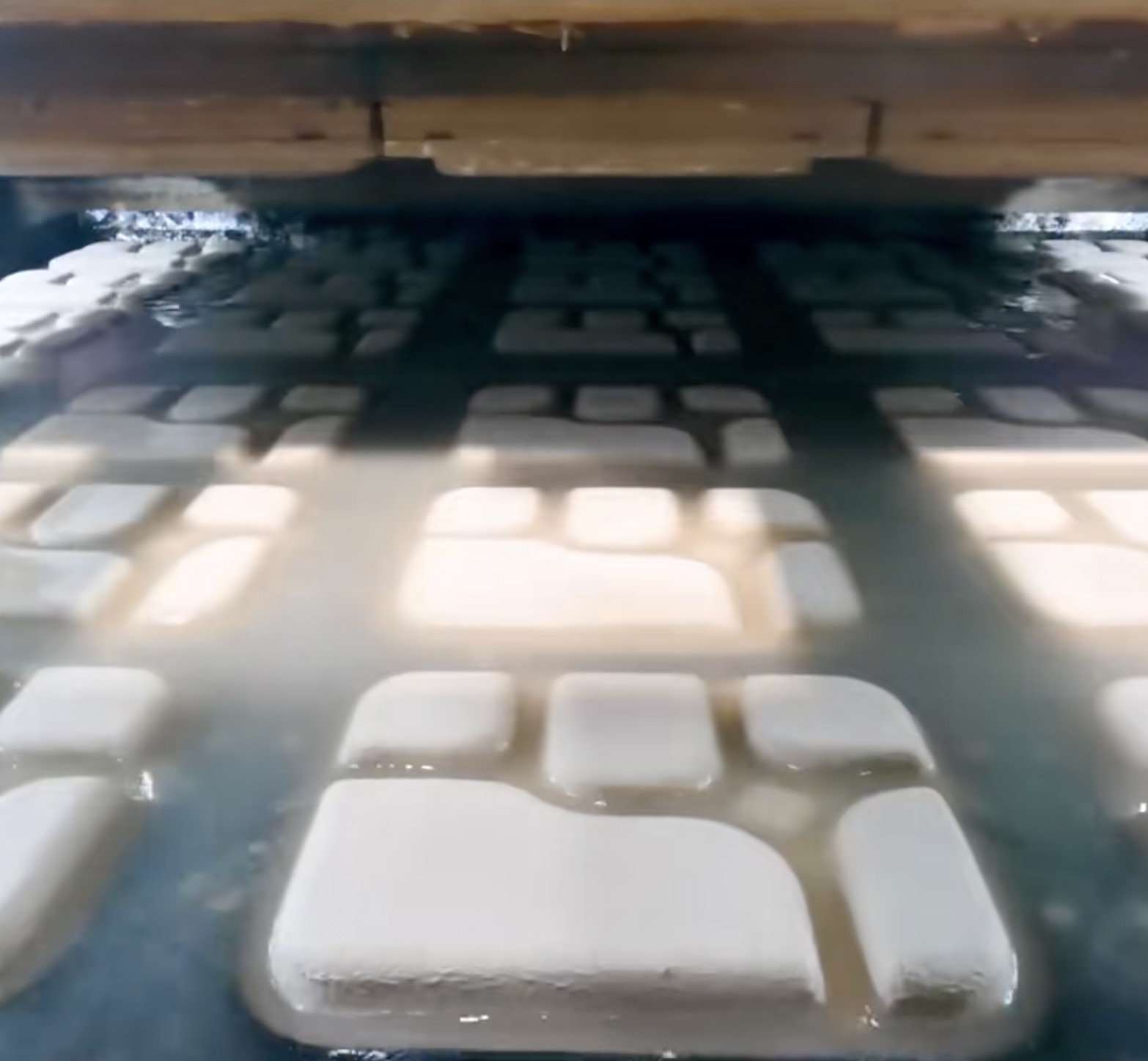
Fiber-based clamshell packaging, including bagasse and molded fiber containers, uses a different manufacturing approach.
Fiber Pulping
Plant-based fibers are processed into pulp suitable for molding.
For bagasse packaging, the fiber source comes from sugarcane processing residue.
Molding and Drying
The prepared pulp is formed into molds that create:
- Food cavities
- Lid and base structures
- Package edges
- Stacking features
After molding, the products are dried to stabilize the structure.
Additional finishing may include:
- Surface treatment
- Edge trimming
- Moisture or grease resistance treatments
Finishing and Quality Checks
After forming, clamshell packaging is inspected to verify design consistency and performance.
Dimensional Inspection
Manufacturers may check:
- Length
- Width
- Height
- Cavity dimensions
Consistent dimensions help ensure product fit and stacking performance.
Closure Fit Testing
Closure systems are evaluated for:
- Lid and base alignment
- Closing performance
- Retention characteristics
The required closure performance depends on the intended application.
Appearance Inspection
Visual checks may identify:
- Surface defects
- Scratches
- Color variation
- Forming irregularities
Appearance is especially important for clear clamshell packaging because product visibility is a primary function.
Material and Production Traceability
For food packaging applications, buyers may review documentation related to:
- Material specifications
- Production records
- Quality control procedures
- Food-contact documentation where applicable
Traceability helps maintain consistent packaging performance between production batches.
Is Clamshell Packaging Sustainable?
The sustainability of clamshell packaging depends on the complete lifecycle of the package. Material choice, manufacturing, recycling or composting infrastructure, and disposal behavior all influence environmental performance.
A recyclable or compostable material does not automatically achieve that outcome after disposal.
Recyclable Plastic Clamshells
Plastic clamshell containers made from materials such as PET and PP may support recycling systems when appropriate collection, sorting, and processing infrastructure exists.
However, technical recyclability and actual recycling acceptance are different.
Real-world recycling depends on:
- Local collection programs
- Sorting capability
- Contamination levels
- Processing infrastructure
A polymer may have recycling potential but still not be accepted in every local recycling system.
Recycled Content
Some clamshell packaging uses recycled content, such as recycled PET (rPET).
Recycled content can be considered when businesses want to incorporate recycled materials into packaging designs.
However, recycled content does not determine end-of-life performance by itself.
A complete evaluation should consider:
- Recycled content percentage
- Food-contact suitability
- Material specifications
- Local recycling systems
Compostable Fiber and PLA Options
Fiber-based clamshell packaging, including bagasse and molded fiber products, is often considered by businesses evaluating alternatives to conventional plastics.
Bagasse is commonly used for:
- Takeaway containers
- Catering packaging
- Foodservice applications
However, compostability depends on:
- Applicable certifications
- Product construction
- Coatings or additives
- Composting infrastructure
For packaging making industrial compostability claims, standards such as ASTM D6400 및 EN 13432 provide frameworks for evaluating compostable products under defined conditions.
Meeting a compostability standard does not mean a package will break down in every environment.
Why the Local End-of-Life System Matters
The environmental outcome of clamshell packaging depends on what happens after use.
A recyclable package requires:
- Collection through suitable recycling systems
- Sorting and processing capability
- Appropriate recycling pathways
A compostable package requires:
- Applicable certification where required
- Suitable composting facilities
- Correct disposal routes
Because recycling and composting systems vary by location, the same package may have different outcomes in different regions.
자주 묻는 질문
What is clamshell packaging used for?
Clamshell packaging is used for food, retail, and consumer products requiring protection and visibility. Common food applications include produce, sushi, salads, bakery products, prepared meals, and takeaway foods.
What does clamshell packaging mean?
Clamshell packaging refers to a container made from two connected sections joined by an integrated hinge that opens and closes like a shell.
What is clamshell packaging made from?
Common materials include PET, rPET, PP, PS, OPS, PLA, bagasse, molded fiber, and paperboard.
Are clamshell containers recyclable?
Some clamshell containers may be recyclable depending on material type and local recycling systems.
Are clamshell containers microwave-safe?
Only containers specifically designed, tested, and labeled for microwave use should be used for reheating.
Are bagasse clamshells compostable?
Some bagasse clamshells may be compostable when they meet applicable standards and are processed through suitable composting systems.
What is the difference between clamshell and blister packaging?
Clamshell packaging has two connected sections with a hinge, while blister packaging usually uses a formed cavity attached to a backing material.
Are clamshell and hinged containers the same?
A clamshell is a type of hinged container, but not every hinged container has a traditional clamshell structure.
How long do clamshell containers last?
The lifespan depends on the material, design, storage conditions, and intended application. Food clamshells are generally designed for short-term uses such as display, transport, and food service.
결론
Clamshell packaging is a hinged container format that combines connected sections, closure systems, and product visibility in one package design. It is widely used where protection, presentation, and convenient handling are important.
Choosing the right clamshell packaging starts with the application rather than the material alone. Product type, storage conditions, moisture requirements, transportation needs, and sustainability goals should guide material and design decisions.
Sustainability should be evaluated through the full lifecycle of the package. Recycling and composting outcomes depend on material characteristics, certification requirements, and available local systems.
For businesses purchasing clamshell packaging, compliance should be verified through appropriate documentation. Food-contact information, material specifications, testing records, and sustainability documentation help confirm that the packaging matches its intended market and application.

ManLuen 플라스틱 포장 회사는 20년 이상 플라스틱 식품 포장 생산에 특화되어 있습니다. 저희 제품은 100% 순수 원료와 BPA-Free PP, PS, OPS로 만들어졌으며, FDA 및 유럽 표준을 준수합니다.
 KO
KO  EN
EN  ZH
ZH  FR
FR  PT
PT  ES
ES  JA
JA