

はじめに
Sauce cups with lids are a small product, but they serve several supermarket customers at once. Parents use them for packed lunches. Home cooks use them for dressings and condiments. Party hosts need them for dips. Restaurants and deli counters buy them for takeaway orders.
A supermarket can sell more sauce cups by making the assortment easy to understand. Stock a useful size range, separate cold-use and heat-tolerant options, show customers where each cup fits, and place the products near the foods that need them. Buyers comparing adjacent formats can also review Manluen’s food storage containers.
This guide explains how to build the range, arrange the shelf, serve different customer groups and run promotions without relying on exaggerated product claims.

1. Build a Sauce Cup Range Around Real Uses
Start with what customers put inside the cup. Soy sauce, ketchup, salad dressing, salsa and marinades need different portions. A clear shelf plan prevents shoppers from comparing a wall of nearly identical packs.
Use a Clear Size Ladder
| Size | Typical Use | Merchandising Message |
|---|---|---|
| 0.75–1 oz | Soy sauce, ketchup, mustard and small samples | Single-serve dipping portions |
| 1.5–2 oz | Salad dressing, yogurt toppings and lunchbox dips | Everyday takeaway and packed-lunch use |
| 3.25–4 oz | Larger dressing portions, salsa and side condiments | Meal prep, deli and family portions |
| 5.5 oz and above | Marinades, toppings and larger servings | Bulk preparation and catering use |
Use actual fill volume and dimensions rather than relying only on the printed ounce size. For the smallest portions, the WL-1OZ portion cup with lid provides a clear reference. Larger applications can be compared with the WL-4OZ dipping sauce cup および WL-5.5OZ condiment cup.

Make the Lid Part of the Product Decision
A cup and lid should be evaluated as one set. Customers care about easy closure, reliable fit and clean opening. Supermarket buyers should test several production samples with thin, oily and thick sauces. Turn the closed sample on its side over an absorbent sheet and repeat the test after chilled storage.
Do not describe a cup as spill-proof unless the finished set has been tested under defined conditions. “Secure-fitting lid” is a more accurate shelf message when the product has passed normal handling tests but is not designed as a sealed transport vessel.
Separate Different Materials and Use Conditions
Manluen’s sauce cup range includes PP and PET formats. These plastics do not have identical temperature performance. A material name also does not prove that every product is suitable for a microwave, freezer or dishwasher. Use the supplier’s instructions for the exact SKU. The broader guide to food packaging materials can help category buyers explain the differences.

2. Merchandise Sauce Cups Where Customers Need Them
A single disposable-tableware aisle is useful for planned purchases, but secondary placement can introduce the product to customers who did not put sauce cups on their shopping list.
Use Cross-Merchandising
- Place 1 oz cups near 使い捨て寿司トレイ, fries and condiment bottles.
- Place 1.5–2 oz cups near salad kits, lunch supplies and meal-prep products.
- Place 3.25–4 oz cups near deli meals, marinades and party foods.
- Place larger cups near catering supplies and bulk ingredients.
A small secondary display should include a clear price, size and suggested use. It should not depend on keyword-heavy signs. “1 oz cups for dips and condiments” tells the customer more than a list of near-duplicate product terms.
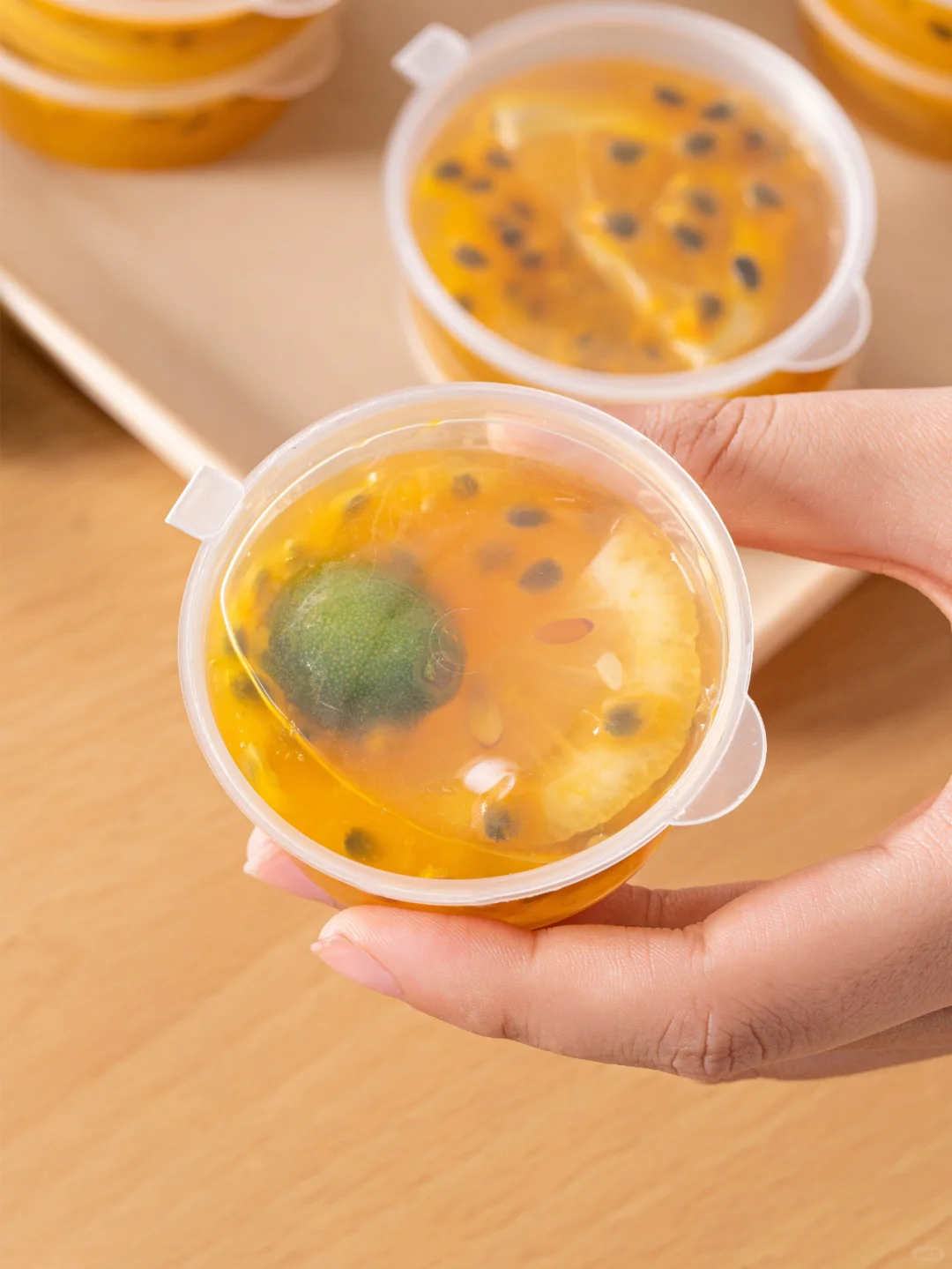
Organize the Main Shelf by Decision
Customers usually decide by size first, then lid, material or quantity. Arrange the shelf from smallest to largest and keep the matching lid information visible. Within each size, separate consumer packs from foodservice bulk packs.
Useful shelf labels include:
- capacity in ounces and milliliters;
- number of cup-and-lid sets;
- recommended cold or warm-food use;
- material identification;
- clear warnings against unsupported heating or reuse.
3. Match the Message to the Shopper
Parents and Meal Preppers
These customers want compact portions that fit inside a lunch bag or 弁当箱. Show the outer dimensions as well as the capacity. A 1.5 oz or 2 oz cup can suit dressing, dip or a small topping without taking up the full compartment.
The WL-2OZ takeaway sauce cup is one size buyers can compare for this use. Avoid describing disposable cups as reusable unless the manufacturer specifically supports repeated use.
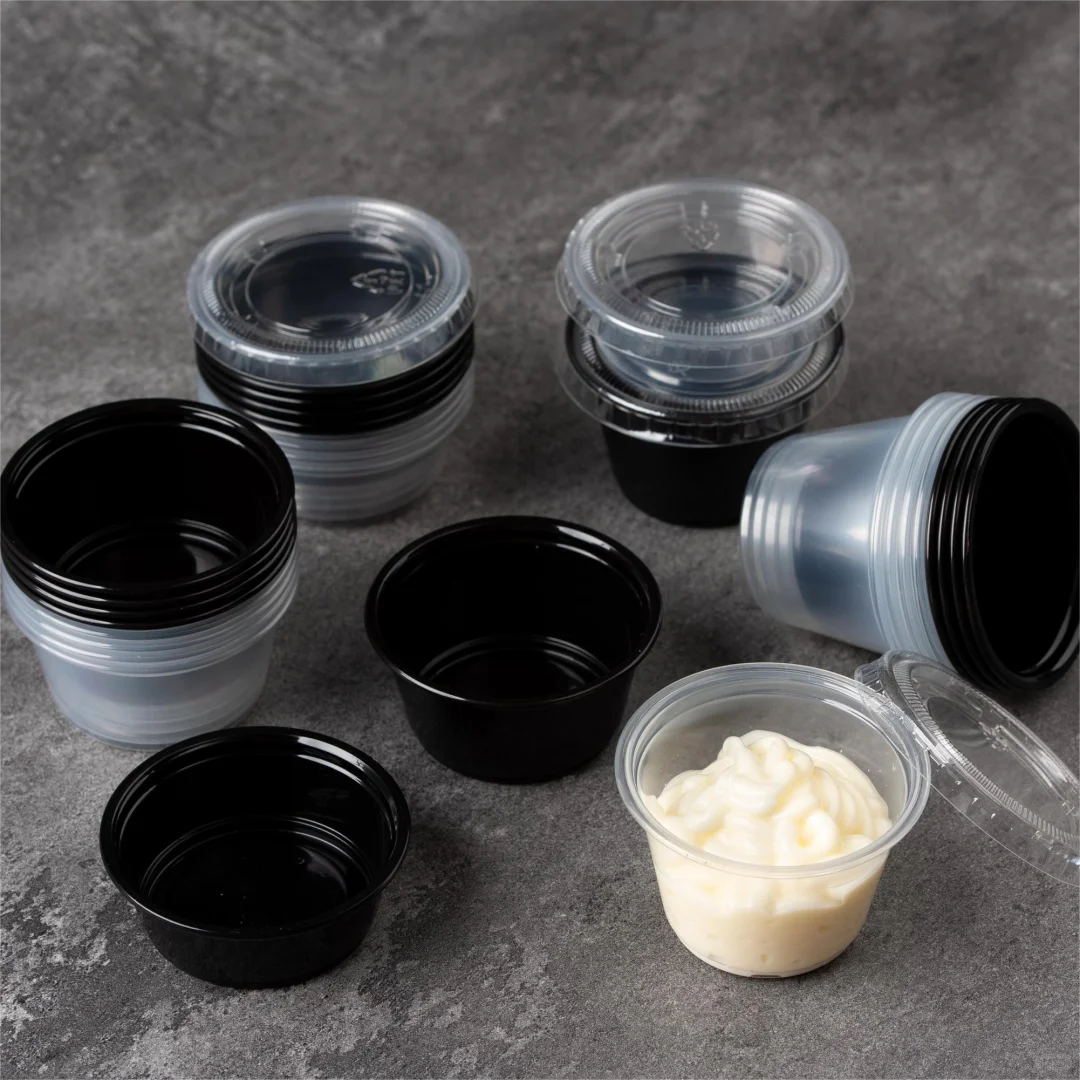
Foodservice and Catering Buyers
Commercial customers care about case quantity, consistent lid fit, dispensing speed and supply continuity. Show the carton quantity and let qualified business customers request full-case pricing. A small sign can direct them to a service desk or wholesale contact without crowding the retail shelf.
Restaurants can also use the related article on improving operations with sauce cups to compare portion control, delivery and supplier issues.
Casual Entertainers
Party shoppers often need several sauces and a simple cleanup. Place portion cups near パーティー用トレイ, vegetable platters and snack displays. Show how many guests a pack may serve only when the estimate states the assumed number of cups per guest.
4. Use Promotions That Can Be Measured
Promotions should solve a customer problem and produce a result the store can track. Do not use fixed discount figures simply because they appeared in an earlier campaign.
Bundle Complementary Products
Test simple combinations such as salad kits with 2 oz dressing cups, sushi packs with 1 oz soy sauce cups, or party trays with several cup sizes. Keep each bundle easy to understand and compare its margin with the products sold separately.

Run a Short Test Before a Chain-Wide Rollout
Choose a small store group and record unit sales, gross margin, basket attachment and out-of-stock rates before and during the test. Compare the result with similar control stores. This gives the category manager evidence for the next planogram instead of relying on an attractive display alone.
Use Samples Carefully
Where local food-sampling rules allow, a staffed demonstration can show how the cup closes and how the portion looks. Use clean products, list allergens in the sampled food, and do not invite customers to reuse a single-use cup beyond its intended purpose.

5. Verify Food-Contact and Product Claims
“FDA compliant,” “BPA-free” and “microwave-safe” should never be copied across a complete sauce cup range without checking the exact material and intended use. The FDA explains that the regulatory status of a food-contact material depends on every substance expected to migrate under its intended conditions. Buyers should review the agency’s guidance on food-contact material components and ask the supplier for the applicable basis.
For plastic products sold into the EU, Commission Regulation (EU) No 10/2011 is a core part of the food-contact framework. The declaration and testing should match the cup, lid, material, color and conditions of use.
Supermarket buyers should request:
- the product drawing and material specification;
- the regulatory basis and current test documents;
- intended food types, temperature and contact time;
- case quantity and lot traceability;
- written instructions for heating, freezing or reuse when claimed.
Manluen’s article on food-grade packaging explains why intended use and documentation matter. Buyers can also review the company’s certification information before requesting records for a specific sauce cup.
6. Track the Right Category Metrics
Sales growth alone does not show whether the category improved. Review:
- unit sales and gross margin by size;
- sales per shelf facing;
- basket attachment to sushi, salad, deli and party foods;
- out-of-stock rate;
- returns or complaints related to lid fit;
- consumer-pack versus case-pack performance;
- inventory weeks on hand.
Use four to eight weeks of data where practical, then remove duplicate sizes that do not serve a distinct use. The same principle applies to deli packaging; Manluen’s guide to supermarket and deli tray sales provides a related category-management view.
よくある質問
Which sauce cup sizes should a supermarket stock?
A practical range usually starts with a small dipping size, a lunchbox or dressing size, and a larger deli or catering size. The exact mix should follow local basket data. Add or remove sizes only after checking whether each one serves a distinct use.
Are sauce cups with lids leak-proof?
Not automatically. Lid fit, rim design, sauce viscosity, temperature and handling all affect leakage. Test the finished cup-and-lid set with the intended sauce before making a strong claim.
Can plastic sauce cups go in the microwave?
Only when the supplier identifies the exact SKU as microwave-suitable and provides the conditions of use. PP and PET products should not be treated as interchangeable. Do not infer microwave safety from the cup’s appearance.
What MOQ applies to wholesale sauce cups?
MOQ varies by stock status, size, material, color, packaging and printing. Request separate terms for samples, standard products, custom packs and repeat orders. To compare an actual program, buyers can request a sauce cup quote with the required sizes, quantities and destination market.
結論
Supermarkets can improve sauce cup sales by making the category easier to shop. Build a clear size ladder, place secondary displays near relevant foods, separate household and foodservice packs, and test promotions with real sales data. Product claims should remain tied to the exact cup, lid and intended use.
情報源とさらなる資料
U.S. Food and Drug Administration. Determining the Regulatory Status of Components of a Food Contact Material.
Used to explain why food-contact status depends on the individual components and intended conditions of use.
U.S. Food and Drug Administration
European Union. Commission Regulation (EU) No 10/2011.
Used for the EU requirements applying to plastic materials and articles intended to contact food.
EUR-Lex

マンルエンプラスチック包装有限公司は、20年以上にわたりプラスチック食品包装の製造を専門としています。当社の製品は、100%のバージン素材とBPAフリーのPP、PS、OPSを使用し、FDAおよびヨーロッパ基準に準拠しています。
 JA
 EN
 ZH
 FR
 PT
 ES
 KO