
冷蔵食品ラインのパッケージを比較している購入者向けに、同じ素材、閉鎖方法、取り扱いチェックも適用されます 使い捨て寿司トレイ スーパーマーケット、レストラン、テイクアウトカウンターで使用される。.
はじめに
Wholesale purchasing of disposable bento boxes can help supermarkets and restaurants standardize packaging, control stock, and serve prepared meals more efficiently. The savings do not come from buying the cheapest box. They come from choosing a format that fits the menu, packs efficiently, closes reliably, and arrives with the correct food-contact documents.
This guide explains how to compare wholesale bento boxes by size, material, lid, compartment layout, carton packing, customization, and intended use. Buyers can also review Manluen’s full 弁当箱ラインナップ while defining the required format.

Why Supermarkets and Restaurants Buy Bento Boxes in Bulk
Bento boxes give prepared-food teams a consistent container for main dishes, sides, sushi, salads, snacks, and lunch combinations. A standard packaging range can simplify counter setup and reduce the number of lids and bases staff must manage.
Bulk purchasing may lower the unit price, but it also affects cash flow and storage. A restaurant that orders too many slow-moving sizes can lose more than it saves. A supermarket should compare weekly usage, carton quantity, available storage, shelf format, and reorder lead time before setting the order volume.
For a broader look at lid fit, takeaway handling, and spill control, see Manluen’s guide to choosing a disposable bento box with lid.

Match the Box to the Food and Sales Channel
| Use case | Useful features | Checks before ordering |
|---|---|---|
| Supermarket prepared meals | Clear display lid, stable base, efficient shelf footprint | Cold performance, label area, stacking, visibility |
| Restaurant takeaway | Secure closure, suitable portion size, easy staff handling | Transport test, lid fit, sauce movement, closing speed |
| Multi-item meals | Two or more compartments | Divider height, sauce transfer, usable compartment volume |
| Sushi or chilled food | Shallow base and clear lid | Condensation, cold brittleness, presentation, food clearance |
| Meals intended for reheating | Complete container documented for the intended heating conditions | Base and lid materials, time, temperature, food type, instructions |
A box can look large but provide limited usable space because of tapered walls, rounded corners, or raised dividers. Ask for both external dimensions and usable internal dimensions. Test the normal serving weight rather than selecting a container from its advertised capacity alone.

Material Selection: PP, PET, OPS, and PS
Wholesale bento boxes may be offered in several plastics. Each material has different strengths and limitations. The same model name may also be available in more than one material, so the quotation must identify the exact construction.
- PP: commonly used for rigid meal containers and selected reheating applications. Microwave suitability still requires product-specific confirmation.
- PET: valued for clarity and chilled display. It should not be treated as a general microwave material.
- OPS or PS: often used for clear display components and cold-food packaging. Buyers should confirm temperature and impact limitations.
For a fuller comparison, use the food packaging materials guide. Buyers should also understand what food-grade packaging means: the complete article, not just the resin name, must suit the intended food-contact use.
Microwave Claims Require Product-Specific Evidence
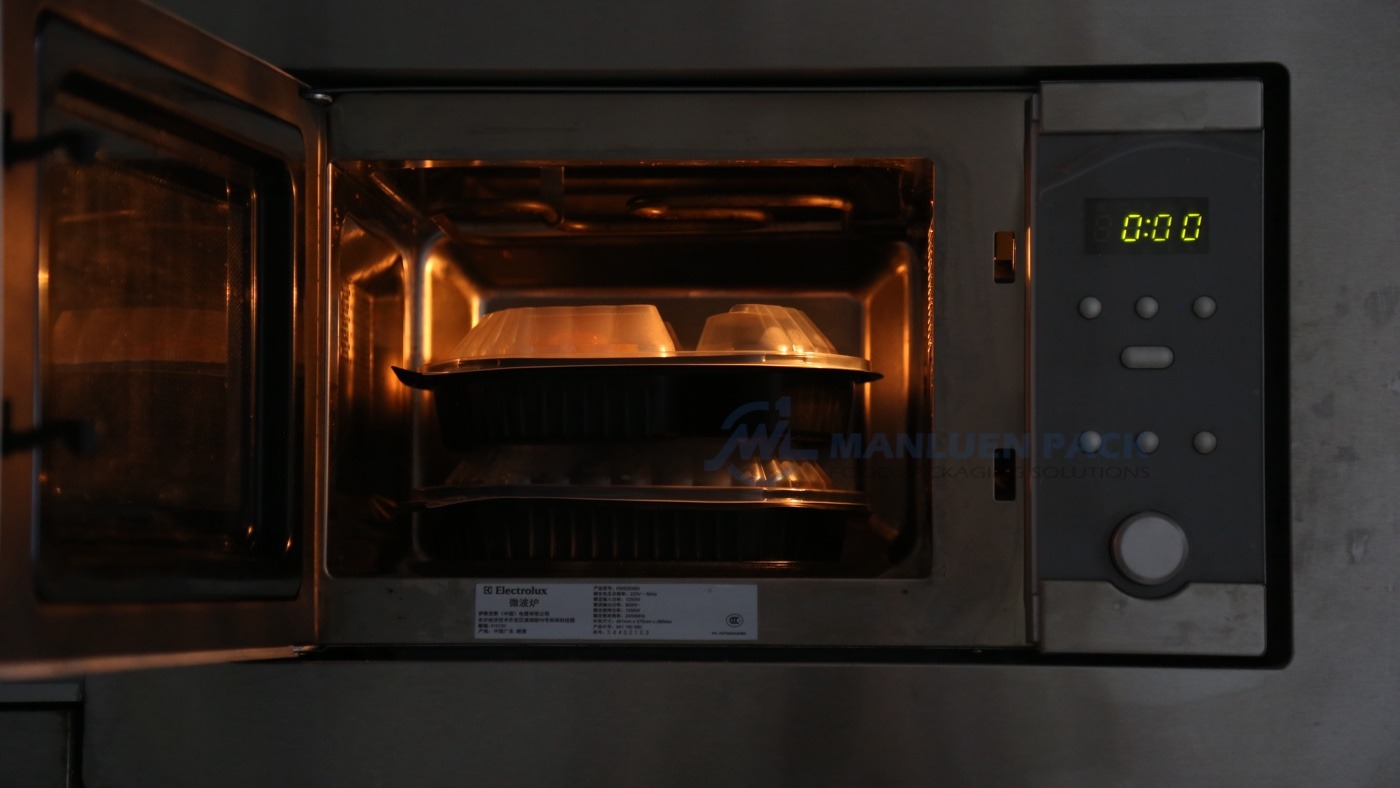
A polypropylene resin code does not make every bento box microwave-safe. The base, lid, colorants, additives, container shape, food type, heating time, and temperature all matter. A clear lid may use a different plastic from the base and may need to be removed before heating.
Ask the supplier for written conditions of use for the exact model. Check whether the instructions cover reheating or actual cooking, whether the lid can remain attached, and whether fatty or oily foods are included. Manluen’s plastic-container microwave safety guide explains these checks in more detail.
Manluen Bento Box Examples
The WL-8525 large bento box measures 233 × 162 × 50 mm and is packed at 300 pieces per carton. The product page lists PS, PP, PET, and OPS material options. This model suits larger prepared-food and takeaway portions when the selected material matches the intended use.

The WL-8520 takeaway meal box measures 215 × 148 × 50 mm and is packed at 400 pieces per carton. It provides another large-format option with a different footprint and carton configuration.
For smaller portions, the WL-8505 mini bento box measures 136 × 111 × 50 mm and is packed at 600 pieces per carton. It may suit side dishes, desserts, snacks, or compact takeaway portions.
These models show why wholesale buyers should compare the full specification. Dimensions, material, pieces per carton, and carton volume affect portion control, storage, freight, and landed cost.
Wholesale Economics: Calculate the Real Cost
Wholesale pricing can reduce the unit cost, but only when the product is used consistently and stored without excessive damage. Compare the total cost per usable container rather than the quoted factory price alone.
Include the following items in the calculation:
- Unit price at the required quantity
- Base and lid packing configuration
- Samples and courier charges
- Printing plates, tooling, and artwork setup
- Export cartons and palletizing
- Testing and compliance documentation
- Freight, insurance, customs, duties, and local delivery
- Expected damage, rejected units, and inventory carrying cost
There is no universal MOQ. Stock items may support smaller trial quantities. Custom color, printing, material, or molds can require larger production runs. Ask for quantity tiers and written terms for the exact product.

Customization for Supermarkets and Restaurants
Customization can help a food business control presentation and simplify operations, but every change affects cost and lead time. Common options include base color, labels, sleeves, carton printing, embossing, compartment layout, and new tooling.
Supermarkets often need label space for product name, ingredients, allergen information, net quantity, date marking, price, and barcode. Restaurants may prioritize a fast closure, sauce separation, tamper evidence, and branding. State these requirements before sample production.
For a new mold, confirm ownership, maintenance, storage period, modification costs, and acceptance dimensions. For printed packaging, approve a physical color sample and define print tolerance in writing.
Food-Contact Compliance for Wholesale Bento Boxes
In the United States, the FDA evaluates food-contact substances according to their identity, specifications, limitations, and intended conditions of use. Different components of a finished container may rely on different regulatory provisions or authorizations.
Buyers should request the regulatory basis and relevant test or compliance documents for the exact base and lid. The documentation should identify the material, manufacturer, food type, temperature, and contact time. A generic certificate or an unrelated test report does not establish compliance for every product.
In the European Union, Regulation (EC) No 1935/2004 provides the general framework for food-contact materials, while Regulation (EU) No 10/2011 covers plastic materials and articles. Ask for an appropriate declaration of compliance and the supporting information for the construction being purchased.
Manluen’s article on food packaging authorization explains why “FDA approved” is usually the wrong question. Buyers can also review the company’s certifications and testing information and request documents for the selected SKU.

How to Qualify a Bento Box Supplier
A dependable supplier should provide clear answers about product construction, factory capability, quality control, and delivery. Check the following before placing a commercial order:
- Confirm the registered company, factory address, and export entity.
- Request a model-specific quotation and specification.
- Check production equipment, mold ownership, capacity, and lead time.
- Review raw-material control and lot traceability.
- Test representative samples with the actual menu.
- Agree on defect standards and inspection procedures.
- Confirm payment terms, Incoterm, and shipping documents.
- Keep an approved sample for production comparison.
For further supplier and product-positioning considerations, see Manluen’s disposable bento box wholesale market guide.

Sample Testing Before a Bulk Order
Test the box with the real food and handling process. Fill it to the normal serving weight, close it as staff would during service, and hold it at the expected temperature. Stack the filled boxes, carry them in the normal delivery bag, and inspect them after the expected delivery time.
Check for lid lifting, base flex, cracking, fogging, sauce transfer, divider overflow, and food movement. If the product will be reheated, follow the written conditions for the exact container and lid. Test more than one sample and document the result by menu item.
Restaurants comparing broader takeaway formats may also use Manluen’s to-go bento box guide. If the business also needs ingredient or back-of-house packaging, compare the separate food storage container range instead of assuming a display bento box suits repeated storage.

Wholesale Bento Box Buying Checklist
- Food type, serving weight, and compartment plan
- External and usable internal dimensions
- Base material and lid material
- Written storage and heating conditions
- Closure, stacking, transport, and refrigeration tests
- Food-contact documents for the target market
- Pieces per carton, carton size, and total freight volume
- MOQ and price tiers for stock and custom products
- Printing, tooling, artwork, and approval costs
- Lead time, payment, inspection, and shipping terms
When these details are ready, request samples and a model-specific wholesale quotation from Manluen.
よくある質問
Are all disposable bento boxes microwave-safe?
No. Microwave suitability depends on the exact base and lid materials, design, food, temperature, and heating time. Use a container in a microwave only when the supplier provides written instructions for that model.
What is the MOQ for disposable bento box wholesale orders?
MOQ depends on the model, material, color, packing, and customization. Stock products may support smaller trial quantities. Custom printing or tooling usually changes the minimum quantity.
Should supermarkets use one bento size for every meal?
Usually not. Portion size, meal layout, shelf space, and label requirements vary. A small set of standardized sizes can simplify stock without forcing every meal into the same box.
What documents should buyers request?
Request the material specification, product drawing, regulatory basis, relevant test report or declaration, conditions of use, and lot-traceability information. The documents should match the exact base and lid.
How can buyers compare wholesale quotations fairly?
Send every supplier the same specification and compare unit price, carton packing, freight volume, tooling, testing, payment, lead time, and quality terms. Calculate the landed cost per usable container.
結論
Disposable bento box wholesale purchasing works best when buyers standardize specifications before comparing prices. Match the container to the food, verify the base and lid materials, test real samples, and review product-specific compliance documents. The lowest unit price has little value if the box wastes shelf space, fails in delivery, or cannot support the intended use.
情報源とさらなる資料
U.S. Food and Drug Administration. Determining the Regulatory Status of Components of a Food Contact Material. Used for the U.S. authorization routes and component-level compliance checks. U.S. Food and Drug Administration
U.S. Food and Drug Administration. Food Types & Conditions of Use for Food Contact Substances. Used for distinctions among refrigerated storage, reheating, hot filling, and cooking. U.S. Food and Drug Administration
European Commission. Food Contact Materials Legislation. Used for the EU framework under Regulation (EC) No 1935/2004 and the rules applicable to plastic food-contact materials. European Commission
EUR-Lex. Commission Regulation (EU) No 10/2011 on Plastic Materials and Articles Intended to Come into Contact with Food. Used for the EU plastic food-contact compliance framework. EUR-Lex

マンルエンプラスチック包装有限公司は、20年以上にわたりプラスチック食品包装の製造を専門としています。当社の製品は、100%のバージン素材とBPAフリーのPP、PS、OPSを使用し、FDAおよびヨーロッパ基準に準拠しています。
 JA
 EN
 ZH
 FR
 PT
 ES
 KO