
Key Takeaways
- Product: Disposable Bowls for Hot Soup – The Complete Guide for Restaurants and Food Service — a this food container engineered for takeaway, delivery, and food service operations.
- Material: Food-grade PP (polypropylene) — BPA-free, microwave-safe, and FDA / EU compliant.
- Typical capacity: ~12 oz per unit, suitable for individual meal portions.
- Best for: Restaurants, caterers, food trucks, and retail ready-to-eat counters.
- Sourcing: Available wholesale from ManLuen with FDA, EU, and ISO certifications documented on the certifications page.
Introduction
For restaurants, catering services, and food factories serving hot soups, choosing the right disposable bowls for hot soup is critical to maintaining food quality, ensuring customer satisfaction, and streamlining operations. The market offers a diverse range of disposable bowls specifically designed for hot soup applications, from lightweight paper bowls to insulated containers. This comprehensive guide explores everything you need to know about selecting the best disposable bowls for your hot soup service, including material options, size considerations, and wholesale procurement strategies.
If you’re also looking to upgrade your takeout packaging, explore our guide on disposable bento boxes for additional insights into food packaging solutions.
Why Disposable Bowls Matter for Hot Soup Service
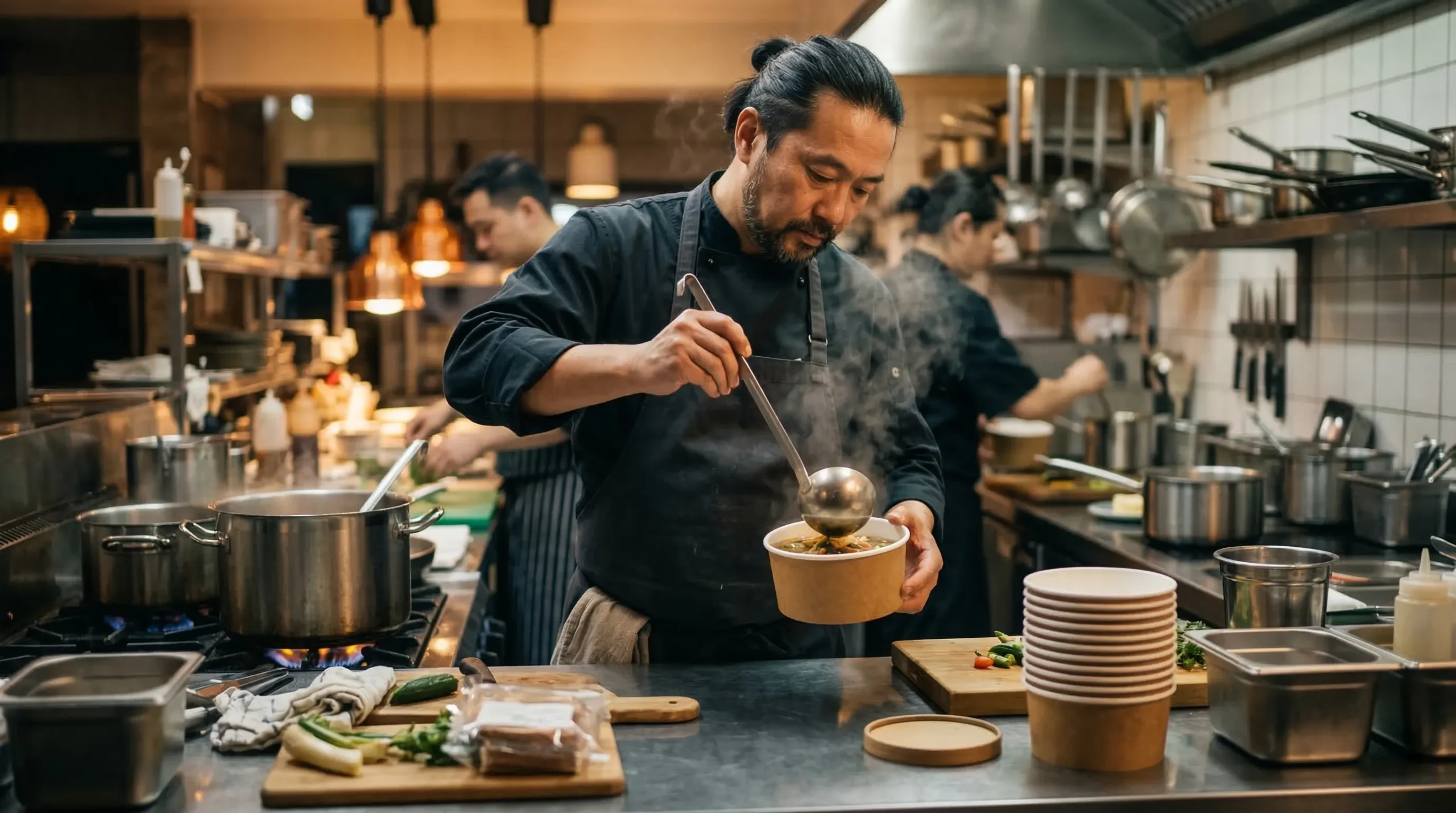
The packaging you choose for hot soup directly impacts multiple aspects of your food service operation:
- Food Safety and Quality: Proper insulation keeps soup at safe serving temperatures
- Customer Experience: Leak-proof, sturdy bowls prevent spills and maintain presentation
- Operational Efficiency: Disposable bowls eliminate dishwashing overhead and speed up service
- Brand Perception: Quality packaging reflects professionalism and attention to detail
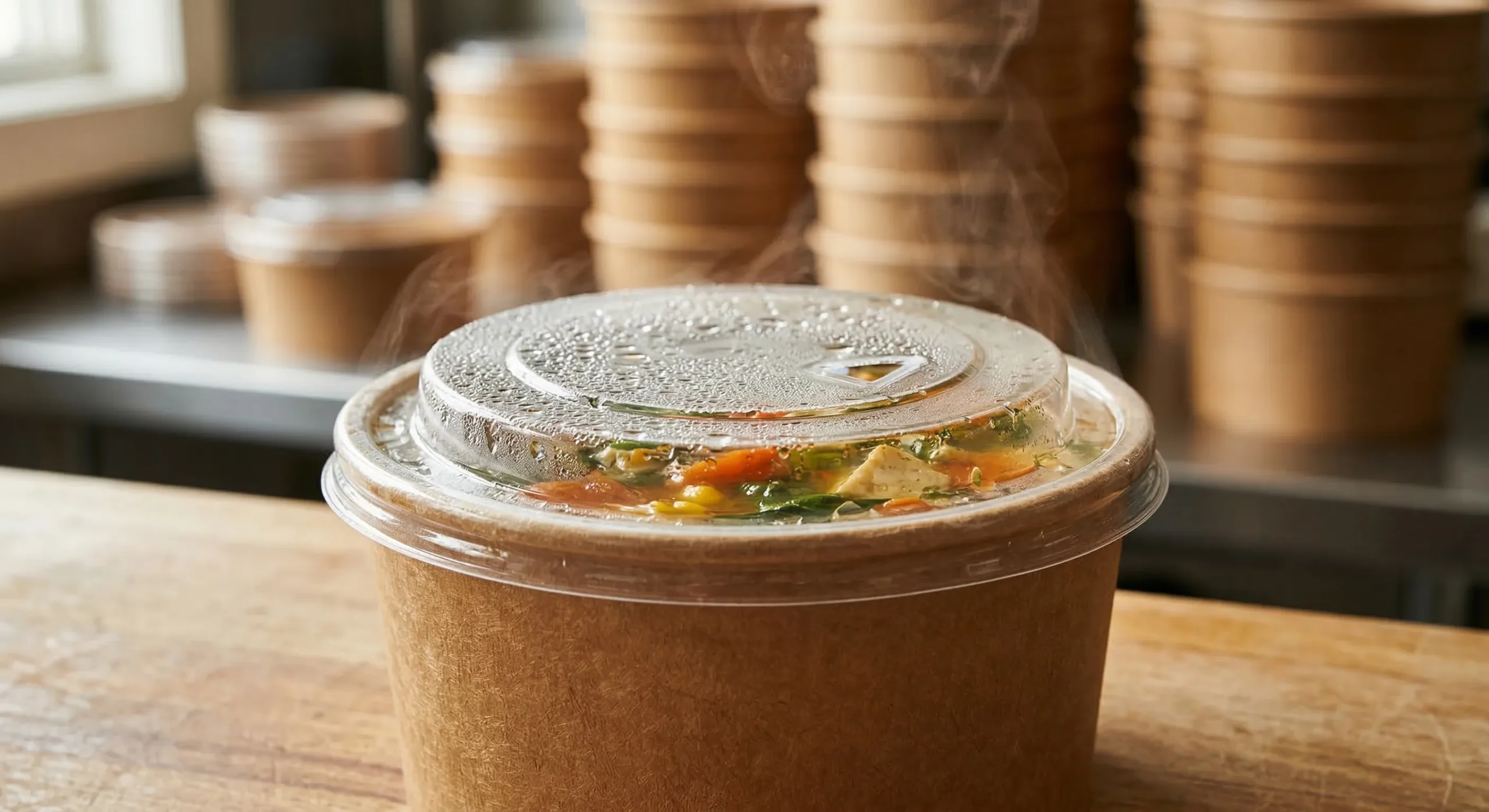
Using high-quality disposable bowls for hot soup helps maintain the temperature and quality of your soups from kitchen to table. Whether you run a small restaurant or a large catering operation, the right bowl choice can significantly improve your service efficiency.
For more information on how to choose the right food containers for your business, visit our complete guide to food packaging solutions.
Understanding Disposable Bowl Materials
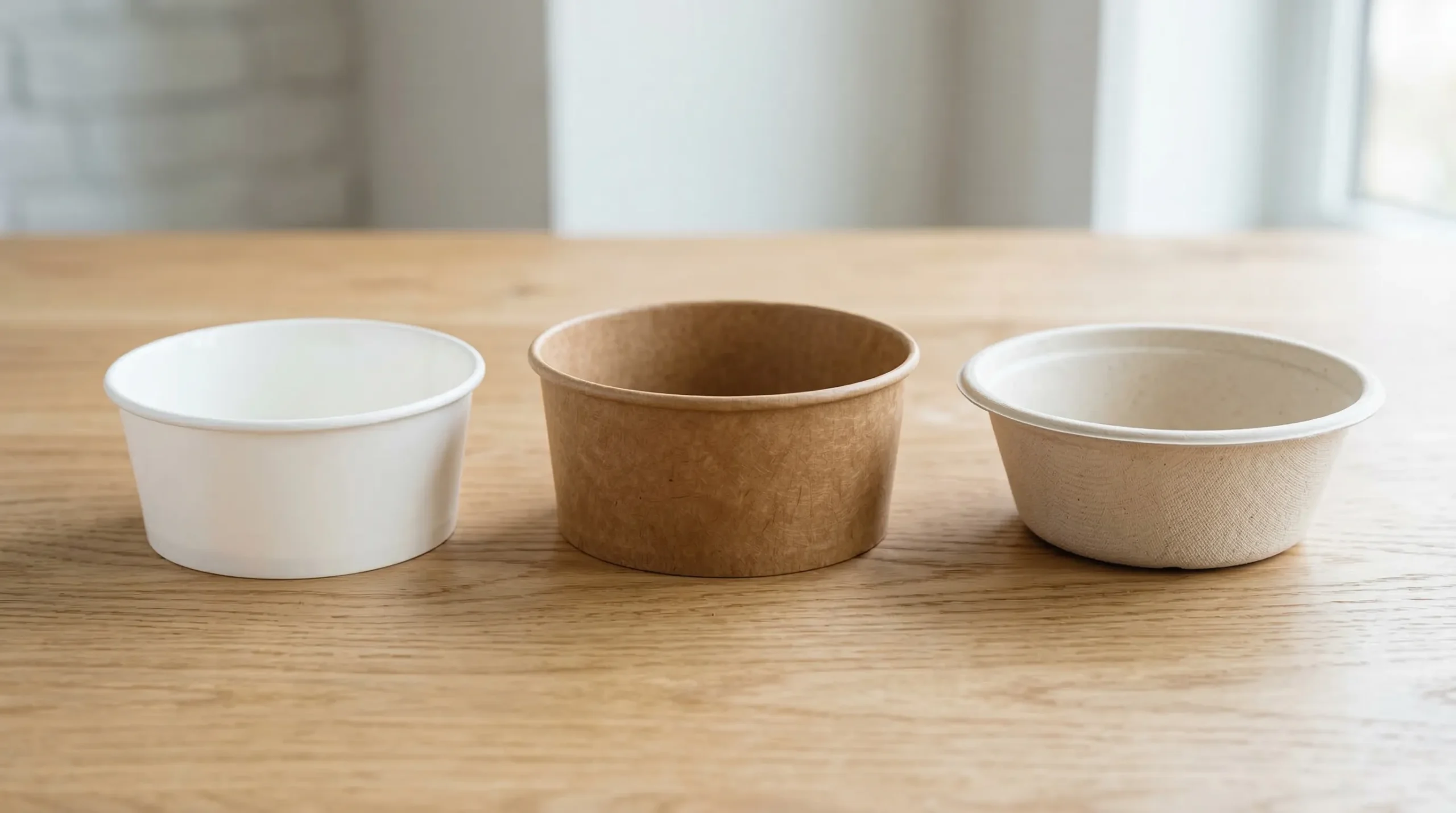
Paper Bowls with PE or PLA Lining
Paper bowls with polyethylene (PE) or polylactic acid (PLA) lining are the most common choice for serving hot soup. These bowls offer excellent heat resistance and leak-proof performance while remaining environmentally friendly. The lining prevents moisture from penetrating the paper, ensuring the bowl maintains its structural integrity even with hot, liquid content.
High-quality disposable paper bowls for hot soup come with these benefits:
- Microwave-safe for customer convenience
- Compostable options available
- Custom printing for brand visibility
- Cost-effective for bulk ordering
According to industry standards, paper bowls with proper lining can safely hold hot liquids at temperatures up to 95°C without degrading. This makes them ideal for serving soup, noodles, and other hot dishes in restaurant and takeout settings.
Kraft Paper Bowls
Kraft paper bowls have gained popularity. They offer a natural look and can be printed with your brand logo. These bowls handle heat well. They come in various thicknesses to match different serving needs. Many restaurants prefer kraft paper bowls for their rustic, eco-friendly appearance.
Bagasse Bowls
Sugarcane fiber (bagasse) bowls are an eco-friendly choice. They break down naturally within 90 days. These bowls handle temperatures up to 100°C. This makes them great for hot soup while meeting sustainability goals. Bagasse bowls are popular among businesses that care about the environment.
PP Plastic Soup Bowls
PP plastic soup bowls are another practical option for hot soup, takeaway meals, noodles, and prepared foods. Compared with paper or fiber-based bowls, polypropylene offers good heat resistance, durability, and dimensional stability, making it suitable for foodservice applications where containers need to hold hot or heavier foods during transport.
Selecting the Right Bowl Size
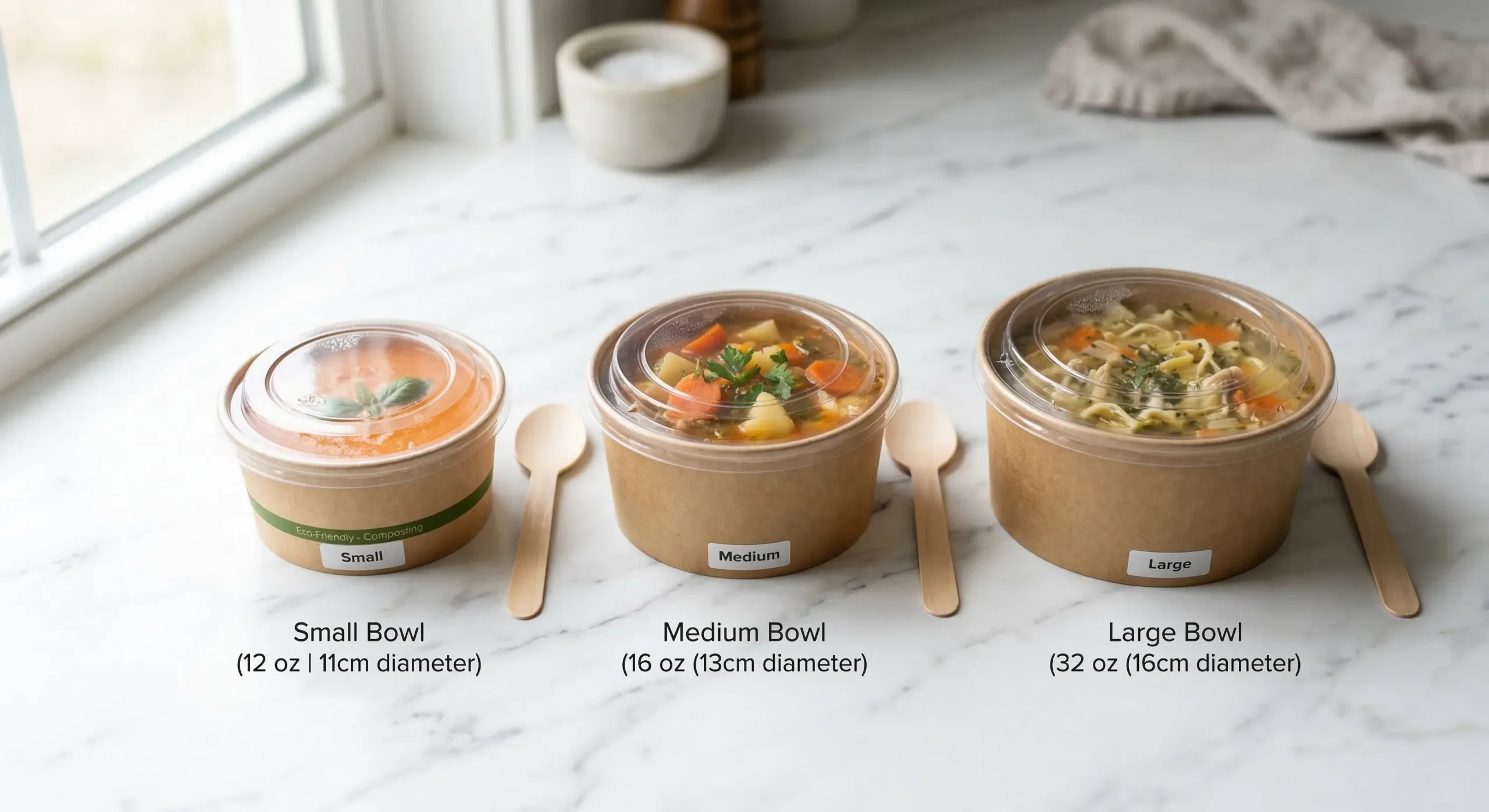
Choosing the appropriate bowl size is essential for portion control and customer satisfaction:
| Size (oz) | Capacity (ml, approx.) | Manluen Model | Best For |
|---|---|---|---|
| 8–12 oz | ≈ 240–355 ml | — | Small soups, appetizers, sauces, side portions |
| 16 oz | ≈ 473 ml | L-6016 16oz | Single meal portions, soup, noodles, side dishes |
| 24 oz | ≈ 710 ml | L-2024 24oz | Standard soup portions, noodles, rice dishes, takeaway meals |
| 28 oz | ≈ 828 ml | L-0028 28oz | Large soup portions, stews, curries, prepared meals |
| 32 oz | ≈ 946 ml | L-929 32oz | Large individual meals, family-style sides, catering |
| 38 oz | ≈ 1,124 ml | L-0038 38oz / WL-38 | Extra-large soup portions, noodles, sharing meals |
| 42 oz | ≈ 1,242 ml | YN-42 | Large takeaway meals, soup, noodles, rice dishes |
| 48 oz | ≈ 1,420 ml | YN-48 | Extra-large meals, sharing portions, catering |
| 50 oz | ≈ 1,479 ml | YN-50 | Family-size servings, large takeaway orders, catering |
When selecting bulk disposable bowls, consider your menu offerings and typical portion sizes. Many suppliers offer size variety packs to accommodate different menu items.
Key Features to Consider
Heat Resistance and Microwave Safety
Ensure bowls are marked as microwave-safe to allow customers to reheat soup without concerns about chemical leaching or structural failure. High-quality paper bowls with proper lining can withstand microwave reheating while maintaining their shape. This is especially important for takeout and delivery orders where customers may need to reheat their soup.
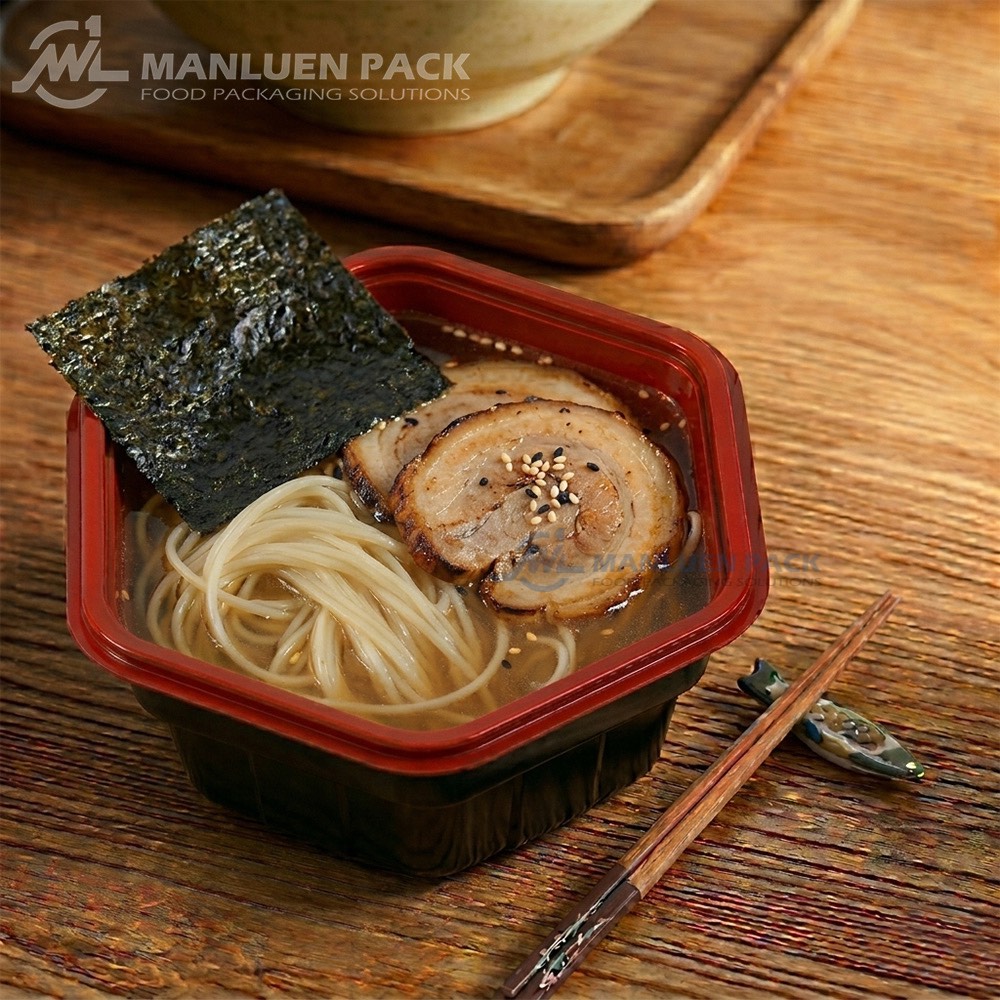
Leak-Proof Design
Multi-layer construction and secure rim designs prevent leakage during transport. This is particularly important for takeout and delivery services where bowls may be stacked or tilted. Look for bowls with:
- Reinforced rims
- Tight-fitting lids (if applicable)
- Double-wall construction for extra insulation
Stackability
Space-efficient stacking reduces storage requirements and makes inventory management easier. Look for bowls with consistent dimensions and nested stacking capability. This is crucial for restaurants with limited storage space.
Wholesale Procurement Strategies
Direct Factory Sourcing
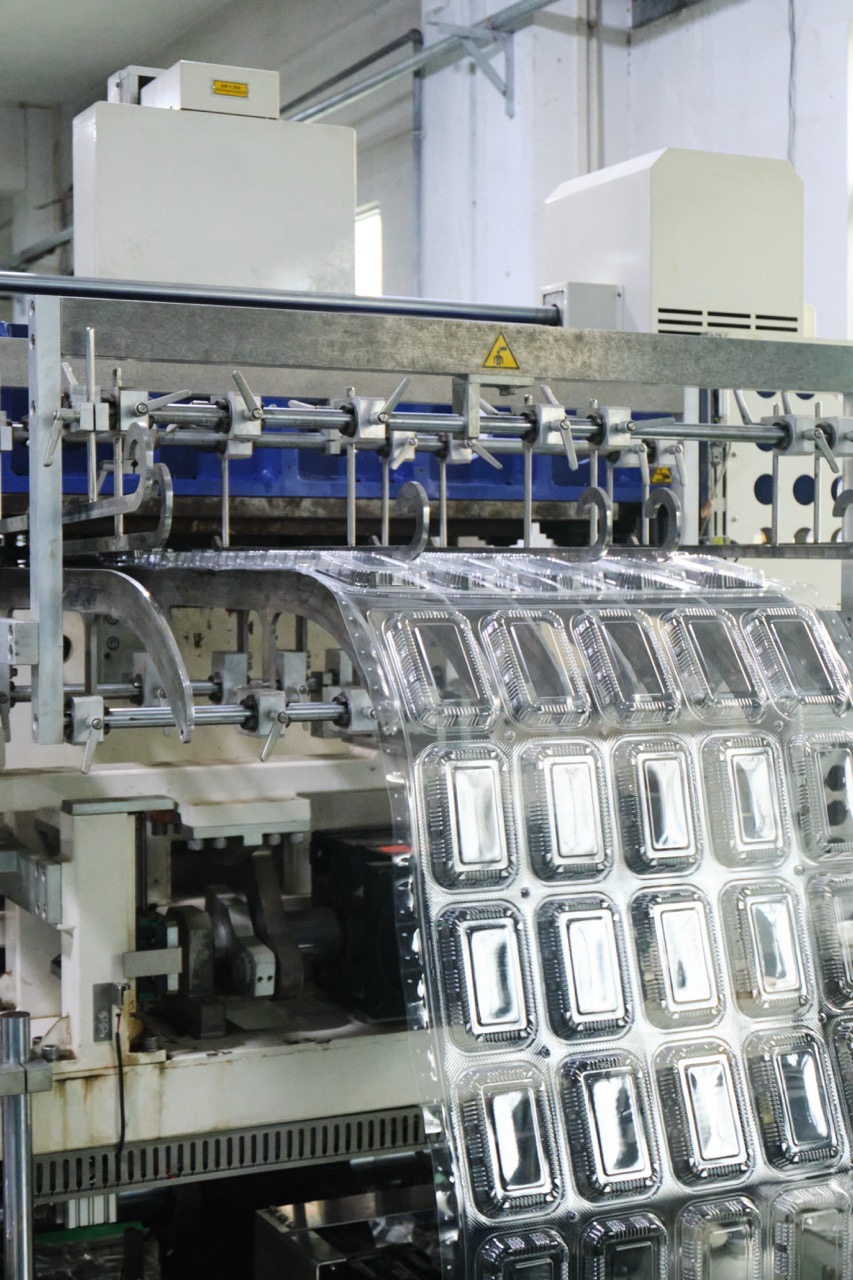
Purchasing directly from manufacturers typically offers the best unit economics. Factories in China and Southeast Asia provide competitive pricing for bulk orders, with many offering customization options for logo printing and custom colors. When sourcing paper soup bowls wholesale, consider:
- Factory certifications (ISO, FDA)
- Production capacity
- Sample quality
- Lead times and shipping options
Minimum Order Quantities
Most manufacturers require minimum order quantities (MOQs) ranging from 1,000 to 10,000 units per design. This makes direct factory sourcing most economical for established restaurants and distributors. Some suppliers offer lower MOQs for standard products.
Quality Verification
Before committing to large orders, request samples to verify:
- Heat resistance performance
- Leak-proof integrity
- Print quality for custom branding
- Packaging consistency
Cost-Benefit Analysis
When evaluating disposable bowls for hot soup, consider the total cost of ownership:
- Unit Price: Lower per-unit cost through bulk purchasing
- Storage Space: Nested bowls reduce warehouse requirements
- Operational Savings: Reduced labor for dishwashing
- Customer Satisfaction: Fewer complaints about leaks or quality
Many restaurants find that investing in higher-quality hot soup packaging reduces overall costs through fewer customer complaints and returns. For more insights on sustainable food packaging, check out our kraft paper boxes guide.
結論
Choosing the right disposable bowls for hot soup depends on more than capacity alone. Restaurants, caterers, takeaway businesses, and food manufacturers should consider material, heat resistance, lid fit, portion size, stackability, transport conditions, and purchasing volume together.
For hot soup and prepared meals, PP plastic soup bowls offer a practical combination of durability, heat resistance, and multiple capacity options. Manluen’s range from 16 oz to 50 oz gives buyers flexibility for everything from individual soup portions and noodles to larger takeaway meals, sharing portions, and catering applications.
Before placing a bulk order, it is best to match the bowl size and material to the actual food, serving temperature, transport time, and target market requirements. Requesting samples and confirming the specifications of the exact SKU can help ensure the selected packaging performs reliably in real food-service conditions.
For wholesale food packaging requirements, Manluen can provide multiple bowl sizes and related disposable food container options for restaurant, retail, delivery, and catering applications.
Sources and Further Reading
The material safety and food-contact claims cited in this article are drawn from the following primary regulatory and industry sources. Each entry links to the original document.
- FDA 21 CFR 177 — Food Contact Polymer Standards
- EU Regulation 10/2011 — Plastic Food Contact Materials
Selecting the right disposable bowls for hot soup service requires balancing multiple factors: material quality, size options, heat resistance, and cost efficiency. By understanding your specific operational needs and sourcing from reputable wholesale suppliers, you can find packaging solutions that enhance food quality, improve customer satisfaction, and support your business growth.
For restaurants looking to upgrade their restaurant food containers, exploring different material options and supplier relationships can yield significant improvements in both cost and customer experience. Start by requesting samples from multiple suppliers to find the perfect balance of quality and price for your specific needs.
Explore our sushi tray solutions for more food packaging inspiration.
This guide helps food service professionals make informed decisions about disposable soup packaging. For more information about sustainable packaging solutions, explore our related articles on food packaging trends.
Frequently Asked Questions
Is the this food container microwave-safe?
Yes. This product is made from food-grade PP (polypropylene), which is microwave-safe up to 120 °C under FDA 21 CFR 177 and EU Regulation 10/2011 food-contact standards.
What is the minimum order quantity for this wholesale?
Standard configurations start at 5,000–10,000 units MOQ. Custom-printed or custom-mould tooling may require higher minimums. To request a sample and a tailored quote, send your specifications (material, dimensions, quantity, target market) to the ManLuen team.
Does the this container meet FDA and EU food-contact regulations?
Yes. ManLuen publishes current FDA 21 CFR and EU 10/2011 migration test reports for its PP food-contact containers. See the certifications page for the full list, or request the test report for your specific SKU.

マンルエンプラスチック包装有限公司は、20年以上にわたりプラスチック食品包装の製造を専門としています。当社の製品は、100%のバージン素材とBPAフリーのPP、PS、OPSを使用し、FDAおよびヨーロッパ基準に準拠しています。
 JA
JA  EN
EN  ZH
ZH  FR
FR  PT
PT  ES
ES  KO
KO