
Introduction
Kraft paper boxes with lids give restaurants a practical way to pack takeaway meals while keeping the food visible, organized, and easy to carry. The paper base provides a natural presentation, while the lid protects the food during display, pickup, and short-distance delivery.
The word “kraft” does not tell you everything about a container. Buyers still need to check the board construction, food-contact coating, lid material, closure, size, and intended temperature range. A box that works for chilled sushi may not suit hot soup or reheating. This guide explains what to check before ordering kraft paper food boxes in bulk.
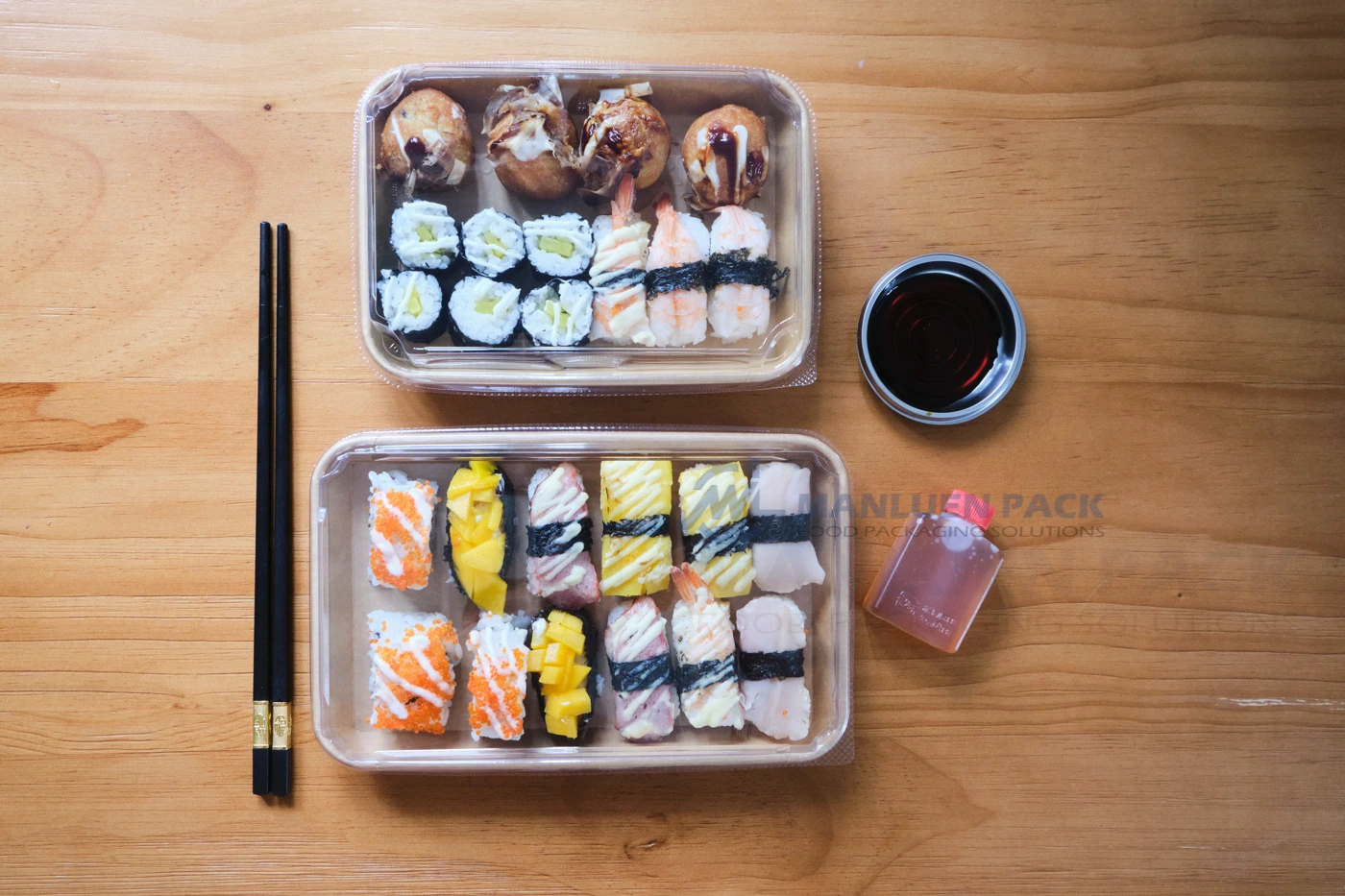
What Are Kraft Paper Boxes With Lids?
A kraft paper food box normally uses a paperboard base with a separate or attached lid. The lid may be paper, PET, PP, or another material, depending on the design and intended use. Some boxes also use an internal coating to resist grease or moisture.
This mixed construction gives buyers several options. A clear lid can show sushi, pastries, salads, or prepared meals. A paper lid can provide more printing space and a more uniform paper appearance. The correct choice depends on how the food is prepared, stored, displayed, and transported.
Manluen’s sushi tray range, for example, includes kraft paper bases with fitted clear lids in several sizes. Buyers can compare the full packaging system rather than judging the base alone.
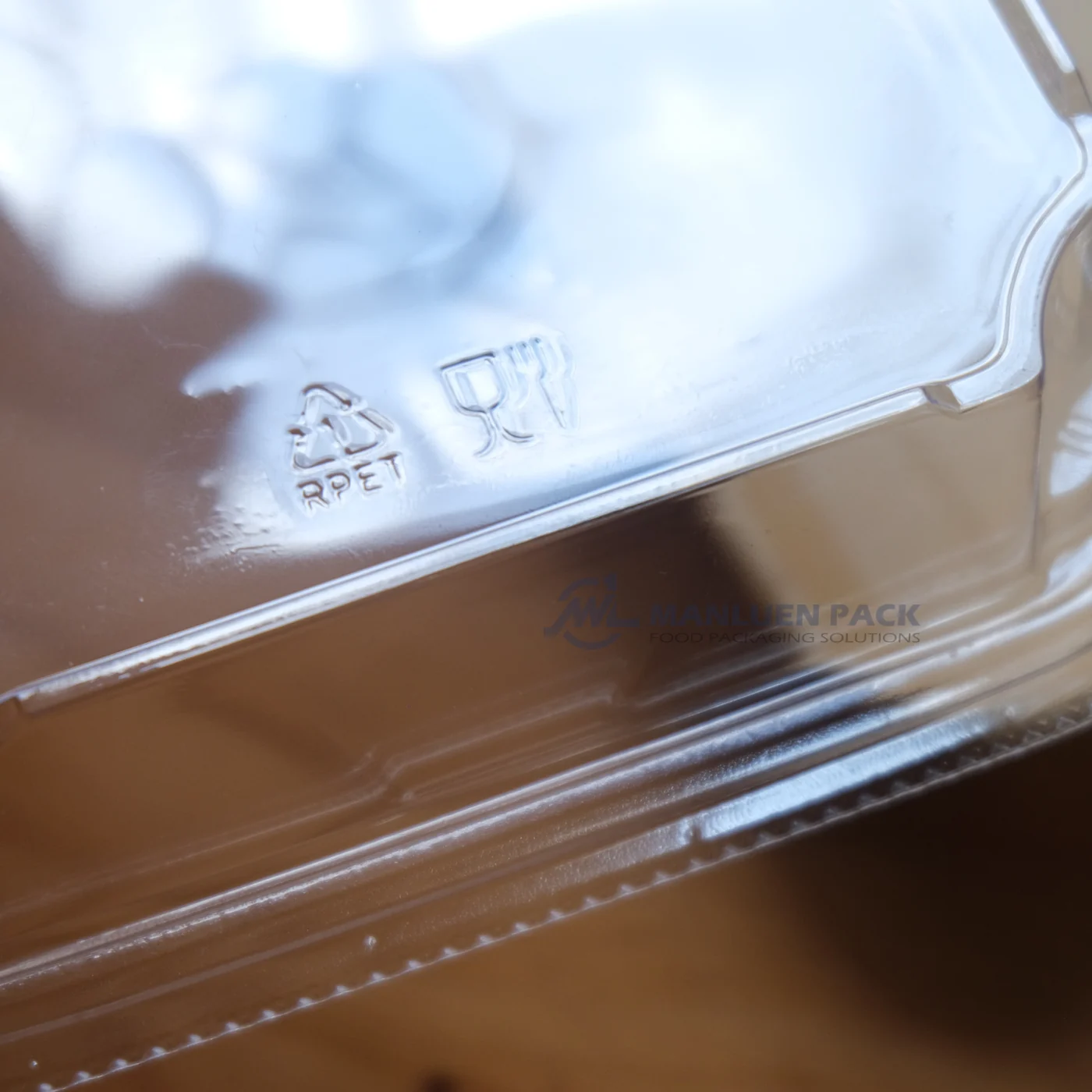
Why Foodservice Businesses Use Kraft Paper Boxes
A Clear, Natural Presentation
The brown paper surface creates a simple background for colorful food. When paired with a transparent lid, staff and customers can check the contents without opening the package. This works well for sushi counters, cafés, bakeries, catering displays, and grab-and-go refrigerators.
Better Menu Organization
Kraft paper boxes are available in shallow trays, deeper meal boxes, folding cartons, and divided formats. A correctly sized box helps prevent food from sliding around. It also reduces the need to fill empty space with extra liners or inserts.
Useful Branding Space
Paper surfaces can support printed logos, labels, sleeves, and handling instructions. Before approving artwork, buyers should confirm print coverage, ink system, color tolerance, and whether the printed area will contact food. A sample run is the safest way to check how the finished package looks under restaurant lighting.
Efficient Storage and Service
Many paper bases and plastic lids can be stacked separately before use. This can make counter setup faster and help staff monitor stock. Buyers should still compare nesting height, carton dimensions, and assembled-box storage because these factors affect warehouse space and freight cost.

The Box Must Match the Food
No single kraft box works for every menu item. Start with the food, then choose the structure.
| Food or service | Useful box features | Checks before buying |
|---|---|---|
| Sushi and chilled prepared food | Shallow paper base, clear fitted lid, good product visibility | Lid fit, cold-storage performance, condensation, food-contact documents |
| Salads and dry meals | Deeper base, secure lid, enough headroom for toppings | Oil resistance, closing force, stacking, transport movement |
| Pastries and desserts | Rigid walls, clear viewing area, clean internal surface | Crush resistance, frosting clearance, grease marks, display stability |
| Sauced or oily food | Appropriate barrier coating and a well-matched closure | Leak testing with the actual recipe, contact time, temperature limits |
| Hot food | Material system approved for the intended hot-fill or holding condition | Written temperature guidance for the base, coating, and lid |
Do not assume that a brown paper box is suitable for soup, a microwave, or prolonged hot holding. Those uses depend on the complete construction. The food packaging material, coating, adhesive, and lid may each have different limits.
Choose the Lid as Carefully as the Base
The lid affects visibility, ventilation, stacking, and transport performance. It can also determine whether the package is suitable for a specific temperature range.
- Clear PET lids: useful for chilled display and takeaway presentation. Do not heat them unless the exact product instructions allow it.
- PP lids: may suit some warmer applications, but suitability still depends on the grade and finished design.
- Paper lids: offer a consistent paper look and printing area, but they hide the food and may need a barrier layer.
- Windowed lids: balance branding space with product visibility. Buyers should ask what film is used in the window.
A lid should close without excessive force and remain secure after the filled boxes are stacked. Test it with the real food weight. An empty display sample cannot reproduce the pressure, grease, steam, or movement of a delivery order.
Coatings and Moisture Resistance
Untreated paper absorbs water and oil. Food boxes may therefore use a coating or laminated barrier. The barrier must match the food and intended conditions of use. Greasy food, acidic sauces, steam, refrigeration, and long contact times place different demands on the package.
Ask the supplier to identify the coating rather than using a vague term such as “food grade.” Request the material specification and the food-contact basis for the complete box. Manluen’s guide to what food-grade packaging means explains why a finished package cannot be evaluated from one material name alone.
The U.S. FDA treats coatings, adhesives, colorants, and other packaging components as food-contact substances when they are used in contact with food. The authorization must cover the intended use. This is why a supplier should state the food type, temperature, and contact time supported by its documents.
Do Not Treat “Paper” as an Automatic Environmental Claim
A paper base may contain renewable fiber, but the complete package can also include a coating, adhesive, ink, and plastic lid. These parts affect collection, sorting, and recycling. Food residue can create another problem.
For U.S. marketing, the Federal Trade Commission advises businesses not to make broad, unqualified claims such as “green” or “eco-friendly.” Recyclable, biodegradable, and compostable claims need evidence and may require clear qualifications. Local collection systems also matter.
Use precise language. State the actual material, recycled content if documented, applicable certification, and disposal route. If the paper base and plastic lid must be separated, put that instruction on the packaging. For a wider view of current materials and regulatory pressures, see Manluen’s sustainable food packaging guide.

Food-Contact Compliance for U.S. and EU Buyers
United States
In the United States, buyers should not rely on a general “FDA approved” statement. The FDA regulates food-contact substances according to their composition and intended use. Paper and paperboard components appear in 21 CFR Part 176, while coatings, polymers, adhesives, and other components may fall under other provisions or authorizations.
Ask the supplier for the regulatory basis for the paper base, barrier coating, adhesive, ink, and lid. The documents should match the exact construction being purchased. Manluen’s guide to food packaging authorization in the United States explains what buyers should request instead of accepting a generic approval claim.
European Union
Regulation (EC) No 1935/2004 provides the general EU framework for materials intended to contact food. Finished packaging must not transfer substances to food in amounts that endanger health, cause an unacceptable change in food composition, or affect taste and odor. Additional rules may apply to individual materials and national markets.
For imports, ask for a declaration or compliance statement appropriate to the construction, test reports for the intended use, and traceability information. Do not apply a plastic migration report to an unrelated paper box simply because both products use a clear lid.
A Practical Sample Test
Before placing a bulk order, test production samples with the actual menu. A simple trial can reveal more than a catalog photograph.
- Fill the box with the normal serving weight.
- Use the real food temperature and sauce or oil content.
- Close the lid using normal staff procedures.
- Stack the boxes at the height used during delivery.
- Hold them for the expected pickup or delivery time.
- Check the base for softening, staining, warping, and seam failure.
- Check the lid for lifting, cracking, fogging, and contact with the food.
- Repeat the test after refrigeration if the product will be sold chilled.
Record the result by food type and portion. A box may pass with dry pastries but fail with an oily meal. Approve each use case separately.
Manluen Kraft Paper Sushi Box Examples
For compact chilled portions, the 0# kraft paper sushi tray combines a 138 × 78 × 24 mm natural kraft base with a fitted clear PET lid. It is packed at 600 sets per carton and suits small sushi portions or prepared-food assortments.
The larger 3# kraft paper sushi box uses a 165 × 113 × 24 mm base with a clear PET lid. It is packed at 300 sets per carton and provides more room for rolls, nigiri combinations, and takeaway portions.
These examples show why buyers should compare dimensions and carton packing instead of ordering from a general description. Manluen also offers other sizes in the same kraft paper sushi tray range. Request the specification for the exact model and confirm that the selected packaging suits the intended food and handling conditions.
Wholesale Buying Checklist
Use this checklist when comparing kraft paper boxes with lids:
- Exact base and lid dimensions
- Usable internal space and lid headroom
- Paperboard type, thickness, and source
- Barrier coating and lid material
- Intended food types and temperature conditions
- Food-contact compliance documents for the target market
- Migration or performance tests that match the finished construction
- Closure, stacking, refrigeration, and delivery sample results
- Carton quantity, carton dimensions, and freight volume
- Printing method, artwork requirements, and color tolerance
- Production lead time and written quality terms
For more sourcing detail, review the guide to safe materials for wholesale kraft paper boxes. You can also check Manluen’s certifications and test documents, then request a quote for the required size, quantity, printing, and destination market.
Questions fréquemment posées
Are kraft paper boxes with lids leakproof?
Not automatically. Resistance to oil and moisture depends on the paperboard, coating, seams, lid fit, food temperature, and contact time. Test the package with the actual recipe before use.
Can kraft paper food boxes go in a microwave?
Only when the supplier states that the complete box is suitable for microwave use under specific conditions. A paper base may include coatings, adhesives, inks, or a plastic lid that should not be heated. Never place a clear lid in a microwave unless the instructions for that exact product permit it.
Are kraft paper boxes recyclable?
It depends on the coating, food residue, lid material, and local recycling system. The base and lid may need to be separated. Buyers should use qualified disposal claims and provide accurate local instructions.
What documents should a buyer request?
Request the product specification, material breakdown, food-contact compliance basis, relevant test reports, traceability information, and written conditions of use. For printed or customized packaging, also confirm the ink and adhesive systems.
What is the minimum order quantity?
The minimum order quantity depends on the model, stock status, printing, and tooling. Ask for a written quotation for the exact size and configuration rather than relying on a general MOQ.
Conclusion
Kraft paper boxes with lids can work well for takeaway, retail display, and catering when the construction matches the food. Focus on the complete package: paper base, coating, lid, closure, and intended conditions of use. Test samples with the real menu and verify the supporting documents before ordering in volume.
Sources et lectures complémentaires
U.S. Food and Drug Administration. Food Packaging & Other Substances that Come in Contact with Food. Used for the definition and authorization of food-contact substances, including coatings and other packaging components. U.S. Food and Drug Administration
U.S. Food and Drug Administration. Food Ingredient & Packaging Terms. Used for the regulatory distinction among food-contact substances, materials, and finished articles and the relevant CFR parts. U.S. Food and Drug Administration
Electronic Code of Federal Regulations. 21 CFR Part 176—Indirect Food Additives: Paper and Paperboard Components. Used for the U.S. regulatory context for paper and paperboard food-contact components. eCFR
Federal Trade Commission. Environmental Claims: Summary of the Green Guides. Used for recyclable, compostable, degradable, renewable-material, and general environmental marketing claims. Federal Trade Commission
European Commission. Food Contact Materials Legislation. Used for the EU framework under Regulation (EC) No 1935/2004. European Commission

ManLuen Plastic Packaging Company, spécialisée dans la production d'emballages alimentaires en plastique depuis plus de 20 ans. Nos produits sont fabriqués à partir de PP, PS et OPS vierges et sans BPA, conformes aux normes de la FDA et aux normes européennes.
 FR
 EN
 ZH
 PT
 ES
 KO
 JA