
Introduction
Bagasse packaging has moved from a niche sustainability product to a practical option for restaurants, catering companies, supermarkets, foodservice distributors, and private-label brands. It is commonly used for clamshells, trays, bowls, plates, and compartmented takeaway containers—especially where businesses want an alternative to expanded-polystyrene foam or conventional plastic.
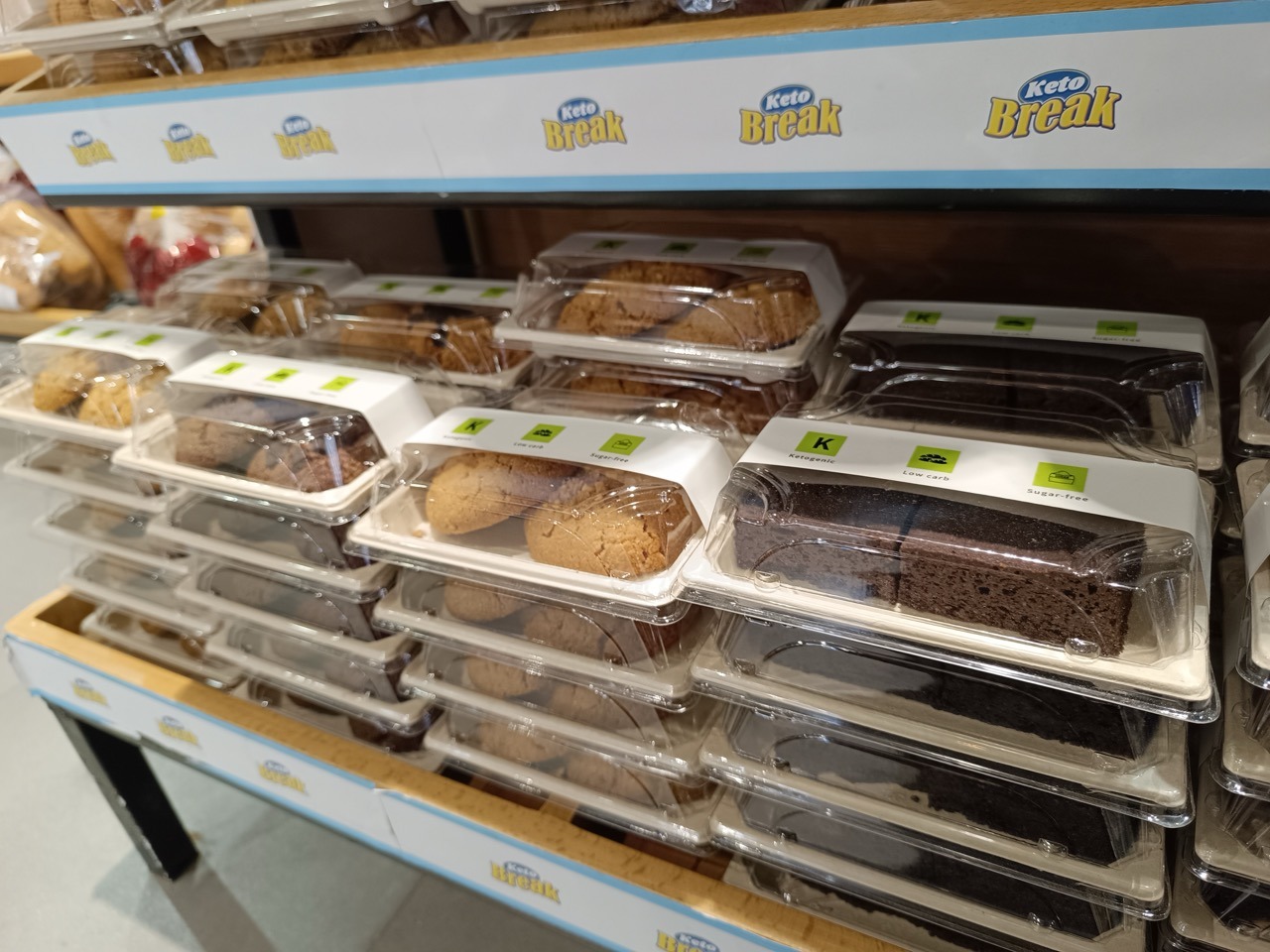
But “made from sugarcane” does not answer the questions a professional buyer must ask. Is the finished container safe for direct food contact? Can it hold oily or liquid-heavy food? Is it microwaveable? Does “compostable” mean industrial or home composting? Are the coating, binder, ink, and grease-resistant treatment included in the compliance documents?
The wider market for bio-based packaging is also expanding. An Arizton report estimated the global bioplastic packaging market at approximately USD 9.9 billion in 2024, with a CAGR of about 4% over its 2019–2024 forecast period. Bagasse itself is molded fiber rather than a bioplastic, but its growth is part of the same commercial shift toward plant-derived and lower-waste packaging options.
This guide answers both sides of the sourcing decision: what bagasse packaging is and whether it is right for a specific food business. It explains how bagasse products are made, where they perform well, where they do not, how they compare with PLA and conventional plastic, and what U.S. and international buyers should verify before placing an order.
What Is Bagasse Packaging? The Quick Answer
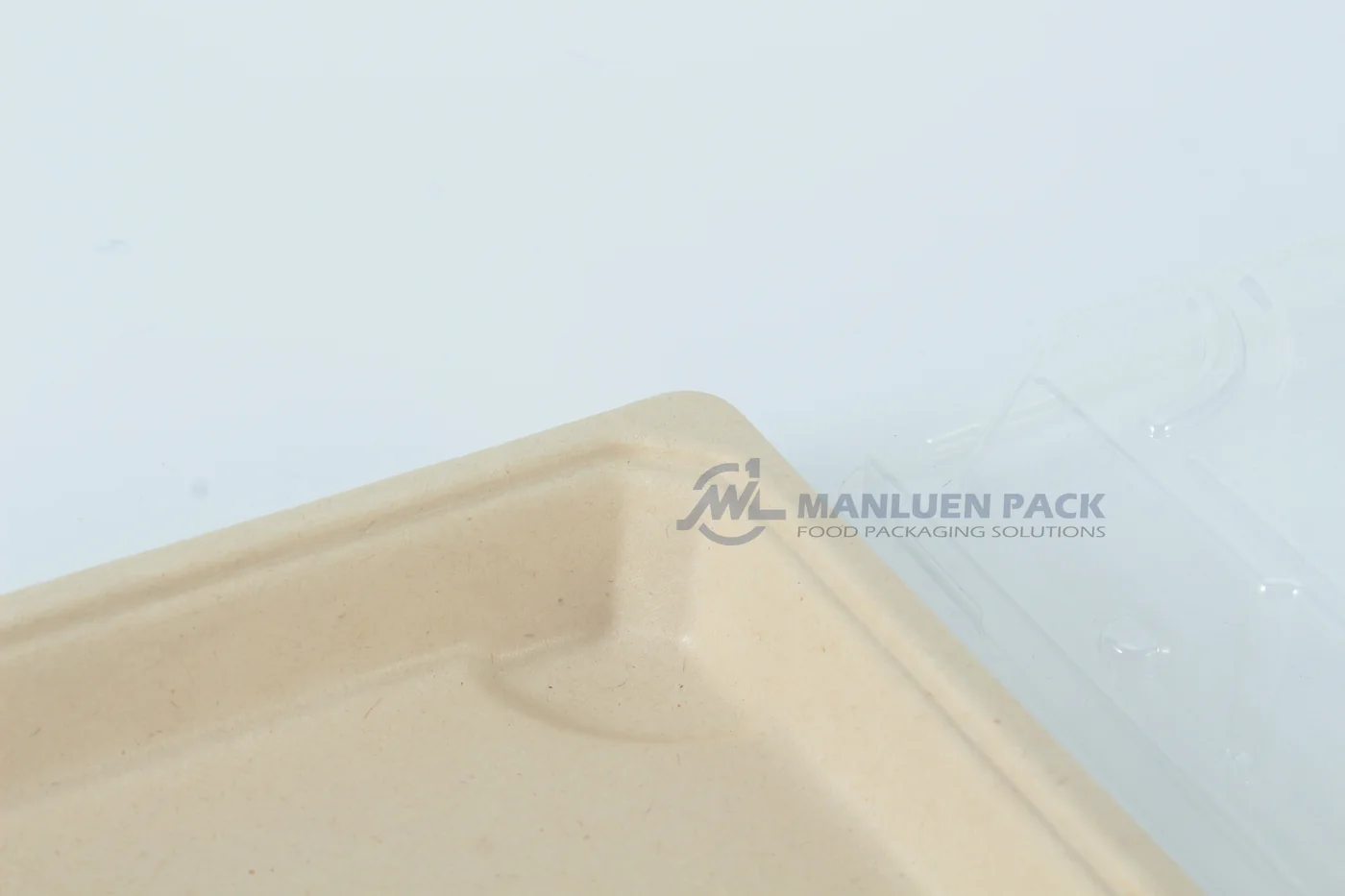
Bagasse packaging is molded-fiber packaging made primarily from the fibrous residue left after sugarcane stalks are crushed to extract juice. The recovered fibers are cleaned, converted into pulp, formed in molds, pressed, dried, trimmed, and finished as food containers, trays, bowls, plates, cups, and lids.
Bagasse packaging is:
- A plant-fiber product made from an agricultural by-product
- Structurally closer to molded paper pulp than to plastic
- Usually opaque, rigid, lightweight, and suitable for short-term foodservice use
- Available in products designed for hot, cold, oily, and microwave-reheated foods
- Potentially commercially or home compostable when the complete finished item has the relevant certification
Bagasse is not automatically food safe, PFAS-free, home compostable, or suitable for every microwave and freezer condition. Those claims depend on the complete formulation, product design, testing, certification, and intended conditions of use.
What Is Bagasse Made From?
Sugarcane stalks contain juice surrounded by a fibrous plant structure. After sugar producers crush the stalks and remove the juice, the remaining material is called bagasse. It contains cellulose, hemicellulose, lignin, and other natural plant components that can be processed into pulp.
Historically, sugar mills used much of this residue as boiler fuel or treated it as a relatively low-value by-product. Molded-fiber production creates another use for the material by converting it into rigid packaging.
Bagasse Is Not the Same as PLA
Bagasse and PLA are often displayed together as compostable foodservice products, but they are different material families.
Bagasse is a network of processed plant fibers. PLA, or polylactic acid, is a thermoplastic polymer made from fermented plant-derived feedstocks such as corn or sugar. Bagasse behaves more like molded paper, while PLA behaves more like plastic and can be made into clear cups, lids, films, and clamshells.
Bagasse Is Not Always a Single-Material Product
A package advertised as “sugarcane” may contain more than bagasse fiber. Manufacturers may blend bagasse with bamboo or wood fiber and may add wet-strength agents, binders, colorants, surface treatments, bio-wax, or a polymer coating to improve water and grease resistance.
These components can change food-contact status, heat performance, compostability, recyclability, and PFAS claims. Buyers should therefore request a complete material-composition statement rather than assuming that a natural-looking container is made from untreated fiber alone.
How Is Bagasse Packaging Made?
Bagasse packaging is made through a molded-pulp process. Exact equipment and formulations vary, but commercial production generally follows these stages.
1. Fiber Collection and Preparation
Bagasse is collected after extracting sugarcane juice. The fibers are screened and cleaned to remove soil, residual sugar, pith, and other impurities. The raw material may be dried or baled for transport and storage before pulping.
2. Pulping and Formulation
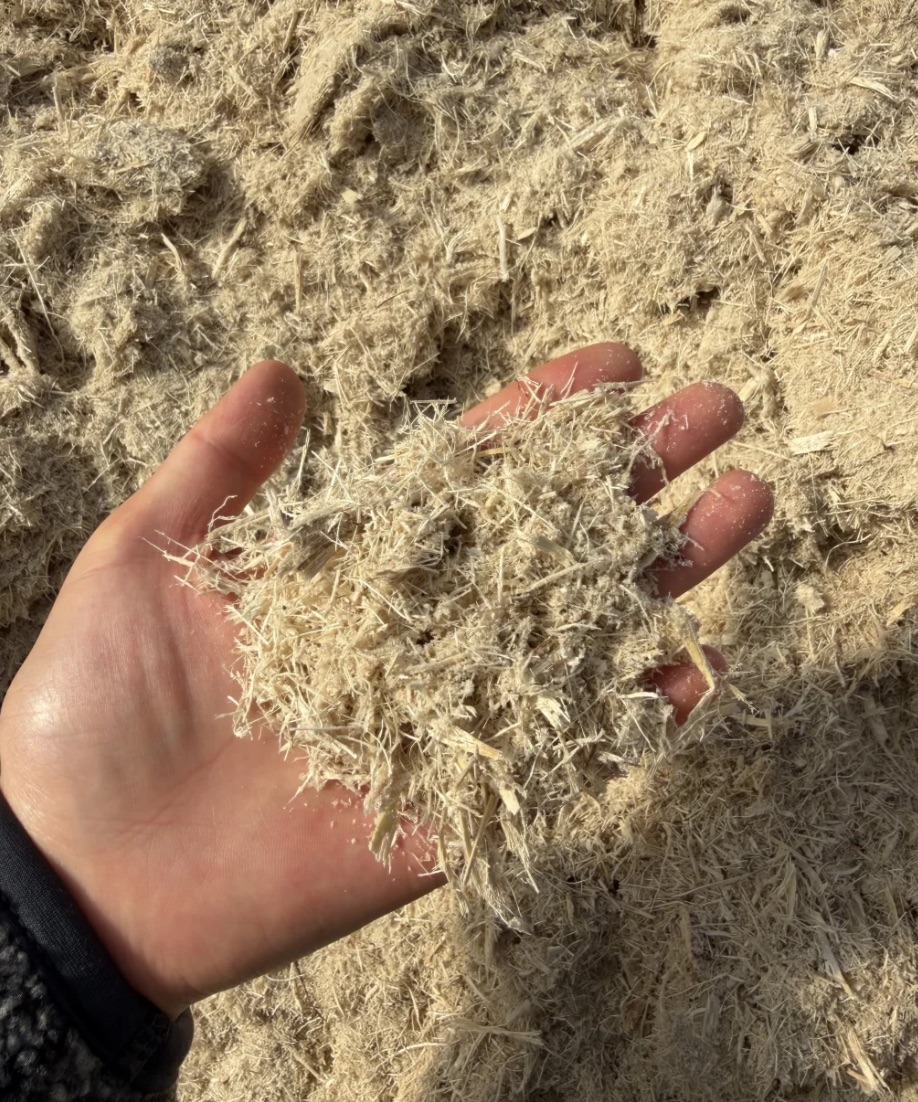
The prepared fiber is dispersed in water and mechanically processed into pulp. The manufacturer controls fiber length, consistency, moisture, and any permitted functional additives. If water- or grease-resistance chemistry is used, it becomes part of the finished food-contact formulation and must be included in the compliance review.
3. Forming
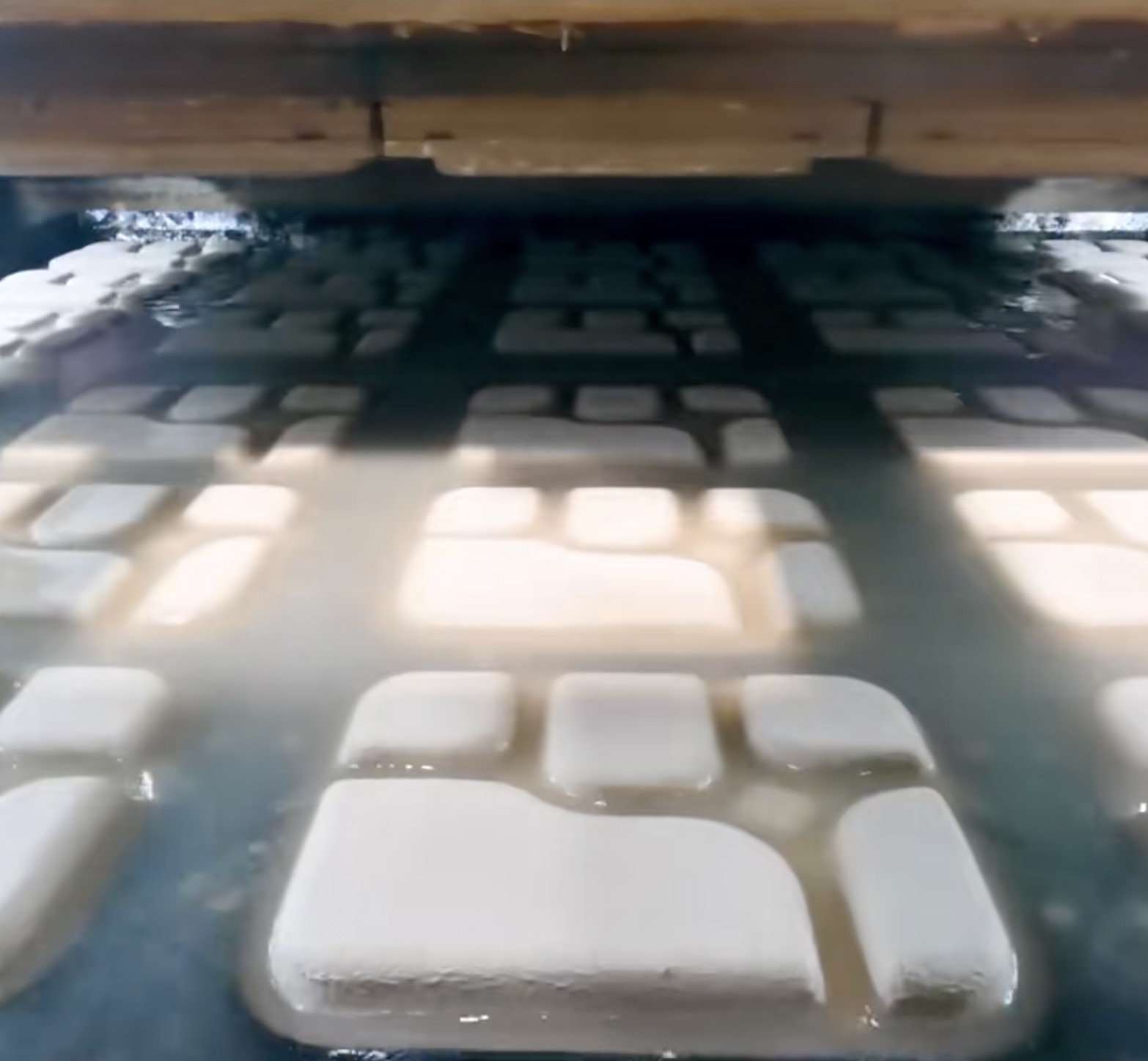
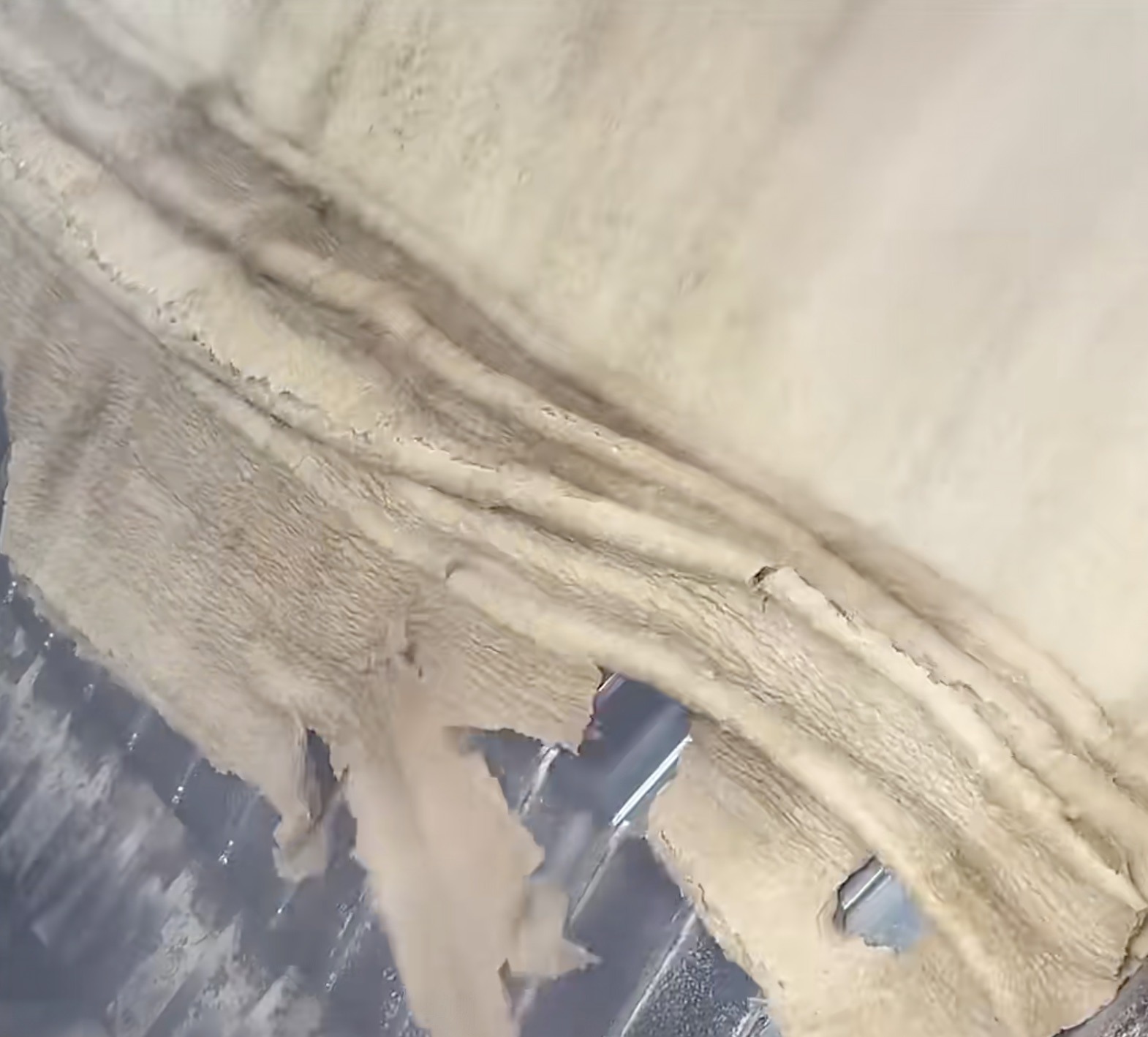
Vacuum draws the pulp slurry onto a screened mold, forming the basic geometry of a tray, bowl, plate, or clamshell. Fiber distribution, drainage, mold design, and wall thickness influence stiffness, weight, surface consistency, and weak points around corners or hinges.
4. Hot Pressing and Drying
Heat and pressure remove moisture, densify the fiber structure, and improve the surface finish. Wet-pressed products are typically smoother and more compact than rougher conventional molded-pulp products. The process settings must be controlled because residual moisture and uneven density can affect stacking, dimensional stability, and leak resistance.
5. Trimming and Finishing
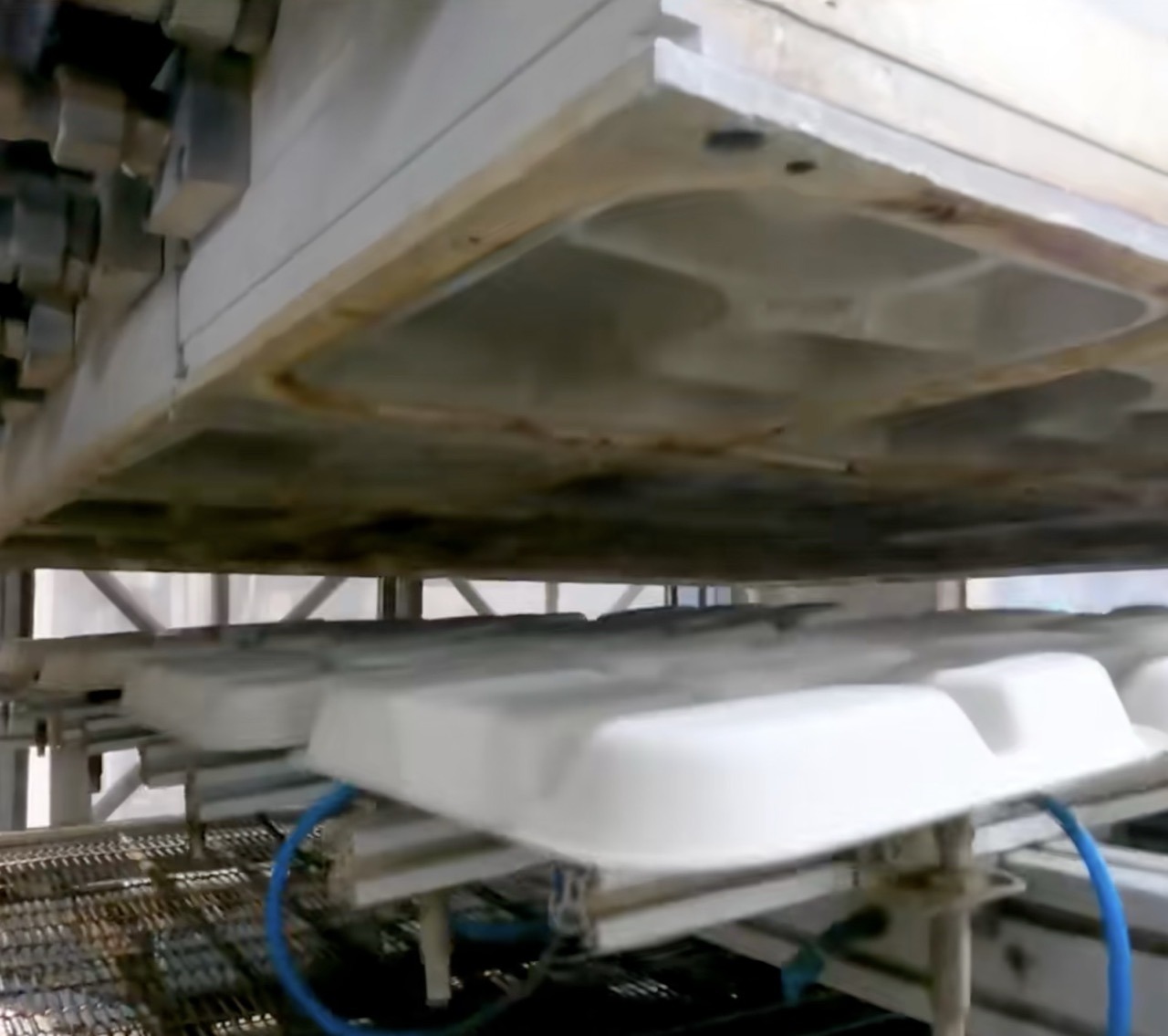
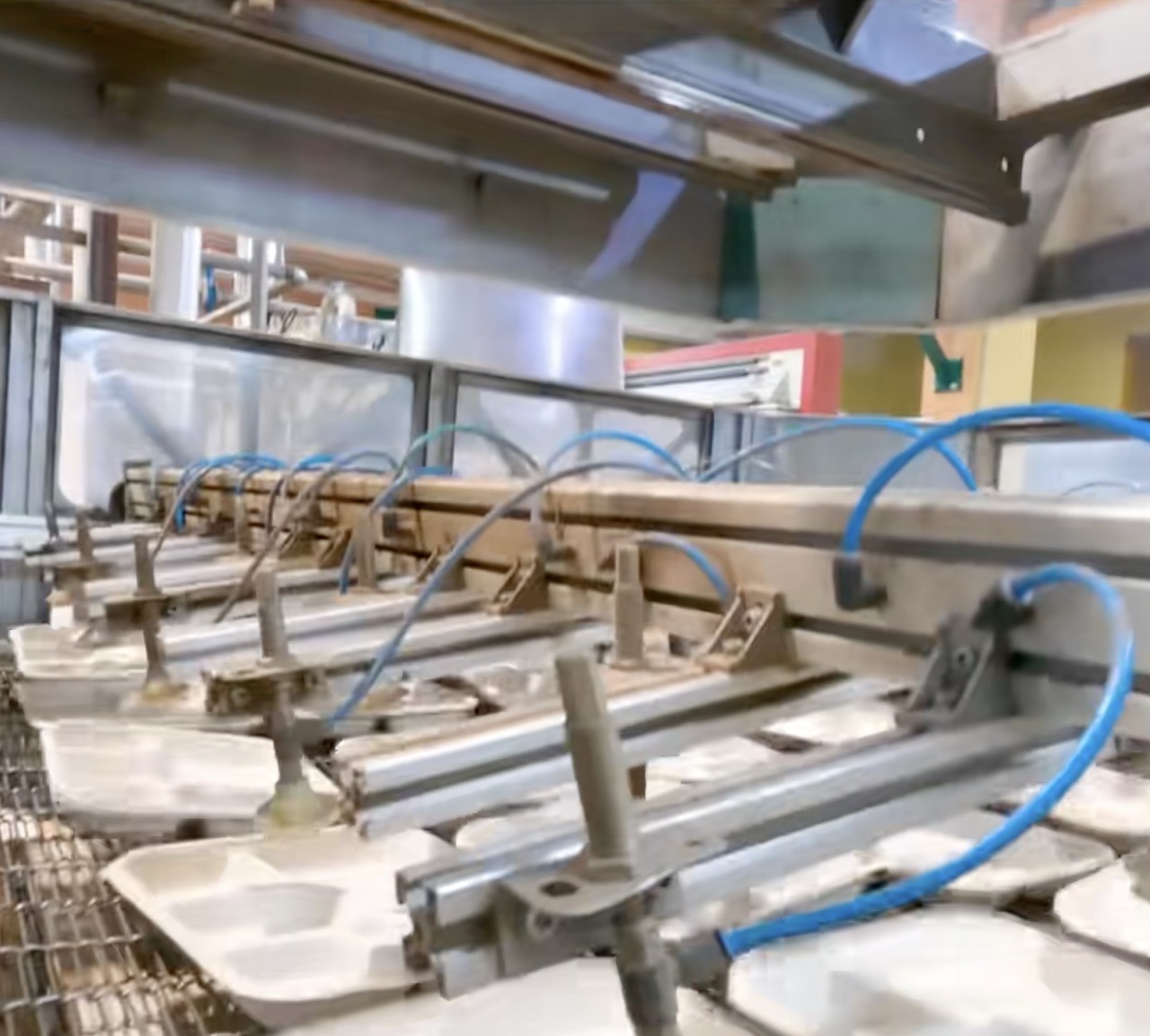
The formed items are trimmed to create clean edges and reliable lid fit. Embossing, printing, lamination, coatings, or separate lids may be added depending on the design. Every added component must remain compatible with the intended food, temperature, and end-of-life claim.
6. Quality Control and Packing
Typical finished-product checks include:
- Dimensions, weight, capacity, and nesting consistency
- Surface appearance, odor, contamination, and edge quality
- Hinge strength, lid fit, compression, and stacking
- Water, oil, and leak resistance under defined test conditions
- Microwave, freezer, and hot-food performance for relevant SKUs
- Moisture content, migration, and other food-contact requirements
An audit should examine incoming-fiber controls, formulation records, change control, finished-product inspection, and traceability—not only a final visual inspection report.
Main Properties of Bagasse Food Packaging
Heat and Cold Performance
Many commercial bagasse products are marketed for freezer storage and short microwave reheating. Supplier technical data sheets commonly state working ranges around -20°C to 100–120°C and microwave cycles of approximately three minutes.
These figures are typical supplier specifications, not a universal material guarantee. Performance varies with wall thickness, fiber blend, moisture, coating, food composition, container geometry, appliance power, and test method. Buyers should obtain the technical data sheet and test report for the exact SKU and should validate it with the actual food.
Bagasse should not automatically be used in a conventional oven, under a grill, or for prolonged high-temperature cooking. Microwave suitability also does not mean unlimited repeat use.
Grease and Moisture Resistance
Dense molded fiber can resist grease and short-term moisture, which makes bagasse useful for burgers, rice, noodles, fried foods, curries, and prepared meals. Performance improves with good fiber distribution, controlled pressing, adequate wall thickness, and a well-designed closure.
Very oily foods, soups, sauces, and long holding times create greater demands. Some products use additional barrier chemistry or a polymer lining. Buyers should identify the barrier system, confirm that it is food-contact compliant, and determine whether it affects compostability or recyclability.
Rigidity and Stackability
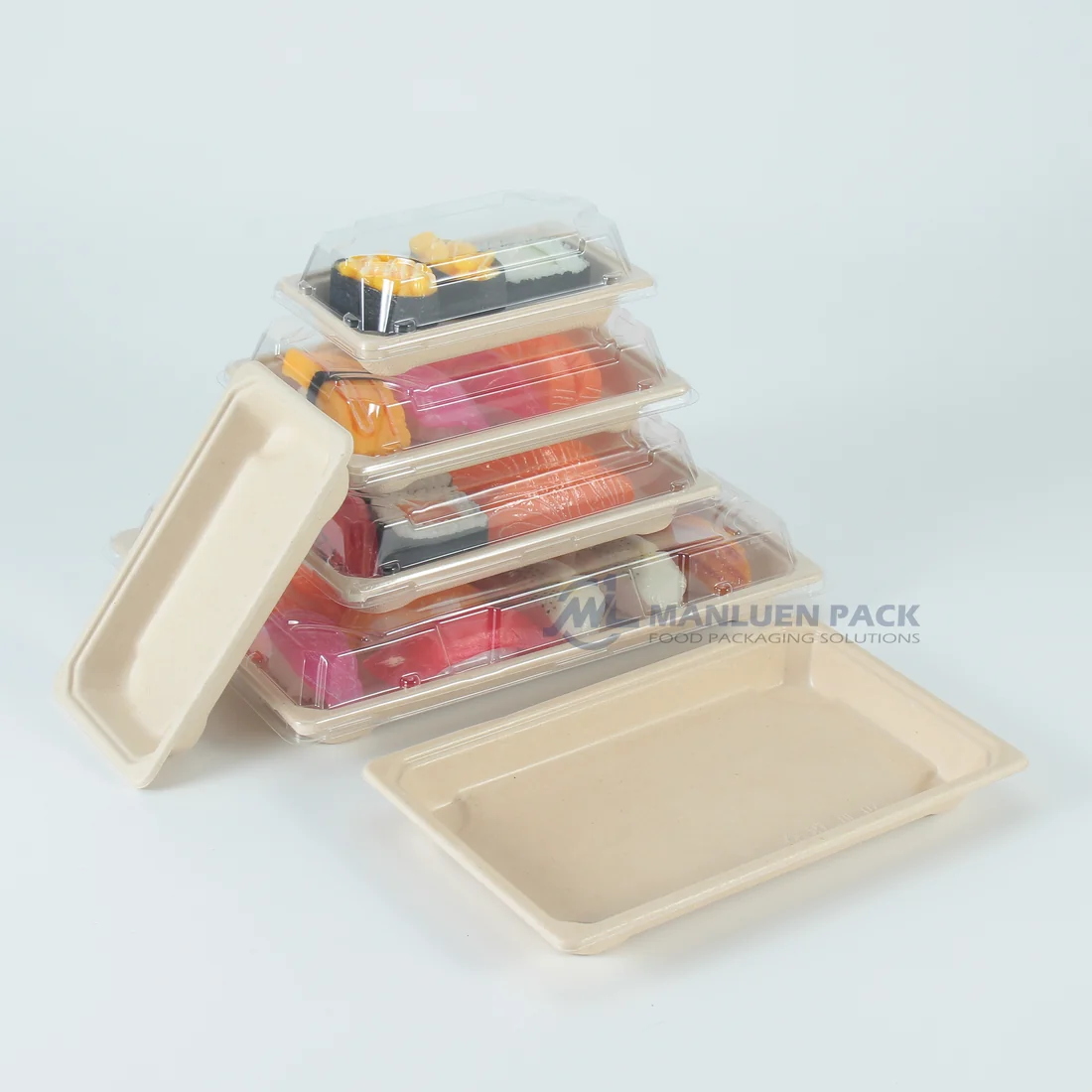
Molded bagasse can provide sufficient stiffness for takeaway and delivery while remaining relatively lightweight. Reinforcement ribs, corner geometry, wall thickness, hinge design, and nesting clearances determine how well a product survives case packing, stacking, transport, and customer handling.
Opaque Natural Appearance
Bagasse normally has a white, beige, or natural-fiber appearance. This can support a plant-based brand presentation, but it does not provide the clear product visibility available from PET, OPS, or some PLA packaging. Food businesses selling premium sushi, fruit, salads, cakes, or bakery items may need a clear lid or a different material system.
Common Applications of Bagasse Packaging
Bagasse is most useful for short-term foodservice applications where rigidity, hot-food performance, and an opaque fiber appearance are acceptable.
| Application | Common Bagasse Format | Why It Can Work | What to Verify |
|---|---|---|---|
| Burgers and sandwiches | Hinged clamshell | Rigid structure, heat tolerance, and short-term grease resistance | Hinge strength, ventilation, oil holdout, and closure |
| Rice, noodles, and hot entrées | Single- or multi-compartment box | Portion separation and compatibility with many hot takeaway meals | Fill temperature, sauce exposure, microwave instructions, and lid fit |
| Fried foods | Clamshell, tray, or plate | Grease resistance and an appearance suited to takeaway service | Holding time, ventilation, barrier treatment, and PFAS statement |
| Salads and cold meals | Bowl or tray with fiber or clear lid | Rigid presentation and suitability for short chilled service | Condensation, refrigeration duration, lid material, and leak resistance |
| Soups and saucy food | Deep bowl with matching lid | Possible for products designed and tested for liquid-heavy foods | Long-duration leakage, softening, seal security, and coating composition |
| Serviço de Catering | Plates, bowls, trays, and compartmented plates | Broad format range and convenient single-service use | Load strength, heat holding, cut resistance, and collection route |
Bagasse is generally less suitable for airtight long-shelf-life products, high-barrier retail packaging, products that must remain transparent, and applications requiring repeated washing or reheating.
Is Bagasse Packaging Food Safe?
Bagasse packaging can be safe for food contact when the complete product has an appropriate regulatory basis and is manufactured and used within defined conditions.
The fiber’s agricultural origin does not exempt the package from food-contact requirements. The FDA explains that a food contact substance that is also a food additive must be authorized for its intended use before marketing in the United States.
For paper and paperboard systems, manufacturers commonly evaluate components under the applicable provisions of 21 CFR Parts 174–179, including Part 176. A component may instead be supported by an effective Food Contact Notification, a Threshold of Regulation exemption, prior sanction, GRAS status for the intended use, or another valid basis.
An FCN is specific to the identified manufacturer or supplier, substance, and conditions of use. A factory cannot automatically rely on another company’s FCN for a similar chemical.
Why the Finished Formulation Matters
The compliance review should cover:
- The bagasse and any other plant fibers
- Wet-strength agents, binders, processing aids, and colorants
- Oil- and water-resistant treatments
- PLA, bio-wax, or other liners and coatings
- Printing inks, adhesives, labels, and lid materials
- Expected migration under the intended food types, temperatures, and contact times
A generic website statement saying “FDA approved” is not enough. Buyers should request the specific regulatory basis and conditions of use for the finished SKU.
Is Bagasse Packaging Compostable and Biodegradable?
Bagasse fiber is biologically derived, but a finished container should not be marketed as universally biodegradable or compostable without considering every coating, additive, label, and lid.
Biodegradable vs Compostable
“Biodegradable” means microorganisms can break a material down under suitable environmental conditions. It does not specify how long the process takes or whether it occurs in soil, seawater, a landfill, a backyard pile, or a managed facility.
“Compostable” is a more controlled claim. It means the finished product meets defined requirements for biodegradation, disintegration, regulated substances, and compost quality under specified composting conditions.
Commercial Composting vs Home Composting
ASTM D6400 covers plastics and products made from plastics that are intended to compost in municipal or industrial aerobic facilities where thermophilic conditions are achieved. ASTM D6868 applies to items that incorporate plastics or polymers as coatings or additives with paper and other substrates.
Neither standard should be described as a general home-composting guarantee. BPI now offers two distinct certifications:
- Commercial Only Certification: disintegration testing at 58 ±2°C for up to 84 days and biodegradation testing at the same temperature for six months.
- Commercial & Home Certification: additional home-compost testing at 25 ±2°C, with disintegration testing up to 180 days and biodegradation testing up to 12 months.
Therefore, a “roughly 90 days” statement refers only to controlled commercial-compost disintegration conditions. It does not mean the product disappears within 90 days in a backyard pile, landfill, roadside environment, or ocean.
How Buyers Should Verify a Compostability Claim
Ask for:
- The certification body and certificate number
- The exact certification scheme: commercial only or commercial and home
- The applicable standard, such as ASTM D6400, ASTM D6868, or EN 13432
- The exact certified SKU, dimensions, color, coating, ink, lid, and permitted variants
- A match between the certificate and the product listed in the certifier’s public database
A raw-material certificate does not automatically cover a finished printed clamshell. Changing the coating, pigment, thickness, or other formulation component may require a certification review.
Benefits of Bagasse Packaging
Uses an Agricultural By-Product
Bagasse production can give sugarcane residue an additional material use instead of relying only on virgin petroleum polymer or wood pulp. This can support resource-efficiency goals when the fiber source and production system are responsibly managed.
Works for Many Hot and Oily Foods
Compared with some cold-use bioplastics, molded bagasse can be a practical starting point for hot meals, fried foods, rice, noodles, and short microwave reheating. The result remains product-specific, so real-food validation is still required.
Can Support Certified Composting Programs
Certified bagasse products can help foodservice programs collect food scraps and packaging together when the receiving composter accepts the item. This benefit depends on local collection, sorting, and processing infrastructure; certification alone does not guarantee local acceptance.
Offers an Alternative to Foam Foodservice Packaging
Bagasse clamshells and plates can replace some expanded-polystyrene formats where foam restrictions, customer specifications, or corporate packaging goals apply.
Environmental Performance Can Be Favorable—but Is Not Automatic
Life-cycle performance depends on fiber sourcing, mill energy, pulping, water use, additives, coating, product weight, transport distance, food waste, and end-of-life treatment. Bagasse should not be labeled universally “lowest carbon” without a product-specific life-cycle assessment. UNEP’s reviews of single-use food packaging alternatives emphasize that material comparisons change with the system boundaries and local waste-management scenario.
Limitations of Bagasse Packaging
It Is Not a High-Barrier, Long-Shelf-Life Package
Bagasse is generally intended for short foodservice contact. It normally cannot match the oxygen, aroma, and moisture barriers of a purpose-designed plastic or multilayer package. Long refrigerated storage can also expose the fiber to condensation and softening.
Liquid Resistance Is Product-Specific
A tray that performs well with fried food may fail with hot soup. Wall thickness, seam geometry, fiber density, coating, contact time, and temperature all affect leakage. Test the actual food for the maximum expected holding and delivery time.
It Does Not Provide Clear Display
Bagasse is opaque. Retail programs that depend on seeing sushi, fruit, salads, pastries, or decorated cakes may prefer PET, OPS, or a combined bagasse-base and clear-lid system.
Composting Infrastructure Is Limited
Commercially compostable does not mean curbside-compostable everywhere. Some composters reject packaging because of contamination, certification limits, processing time, or difficulty distinguishing certified items from conventional plastic. Check acceptance before making consumer disposal claims.
Humidity and Storage Require Control
Molded fiber can absorb moisture during long storage. Cases should be protected from high humidity, water, odor, pests, and crushing. Buyers should confirm recommended warehouse conditions and shelf life. We would recommend the Deli Container for long-term storage
Cost and Supply Terms Vary
Bagasse may cost more per unit than conventional PP or PS packaging. Price depends on size, weight, compartments, finish, certification, lining, artwork, order volume, tooling, shipping method, and destination. Published online price ranges and MOQs should not be treated as market-wide facts; obtain comparable landed quotations for the same specification.
Bagasse vs PLA vs Plastic Packaging
| Decision Factor | Bagaço | PLA | PP | PET or OPS |
|---|---|---|---|---|
| Material family | Molded plant fiber | Bio-based thermoplastic | Conventional thermoplastic | Conventional thermoplastics |
| Appearance | Opaque, natural-fiber look | Can be clear | Translucent or opaque | High clarity |
| Typical application | Hot meals, clamshells, plates, and bowls | Cold cups, lids, films, and clear foodservice items | Hot meals, soup tubs, bento boxes, and rated reheating | Cold sushi, salad, fruit, bakery, and display packaging |
| Microwave suitability | Available for short reheating when SKU-tested | Often limited for standard grades | Commonly available when the finished container is rated | Standard foodservice grades are generally not for microwave use |
| Barrier and shelf life | Best for short-term service | Varies by grade and structure | Good moisture resistance | Good moisture resistance and display performance |
| End-of-life route | Commercial or home composting only when appropriately certified and accepted | Usually commercial composting when certified | Recycling availability varies by package and locality | Recycling availability varies; PET often has broader collection than OPS |
| Main limitation | Opacity, moisture sensitivity, and infrastructure dependence | Heat limitations and composting infrastructure | Fossil feedstock and variable recycling access | Limited hot-food performance for standard grades |
Choose bagasse when hot-food service, an opaque fiber presentation, and a verified composting program align. Choose PLA when transparency and certified commercial compostability are central but high heat is not. Choose PP when heat performance, leak resistance, unit economics, or longer holding is more important. Choose PET or OPS when clear cold-food display is essential.
Many businesses need more than one material family. A restaurant may use bagasse for hot entrées, PP for liquid-heavy soup, and PET for chilled desserts or salads.
U.S. Compliance: FDA, ASTM, BPI, and PFAS
FDA Food-Contact Compliance
The buyer should request a product-specific compliance statement identifying the finished SKU, material composition, applicable regulatory basis, food types, temperature, and contact time. Do not accept an unlabeled laboratory report or generic “FDA certificate” as proof for every item in a catalog.
ASTM Standards
ASTM D6400 and D6868 are industrial-compostability specifications used for different product constructions. They address compostability claims; they do not replace FDA food-contact compliance, migration evaluation, or real-use performance testing.
BPI Certification
BPI provides third-party commercial and home compostability certifications based on separate schemes. Verify the finished product in BPI’s searchable database and confirm that the certificate covers the supplied SKU and all relevant variations.
PFAS Verification
PFAS have historically been used to provide oil and water resistance in paper and paperboard food packaging. The FDA announced in 2024 that PFAS-containing grease-proofing substances were no longer being sold for U.S. food-packaging uses, and in January 2025 determined that 35 related FCNs were no longer effective after those uses were abandoned.
Bagasse buyers should request a current statement confirming whether PFAS are intentionally added and should obtain appropriate analytical evidence when required by a customer, certification program, or destination jurisdiction. “Natural fiber” does not prove PFAS absence.
Multi-Market Compliance: EU, Japan, and GCC Sales
A global supplier can reduce duplicated testing and documentation work, but no single “international certificate” proves compliance everywhere. Each market should be evaluated separately.
European Union
Regulation (EU) 2025/40 on Packaging and Packaging Waste entered into force on February 11, 2025 and applies generally from August 12, 2026. It introduces requirements covering packaging minimization, recyclability, labeling, substances, and other circularity measures.
Bagasse does not receive an automatic exemption simply because it is bio-based or compostable. Article 9 identifies particular packaging categories that must be compostable, while other biodegradable packaging generally must be designed for material recycling without harming other waste streams by February 12, 2028. Exporters must also address applicable EU food-contact requirements and provide
technical documentation for the finished construction.
Japan and GCC Markets
For Japan, buyers should request documentation aligned with the applicable food-contact framework and current Ministry of Health, Labour and Welfare requirements. For Saudi Arabia and other Gulf markets, check the exact national or regional conformity, labeling, import, and food-contact requirements that apply to the product.
Avoid asking only whether the factory is “MHLW certified” or “SASO certified.” Ask which regulation, standard, test method, product, importer, and destination the document covers, and verify its validity with the issuing organization where possible.
Bagasse Packaging Buyer Checklist
Before approving a supplier or placing a production order, verify the following.
Four Essential Documents
- Food-contact compliance statement: identifies the exact SKU, full construction, regulatory basis, food types, temperatures, and contact times.
- Compostability certificate: identifies the certification body, scheme, certificate number, certified product, and covered variants.
- Supporting ASTM or other test report: shows the sample identity, applicable standard, laboratory, dates, methods, and results.
- PFAS statement: confirms whether PFAS are intentionally added and identifies any supporting test method or customer-specific limit.
Additional Technical Checks
Ask for:
- Full fiber blend, coating, binder, additive, ink, adhesive, and lid composition
- SKU-specific technical data sheet and current test reports
- Microwave, freezer, hot-fill, oil, water, and leak-test conditions
- Dimensional tolerances, unit weight, capacity, case count, and carton dimensions
- Incoming-material controls, finished-product inspection, batch traceability, and change control
- Manufacturing capacity, realistic production lead time, tooling ownership, and backup-plan information
- Samples taken from normal production rather than a specially prepared prototype batch
Commercial Checks
Compare quotations on the same basis. Confirm whether the price is EXW, FOB, CIF, or DDP; who pays duty, port fees, inspection, inland transport, and demurrage; the payment milestones; minimum order by SKU and color; tooling fees; artwork approval; overrun tolerance; claims window; and remedy for nonconforming goods.
Real-World Validation
Before a full rollout, test production samples with the actual food and workflow. Useful trials include:
- Hot-fill and maximum holding-time tests
- Oil, sauce, soup, and 24-hour leakage tests where relevant
- Microwave testing at the actual wattage and cycle length
- Freezer, thawing, refrigeration, and condensation tests
- Lid fit, hinge cycling, stacking, compression, drop, and delivery vibration
- Odor, taste transfer, cut resistance, and consumer handling
Certification establishes defined compliance characteristics. It does not replace validation in the buyer’s actual menu, kitchen, delivery route, and waste system.
Perguntas Frequentes
What is bagasse packaging made from?
It is made primarily from the fibrous residue left after sugarcane juice extraction. The fibers are cleaned, pulped, molded, pressed, dried, and trimmed. Finished products may also contain other plant fibers, binders, coatings, inks, or barrier treatments.
Is bagasse a bioplastic?
No. Bagasse is molded lignocellulosic fiber. PLA is a bio-based thermoplastic. The materials may both appear in compostable packaging programs, but they have different structures and performance characteristics.
Is bagasse packaging better than plastic?
It depends on the application. Bagasse can suit hot takeaway meals and certified composting programs. PP can offer stronger moisture resistance and longer holding, while PET and OPS provide clear cold-food display. No material is best for every food and waste system.
Can bagasse packaging go in the microwave?
Many bagasse containers are designed for short microwave reheating, but the exact time and temperature depend on the SKU, food, moisture, coating, and appliance. Follow the supplier’s tested instructions and verify the complete base-and-lid system.
Can bagasse containers go in the freezer?
Many supplier specifications cover freezer temperatures around -20°C, but this is not universal. Test the exact container for brittleness, condensation, seal integrity, thawing, and any reheating step.
How long does bagasse take to decompose?
There is no single time for every environment. BPI’s commercial certification uses disintegration testing at 58 ±2°C for up to 84 days and biodegradation testing for six months. Home-compost testing runs at lower temperature and permits longer timeframes. Landfills and uncontrolled natural environments can be much slower.
Is bagasse packaging home compostable?
Only make that claim when the exact finished item has an appropriate home-compost certification. ASTM D6400 alone addresses municipal or industrial composting and is not proof of home compostability.
Is bagasse packaging PFAS-free?
It can be, but plant fiber does not guarantee it. Request a product-specific no-intentionally-added-PFAS statement and supporting analytical information when required. Confirm that the statement covers coatings and processing aids, not only the raw fiber.
What foods can be packed in bagasse containers?
Common applications include burgers, fried foods, rice, noodles, prepared meals, salads, catering portions, and some soups or sauces. Suitability depends on temperature, oil and water content, holding time, closure, and barrier system.
What should I test before switching to bagasse?
Test the real food for heat, microwave use, freezer storage, condensation, leakage, oil penetration, lid fit, stacking, delivery handling, odor, and maximum holding time. Also confirm that local composting facilities accept the certified item.
Conclusão
Bagasse packaging is a molded-fiber food packaging option made from sugarcane-processing residue. It can work well for hot takeaway meals, burgers, fried foods, catering, plates, bowls, and compartmented containers, especially when a food business wants to move away from foam packaging or participate in a verified composting program.
Its limitations are equally important. Bagasse is opaque, moisture-sensitive over long periods, unsuitable for many long-shelf-life applications, and not guaranteed to compost in every community. Heat resistance, leak performance, PFAS status, and home-compost claims must be verified for the finished SKU.
For U.S. buyers, the essential evidence chain includes a product-specific food-contact statement, the relevant ASTM or certification documentation, BPI database verification where claimed, and a current PFAS statement. Exporters must separately map EU, Japanese, GCC, and other destination-market requirements rather than relying on a single generic “international certificate.”
The best sourcing decision begins with the actual food and operating conditions. Compare qualified samples, test the complete container in the real kitchen and delivery process, verify the available waste route, and then compare landed pricing and supplier controls. If your business uses both fiber and plastic packaging, Manluen Pack can discuss application requirements, available formats, dimensions, and supporting documentation for the selected product before an order is finalized.
References
U.S. Food and Drug Administration (FDA). Food Packaging & Other Substances That Come in Contact with Food: Information for Consumers.
Used for the definition of food-contact substances and the requirement that food-contact additives have an appropriate authorization for their intended use.
U.S. Food and Drug Administration
U.S. Food and Drug Administration (FDA). Packaging & Food Contact Substances.
Used for the Food Contact Notification program and the broader U.S. food-contact regulatory framework.
U.S. Food and Drug Administration
U.S. Food and Drug Administration (FDA). Determining the Regulatory Status of Components of a Food Contact Material.
Used for the 21 CFR, FCN, GRAS, prior-sanction, and exemption pathways and the manufacturer-specific nature of FCNs.
U.S. Food and Drug Administration
U.S. Food and Drug Administration (FDA). Market Phase-Out of Grease-Proofing Substances Containing PFAS.
Used for the U.S. phase-out of PFAS-containing grease-proofing agents and the January 2025 status of 35 related Food Contact Notifications.
U.S. Food and Drug Administration
ASTM International. ASTM D6400: Standard Specification for Labeling of Plastics Designed to Be Aerobically Composted in Municipal or Industrial Facilities.
Used to define the scope of ASTM D6400 and distinguish industrial compostability from home-compost claims.
ASTM International
ASTM International. ASTM D6868: Standard Specification for Labeling of End Items That Incorporate Plastics and Polymers as Coatings or Additives with Paper and Other Substrates.
Used to explain the standard commonly relevant to fiber products containing polymeric coatings or additives.
ASTM International
Biodegradable Products Institute (BPI). Compostability Certification.
Used for the distinction between Commercial Only and Commercial & Home certification and their current test temperatures and timeframes.
Biodegradable Products Institute
Biodegradable Products Institute (BPI). Find Certified Products.
Used for the recommendation that buyers verify the exact product and certificate in BPI’s public database.
Biodegradable Products Institute
European Union. Regulation (EU) 2025/40 on Packaging and Packaging Waste.
Used for the August 12, 2026 application date and the PPWR requirements affecting compostable, biodegradable, and fiber-based packaging.
EUR-Lex
European Bioplastics. EN 13432: Certified Bioplastics Performance in Industrial Composting.
Used as an explanatory reference for the European industrial-compostability standard commonly applied to packaging.
European Bioplastics
United Nations Environment Programme (UNEP). Addressing Single-Use Plastic Products Pollution Using a Life-Cycle Approach.
Used for the life-cycle perspective and the need to compare packaging alternatives within their actual production, use, and waste-management systems.
United Nations Environment Programme
Arizton. Bioplastic Packaging Market: Global Outlook and Forecast 2019–2024.
Used only for the adjacent bio-based and bioplastic packaging market estimate of approximately USD 9.9 billion in 2024 and CAGR of about 4% over the report’s forecast period.
Arizton
Queensland University of Technology (QUT). Research on Bagasse- and Cassava-Based Biodegradable Packaging.
Used as academic background for converting agricultural residues into molded or bio-based packaging materials.
Queensland University of Technology
Bioleader. Sugarcane Bagasse Tableware Technical Data Sheet.
Used only as an example of a supplier-specific temperature specification; the article does not treat its -20°C to 100–120°C range as universal for all bagasse products.
Bioleader

ManLuen Plastic Packaging Company, especializada na produção de Embalagens de Alimentos de Plástico há mais de 20 anos. Os nossos produtos são feitos de PP virgem e livre de BPA, em conformidade com os padrões da FDA e Europeus.
 PT
PT  EN
EN  ZH
ZH  FR
FR  ES
ES  KO
KO  JA
JA