
소개
Pick up a bag of coffee, a box of cereal, or a prepared meal in a U.S. grocery store and you will usually find a statement such as “Net Wt 12 oz (340 g).” The word net identifies the quantity of product inside the package rather than the combined weight of the product and its packaging.
So, does net weight include packaging? No. Net weight normally excludes the packaging and other non-product materials.
The distinction affects more than the front label. Net weight helps determine portion control, retail unit pricing, GS1 product data, inventory records, and some customs or trade declarations. Gross weight is generally more relevant to freight, vehicle loading, and shipping charges. Tare weight connects the two by representing the packaging or empty container that must be deducted.
This guide explains what net weight means on food packaging, how to calculate and label it, how it differs from gross, tare, drained, and dimensional weight, and what U.S. food businesses should verify before printing a label or approving a package.
Does Net Weight Include Packaging? The Quick Answer
No. Net weight is the weight of the food or other product, excluding the packaging used to contain, protect, display, or ship it.
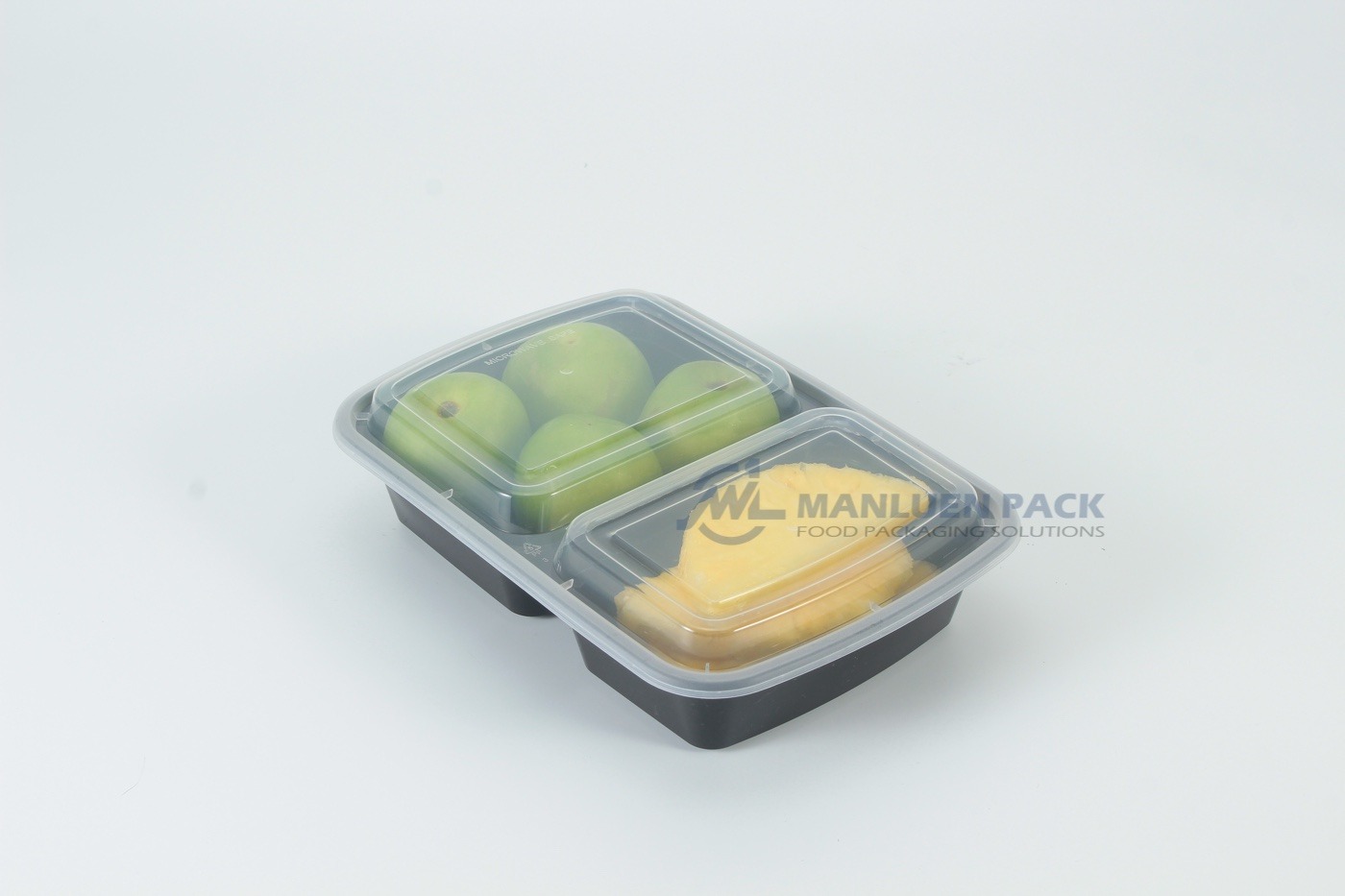
Packaging excluded from net weight can include the primary container, lid, label, secondary carton, shipping case, pallet, and other non-product materials.
The basic relationship is:
Gross Weight = Net Weight + Tare Weight
Or:
Net Weight = Gross Weight − Tare Weight
For example, if a prepared sushi product weighs 500 g and its tray and lid weigh 40 g, the complete package weighs 540 g. The consumer-facing net weight is 500 g, the tare is 40 g, and the gross weight of the retail unit is 540 g.
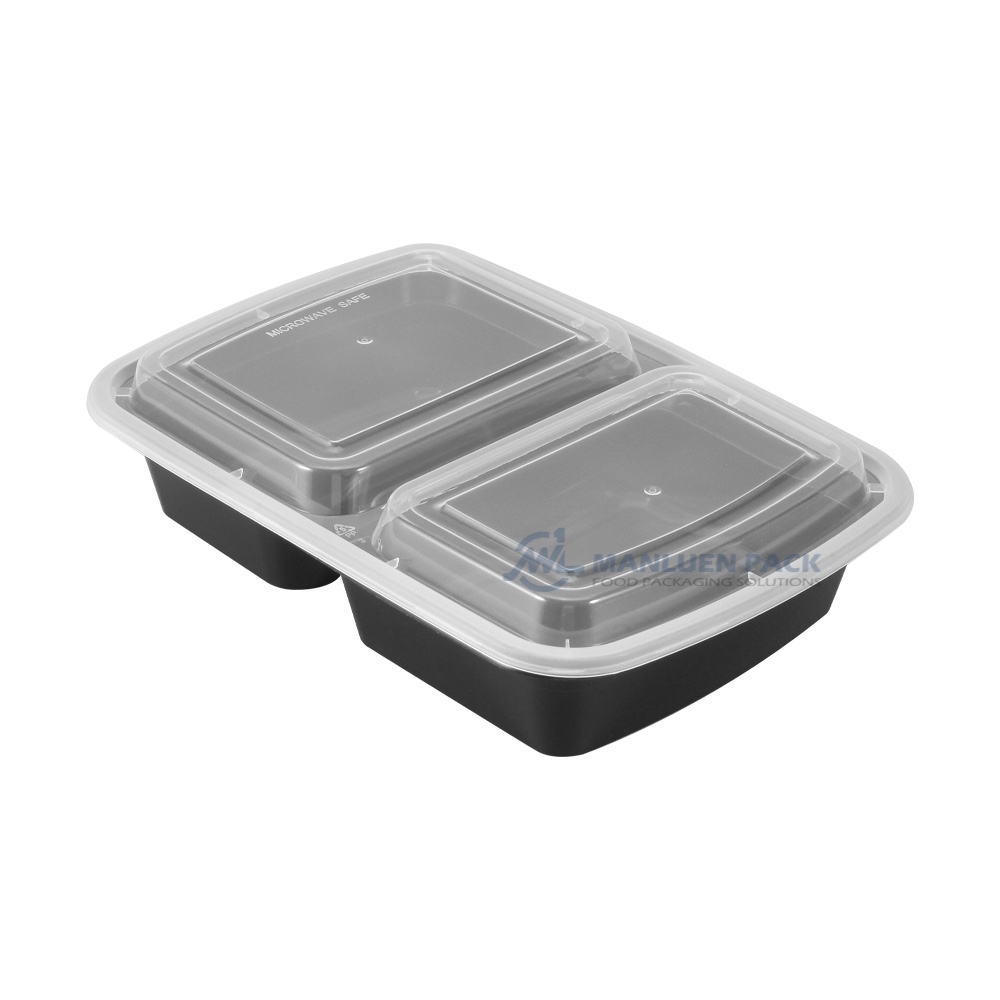
What Does Net Weight Mean on Food Packaging?
For a food label, net weight communicates the actual quantity of food in the package. The FDA’s broader legal term is the net quantity of contents, which may be declared by weight, liquid measure, dry measure, numerical count, or an appropriate combination depending on the product.
The governing principle is stated in 21 CFR §101.105: the label must bear a statement of the net quantity of contents in terms of weight, measure, numerical count, or a combination where appropriate.
For weight-based declarations, the contents—not the container, wrappers, or packing materials—form the declared quantity. A limited exception applies to certain products in containers designed to deliver their contents under pressure, where the propellant is included under the regulation.
Net Weight Is Not the Same as Serving Size
Net weight and serving size can appear on the same package, but they answer different questions.
| Label Information | What It Means | Typical Location | Example |
|---|---|---|---|
| Net quantity of contents | Total amount of product in the package | Principal display panel | Net Wt 12 oz (340 g) |
| Serving size | Amount used as the basis for Nutrition Facts | Nutrition Facts panel | About 1 cup (55 g) |
| Servings per container | Approximate number of servings in the package | Nutrition Facts panel | About 6 servings per container |
Section 101.9(b)(7), sometimes cited in net-weight discussions, primarily explains how the serving size is expressed in a household measure followed by a metric equivalent. It should not be treated as the principal rule for writing the net quantity statement on the front of the package.
Net Weight vs Gross Weight vs Tare Weight
| Weight Term | What It Measures | Includes Packaging? | Common Uses |
|---|---|---|---|
| Net weight (N.W.) | The product or goods themselves | No | Food label, quantity control, product data, unit pricing, and trade records |
| Tare weight | The empty container, packaging, or transport equipment being deducted | Packaging is the subject measured | Scale operation, filling calculations, warehouse records, and container specifications |
| Gross weight (G.W.) | Product plus applicable packaging and transport materials | Yes | Freight planning, carrier billing, load limits, and shipping documentation |
| Dimensional weight | A carrier calculation based on external package volume | Based on packaged dimensions | Parcel and air-freight pricing for bulky shipments |
Net Weight
Net weight measures the product itself and excludes the tare associated with the stated measurement level. For packaged food, it is the quantity declared for the food rather than the container.For a case containing individually packaged products, “net weight” may refer to the combined product content, but the exact commercial-document definition should be agreed with the buyer, carrier, broker, and applicable authority.
Tare Weight
Tare is the weight deducted from the gross measurement. At retail-unit level, it may be the empty tray, lid, label, and absorbent pad. At shipment level, it may refer to an empty transport container or other specified packaging. Because “tare” can describe different levels, documents should state exactly what is included.
Gross Weight
Gross weight is the combined weight of the goods and the packaging relevant to that measurement level. A retail unit’s gross weight may include the food, tray, lid, and label. A pallet’s gross weight may also include cases, dividers, stretch wrap, straps, corner boards, and the pallet.
Shipping or Dimensional Weight
Carrier-billed weight is not always the same as scale weight. Parcel and air carriers may compare the packaged shipment’s actual gross weight with dimensional weight and charge on the higher value. The divisor and rounding rules depend on the carrier, service, route, and contract.
Which Packaging Components Are Excluded?
Primary Packaging
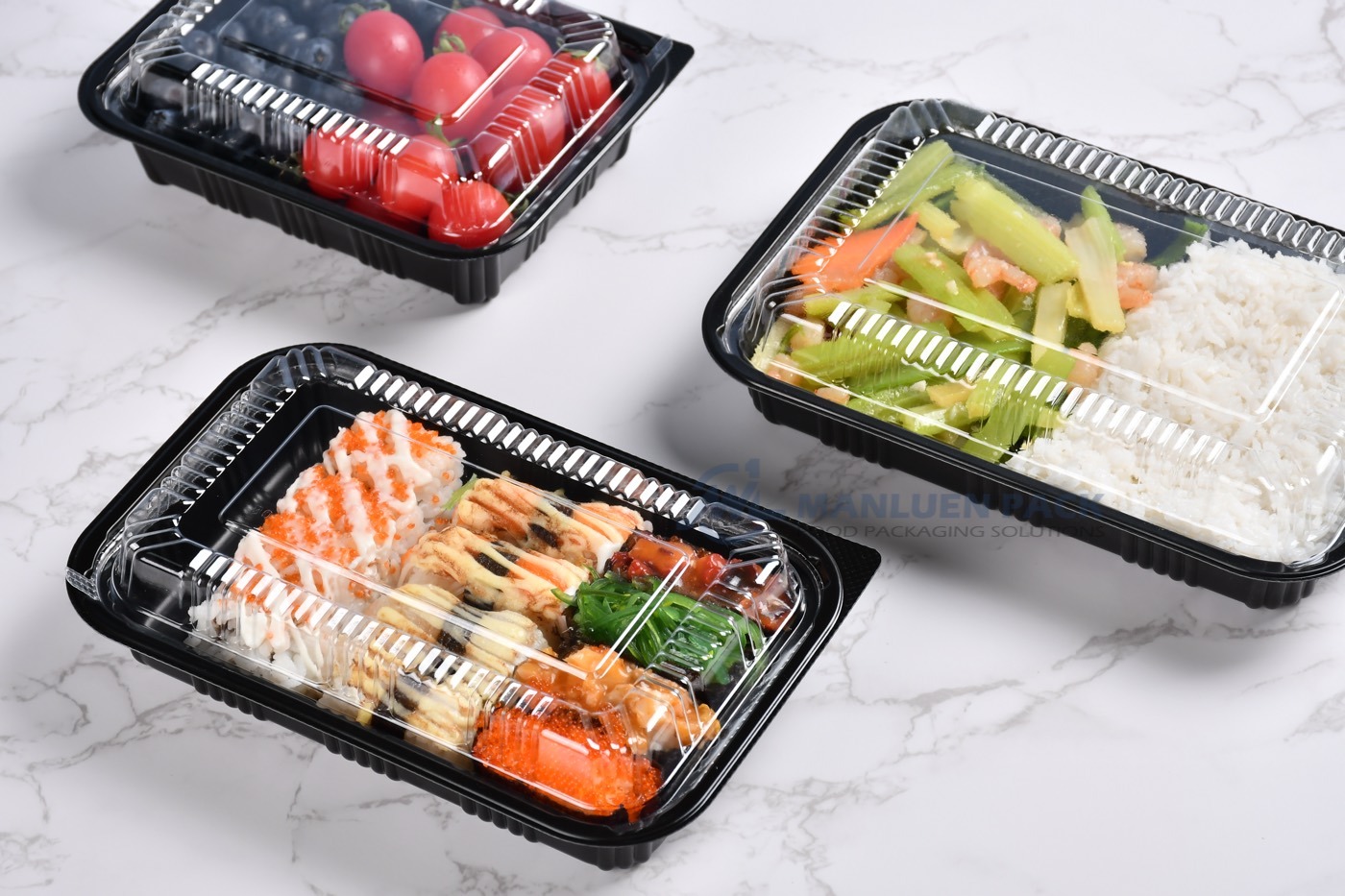
Primary packaging directly contains the food. Examples include a 스시 쟁반, soup cup, sauce tub, beverage bottle, cereal pouch, can, jar, or cake clamshell. Its weight is excluded from the declared net weight even though the package may be essential to food safety and shelf life.
Secondary Packaging
Secondary packaging groups one or more retail units. Examples include a paperboard multipack, display carton, shrink-wrapped bundle, or corrugated case. It does not become part of the retail unit’s net food weight.
Tertiary or Transport Packaging
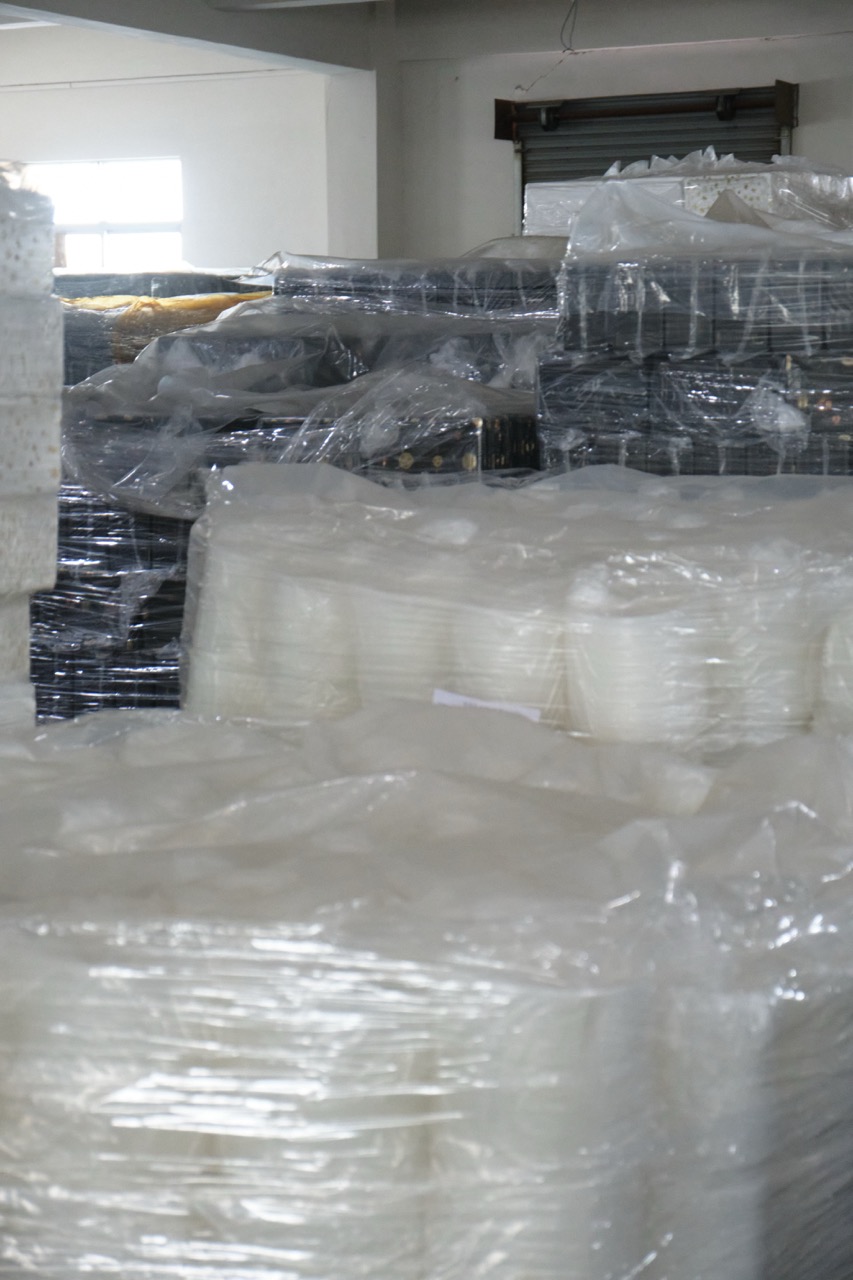
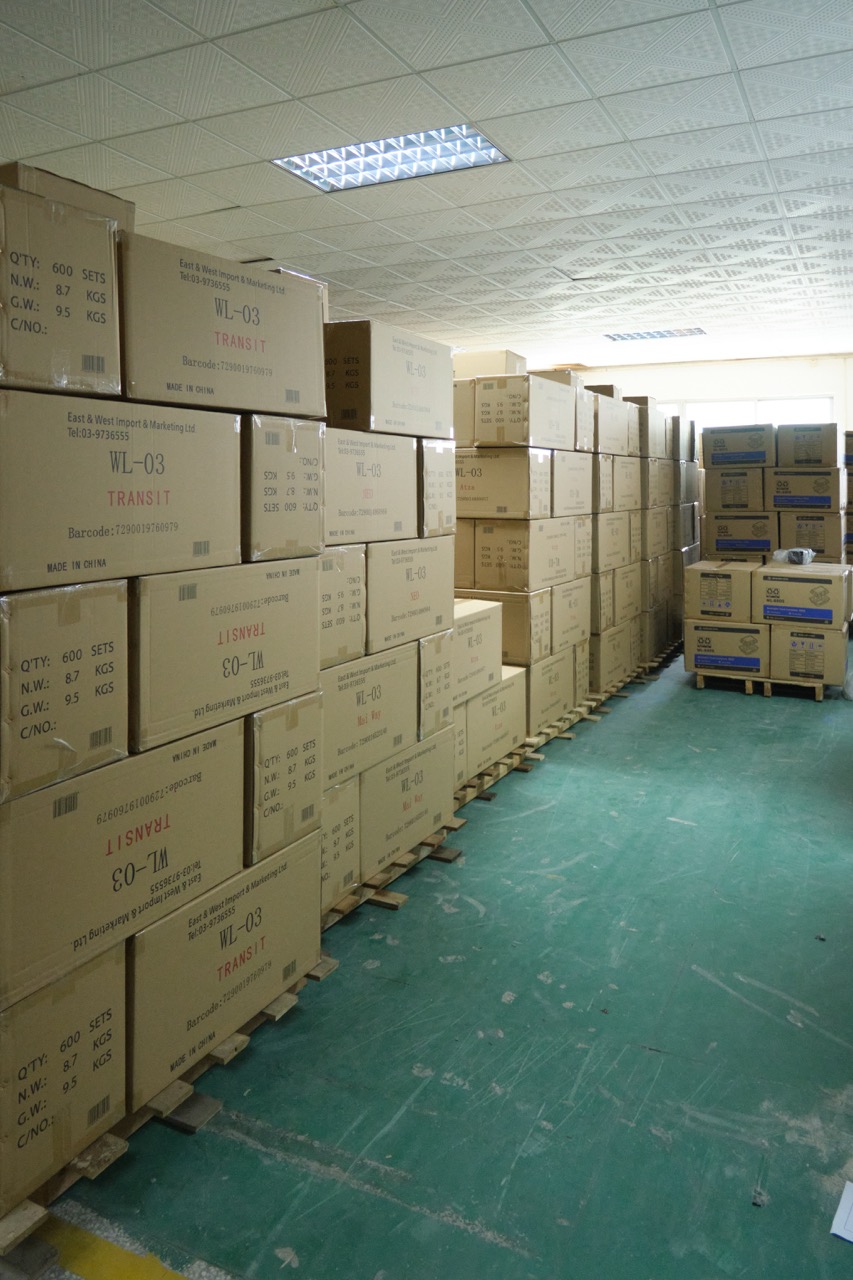
Pallets, stretch wrap, straps, corner boards, slip sheets, shipping cases, dunnage, and intermodal containers affect gross shipment weight and freight calculations but are not food content.
Non-Food Items Inside the Package
Desiccants, oxygen absorbers, absorbent pads, promotional inserts, utensils, and separate non-food accessories are not normally edible product content. Their treatment in a specialized combination pack may require a product-specific review, but they should not simply be added to a food net-weight declaration.
How Is Net Weight Calculated?
The basic calculation is:
Net Weight = Gross Weight − Tare Weight
For a prepared meal:
- Gross weight of filled and closed container: 620 g
- Average tare of container, lid, and label: 70 g
- Calculated net weight: 620 g − 70 g = 550 g
This formula is straightforward, but an accurate production system needs more than one empty package placed on a scale.
Step 1: Define the Tare Components
Write down exactly which components are included in the tare: base, lid, liner, pad, film, label, seal, and any other non-product part. Use the same definition across production, quality, artwork, and logistics teams.
Step 2: Establish Representative Tare
Packaging weight varies because of resin, paper, glass, metal, molding, trimming, coating, and moisture tolerances. Measure a representative sample rather than relying on a single nominal catalog weight. Recheck tare after a material, supplier, thickness, color, or tooling change.
Step 3: Use Suitable, Calibrated Equipment
The scale’s capacity, division size, accuracy, legal-for-trade status where applicable, calibration, location, vibration, airflow, and cleaning all affect the result. A shipping scale may not have the resolution required for small retail packages.
Step 4: Control Filling and Monitor Variation
Set the target fill above the labeled quantity by an amount justified by process capability, product loss, scale uncertainty, and legal requirements. Monitor individual values and lot averages rather than relying only on the machine’s nominal setting.
How to Write Net Weight on Food Packaging
A common U.S. weight-based format is:
Net Wt 16 oz (454 g)
The appropriate declaration depends on whether the food is sold by weight, liquid measure, dry measure, count, or a combination.
Use the Principal Display Panel
The net quantity statement generally appears on the principal display panel—the part most likely to be displayed or examined under customary retail conditions. It is normally placed within the bottom 30% of that panel, subject to the detailed FDA rules and package-specific exceptions.
Use U.S. Customary and Metric Units
FDA-regulated consumer food labels generally show both U.S. customary and metric declarations, such as ounces followed by grams or pounds followed by kilograms. Liquids are declared using the appropriate liquid measure.
Select the Correct Quantity Basis
Use weight for foods normally sold by weight, liquid measure for foods normally sold by liquid measure, and numerical count when count is the appropriate consumer quantity. Some products require or permit a combination.
Meet Prominence and Type-Size Rules
The declaration must be conspicuous, easy to read, and sufficiently contrasted with the background. Minimum type size depends on the area of the principal display panel. FDA guidance begins at 1/16 inch for panels of 5 square inches or less and requires larger type as the panel area increases.
Do Not Use Exaggerating Qualifiers
Terms such as “jumbo quart” or “full gallon” should not qualify the legal quantity statement. Marketing copy should not obscure, contradict, or crowd the declaration.
Confirm Conversion and Rounding
Do not convert units by rough estimation. Use the required conversion and rounding method, ensure the customary and metric values are consistent, and review final artwork against the current rule before printing.
Solids, Liquids, Counted Foods, and Drained Products
Solid and Semi-Solid Foods
Rice, pasta, coffee, cereal, nuts, prepared meals, sushi, and many spreads are commonly declared by weight when weight is the established method of sale.
Liquid Foods
Beverages and other foods normally sold by liquid measure are generally declared by fluid measure rather than net weight. Density should not replace a required volume declaration without confirming the applicable rule.
Products Sold by Count
Some foods are appropriately declared by count, such as a package containing a stated number of individually identifiable units. Count may be combined with weight or measure when required or appropriate.
Food Packed in a Liquid Medium
Packing liquid is not packaging merely because a consumer may pour it away. The FDA Food Labeling Guide explains that water or another packing medium is generally included in the net quantity, while drained weight is provided in certain cases where the medium is normally discarded, such as some olives and mushrooms.
Do not apply a universal “food only after draining” rule to every canned or jarred product. Review the product’s standard of identity, method-of-sale rules, FDA guidance, and any drained-weight requirement.
Multi-Component Food Kits
When foods are packaged and presented for consumption together—such as pasta with a separate sauce pouch—the complete food components may contribute to the declared net contents. Non-food utensils and promotional items remain outside the food quantity.
Worked Examples
| Product | Product Content | Packaging Tare | Retail Gross Weight | Net Declaration Basis |
|---|---|---|---|---|
| 스시 트레이 | 500 g sushi | 40 g tray and lid | 540 g | 500 g food content |
| Prepared meal | 550 g meal | 70 g container, lid, and label | 620 g | 550 g food content |
| Bagged nuts | 340 g nuts | 18 g pouch and label | 358 g | 12 oz (340 g), subject to correct conversion and labeling |
| 24-unit master case | 24 × 340 g = 8.16 kg product | Retail pouches plus case, dividers, tape, and label | Product plus all applicable tare | Retail label remains based on each unit’s product content |
Why Accurate Net Weight Matters
Weights-and-Measures Inspection
NIST Handbook 133 provides procedures used to evaluate packaged-goods net contents. NIST summarizes the rule plainly: there is no general-purpose tolerance that allows a manufacturer to underfill packages intentionally.
A sample must satisfy:
- Average Requirement: the average net quantity of packages in the lot must at least equal the labeled quantity.
- Individual Package Requirement: individual shortages must not be unreasonably large. Maximum Allowable Variations identify unreasonable minus errors.
Reasonable variations are accepted only when caused by unavoidable deviations in good manufacturing and quantity-control practices. Overfilled packages do not automatically cure every excessive individual shortage.
FDA Compliance Policy Guide
FDA CPG Sec. 562.300 provides separate enforcement guidance. It states criteria for recommending legal action when a 48-unit sample shows an average short weight of 1% or more after shrinkage, shipping loss, and tare-weight variation have been ruled out as significant causes.
This is an enforcement recommendation, not permission to design a process around 1% underfill. State requirements, NIST procedures, product-specific rules, and customer contracts may also apply.
Retail Unit Pricing
Unit price—such as price per ounce or pound—depends on declared product quantity. Incorrect net content can distort consumer comparisons and retailer data.
Unit pricing is not federally mandatory across all U.S. states. NIST currently reports that 19 states and two territories have unit-pricing laws or regulations, with 11 jurisdictions containing mandatory provisions. Businesses must check the current rules in every selling jurisdiction.
GS1 and GTIN Management
GS1 defines net content as the amount of consumable product in the trade item as declared on the label; it may be weight, volume, count, or another appropriate unit.
Under GS1’s Declared Net Content rule, any increase or decrease to legally required net content printed on the package requires a new GTIN. GS1 gives the example of a salty-snack package increasing from 680 g (24 oz) to 794 g (28 oz). The retail item and existing higher packaging levels receive new identifiers.
Updating artwork without updating GTIN data can create mismatches in retailer systems, shelf labels, inventory, replenishment, and traceability.
Net, Gross, and Tare Weight in Logistics
In logistics, net, gross, and tare weight may be measured at different levels—from a retail unit to a case, pallet, vehicle, or shipping container—so specifications should clearly state what each figure includes.
Accurate weight information helps:
- Prevent vehicle, pallet, rack, and container overloading
- Calculate freight and handling costs
- Plan case, pallet, and container utilization
- Reconcile commercial invoices, packing lists, and bills of lading
- Avoid reweigh fees, rejected loads, and documentation discrepancies
The cited Inbound Logistics article does not establish a universal U.S. rule requiring every bill of lading to show net, gross, and tare to two decimal places. Required fields, precision, and definitions vary by mode, carrier, commodity, contract, and jurisdiction.
Do Not Use Retail Net Weight as Freight Weight
A carrier moves the complete packaged shipment, so packaging affects the physical load even though it is excluded from the food label. At the same time, do not copy gross freight weight into a document field that specifically requests net goods weight.
Define the Measurement Level
“Gross weight” can refer to a retail unit, case, pallet, loaded vehicle, or container. “Tare” can refer to an empty retail package, pallet, vehicle, or intermodal container. Every specification should name the level and included components.
Common Net-Weight Labeling Mistakes
- Including the container or lid: using the complete packaged scale reading without subtracting tare overstates the food quantity.
- Using outdated tare: material, thickness, coating, closure, or moisture changes can make the programmed tare inaccurate.
- Confusing serving size with net quantity: Nutrition Facts serving size does not replace the total net quantity statement.
- Using weight for a product sold by volume: the declaration method depends on the product and governing rule.
- Assuming packing liquid is packaging: brine, syrup, oil, or water may contribute to net contents even when consumers often discard it.
- Using unverified conversions: customary and metric quantities must agree after correct conversion and rounding.
- Failing to assign a new GTIN: changing legally declared net content while keeping the old barcode conflicts with GS1 rules.
- Treating guidance as an underfill allowance: unavoidable variation is not permission to sell deliberately short-filled packages.
Net-Weight Approval Checklist
Before printing or approving a food label:
- Identify whether the product must be declared by weight, liquid measure, dry measure, count, or a combination.
- Define what constitutes food content and what constitutes tare.
- Check whether packing medium, glaze, propellant, or drained-weight rules require special treatment.
- Measure representative tare using final production components.
- Confirm customary and metric quantities and rounding.
- Verify principal-display-panel location, spacing, contrast, and type size.
- Review the product standard of identity and special labeling rules.
- Validate the filling and inspection plan using suitable calibrated equipment.
- Match the declaration across artwork, product specification, GS1 data, and retailer records.
- Assign new GTINs when legally required declared net content changes.
- Define net, tare, and gross weight separately for cases, pallets, and freight documents.
- Use qualified regulatory review when requirements are uncertain.
자주 묻는 질문
Does net weight include packaging?
No. Net weight excludes the container, tray, lid, wrapper, label, carton, pallet, and other packaging. It represents the product itself.
What does net weight mean on food packaging?
It tells consumers how much food is inside the package. The FDA’s broader term “net quantity of contents” also covers products declared by volume or count.
Is net weight the same as gross weight?
No. Net weight is product only. Gross weight combines product with packaging and other components included at the stated measurement level.
What is tare weight?
Tare is the empty packaging, container, or equipment weight deducted from gross weight to calculate net weight.
How do you calculate net weight?
Subtract tare from gross weight: Net Weight = Gross Weight − Tare Weight. Use representative packaging tare and suitable calibrated equipment.
Does net weight include brine or syrup?
Packing liquid is not automatically packaging. It is generally included in net quantity, while some products also use or require a drained-weight declaration. Check the product-specific rule.
Is net weight required on U.S. packaged-food labels?
Most packaged foods must carry an accurate net quantity statement, subject to detailed FDA rules and applicable exemptions.
Can one package be slightly below the labeled weight?
Unavoidable individual variation can occur, but NIST states there is no general underfill tolerance. The lot must meet the average requirement, and individual shortages cannot exceed the applicable Maximum Allowable Variation.
Does changing net weight require a new barcode?
Yes. GS1 requires a new GTIN when legally required net content printed on the package increases or decreases. Higher packaging levels also require corresponding new GTINs.
Is unit pricing mandatory in every U.S. state?
No. It is not federally mandated nationwide. NIST currently reports relevant laws or regulations in 19 states and two territories, including mandatory provisions in 11 jurisdictions.
결론
The answer to “does net weight include packaging?” is simple: no. Net weight refers only to the food or goods themselves, while packaging is treated as tare and contributes to gross weight.
The important part is using each value in the right context. Food labels rely on net quantity, filling operations use tare deductions to control declared content, retail and GS1 systems use product quantity for identification and pricing, and freight calculations rely on gross or dimensional weight for the complete shipment.
Packaging design can still affect these calculations. Changing a tray, lid, liner, or label may alter tare weight, shipment weight, and filling settings even when the declared food quantity remains unchanged.
For food businesses, this means packaging specifications should be finalized together with labeling, production, and logistics data. Manluen can discuss suitable container formats, dimensions, materials, and product specifications before packaging artwork and shipping details are confirmed.
References
U.S. Food and Drug Administration (FDA). A Food Labeling Guide.
Used for FDA guidance on net-quantity terminology, customary and metric declarations, principal-display-panel placement, type size, packing media, and drained weight.
U.S. Food and Drug Administration
Electronic Code of Federal Regulations. 21 CFR §101.105—Declaration of Net Quantity of Contents.
Used for the legal requirements governing the form, placement, prominence, and calculation of net quantity on food labels.
Electronic Code of Federal Regulations
Electronic Code of Federal Regulations. 21 CFR §101.9—Nutrition Labeling of Food.
Used to distinguish Nutrition Facts serving size from the package’s total net quantity of contents.
Electronic Code of Federal Regulations
U.S. Food and Drug Administration (FDA). CPG Sec. 562.300—Foods: Net Weight.
Used for FDA enforcement guidance concerning a 48-unit sample with an average short weight of 1% or more after relevant loss and tare factors are excluded.
U.S. Food and Drug Administration
National Institute of Standards and Technology (NIST). Handbook 133: Checking the Net Contents of Packaged Goods.
Used for the average requirement, individual-package requirement, Maximum Allowable Variations, and inspection framework.
National Institute of Standards and Technology
National Institute of Standards and Technology (NIST). Net Contents of Packaged Goods FAQs.
Used for the explanation that there is no general underfill tolerance and only unavoidable reasonable variations are permitted.
National Institute of Standards and Technology
National Institute of Standards and Technology (NIST). Uniform Unit Pricing: Tools for Consumers to Fight Shrinkflation.
Used for the current overview of state and territorial unit-pricing laws.
National Institute of Standards and Technology
GS1. GTIN Management Standard—Declared Net Content.
Used for the GS1 definition of net content and the requirement to assign a new GTIN when legally required declared net content changes.
GS1
Inbound Logistics. What Is Gross Weight? Differences and Calculations vs Net Weight.
Used for logistics definitions of net, gross, and tare weight and the importance of weight accuracy in transport planning.
Inbound Logistics
inecta. Gross Weight vs Net Weight: Key Differences and Calculations for the Food Industry.
Used as an industry reference for separating product, package, and shipment weight in food operations.
inecta
Buske Logistics. What Is Net Weight?
Used as a supplementary logistics reference for net weight in warehousing and distribution.
Buske Logistics

ManLuen 플라스틱 포장 회사는 20년 이상 플라스틱 식품 포장 생산에 특화되어 있습니다. 저희 제품은 100% 순수 원료와 BPA-Free PP, PS, OPS로 만들어졌으며, FDA 및 유럽 표준을 준수합니다.
 KO
KO  EN
EN  ZH
ZH  FR
FR  PT
PT  ES
ES  JA
JA