
Sustainable packaging sourcing should not be measured by one claim, one material, or one certification. A supplier can offer recycled packaging and still perform poorly on product protection, delivery reliability, traceability, or compliance.
A better sourcing decision looks at the complete package: environmental credentials, technical performance, food-contact requirements where relevant, manufacturing quality, total cost, minimum order quantities, lead time, and the supplier’s ability to support its claims with current documentation.
For most businesses, the simplest way to compare suppliers is to use a weighted scorecard before requesting samples or approving production.
How to Measure Sustainable Packaging Sourcing
Start by measuring the factors that can change the success of the purchase, not just the environmental message attached to the material.
A practical supplier scorecard might look like this:
| Evaluation Area | Suggested Weight | What to Measure |
| Environmental credentials | 20% | Material sourcing, recycled content, certifications, carbon and environmental data |
| Packaging performance | 20% | Strength, barrier, shelf life, sealing and machine compatibility |
| Food-contact and regulatory compliance | 15% | Applicable declarations, testing and market-specific requirements |
| Manufacturing and quality | 15% | Capacity, traceability, QC systems, tolerances and defect control |
| Price and total cost | 10% | Unit price, tooling, freight, wastage, compliance and inventory |
| MOQ and flexibility | 5% | Minimum quantities, sampling, customization and order flexibility |
| Lead time and delivery | 10% | Stock availability, production lead time and delivery reliability |
| Documentation and support | 5% | Certificates, test reports, response quality and technical support |
Score each area from 1 to 5, then multiply the score by its weight.
Supplier score = Σ criterion score × criterion weight
A supplier with the highest environmental score should not automatically win. If its packaging fails on the filling line, requires an impractical MOQ, or takes months longer to arrive, the sourcing decision may not be sustainable from an operational or financial perspective.
The scorecard also gives procurement, sustainability and operations teams one common basis for discussing the decision.
How to Compare Environmental Credentials of Food Packaging Suppliers
The first step is not counting certificates. It is identifying exactly what each environmental claim means.
Terms such as green, eco-friendly 및 sustainable can describe very different things. One supplier may be referring to recycled content, another to renewable raw materials, and another to compostability.
Ask suppliers to make the claim specific.
If a package contains recycled material, what percentage is post-consumer recycled content? If it is compostable, is that claim supported for commercial composting, home composting, or both? If the paper is responsibly sourced, which chain-of-custody system supports the claim?
Then check whether the evidence actually applies to the product you intend to purchase. A genuine certificate is not useful if it covers a different factory, material, product family or manufacturing site.
For forest-based materials, FSC Chain of Custody verifies that FSC-certified material remains identified and tracked through manufacturing and distribution. PEFC also operates a chain-of-custody system for forest and tree-based products. These certifications address material sourcing and traceability; they do not by themselves prove that the finished package has lower carbon emissions or is suitable for food contact.
What Do the Main Sustainability Credentials Actually Show?
| Credential | What It Mainly Verifies | Most Relevant To |
| FSC Chain of Custody | Traceability of certified forest-based materials | Paper, paperboard, kraft and corrugated packaging |
| PEFC Chain of Custody | Traceability of certified, recycled or controlled forest-based material | Paper and wood-based packaging |
| GRS | Recycled material verification and chain of custody, with additional processing requirements | Products containing verified recycled inputs |
| ISCC PLUS | Traceability of recycled, circular and bio-based feedstocks | Plastics, polymers and packaging using alternative feedstocks |
| BPI | Compostability under defined certification schemes | Compostable foodservice and packaging products |
| ISO 14001 | An organization’s environmental management system | Supplier or manufacturing-site environmental management |
| EcoVadis | Broader company ESG management performance | Supplier sustainability assessment |
| CDP | Corporate environmental disclosure | Climate and environmental reporting |
GRS, for example, tracks recycled raw materials through the supply chain and includes chain-of-custody requirements. ISCC PLUS can support verified claims for recycled and bio-based plastics using chain-of-custody approaches such as mass balance or physical segregation.
BPI serves a different purpose. Its current certification framework distinguishes commercial compostability from commercial-and-home compostability, with ASTM D6400 serving as the base standard for its commercial certification program.
ISO 14001 is different again. The current ISO 14001:2026 standard concerns an organization’s environmental management system. It can tell you something about how a supplier manages environmental responsibilities, but it does not certify that a particular tray, pouch or carton is recyclable.
EcoVadis evaluates company sustainability management across areas including environment, labor and human rights, ethics and sustainable procurement. That makes it more useful for supplier-level ESG screening than for proving a specific material claim.
The practical rule is simple: match the credential to the claim you are trying to verify.
What Environmental Credentials Should Food Packaging Suppliers Provide?
Food packaging requires another layer of due diligence because environmental performance does not replace product safety.
In the United States, FDA food-contact rules apply to substances that contact food, including packaging components such as adhesives, coatings and colorants. A buyer should therefore ask the supplier to identify the regulatory basis for the intended material, food type, temperature and use rather than treating “food grade” as a complete technical answer.
Food packaging buyers should also review the complete structure. A package may contain a sustainable substrate but still use coatings, inks, adhesives or barrier layers with different compliance considerations.
For flexible food packaging, technical performance matters just as much. Oxygen transmission rate (OTR), water-vapor transmission rate (WVTR), seal strength, seal window and light protection can directly affect shelf life. PCR or bio-based materials may also need different evaluation depending on whether they appear in a direct food-contact layer or a non-contact layer.
Low-migration ink systems and appropriate chemical documentation can strengthen the review, but the final requirement depends on the actual package and market.
Do not approve a material change on a supplier data sheet alone. Test the physical package with the product and, where applicable, run it through the actual filling and sealing equipment.
A sustainable package that reduces shelf life, leaks more frequently or causes production stoppages can create more waste than the format it replaced.
Where to Buy Eco-Friendly Packaging
Businesses generally buy sustainable packaging through four channels: direct manufacturers, domestic distributors, packaging wholesalers and specialist sustainable-packaging suppliers.
Direct manufacturers usually make the most sense for larger custom programs because they provide more control over structure, printing, tooling and materials. The trade-off is that custom manufacturing often requires larger MOQs and longer lead times.
Distributors and wholesalers are more useful when speed and inventory availability matter. They can stock common food containers, mailers, cartons and bags so a business does not need to wait for a new production run.
Specialist sustainable-packaging companies sit somewhere between the two. They often carry certified compostable, recycled-content, recyclable or responsibly sourced products while also offering custom programs.
The right channel therefore depends on whether your priority is customization, unit price, low MOQ or fast delivery.
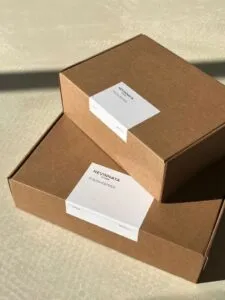
Where to Buy Sustainable Packaging in the US
Several suppliers currently publish sustainable packaging options and shipping information for U.S. buyers. The table below is not a ranking; it shows different sourcing models and published lead-time information that buyers can compare.
| Supplier | Useful For | Published Stock / Delivery Information | Custom Considerations |
| EcoEnclose | Ecommerce boxes, mailers and shipping supplies | Stock products have a published processing lead time of 1–2 business days | Corrugated and branded products have separate made-to-order lead times |
| Good Start Packaging | Compostable and sustainable foodservice packaging | Most stock orders ship within 1 business day; early orders may ship the same day | Custom lead times vary; some printed products have much longer production windows |
| World Centric | Compostable foodservice and takeout packaging | Ground shipping is published at 5–7 business days; expedited options are available | Special/custom products can require much larger quantities and longer lead times |
| Green Paper Products | Compostable and recyclable foodservice supplies | Products may ship from several U.S. warehouses within 1–2 business days depending on availability | Large shipments and customized requirements need separate planning |
| noissue | Custom and stock ecommerce packaging | Some ready-to-ship or U.S.-made products show delivery around 1 week | Published custom lead times vary significantly by format |
EcoEnclose states that ready-to-ship stock products normally require 1–2 business days of processing, excluding transit time.
Good Start Packaging states that most stock orders ship within one business day, with qualifying orders placed early enough sometimes shipping the same day. Its product range includes third-party certified compostable food packaging, including products with BPI, TÜV Austria and other certifications depending on the SKU.
World Centric publishes ground delivery of approximately 5–7 business days on current store listings, including 1–2 business days of processing, and also offers expedited shipping.
Green Paper Products uses several U.S. warehouse locations and says orders may ship within 1–2 business days depending on availability. Large shipments can take longer.
noissue demonstrates why buyers must separate stock and custom lead times. Its current mailer listings show delivery around one week for some stock or U.S.-made options, while some highly customized compostable mailers show lead times around ten weeks.
Always confirm the current SKU, quantity and destination before treating a published lead time as a purchasing commitment.
Which Sustainable Packaging Suppliers Have Fast Delivery Times for Businesses?
There is no single fastest supplier for every business because companies publish lead time in different ways.
Some quote the number of days before an order leaves the warehouse. Others quote total delivery time. Custom packaging usually starts its production clock only after artwork or proof approval.
For standard stock products, Good Start Packaging and EcoEnclose currently publish some of the shorter processing windows among the suppliers reviewed here. Green Paper Products can also ship from several U.S. warehouses, which may shorten transit depending on stock location. World Centric publishes a clearer end-to-end ground delivery range of about 5–7 business days.
Custom work changes the comparison completely. Good Start lists one custom printed food box program with a 30,000-unit minimum and a 10–12 week lead time, while noissue publishes product-specific custom delivery windows ranging from about one week for certain U.S.-made poly mailers to roughly ten weeks for custom compostable mailers.
When delivery matters, ask suppliers to separate five dates: sample turnaround, artwork approval, tooling, production and transit. A supplier that says “three-week lead time” may only be describing production.
Local inventory, standard SKUs, existing tooling and regional warehouses usually make delivery faster. Forecast sharing and supplier-held safety stock can also reduce replenishment risk for recurring orders.
Define Packaging Requirements Before Comparing Suppliers
Sustainability decisions only make sense after the package’s job is clear.
Define the product, dimensions, weight, filling process, storage temperature, required shelf life, barrier needs and distribution conditions before requesting quotations.
For a food pouch, barrier and sealing may drive the material decision. For an ecommerce package, compression strength, dimensions and shipping weight may matter more. For a restaurant takeout container, heat resistance, grease resistance, leakage and food-contact suitability may dominate.
This prevents a common sourcing mistake: comparing two “sustainable” packages that do not actually perform the same function.
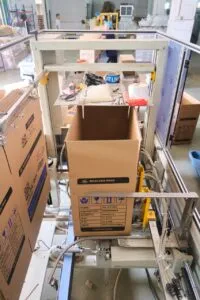
How to Evaluate Sustainable Packaging Materials
Recycled Content
Recycled content is one of the easiest metrics to quantify.
Recycled content % = recycled material weight ÷ total material weight × 100
Ask whether the content is post-consumer recycled (PCR), post-industrial or another defined recycled input. Also ask how the supplier measures and documents the percentage.
A higher recycled percentage is not automatically better if it compromises the performance needed for the application. Compare strength, appearance, barrier and regulatory suitability at the same time.
Recyclable vs. Compostable Packaging
Recyclable and compostable packaging solve different problems.
A recyclable package only creates value if suitable collection and processing exist in the market where it becomes waste. A technically recyclable film may still go to landfill where flexible-film collection is limited.
Compostable packaging faces the same infrastructure issue. BPI’s certification system itself distinguishes commercial compostability from home compostability, reflecting the fact that these are different end-of-life conditions.
For many products, recyclability may be the more practical goal where established collection exists. Compostable formats can make more sense when packaging is likely to be mixed with food waste and suitable composting infrastructure is available.
Do not treat “biodegradable,” “bio-based” and “compostable” as synonyms.
Mono-Material Flexible Packaging
Traditional flexible packages often combine several materials to provide barrier and mechanical performance. These structures can be difficult to recycle because the layers cannot easily be separated.
Mono-material structures simplify the material family and can improve recyclability, but the change still needs technical validation. Check OTR, WVTR, puncture resistance, seal behavior and filling-line performance before approving a switch.
Packaging Weight and Material Efficiency
Using less material can improve environmental and financial performance without changing the basic packaging format.
A simple measure is:
Weight reduction % = (old packaging weight − new packaging weight) ÷ old packaging weight × 100
Track package weight alongside dimensions. A lightweight but oversized shipping box can still perform poorly because dimensional weight and unused transport space increase logistics costs.
Measure the Full Lifecycle, Not One Material Attribute
A lifecycle view prevents sourcing teams from shifting environmental impact from one stage to another.
When comparing lifecycle data, confirm that suppliers use the same system boundary. A cradle-to-gate figure covers a different portion of the lifecycle from a cradle-to-grave figure, so the numbers cannot be treated as equivalent.
Transportation also deserves its own measurement. Record distance traveled, transport mode, package weight, pallet utilization and packing density. A package sourced closer to the point of use may reduce logistics emissions, but geography should still be balanced against manufacturing efficiency and product performance.
End-of-life analysis should also distinguish between what a package can do and what actually happens to it. “Recyclable” describes a property. “Recycled” describes an outcome.
Measure Packaging Performance, Waste and Returns
Environmental measurement should include packaging failure.
Track damage rates, leaks, rejected packs, return frequency and production scrap. A lightweight format that increases damage may shift the environmental burden from packaging material to replacement products and additional transportation.
Useful operational metrics include:
Damage rate = damaged shipments ÷ total shipments × 100
및
Manufacturing waste rate = packaging scrap ÷ total packaging material used × 100
These measures connect sustainability with quality rather than treating them as separate programs.
Evaluate Supplier Manufacturing Capability
A supplier’s environmental credentials matter only if the factory can reproduce the required package consistently.
For high-volume sourcing, review production capacity, automation, backup equipment and peak-season capability. Ask how the supplier controls dimensional tolerances, printing consistency, sealing and batch variation.
Testing capability also matters. Depending on the package, relevant testing may include burst strength, tear resistance, compression, drop testing, handle pull force, seal strength, environmental aging and humidity resistance.
Traceability should connect production lots with raw materials and supporting certificates. If a supplier cannot trace a finished order back to the relevant material batch, environmental claims become harder to defend when questions arise.
Compare MOQ, Lead Time and Customization Early
A material can look attractive until the quotation arrives with an impractical minimum order.
Ask for MOQ at the same time as price. Stock items, plain custom packaging and custom-printed packaging often have very different thresholds.
Lead time should also be broken down. Separate sampling, tooling, artwork approval, production and transit.
Customization may introduce costs for printing plates, cylinders, dies or structural tooling. A simpler design can reduce both cost and production time.
For businesses with uncertain demand, the lowest unit price is not always the best offer. A slightly higher unit price with a lower MOQ may reduce inventory exposure and the risk of obsolete packaging.
Compare Total Cost, Not Unit Price
The supplier quote is only the beginning of packaging cost.
A useful calculation is:
Total packaging cost = purchase cost + tooling + inbound freight + packing labor + inventory + production waste + product damage + compliance costs + applicable EPR costs
Then account for measurable savings such as lower freight, less material, faster packing or fewer damaged shipments.
This prevents a supplier with the lowest unit price from appearing cheaper when its packaging creates more waste, freight or operational downtime.
Include EPR and Market Requirements in Supplier Selection
Extended Producer Responsibility requirements increasingly make packaging data part of procurement.
Rules vary by market, but businesses may need accurate information on material type, packaging weight, recycled content and recyclability to support reporting and fee calculations.
Build these questions into the RFQ rather than requesting the information after the packaging launches.
A supplier that can provide consistent material declarations, weights and supporting documentation can reduce the internal work required for compliance.
Do not assume that switching to recyclable or compostable packaging automatically removes EPR obligations. Check the rules in each market where the packaging will be sold.
How to Verify a Supplier’s Sustainability Claims
Good procurement documentation should allow another person in the organization to understand exactly why a claim was accepted.
For each important claim, retain the relevant certificate, test report or material declaration. Check the issuer, certificate number, facility or product scope, validity period and applicable market.
Where a certification body maintains a public database, use it. BPI, for example, provides an online catalog for verifying certified products. ISCC also maintains a database of valid certificates.
The same discipline applies to recycled-content and forest-sourcing claims. Do not assume that certification held by a corporate group automatically covers every plant or product.
Avoid Greenwashing by Keeping Claims Specific
The safest sustainability claims are usually the most precise.
“Eco-friendly food packaging” gives the buyer little information.
“Made with 70% post-consumer recycled content” identifies a measurable property.
“Made with 70% PCR supported by the applicable chain-of-custody documentation” is stronger because the evidence and claim align.
The internal process should therefore follow a simple sequence:
claim → evidence → review → approved wording
Procurement, ESG and marketing teams should work from the same evidence. This reduces the risk that a technically narrow product attribute turns into an unsupported public statement.
Set Sustainable Packaging Sourcing KPIs
Once suppliers have been selected, keep measuring the program.
Material KPIs can include recycled-content percentage, packaging weight per unit and the share of paper sourced under an accepted chain-of-custody system.
Supplier KPIs can measure the percentage of suppliers that meet the company’s sustainability requirements or provide complete supporting documentation.
Operational KPIs can include CO₂ per shipment, manufacturing waste, damage rates and average lead time.
A useful waste metric is:
Waste diversion rate = waste diverted from landfill ÷ total waste generated × 100
Delivery performance should also form part of the sourcing score. Track average lead time and on-time delivery rather than relying on the promised lead time in the original sales quotation.
For larger supplier programs, EcoVadis-style ESG ratings or CDP disclosures can supplement product-level evidence, particularly when the business wants to assess broader supplier environmental management. CDP’s 2026 disclosure system also includes supplier progress-tracking capabilities for supply-chain users.
Set a Baseline Before You Set a Target
Targets become useful only when the starting point is known.
Audit current packaging first. Record material composition, weight, cost, waste, damage rate, suppliers and lead times.
Then set measurable targets against that baseline.
A business might aim to reduce packaging weight, increase verified recycled content, move more paper sourcing to certified sources, reduce average lead time or increase the percentage of suppliers that provide complete environmental documentation.
Every target should specify a baseline, metric, deadline and owner.
“Use more sustainable packaging” is an intention.
“Reduce average packaging weight per order by 15% from the 2026 baseline by the end of 2028” can actually be managed.
A Practical Sustainable Packaging Procurement Process
A disciplined sourcing project usually starts with requirements rather than supplier outreach.
First define what the package must do and establish the sustainability goal. Audit the current packaging so you have a baseline. Then create the supplier scorecard and shortlist suppliers that appear capable of meeting both functional and environmental requirements.
Request material specifications, certificates and quotations at the same time. Once the documents pass the initial review, obtain samples and test them. Food or flexible packaging may require shelf-life and line trials; protective packaging may require drop or compression testing.
Compare total cost, MOQ and lead time before choosing the preferred supplier. For a major material change, use a pilot order before full rollout.
After approval, continue measuring quality, environmental KPIs and delivery performance. Review important certificates and requirements when materials change and on a regular supplier-review cycle.
Common Mistakes When Sourcing Sustainable Packaging
Several mistakes appear repeatedly in sustainable packaging projects.
One is choosing the material first and checking performance later. Another is comparing certificates by quantity rather than understanding what they verify.
Buyers also frequently assume recyclable means widely recycled, or that compostable automatically means environmentally preferable. Neither conclusion is safe without considering local infrastructure.
Other problems appear later in the project: skipping line trials, ignoring shelf-life changes, comparing unit price instead of total cost, overlooking MOQ and accepting a quoted lead time without asking whether it includes transit.
Documentation creates another common failure point. An expired certificate, a report covering another product, or a broad supplier-level certification should not be used to support a claim that it does not actually verify.
Red Flags When Evaluating Sustainable Packaging Suppliers
Treat vague environmental language without supporting evidence as a warning sign.
The same applies when a supplier cannot identify the recycled-content methodology, refuses to share relevant test reports, or sends certificates that do not clearly match the manufacturing site or product.
Commercial uncertainty also matters. A supplier that cannot define MOQ, lead time, quality tolerance or defect procedures can create problems even if the material itself looks strong.
For food packaging, the inability to provide clear technical information about the intended food-contact use is another reason to stop the review and request more evidence.
The best suppliers do not need to have every sustainability certification available. They do need to understand the claims they make and provide documentation that supports them.
Sustainable Packaging Supplier Checklist
Before approving a supplier, confirm the essentials in one place.
| Area | Confirm Before Approval |
| Environmental claim | Claim is specific and measurable |
| Certification | Certificate matches the material, product or supplier scope claimed |
| Documentation | Evidence is current and traceable |
| Recycled content | Percentage and measurement method are documented |
| End of life | Recycling or composting claim fits the intended market |
| Food packaging | Food-contact basis and intended use are documented |
| Performance | Strength, barrier, sealing and shelf life meet requirements |
| Production | Supplier can meet capacity and tolerance requirements |
| Testing | Relevant lab and production trials are complete |
| MOQ | Minimum volume fits actual demand |
| 비용 | Total cost has been compared, not unit price alone |
| Lead time | Production and transit times are understood separately |
| Delivery | Stock strategy and on-time performance are acceptable |
| Quality | Defect tolerances and return procedures are agreed |
| 준수 | Required market and EPR data are available |
| Claims | Public sustainability wording matches the evidence |
자주 묻는 질문
How do you measure sustainable packaging sourcing?
Use a supplier scorecard that combines environmental credentials, packaging performance, compliance, manufacturing quality, price, MOQ and delivery. Then track ongoing KPIs such as recycled-content percentage, packaging weight, waste, damage rates and lead time.
How do you compare environmental credentials of food packaging suppliers?
Start with the exact environmental claim and determine what evidence supports it. Compare certification scope, material documentation, food-contact information and supplier environmental performance rather than counting the number of certificates.
Where can businesses buy eco-friendly packaging?
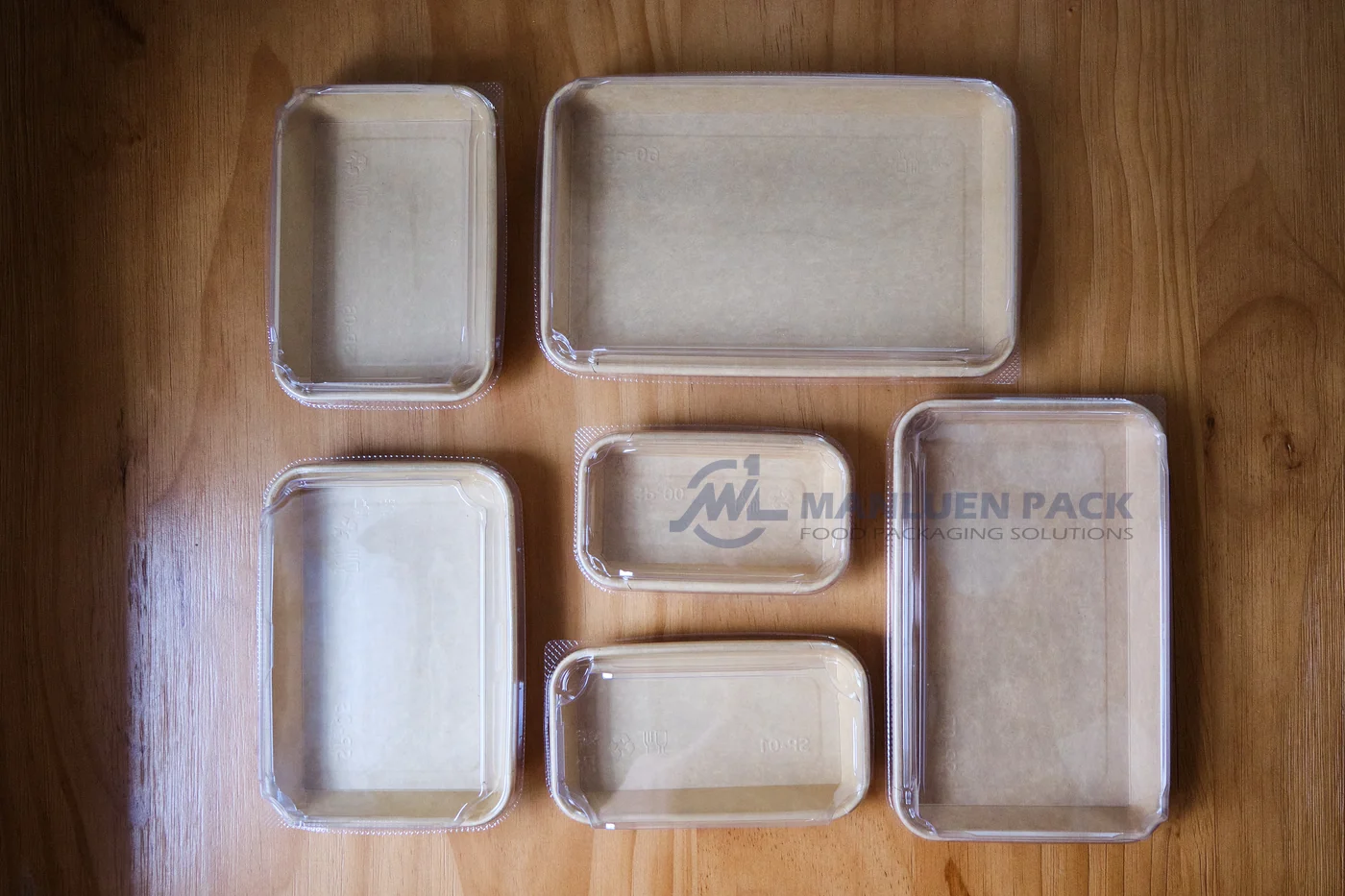
Businesses can buy from direct manufacturers, domestic distributors, wholesalers and sustainable-packaging specialists. Direct manufacturing usually offers more customization, while stocked distributors are generally better suited to lower quantities and faster fulfillment.
Where can I buy sustainable packaging in the US?
Current options include suppliers such as EcoEnclose for ecommerce packaging, Good Start Packaging and World Centric for foodservice products, Green Paper Products for stocked food and disposable packaging, and noissue for stock and custom ecommerce packaging. Product suitability, MOQ and lead time should be checked at SKU level rather than supplier level.
Which sustainable packaging suppliers have fast delivery times for businesses?
For stock products, EcoEnclose currently publishes 1–2 business days of processing, while Good Start says most stock orders ship within one business day. Green Paper Products can ship from several U.S. warehouses within 1–2 business days depending on inventory. World Centric publishes approximately 5–7 business days for ground delivery. Custom packaging can take much longer.
What certifications should a sustainable packaging supplier have?
There is no universal certification package. FSC or PEFC may support forest-sourcing claims, GRS can support recycled-material claims, ISCC PLUS can support circular or bio-based feedstock traceability, and BPI relates to compostability. ISO 14001 and EcoVadis assess broader organizational environmental or sustainability management rather than a specific package.
Is FSC certification enough to prove packaging is sustainable?
No. FSC Chain of Custody verifies forest-based material sourcing and traceability. It does not by itself prove recyclability, compostability, low carbon emissions, food-contact suitability or lower total environmental impact.
Is compostable packaging better than recyclable packaging?
Not automatically. The better end-of-life route depends on the packaging, contamination level and local collection infrastructure. Commercially compostable packaging needs access to suitable composting systems to achieve its intended end-of-life outcome.
What should I ask a sustainable packaging supplier before buying?
Ask what the package is made from, which claims are independently supported, what certifications or test reports apply, whether it meets your performance and regulatory requirements, and what the MOQ, total cost and full lead time will be.
Why can custom sustainable packaging take longer?
Specialty materials may need to be sourced separately, and custom packaging may require artwork approval, tooling, printing setup, testing and production before transit begins. Lead times therefore vary much more than for stocked packaging.
How to Choose the Right Sustainable Packaging Supplier
The right sustainable packaging supplier is not necessarily the company with the strongest environmental slogan or the largest list of certifications.
Choose the supplier that can prove the claims that matter to your application, meet the technical requirements of the product, provide consistent quality, comply with the relevant market requirements, and deliver at a cost and lead time your business can manage.
How to Measure Sustainable Packaging Sourcing and Compare Suppliers
Sustainable packaging sourcing should not be measured by one claim, one material, or one certification. A supplier can offer recycled packaging and still perform poorly on product protection, delivery reliability, traceability, or compliance.
A better sourcing decision looks at the complete package: environmental credentials, technical performance, food-contact requirements where relevant, manufacturing quality, total cost, minimum order quantities, lead time, and the supplier’s ability to support its claims with current documentation.
For most businesses, the simplest way to compare suppliers is to use a weighted scorecard before requesting samples or approving production.
How to Measure Sustainable Packaging Sourcing
Start by measuring the factors that can change the success of the purchase, not just the environmental message attached to the material.
A practical supplier scorecard might look like this:
| Evaluation Area | Suggested Weight | What to Measure |
| Environmental credentials | 20% | Material sourcing, recycled content, certifications, carbon and environmental data |
| Packaging performance | 20% | Strength, barrier, shelf life, sealing and machine compatibility |
| Food-contact and regulatory compliance | 15% | Applicable declarations, testing and market-specific requirements |
| Manufacturing and quality | 15% | Capacity, traceability, QC systems, tolerances and defect control |
| Price and total cost | 10% | Unit price, tooling, freight, wastage, compliance and inventory |
| MOQ and flexibility | 5% | Minimum quantities, sampling, customization and order flexibility |
| Lead time and delivery | 10% | Stock availability, production lead time and delivery reliability |
| Documentation and support | 5% | Certificates, test reports, response quality and technical support |
Score each area from 1 to 5, then multiply the score by its weight.
Supplier score = Σ criterion score × criterion weight
A supplier with the highest environmental score should not automatically win. If its packaging fails on the filling line, requires an impractical MOQ, or takes much longer to arrive, the sourcing decision may not be sustainable from an operational or financial perspective.
The scorecard also gives procurement, sustainability and operations teams one common basis for discussing the decision.
How to Compare Environmental Credentials of Food Packaging Suppliers
The first step is not counting certificates. It is identifying exactly what each environmental claim means.
Terms such as green, eco-friendly 및 sustainable can describe very different things. One supplier may be referring to recycled content, another to renewable raw materials, and another to compostability.
Ask suppliers to make the claim specific.
If a package contains recycled material, what percentage is post-consumer recycled content? If it is compostable, is that claim supported for commercial composting, home composting, or both? If the paper is responsibly sourced, which chain-of-custody system supports the claim?
Then check whether the evidence actually applies to the product you intend to purchase. A genuine certificate is not useful if it covers a different factory, material, product family or manufacturing site.
For forest-based materials, FSC and PEFC Chain of Custody systems focus on tracing eligible forest-based materials through the supply chain. They address sourcing and traceability rather than proving every environmental attribute of the finished package. [1][2]
What Do the Main Sustainability Credentials Actually Show?
| Credential | What It Mainly Verifies | Most Relevant To |
| FSC Chain of Custody | Traceability of eligible forest-based materials | Paper, paperboard, kraft and corrugated packaging |
| PEFC Chain of Custody | Traceability of certified, recycled or controlled forest-based material | Paper and wood-based packaging |
| GRS | Recycled material verification and chain of custody, with additional processing requirements | Products containing verified recycled inputs |
| ISCC PLUS | Traceability of circular, recycled and bio-based feedstocks | Plastics, polymers and alternative feedstocks |
| BPI | Compostability under defined certification programs | Compostable packaging and foodservice products |
| ISO 14001 | An organization’s environmental management system | Supplier or manufacturing-site environmental management |
| EcoVadis | Broader company sustainability management performance | Supplier ESG evaluation |
| CDP | Corporate environmental disclosure | Climate and environmental data |
The Global Recycled Standard was updated to Version 5.0 in July 2026, strengthening tracking of reclaimed material through the certified supply chain. [3]
ISCC PLUS uses chain-of-custody approaches including physical segregation, controlled blending and mass balance. The system therefore serves a different purpose from a product-level recyclability certification. [4]
BPI also distinguishes different composting conditions. Its Commercial & Home Compostable Certification program was introduced in 2025, while ASTM D6400 requirements used for commercial compostability continued to evolve in 2026. [5][6]
ISO 14001:2026 concerns environmental management systems. It can tell a buyer something about how a supplier manages environmental responsibilities, but it does not certify that a particular pouch, tray or carton is recyclable. [7]
EcoVadis likewise evaluates company-level sustainability management rather than a single packaging material. Its 2026 methodology covers environment, labor and human rights, ethics and sustainable procurement. [8]
The practical rule is simple: match the credential to the claim you are trying to verify.
What Environmental Credentials Should Food Packaging Suppliers Provide?
Food packaging requires another layer of due diligence because environmental performance does not replace product safety.
In the United States, food-contact requirements can apply to packaging components such as polymers, adhesives, coatings and colorants. Buyers should ask suppliers to identify the regulatory basis for the intended material, food type, temperature and use rather than treating “food grade” as a complete technical answer. [9]
Food packaging buyers should also review the complete structure. A package may contain a sustainable substrate but still use coatings, inks, adhesives or barrier layers with different compliance considerations.
For flexible food packaging, technical performance matters just as much. Oxygen transmission rate (OTR), water-vapor transmission rate (WVTR), seal strength, seal window and light protection can directly affect shelf life. PCR or bio-based materials may also need different evaluation depending on whether they appear in a direct food-contact layer or a non-contact layer.
Low-migration ink systems and appropriate chemical documentation can strengthen the review, but the final requirement depends on the actual package and market.
Do not approve a material change on a supplier data sheet alone. Test the physical package with the product and, where applicable, run it through the actual filling and sealing equipment.
A sustainable package that reduces shelf life, leaks more frequently or causes production stoppages can create more waste than the format it replaced.
Where to Buy Eco-Friendly Packaging
Businesses generally buy sustainable packaging through four channels: direct manufacturers, domestic distributors, packaging wholesalers and specialist sustainable-packaging suppliers.
Direct manufacturers usually make the most sense for larger custom programs because they provide more control over structure, printing, tooling and materials. The trade-off is that custom manufacturing often requires larger MOQs and longer lead times.
Distributors and wholesalers are more useful when speed and inventory availability matter. They can stock common food containers, mailers, cartons and bags so a business does not need to wait for a new production run.
Specialist sustainable-packaging companies sit somewhere between the two. They often carry certified compostable, recycled-content, recyclable or responsibly sourced products while also offering custom programs.
The right channel therefore depends on whether your priority is customization, unit price, low MOQ or fast delivery.
Where to Buy Sustainable Packaging in the US
Several suppliers currently publish sustainable packaging options and shipping information for U.S. buyers. The table below is not a ranking; it shows different sourcing models and published lead-time information that buyers can compare.
| Supplier | Useful For | Published Stock / Delivery Information | Custom Considerations |
| EcoEnclose | Ecommerce boxes, mailers and shipping supplies | Ready-to-ship stock products: 1–2 business days processing | Custom and branded formats have separate production lead times |
| Good Start Packaging | Sustainable and compostable foodservice packaging | Most stock orders ship within 1 business day | Custom programs vary by product and quantity |
| World Centric | Compostable foodservice and takeout packaging | Ground shipping commonly listed as 5–7 business days | Custom requirements need separate planning |
| Green Paper Products | Compostable and recyclable foodservice supplies | Orders can ship from several U.S. warehouses within 1–2 business days depending on availability | Large orders may require additional delivery time |
| noissue | Stock and custom ecommerce packaging | Several ready-to-ship products list delivery around 1 week | Custom lead times range widely by format |
EcoEnclose currently states that ready-to-ship stock products have a processing lead time of 1–2 business days, while branded products can require several weeks depending on format. [11]
Good Start Packaging states that most stock orders ship within one business day, with qualifying orders placed early enough sometimes shipping the same day. [12]
World Centric currently lists approximately 5–7 business days for ground shipping on multiple store products, including processing and transit estimates. [13]
Green Paper Products uses multiple U.S. warehouse locations and states that orders may ship within 1–2 business days depending on product availability. [14]
noissue illustrates why stock and custom orders must be compared separately. Its current mailer listings include ready-to-ship products with delivery around one week as well as custom formats with production and delivery windows of several weeks. [15]
Always confirm the specific SKU, order quantity, destination and stock position before treating a published lead time as a purchasing commitment.
Which Sustainable Packaging Suppliers Have Fast Delivery Times for Businesses?
There is no single fastest supplier for every business because companies publish lead time in different ways.
Some quote the number of days before an order leaves the warehouse. Others quote total delivery time. Custom packaging usually starts its production clock only after artwork or proof approval.
For stock products, EcoEnclose currently publishes a 1–2 business day processing window, while Good Start Packaging says most stock orders ship within one business day. Green Paper Products can also ship from several U.S. warehouses depending on inventory. World Centric provides an end-to-end ground-shipping estimate of approximately 5–7 business days. [11][12][13][14]
Custom work changes the comparison. noissue, for example, currently lists a one-week delivery estimate for some U.S.-made custom poly mailers, while custom compostable mailers can require around ten weeks. [15]
When delivery matters, ask suppliers to separate five dates: sample turnaround, artwork approval, tooling, production and transit. A supplier that says “three-week lead time” may only be describing production.
Local inventory, standard SKUs, existing tooling and regional warehouses usually make delivery faster. Forecast sharing and supplier-held safety stock can also reduce replenishment risk for recurring orders.
Define Packaging Requirements Before Comparing Suppliers
Sustainability decisions only make sense after the package’s job is clear.
Define the product, dimensions, weight, filling process, storage temperature, required shelf life, barrier needs and distribution conditions before requesting quotations.
For a food pouch, barrier and sealing may drive the material decision. For an ecommerce package, compression strength, dimensions and shipping weight may matter more. For a restaurant takeout container, heat resistance, grease resistance, leakage and food-contact suitability may dominate.
This prevents a common sourcing mistake: comparing two “sustainable” packages that do not actually perform the same function.
How to Evaluate Sustainable Packaging Materials
Recycled Content
Recycled content is one of the easiest metrics to quantify.
Recycled content % = recycled material weight ÷ total material weight × 100
Ask whether the content is post-consumer recycled (PCR), post-industrial or another defined recycled input. Also ask how the supplier measures and documents the percentage.
A higher recycled percentage is not automatically better if it compromises the performance needed for the application. Compare strength, appearance, barrier and regulatory suitability at the same time.
Recyclable vs. Compostable Packaging
Recyclable and compostable packaging solve different problems.
A recyclable package only creates value if suitable collection and processing exist in the market where it becomes waste. A technically recyclable film may still go to landfill where flexible-film collection is limited.
Compostable packaging faces the same infrastructure issue. BPI’s certification framework distinguishes commercial compostability from products certified for both commercial and home composting. [5]
For many products, recyclability may be the more practical goal where established collection exists. Compostable formats can make more sense when packaging is likely to be mixed with food waste and suitable composting infrastructure is available.
Do not treat biodegradable, bio-based 및 compostable as synonyms.
Mono-Material Flexible Packaging
Traditional flexible packages often combine several materials to provide barrier and mechanical performance. These structures can be difficult to recycle because the layers cannot easily be separated.
Mono-material structures simplify the material family and can improve recyclability, but the change still needs technical validation. Check OTR, WVTR, puncture resistance, seal behavior and filling-line performance before approving a switch.
Packaging Weight and Material Efficiency
Using less material can improve environmental and financial performance without changing the basic packaging format.
A simple measure is:
Weight reduction % = (old packaging weight − new packaging weight) ÷ old packaging weight × 100
Track package weight alongside dimensions. A lightweight but oversized shipping box can still perform poorly because dimensional weight and unused transport space increase logistics costs.
Measure the Full Lifecycle, Not One Material Attribute
A lifecycle view prevents sourcing teams from shifting environmental impact from one stage to another.
When comparing lifecycle data, confirm that suppliers use the same system boundary. A cradle-to-gate figure covers a different portion of the lifecycle from a cradle-to-grave figure, so the numbers cannot be treated as equivalent.
Transportation also deserves its own measurement. Record distance traveled, transport mode, package weight, pallet utilization and packing density. A package sourced closer to the point of use may reduce logistics emissions, but geography should still be balanced against manufacturing efficiency and product performance.
End-of-life analysis should also distinguish between what a package can do and what actually happens to it. “Recyclable” describes a property. “Recycled” describes an outcome.
Measure Packaging Performance, Waste and Returns
Environmental measurement should include packaging failure.
Track damage rates, leaks, rejected packs, return frequency and production scrap. A lightweight format that increases damage may shift the environmental burden from packaging material to replacement products and additional transportation.
Useful operational metrics include:
Damage rate = damaged shipments ÷ total shipments × 100
및
Manufacturing waste rate = packaging scrap ÷ total packaging material used × 100
These measures connect sustainability with quality rather than treating them as separate programs.
Evaluate Supplier Manufacturing Capability
A supplier’s environmental credentials matter only if the factory can reproduce the required package consistently.
For high-volume sourcing, review production capacity, automation, backup equipment and peak-season capability. Ask how the supplier controls dimensional tolerances, printing consistency, sealing and batch variation.
Testing capability also matters. Depending on the package, relevant testing may include burst strength, tear resistance, compression, drop testing, handle pull force, seal strength, environmental aging and humidity resistance.
Traceability should connect production lots with raw materials and supporting certificates. If a supplier cannot trace a finished order back to the relevant material batch, environmental claims become harder to defend when questions arise.
Compare MOQ, Lead Time and Customization Early
A material can look attractive until the quotation arrives with an impractical minimum order.
Ask for MOQ at the same time as price. Stock items, plain custom packaging and custom-printed packaging often have very different thresholds.
Lead time should also be broken down. Separate sampling, tooling, artwork approval, production and transit.
Customization may introduce costs for printing plates, cylinders, dies or structural tooling. A simpler design can reduce both cost and production time.
For businesses with uncertain demand, the lowest unit price is not always the best offer. A slightly higher unit price with a lower MOQ may reduce inventory exposure and the risk of obsolete packaging.
Compare Total Cost, Not Unit Price
The supplier quote is only the beginning of packaging cost.
A useful calculation is:
Total packaging cost = purchase cost + tooling + inbound freight + packing labor + inventory + production waste + product damage + compliance costs + applicable EPR costs
Then account for measurable savings such as lower freight, less material, faster packing or fewer damaged shipments.
This prevents a supplier with the lowest unit price from appearing cheaper when its packaging creates more waste, freight or operational downtime.
Include EPR and Market Requirements in Supplier Selection
Extended Producer Responsibility requirements increasingly make packaging data part of procurement.
Rules vary by market, but businesses may need accurate information on material type, packaging weight, recycled content and recyclability to support reporting and fee calculations.
Build these questions into the RFQ rather than requesting the information after the packaging launches.
A supplier that can provide consistent material declarations, weights and supporting documentation can reduce the internal work required for compliance.
Do not assume that switching to recyclable or compostable packaging automatically removes EPR obligations. Check the rules in each market where the packaging will be sold.
How to Verify a Supplier’s Sustainability Claims
Good procurement documentation should allow another person in the organization to understand exactly why a claim was accepted.
For each important claim, retain the relevant certificate, test report or material declaration. Check the issuer, certificate number, facility or product scope, validity period and applicable market.
Where a certification body maintains a public database, use it. The same principle applies to recycled-content and forest-sourcing claims: certification held by a corporate group does not automatically mean every plant or product is covered.
Supplier-level sustainability information can add another layer of due diligence. CDP’s 2026 supply-chain work emphasizes using environmental disclosure data in procurement and supplier progress tracking. [10]
Avoid Greenwashing by Keeping Claims Specific
The safest sustainability claims are usually the most precise.
“Eco-friendly food packaging” gives the buyer little information.
“Made with 70% post-consumer recycled content” identifies a measurable property.
“Made with 70% PCR supported by the applicable chain-of-custody documentation” is stronger because the evidence and claim align.
The internal process should therefore follow a simple sequence:
claim → evidence → review → approved wording
Procurement, ESG and marketing teams should work from the same evidence. This reduces the risk that a technically narrow product attribute turns into an unsupported public statement.
Set Sustainable Packaging Sourcing KPIs
Once suppliers have been selected, keep measuring the program.
Material KPIs can include recycled-content percentage, packaging weight per unit and the share of paper sourced under an accepted chain-of-custody system.
Supplier KPIs can measure the percentage of suppliers that meet the company’s sustainability requirements or provide complete supporting documentation.
Operational KPIs can include CO₂ per shipment, manufacturing waste, damage rates and average lead time.
A useful waste metric is:
Waste diversion rate = waste diverted from landfill ÷ total waste generated × 100
Delivery performance should also form part of the sourcing score. Track average lead time and on-time delivery rather than relying on the promised lead time in the original sales quotation.
For larger supplier programs, EcoVadis ratings or CDP disclosures can supplement product-level evidence by providing broader information about a supplier’s sustainability management and environmental reporting. [8][10]
Set a Baseline Before You Set a Target
Targets become useful only when the starting point is known.
Audit current packaging first. Record material composition, weight, cost, waste, damage rate, suppliers and lead times.
Then set measurable targets against that baseline.
A business might aim to reduce packaging weight, increase verified recycled content, move more paper sourcing to certified sources, reduce average lead time or increase the percentage of suppliers that provide complete environmental documentation.
Every target should specify a baseline, metric, deadline and owner.
“Use more sustainable packaging” is an intention.
“Reduce average packaging weight per order by 15% from the 2026 baseline by the end of 2028” can actually be managed.
A Practical Sustainable Packaging Procurement Process
A disciplined sourcing project usually starts with requirements rather than supplier outreach.
First define what the package must do and establish the sustainability goal. Audit the current packaging so you have a baseline. Then create the supplier scorecard and shortlist suppliers that appear capable of meeting both functional and environmental requirements.
Request material specifications, certificates and quotations at the same time. Once the documents pass the initial review, obtain samples and test them. Food or flexible packaging may require shelf-life and line trials; protective packaging may require drop or compression testing.
Compare total cost, MOQ and lead time before choosing the preferred supplier. For a major material change, use a pilot order before full rollout.
After approval, continue measuring quality, environmental KPIs and delivery performance. Review important certificates and requirements when materials change and on a regular supplier-review cycle.
Common Mistakes When Sourcing Sustainable Packaging
Several mistakes appear repeatedly in sustainable packaging projects.
One is choosing the material first and checking performance later. Another is comparing certificates by quantity rather than understanding what they verify.
Buyers also frequently assume recyclable means widely recycled, or that compostable automatically means environmentally preferable. Neither conclusion is safe without considering local infrastructure.
Other problems appear later in the project: skipping line trials, ignoring shelf-life changes, comparing unit price instead of total cost, overlooking MOQ and accepting a quoted lead time without asking whether it includes transit.
Documentation creates another common failure point. An expired certificate, a report covering another product, or a broad supplier-level certification should not be used to support a claim that it does not actually verify.
Red Flags When Evaluating Sustainable Packaging Suppliers
Treat vague environmental language without supporting evidence as a warning sign.
The same applies when a supplier cannot identify the recycled-content methodology, refuses to share relevant test reports, or sends certificates that do not clearly match the manufacturing site or product.
Commercial uncertainty also matters. A supplier that cannot define MOQ, lead time, quality tolerance or defect procedures can create problems even if the material itself looks strong.
For food packaging, the inability to provide clear technical information about the intended food-contact use is another reason to stop the review and request more evidence.
The best suppliers do not need to have every sustainability certification available. They do need to understand the claims they make and provide documentation that supports them.
Sustainable Packaging Supplier Checklist
| Area | Confirm Before Approval |
| Environmental claim | Claim is specific and measurable |
| Certification | Certificate matches the material, product or supplier scope claimed |
| Documentation | Evidence is current and traceable |
| Recycled content | Percentage and measurement method are documented |
| End of life | Recycling or composting claim fits the intended market |
| Food packaging | Food-contact basis and intended use are documented |
| Performance | Strength, barrier, sealing and shelf life meet requirements |
| Production | Supplier can meet capacity and tolerance requirements |
| Testing | Relevant lab and production trials are complete |
| MOQ | Minimum volume fits actual demand |
| 비용 | Total cost has been compared, not unit price alone |
| Lead time | Production and transit times are understood separately |
| Delivery | Stock strategy and on-time performance are acceptable |
| Quality | Defect tolerances and return procedures are agreed |
| 준수 | Required market and EPR data are available |
| Claims | Public sustainability wording matches the evidence |
자주 묻는 질문
How do you measure sustainable packaging sourcing?
Use a supplier scorecard that combines environmental credentials, packaging performance, compliance, manufacturing quality, price, MOQ and delivery. Then track ongoing KPIs such as recycled-content percentage, packaging weight, waste, damage rates and lead time.
How do you compare environmental credentials of food packaging suppliers?
Start with the exact environmental claim and determine what evidence supports it. Compare certification scope, material documentation, food-contact information and supplier environmental performance rather than counting the number of certificates.
Where can businesses buy eco-friendly packaging?
Businesses can buy from direct manufacturers, domestic distributors, wholesalers and sustainable-packaging specialists. Direct manufacturing usually offers more customization, while stocked distributors are generally better suited to lower quantities and faster fulfillment.
Where can I buy sustainable packaging in the US?
Current options include EcoEnclose for ecommerce packaging, Good Start Packaging and World Centric for foodservice products, Green Paper Products for stocked foodservice supplies, and noissue for stock and custom ecommerce packaging. Product suitability, MOQ and lead time should be checked at SKU level rather than supplier level. [11][12][13][14][15]
Which sustainable packaging suppliers have fast delivery times for businesses?
For stock products, EcoEnclose currently publishes 1–2 business days of processing, while Good Start Packaging says most stock orders ship within one business day. Green Paper Products can ship from several U.S. warehouses within 1–2 business days depending on availability. World Centric lists approximately 5–7 business days for standard ground delivery on current product pages. Custom packaging can take significantly longer. [11][12][13][14][15]
What certifications should a sustainable packaging supplier have?
There is no universal certification package. FSC or PEFC can support forest-sourcing claims, GRS can support recycled-material claims, ISCC PLUS can support circular or bio-based feedstock traceability, and BPI relates to compostability. ISO 14001 and EcoVadis address broader organizational environmental or sustainability management rather than proving a specific package attribute.
Is FSC certification enough to prove packaging is sustainable?
No. FSC Chain of Custody addresses forest-based material sourcing and traceability. It does not by itself prove recyclability, compostability, food-contact suitability or lower total environmental impact. [1]
Is compostable packaging better than recyclable packaging?
Not automatically. The better end-of-life route depends on the packaging, contamination level and local collection infrastructure. Commercially compostable packaging needs access to suitable composting systems to achieve its intended end-of-life outcome.
What should I ask a sustainable packaging supplier before buying?
Ask what the package is made from, which claims are independently supported, what certifications or test reports apply, whether it meets your performance and regulatory requirements, and what the MOQ, total cost and full lead time will be.
Why can custom sustainable packaging take longer?
Specialty materials may need to be sourced separately, and custom packaging may require artwork approval, tooling, printing setup, testing and production before transit begins. Lead times therefore vary much more than for stocked packaging.
How to Choose the Right Sustainable Packaging Supplier
The right sustainable packaging supplier is not necessarily the company with the strongest environmental slogan or the largest list of certifications.
Choose the supplier that can prove the claims that matter to your application, meet the technical requirements of the product, provide consistent quality, comply with the relevant market requirements, and deliver at a cost and lead time your business can manage.
Measure those factors with the same scorecard for every supplier. Test the packaging before scaling, document the evidence behind important claims, and continue tracking performance after launch.
That approach turns sustainable packaging sourcing from a marketing decision into a measurable procurement process.
References
- Forest Stewardship Council (FSC).FSC Directive on Chain of Custody Certification (FSC-DIR-40-004). Updated April 15, 2026. Provides FSC’s current interpretations for Chain of Custody certification requirements.
- Programme for the Endorsement of Forest Certification (PEFC).Chain of Custody of Forest and Tree Based Products and Related Standards – Guidance for Use, PEFC GD 2001:2025. Second edition published June 10, 2025.
- Textile Exchange.GRS-101 Global Recycled Standard (GRS), Version 5.0. July 1, 2026. Covers updated requirements for tracking reclaimed and recycled materials through certified supply chains.
- ISCC System GmbH.ISCC PLUS 203-2 — Chain of Custody, Version 1.1. Covers physical segregation, controlled blending and mass-balance approaches under ISCC PLUS.
- Biodegradable Products Institute (BPI).BPI Launches Commercial & Home Compostable Certification Program. September 18, 2025. Explains BPI’s certification framework for products intended for commercial and home composting conditions.
- Biodegradable Products Institute (BPI).Compostable Products Standard Revised. September 11, 2026. Summarizes 2026 revisions strengthening biodegradation requirements under ASTM D6400 for commercially compostable products.
- International Organization for Standardization (ISO).ISO 14001:2026 — Environmental Management Systems — Requirements with Guidance for Use. Published April 2026.
- EcoVadis Ratings Methodology Overview and Principles. July 22, 2026. Describes the current company sustainability rating framework across environment, labor and human rights, ethics and sustainable procurement.
- S. Food and Drug Administration (FDA).Understanding How the FDA Regulates Substances that Come into Contact with Food. 2025. Explains U.S. regulatory pathways for food-contact substances used in packaging and related applications.
- Sustainable Supply Chains: How Disclosure Data Drives Progress and Accelerates Action. March 18, 2026. Discusses the use of supplier environmental disclosure data in procurement and supply-chain management.
- Lead Times. Current supplier operations page. Accessed October 24, 2026. Lists 1–2 business days for ready-to-ship stock products and product-specific lead times for branded packaging.
- Good Start Packaging.Shipping & Returns. Current supplier operations page. Accessed October 24, 2026. States that most stock orders ship within one business day and qualifying early orders may ship the same day.
- World Centric.Current product shipping information. Accessed October 24, 2026. Current listings show approximately 5–7 business days for standard ground delivery, including processing and transit estimates.
- Green Paper Products.Shipping Policy. Current supplier operations page. Accessed October 24, 2026. Describes fulfillment from multiple U.S. warehouses and shipment within 1–2 business days depending on product availability.
- Mailers — Current Product, MOQ and Lead-Time Listings. Accessed October 24, 2026. Shows substantial differences between ready-to-ship, U.S.-made and fully custom packaging lead times. Its Custom Compostable Mailers documentation was updated November 4, 2025.
- Note: Supplier inventory, MOQs, processing times and delivery estimates can change. Verify the current product page or quotation before using supplier-specific lead-time information for purchasing decisions.

ManLuen 플라스틱 포장 회사는 20년 이상 플라스틱 식품 포장 생산에 특화되어 있습니다. 저희 제품은 100% 순수 원료와 BPA-Free PP, PS, OPS로 만들어졌으며, FDA 및 유럽 표준을 준수합니다.
 KO
 EN
 ZH
 FR
 PT
 ES
 JA