
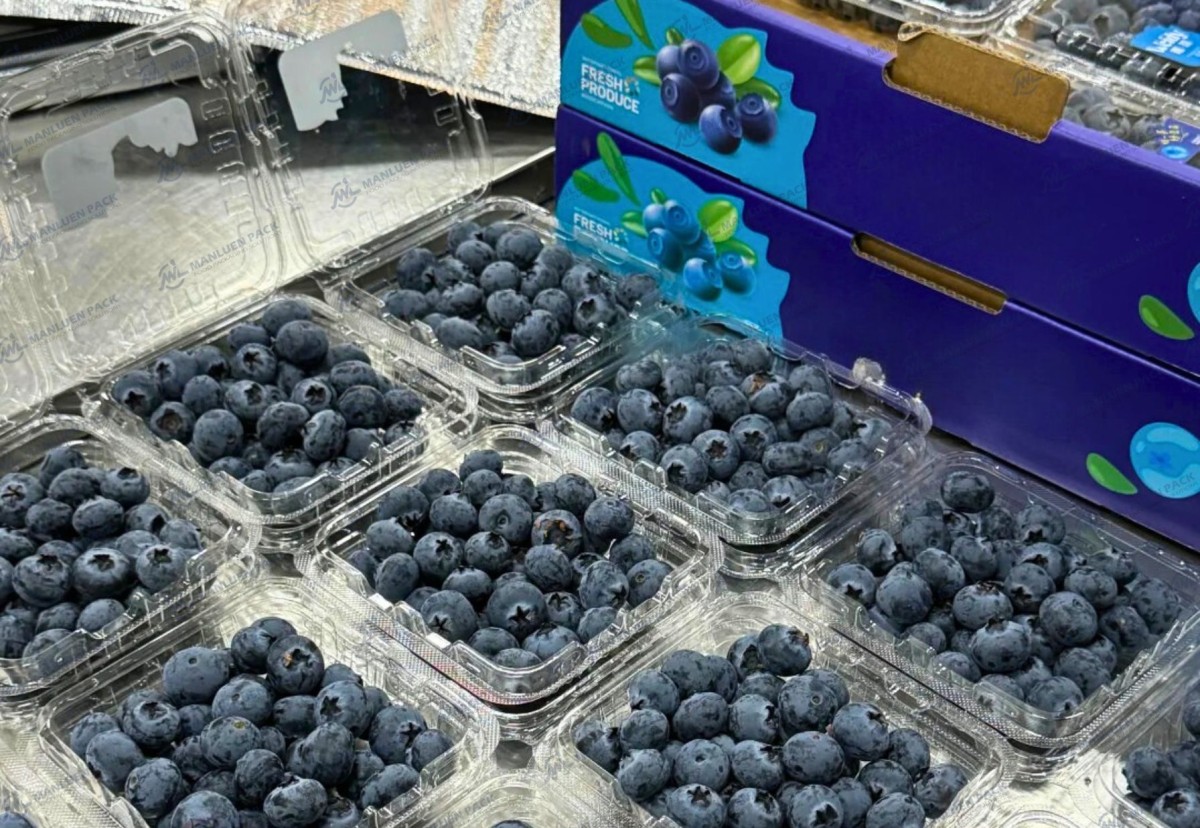
Blueberries bruise easily, lose moisture after harvest, and need steady airflow during cooling. The package must protect the fruit without trapping too much heat or moisture.
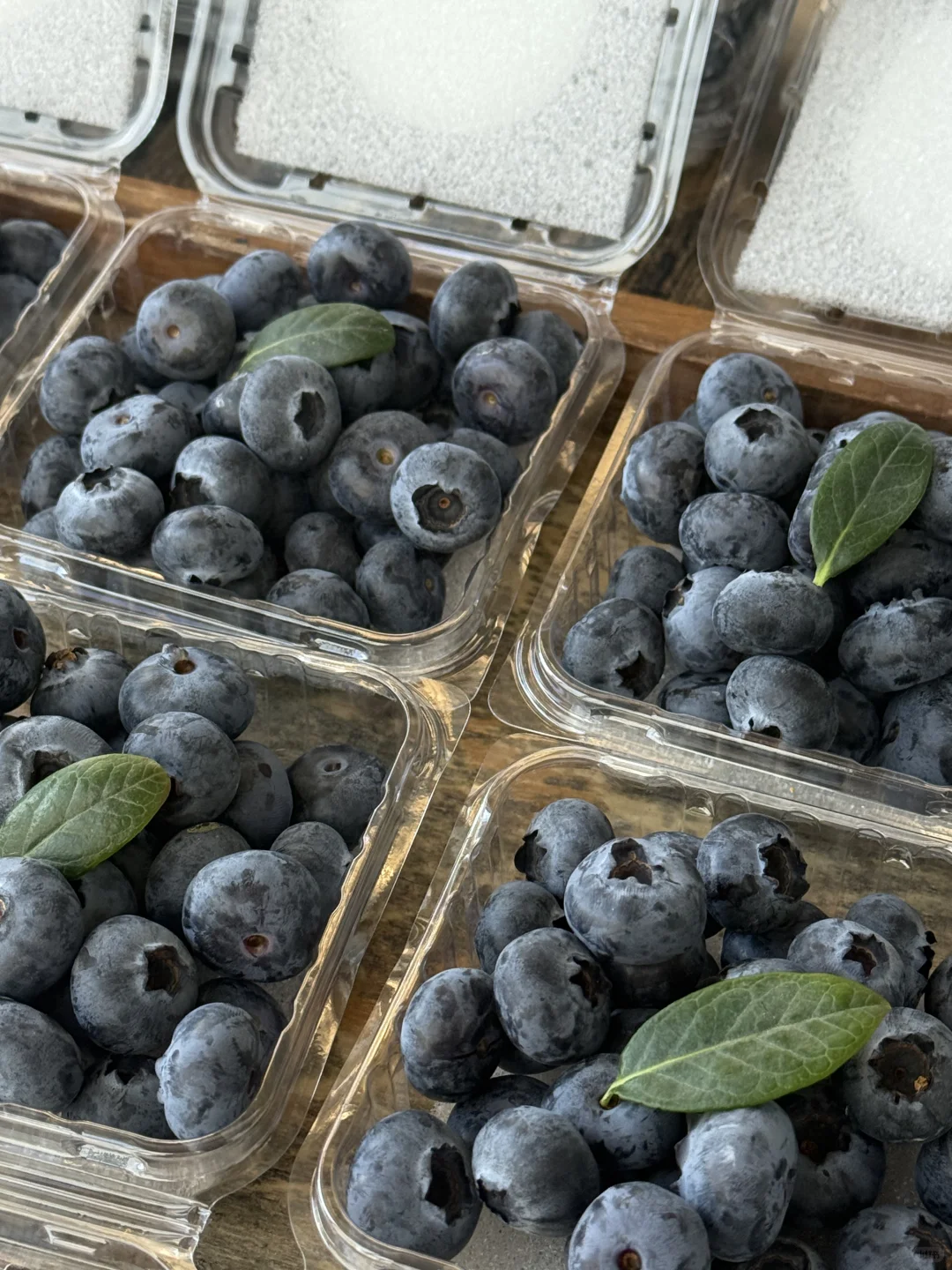
Clear, vented clamshell containers are widely used for fresh blueberries because they combine visibility, ventilation, and physical protection. However, the material alone does not decide how well a container performs. Buyers also need to check the vent pattern, closure, stacking strength, dimensions, label area, and cold-chain conditions.
This guide explains how PET and PS blueberry packaging differ and what buyers should verify before placing a wholesale order.
What Does Good Blueberry Packaging Need to Do?
A blueberry container has several practical jobs. It must hold the berries securely, allow cooling air to move through the pack, resist damage during transport, and display the fruit clearly at retail.
The University of Georgia Cooperative Extension notes that vented clear clamshells are commonly used because they hold the fruit in place while allowing airflow during forced-air cooling. The same guidance recommends rapid cooling and careful temperature control after harvest.
A suitable blueberry package should provide:
- Enough ventilation for the intended cooling process
- A secure closure that stays shut during handling
- Space for the berries without excessive compression
- Good visibility for retail inspection and display
- Stable stacking in trays, cartons, and pallets
- A practical area for labels, barcodes, and traceability information
These requirements should guide the design. A low price cannot compensate for crushed fruit, open lids, blocked airflow, or poor carton fit.
PET or PS: Which Material Should You Choose?
PET and PS can both be used for clear food packaging when the exact resin, additives, and finished article comply with the intended conditions of use. They do not perform in the same way.
For a broader comparison of plastics, paper, aluminum, and plant-fiber options, see Manluen’s guide to food packaging materials.
PET blueberry containers
PET offers high clarity and good impact resistance. It works well for retail packs that must remain attractive after packing, transport, stacking, and shelf handling.
PET is often the stronger choice when buyers need:
- Clear product presentation
- Better resistance to cracking during transport
- Firm sidewalls and lid structure
- Consistent performance in refrigerated distribution
- A material that may be accepted in PET recycling streams where local facilities permit it
Recyclability still depends on the complete package. Labels, adhesives, colors, food residue, local collection rules, and sorting facilities can all affect whether a used container is actually recycled.
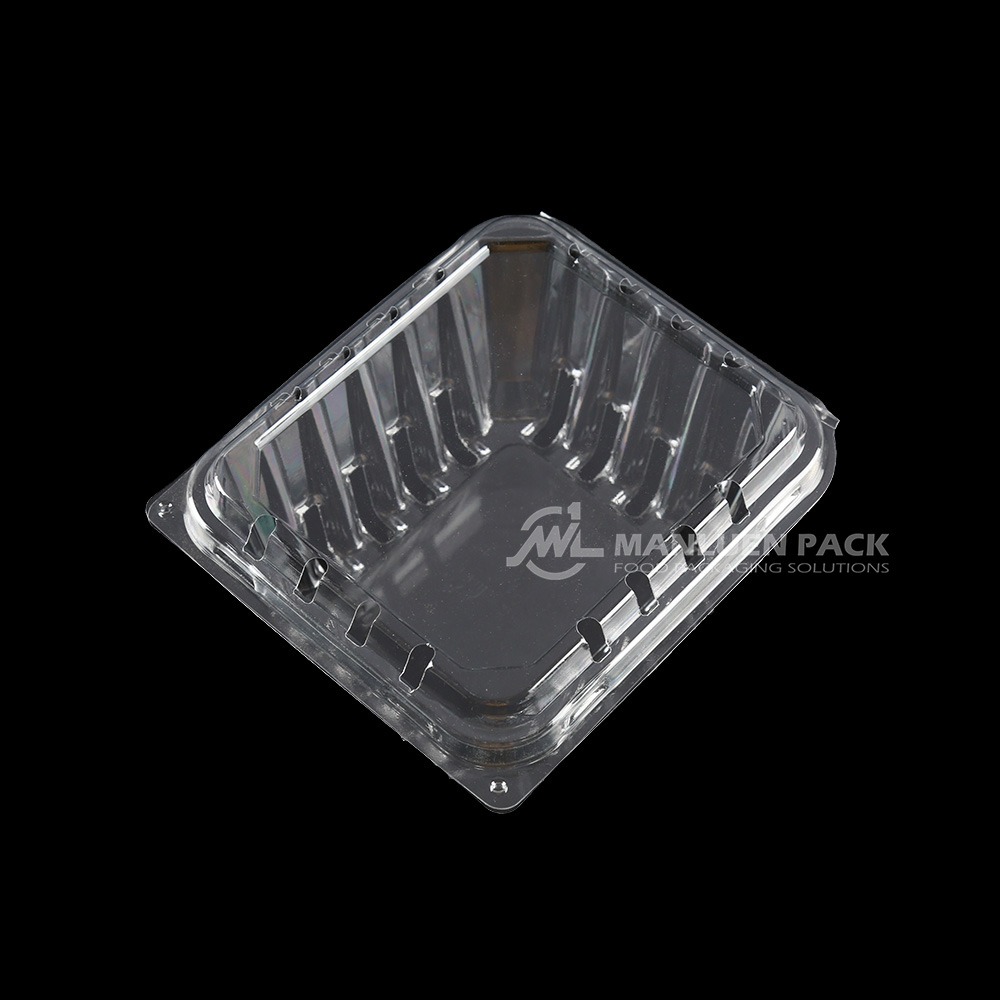
PS blueberry containers
PS can provide a clear, rigid package at a competitive cost. It may suit short distribution routes, local retail programs, and applications where the container will face limited handling.
PS is generally more brittle than PET. Buyers should therefore test the hinge, corners, locking points, and stacking performance under realistic transport conditions.
Collection options for used PS packaging are also limited in many markets. Check the recycling system in the destination country or region before making a recyclability claim.
| Selection factor | PET | PS |
|---|---|---|
| Clarity | 높음 | 높음 |
| Impact resistance | Generally stronger | More prone to cracking |
| Typical use | Retail and longer distribution | Shorter distribution and cost-focused programs |
| Cold-food use | Suitable when supported by the product specification | Suitable when supported by the product specification |
| Recycling access | Depends on local PET collection and package design | Often more limited |
Do not select a container from the resin name alone. Ask for samples made with the same material, thickness, vent pattern, and closure that will be used in production.
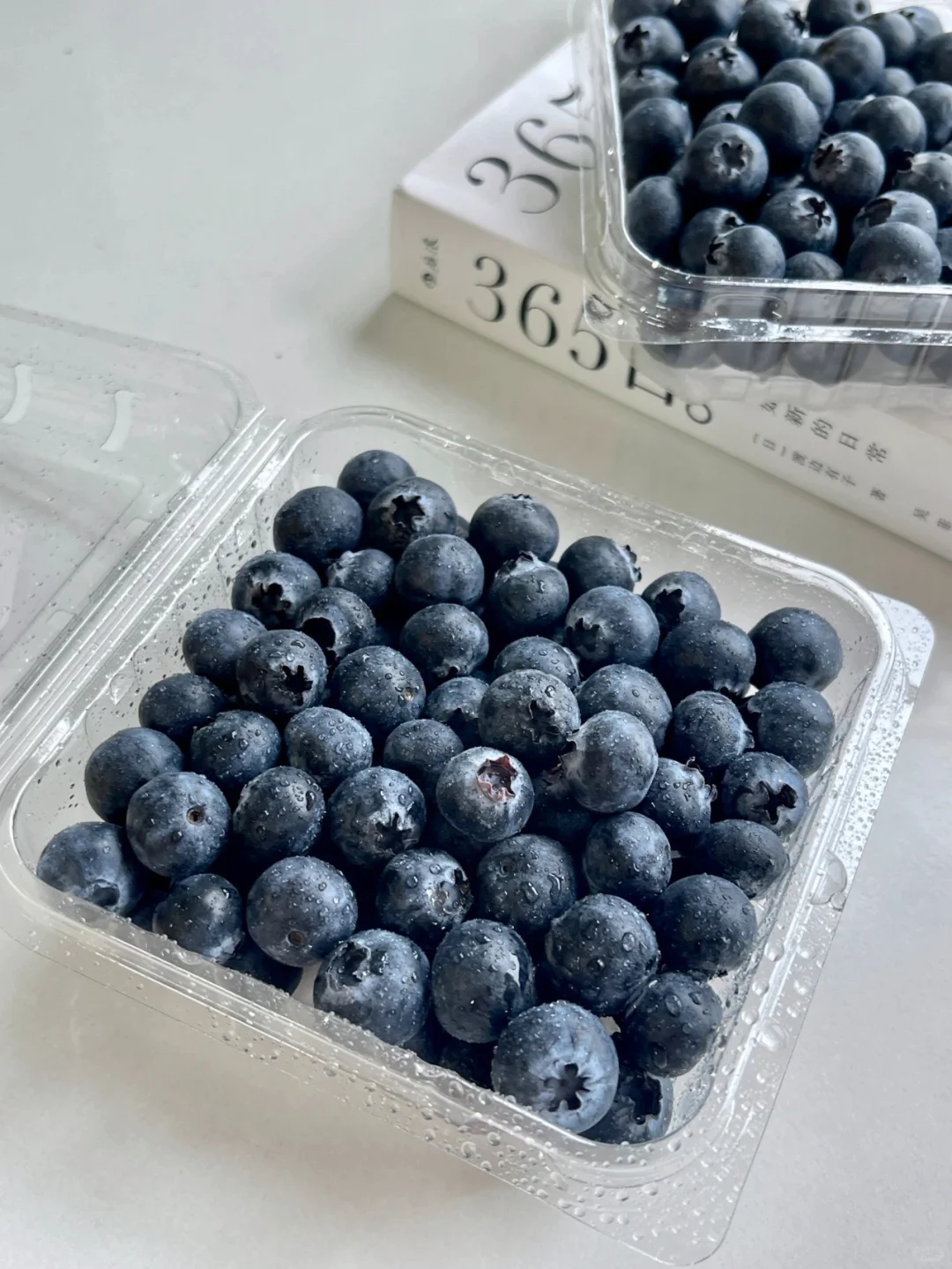
Ventilation and Cold-Chain Performance
Blueberries continue to respire after harvest. Removing field heat quickly helps reduce water loss, decay, and quality loss.
According to the University of Georgia, forced-air cooling works best when air can move horizontally through the packed fruit. Containers therefore need correctly placed holes or slots. The guide lists an optimum temperature of about 32°F, with relative humidity around 90% to 95%, although the exact handling program depends on the cultivar and supply chain.
More ventilation is not automatically better. Too little vent area can slow cooling. Too much may increase moisture loss or weaken the package. Vent location also matters because holes can become blocked when containers are stacked inside a carton.
Manluen’s guide to blueberry container venting explains this design question in more detail.
Before approving a package, test it as part of the complete packing system:
- Fill the container with the actual blueberry variety and target weight.
- Place filled packs in the intended master carton.
- Confirm that carton walls and nearby containers do not block the vents.
- Run the normal precooling process.
- Measure fruit temperature in the center of the load.
- Check weight loss, condensation, firmness, lid security, and damaged fruit after transport.
A sample that looks good when empty may behave differently after filling, cooling, stacking, and vibration.
Choose the Container Size from the Product and Sales Format
There is no single best blueberry container size. The correct size depends on the declared net weight, berry size, retail price point, carton dimensions, and customer requirements.
Small packs can support individual or convenience purchases. Larger packs can suit family-size retail and wholesale programs. In both cases, the berries need enough room to avoid compression.
Use the target net weight as the starting point. Then test the actual fruit. Berry diameter, cultivar, harvest condition, and moisture can change how much space the same weight occupies.
| Buyer question | What to verify |
|---|---|
| Will the container hold the declared net weight? | Run fill tests with the actual berry variety and size range. |
| Will the fruit be compressed? | Check headspace after closing the lid. |
| Will it fit the master carton? | Confirm container count, orientation, carton dimensions, and vent alignment. |
| Will it stack safely? | Test filled packs rather than empty samples. |
| Is there enough label space? | Check barcode size, country-of-origin text, traceability codes, and retailer labels. |
Buyers should also inspect the closure. A good clamshell should close without excessive force and remain closed during packing and distribution. At the same time, consumers should be able to open it without damaging the fruit.
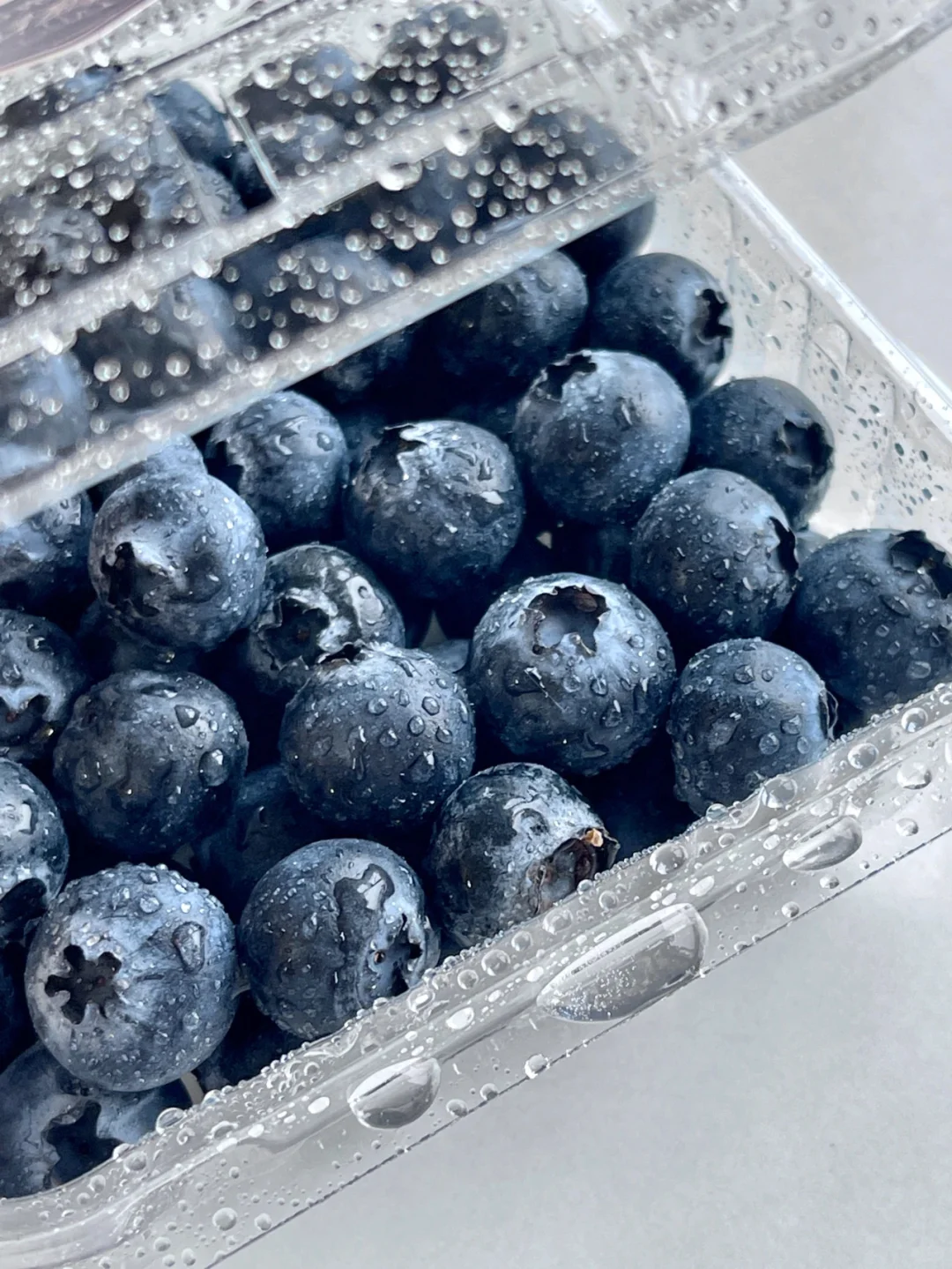
Food-Contact Safety and Compliance
The phrase “food grade” does not mean that every plastic package is suitable for every food or temperature. Compliance depends on the material formulation and its intended conditions of use. Manluen’s article on what food-grade packaging means explains this distinction.
In the United States, the FDA regulates substances used in food-contact materials. The agency evaluates factors such as the intended food type, storage temperature, contact time, and possible migration into food. Relevant regulatory provisions include 21 CFR 177.1630 for certain PET polymers 및 21 CFR 177.1640 for polystyrene and rubber-modified polystyrene.
A supplier should not rely on the words “FDA approved” as a complete answer. Ask for the regulatory basis for the exact resin and finished container. The documents should match the material, manufacturer, intended food, and conditions of use.
For products sold in the European Union, buyers should review the applicable requirements under Regulation (EU) No 10/2011, including supporting migration documentation and a Declaration of Conformity where required.
The Manluen guide to plastic food packaging compliance covers the questions importers should raise with suppliers.
Documents to request before ordering
- The exact resin and material specification
- The regulatory basis for the intended market
- Migration or food-contact test reports for the relevant product
- An EU Declaration of Conformity when applicable
- A statement covering colorants, additives, coatings, and recycled content
- Lot identification and traceability records
- Current test dates and the identity of the tested sample
Manluen publishes company-level information on its certifications page. Buyers should still request the document set that applies to the exact SKU, material, and destination market.
How to Evaluate a Blueberry Container Sample
Do not approve a package from photographs alone. A physical test can reveal weak hinges, sharp edges, poor stacking, blocked vents, and lids that open under pressure.
- Check the material. Confirm whether the sample is PET or PS and compare it with the written specification.
- Run a fill test. Use the actual berries and target net weight.
- Inspect headspace. The lid should not press against the top layer of fruit.
- Test the closure. Open and close several samples and check whether the lock remains secure.
- Check the vents. Confirm that air paths remain open inside the master carton.
- Test stacking. Use filled containers and the intended carton configuration.
- Simulate transport. Check for cracked corners, open lids, bruising, and movement inside the pack.
- Review the label area. Make sure the label does not cover critical ventilation holes.
If you are comparing several materials or package formats, the broader guide on how to choose food packaging provides a useful selection framework.
What to Ask a Wholesale Supplier
A suitable supplier should be able to answer practical questions without relying on general claims.
- Which material and resin grade will be used?
- Are the sample and production version identical?
- What are the internal and external dimensions?
- What is the container weight and thickness tolerance?
- Can the vent pattern be adjusted?
- How is lid fit checked during production?
- What inspection standard applies to cracks, deformation, contamination, and closure defects?
- Can the supplier provide current, product-specific food-contact documents?
- What are the packing quantity, carton dimensions, lead time, and minimum order quantity?
- Are custom labels, embossing, or other branding options available?
Manluen supplies disposable food containers for international food businesses. More information about the company and its manufacturing background is available on the About Manluen page.
자주 묻는 질문
Are PET and PS containers safe for blueberries?
They can be suitable for cold food contact when the complete material formulation and finished container comply with the intended use. Ask the supplier for documentation that covers the exact product rather than relying on a general material claim.
Is PET always better than PS?
No. PET usually offers better impact resistance, while PS may provide a lower-cost rigid package for shorter distribution. The right choice depends on transport conditions, target market, package design, and local waste systems.
How much ventilation does a blueberry container need?
There is no universal percentage for every operation. Vent area and location must work with the berry variety, cooling method, master carton, storage period, and humidity. Test the complete filled packing system before production.
Can blueberry clamshell packaging be recycled?
Some PET clamshells may be accepted in local recycling programs, but collection rules vary. Labels, adhesives, colors, food residue, and sorting equipment can affect acceptance. PS recycling access is generally more limited. Buyers should confirm local rules before printing a recycling claim.
Can these containers go in a microwave?
Blueberry clamshells are designed mainly for cold storage and retail display. Do not describe a PET or PS berry container as microwave-safe unless the exact product has been designed, tested, and documented for that use.
How should I choose the right fill size?
Start with the declared net weight and retail format. Fill the sample with the actual berries, close the lid, check headspace, and test the pack inside the intended shipping carton.
Choose the Package as Part of the Cold Chain
A blueberry package cannot replace careful harvesting, rapid cooling, stable refrigeration, and gentle handling. It should support those processes.
Compare materials, vent patterns, closures, carton fit, and documentation before making a decision. Always test filled production samples under the same cooling and transport conditions that the berries will face.
To discuss dimensions, materials, samples, packing requirements, or custom blueberry clamshell packaging, request a quote from Manluen.
Sources and Further Reading
- U.S. Food and Drug Administration. Food Packaging & Other Substances that Come in Contact with Food. Used for the FDA food-contact and intended-use explanation. U.S. Food and Drug Administration
- Electronic Code of Federal Regulations. 21 CFR 177.1630 — Polyethylene Phthalate Polymers. Used for the PET regulatory reference. eCFR
- Electronic Code of Federal Regulations. 21 CFR 177.1640 — Polystyrene and Rubber-Modified Polystyrene. Used for the PS regulatory reference. eCFR
- European Union. Regulation (EU) No 10/2011 on Plastic Materials and Articles Intended to Come into Contact with Food. Used for the EU compliance section. EUR-Lex
- University of Georgia Cooperative Extension. Blueberry Harvesting and Postharvest Handling. Used for ventilation, cooling, humidity, and handling guidance. University of Georgia Cooperative Extension
- USDA Agricultural Research Service. Commercial Storage of Fruits, Vegetables, and Florist and Nursery Stocks. Used as supporting guidance for blueberry packaging and refrigerated storage. USDA Agricultural Research Service

ManLuen 플라스틱 포장 회사는 20년 이상 플라스틱 식품 포장 생산에 특화되어 있습니다. 저희 제품은 100% 순수 원료와 BPA-Free PP, PS, OPS로 만들어졌으며, FDA 및 유럽 표준을 준수합니다.
 KO
KO  EN
EN  ZH
ZH  FR
FR  PT
PT  ES
ES  JA
JA