
Sushi Tray Sizes & Capacity: How to Pick the Right Tray for 6, 12, 20, 40, and 100 Pieces
Choosing the right sushi tray is not just about finding a container that looks good. The tray has to fit the number of pieces, protect delicate rice and toppings, leave enough room for garnish and sauce cups, and match the serving context: a single grab-and-go lunch, a family platter, a grocery display, or a catered party. If you searched for “shusi tray,” the product you probably need is a sushi tray—and the fastest way to choose one is by capacity.
This guide gives you a practical sizing framework for 6, 12, 20, 40, and 100 pieces of sushi, with approximate tray dimensions in inches and centimeters, examples by use case, and material tips for 使い捨て寿司トレイ, trays with lids, wooden serving boards, and catering platters.
The short version: choose by piece count first, then by piece type, then by lid height and presentation space. A 20-piece roll-only sushi tray does not need the same footprint as a 20-piece mixed sushi tray with nigiri, sashimi, ginger, wasabi, and two sauce cups.
Sushi Tray Size and Capacity Cheat Sheet
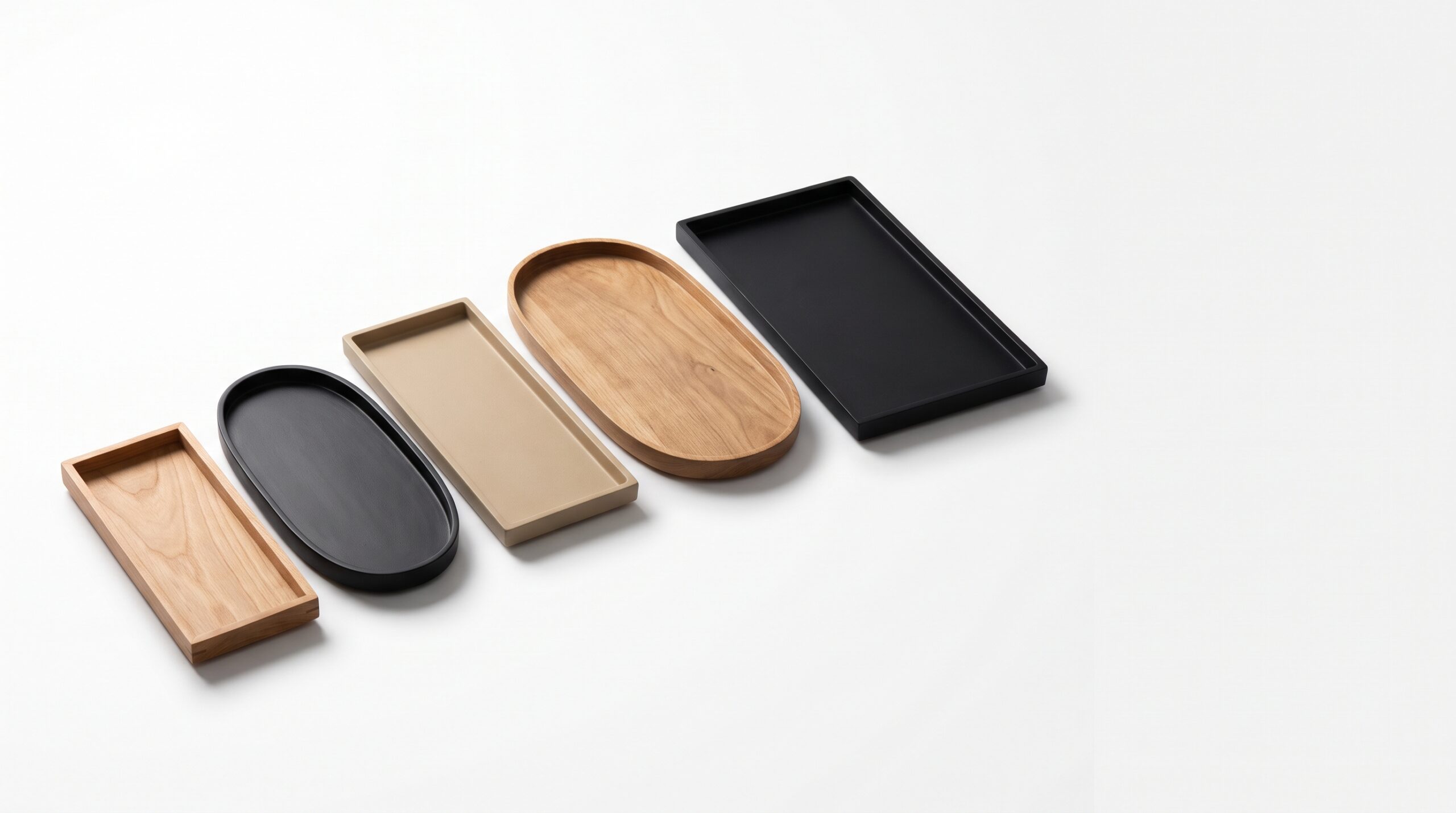
There is no single universal sushi tray size because sushi pieces vary. A standard maki roll piece may be compact and uniform, while nigiri is longer, sashimi needs more surface area, and specialty rolls with toppings require extra headroom under the lid. Still, the following table works well for planning most US takeout, retail, home entertaining, and sushi catering scenarios.
Important sizing note: Use the tray’s inside usable dimensions, not only the outside rim-to-rim measurement. A sushi tray listed as 10 x 7 inches may have a slightly smaller flat interior once the raised rim, lid channel, or molded compartments are considered.
| Sushi count | Approx. sushi tray size | Metric equivalent | Best for | Practical capacity notes | Manluen Recommended Products |
|---|---|---|---|---|---|
| 6 pieces | 6 x 4 in to 7 x 5 in | 15 x 10 cm to 18 x 13 cm | Single snack, small roll sample, appetizer add-on | Works for one roll cut into 6 pieces, or 4 nigiri plus garnish if arranged tightly. | WL-03 — 168 × 118 mm; WL-0.6 — 167 × 92 mm for narrower portions |
| 12 pieces | 8 x 5.5 in to 9 x 6 in | 20 x 14 cm to 23 x 15 cm | Lunch tray, two basic rolls, sampler for one person | Good for 12 maki pieces, 8 roll pieces plus 4 nigiri, or a compact mixed set with one small sauce cup. | WL-07 — 219 × 139 mm; WL-09 — approx. 241 × 148 mm for a slightly larger presentation |
| 20 pieces | 10 x 7 in to 12 x 8 in | 25 x 18 cm to 30 x 20 cm | Family platter, small party tray, restaurant takeout combo | A strong all-purpose size. Leave at least 10–15% open space for ginger, wasabi, dividers, and lid clearance. | WL-11 — 260 × 188 mm; a strong fit for standard 20-piece sushi assortments |
| 40 pieces | 14 x 10 in to 16 x 11 in, or two 20-piece trays | 36 x 25 cm to 41 x 28 cm | Party platter, office lunch, small catering order | Often easier to serve as two 20-piece trays for freshness, transport, and variety separation. | WL-65 — Ø380 mm; WL-C025 / WL-C021 — approx. 350 × 350 mm square trays; KS-65 — 382 × 385 mm for larger party presentations |
| 100 pieces | Multiple 16 x 11 in trays, two half-sheet-size trays, or one large catering board | Multiple 41 x 28 cm trays, or approx. 46 x 66 cm sheet-pan footprint | Catering, weddings, corporate events, buffet table | Avoid crowding all 100 pieces onto one tray unless using a professional catering platter with strong base support. | Two or more large Manluen party trays recommended, such as KS-67 — 455 × 455 mm and/or WL-B19 — 584 × 303 mm, depending on sushi size and layout |
For a quick rule of thumb, a single layer is almost always better than stacking. Stacked sushi looks abundant at first, but it compresses rice, smears sauces, makes pieces harder to pick up, and creates food-safety and freshness problems. If the sushi tray looks too full before garnish is added, move up one size or split the order across two trays.
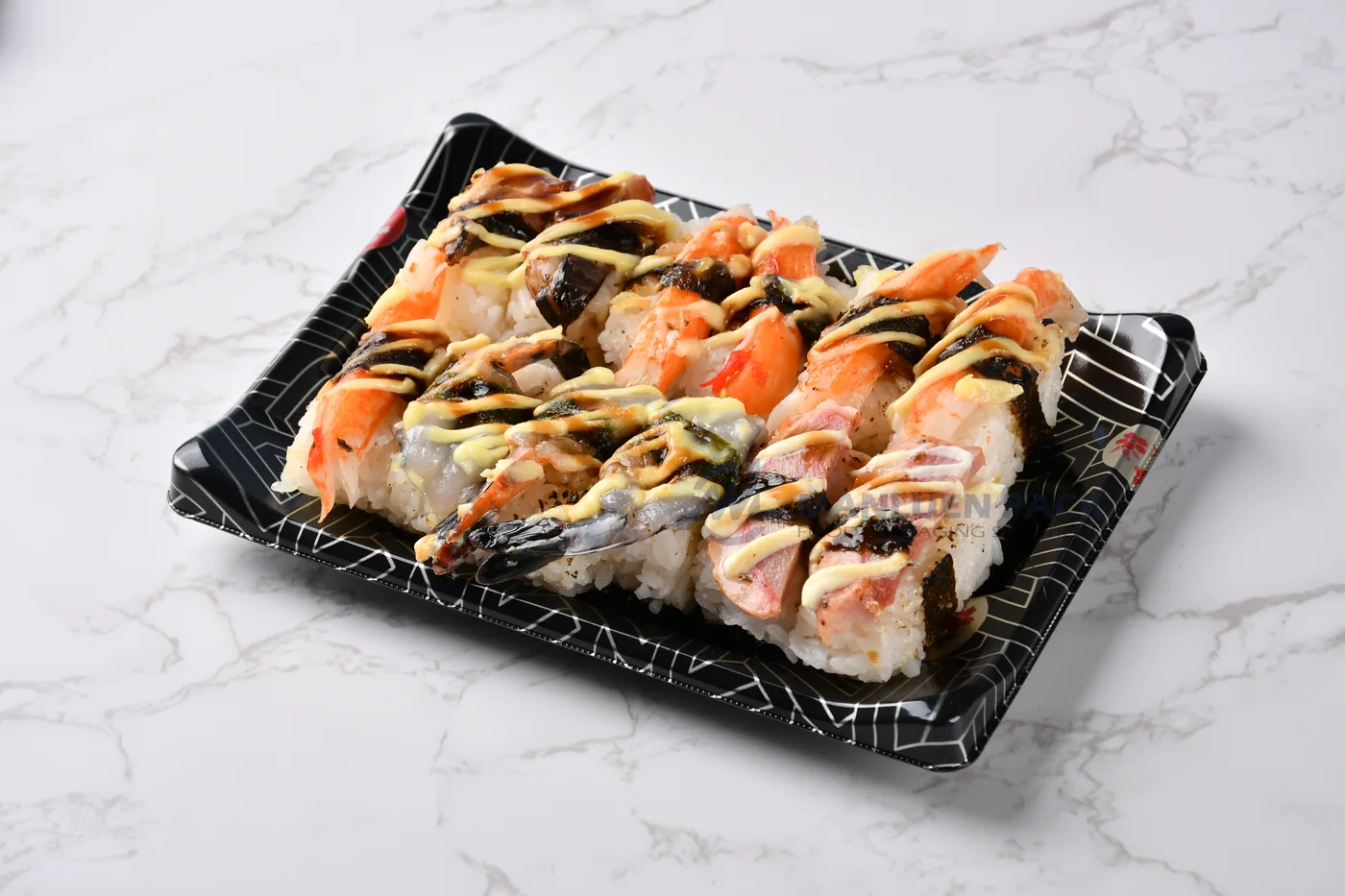
Capacity depends on the type of sushi
When calculating sushi tray capacity, treat each piece type differently:
- Maki and uramaki roll pieces: Usually the easiest to pack neatly. A standard roll cut into 6 or 8 pieces can sit in rows with minimal gaps.
- Nigiri: Longer and more delicate. It needs room so toppings do not touch or slide.
- Sashimi: Requires more open space than roll pieces because the slices should be displayed flat or slightly overlapped, not squeezed upright.
- Specialty rolls: Need extra clearance because of toppings, sauces, tempura flakes, roe, avocado, or seared fish.
- Sauce cups and garnish: A 1-oz or 2-oz sauce cup can take the space of 2–4 sushi pieces, depending on the tray.
That means a sushi tray advertised as “20-piece capacity” may be accurate for simple roll pieces but too small for a premium 20-piece chef’s assortment.
How to Calculate Sushi Tray Capacity
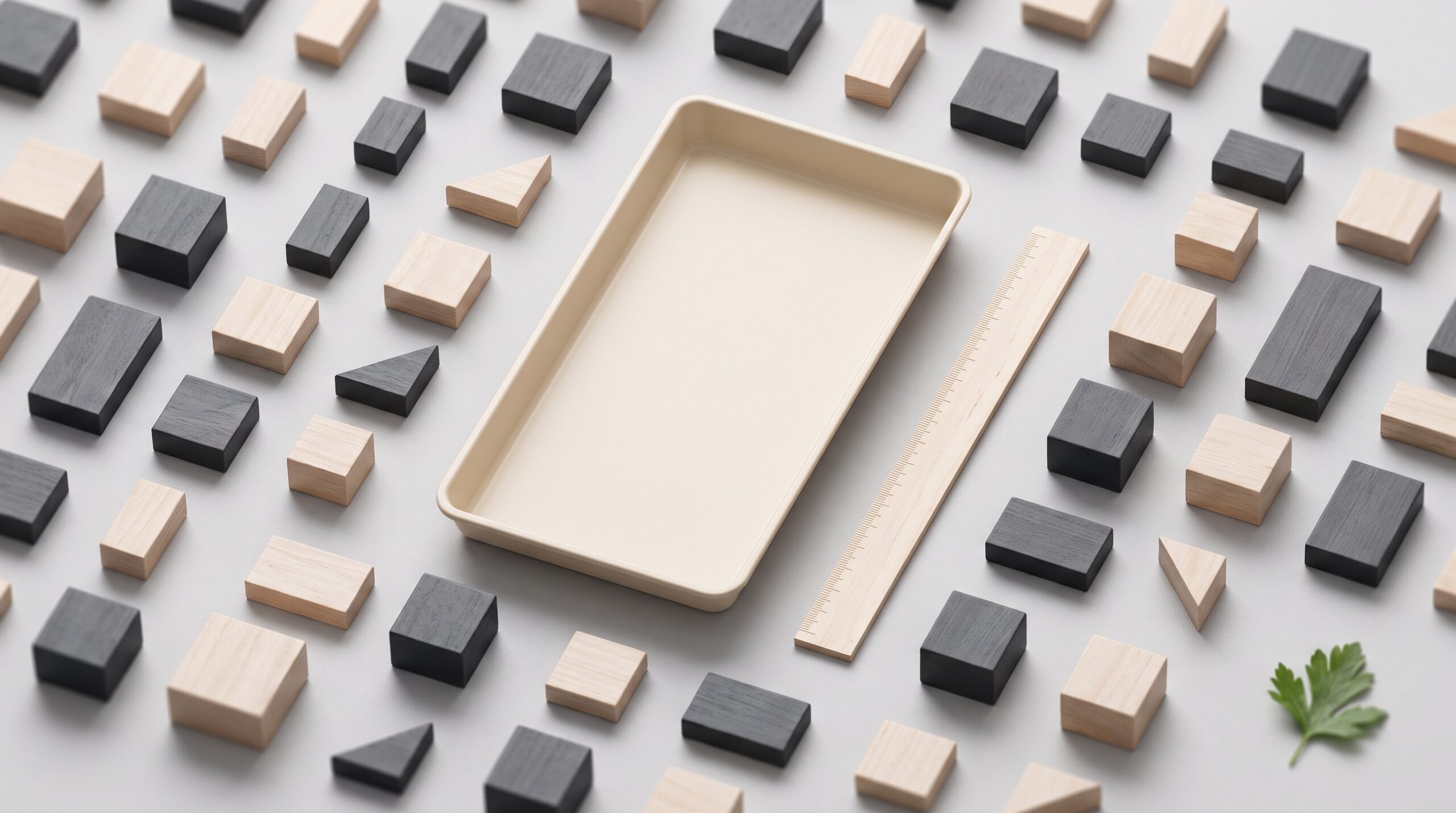
A reliable sushi tray capacity estimate starts with three numbers: the number of pieces, the average footprint per piece, and the presentation allowance. You do not need a perfect engineering calculation, but using a simple planning method prevents the most common mistake: buying a sushi tray that is technically large enough but visually overcrowded.
Step 1: Start with the piece count
For most US orders, sushi is sold in familiar counts:
- 6 pieces: One small roll, tasting portion, or appetizer.
- 8 pieces: One standard roll in many restaurants.
- 12 pieces: A lunch-size tray or two smaller rolls.
- 20 pieces: Family or small party size.
- 40 pieces: Party platter size.
- 100 pieces: Catering size.
If your menu sells rolls in 8-piece portions, calculate backward from roll count. For example, a 40-piece sushi tray usually equals five 8-piece rolls. A 100-piece catering order could be twelve 8-piece rolls plus four nigiri, or a balanced combination such as 64 roll pieces, 24 nigiri, and 12 sashimi-style pieces.
Step 2: Add a presentation allowance
A sushi tray should not be filled edge to edge. Plan for 10–20% extra space beyond the footprint of the sushi itself. Use the lower end for simple disposable takeout trays and the higher end for premium party trays.
Add extra room for:
- Pickled ginger and wasabi
- Soy sauce cups or compartments
- Plastic grass dividers or paper liners
- Lemon, shiso leaf, cucumber, or edible garnish
- Labeling area for retail display
- Lid clearance for topped rolls
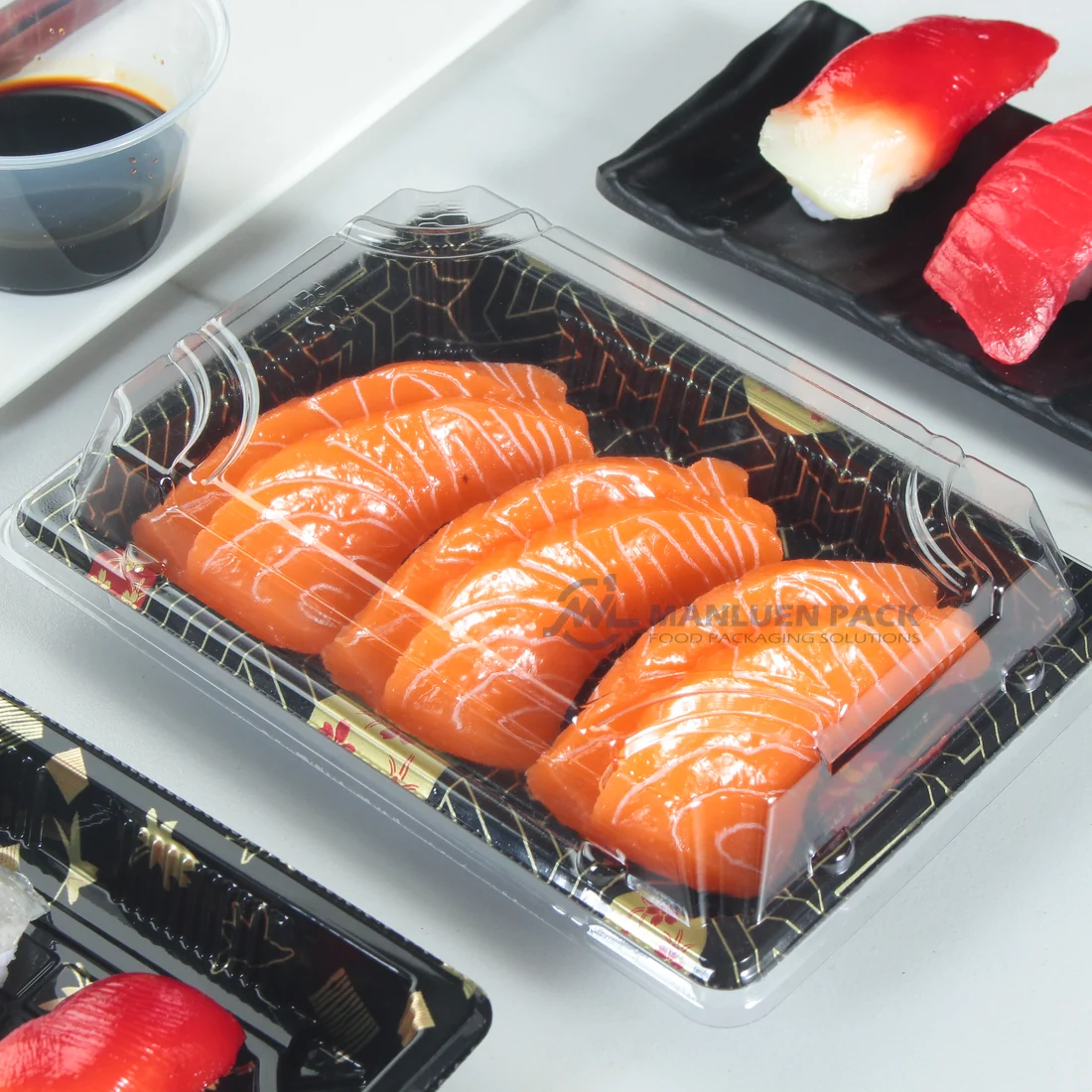
For example, 20 basic roll pieces may fit on a 10 x 7 inch sushi tray. But 20 mixed pieces with 2 sauce cups and garnish will usually look better on a 12 x 8 inch tray.
Step 3: Match tray depth and lid height
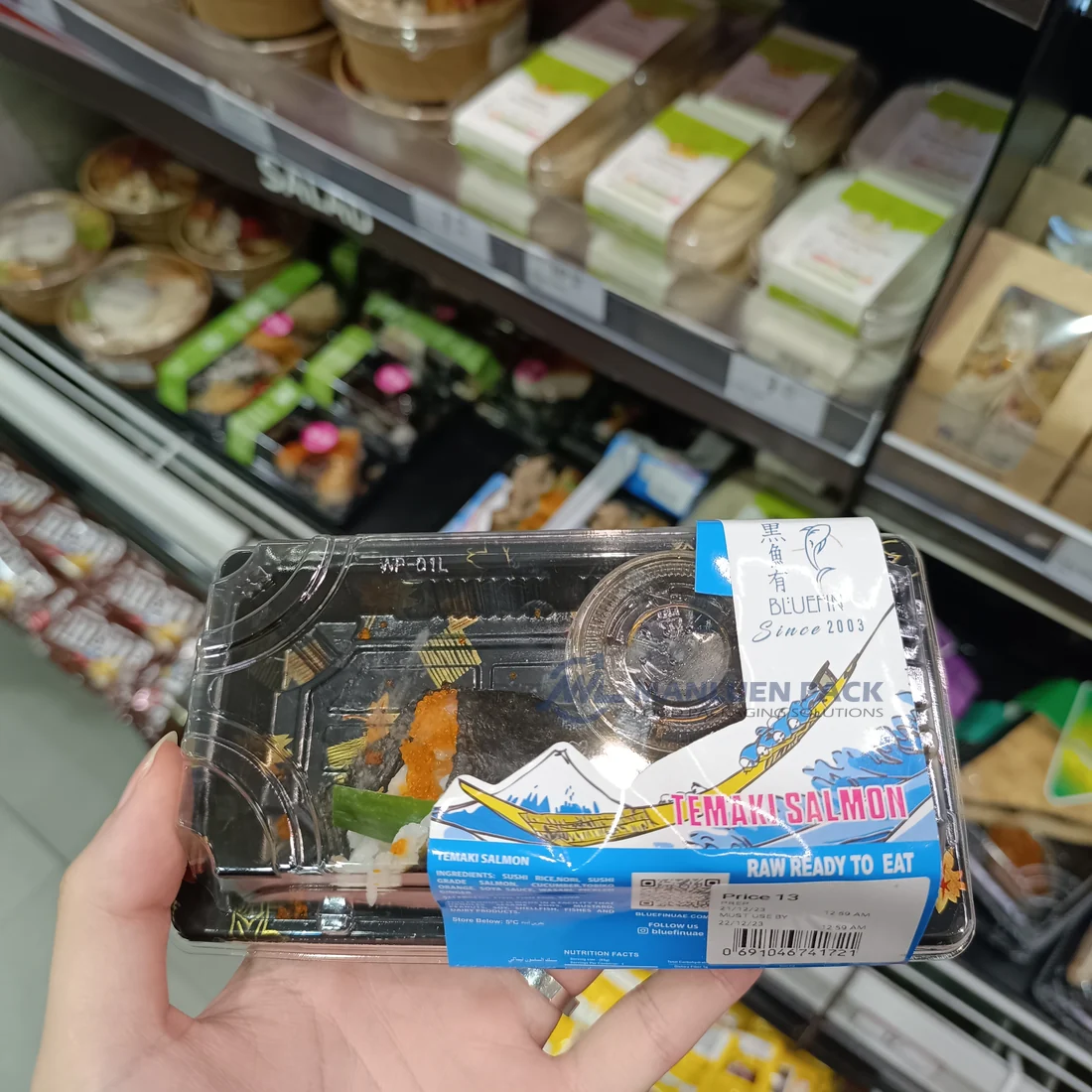
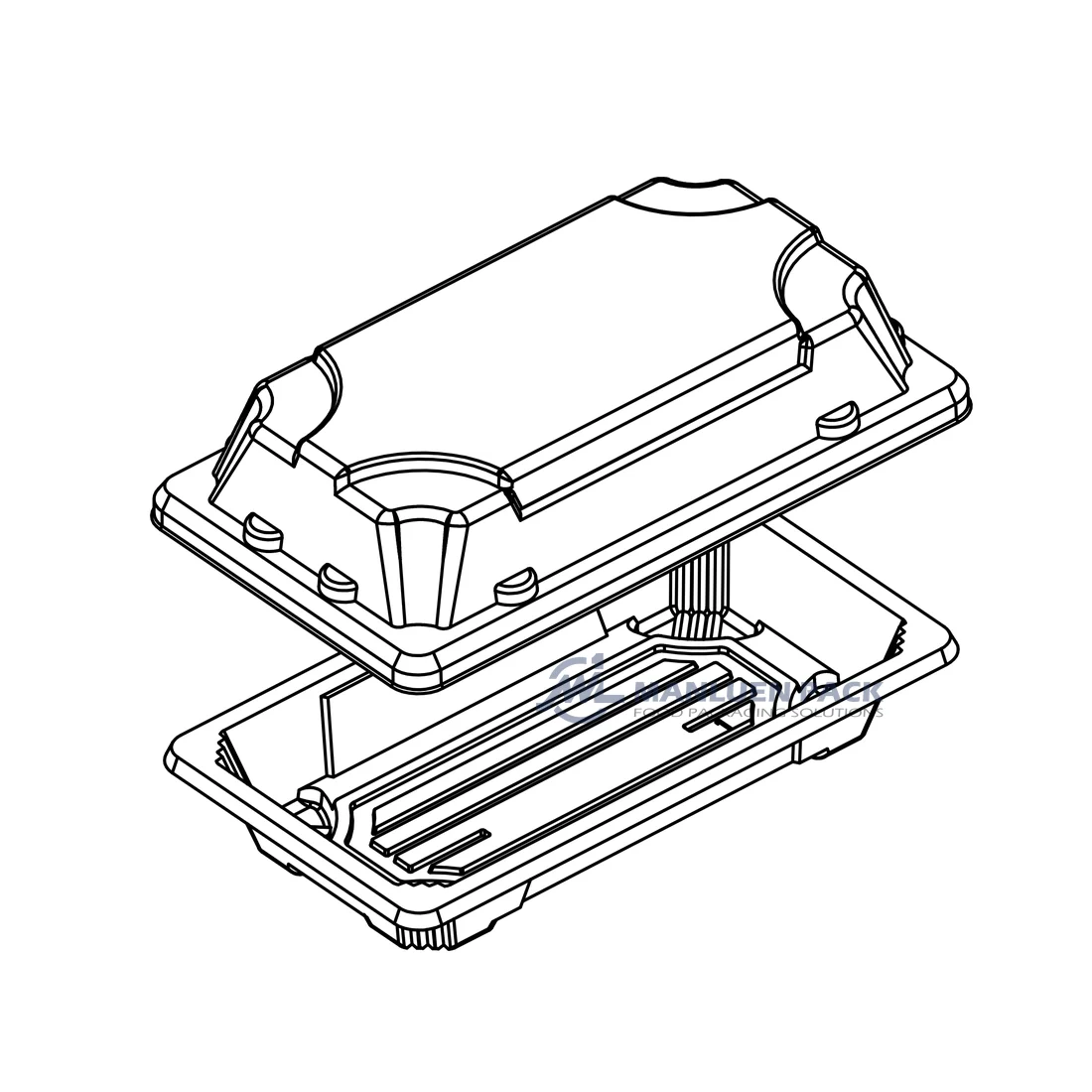
Surface area is only half the decision. Lid height matters, especially for takeout and grocery displays. A low dome lid can press against eel sauce, spicy mayo, avocado, fish roe, or torch-seared toppings. For specialty rolls, choose a sushi tray with a lid height that leaves visible air space above the tallest piece.
As a general guide:
- Low-profile lids: Best for simple maki, California rolls, and clean retail display.
- Medium dome lids: Best for assorted sushi, nigiri, and topped rolls.
- High dome lids: Best for premium rolls, decorative party platters, or trays with sauce cups inside.
For restaurants and grocery sushi counters, a clear anti-fog lid can also improve product visibility in refrigerated display cases. For home entertaining, an open wooden board or bamboo sushi tray may look better, but it will not protect sushi during transport.
Step 4: Estimate pieces per person
If you are choosing a sushi tray for a party rather than a menu item, convert people into pieces first.
| Serving situation | Pieces per person | Example for 10 guests |
|---|---|---|
| Light appetizer before a meal | 3–5 pieces | 30–50 pieces |
| Party snack with other foods | 5–7 pieces | 50–70 pieces |
| Main meal with sides | 8–12 pieces | 80–120 pieces |
| Sushi-focused dinner | 12–16 pieces | 120–160 pieces |
This is why a 40-piece sushi tray can feed very different group sizes. It may serve 8–10 guests as an appetizer, 5–7 guests as a party snack, or only 3–5 guests as the main meal. For a 100-piece sushi tray, expect roughly 16–20 guests for party snacking or 8–12 guests for a sushi-centered meal.
Picking the Right Sushi Tray for 6, 12, 20, 40, and 100 Pieces
The best sushi tray size depends on how the tray will be used. A restaurant packing takeout orders has different needs than a host building a party sushi platter, and a grocery sushi counter has different priorities than a caterer transporting 100 pieces across town.
6-piece sushi tray: single roll, small appetizer, or tasting set
A 6-piece sushi tray is the smallest practical size for most sushi packaging. It is ideal for one small roll, a side item, or an appetizer portion. A 6 x 4 inch tray can work if the pieces are simple and uniform, while a 7 x 5 inch tray gives better room for ginger and wasabi.
Choose a 6-piece sushi tray when you need:
- One roll cut into 6 pieces
- A sample tray for retail promotions
- A small kids’ portion
- A side sushi add-on with poke, salad, or bento
- A compact grab-and-go snack
Avoid using a 6-piece tray for large specialty rolls unless the lid has enough height. A topped roll with avocado, spicy tuna, sauce drizzle, or tempura flakes can look cramped even if the piece count is low.
12-piece sushi tray: lunch combo or two-roll sampler
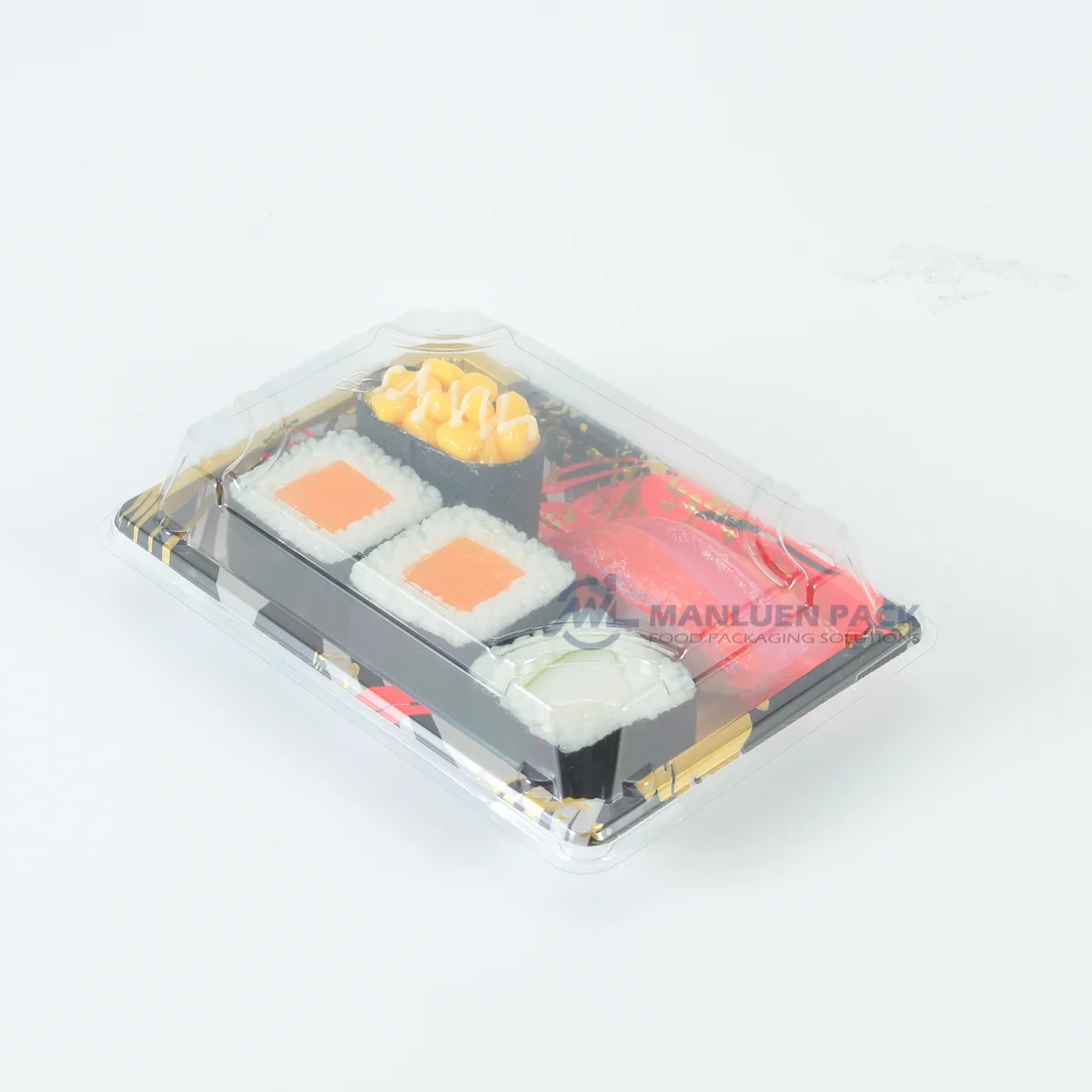
A 12-piece sushi tray is one of the most useful sizes for individual meals. It can hold two 6-piece rolls, one 8-piece roll plus 4 nigiri, or a mixed sampler with a small garnish area. In many takeout and grocery settings, this is the sweet spot for a lunch portion: large enough to feel complete, but small enough to remain portable.
A typical 12-piece layout might be:
- Row 1: 6 California roll pieces
- Row 2: 6 spicy tuna roll pieces
- Corner: ginger and wasabi in a small liner
For more premium presentation, use a slightly larger tray and place pieces diagonally rather than in tight straight rows. This creates visual movement and helps the sushi tray look intentional instead of crowded.
20-piece sushi tray: family platter and best all-purpose size
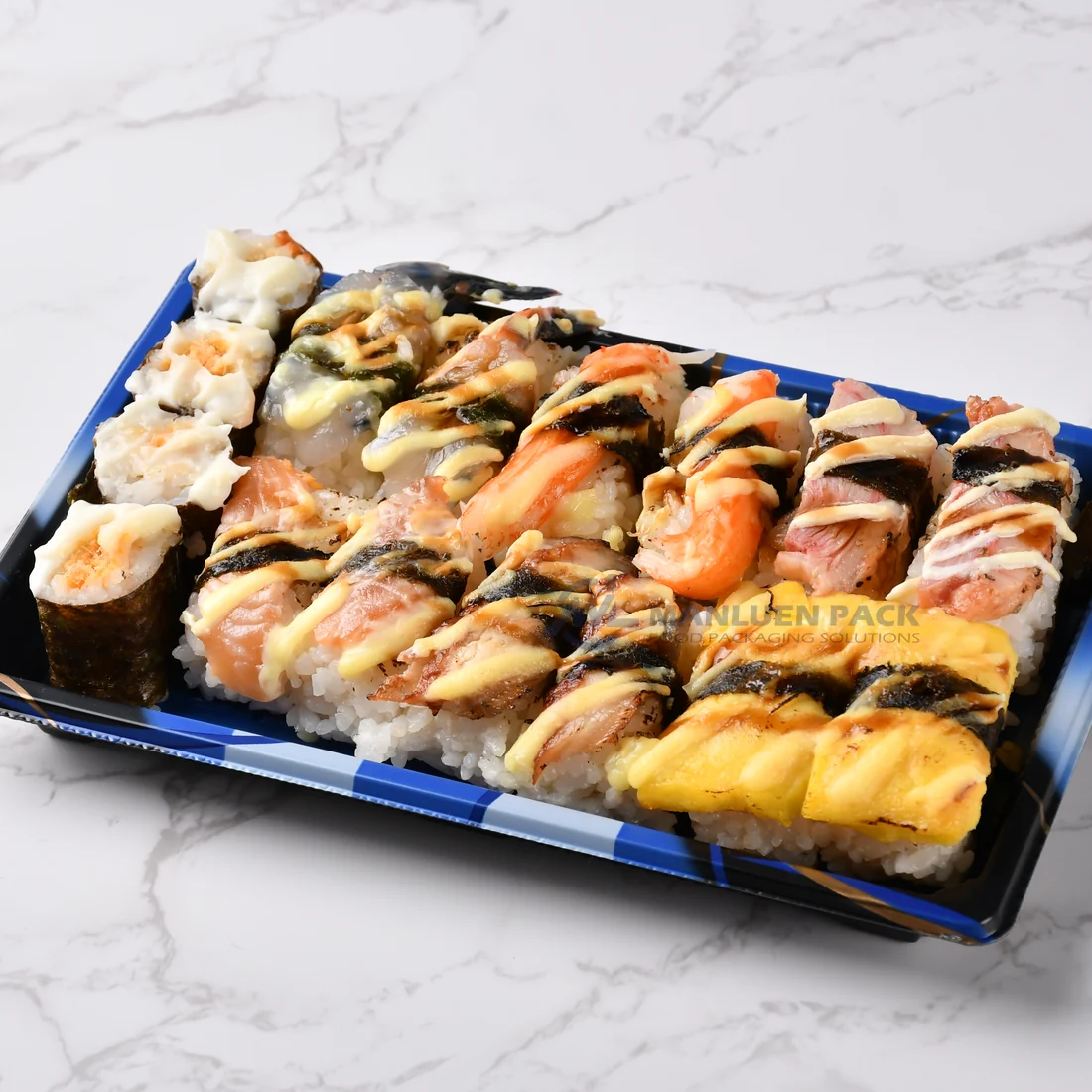
A 20-piece sushi tray is the most versatile option for families, small gatherings, and restaurant combo platters. It is large enough for variety but still manageable for takeout. If you only stock a few sushi tray sizes, a 20-piece format is usually worth including.
A balanced 20-piece example:
- 8 pieces California roll
- 8 pieces spicy tuna or salmon avocado roll
- 4 pieces nigiri
- Ginger and wasabi in the corner
- One sauce cup packed separately or in a recessed compartment
For a clean presentation, choose around 10 x 7 inches for simple rolls and 12 x 8 inches for mixed sushi. If the tray includes sauce cups inside the lid, move up in size. A 2-oz sauce cup can steal more usable area than most buyers expect.
40-piece sushi tray: party platter or split-tray setup
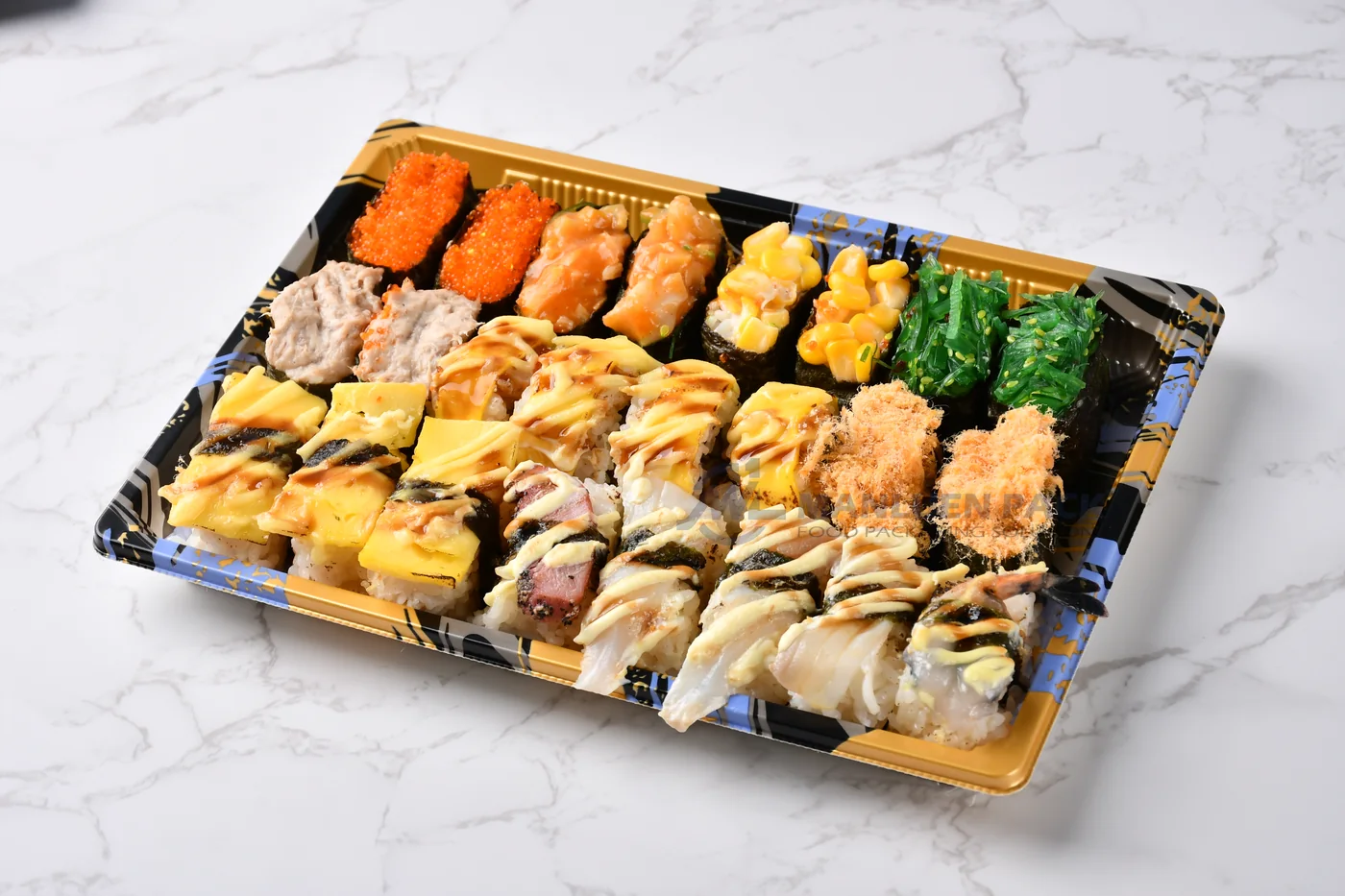
A 40-piece sushi tray works well for parties, office lunches, birthday gatherings, and small catering orders. But at this count, one large tray is not always better. Two 20-piece trays are often easier to transport, easier to refrigerate, and easier to arrange with variety.
Use one large 40-piece sushi tray when:
- You want a single centerpiece platter
- The sushi will be served immediately
- The tray has a strong base and secure lid
- The arrangement is mostly roll pieces
Use two smaller trays when:
- You need vegetarian and seafood options separated
- You want spicy and non-spicy rolls separated
- The sushi tray will travel by car or delivery bag
- You want to replenish a buffet table in stages
A 40-piece party tray might include five 8-piece rolls. For a more premium mix, use 24 roll pieces, 8 nigiri, and 8 sashimi or specialty pieces. In that case, the tray should be closer to 16 x 11 inches or split into multiple trays for a cleaner look.
100-piece sushi tray: catering, buffet, and event service
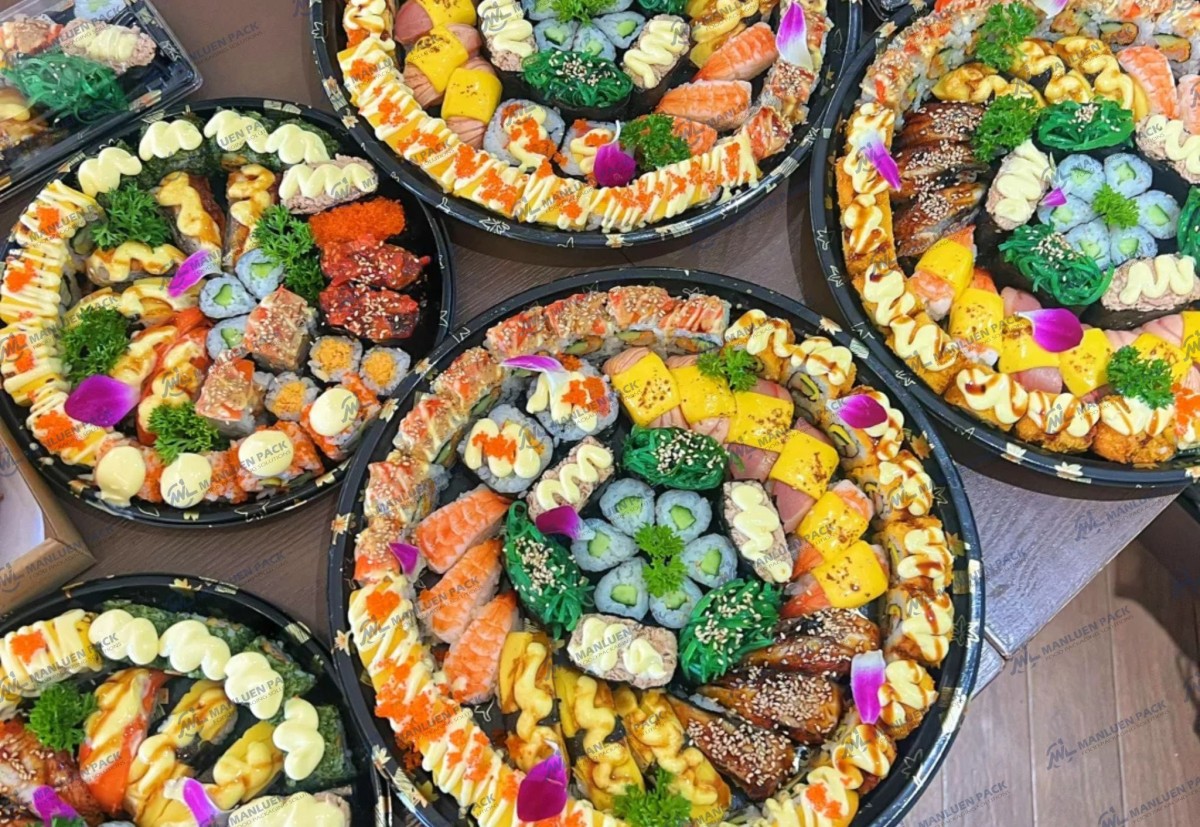
A 100-piece sushi tray is not just a bigger version of a lunch tray. At this scale, the main priorities are structure, transport, temperature control, labeling, and replenishment. A single massive sushi platter may look impressive, but it can be hard to carry, hard to keep cold, and hard for guests to access without disturbing the arrangement.
For most events, the best approach is to divide 100 pieces into three to five sushi party trays:
- Tray 1: Classic rolls such as California, cucumber, avocado, and shrimp tempura
- Tray 2: Spicy or premium rolls such as spicy tuna, salmon avocado, and eel avocado
- Tray 3: Nigiri selection
- Tray 4: Vegetarian or allergy-aware options
- Tray 5: Backup sushi tray kept chilled until replenishment
This approach helps with both presentation and food safety. It also gives guests clearer choices. For corporate events, weddings, school functions, and retail catering, label trays by fish type, spice level, and allergens where appropriate.
A 100-piece order can serve about 16–20 people as party food or 8–12 people as a main sushi meal. If sushi is the centerpiece and guests are hungry, order closer to 12 pieces per person and include sides such as edamame, salad, miso soup, dumplings, fruit, or dessert.
素材, Lid, and Freshness Choices for Your Sushi Tray
After capacity, the next decision is material. The right sushi tray material depends on whether the tray is disposable or reusable, whether it needs a lid, whether it will sit in a refrigerated display case, and whether the buyer is a restaurant, grocery counter, caterer, or home host.
Disposable plastic sushi trays: PET, rPET, and clear lids
For US takeout and grocery sushi packaging, the most common format is a black or patterned base with a clear lid. PET and rPET are popular because they offer clarity, rigidity, and cold-food performance. rPET includes recycled PET content, which may support sustainability goals depending on supplier claims and local recycling realities.
Disposable sushi trays are useful when you need:
- A secure lid for delivery or grab-and-go retail
- Clear visibility in refrigerated cases
- Stackability for prep and storage
- Consistent sizing for menu items
- Tamper-evident labels or retail stickers
However, buyers should not assume every plastic sushi tray is microwave safe. Many clear PET sushi trays are designed for cold food display, not heating. If microwave use matters, confirm the material and temperature rating with the supplier. For food-contact safety, US businesses should source packaging designed for food use and understand FDA food-contact expectations. The FDA maintains resources on Packaging & Food Contact Substances, which is a useful starting point for compliance-minded packaging teams.
PLA, bagasse, and fiber trays: sustainability trade-offs
Eco-friendly sushi packaging is growing, especially for restaurants and retailers responding to customer preference or local packaging rules. PLA, molded fiber, and bagasse can reduce reliance on conventional plastic, but each option has trade-offs.
| 素材 | Strengths | Watch-outs | Best use |
|---|---|---|---|
| PET | Clear, rigid, widely available, good for cold display | Not usually microwave safe; recycling depends on local systems | Grocery sushi, takeout, retail display |
| rPET | Similar to PET with recycled content | Supplier claims should be verified; clarity can vary | Retailers with sustainability goals |
| PLA | Plant-based plastic appearance; clear options available | Industrial composting access may be limited; heat sensitivity | Cold sushi where composting program exists |
| Bagasse / molded fiber | Renewable fiber look, sturdy base, premium natural feel | Usually needs separate lid; less visibility than clear plastic | Catering, eco-positioned takeout, events |
| Bamboo / wood | Attractive, reusable, strong presentation | Hand-washing often required; no transport lid unless paired separately | Home entertaining, dine-in, premium sushi platters |
For restaurants, grocery buyers, and food-service packaging teams, the best practice is to request samples before bulk purchasing. Test the sushi tray with your actual menu: sauced rolls, tall specialty rolls, refrigerated holding, delivery bags, labels, and stacking pressure. A tray that looks perfect empty may fail once rice moisture, sauce, and lid pressure are involved.
Wooden, bamboo, lacquer, and ceramic serving trays
Reusable sushi serving trays are best for dine-in presentation, home parties, and catered displays where the food is placed shortly before service. Bamboo boards, wooden sushi boats, lacquer-style trays, and ceramic platters all create a stronger visual impression than disposable sushi packaging.
Choose reusable sushi trays when:
- The sushi will not travel far after plating
- Presentation matters more than stackability
- The tray can be washed, dried, and stored properly
- The host wants a centerpiece effect
- The restaurant serves sushi at the table rather than in takeout packaging
Wood and bamboo trays should generally be hand-washed unless the manufacturer specifically states dishwasher-safe. Ceramic is often easier to sanitize and may be dishwasher-safe, but it is heavier and more breakable. Lacquer-style trays can look elegant but may scratch, chip, or require careful handling.
Freshness, cold holding, and transport
Sushi is a time- and temperature-sensitive food, especially when it contains raw fish, cooked seafood, egg, or dairy-based sauces. The FDA Food Code is a model for retail food safety practices and includes cold-holding guidance for time/temperature control foods; businesses can reference the FDA Food Code and local health department rules for exact requirements.
For practical serving, keep these points in mind:
- Keep sushi refrigerated until close to service time.
- Use insulated bags or coolers for transport.
- Keep sushi trays out of direct sunlight and away from heat sources.
- Do not leave sushi sitting at room temperature for extended periods.
- For events, place out smaller trays and replenish from chilled backup trays.
- Use lids during transport, then remove or vent them for display if condensation builds.
A beautiful sushi tray can still disappoint if rice dries out, fish warms up, or sauces smear on the lid. The best sushi tray is the one that supports both presentation and freshness.
Sushi Tray Buying Checklist and Key Takeaways
The easiest way to choose a sushi tray is to work backward from the number of pieces and the serving context. A compact sushi tray may be fine for a quick lunch, but a party sushi platter needs negative space, garnish room, and a stronger base. A retail sushi tray needs a clear secure lid, while a home sushi board may need beauty more than stackability.
Use these quick sushi tray takeaways:
- For 6 pieces: choose a 6 x 4 to 7 x 5 inch tray for one roll or a small appetizer.
- For 12 pieces: choose an 8 x 5.5 to 9 x 6 inch sushi tray for lunch combos and samplers.
- For 20 pieces: choose a 10 x 7 to 12 x 8 inch sushi tray; this is the best all-purpose size.
- For 40 pieces: choose a 14 x 10 to 16 x 11 inch sushi tray, or split into two 20-piece trays.
- For 100 pieces: split into multiple sushi trays for easier serving, transport, labeling, and cold holding.
- For topped rolls: check lid height, not just tray length and width.
- For commercial buying: test sushi tray samples with your real menu before ordering cases in bulk.
If you are sourcing sushi trays for a restaurant, grocery sushi counter, catering business, or event program, build a simple tray map: one size for single rolls, one for lunch combos, one for family platters, and one for catering. That small standardization step can reduce packaging waste, improve presentation consistency, and make staff training much easier.
The right sushi tray is the one that fits your piece count, your lid height, your menu style, and your service format. Match those four factors first, then choose between PET, rPET, fiber, wood, or ceramic based on whether the sushi tray is going home with a customer, sitting in a refrigerated case, or anchoring a party platter.
よくある質問
What size sushi tray do I need for 20 pieces?
For 20 pieces, start with a 10 x 7 inch sushi tray for simple roll pieces or a 12 x 8 inch sushi tray for mixed sushi with nigiri, garnish, and sauce cups. If the sushi includes tall toppings or sauce drizzle, choose a medium or high dome lid so the lid does not touch the food.
How many pieces of sushi should I plan per person for a party?
Plan 3–5 pieces per person for a light appetizer, 5–7 pieces per person when sushi is one of several party foods, and 8–12 pieces per person when sushi is the main meal. For a sushi-focused dinner with hungry guests, plan closer to 12–16 pieces per person.
Are plastic sushi trays microwave safe?
Do not assume a plastic sushi tray is microwave safe. Many clear PET sushi trays are designed for cold display and takeout, not heating. Only microwave a sushi tray if the supplier or manufacturer clearly labels it as microwave-safe and provides a temperature rating. When in doubt, transfer food to a microwave-safe plate.
Is one large 100-piece sushi tray better than several smaller trays?
Usually, several smaller trays are better. Splitting 100 pieces into three to five sushi trays improves transport, cold holding, replenishment, guest access, and variety separation. A single large sushi tray can work for a dramatic catering display, but it needs a rigid base, careful handling, and a plan to keep the sushi cold.
What is the best sushi tray material for takeout?
For most takeout and grocery display, PET or rPET sushi trays with clear lids are common because they are rigid, transparent, and suitable for cold-food visibility. For eco-positioned service, PLA, bagasse, or molded fiber may be options, but buyers should confirm composting access, lid fit, moisture resistance, and food-contact suitability before switching.

マンルエンプラスチック包装有限公司は、20年以上にわたりプラスチック食品包装の製造を専門としています。当社の製品は、100%のバージン素材とBPAフリーのPP、PS、OPSを使用し、FDAおよびヨーロッパ基準に準拠しています。
 JA
JA  EN
EN  ZH
ZH  FR
FR  PT
PT  ES
ES  KO
KO