
はじめに
A PP plastic clamshell container is a one-piece food package with a base, an attached lid, and an integrated hinge. It opens and closes like a shell. For restaurants, caterers, delis, and takeaway businesses, this design makes filling and closing food orders faster because staff do not need to match separate lids and bases.
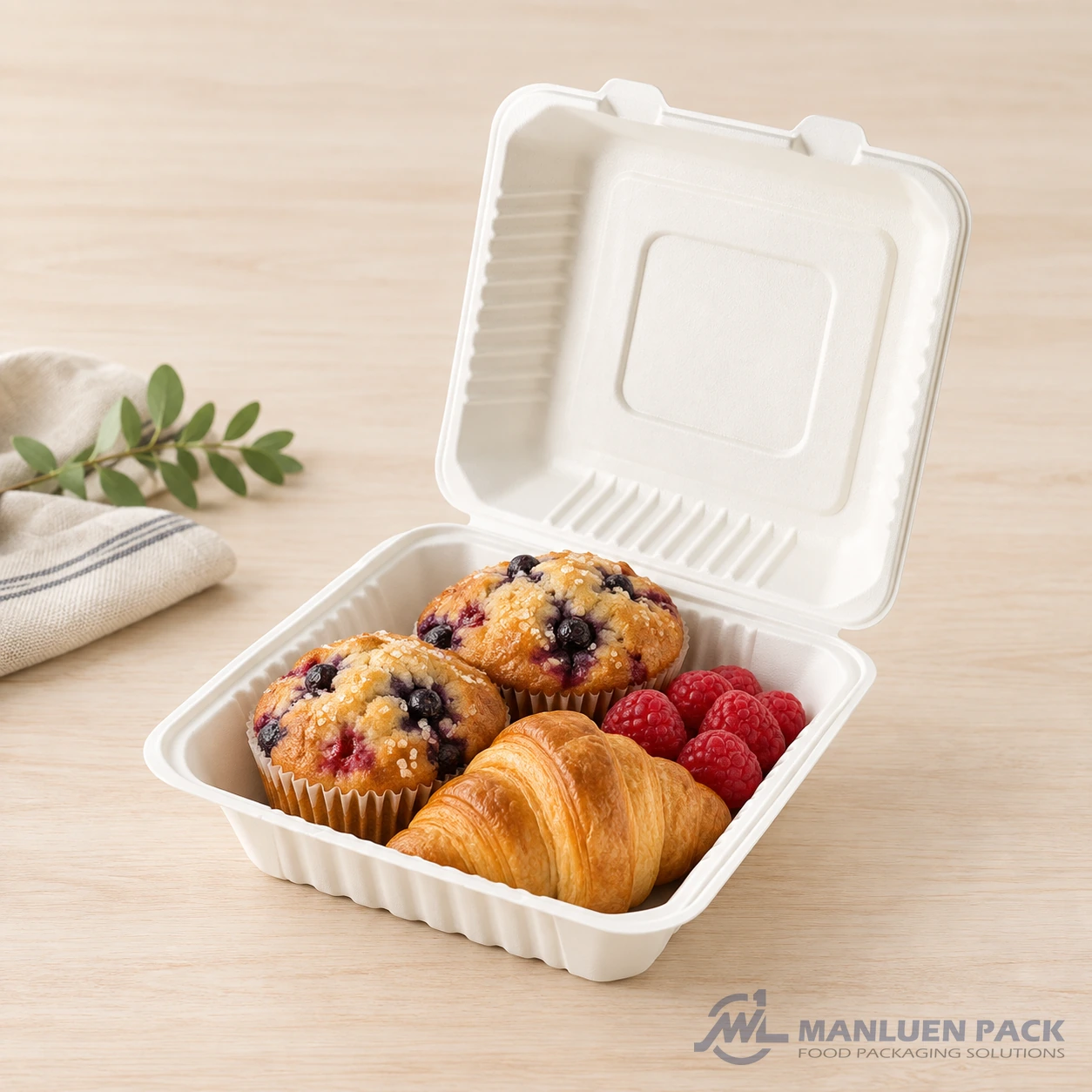
Polypropylene, or PP, is useful when a foodservice package needs more heat resistance and toughness than many clear display plastics. However, PP is not automatically the right material for every food. Microwave use, leak resistance, temperature limits, and food-contact compliance depend on the exact container—not the resin name alone. This guide explains when PP clamshell containers work well, where they have limits, and what buyers should check before placing a wholesale order.
What Is a PP Plastic Clamshell Container?
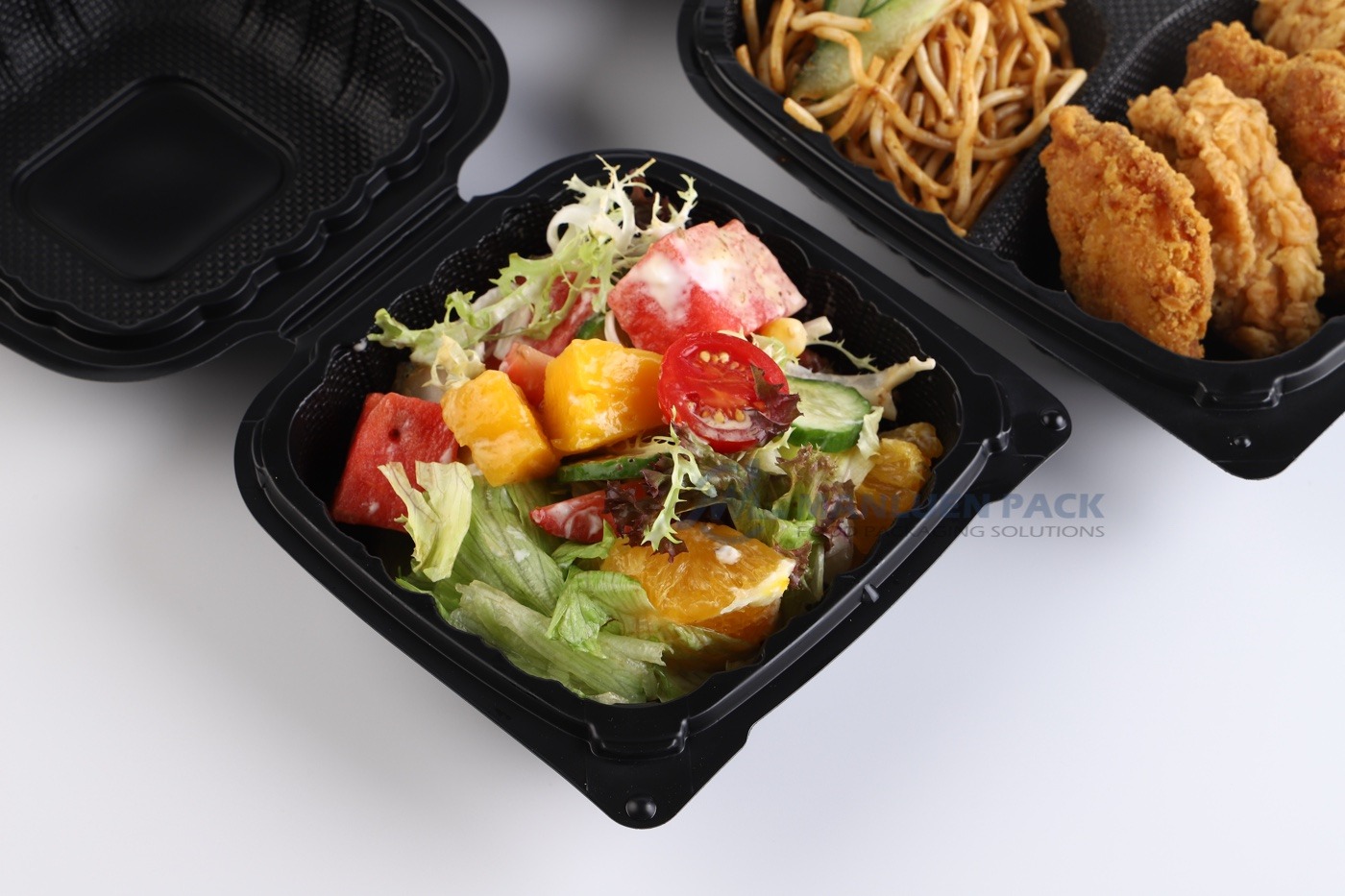
A clamshell container has two connected sections. The lower section holds the food. The upper section closes over it, while the hinge keeps both parts together. Snap tabs, friction-fit rims, or locking points help the package stay closed during storage and transport. PP clamshells are commonly used for:
- Rice, pasta, and prepared meals
- Sandwiches, burgers, and wraps
- Chicken, side dishes, and takeaway portions
- Catering meals and grab-and-go food
- Meal-prep and deli applications
The integrated lid is the main operational advantage. It reduces loose components at a packing station and helps staff close orders quickly. Manluen’s broader guide to what clamshell packaging is compares PP with PET, PS, OPS, PLA, bagasse, and paperboard formats. 
Why Food Businesses Choose PP Clamshell Containers
PP combines low weight with useful toughness. A well-designed PP clamshell can resist cracking during normal filling, stacking, and delivery. It can also suit warm food applications when the exact container has been designed and tested for those conditions.
One-Piece Handling
The attached lid stays with the base. Staff do not need to find a matching lid during a busy service period. This can simplify inventory and reduce packing mistakes.
Practical Heat Performance
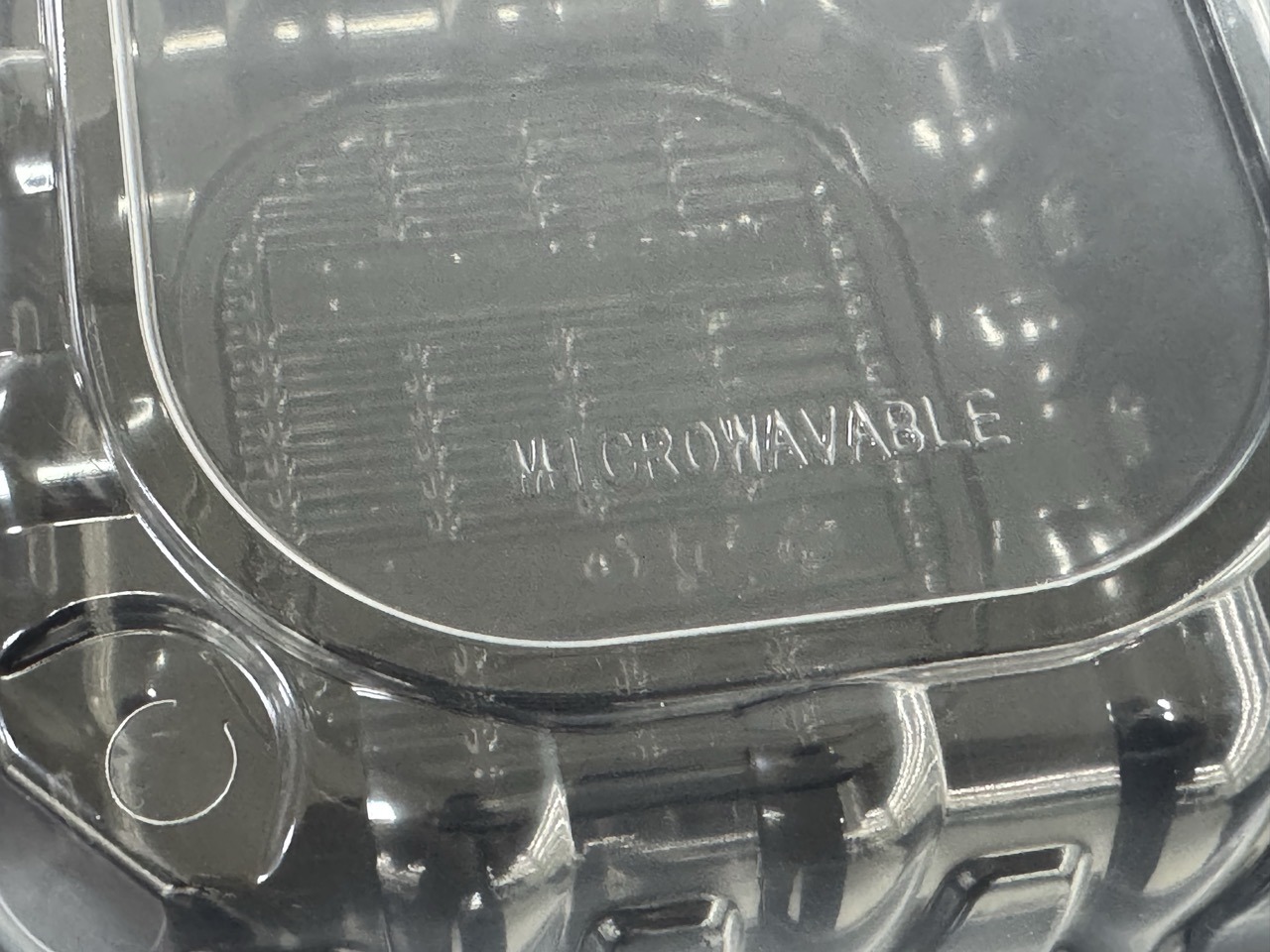
PP is often chosen for prepared meals because it generally tolerates higher temperatures than PET, PS, or OPS. Still, buyers should not assume that every PP package is microwave-safe. Resin grade, pigments, mineral fillers, wall thickness, hinge design, lid structure, heating time, and food type all affect performance. Only use a container in a microwave when the supplier provides instructions for that exact model. Do not treat an FDA citation or the letters “PP” as a microwave-use approval.
Useful Strength at Low Weight
Good clamshell performance comes from the full design. Ribs, corners, rim geometry, hinge thickness, and locking points can matter as much as the amount of plastic. Buyers should test the container with the heaviest intended meal instead of judging strength from an empty sample.
Several Sizes and Compartment Layouts
PP clamshells are available in compact single-compartment formats, larger meal boxes, and divided containers. For example, the WL-P61 6×6 clamshell container suits smaller portions, while the WL-P81 8×8 clamshell container provides more room for full meals. A rectangular format such as the WL-P96 9×6 clamshell container can suit sandwiches, combination meals, and longer food portions.

PP Is Not the Best Choice for Every Food
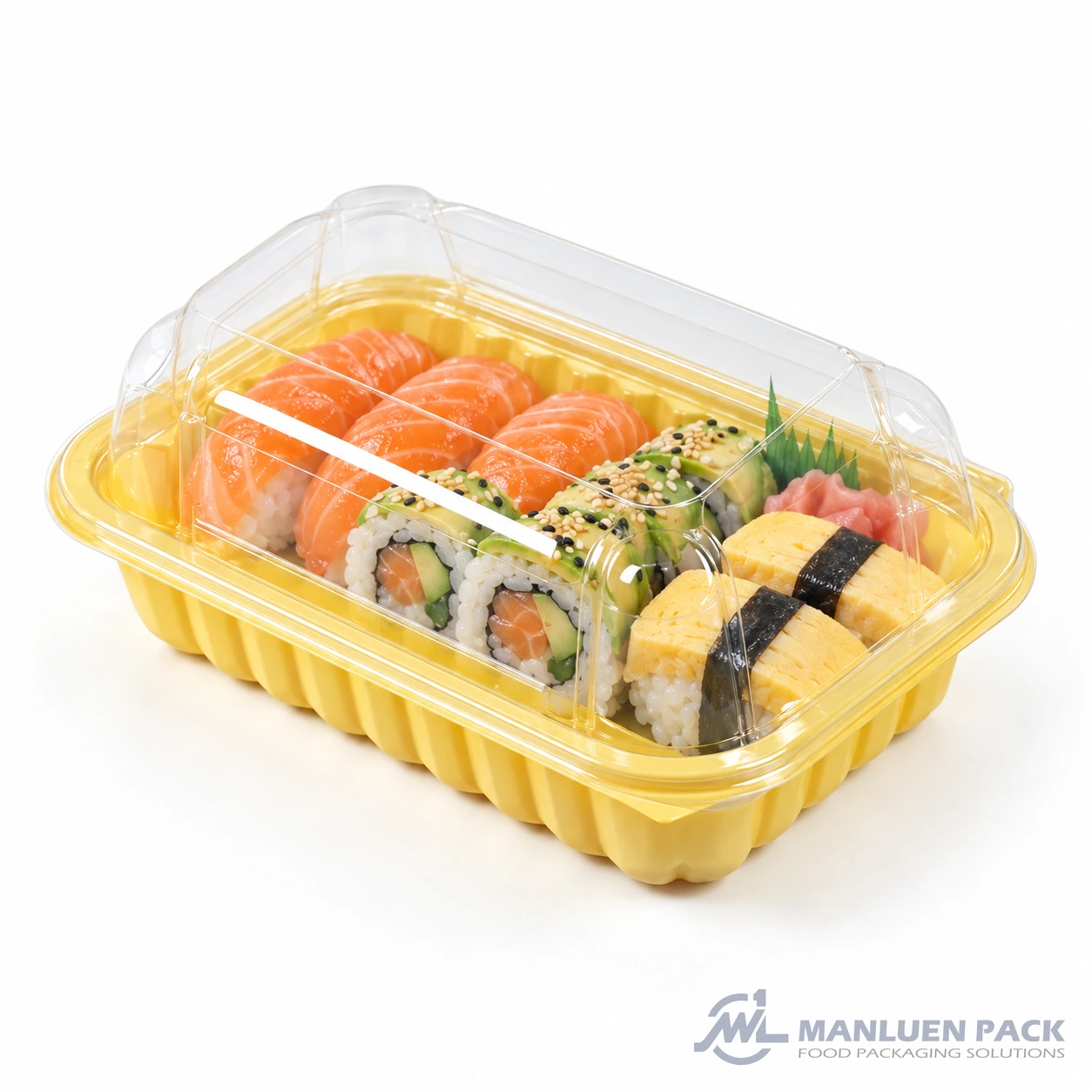
PP clamshells are usually opaque or translucent rather than crystal clear. If shelf visibility is the main goal, clear PET or OPS packaging is often better for berries, cakes, or 使い捨て寿司トレイ where product visibility matters. The guide to food packaging materials explains the differences between these resins. PP also does not make a weak closure leak-proof. Sauces, soups, and oily foods require product-specific testing. A package that works for a dry sandwich may fail with a meal containing liquid gravy. Use the following rule:
- Choose PP when the food needs a tough hinged package, warm-food compatibility, or documented microwave performance.
- Consider PET or OPS when high clarity and chilled display are more important than heat resistance.
- Consider bagasse or another fiber format when the buyer has a verified composting objective and suitable local collection.
- Use a dedicated deli or soup container when liquid sealing is more important than the convenience of a hinged lid.
For round portions and liquid-rich foods, buyers can also compare Manluen’s food storage containers rather than forcing a clamshell into the wrong application.
Are PP Clamshell Containers Food-Safe?
PP can be used in food-contact packaging when its composition and intended use meet the applicable requirements. In the United States, 21 CFR Part 177 includes provisions for polymers used in food-contact applications. In the European Union, Regulation (EU) No 10/2011 establishes rules for plastic materials and articles intended to contact food. These rules do not mean that every PP container is universally “FDA approved” or suitable for every food. Compliance depends on the exact formulation, additives, colorants, food type, contact time, and temperature. The article on what food-grade packaging means explains why buyers need product-specific evidence. Before ordering, ask the supplier for:
- A declaration or compliance statement tied to the exact SKU
- The material specification for the complete container
- The applicable 21 CFR, FCN, EU, or other regulatory basis
- Migration or extractables test reports where required
- Instructions covering food type, contact time, and temperature
- Lot traceability and change-control information
For a broader US and EU review, see the plastic food packaging compliance guide.
Can You Microwave a PP Clamshell Container?
Microwave a PP clamshell only when the manufacturer identifies the exact product as suitable for microwave use and provides use conditions. Remove or vent the lid if the instructions require it. Avoid prolonged heating, an empty container, or contact with an oven, grill, or open flame. Check the package before reheating:
- Read the model-specific microwave instructions.
- Confirm whether the lid can remain closed, must be vented, or must be removed.
- Use the stated heating time and power level.
- Stop if the container warps, softens, cracks, or develops a damaged hinge.
- Replace containers that are visibly worn or damaged.
Manluen also publishes model-specific articles on the WL-P61 square PP clamshell and the larger WL-P81 square PP clamshell. Buyers should still request the current specification for the SKU they intend to purchase.
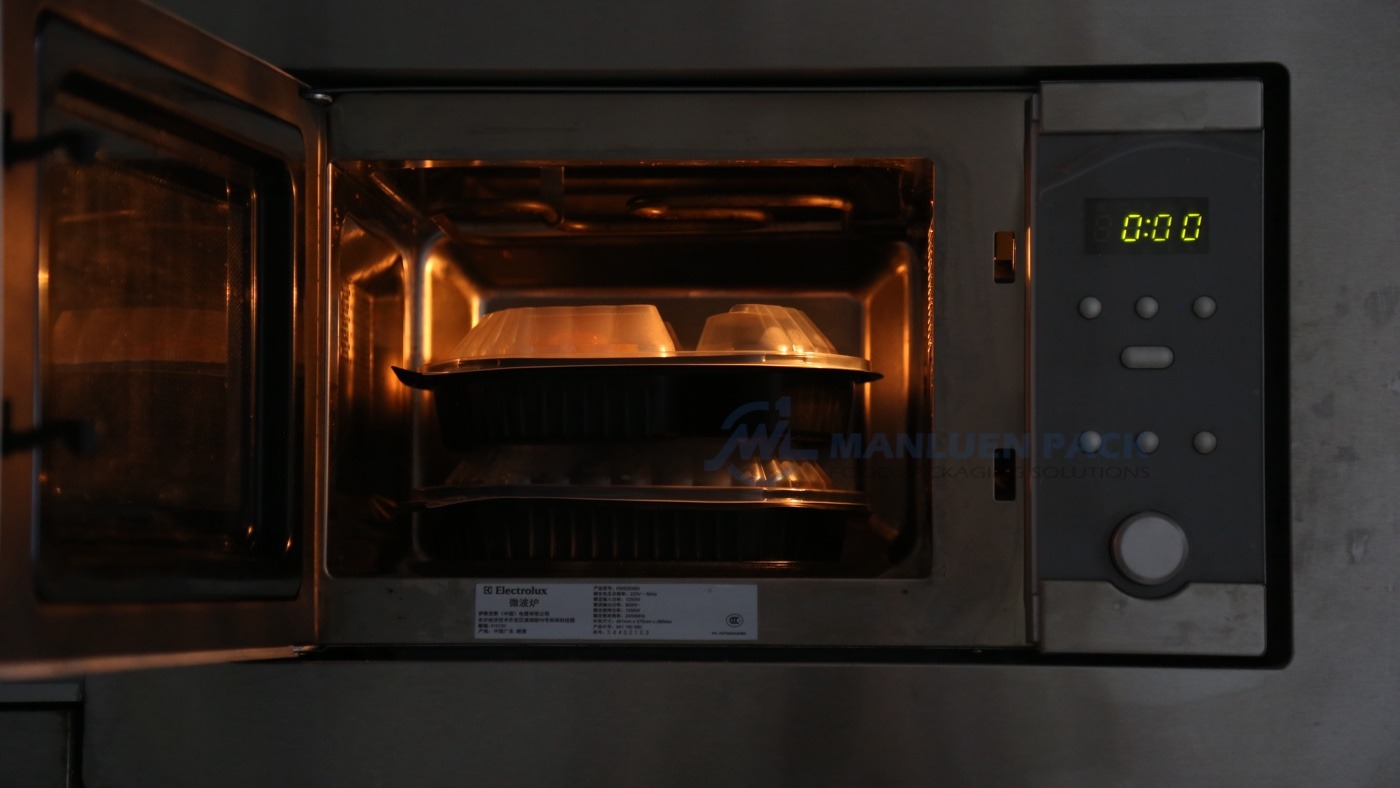
Are PP Clamshell Containers Recyclable?
PP is a recyclable resin, but that does not mean every used PP clamshell will be recycled. Collection rules, sorting equipment, food residue, labels, pigments, and local demand all affect whether a container is accepted and processed. Do not describe a package as “100% recyclable” without checking the destination market. Ask whether local programs accept rigid PP food packaging and whether the container must be rinsed or separated from labels and other parts. Durability can reduce breakage and packaging loss during distribution, but a single-use PP clamshell still uses material and creates waste after disposal. Buyers comparing environmental claims should look at the complete package, local recovery system, food-waste risk, and available alternatives rather than relying on one broad claim. 
How to Choose a PP Clamshell Container
Start with the food and distribution process. A product photo is not enough to approve a package.
1. Define the Food and Portion
List the food type, portion weight, oil or sauce content, serving temperature, and expected holding time. Measure the usable internal space rather than relying only on the external 6×6, 8×8, or 9×6 description.
2. Check the Closure
Fill and close the package using normal staff procedures. Turn it through the angles it will experience during packing and delivery. Check whether the lid opens, corners flex, or liquid reaches the rim.
3. Test Stacking and Transport
Stack containers at the expected height. Place them in the actual delivery bag or carton. Inspect the bottom package for deformation and confirm that the lid does not press into the food.
4. Confirm Tamper-Evident Requirements
A snap closure is not automatically tamper-evident. If the order needs visible opening evidence, choose a package with a specific tamper-evident feature or apply a compatible seal. The guide to tamper-evident packaging explains this distinction.
5. Review Samples Before a Bulk Order
Test several filled samples under refrigeration, hot holding, reheating, stacking, and delivery conditions that match the intended use. Record failures and compare all suppliers against the same test plan.
What to Include in a Wholesale RFQ
A useful request for quotation should state:
- Preferred model, dimensions, and compartment count
- Food type and filled weight
- Filling, storage, transport, and reheating temperatures
- Required color, label area, or custom printing
- Destination country and required compliance documents
- Estimated order quantity and delivery schedule
- Sample and carton-testing requirements
Do not assume that every order starts at the same quantity. MOQ depends on the existing mold, model, color, printing, packaging configuration, and production schedule. Buyers evaluating Manluen as a packaging supplier can review its certification information and use the request-a-quote form to ask for the current SKU specification, sample terms, MOQ, and lead time.
よくある質問
What is a PP plastic clamshell container?
It is a one-piece polypropylene food container with a base and attached hinged lid. The integrated design simplifies filling, closing, storage, and takeaway handling.
Is every PP clamshell microwave-safe?
No. Use only a model that the manufacturer has designed, tested, and labeled for microwave use. Follow the instructions for the base and lid.
Can a PP clamshell hold soup?
Only if the exact closure has passed testing with that liquid and the intended transport conditions. A separate-lid deli or soup container may provide a better seal.
Are PP clamshell containers clear?
PP can be translucent, but it usually does not provide the crystal-clear display associated with PET or OPS. Choose the material according to heat, impact, and visibility requirements.
What is the minimum order quantity?
There is no universal MOQ. It varies by model, stock status, color, printing, customization, and production plan. Request current terms for the exact SKU.
結論
PP plastic clamshell containers are a practical choice for many takeaway meals because they combine an attached lid, useful toughness, and options for warm-food or microwave applications. They are not the best package for every product. Clear chilled displays, liquids, and certified composting programs may require a different material or container design. Choose the package by testing the actual food, portion, closure, stack, delivery route, and heating conditions. Then verify the SKU-specific compliance documents, instructions, MOQ, and commercial terms before ordering.
情報源とさらなる資料
U.S. Electronic Code of Federal Regulations. 21 CFR Part 177—Indirect Food Additives: Polymers. Used for the US regulatory framework covering polymers intended for food-contact applications. Electronic Code of Federal Regulations European Union. Commission Regulation (EU) No 10/2011 on Plastic Materials and Articles Intended to Come into Contact with Food. Used for the EU framework governing plastic food-contact materials and articles. EUR-Lex U.S. Environmental Protection Agency. Recycling Basics and Benefits. Used for the role of local collection, sorting, processing, and end markets in packaging recycling. U.S. Environmental Protection Agency

マンルエンプラスチック包装有限公司は、20年以上にわたりプラスチック食品包装の製造を専門としています。当社の製品は、100%のバージン素材とBPAフリーのPP、PS、OPSを使用し、FDAおよびヨーロッパ基準に準拠しています。
 JA
 EN
 ZH
 FR
 PT
 ES
 KO