
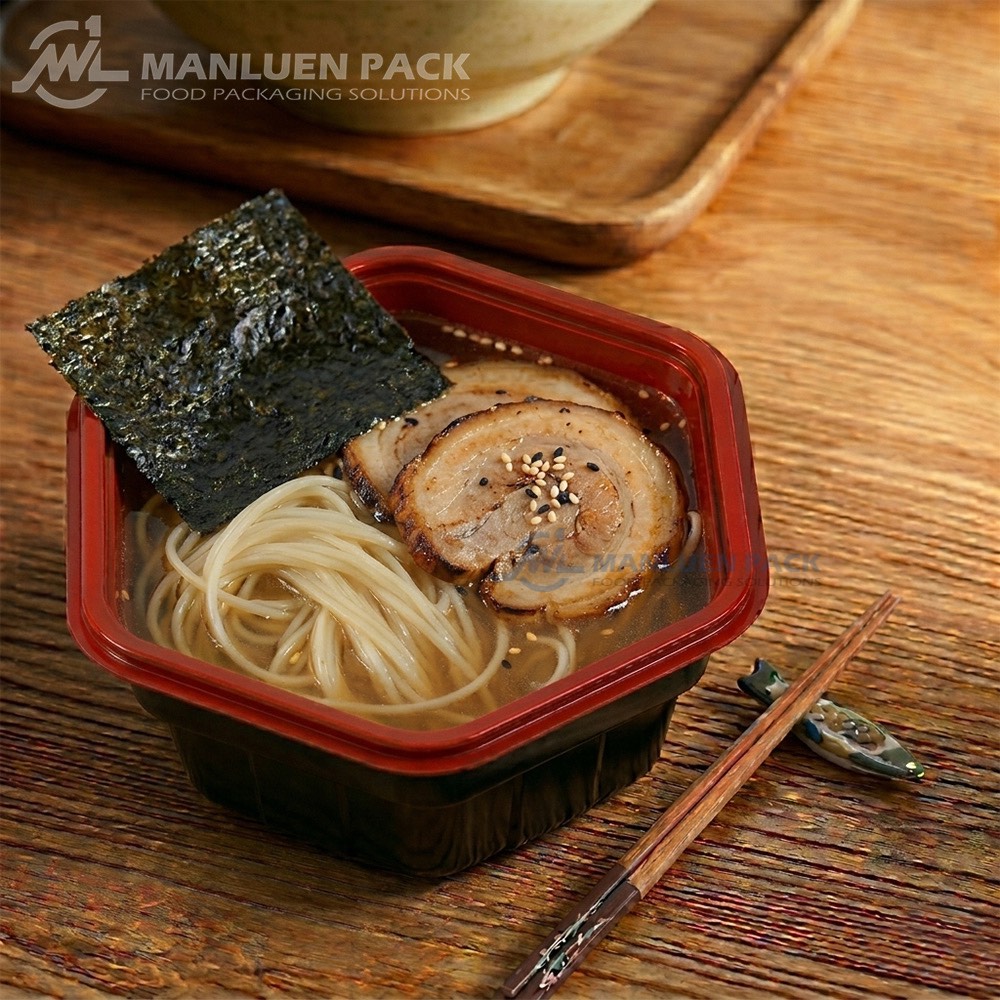
冷蔵食品ラインのパッケージを比較している購入者向けに、同じ素材、閉鎖方法、取り扱いチェックも適用されます 使い捨て寿司トレイ スーパーマーケット、レストラン、テイクアウトカウンターで使用される。.
はじめに
Disposable bowls are a small part of a foodservice operation, but choosing the wrong one can quickly create practical problems. A bowl that bends under heat, does not fit its lid properly, or is too small for the intended portion can affect both kitchen efficiency and the customer’s takeaway experience.
Restaurants, caterers, food trucks, delis, and ready-to-eat counters therefore need to consider more than price when choosing disposable bowls. Material, capacity, lid fit, heat resistance, storage, and the type of food being served all matter.
This guide looks at how to choose suitable disposable bowls for hot soup and other common foodservice applications, with a particular focus on takeaway, delivery, catering, and wholesale purchasing.
重要なポイント
- Product type: Disposable bowls for hot soup are commonly used for takeaway, delivery, catering, and ready-to-eat foodservice applications.
- 素材: Food-grade PP (polypropylene) is widely used for hot-food bowls because of its heat resistance and suitability for microwave applications when the specific product is rated for this use.
- Capacity: Bowl sizes should be selected according to portion requirements, from smaller side portions to larger bowls for soup, noodles, salads, and complete meals.
- Typical users: Restaurants, caterers, food trucks, delis, meal-prep businesses, and retail ready-to-eat counters.
- 調達先: ManLuen supplies food packaging for wholesale and foodservice applications. Relevant compliance documentation can be reviewed on the 認証ページ.
1. Choosing Disposable Bowls for Restaurant Takeaway
For restaurants, the main requirement is simple: the bowl needs to perform reliably from the kitchen to the customer.
Hot soup, noodles, rice dishes, curries, and salads all place different demands on the package. A bowl that works well for a cold salad may not be suitable for steaming broth, while a very large container may be unnecessary for side dishes.
1.1 Lid Fit and Takeaway Performance
For soup and other liquid foods, lid compatibility should be one of the first things to check. A well-matched bowl and lid help reduce movement and accidental spills during takeaway and delivery.
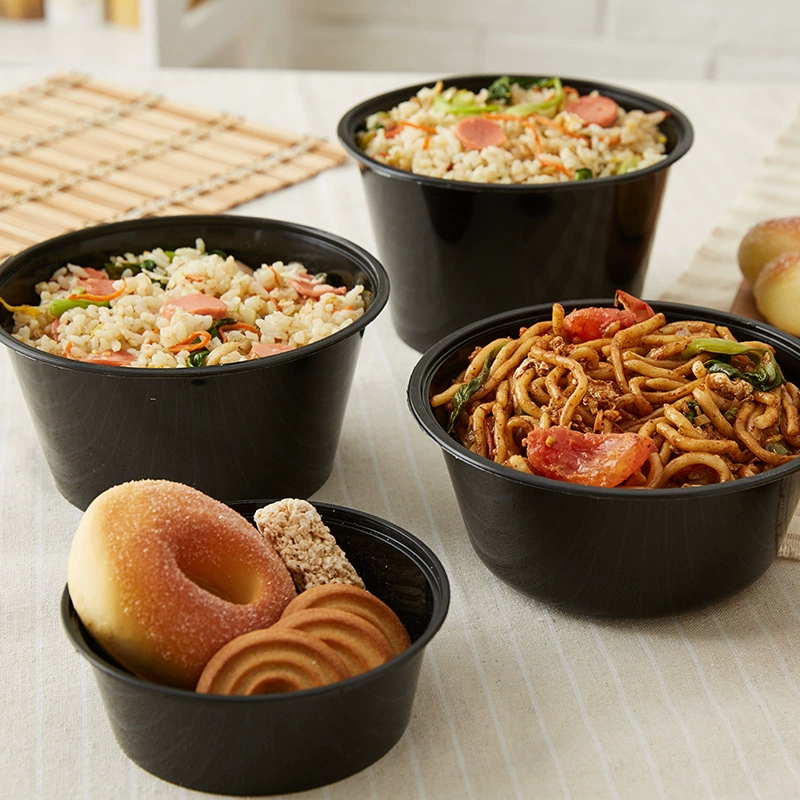
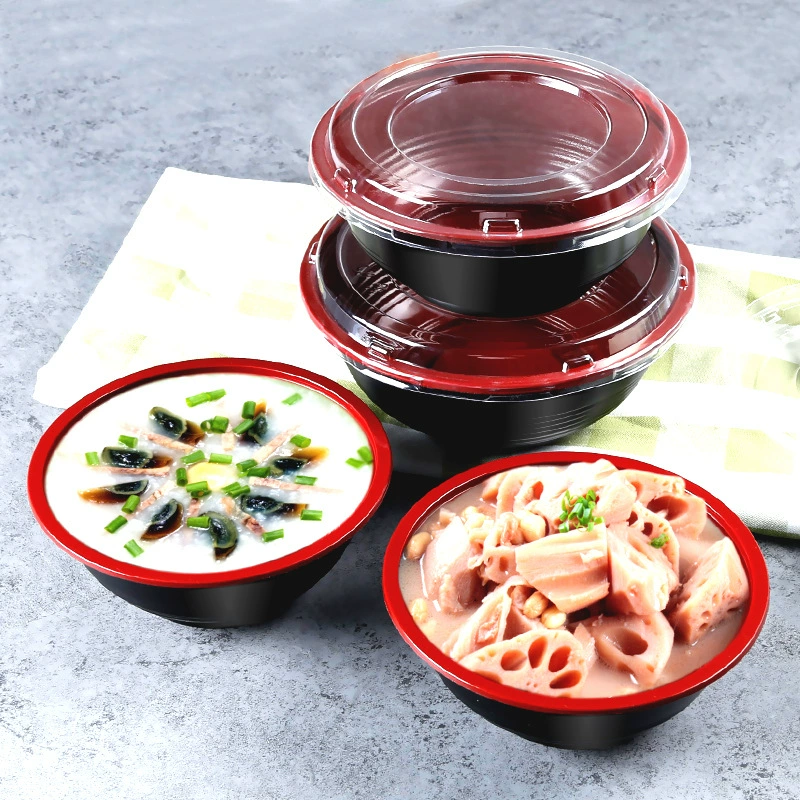
Heavy-duty food bowls are especially useful for applications where the container needs to retain its shape while holding hot or relatively heavy food.
Restaurants serving ramen, noodle soup, congee, curry, or similar dishes should also consider how steam, temperature, and transport time affect the bowl and lid combination.
Color and presentation can be selected according to the menu. Black, white, clear, or colored bowls may suit different food concepts, but practical performance should remain the first consideration.
1.2 Why Restaurants Often Buy Bowls in Bulk
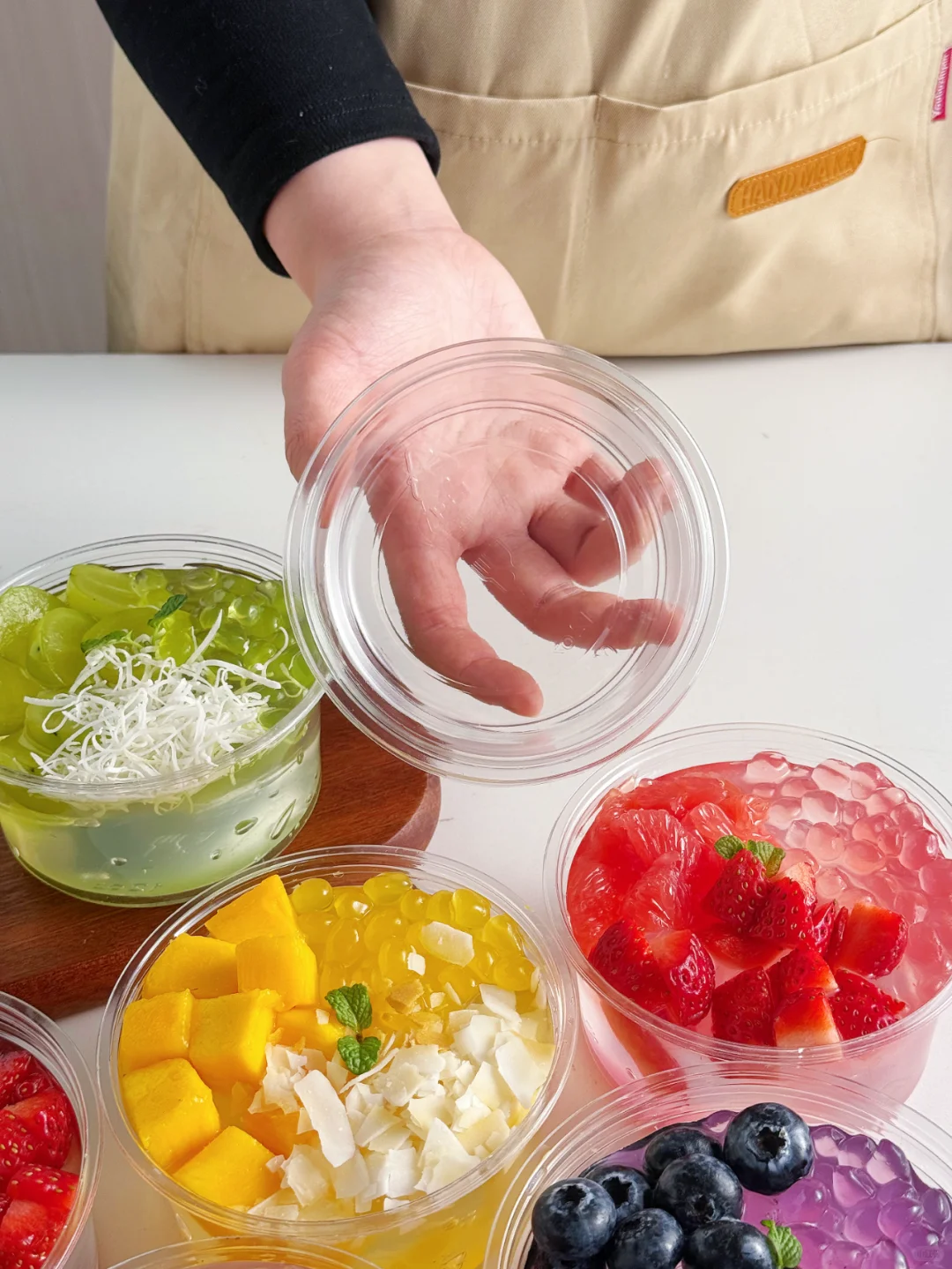
For businesses with consistent takeaway volume, purchasing disposable bowls in wholesale quantities can make inventory planning easier and reduce the cost per unit.
Buying compatible bowls and lids together is also useful. It reduces the risk of mixing different container sizes or lid specifications and simplifies day-to-day stock management.
Restaurants with several menu categories may keep multiple sizes on hand: smaller bowls for sauces and sides, medium bowls for soup and noodles, and larger bowls for salads or complete meals.
2. Catering and Events: Convenience Without Compromising Presentation
Catering operations have slightly different requirements. Containers may need to be transported in larger quantities, stacked before service, moved between preparation and event locations, and sometimes used for both hot and cold foods.
2.1 Selecting Bowls for Different Menu Items
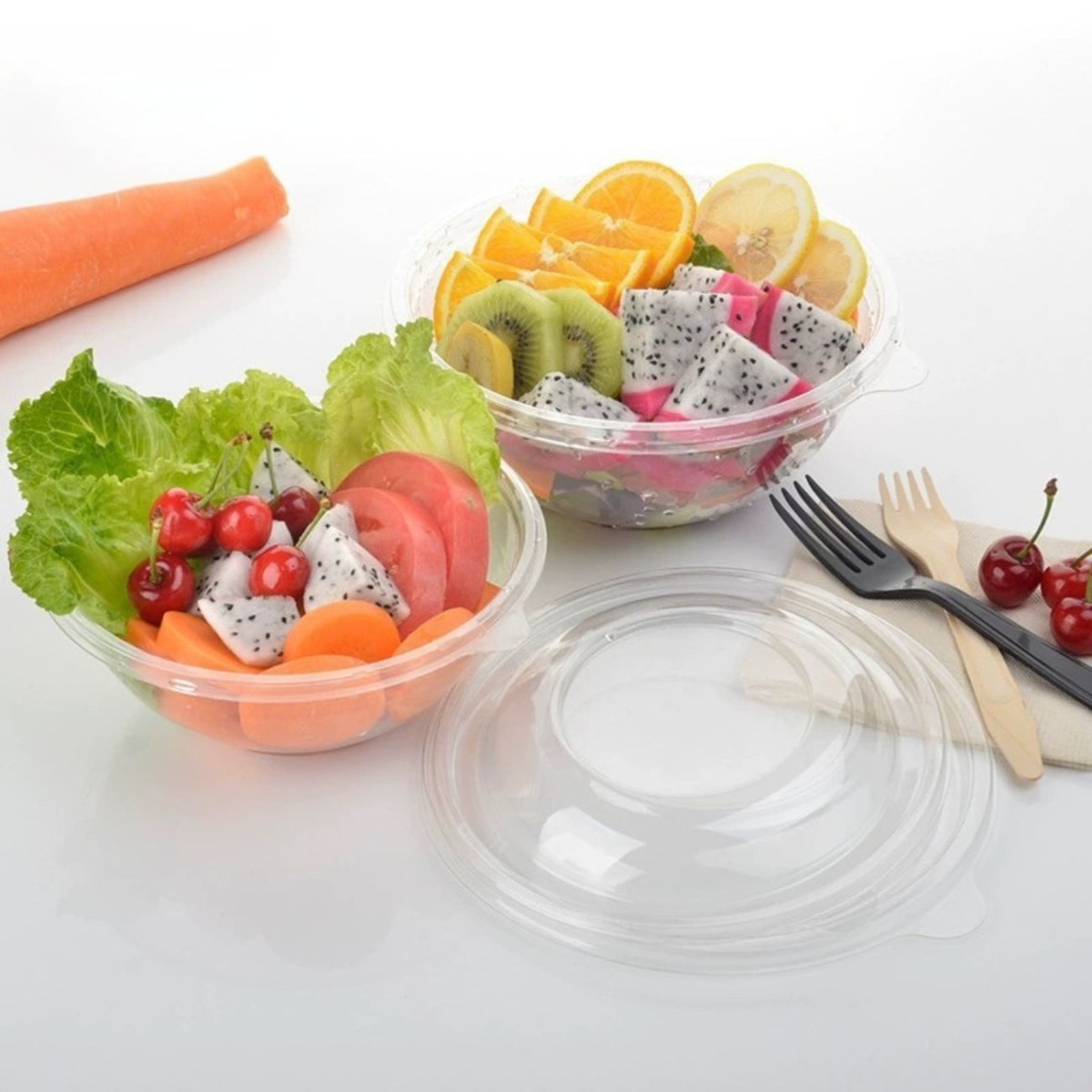
Disposable salad bowls are useful for greens, fruit, cold appetizers, and prepared dishes, while smaller bowls can be used for sauces, dips, desserts, or side portions.
For hot-food stations, disposable soup bowls should be selected according to the serving temperature and intended holding time. If guests are allowed to take food away after an event, matching lids can also make the same packaging more versatile.
2.2 Storage and Large-Batch Service
When hundreds of portions are being prepared, storage efficiency becomes more important. Stackable bowls can reduce the amount of space required in kitchens, catering vehicles, and storage areas.
For applications that involve reheating, businesses should confirm that the specific container is designed for microwave use rather than assuming that every disposable bowl can be reheated.
3. Meal Prep, Delis, and Small Food Businesses
Disposable bowls are also widely used outside traditional restaurants. Meal-prep services, home-based food businesses, delis, bakeries, and small takeaway operators often need packaging that can work across several menu items rather than requiring a different container for every product.
3.1 Food Storage and Meal Preparation
Food storage bowls with lids can be used for prepared meals, leftovers, salads, fruit, side dishes, and other ready-to-eat foods.
For meal-prep businesses, lightweight plastic bowls are convenient for portioning and transportation. However, the container should still be selected according to the food’s temperature, oil content, storage conditions, and expected shelf time.
3.2 What to Look for in a Hot Soup Bowl
When choosing the best disposable bowls for hot soup, material performance is particularly important.
PP is commonly used for hot-food containers because it offers good heat resistance. For microwave applications, always confirm that the particular bowl is specified by the manufacturer as microwave-safe and follow the recommended temperature and heating instructions.
A suitable soup bowl should also maintain its shape when filled, provide enough capacity for the intended portion, and use a compatible lid when the food will be transported.
4. Practical Buying Considerations for Disposable Bowls
4.1 Do Not Judge a Bowl by Price Alone
A lower-cost container is not necessarily the most economical option if it is too thin for the food, cracks during handling, or creates problems during delivery.
For foodservice buyers, durability should be evaluated together with unit price. Bowl rigidity, rim strength, lid fit, and performance at the intended serving temperature are all relevant purchasing factors.
4.2 Keep Several Sizes for Different Portions
Few restaurants can efficiently serve every menu item in the same container.
Smaller bowls may work for snacks, sides, sauces, or desserts. Medium sizes are commonly used for individual soups and noodles, while larger disposable bowls can accommodate salads, rice dishes, family portions, or shared meals.
Choosing sizes around actual menu portions can also help avoid unnecessary packaging volume.
4.3 Match Convenience Features to the Application
Features such as microwave suitability, stackability, clear lids, secure closures, and compatibility between bowl and lid should be selected according to the way customers will actually use the package.
A takeaway restaurant may prioritize lid security and stacking, while a retail food counter may place greater emphasis on product visibility and presentation.
Choosing the Right Bowl for the Application
There is no single disposable bowl that is best for every foodservice business.
A restaurant serving hot soup has different packaging requirements from a salad counter, catering company, meal-prep service, or retail deli. The most practical approach is to begin with the food itself and then evaluate material, serving temperature, portion size, lid requirements, storage conditions, and transportation.
For businesses purchasing in volume, it is also worth testing the complete bowl-and-lid combination before committing to a large order. A sample used with the actual menu item usually provides more useful information than evaluating the container by specification alone.
情報源とさらなる資料
The material safety and food-contact information referenced in this article can be reviewed through the following primary regulatory sources:
- FDA 21 CFR Part 177 — Indirect Food Additives: Polymers
- EU Regulation No. 10/2011 — Plastic Materials and Articles Intended to Come Into Contact with Food
For foodservice buyers, the objective is not simply to find the cheapest disposable bowl. It is to choose a container that fits the food, portion, temperature, handling process, and delivery conditions. A suitable bowl can reduce packaging problems while making day-to-day foodservice operations more predictable.
お問い合わせ方法
電話番号:+86-17328007523
メール:info@manluenpack.com
よくある質問
Are PP food bowls microwave-safe?
PP is widely used for microwaveable food containers because of its heat resistance, but microwave suitability should always be confirmed for the specific product. Follow the manufacturer’s stated temperature and heating instructions rather than assuming that every PP bowl has the same operating limits.
What is the minimum order quantity for wholesale food bowls?
Standard configurations may start at approximately 5,000–10,000 units depending on the product. Custom printing, colors, dimensions, or new mould development may require different minimum quantities. To request a sample and tailored quote, provide the required material, dimensions, quantity, application, and target market.
Do ManLuen food containers meet FDA and EU food-contact requirements?
Food-contact documentation varies by material and individual product. ManLuen provides relevant testing and compliance documentation for applicable food-contact packaging. You can review available documents on the 認証ページ or request documentation for a specific SKU.

マンルエンプラスチック包装有限公司は、20年以上にわたりプラスチック食品包装の製造を専門としています。当社の製品は、100%のバージン素材とBPAフリーのPP、PS、OPSを使用し、FDAおよびヨーロッパ基準に準拠しています。
 JA
JA  EN
EN  ZH
ZH  FR
FR  PT
PT  ES
ES  KO
KO