
Short Answer
Film packaging uses a thin, flexible web of material to wrap, contain, seal, cover, or protect a product. The film may become the complete package, such as a bag or pouch, or one component of a larger system, such as a peelable lid sealed to a rigid food tray.
Packaging film may be supplied as rolls, sheets, preformed bags, pouches, or lidding material. It can be a simple single-layer polyethylene structure or a multilayer construction that combines different polymers, coatings, adhesives, metallization, paper, or aluminum foil.
Common formats include bags, pouches, flow wrap, form-fill-seal rollstock, lidding film, vacuum packs, shrink film, stretch film, and overwrap. Depending on its structure and intended use, film packaging can perform six main functions:
- contain the product;
- create and maintain a seal;
- control oxygen, moisture, aroma, grease, or light transmission;
- resist puncture, tearing, flexing, and abrasion;
- provide a printable and scannable surface; and
- run reliably on the intended packaging equipment.
No film performs all of these functions equally well. Choosing the right structure therefore requires more than naming a polymer. Buyers must define the product, required shelf life, barrier level, sealing method, filling process, storage temperature, packaging equipment, regulatory market, and realistic end-of-life route. The finished film should be designed around the priorities of both the product and the filling line.
Film Packaging, Packaging Film, and Flexible Packaging
The terms are related but not identical.
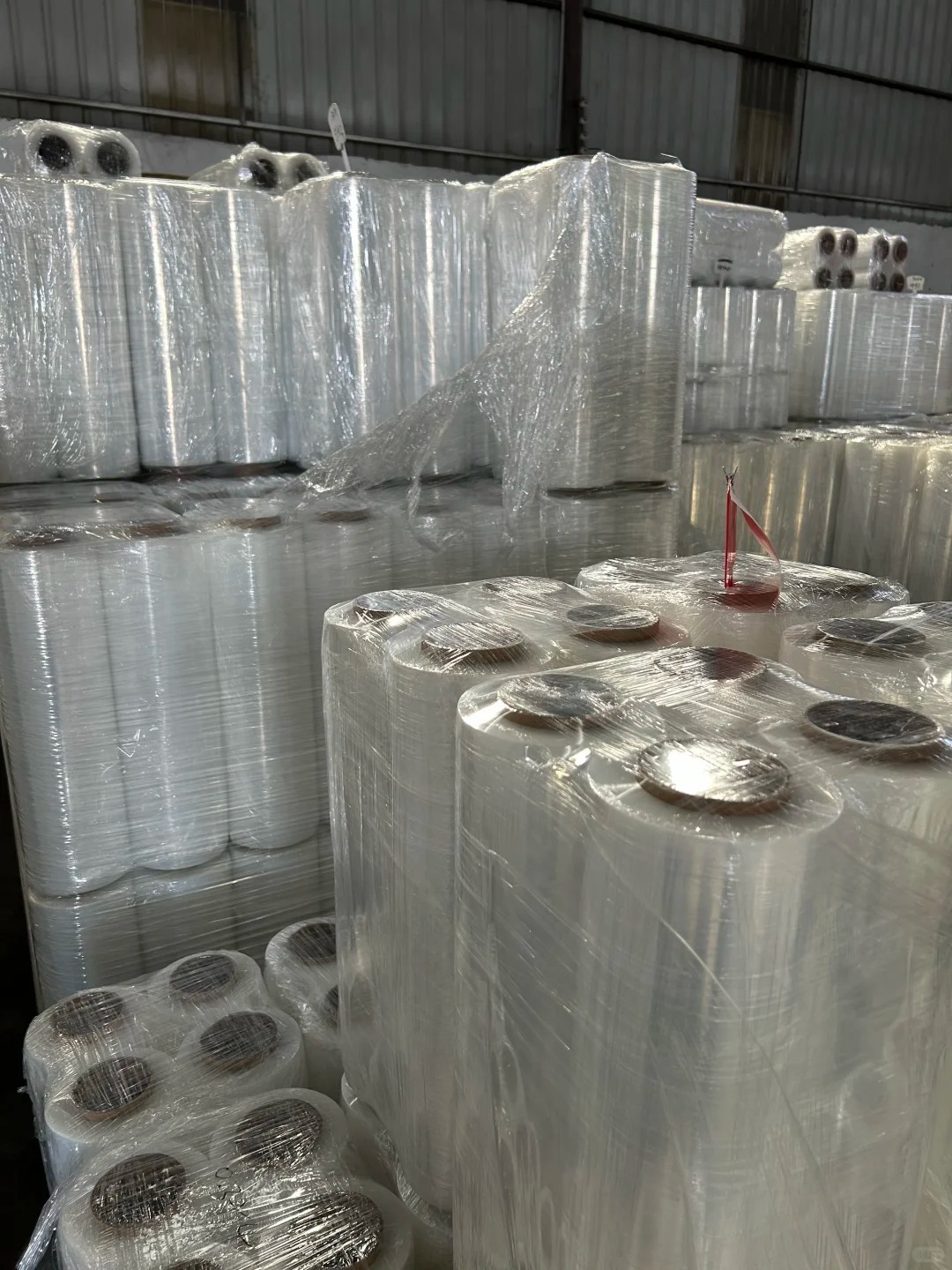
- Packaging film usually means the flexible material itself, such as a roll of printed BOPP film or a coextruded PE barrier film.
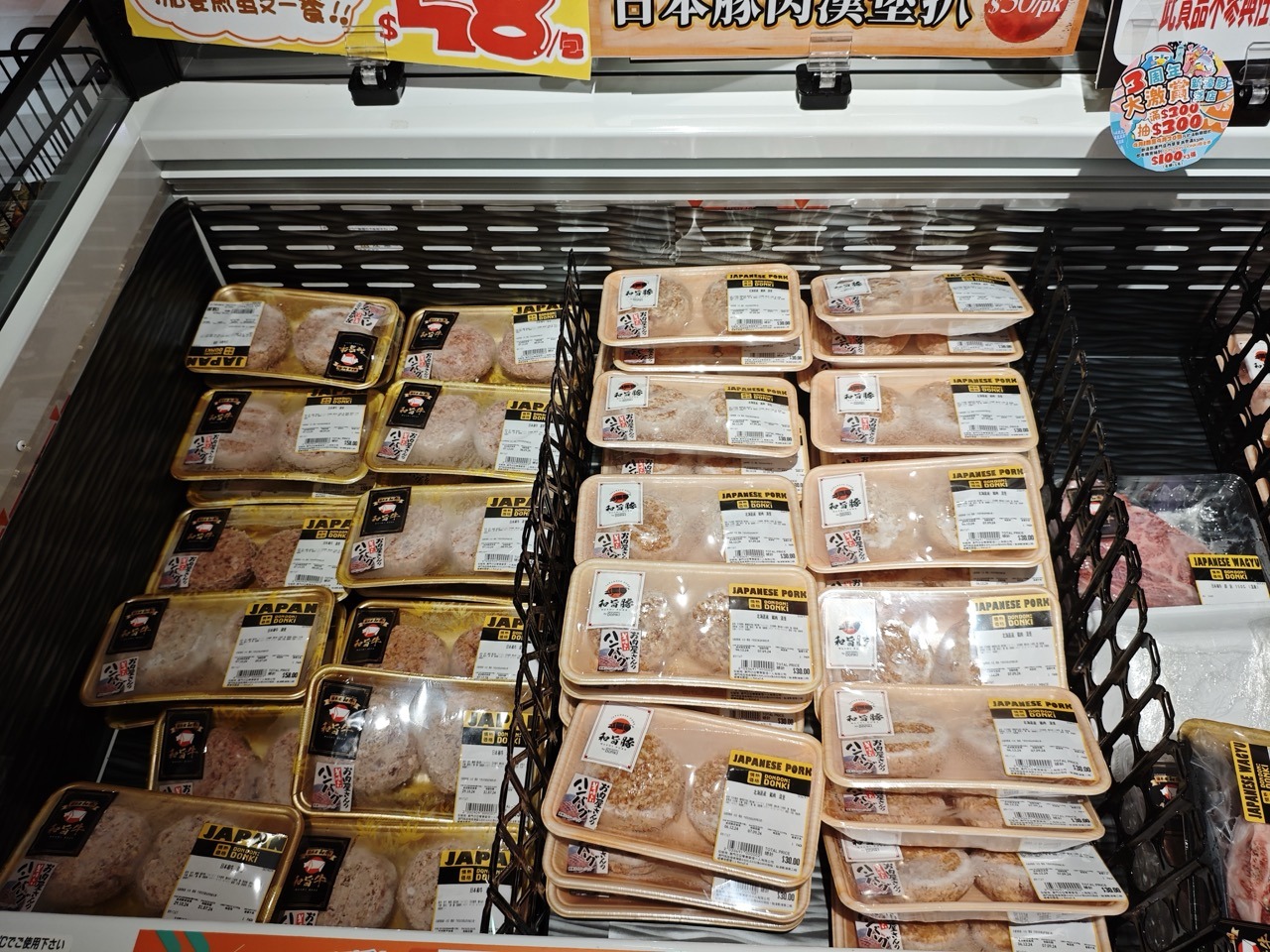
- Film packaging means the package or packaging system made with that film, such as a sealed snack bag, vacuum pouch, or tray lid.
- Flexible packaging is the broader category. It includes films as well as flexible combinations of plastic, paper, foil, coatings, and adhesives.
A film can be supplied as rollstock before it becomes a package. Once a form-fill-seal machine shapes, fills, and closes that material, it becomes part of a finished film-packaging system.
What Is Packaging Film Made Of?
Most packaging films use thermoplastic polymers. Different polymers contribute different combinations of flexibility, stiffness, clarity, heat resistance, sealing, toughness, and barrier performance. The following table describes common roles rather than universal specifications.
| Matériau | Common film forms | Typical contribution | Important limitation |
|---|---|---|---|
| Polyethylene | LDPE, LLDPE, HDPE | Flexibility, toughness, moisture resistance, heat-seal layers, bags and liners | Usually provides limited oxygen barrier by itself |
| Polypropylene | BOPP, CPP | Clarity, stiffness, moisture resistance, printing or sealing depending on the grade | Low-temperature toughness and seal behavior depend on the exact film |
| Polyethylene terephthalate | BOPET and other PET films | Strength, dimensional stability, temperature resistance, printing and lamination surface | Often needs a separate sealant layer |
| Polyamide | PA or nylon films | Toughness, puncture resistance, and useful gas-barrier performance | Moisture can change its barrier and mechanical behavior |
| Ethylene vinyl alcohol | EVOH barrier layers | Strong oxygen barrier in a protected multilayer structure | Barrier performance is sensitive to humidity, so EVOH is normally protected by other layers |
| Polylactic acid | PLA film and coated or laminated structures | Bio-based feedstock, clarity, and stiffness for selected applications | Heat resistance, brittleness, and end-of-life options depend on grade and finished structure |
| Aluminum or metallized layer | Foil laminate or vacuum-metallized film | Improved light, gas, and moisture protection | Can complicate material recovery when bonded into a mixed-material laminate |
Material abbreviations do not fully define performance. Thickness, orientation, crystallinity, additives, coatings, layer order, adhesives, processing history, humidity, temperature, and seal design all matter. A PE film used as a stretch wrap is not interchangeable with a PE sealant layer in a retort pouch.
Single-Layer vs. Multilayer Film Packaging
Single-Layer Film
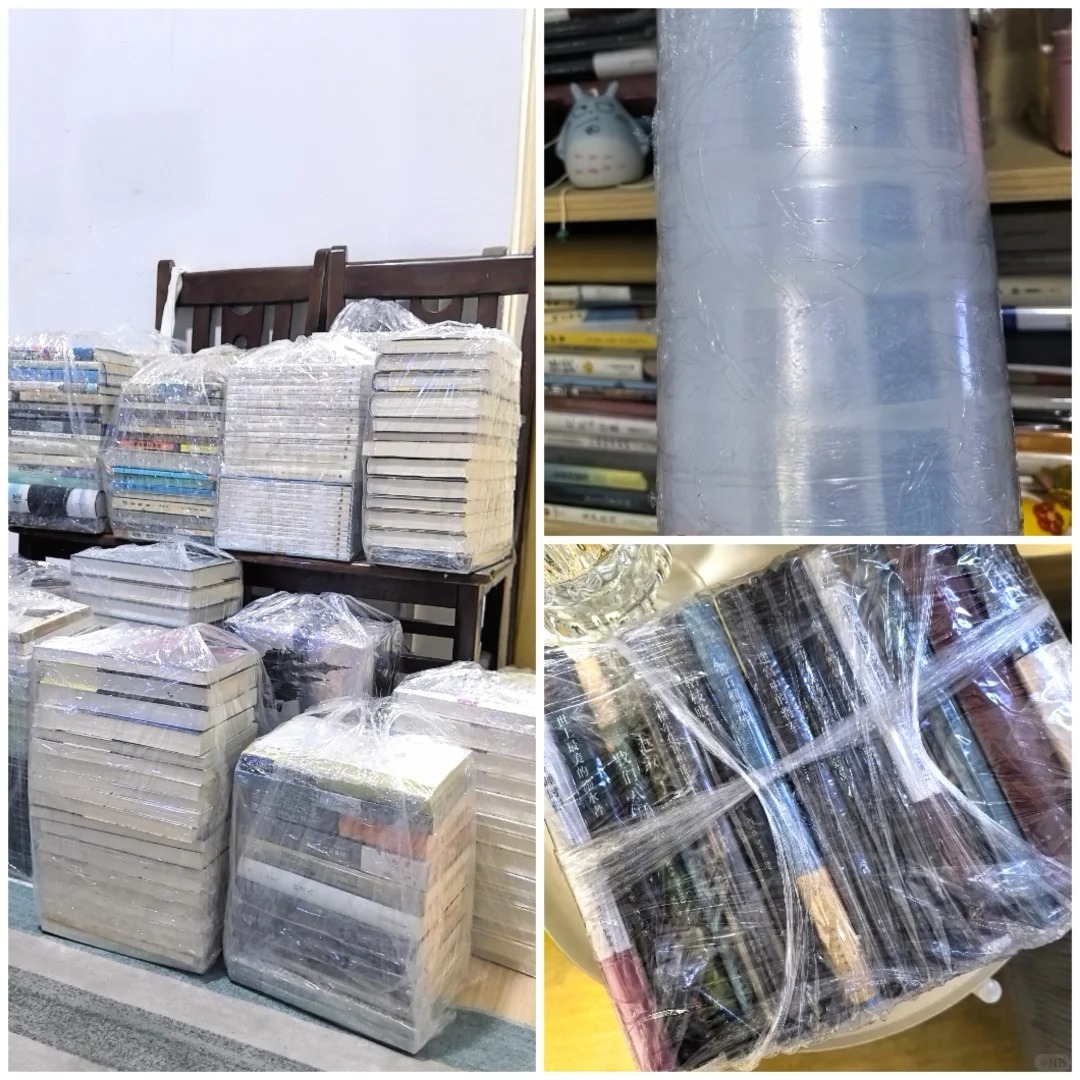
A monolayer film is made as one continuous material layer, although it may still contain a polymer blend and additives. Simple PE bags, liners, produce films, and some overwraps can use this approach when product-protection requirements are modest.
A simpler structure may make identification and reprocessing easier, but “single layer” or “mono-material” does not automatically mean recyclable. Collection access, labels, inks, adhesives, contamination, color, dimensions, sorting, reprocessing capacity, and end-market demand still determine the practical result.
Multilayer Film
More demanding products often require several properties at the same time. A simplified structure may contain:
Print and strength layer / Barrier layer / Sealant and food-contact layer
The outside may provide stiffness, abrasion resistance, and a printing surface. A middle layer may control oxygen, moisture, aroma, or light. The inside may contact the food and create a reliable seal. Tie layers or adhesives keep materials together when the main polymers do not bond directly.
Multilayer films can improve barrier, strength, and seal performance because each layer has a defined function. A peer-reviewed review in Food Control describes this ability to combine mechanical, gas-barrier, water-vapor-barrier, sealing, and low-temperature properties. The tradeoff is that permanently bonded dissimilar materials are often more difficult to sort and recycle than compatible single-polymer structures.
Coextrusion, Lamination, and Coating
- Coextrusion brings two or more molten polymer streams together during film production.
- Lamination joins separately manufactured webs, usually with adhesive, extrusion coating, or thermal bonding.
- Coating applies a thin functional surface for sealing, printing, barrier, slip, antistatic performance, or another purpose.
- Metallization deposits a very thin metal layer to improve light and barrier performance.
The appropriate method depends on the required layer combination, production volume, barrier target, appearance, and converting equipment.
What Are the Main Types of Film Packaging?
Bags and Pouches
Flat bags, side-gusset bags, stand-up pouches, sachets, zipper pouches, and spouted pouches can all be made from film. A basic bag may use a simple PE structure, while a shelf-stable or aroma-sensitive product may require a printed multilayer laminate.
Flow Wrap and Form-Fill-Seal Film
Rollstock travels through packaging machinery, forms around or into a package, receives the product, and is sealed. Horizontal and vertical form-fill-seal systems commonly package bakery goods, snacks, confectionery, frozen food, powders, and individual portions.
The film must match the equipment’s forming geometry, tension, coefficient of friction, registration control, cutting, sealing temperature, pressure, dwell time, and line speed. A material that protects the product but cannot run consistently is not a workable commercial specification.
Lidding Film
Lidding film closes the open top of a tray, cup, tub, or bowl. It is widely used for prepared meals, dairy products, produce, meat, seafood, deli items, and refrigerated foods. The film and rigid container work as one system.
A lid must seal to the actual rim material and surface condition. PET, PP, PS, aluminum, coated paperboard, and other tray materials can require different sealant chemistries and operating windows. Buyers may also specify easy-peel, weld-seal, anti-fog, venting, high-barrier, freezer, microwave, oven, retort, or tamper-evident performance.
Vacuum and Vacuum-Skin Film
Vacuum packaging removes much of the air before sealing. Vacuum pouches and top webs generally need dependable seals, puncture resistance, flex-crack resistance, and barrier performance appropriate to the product. Vacuum-skin packaging heats and draws a top film closely around the food and onto a supporting web or tray.
Meat, poultry, seafood, cheese, and processed foods are common applications. Sharp bones, fatty surfaces, purge, storage temperature, and required shelf life can change the necessary structure.
Shrink Film
Shrink film is applied relatively loosely and then heated so it contracts around the product or group of products. It can improve containment, tamper evidence, bundling, and presentation. Shrink performance depends on orientation, shrink temperature, shrink force, and compatibility with the product.
Stretch Film
Stretch film is mechanically extended and wrapped under tension. It is commonly used to unitize pallet loads, although specialized food overwraps also rely on elastic recovery and cling. Stretch film and shrink film are not the same: one relies mainly on applied tension, while the other relies on heat-induced contraction.
Cling Film and Overwrap
Cling and overwrap films cover trays or products for containment, visibility, and short-term protection. Their performance may depend on cling, fog control, oxygen transmission, moisture retention, puncture resistance, and seal or tack behavior. Consumer plastic wrap is one form of cling film, but industrial overwrap specifications can differ substantially.
How Is Packaging Film Made?
Most plastic packaging film starts as polymer resin. The resin is dried when required, melted, filtered, and extruded into a continuous web. Two common routes are blown-film and cast-film extrusion.
Blown-Film Extrusion
Molten polymer leaves a circular die as a tube. Air expands the tube into a bubble, which cools before being collapsed and wound. Processors control die gap, blow-up ratio, cooling, drawdown, thickness profile, and winding. The tubular format can be slit into flat webs or converted directly into bags.
Cast-Film Extrusion
Molten polymer exits a flat die and is rapidly cooled on a chill roll. Cast film can provide high output, good gauge control, and strong optical properties for suitable resins and applications. CPP and many stretch-film structures are produced through cast processes.
Orientation and Converting
Some films are stretched in one or two directions under controlled conditions. Orientation can change strength, stiffness, shrink behavior, dimensional stability, clarity, and barrier performance. BOPP and BOPET are familiar biaxially oriented films.
After film formation, converting may include printing, surface treatment, coating, metallization, lamination, curing, slitting, perforating, laser scoring, bag making, and quality inspection. The finished package therefore reflects both material production and multiple converting steps.
What Does Film Packaging Protect Against?
Oxygen
Oxygen can contribute to oxidation, color change, aroma loss, and other quality changes in sensitive foods. Oxygen transmission rate, or OTR, describes how much oxygen passes through a material under specified test conditions. Temperature and relative humidity must be considered when comparing values.
Water Vapor
Dry foods may lose crispness when moisture enters, while moist foods may lose weight and texture when water escapes. Water vapor transmission rate, or WVTR, measures moisture-vapor movement through a film under stated conditions. A strong oxygen barrier is not necessarily a strong moisture barrier.
Aroma, Grease, and Light
Coffee, spices, snacks, dairy products, and other foods may need aroma retention or odor protection. Fatty foods may require grease resistance and seal performance in the presence of oil. Light-sensitive products may need pigments, metallization, foil, or another light-blocking component.
Mechanical Damage
Films can be designed to resist puncture, tear propagation, flex cracking, abrasion, and package drop or vibration. The critical property depends on the product. A bakery wrapper does not face the same loads as a vacuum pouch surrounding bone-in meat.
Seal Failure
A film’s barrier data cannot compensate for a leaking seal. Seal strength, hot tack, seal initiation temperature, contamination tolerance, dwell time, pressure, cooling, and package geometry all affect integrity. Validation should test the formed package under production and distribution conditions rather than evaluating only a flat film sample.
How Is Film Packaging Used for Food?
| Food application | Common film role | Important selection questions |
|---|---|---|
| Bread and bakery | Bags, flow wrap, windows, and overwrap | Moisture balance, clarity, sealing, grease, and product compression |
| Snacks and confectionery | Printed rollstock and pouches | Moisture, oxygen, light, aroma, machinability, and easy opening |
| Fresh produce | Bags, wraps, perforated film, and tray lidding | Respiration, condensation, fogging, venting, visibility, and damage protection |
| Meat and seafood | Vacuum bags, skin film, barrier lidding, and overwrap | Puncture, seal contamination, oxygen control, purge, temperature, and display life |
| Cheese and dairy | Pouches, wraps, cup lids, and barrier films | Aroma, oxygen, moisture, seal integrity, peel behavior, and product compatibility |
| Frozen food | Bags, pouches, rollstock, and tray lidding | Low-temperature toughness, puncture, moisture loss, sealing, and reheating instructions |
| Prepared meals | Tray lidding and form-fill-seal structures | Tray compatibility, hot fill, chilling, freezing, microwave or oven use, venting, and peel |
Film selection should begin with the food rather than the preferred material. Product composition, microbial control, processing, distribution temperature, and expected shelf life determine the required package performance.
Lidding Film and Rigid Trays Must Be Specified Together
A rigid tray and flexible lid form one package. The lid must bond to the tray flange without damaging the container or creating an unreliable seal. Surface contamination, flange flatness, anti-fog treatment, tray stiffness, and sealing-equipment setup can all affect the result.
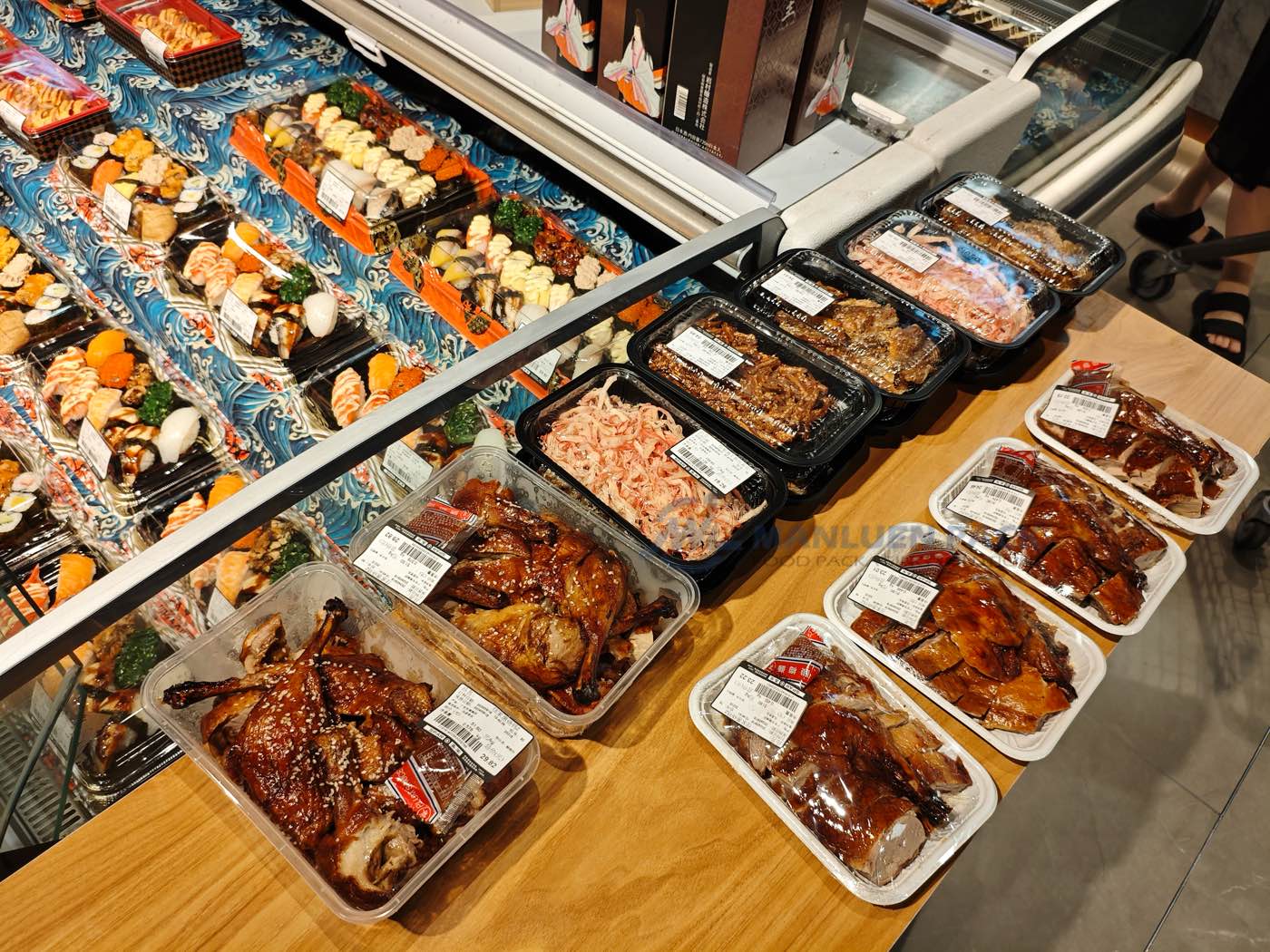
For example, plateaux à sushis often prioritize clarity, anti-fog performance, reliable cold-chain sealing, and easy opening. Prepared-food trays may need freezer-to-microwave or oven performance. Fresh-protein trays may require high barrier and strong seal integrity. The film cannot be selected independently from the tray material and end-use instructions.
Rigid containers may be produced by thermoforming, while the lidding film is produced through film extrusion and converting. These are related but separate manufacturing processes.
Film Packaging vs. Rigid Packaging
| Decision factor | Film packaging | Rigid packaging |
|---|---|---|
| Shape | Conforms to the product or filling process | Maintains a defined shape when empty |
| Typical formats | Bags, pouches, wraps, rollstock, and lidding | Trays, cups, tubs, bottles, and clamshells |
| Material efficiency | Often uses less packaging mass for equivalent containment | Uses structure to provide stacking and crush resistance |
| Equipment | Frequently roll-fed or form-fill-seal | Usually filled as a preformed item or formed inline from sheet |
| Barrier design | Can combine thin functional layers and coatings | Depends on container wall, closure, coating, and headspace |
| Product protection | May depend on the product and secondary packaging for shape support | Usually provides stronger physical shape and presentation |
Many packages combine both formats. A coquille à clapet can use a film label or tamper band, while a rigid tray commonly uses flexible lidding. The correct comparison is between complete systems that deliver equivalent food protection.
US Food-Contact Requirements for Packaging Film
In the United States, a polymer name does not by itself establish that a film is suitable for food contact. The regulatory basis must cover every substance that may reasonably migrate from the completed food-contact material under the intended conditions of use.
21 CFR Part 177 contains regulations for many polymeric food-contact materials. Other substances may be covered by an effective Food Contact Notification, prior sanction, Threshold of Regulation exemption, or another applicable basis. An FCN is generally specific to the identified manufacturer or supplier, substance, intended use, and conditions described in the notification.
Buyers should verify:
- the complete layer structure and food-contact side;
- resins, additives, colorants, coatings, adhesives, and printing inks;
- food type, including aqueous, acidic, fatty, dry, or alcoholic foods;
- temperature and time conditions, such as frozen storage, hot filling, reheating, or cooking;
- whether recycled content is permitted in the intended application;
- supplier identity where the authorization is supplier-specific; and
- supporting compliance and migration documentation.
“FDA approved film” is usually an imprecise sales phrase. A more useful question is whether the complete film construction has a valid regulatory basis for the specified food and conditions of use. Our guide to US food-packaging oversight explains the roles of the FDA and other agencies.
EU Food-Contact and Packaging Requirements
Food-contact films placed on the EU market may need to comply with the general requirements of Regulation (EC) No 1935/2004 and, for plastic materials, Regulation (EU) No 10/2011 as amended. Depending on the construction, additional measures may apply to recycled plastics, active and intelligent materials, printing inks, coatings, adhesives, or other components.
Regulation (EU) 2025/40 on packaging and packaging waste, commonly called the PPWR, entered into force in 2025 and became generally applicable on 12 August 2026. Its requirements do not all begin on that date. Major design-for-recycling, recycled-content, reuse, labeling, and waste-reduction provisions follow their own implementation dates, including important 2030 and 2035 milestones.
Film buyers should not treat “PPWR-ready” as a certificate. They should identify the precise requirement, packaging category, implementation date, test or calculation method, and supporting documentation. A food-contact declaration and a recyclability assessment answer different questions.
Is Film Packaging Recyclable?
Some film packaging can be recycled, but the answer depends on design and local infrastructure. A technically reprocessable polymer is not necessarily collected, sorted, and sold into a viable end market in every location.
Mono-Material Design
Designers increasingly try to keep layers within one compatible polymer family, such as all-PE or all-PP structures. This can reduce incompatibility during reprocessing. However, “mono-material” does not guarantee collection or acceptance, and small amounts of barrier polymer, tie resin, coating, ink, adhesive, zipper, spout, or label may still affect a recycling assessment.
Multimaterial Laminates
A laminate may deliver excellent shelf-life and mechanical performance by combining PET, PE, PA, EVOH, foil, or other layers. Those same bonded layers can be difficult to separate in conventional mechanical recycling. The environmental decision must weigh recovery limitations against the product loss that inadequate packaging could cause.
Claims Must Match Collection Reality
The US Federal Trade Commission advises marketers to qualify recyclable claims when appropriate recycling facilities are not available to at least 60% of consumers or communities where the product is sold. The package format and market therefore matter as much as the resin name.
Before printing a claim, confirm the complete package, local collection route, sorting behavior, reprocessor specification, and applicable labeling rules. Store drop-off, curbside collection, commercial backhaul, composting, and specialized take-back are different systems and should not be presented as interchangeable.
Bio-Based, Biodegradable, and Compostable Films
These terms describe different characteristics. Bio-based refers to feedstock origin. Biodegradable refers to biological breakdown under specified conditions and time. Compostable means a finished item meets defined biodegradation, disintegration, and compost-quality requirements for a stated composting environment.
A PLA film can contain renewable carbon, but it should not be assumed to break down quickly in soil, seawater, landfill, or a home compost pile. Industrial compostability also belongs to the finished package, including inks, adhesives, labels, and other layers. A compostable base film laminated to a conventional barrier layer does not make the complete package compostable.
Similarly, compostable does not mean recyclable in a conventional PE or PP stream. Environmental claims should identify the intended route and confirm that the target market has compatible collection and processing.
Active and Intelligent Packaging Films
Some films do more than passively contain and protect. Active packaging may absorb oxygen or moisture, release an approved antimicrobial substance, or help control the package atmosphere. Intelligent packaging may use indicators or sensors to communicate time, temperature, freshness, leakage, or another condition.
These functions introduce additional regulatory and technical questions. The active substance, indicator, migration potential, food-contact status, consumer instructions, data interpretation, and end-of-life effect must all be evaluated. An active or intelligent feature should be selected because it solves a defined product problem, not simply because it is novel.
How to Choose the Right Packaging Film
- Define the product. Record composition, fat, acidity, moisture, aroma sensitivity, shape, sharp edges, and portion size.
- Set the shelf-life target. Identify the failure modes the film must control rather than requesting “high barrier” without a measurable need.
- Specify storage and processing. Include filling temperature, chilling, freezing, pasteurization, retort, reheating, distribution, and consumer use.
- Set barrier targets. Define OTR, WVTR, light, aroma, and grease requirements under relevant test conditions.
- Define mechanical performance. Consider puncture, tear, flex crack, drop, abrasion, load, and distribution testing.
- Match the seal. Specify the container or opposing web, seal temperature window, pressure, dwell time, hot tack, peel force, and contamination tolerance.
- Match the equipment. Confirm roll dimensions, core, winding, gauge tolerance, friction, stiffness, tracking, registration, and line speed.
- Verify food-contact compliance. Review the complete construction for the intended food, temperature, time, and destination market.
- Define the end-of-life claim. Confirm collection and processing rather than relying on a material label alone.
- Run trials. Test production rolls on the actual line and evaluate formed packages through distribution and shelf life.
For an early material screen, compare the broader families in our guide to matériaux d'emballage alimentaire. Buyers combining lidding film with trays, tubs, and bowls can also review Manluen’s food storage containers.
What to Include in a Film-Packaging RFQ
- product and food type;
- finished package format and dimensions;
- film thickness or allowed gauge range;
- full proposed layer structure;
- OTR and WVTR targets with test conditions;
- sealant and mating surface;
- seal temperature window and required peel or weld behavior;
- puncture, tear, tensile, friction, and optical requirements;
- printing method, colors, treatment level, and artwork control;
- roll width, diameter, core, winding direction, and splice rules;
- packaging-machine model and target line speed;
- food-contact and market documentation;
- shelf-life and distribution test plan;
- recycling, composting, recycled-content, or bio-based claim requirements; and
- change-control, traceability, inspection, and certificate requirements.
Requesting only “food-grade transparent film” leaves too many variables undefined. A useful RFQ connects material construction to measurable package and line performance.
Questions fréquemment posées
What is film packaging?
Film packaging is packaging made primarily from a thin, flexible web that wraps, contains, seals, covers, or protects a product. Examples include bags, pouches, rollstock, tray lidding, vacuum packs, shrink film, and overwrap.
Is film packaging always plastic?
Most commercial packaging film is polymer-based, but a finished flexible structure may also include paper, aluminum foil, metallization, coatings, inks, and adhesives. “Film packaging” describes the flexible format, not one universal material.
What is the difference between film packaging and flexible packaging?
Film packaging is a major part of flexible packaging. Flexible packaging is broader and includes packages made from or combining film, foil, paper, coatings, and other materials that change shape when filled or handled.
What is the difference between shrink film and stretch film?
Shrink film contracts when controlled heat is applied. Stretch film is mechanically extended and wrapped under tension. The materials, machinery, and performance requirements differ.
Is plastic wrap the same as cling film?
In everyday consumer language, the terms often overlap. In industrial specifications, cling film refers to a film designed to adhere to itself or a surface, while overwrap and stretch films can have different thicknesses, cling mechanisms, tension, and end uses.
What is barrier film?
Barrier film is designed to control transmission of oxygen, water vapor, aroma, grease, light, or another substance. It may use one polymer, several coextruded layers, laminated webs, coatings, metallization, or foil. Barrier performance must be stated with test conditions.
Which packaging films are permitted for food contact?
There is no universal list based only on familiar names such as PE, PP, or PET. The complete formulation must have an appropriate regulatory basis for the intended food and use conditions in the destination market. Buyers should review resins, additives, coatings, adhesives, inks, recycled content, food type, temperature, and contact time.
Is food-packaging film recyclable?
Some films can be recycled where suitable collection, sorting, reprocessing, and markets exist. Clean compatible mono-material structures are generally easier to process than permanently bonded dissimilar laminates, but neither a resin code nor a mono-material claim guarantees local acceptance.
Is compostable film the same as bio-based film?
No. Bio-based describes feedstock origin, while compostable describes performance under defined composting conditions. A finished film package must be evaluated with its inks, adhesives, labels, and additional layers.
Conclusion
Film packaging uses a thin flexible structure to contain, seal, protect, and present products. Its performance comes from the complete design: polymer selection, layer architecture, thickness, barrier, mechanical behavior, sealant, converting, equipment, and finished-package geometry.
For food packaging, start with the product and process. Define shelf life, storage, filling, barrier, seal, physical protection, regulatory market, and end-of-life route before selecting a film. The best structure is not the one with the most layers or the strongest marketing claim. It is the structure that protects the product, runs reliably, complies with its intended use, and uses no more material or complexity than necessary.
Sources et lectures complémentaires
- Electronic Code of Federal Regulations: 21 CFR Part 177, Indirect Food Additives—Polymers
- US Food and Drug Administration: Determining the Regulatory Status of Components of a Food Contact Material
- US Food and Drug Administration: Food Types and Conditions of Use for Food Contact Substances
- EUR-Lex: Regulation (EC) No 1935/2004 on Materials and Articles Intended to Come into Contact with Food
- EUR-Lex: Regulation (EU) No 10/2011 on Plastic Materials and Articles Intended to Come into Contact with Food
- EUR-Lex: Regulation (EU) 2025/40 on Packaging and Packaging Waste
- European Commission: Packaging Waste
- US Federal Trade Commission: Environmental Claims—Summary of the Green Guides
- Food Control: Emerging Materials and Technologies of Multilayer Film for Food Packaging Application
- Materials: Recyclability and Redesign Challenges in Multilayer Flexible Food Packaging

ManLuen Plastic Packaging Company, spécialisée dans la production d'emballages alimentaires en plastique depuis plus de 20 ans. Nos produits sont fabriqués à partir de PP, PS et OPS vierges et sans BPA, conformes aux normes de la FDA et aux normes européennes.
 FR
FR  EN
EN  ZH
ZH  PT
PT  ES
ES  KO
KO  JA
JA