
What Is PLA? Properties, Uses, Composting and Recycling
Introduction
What is PLA? PLA, or polylactic acid, is a thermoplastic polyester commonly made from sugars obtained from renewable agricultural feedstocks such as corn, sugarcane, sugar beet, or cassava. Manufacturers use it in clear cups, cold-food containers, trays, lids, films, fibers, 3D-printing filament, and selected medical products.
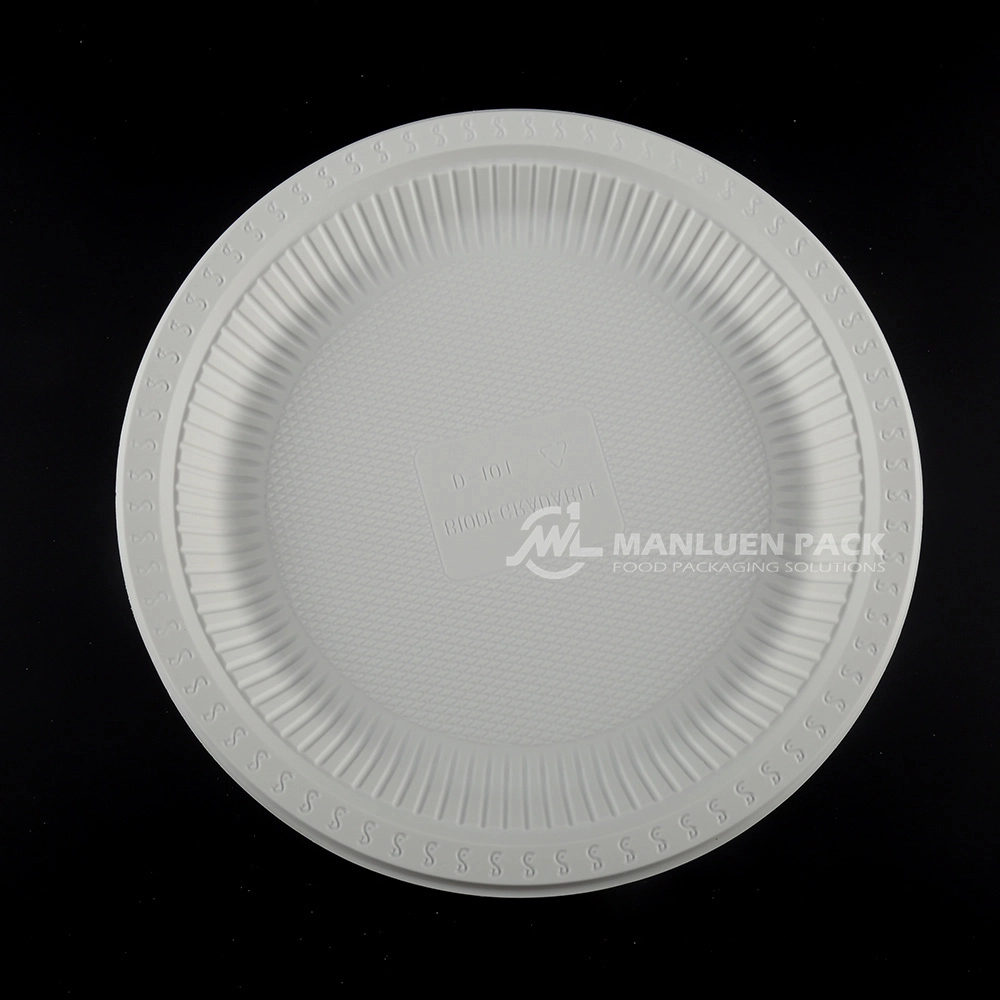
PLA is bio-based, but that fact alone does not mean every PLA product will quickly biodegrade in soil, seawater, a landfill, or a home compost pile. Most packaging-grade PLA that is marketed as compostable is designed for controlled industrial composting conditions. Its real environmental outcome depends on the finished package, applicable certification, collection system, contamination level, and available local infrastructure.
For food-packaging buyers, PLA can provide excellent clarity, useful stiffness, and a renewable feedstock for cold or moderately temperature-sensitive applications. Its limitations include relatively low heat resistance in standard grades, brittleness compared with some conventional plastics, modest moisture and gas-barrier performance, and limited access to dedicated composting or recycling streams. This guide explains how PLA is made, how its molecular structure affects performance, where it works well, and what buyers should verify before specifying it.
What Does PLA Stand For?
PLA stands for polylactic acid. The more chemically precise name is poly(lactic acid). Despite the word “acid” in its common name, PLA is a polyester: its long polymer chains contain ester linkages formed from lactic-acid-derived building blocks.
PLA should not be confused with lactic acid itself. Lactic acid is a small molecule used as the starting building block; PLA is the high-molecular-weight polymer made from those building blocks. The polymer’s molecular weight, stereochemistry, additives, crystallinity, and processing history all affect how a finished PLA item behaves.
What Is PLA Made From?
Commercial PLA usually begins with carbohydrate-rich crops. Starch or sugar is converted into fermentable sugars, microorganisms ferment those sugars into lactic acid, and chemical processing then converts the lactic acid into polymer.
Common feedstocks include:
- corn starch or corn-derived glucose;
- sugarcane and sugar beet;
- cassava and other starch-rich crops; and
- potential future feedstocks such as agricultural residues or other non-food biomass, where technically and commercially available.
The crop source does not, by itself, determine the quality of the finished package. Resin formulation, polymer purity, molecular structure, sheet extrusion, forming conditions, additives, and finished-part design are also important.
Bio-Based Does Not Mean the Same Thing as Biodegradable
These terms describe different attributes:
- Bio-based describes where some or all of the carbon in a material comes from. A bio-based plastic may be made partly or entirely from renewable biological resources such as sugarcane, corn, starch, or cellulose. However, bio-based does not automatically mean biodegradable, compostable, or recyclable. A bio-based polymer can behave similarly to a conventional fossil-based plastic at end of life.
- Biodegradable describes the ability of a material to break down through biological activity under specified environmental conditions and over a specified period. The term should not be used as a general guarantee that an item will quickly disappear in any environment. Temperature, moisture, oxygen, microbial activity, material thickness, and disposal conditions can all affect the rate and extent of biodegradation.
- Compostable is a more specific claim than biodegradable. A compostable product must meet defined requirements for biodegradation, physical disintegration, and compost quality under specified composting conditions. Industrially compostable packaging, for example, may require the controlled temperatures and moisture levels of a commercial composting facility and may not break down in the same way in home composting or the natural environment.
- Recyclable refers to whether a package can realistically be collected, sorted, processed, and converted into useful secondary material within an available recycling system. Technical recyclability alone is not enough. Labels, adhesives, coatings, food residue, multilayer structures, package size, local collection rules, sorting technology, and demand for the recovered material can all affect whether a package is actually recycled in practice.
A plastic can be bio-based without being readily biodegradable, and a biodegradable plastic can be made partly or entirely from fossil-derived feedstocks. Buyers should therefore evaluate each claim separately.
How Is PLA Made?
1. Producing Fermentable Sugars
When production starts with a starch crop, the starch is extracted and hydrolyzed into simpler sugars such as glucose. Sugar crops can enter the process through an appropriate sugar-extraction and purification route.
2. Fermenting Sugar into Lactic Acid
Selected microorganisms ferment the sugar into lactic acid. Process control and purification matter because the optical form and purity of the lactic acid influence the structure and performance of the final polymer.
3. Polymerizing the Lactic-Acid Building Blocks
Two broad routes can be used. Direct polycondensation joins lactic-acid molecules while removing water, but producing high-molecular-weight material efficiently requires careful control. The dominant commercial route commonly converts lactic acid into a cyclic intermediate called lactide and then opens the lactide rings to build long PLA chains. This is known as ring-opening polymerization.
4. Converting PLA Resin into Sheet, Film, or Parts
The polymer is compounded as needed and supplied as resin pellets.
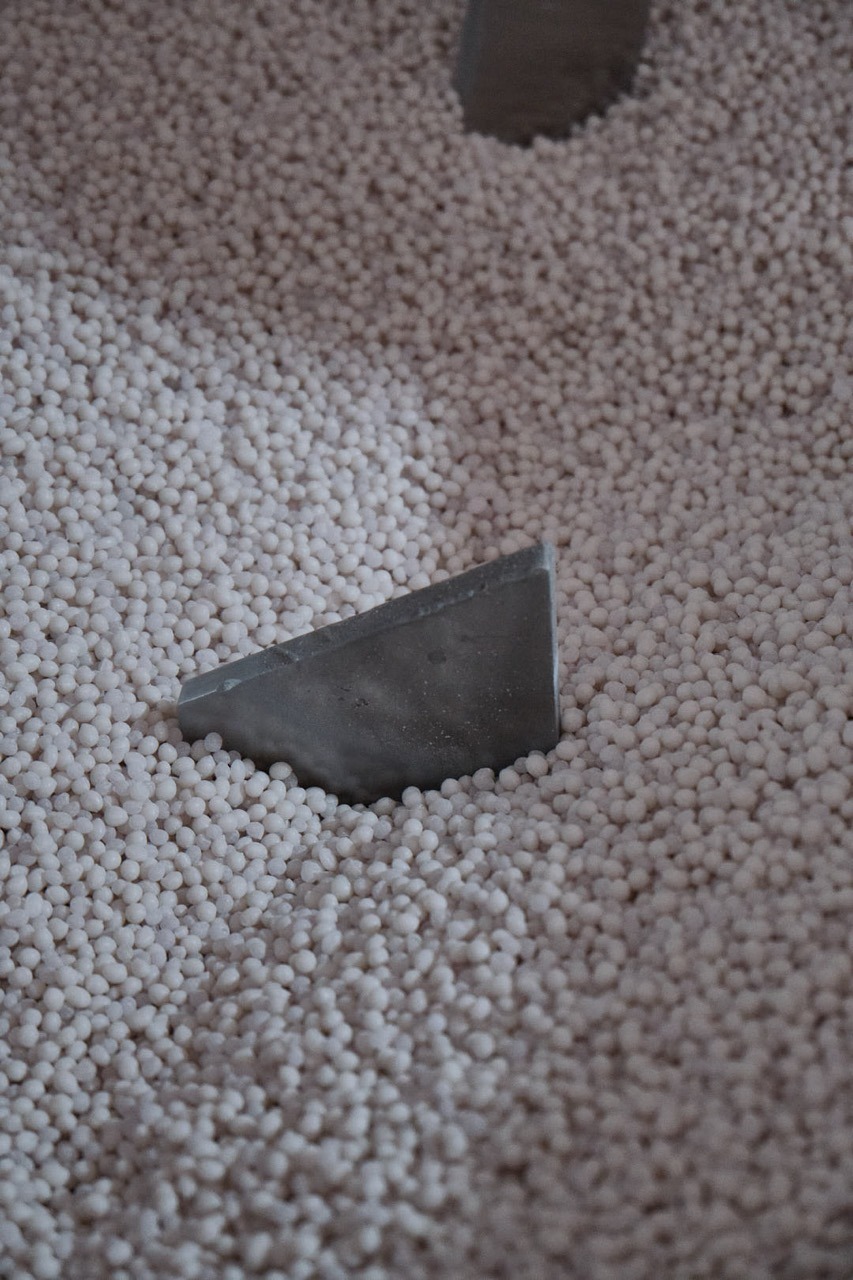
The pellets may be melted and extruded into sheet or film, injection molded, spun into fibers, or extruded as 3D-printing filament.
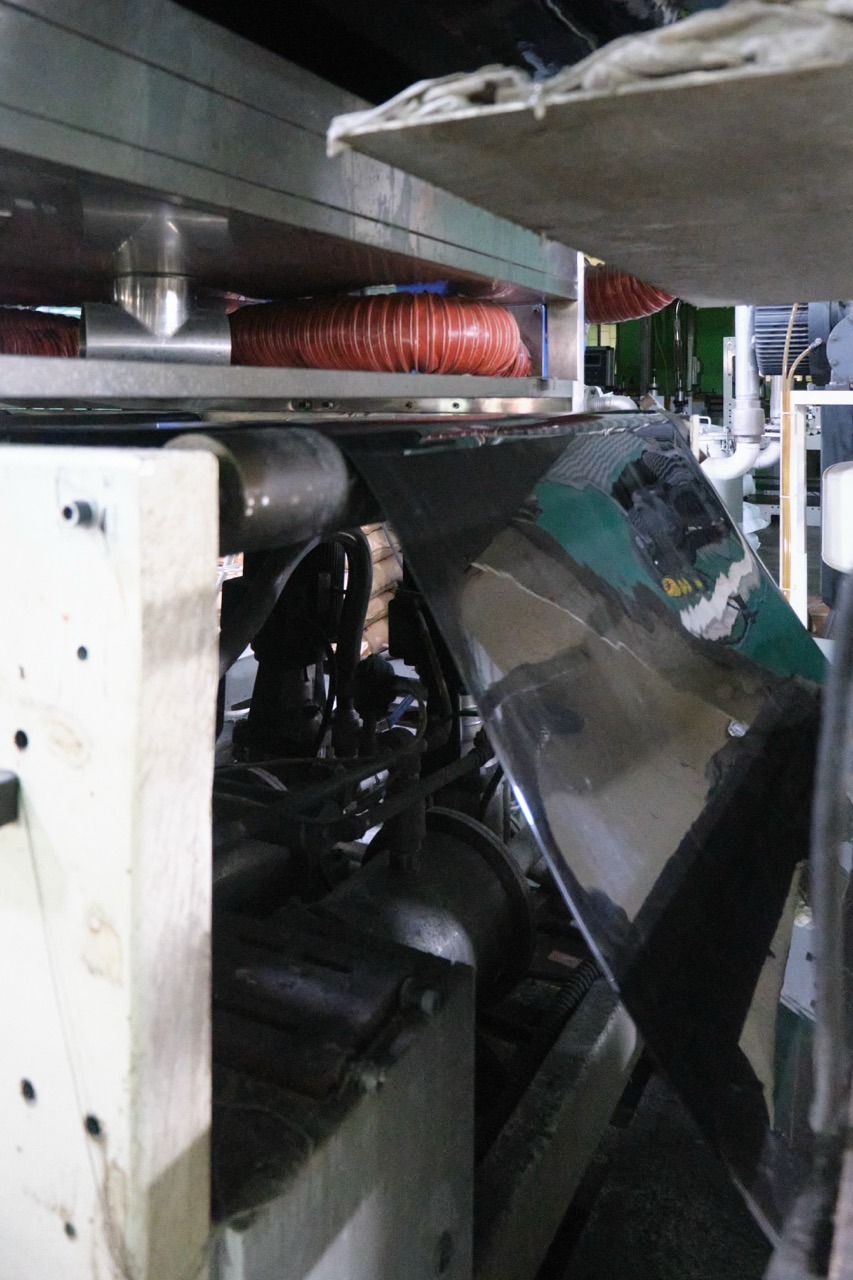
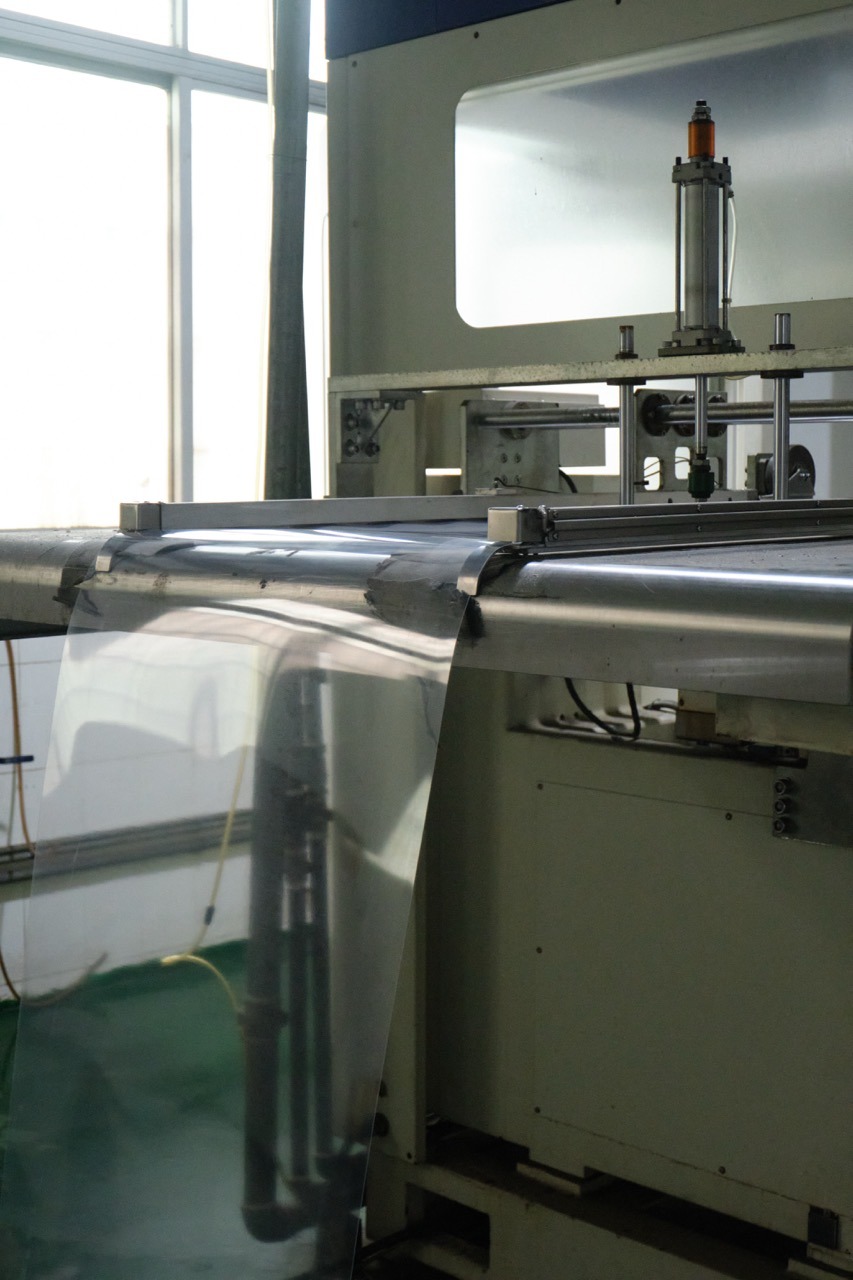
In food-container production, extrusion creates a continuous flat sheet; thermoforming then reheats and shapes that sheet into a three-dimensional tray, cup, lid, or clamshell. Extrusion makes the sheet, while thermoforming reshapes it.
PLA Structure: Why Stereochemistry and Crystallinity Matter
Lactic acid exists in two mirror-image forms, commonly described as L and D forms. Their arrangement in the polymer leads to different PLA structures:
- PLLA contains predominantly L-lactic units and can develop semi-crystalline regions under suitable conditions.
- PDLA contains predominantly D-lactic units.
- PDLLA contains a more random mixture and is generally more amorphous.
These distinctions are not merely academic. A mostly amorphous PLA can offer good transparency but tends to soften at relatively modest temperatures. Greater crystallinity can improve dimensional stability at elevated temperatures, although it may change clarity, processing behavior, forming window, and degradation rate.
Processors can modify PLA through grade selection, controlled annealing, nucleating agents, stereocomplex formation, polymer blends, impact modifiers, plasticizers, fibers, fillers, or chain extenders. Each approach involves tradeoffs. A modifier that improves toughness, heat resistance, or processing may also affect transparency, food-contact status, compostability certification, sealing, or recyclability. Performance should therefore be verified on the finished formulation and part, not inferred from the word “PLA.”
Main Properties of PLA
| Property | Practical meaning for packaging |
|---|---|
| Clarity | Amorphous grades can provide high transparency for product display. |
| Stiffness | PLA can feel crisp and rigid, allowing good shape definition, but thin or poorly designed parts may crack under impact. |
| Heat resistance | Standard amorphous PLA can deform at temperatures that many PP food containers tolerate. Modified or crystallized grades may perform better, but the finished part requires testing. |
| Moisture and gas barrier | PLA offers useful performance for some foods but is not automatically a high-barrier solution. Shelf-life needs may require coatings, layers, or a different material. |
| Printability and conversion | PLA can be printed, sealed, extruded, thermoformed, injection molded, and made into film or fibers when equipment and settings suit the selected grade. |
| Density | Part weight cannot be judged from thickness alone; designers should compare complete packages that deliver equivalent protection. |
Why Standard PLA Has Limited Heat Resistance
Many clear packaging grades are largely amorphous. When exposed to sufficient heat, their polymer chains gain mobility and the part can soften, shrink, warp, or lose dimensional stability. Actual performance depends on resin grade, wall thickness, crystallinity, load, contact time, package geometry, and manufacturing history. A single “maximum PLA temperature” is therefore not reliable for every package.
What Are CPLA and Heat-Resistant PLA?
CPLA commonly refers to crystallized PLA. Manufacturers encourage crystallization and may use nucleating agents or other formulation changes to improve heat resistance. The result is often opaque rather than crystal clear. Heat-resistant PLA formulations can be useful for selected lids, utensils, or serviceware, but buyers should request test data for the exact item and intended use. “CPLA” does not automatically mean oven-safe or microwave-safe.
PLA vs. PLA+
PLA+ is a market label rather than one universal chemical specification. It usually describes PLA blended or compounded for improved toughness, printability, heat performance, or another property. Because formulations vary by supplier, PLA+ should not be assumed to have the same food-contact authorization, compostability, or end-of-life route as unmodified PLA.
How Is PLA Processed?
PLA can be processed using several established plastics-manufacturing methods:
- sheet extrusion and thermoforming for cups, trays, lids, and clamshells;
- film extrusion for wraps, labels, and selected flexible structures;
- injection molding for rigid parts and serviceware;
- fiber spinning for textiles, nonwovens, and hygiene applications; and
- filament extrusion for material-extrusion 3D printing.
PLA is sensitive to moisture and heat during melt processing. Resin normally needs appropriate drying, and the processor must control melt temperature and residence time to limit molecular-weight loss. Scrap generated inside a clean, controlled production process may sometimes be reground and reused at a validated ratio, but repeated thermal processing can alter properties.
PLA in Food Packaging
PLA is best known in packaging for clear, rigid or semi-rigid items used with cold or ambient foods. It may be considered for:
- cold-drink cups and matching lids;
- salad, fruit, deli, and dessert containers;
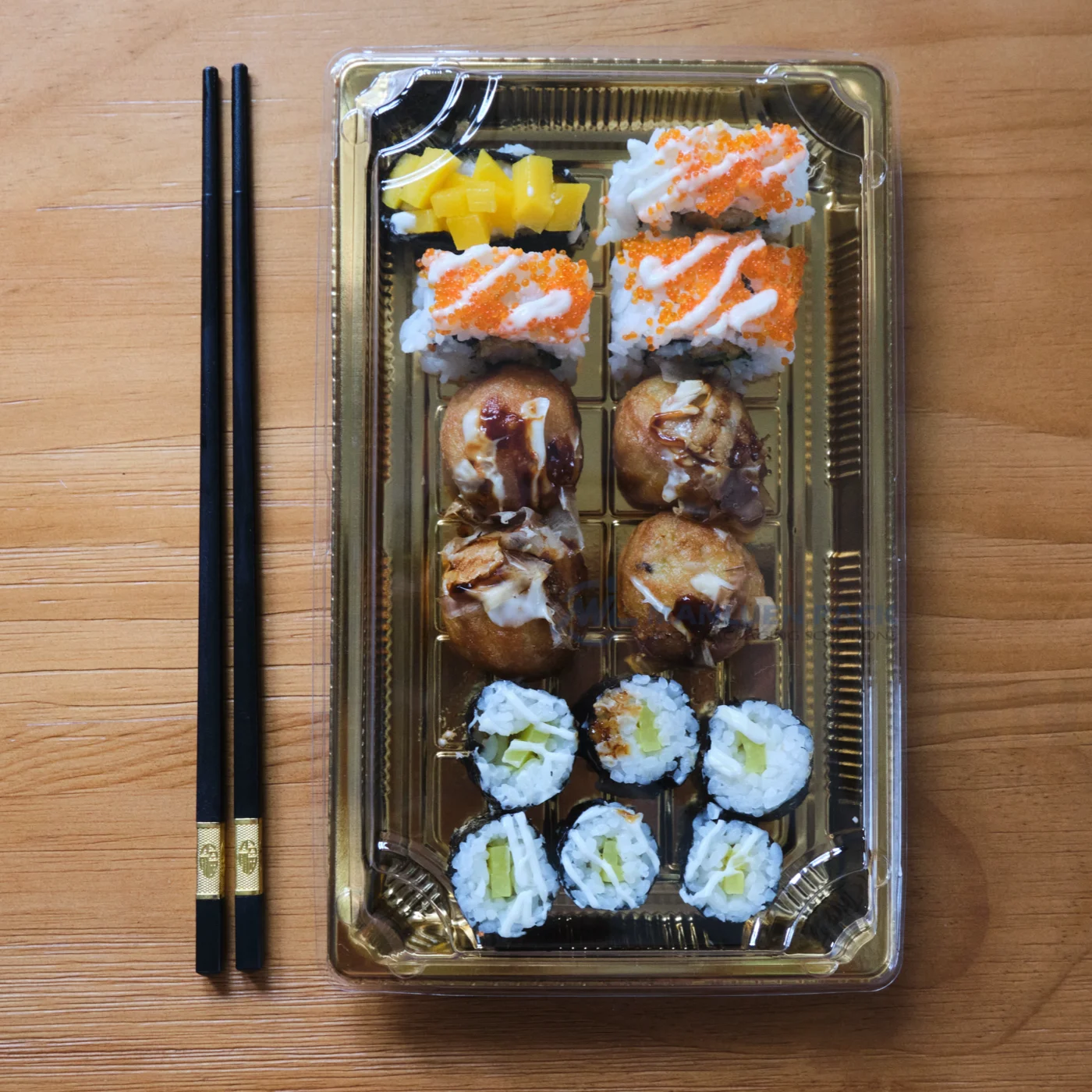
- clear lids for bandejas de sushi y cajas bento;
- clamshell containers for produce or bakery items;
- windows, films, labels, and selected coated-paper structures; and
- clear components for cake containers.
These are potential applications, not a statement that every item in each category is made from PLA. The correct material depends on food temperature, grease and moisture, drop resistance, sealing method, shelf-life target, transport, merchandising, and disposal route. See the broader comparison of food packaging materials when PLA is only one of several candidates.
Where PLA Usually Fits Best
PLA is often strongest when a package needs high clarity and stiffness, carries a cold or ambient product, and is distributed in a market with an appropriate organics or specialized recovery program. It is a less obvious choice for hot filling, high-temperature transport, prolonged heat exposure, demanding impact conditions, or products requiring strong oxygen or moisture barriers.
Is PLA Food Safe?
PLA can be used in food-contact applications, but “PLA” is a family of grades and formulations rather than a blanket regulatory approval. In the United States, the finished food-contact material must have a valid regulatory basis for its intended food type and conditions of use. That basis may depend on an applicable regulation, an effective Food Contact Notification, or another recognized authorization.
The US Food and Drug Administration maintains inventories for food-contact substances and describes conditions of use ranging from sterilization and hot filling to refrigerated or frozen storage. A notification that covers one PLA formulation under specified conditions does not approve every PLA resin, additive, colorant, coating, adhesive, or finished package.
Buyers should request:
- the exact resin and additive declaration;
- the regulatory basis for the intended food and use temperature;
- migration or compliance testing where required;
- information on printing inks, coatings, adhesives, and multilayer components; and
- traceability and change-control documentation.
For a fuller explanation, see what agency approves food packaging.
Is PLA Biodegradable?
PLA is biodegradable under suitable conditions, but that answer is incomplete without specifying the environment and time frame. Temperature, moisture, microorganisms, part thickness, molecular weight, crystallinity, and package design all affect the rate.
PLA degradation generally begins with water-driven hydrolysis of its ester bonds. This shortens the long polymer chains and lowers molecular weight. Microorganisms can more readily assimilate smaller breakdown products after sufficient chain scission has occurred. Heat and moisture accelerate the process; cool or dry environments slow it substantially. Crystalline regions also tend to resist hydrolysis longer than amorphous regions.
Consequently, a PLA cup can behave very differently in an industrial composting process, a backyard compost pile, soil, seawater, or a landfill. “Biodegradable” should never be read as permission to litter.
Is PLA Compostable?
Many PLA formulations can be used to make industrially compostable products, but compostability belongs to the finished item, not just the base resin. Thickness, pigments, labels, inks, adhesives, coatings, and attached components can determine whether the package passes a recognized test.
Industrial Composting vs. Home Composting
Industrial composting facilities can maintain controlled temperature, moisture, aeration, and residence time. Home composting usually runs at lower and less consistent temperatures. A package certified for industrial composting should not be described as home-compostable unless the complete product has separate evidence for that claim.
In the United States, ASTM D6400 is a commonly referenced specification for plastics and finished items designed for aerobic composting in municipal or industrial facilities. Certification and clear labeling can help identify qualifying products, but acceptance still depends on the receiving facility. Some composters do not accept packaging even when it is certified because of sorting challenges, contamination, process limits, or local policy.
The US Federal Trade Commission’s Green Guides also require environmental claims to be properly substantiated and qualified. If suitable composting facilities are not available to a substantial majority of the intended audience, an unqualified compostable claim can mislead consumers.
Does PLA Biodegrade in the Ocean?
Industrial compostability does not establish marine biodegradability. In a 2023 peer-reviewed marine-aquarium study, both amorphous and semi-crystalline PLA samples showed only about 0.15–0.19% weight loss after 260 days, similar to the polystyrene control in that experiment. The precise result should not be generalized to every marine setting, but it demonstrates why PLA packaging must not be marketed as if it quickly disappears in the ocean.
Can PLA Be Recycled?
PLA is technically recyclable, but practical access remains limited in many markets. It should not automatically be placed in a conventional mixed-plastics bin unless the local program explicitly accepts it.
Mechanical Recycling
Clean PLA can be sorted, ground, washed, remelted, and converted into new material. The main challenges are collection volume, separation from other plastics, food contamination, additives, and loss of molecular weight or performance during repeated processing. Dedicated streams produce better results than uncontrolled mixing.
Chemical Recycling
Chemical or feedstock-recycling processes can break PLA into lactic acid, lactide, or other useful intermediates. These routes may recover material value more effectively than repeated melt processing, but commercial availability, energy demand, purity requirements, and economics vary by region and facility.
Why Sorting Matters
PLA can resemble PET in clear packaging, yet the two polymers have different processing behavior. Unwanted PLA in a PET stream can create quality problems, just as PET contamination can impair a PLA stream. Reliable identification, optical sorting, source-separated collection, and sufficient volume are therefore important.
PLA End-of-Life Options
| Route | When it may work | Main limitation |
|---|---|---|
| Reuse | Only when the package is designed, tested, cleaned, and managed as a reusable system. | Many PLA food packs are designed for one use and may not tolerate repeated heat or washing. |
| Mechanical recycling | Clean, source-separated PLA with a dedicated collector and reprocessor. | Limited collection and sorting infrastructure. |
| Chemical recycling | Where a suitable facility accepts PLA and can recover useful chemical building blocks. | Not broadly available; economics and environmental performance are process-specific. |
| Industrial composting | A certified finished item is collected with an accepted organic-waste stream and processed at a compatible facility. | Certification does not guarantee local acceptance or collection. |
| Energy recovery | Where controlled waste-to-energy is part of the local waste system. | Material value is lost and emissions depend on the facility and energy system. |
| Landfill | May be the default where no recovery route exists. | Landfills are not designed to provide industrial composting conditions, so rapid breakdown should not be assumed. |
There is no universally best route for every PLA package. A credible decision considers the local collection system, contamination, transport, processing efficiency, and whether the package prevents food waste. Product protection can outweigh small differences in package material if failure causes the food to be discarded.
PLA vs. PET, PP, and PS
| Decision factor | PLA | PET | PP | PS |
|---|---|---|---|---|
| Typical feedstock | Primarily renewable sugars | Usually fossil-based; recycled content can be available | Usually fossil-based | Usually fossil-based |
| Clarity | High in amorphous grades | High in clear grades | Usually translucent, though clarified grades exist | Can be clear or foamed |
| Heat performance | Limited in standard clear grades; improved grades exist | Grade- and process-dependent | Often preferred for hot-food and microwave-oriented applications, subject to validation | Typically limited; application-dependent |
| Toughness | Stiff but can be brittle | Generally tough | Good toughness and hinge performance | Rigid but can be brittle |
| Common recovery route | Industrial composting or dedicated recycling where available | Established bottle recycling in many markets; acceptance of trays varies | Recycling access varies by format and location | Recycling access is often limited |
| Typical food-packaging fit | Clear cold cups, produce, salads, bakery and deli display | Bottles, clear trays, lids and clamshells | Hot or cold tubs, microwave-oriented containers, lids and reusable items | Trays, lids, cups and foam serviceware where permitted |
This table describes general tendencies, not a purchasing specification. Resin grade, additives, thickness, package geometry, processing, food type, and regional waste systems can change the answer.
Advantages of PLA
- Renewable feedstock: commercial PLA can replace some fossil-derived polymer carbon with carbon from agricultural sugars.
- High clarity: useful for cold-food merchandising and product visibility.
- Good stiffness and forming detail: helpful for lightweight rigid packaging when the design controls brittleness.
- Established processing options: PLA can be extruded, thermoformed, injection molded, spun, and printed with suitable equipment and controls.
- Potential industrial-composting route: certified finished items can fit selected organics programs that explicitly accept them.
Limitations of PLA
- Heat sensitivity: ordinary clear grades may distort in hot filling, microwaving, warm transport, or direct sunlight.
- Brittleness: impact resistance and crack propagation require attention in material selection and package design.
- Barrier limitations: some foods need more moisture, oxygen, aroma, or grease protection than a simple PLA structure provides.
- Processing sensitivity: moisture and excessive heat can reduce molecular weight during conversion.
- Infrastructure gap: technical compostability or recyclability does not create a local collection and processing system.
- Claim complexity: the finished package may contain non-PLA labels, inks, adhesives, coatings, or layers that change its compliance and end-of-life outcome.
PLA Uses Beyond Food Packaging
PLA is also used in 3D-printing filament, fibers and nonwovens, agricultural products, consumer goods, and selected biomedical applications. Medical-grade PLA and related copolymers can be engineered for absorbable sutures, fixation devices, or drug-delivery systems. These specialized, tightly controlled materials should not be equated with packaging-grade PLA, and their performance does not establish the safety or degradation behavior of a food container.
What Buyers Should Specify
- Define the actual use: food type, fill temperature, storage temperature, contact time, refrigeration or freezing, reheating, and transport exposure.
- Set performance requirements: clarity, stiffness, drop resistance, seal strength, leak resistance, barrier, stack load, and shelf life.
- Identify the exact material: resin grade, percentage of PLA, modifiers, colorants, coatings, labels, inks, and adhesives.
- Verify food-contact compliance: request documentation for the complete formulation under the intended conditions of use.
- Verify environmental claims: obtain certification for the finished item and write claims that match the actual disposal environment.
- Confirm local acceptance: ask the recycler or composter whether it accepts that specific format; do not rely only on a resin logo.
- Test production parts: evaluate dimensions, wall distribution, impact, sealing, nesting, denesting, temperature exposure, and distribution performance.
- Compare whole systems: include package weight, product protection, transport, food waste, recovery rate, and the realistic end-of-life route.
Preguntas frecuentes
Is PLA plastic?
Yes. PLA is a thermoplastic polyester. Its common renewable feedstock does not make it non-plastic.
Is PLA made from corn?
It can be. Corn-derived glucose is a common feedstock, but sugarcane, sugar beet, cassava, and other carbohydrate sources can also be used.
Is PLA the same as CPLA?
No. CPLA generally means crystallized PLA formulated or processed for improved heat resistance. It is often more opaque and behaves differently from a standard clear amorphous PLA package.
Can PLA go in a home compost bin?
Not unless the finished item has credible home-compostability evidence and the instructions match the actual conditions. Industrially compostable PLA commonly needs higher, controlled temperatures that a backyard pile may not maintain.
Can PLA go in a recycling bin?
Only when the local program explicitly accepts PLA. It should not be assumed to belong in a PET, PP, or general mixed-plastic stream.
Is PLA microwave-safe?
Do not assume so. Standard clear PLA has limited heat resistance. Microwave suitability must be established for the exact resin, package design, food, time, temperature, and applicable regulatory conditions.
Does PLA contain petroleum?
The main polymer carbon can come from renewable sugars, but a finished product may include fossil-derived additives, coatings, inks, adhesives, or other components. A bio-based claim should specify what was measured and which part of the product it covers.
Is PLA better than PET or PP?
Not in every application. PLA may be attractive for clear cold-food packaging where renewable feedstock and an accepted composting or dedicated recycling route matter. PET may offer stronger established recycling in some markets, while PP often performs better in higher-temperature and impact-demanding applications. The best choice is the lightest practical system that protects the food and has a credible local recovery route.
Conclusion
PLA is a versatile bio-based thermoplastic polyester, not a material that automatically disappears after use. Its renewable feedstock, clarity, stiffness, and compatibility with common conversion methods make it useful for cold-food packaging and many non-packaging applications. Its heat sensitivity, brittleness, barrier limits, and uneven recovery infrastructure require equally careful attention.
The most defensible purchasing decision begins with the product and use conditions, then works outward to material grade, package design, regulatory documentation, certification, and the waste system that actually exists in the destination market. When those elements align, PLA can be a credible option. When they do not, a different material or reuse system may produce the better overall result.
Sources and Further Reading
- US Food and Drug Administration: Inventory of Food Contact Substances Listed in 21 CFR
- US Food and Drug Administration: Food Types and Conditions of Use for Food Contact Substances
- US Federal Trade Commission: Environmental Claims—Summary of the Green Guides
- ASTM International: Standard Specification for Labeling of Plastics Designed to Be Aerobically Composted
- Farah, Anderson and Langer: Physical and Mechanical Properties of PLA, and Their Functions in Widespread Applications
- Castro-Aguirre et al.: Poly(lactic acid)—Mass Production, Processing, Industrial Applications, and End of Life
- Velghe et al.: Review of Processing Degradation of Poly(lactic acid) and Its Prevention
- Ruggero et al.: Degradation of PLA in a Simulated Marine Environment
- Román-Ramírez et al.: Recycling of PLA by Mechanical and Chemical Methods

ManLuen Plastic Packaging Company, especializada en la producción de embalaje de alimentos de plástico durante más de 20 años. Nuestros productos están hechos de PP virgen y libre de BPA, cumpliendo con las normas de la FDA y europeas.
 ES
ES  EN
EN  ZH
ZH  FR
FR  PT
PT  KO
KO  JA
JA